Advertising disclosure: This page includes affiliate product links that may earn us a commission, as well as products from our own store.
Putting weight in a backpack turns an ordinary walk into a training session—but the smart starting point is not the heaviest pack you can survive. Rucking rewards repeatable steps, sensible load placement and the ability to recover for your next workout.
The appeal is obvious to anyone who lifts: no complicated machine, no prescribed running speed, and a way to turn walking into a meaningful conditioning challenge. But a heavy bag changes how your feet, knees, hips and trunk absorb every stride. Military load-carriage guidance treats pack setup, strength, terrain, technique and gradual exposure as one system. Recreational lifters should too.
This is a practical entry plan, not military selection preparation. Your first month should establish comfortable pack fit and steady walking tolerance, not prove how much discomfort you can tolerate. Start conservatively, especially if you already squat, deadlift or run hard during the week.
What rucking actually trains—and what it does not
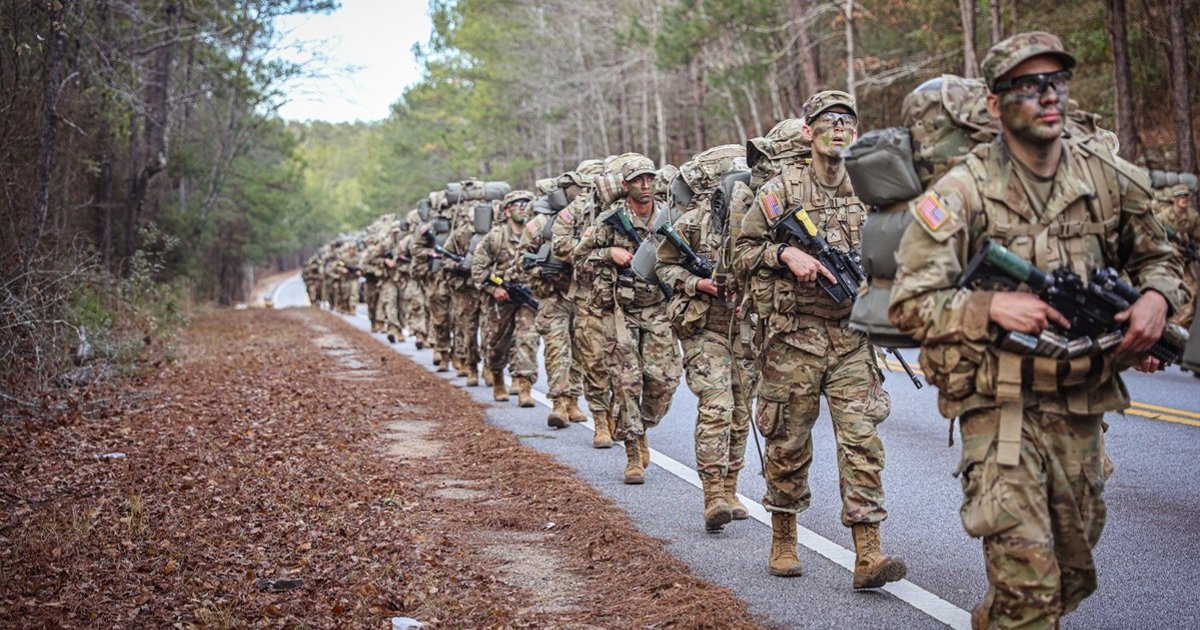
Walking under load asks your legs to support both bodyweight and the contents of your pack for thousands of repeated contacts. Quads and calves help propel the stride, glutes and hips stabilize the pelvis, and the trunk resists the pack pulling your posture out of position. Your breathing and heart rate respond to the combination of grade, distance, pace and mass. The result can be a surprisingly demanding session at an ordinary walking speed.
That does not make a ruck a substitute for every form of training. A loaded walk will not reproduce the peak force of a heavy squat or the speed demands of a sprint. It also does not guarantee superior cardiovascular gains compared with running, cycling or brisk unloaded walking: effort, consistency and recoverability matter. Think of rucking as a distinct tool for load tolerance and conditioning, particularly useful when you want steady outdoor work without running.
A common mistake is judging only the number printed on the backpack. A lighter pack on steep ground may be harder than a heavier one on a smooth path. Two people carrying an identical load can experience different relative demands because their body sizes, stride mechanics and fitness differ. If your posture collapses, feet hurt or pace deteriorates, adding weight is not progress.
Pick a load you can control and pack it so it stays put
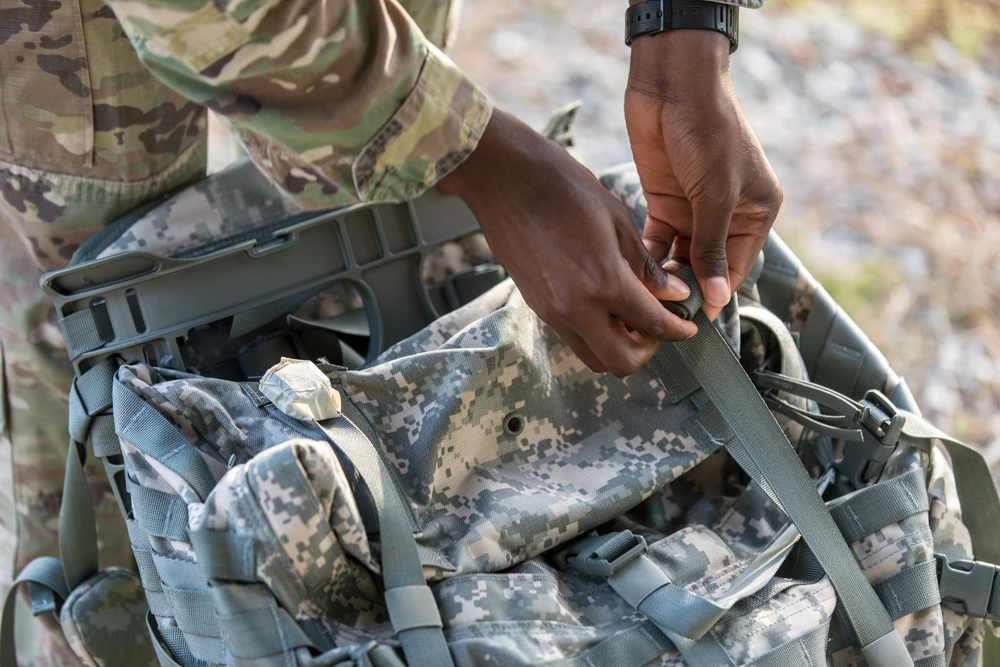
For a first outing, try an ordinary supportive backpack with a small, stable load—perhaps five to ten percent of bodyweight if you are already comfortable walking, or less if you are returning from a layoff. That is a conservative coaching example, not a universal threshold or medical rule. A shorter walk with good posture beats an ambitious weight that forces you to lean sharply forward. Add books or wrapped plates securely rather than leaving hard objects bouncing against your back.
Tighten the shoulder straps until the pack sits close, without pinching or restricting breathing. A hip belt, when the bag has one, can help transfer part of the load toward the pelvis. Keep contents from shifting left to right. On stable ground, placing heavier items relatively high and close to the torso can reduce the backward pull; uneven terrain may favor a lower, more stable arrangement. Experiment within the pack maker’s limits rather than assuming one packing pattern suits every trail.
Footwear should fit the terrain and your feet, not an internet uniform. Stable shoes with appropriate grip are reasonable on dry paths; wet rock, mud and long rough descents demand more attention to traction and ankle comfort. Use socks you know will not rub. Before leaving, check seams, shoulder contact points and whether the load is symmetrical. If you cannot walk naturally for ten minutes, fix the setup before going farther.
Pace and terrain change the workout more than ego does
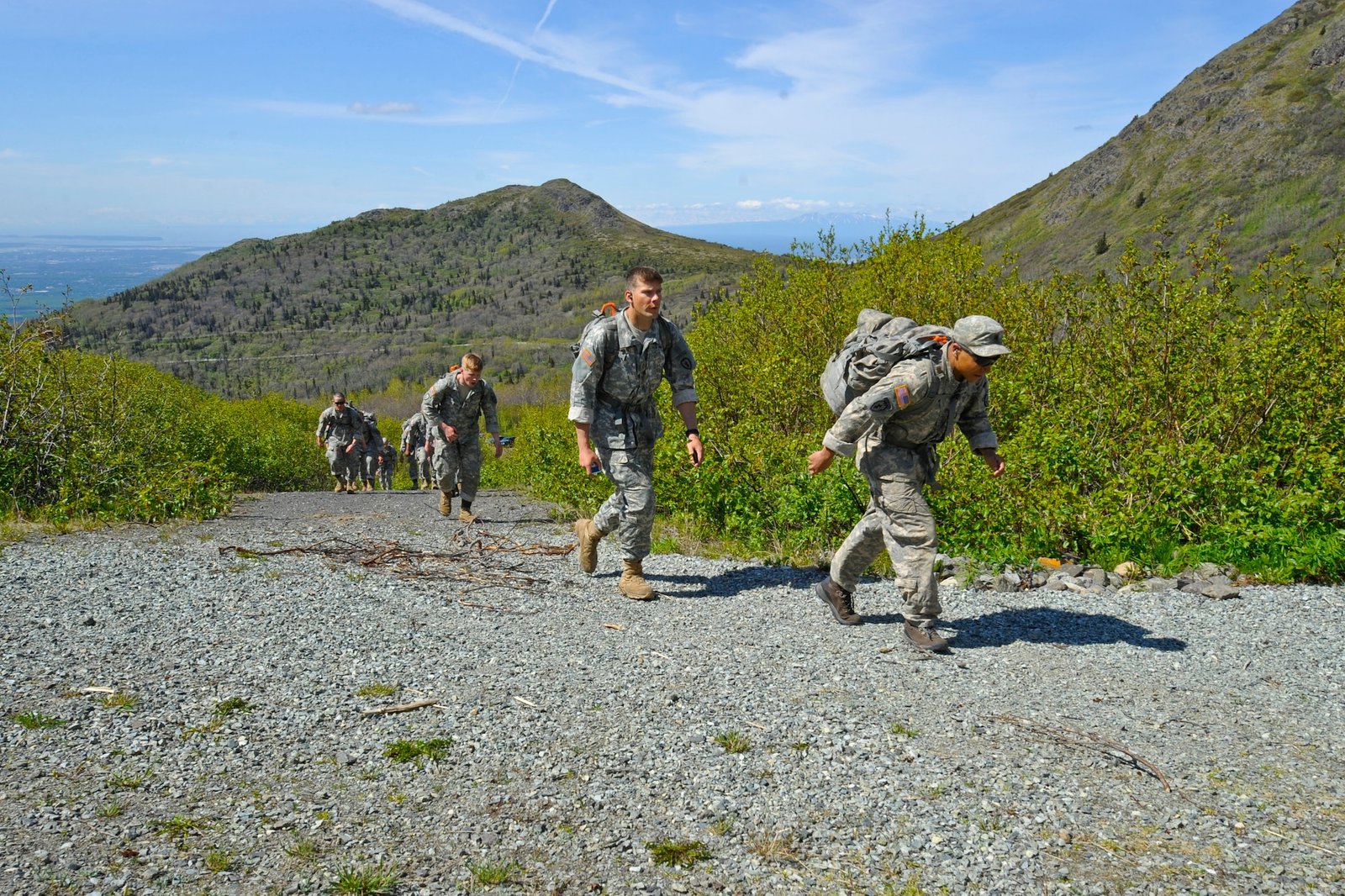
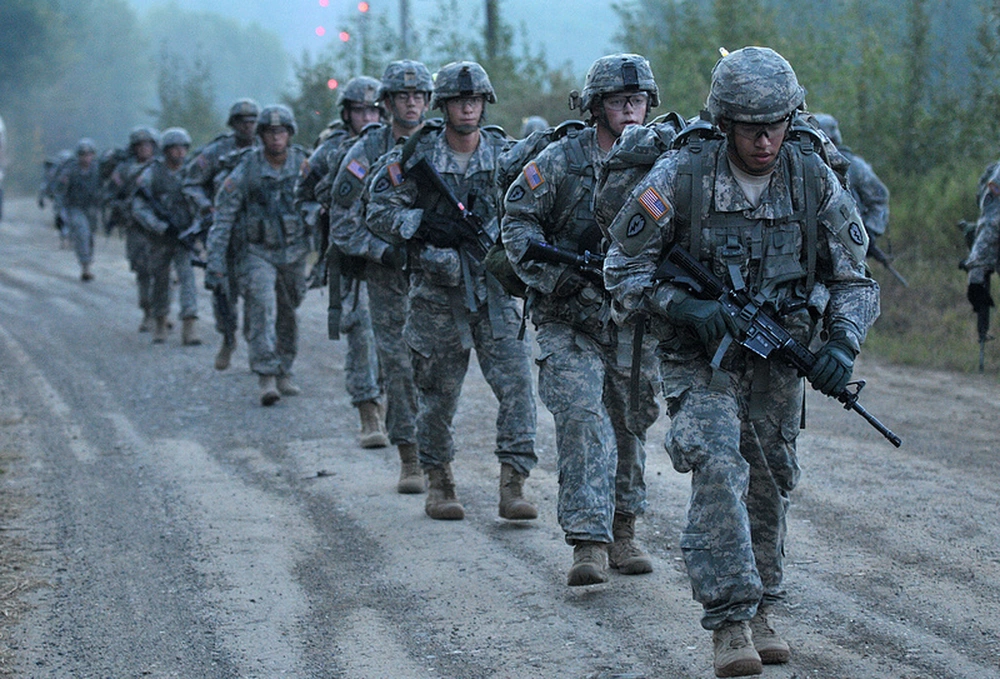
A first ruck should feel like deliberate walking, not a forced march. Choose a route you could comfortably finish without the pack, ideally with a loop that lets you head home early. Walk tall enough to breathe freely, allow a natural arm swing and shorten your stride on climbs or descents when balance requires it. You do not need to imitate a military pace target; recreational fitness has different priorities.
Grade, surface and weather can multiply the effort. A flat pavement circuit makes load and duration easier to control. Sand, loose stones, stairs and wet roots add instability, while downhill sections can punish feet and knees even when your lungs feel fine. Test one variable at a time: keep the same route while you adjust time or mass, then revisit the route before increasing anything else. Running with a heavy ruck simply to chase a pace is a poor default for beginners.

Equipment Worth Exploring
Explore equipment, accessories and gear from our carefully selected range.


Cast Iron Kettlebells
Textured cast-iron kettlebells for swings, squats, carries, and full-body training.

Rubber Hex Dumbbells
Rubber-coated hex dumbbell pairs with a stable shape for home and commercial strength training.


Pro Sled System
Heavy-duty push-pull training sled for loaded conditioning, speed, and strength work.
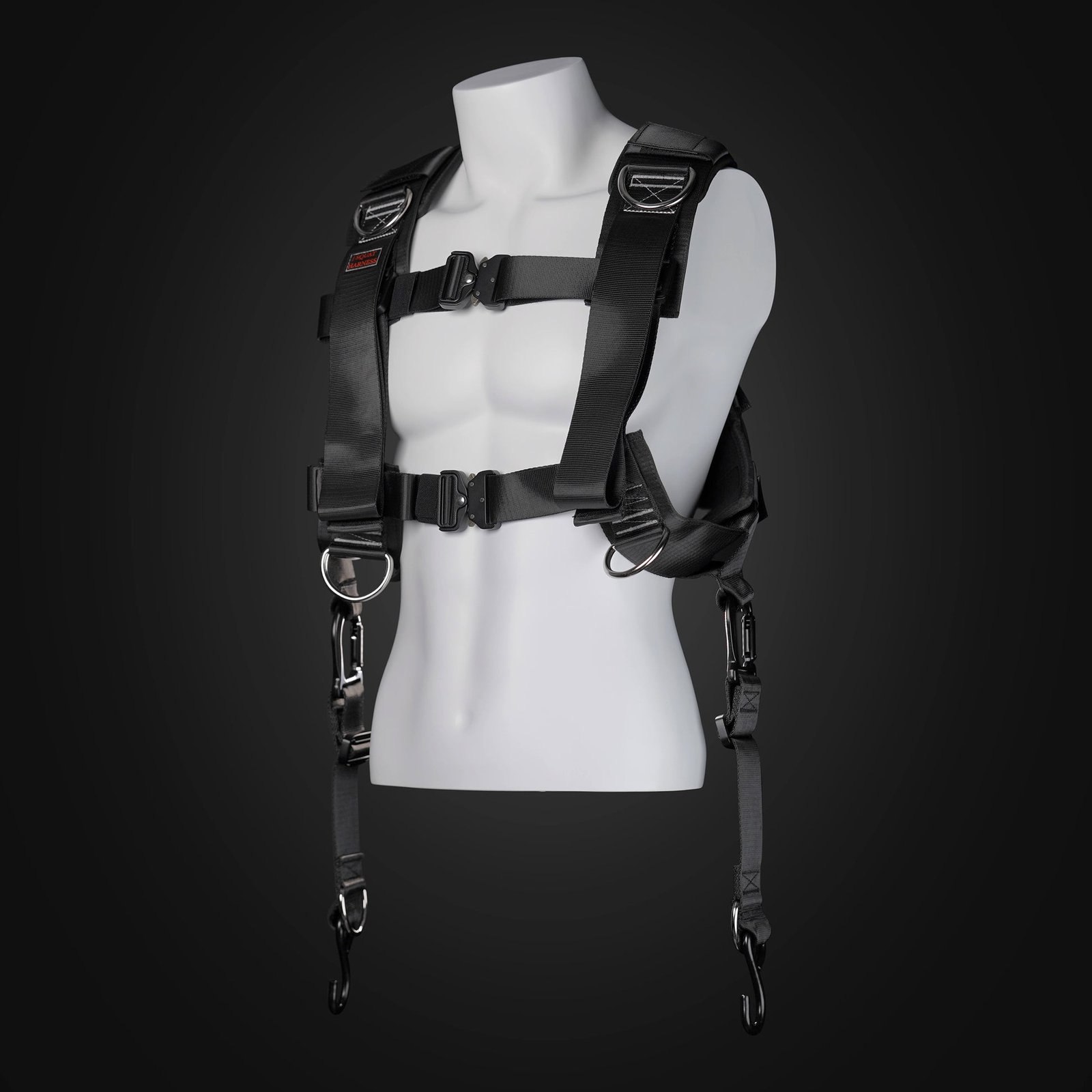
Squat Harness
Wearable harness for hands-free cable squats, sled work, and lower-body training.
Keep your barbell training, but schedule the hard days intelligently
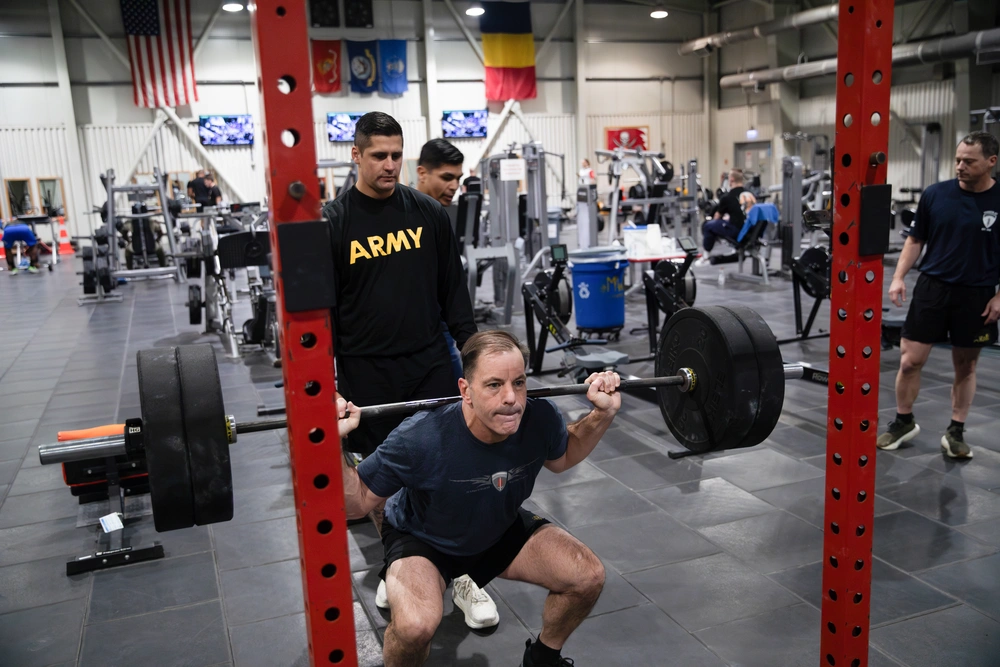
Rucking can coexist with hypertrophy and strength work when the weekly stress budget is honest. A hard leg session followed by a long weighted hill march might leave your calves, lower back and feet too fatigued to perform well. Start with rucks on easier days or after shorter upper-body sessions. If two activities compete for recovery, keep the priority session and shorten the accessory one rather than forcing both to be maximal.
Strength exercises can support the demands of loaded walking. Split squats and step-ups build single-leg control; hinges and trap-bar deadlifts train hip extension; farmer carries challenge the trunk and grip; calf raises can expose a lower-leg weakness. None of those automatically prevent injury, and you do not need to add all of them. Choose one or two movements you already tolerate, and progress them through normal strength principles.
A weighted vest is not automatically interchangeable with a backpack. The distribution and sway are different, so treat the first vest session as a new exposure. Likewise, sled pushes and carries make useful conditioning complements, but they do not perfectly mimic the foot contacts of hiking with a pack. The goal is a well-rounded training week—not accumulating every possible way to feel tired.

Funny Gym Shirts & Workout Gear
Funny gym shirts, tanks, hoodies and workout gear for lifters who like training hard.

Thin Green Line American Flag Gym | Military Support Wo T-Shirt
For laid-back days and powerlifting humor: “Thin Green Line American Flag”.

Grit & Gains Greek God Tee
Show some lifting attitude with a playful “Grit & Gains Stoic Greek God Marble” tee.

Hybrid Athlete – Iron Man Medieval Triathlon Muscle Shi Tank Top
Bring “Hybrid Athlete” humor to your next lifting session.

Funny Uncle Sam Gym – I Want You To Do Cardio Patriotic Hoodie
Bring “Uncle Sam” gym humor to lazy days and post-workout plans.

Train Like a Machine Crewneck Pullover Sweater Iron Man T-Shirt
For laid-back days and superhero humor: “Train Like a Machine”.

Doctor Discipline Sticker
Stick a little “Doctor Discipline Gym Villain” humor on your favorite gear.

The Flasher Superhero Cardio Meme Muscle Shirt Workout Tank Top
Bring “The Flasher” humor to your next lifting session.

Your Mom Is My Cardio – Edgy Meme Decal for Gym Bottles Sticker
Stick a little “Your Mom Is My Cardio” humor on your favorite gear.

Anti Hiking Hiking Hiking Club Shirt – & Meme Top T-Shirt
Heavy lifts, good laughs, and a little “Anti Hiking Hiking Hiking Club” energy.

Cardio Speed Superhero Gym Funny Treadmill Runner Crewn T-Shirt
Bring “Cardio Speed Superhero” humor to your everyday gym style.
A four-week entry plan with one change at a time
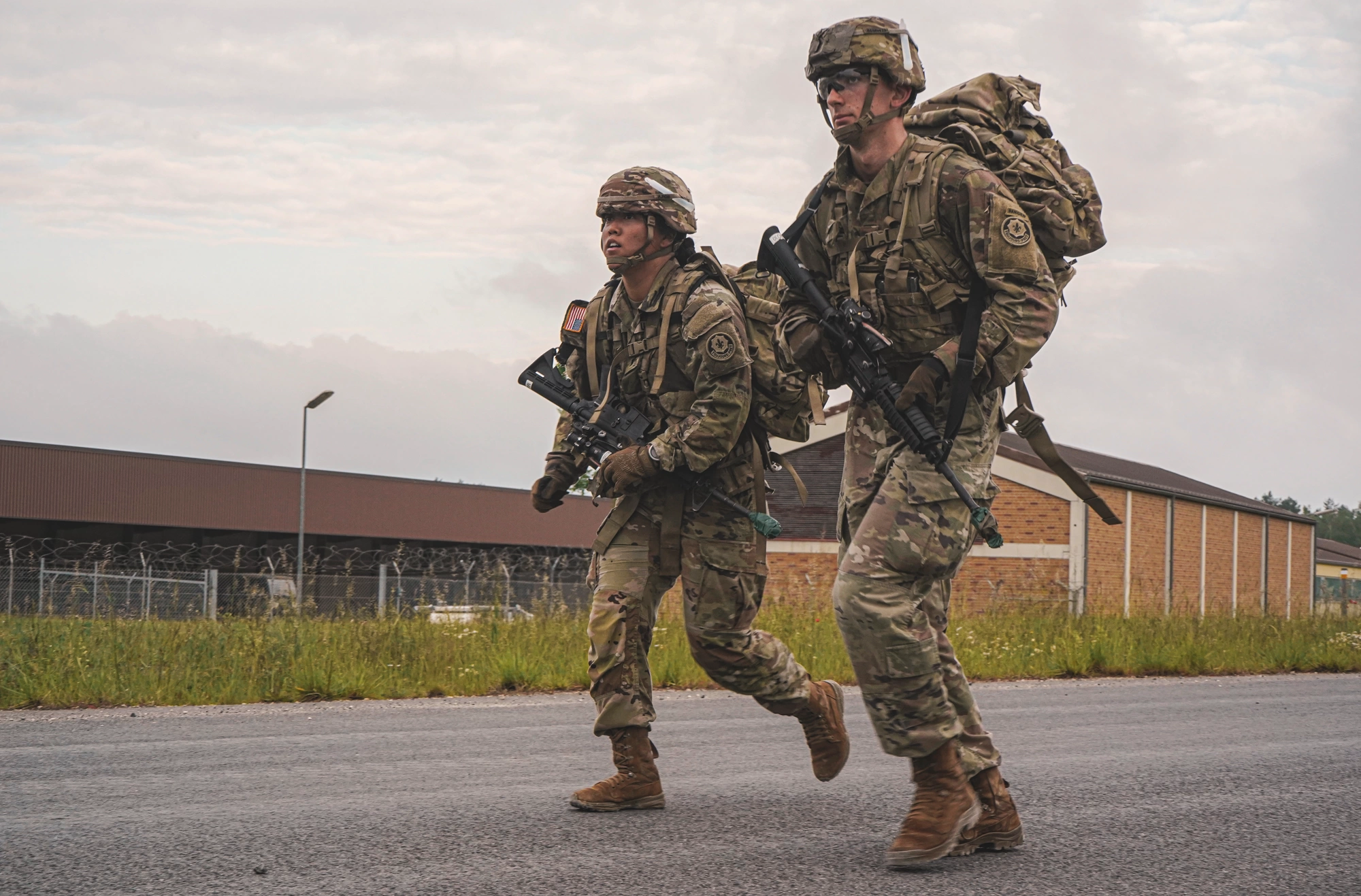
Use this as a sample for a healthy adult who already walks regularly. If walking without weight is challenging, spend the first week building that base before adding a load. Choose a flat, familiar route, begin around a comfortable twenty minutes, and leave the session feeling capable of more. Keep at least a day between longer weighted walks while you learn how your feet and legs respond.
Week 1: Take one twenty-minute easy ruck with a light, secure pack. Complete another ordinary brisk walk separately if you want more conditioning. Identify pressure points, test socks and record effort. There is no benefit to carrying a heroic load on day one.
Week 2: Repeat a similar load for twenty-five to thirty minutes, provided the first session caused no lingering pain or unusual fatigue. If you add a second short outing, keep both easy. Do not simultaneously increase the weight, distance and elevation.
Week 3: Hold the pack mass steady and extend one outing toward thirty to forty minutes, or try a modest incline on a shorter route. If your strength training is especially demanding that week, preserve the easier twenty-minute session instead. Training is cumulative rather than a pass-fail staircase.
Week 4: Repeat your best-tolerated route and assess posture, pace, breath and next-day soreness. Only then consider a small additional load or a slightly longer walk for the next training block. If anything aches persistently, reduce the dose or return to unloaded walking before progressing.
This plan deliberately has no required pace, race distance or escalating percentage. Body mass, pack construction, training age and history vary enormously. A comfortable session repeated for months beats four intense outings that make you dread the next one.
Foot care, recovery and the signs to change course
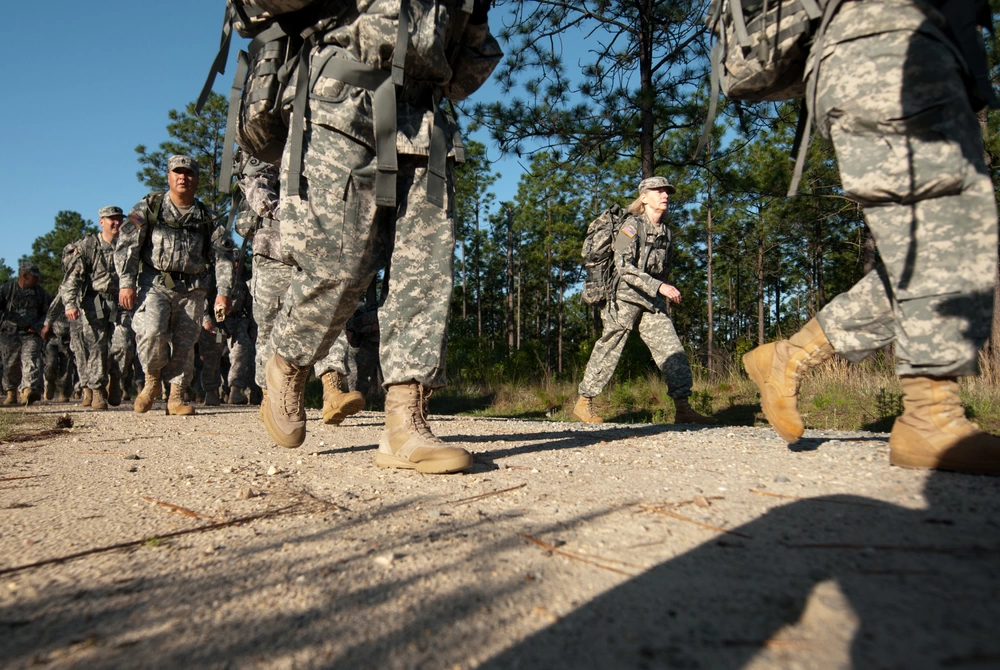
The first weak link in a ruck may be skin rather than lungs. Check for rubbing at your heels, toes, waistband and shoulders early, when adjusting a lace, strap or sock can still solve it. Blisters, numbness and unusual pressure are warnings, not trophies. Drink according to conditions and thirst, and account for heat or humidity; do not copy another person’s fixed hydration quantity for a different body and climate.
Afterward, separate ordinary muscle fatigue from persistent pain. Mild stiffness that resolves as usual is not the same as a sharp joint symptom, a limp or worsening foot pain. If discomfort alters how you walk, stop the load and assess. Seek qualified medical advice for concerning or persistent symptoms, especially with prior injury or cardiovascular problems. More advanced military standards should not be treated as general beginner recommendations.
For lifters, the clearest success metric is whether rucking improves the week rather than ruins it. You should still be able to squat, hinge, train your upper body and enjoy an unloaded walk. Finish with a pack weight you can manage, a route you like and notes that make the next session easier to plan. Once those pieces are consistent, progress becomes both safer and more satisfying.
Equipment Worth Exploring
Explore equipment, accessories and gear from our carefully selected range.


Leather Lifting Straps
Padded leather straps support grip during heavy rows, deadlifts and pulling exercises.

Leather Wrist Grips
Padded leather lifting grips help support the hands and wrists on heavy pulling exercises.


Competition Wall Ball
Competition-style weighted wall ball for HYROX, wall-ball shots, and functional conditioning.

Slam Ball
Low-bounce weighted slam ball for explosive throws and high-intensity conditioning.