Advertising disclosure: This page includes affiliate product links that may earn us a commission, as well as products from our own store.
A percentage written in your program can stay the same while the effort required to lift it changes. If a fresh maximum is 200 kilograms, 140 kilograms is 70 percent of that result. If your available maximum later in the session were 180 kilograms, the same 140 kilograms would represent about 78 percent. Those numbers are an illustration, not a result from a particular lifter. They explain why a hex-bar deadlift comparison asked whether fresh strength or lifting-speed measurements better describe strength after fatiguing work.
The comparison measured strength after different fatigue conditions
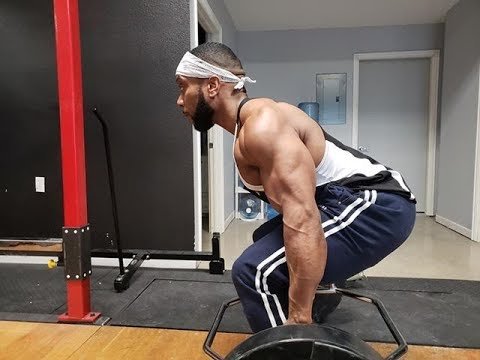
Twenty-seven resistance-trained men completed three sessions in randomized order. Each included incremental loading tests before and after a thirty-minute intervention: rest, five sets at 70 percent of initial maximum with half the possible repetitions, or five sets at that load to failure. The exercise was the hexagonal-barbell deadlift. The target was the directly measured maximum after the intervention, rather than long-term muscle growth.
The distinction between a test and a training program matters. This design deliberately created different conditions so prediction methods could be compared with a measured result. It does not prescribe repeated maximum testing around every normal workout. Nor does it establish that a lifter should train to failure to obtain better information. The work was part of an experiment addressing a measurement question.
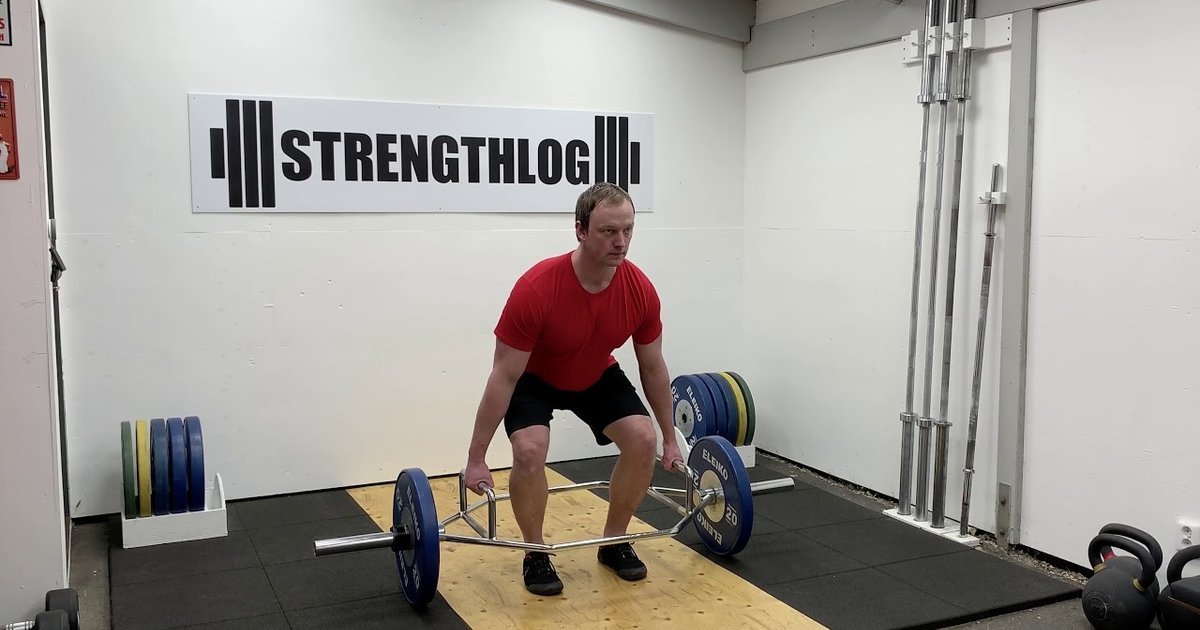
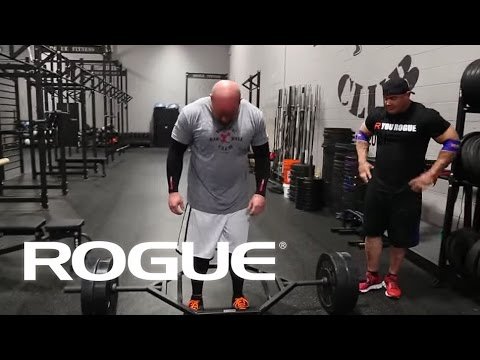
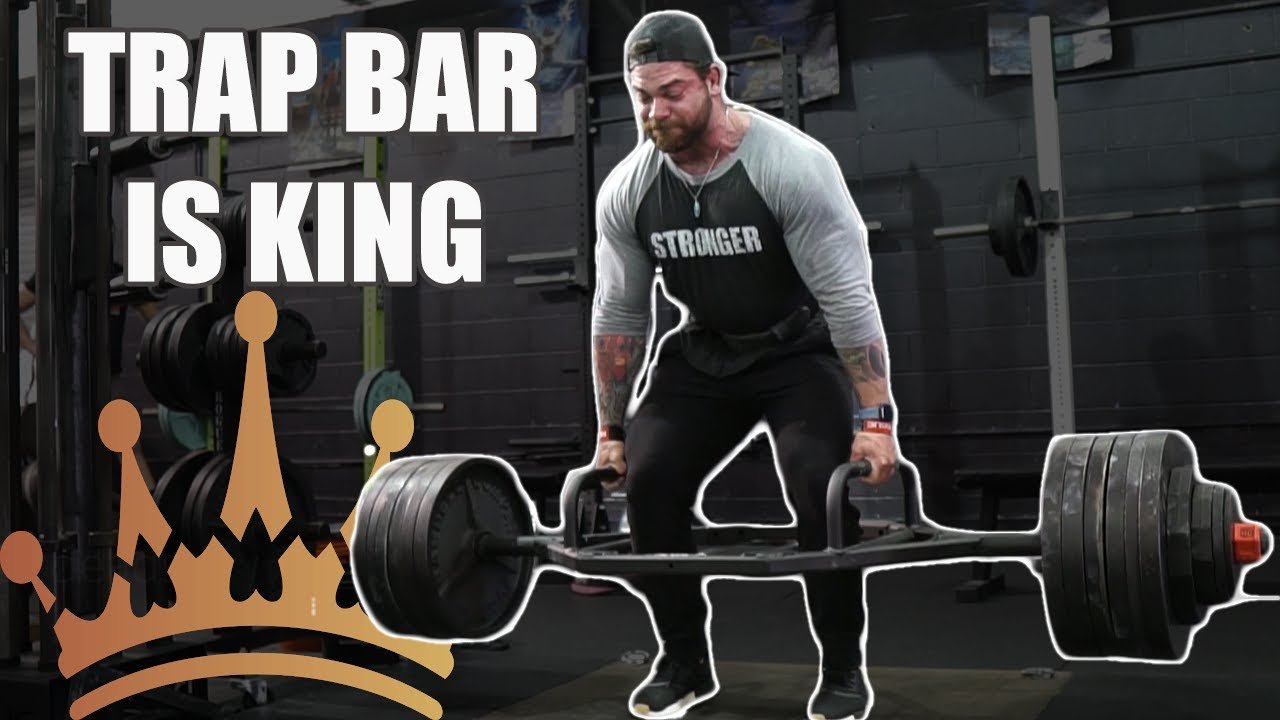
Keep the equipment context specific. A hex bar, its handle position and the way repetitions begin all belong to the task being measured. A photograph of another trap-bar deadlift can illustrate that exercise family without showing the experimental setup. High and low handles should not silently become interchangeable in your own records, and a conventional straight-bar maximum should retain its own identity.
Think of the fresh result as a reference with a time attached. It can help organize training and show progress across comparable assessments. It does not become a promise about every later attempt merely because the arithmetic in a spreadsheet is correct. The useful question is whether the reference still describes the state in which you are asking the athlete to perform.
Average bias and individual error answer different questions
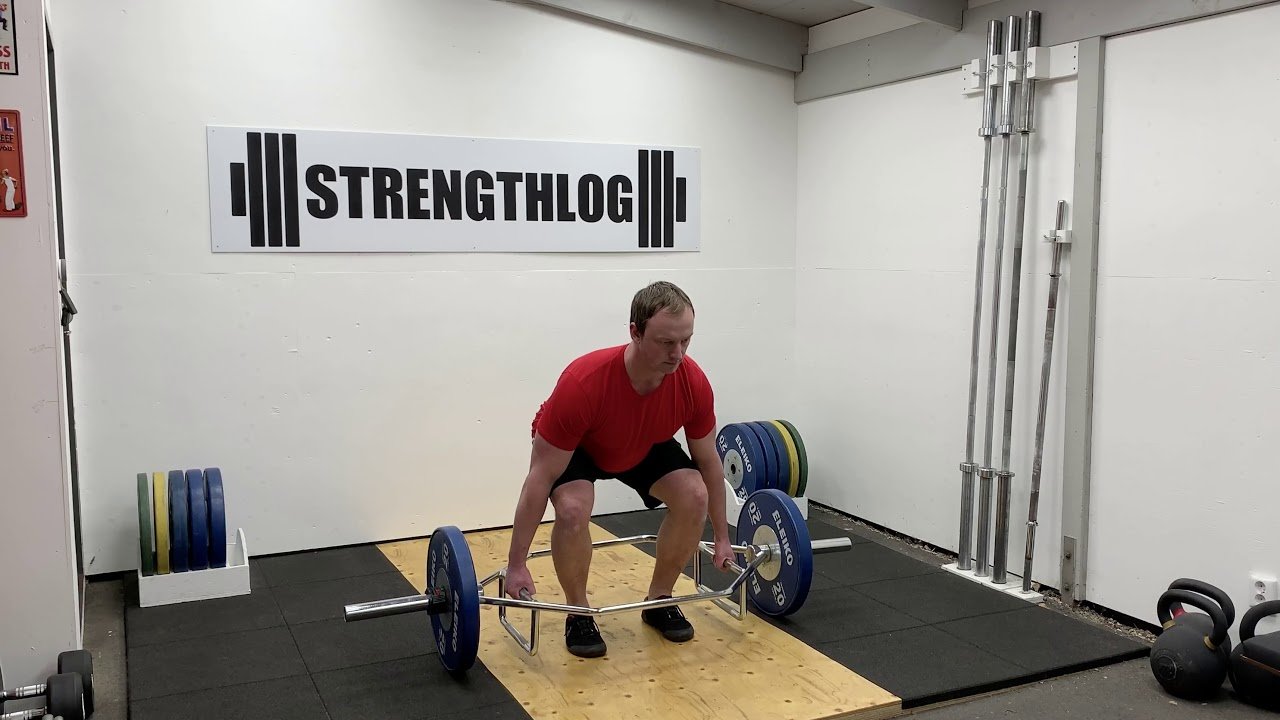
Using the pre-session maximum overestimated the later measured maximum by an average of 9.5 kilograms. Its error increased with greater fatigue. The post-session load–velocity profile had a smaller average bias, 1.9 kilograms. A prediction based on velocity at 90 percent of the initial maximum had the smallest mean absolute error, 4.7 kilograms; the 50-percent method had the largest, 15.4 kilograms.
Average bias describes direction across observations. Absolute error describes how far an estimate misses without allowing positive and negative misses to cancel. Imagine two predictions missing by five kilograms in opposite directions. Their average signed error is zero, yet neither prediction is exact. That arithmetic example explains why a low average bias should not be read as an accuracy guarantee for every person.
Ask what size of miss would change the decision you are making. A rough estimate used to summarize a session and a number used to choose a demanding next attempt have different consequences. Displaying a prediction to one decimal place does not make the uncertainty disappear. The apparent precision of an app can be greater than the practical precision of the underlying method.
The results also resist a simple claim that any speed measurement beats an earlier strength test. The lighter-load method performed worse in this comparison. That makes the measurement procedure part of the conclusion. It is more useful to identify which approach was evaluated and against which reference than to turn the finding into a contest between all technology and all conventional testing.
A velocity reading still needs a measurement method
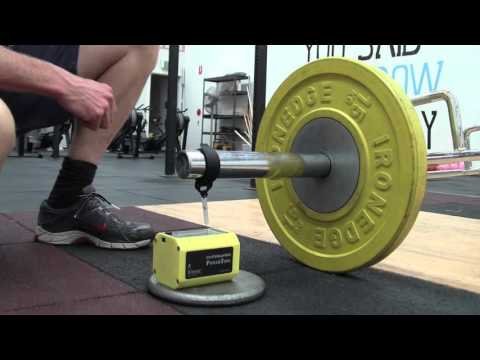
Velocity-based estimation connects the load moved with how quickly it moves. It requires a defined measurement and a model, not just an impression that the bar looked fast. A review of commercial monitoring devices found that measurement quality varied and that many validation studies lacked a gold-standard reference. Device category and testing procedure therefore belong in the discussion alongside the displayed number.
If you use a sensor, follow its exercise-specific setup instructions. Record where it attaches and use the same velocity metric when comparing sessions. Mean velocity, peak velocity and other reported outputs should not be treated as identical labels. A changed attachment position or an altered repetition style can make a comparison harder to interpret before any genuine change in strength is considered.
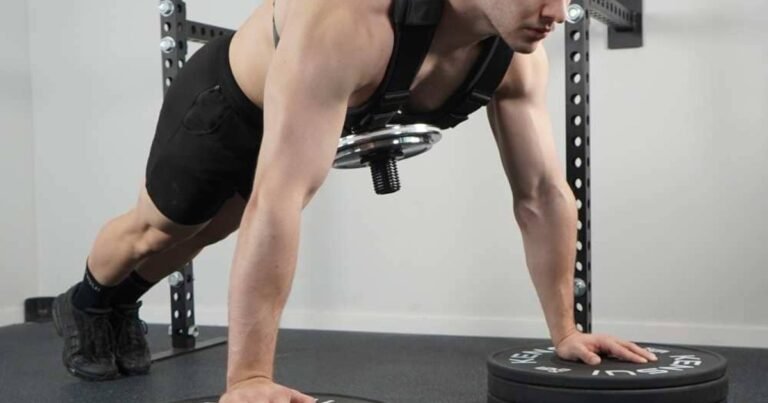
The equipment photograph illustrates a measurement setup; it is not evidence that the pictured person took part in the experiment. That same distinction applies to product choice. A research result obtained with a particular measurement arrangement is not a validation of every consumer device, every phone application or every unofficial spreadsheet that converts a speed into a predicted maximum.
Consider the cost of obtaining the measurement as well as its convenience. A heavier assessment repetition is itself physical work. A result that ranked well in an experiment does not automatically identify the best routine assessment for an inexperienced lifter. Choose an approach with competent supervision where needed, and do not add heavy attempts simply to imitate the best-performing method in a table.
A reliable fresh maximum can still be the wrong later reference
A review of one-repetition maximum testing found generally good to excellent test–retest reliability. That supports the usefulness of direct testing under appropriate conditions. It does not conflict with the fatigue question: repeating a recognizable test and assuming that its result remains current after substantial work are different propositions. Keep repeatability and timing separate when judging a training reference.
Broader work on individualized load–velocity prediction also cautions against treating estimates as direct measurements. A participant-data meta-analysis found moderate predictive validity and a tendency to overestimate maximum strength. That wider finding is not a substitute for the specific fatigue experiment, but it reinforces the need to consider error tolerance rather than assuming an equation removes all uncertainty.
In a training log, separate the measured maximum from a later estimated maximum. Label the date, exercise and method so a new number does not overwrite what the older number meant. If software automatically updates a percentage-based plan, understand which input changed. A measured personal best, a sensor estimate and a coach's conservative working reference need not occupy the same field.
Use the same care when comparing equipment. Changing the frame, handle height or starting surface while retaining the old maximum can combine a new exercise condition with an old denominator. If you want to assess a different bar, establish its setup deliberately and keep the comparison honest. A larger lifted number alone cannot explain how much came from training and how much came from changing the task.

Equipment Worth Exploring
Explore equipment, accessories and gear from our carefully selected range.


Open Hex Bar
Open-frame trap bar with multiple handles for deadlifts, carries, and lower-body training.


Competition Plates
Competition-style bumper plates for Olympic lifts and loaded strength training.

Grip Plates
Rubber-coated weight plates with handholds for loading barbells and machines.


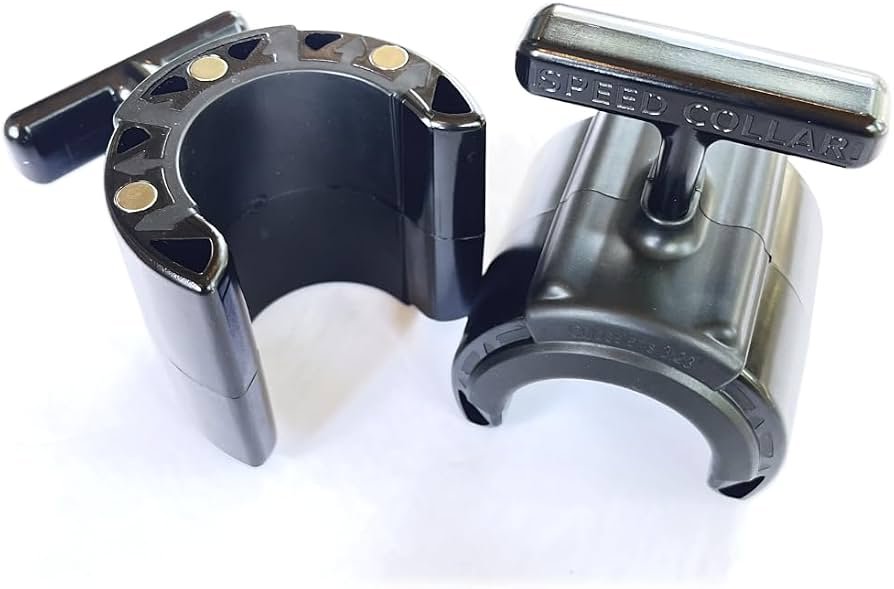
Speed Collar
Quick-release collars designed to secure weight plates on standard two-inch Olympic bars.
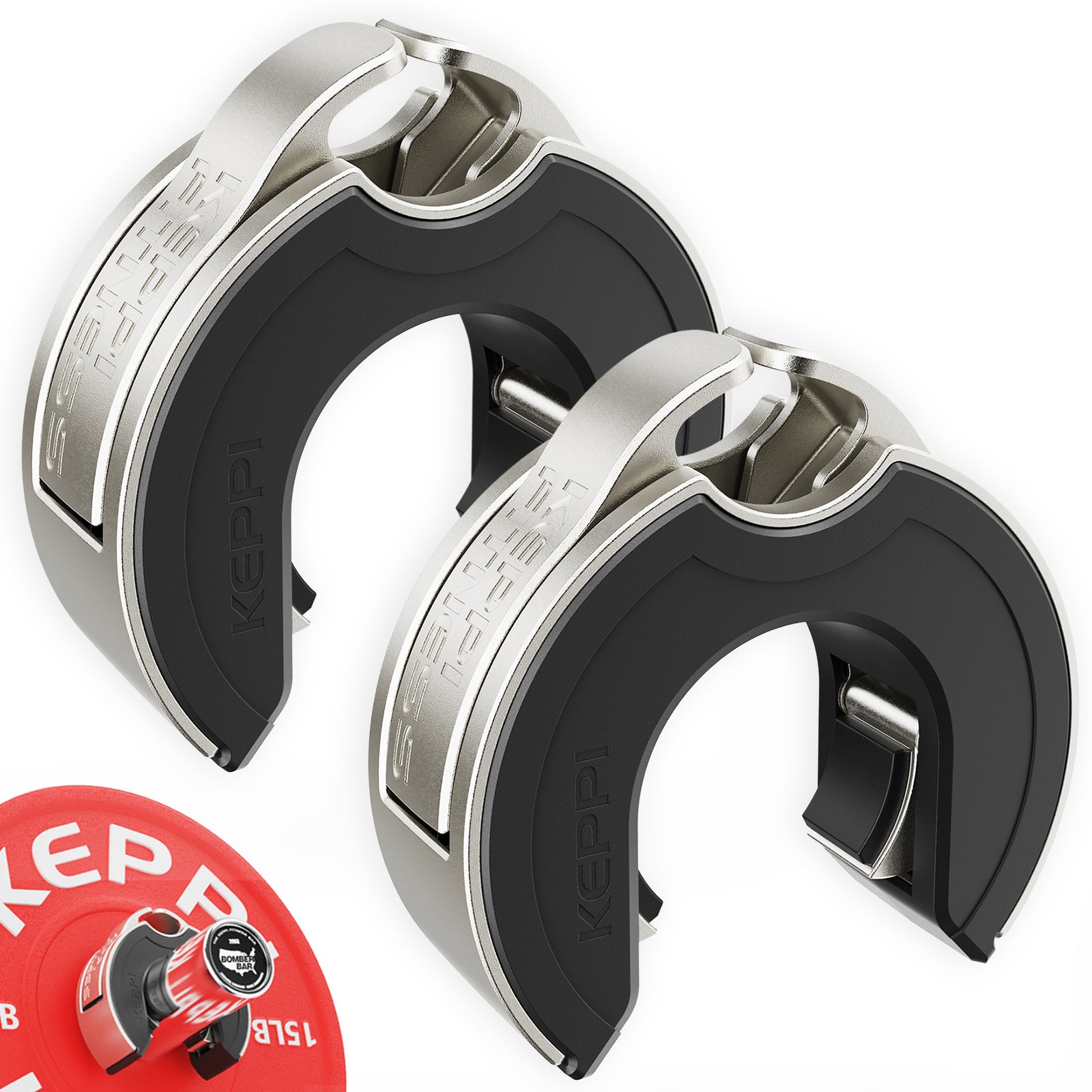
Keppi Open Collars
C-shaped magnetic Olympic barbell collars with a quick-lock mechanism and grippy lining.
Use the finding to improve decisions, not chase constant testing
For ordinary training, the first useful step is to preserve context. Record the working load, completed repetitions, exercise order, rest conditions and why a set ended. A set performed early in the session and one performed after demanding work can carry the same load while providing different information. Notes about that difference are more useful than forcing both entries to look identical.
Decide ahead of time what would lead you to adjust the session. That might involve a planned effort range, repeated loss of the intended movement pattern or feedback from a qualified coach. The experiment does not supply one universal adjustment rule for every lifter. Use its result to question an assumption, rather than inventing a percentage reduction that the study never tested as a program.
For example, if an estimate unexpectedly rises after a difficult session, check the entry before treating it as progress. Confirm the load units, exercise selection, velocity metric and whether the repetition met the intended standard. Correcting a recording error is a different action from changing the training plan. Keep the original observation available so a later review can explain what happened rather than replacing uncertainty with a cleaner-looking number.
A clear goal also prevents overinterpretation. If you are tracking longer-term strength, compare assessments performed under reasonably similar conditions. If you are managing a particular day's work, acknowledge the work already completed. If you want to evaluate a monitoring tool, check whether its evidence applies to the exercise and output you intend to use. Those are related projects with different success criteria.
The practical lesson is not to abandon percentages or to buy a device immediately. It is to stop treating a fresh reference as timeless and a predicted reference as exact. Keep the exercise consistent, label the method and judge a number by the decision it needs to support. Good records help you recognize when an apparent change is a different testing condition rather than a sudden gain or loss of strength.

Funny Gym Shirts & Workout Gear
Funny gym shirts, tanks, hoodies and workout gear for lifters who like training hard.

Trap Bar Deadlift Behold Thee Trap Bar Medieval Gym Pul Hoodie
Show off your medieval humor in a laid-back “Trap Bar Deadlift” hoodie.

3 Plates Deadlift Club – Motivational T-Shirt
Make gym days more fun with “3 Plates Deadlift Club” style.

I Love Deadlifts | Pink Heart Plate Workout Pullover fo T-Shirt
For laid-back days and deadlift humor: “I Love Deadlifts”.

Deadlift Addict & Barbell Cigarettes Can'T Quit T-Shirt
Show some deadlift attitude with a playful “Deadlift Addict & Barbell Cigarettes” tee.

Deadlift And Chill – & Top T-Shirt
Heavy lifts, good laughs, and a little “Deadlift and Chill” energy.

Routine Stoic – Greek God Marble Sculpture Shirt & T-Shirt
Show some lifting attitude with a playful “Routine Stoic Bodybuilding” tee.

Discipline Greek God Statue Stoic Sigma T-Shirt
Heavy lifts, good laughs, and a little “Discipline Greek God Statue Funny Stoic” energy.

Mind Muscle Perfection Brain and Biceps Gym for Science T-Shirt
Show some gym-day personality with “Mind Muscle Perfection Brain and Biceps”.

Be Happy Lift Heavy Happy Weights Emoji Weight Plate Hoodie
Show off your powerlifting humor in a laid-back “Be Happy Lift” hoodie.

Funny Lift Time Gym | Muscle Shirt For Gym Bros & Bodyb Tank Top
Train hard, laugh a little, and rep “Lift Time”.