Advertising disclosure: This page includes affiliate product links that may earn us a commission, as well as products from our own store.
A reverse-grip pushdown is easy to recognize when the palms face upward, but the attachment changes what that instruction feels like. A fixed bar links the hands together. Two separate handles let each wrist find its own path. Neither arrangement earns a bigger-muscle guarantee from its appearance. The useful comparison is whether you can keep the grip secure, extend the elbows deliberately and repeat the setup. This guide focuses on the bilateral choice between a bar and two freely moving handles, rather than a single-arm routine.
Start with the attachment, not the weight stack
For the two-handle version, connect suitable handles to the high cable attachment, begin with the palms facing upward and stand in a balanced position. A small hip hinge can create room for the hands without turning the exercise into a forward lean over the load. Keep the upper arms near the sides and begin with the elbows bent. Those are setup cues, not a requirement to force every wrist into an identical angle.
A straight bar makes the spacing between the hands visible and repeatable. Mark the grip position mentally against the bar's ends or knurling, then use the same position next time. A pair of handles adds another variable: the length of the straps or connecting hardware. Two products described as cable handles can hang at different heights, so compare the assembled setup rather than the product name alone.
Check the connection before loading it. The attachment should be intended for the machine and used within its manufacturer's limits. Position the handles so they can move without catching on each other or forcing your fingers against the cable hardware. If one handle hangs lower, fix the arrangement before interpreting an uneven finish as a difference between your arms.
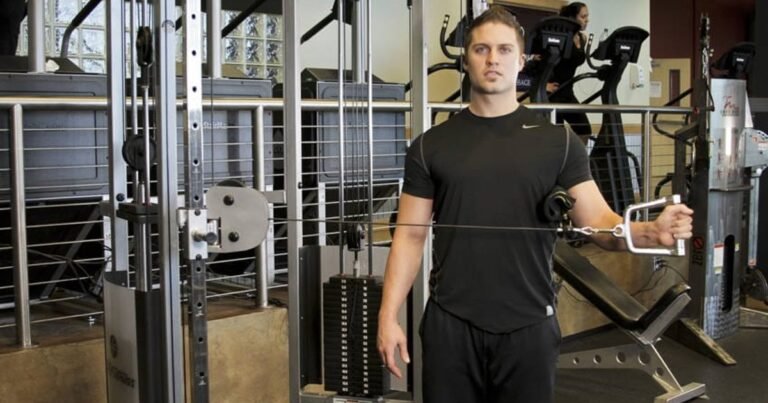
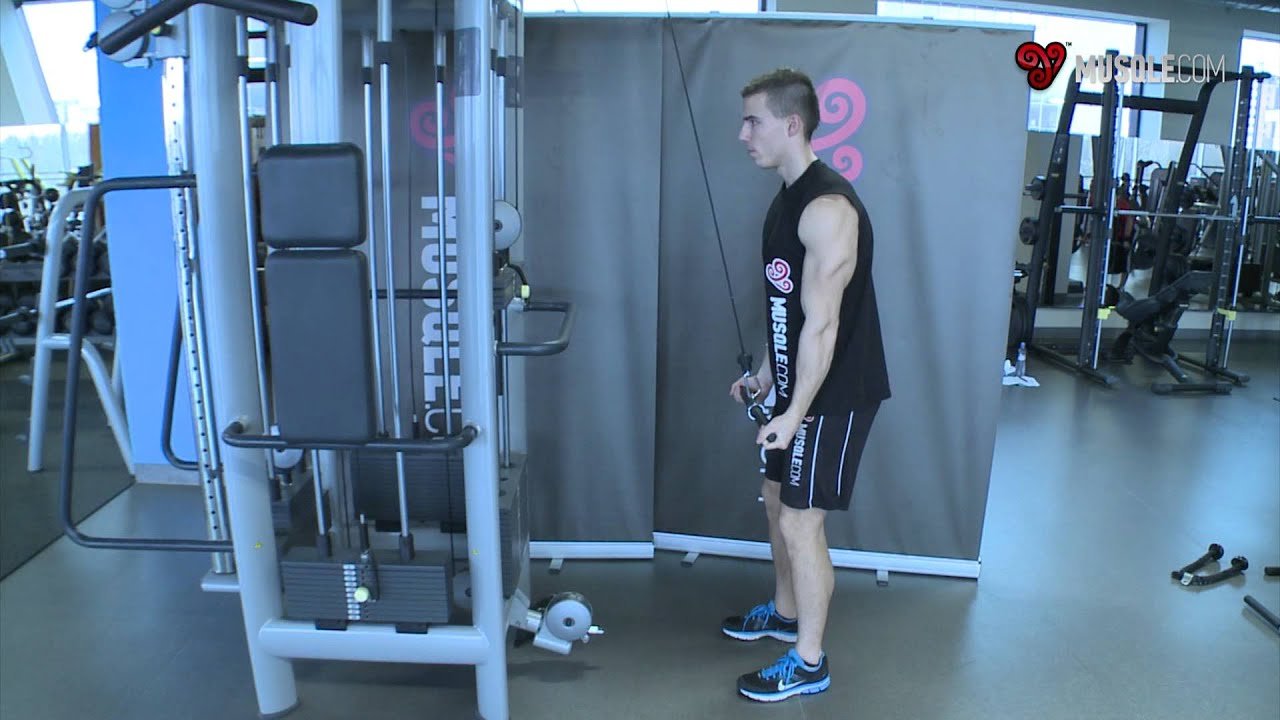
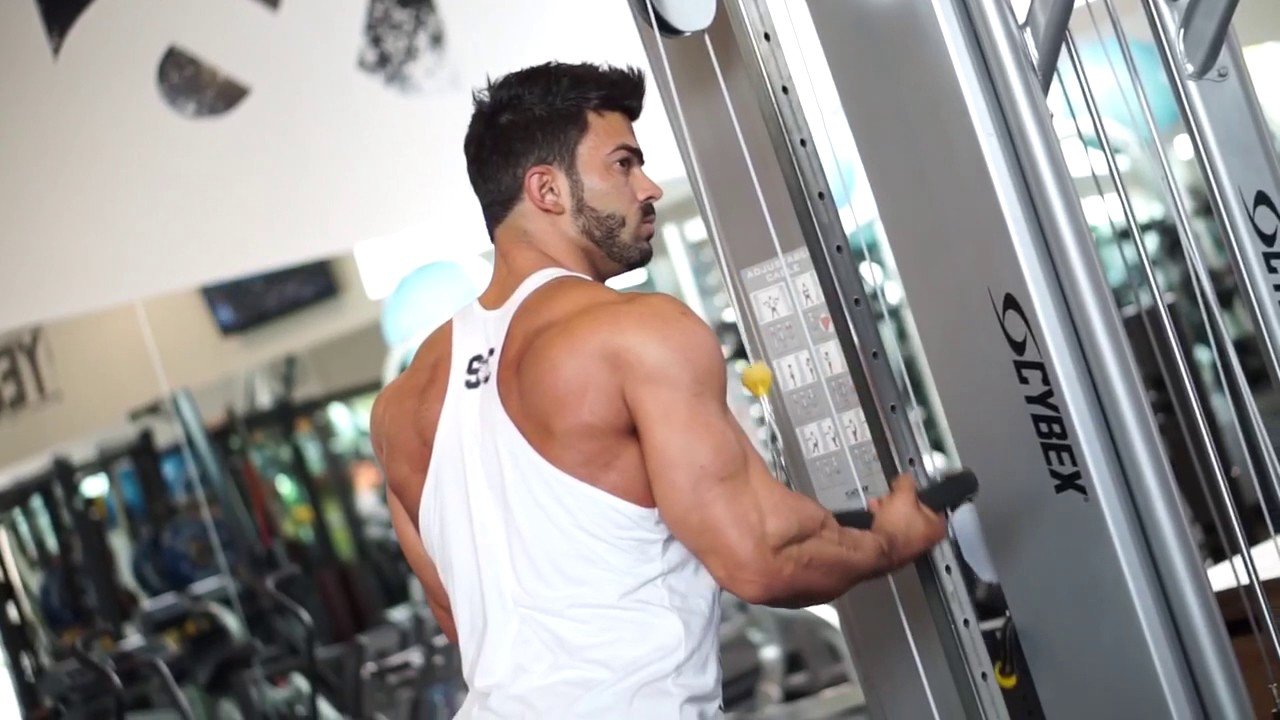
The photograph shows a fixed-bar example, which makes the bilateral position easy to see. It is a comparison setup, not proof that every bar and free-handle arrangement has the same cable travel. Write down the machine, pulley height and attachment when you record the exercise. A pin number without that context is an incomplete description of what you performed.
Let wrist position guide the comparison
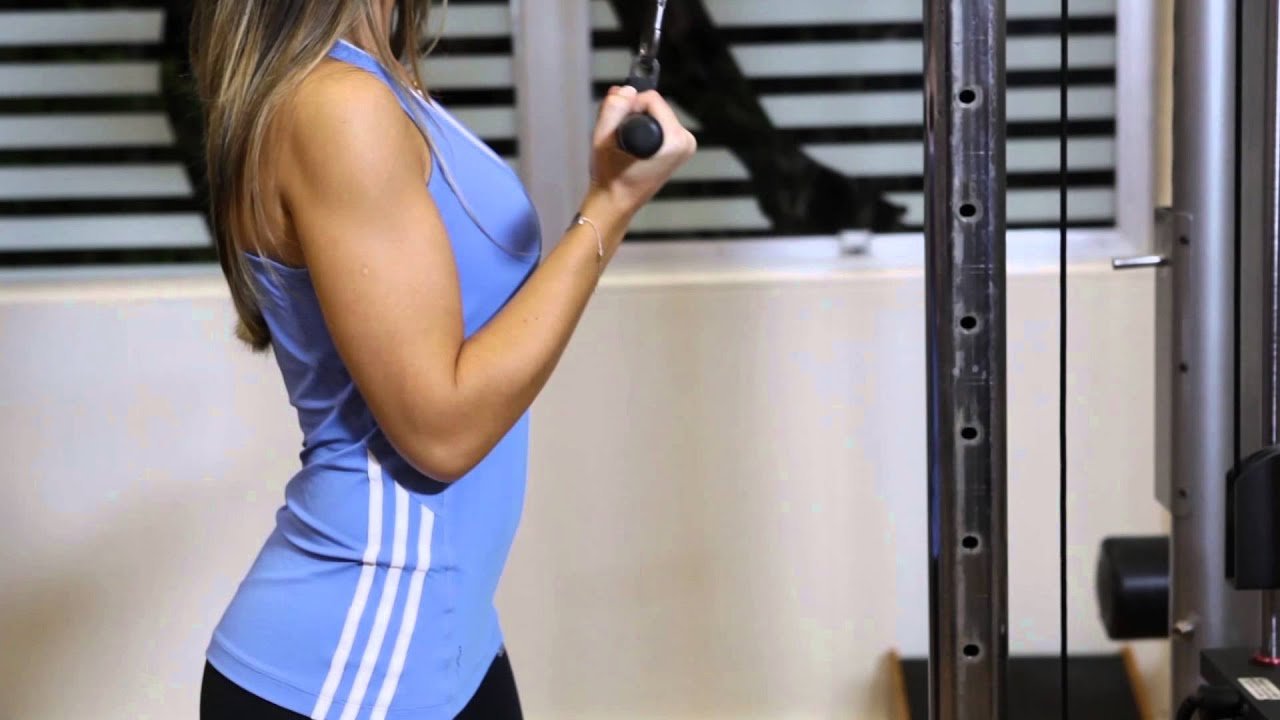
Separate handles allow wrist rotation during the pushdown, whereas a fixed bar links the hands along one rigid attachment. That freedom is the practical feature to assess. It does not establish greater muscle activation or superior growth on its own. Use the arrangement that lets you hold the attachment securely and move deliberately, rather than chasing a claim about isolating a particular triceps head.
Notice whether your wrist position changes because you chose to rotate the handle or because the load is pulling it out of your hand. Those are different observations. In the first case, the attachment follows a planned path. In the second, the grip is becoming the limit of the set. Reduce the load or reconsider the attachment when controlling it takes more attention than performing the elbow movement.
A bar is not automatically unsuitable because it offers less freedom. Its fixed shape can make setup simple, and some lifters may prefer that predictable contact. Conversely, two handles are not automatically more comfortable just because they rotate. Handle diameter, material, strap length and the way the connection hangs still matter. Try the actual arrangement at a manageable resistance before deciding which description sounds better.
Treat discomfort as information to change the task, not a challenge to push through. There is no need to force an underhand position that hurts when another grip or exercise is workable. Persistent symptoms deserve an individual assessment. The aim here is to compare usable equipment conditions, not diagnose a wrist problem or promise that a particular attachment will solve one.
Keep the elbow movement readable
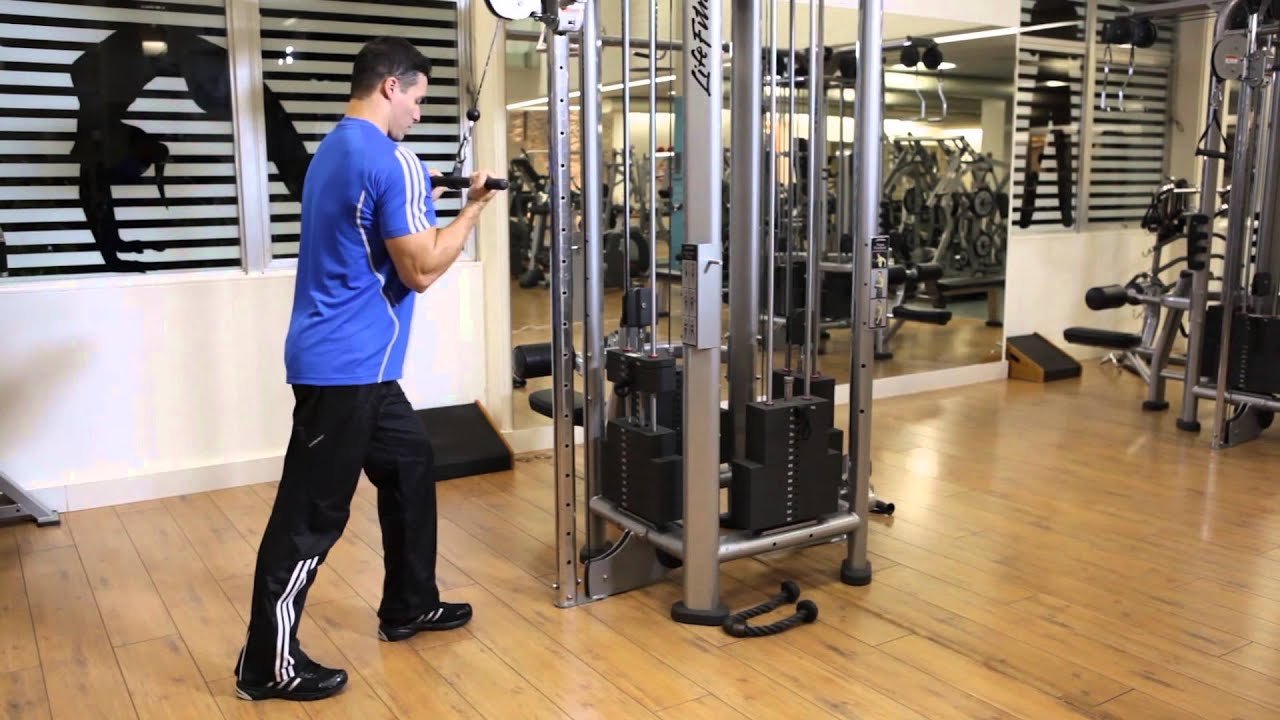
Extend the elbows while keeping the torso braced and the upper arms close to your sides, then return under control. Ordinary pushdown guidance uses the same broad distinction: the forearms move while the upper arms remain comparatively quiet. A heavy stack that makes the whole body rock can obscure that task, even when the handle still travels down.
Watch the start and finish of the repetition separately. At the start, ask whether you have settled into position before applying force. At the finish, ask whether elbow extension brings the handle down or whether you are folding the torso over it. There is no need to exaggerate either endpoint. Choose a controlled range you can reproduce without jerking into the bottom or being pulled abruptly upward.
A small change in elbow location is not the same observation as a large shoulder swing. The useful question is whether the set still resembles the movement you intended. If each successive repetition requires more body movement to keep the stack travelling, stop calling them equivalent repetitions. Record the completed controlled work and adjust the next set instead of disguising the change with a bigger number.
Use a side view if you need to inspect the pattern. Include the shoulder, elbow, hand and cable rather than filming only the stack. A close-up of moving plates cannot show which joints created the movement. Review enough of the set to see whether the last repetition resembles the first, and use that information to make one clear adjustment at a time.
Compare grips without inventing a different exercise
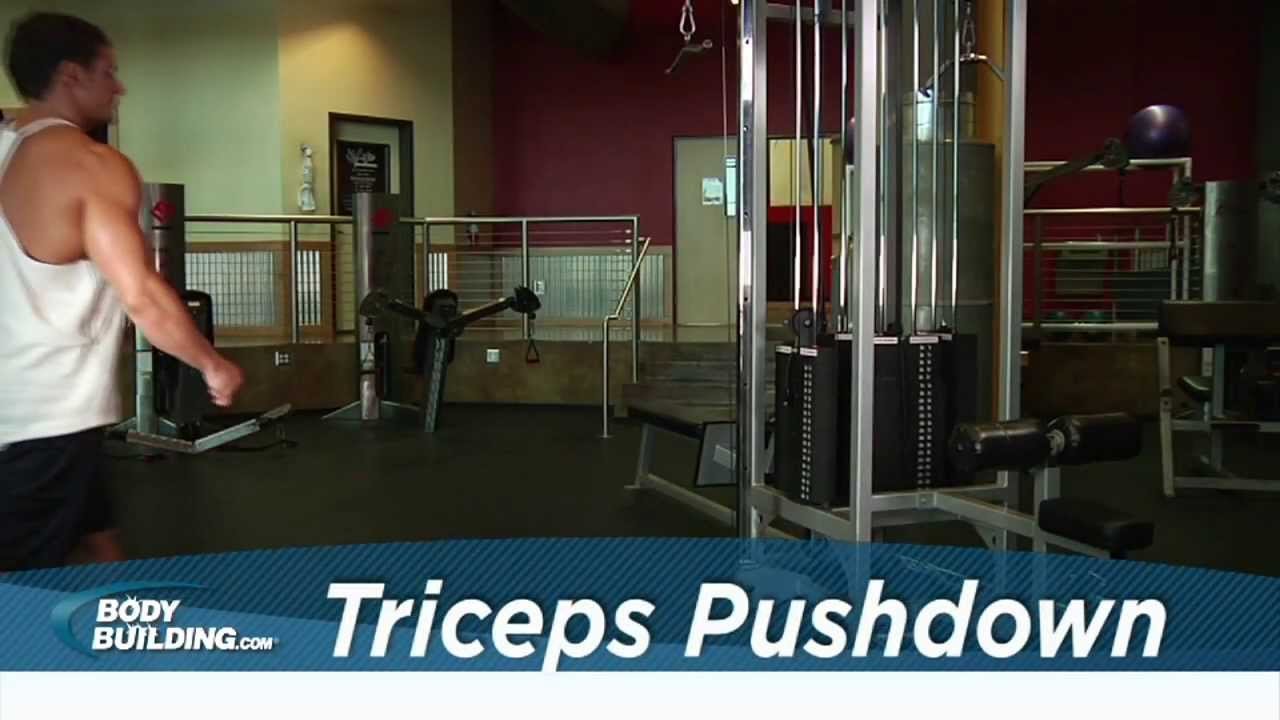
An overhand bar pushdown, a rope pushdown and an underhand pushdown all involve elbow extension, but their hand arrangements differ. In the overhand example pictured here, the palms face down. Do not label it a reverse-grip repetition simply because it uses the same cable station. The attachment and hand orientation belong in the exercise record alongside sets and repetitions.
A rope can permit the hands to separate, while an angled bar changes the contact angle without becoming two independent handles. These are useful options to compare, not a ranking from worst to best. If you change the attachment, establish a manageable working load for that arrangement. Keeping yesterday's pin setting at all costs is a poor reason to accept a grip you cannot control.
Keep the comparison limited. Changing from an underhand bar to independent handles is one decision; adding a different pulley height, a new stance and a substantially heavier load at the same time creates several. Make the first comparison easy to understand. Keep the station and intended elbow motion similar, note the changed attachment and observe which condition is easier to repeat accurately.
Do not confuse a different sensation with proof of a better long-term outcome. A new handle can feel unfamiliar without being more effective, and a familiar bar can feel easier without making it useless. Evaluate the grip, control and ability to complete the planned work first. Specific claims about muscle growth or selecting one triceps head would require evidence beyond these equipment observations.

Equipment Worth Exploring
Explore equipment, accessories and gear from our carefully selected range.

GymPin Ergo Handles
Pair of ergonomic cable handles shaped for comfortable triceps and pulling exercises.

Long Tricep ERGO Ropes
Extended triceps ropes with ergonomic grips for cable pressdowns and overhead extensions.
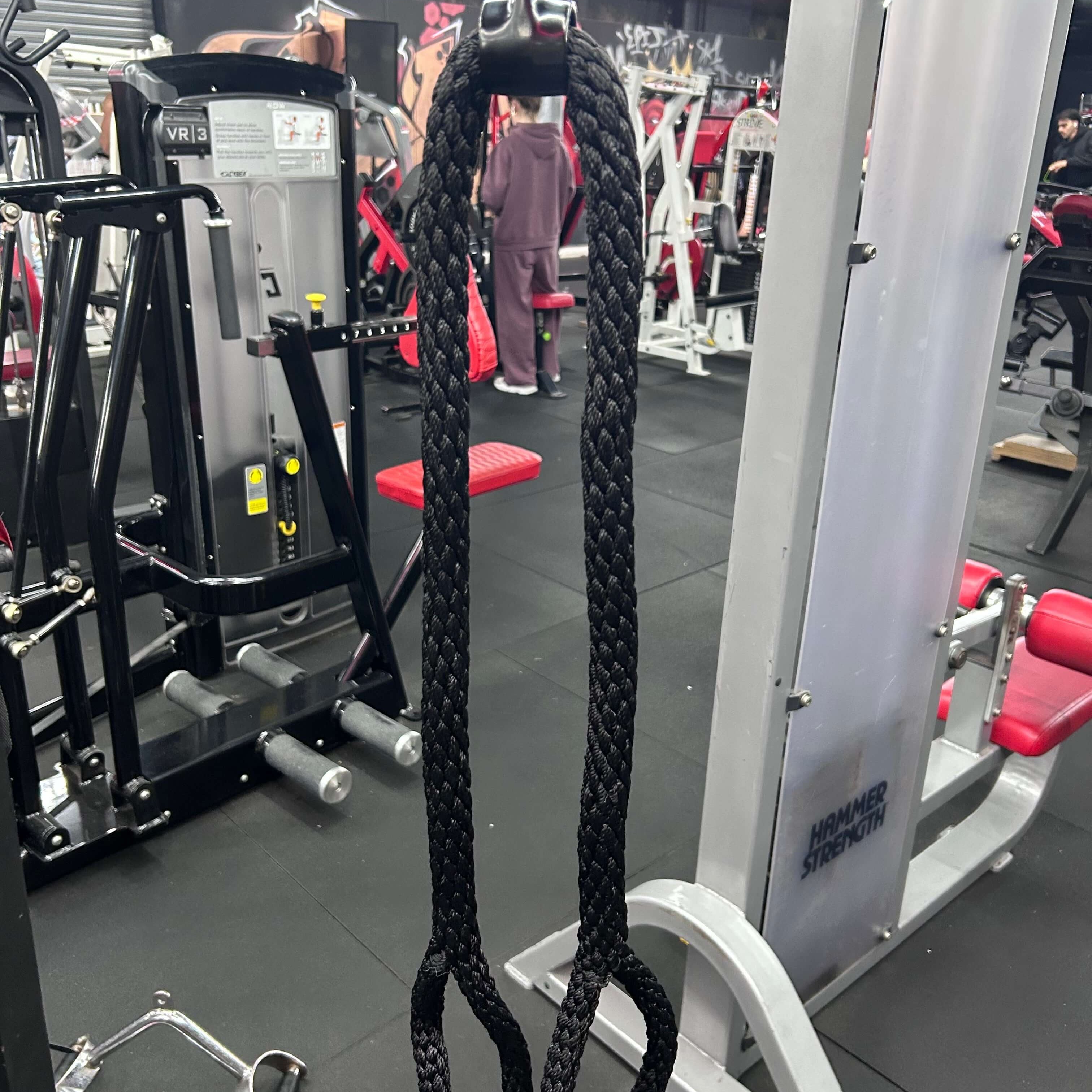
Super Long Tricep Rope
Extra-long looped cable rope for triceps pressdowns and overhead extensions.
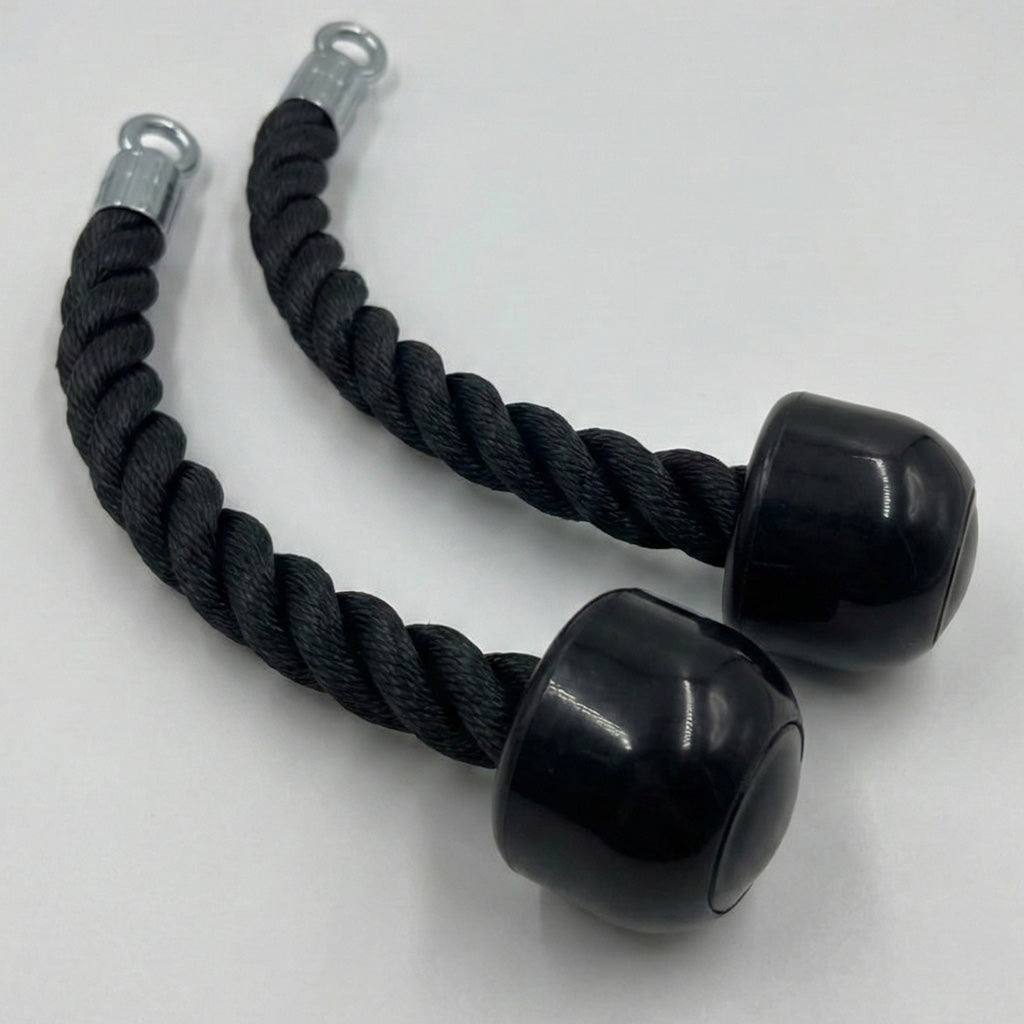
Individual Tricep Ropes
Pair of individual cable ropes for triceps pressdowns and cable hammer curls.

Multi-Length Tricep Strap
Adjustable-length cable strap for triceps, biceps and upper-body cable exercises.
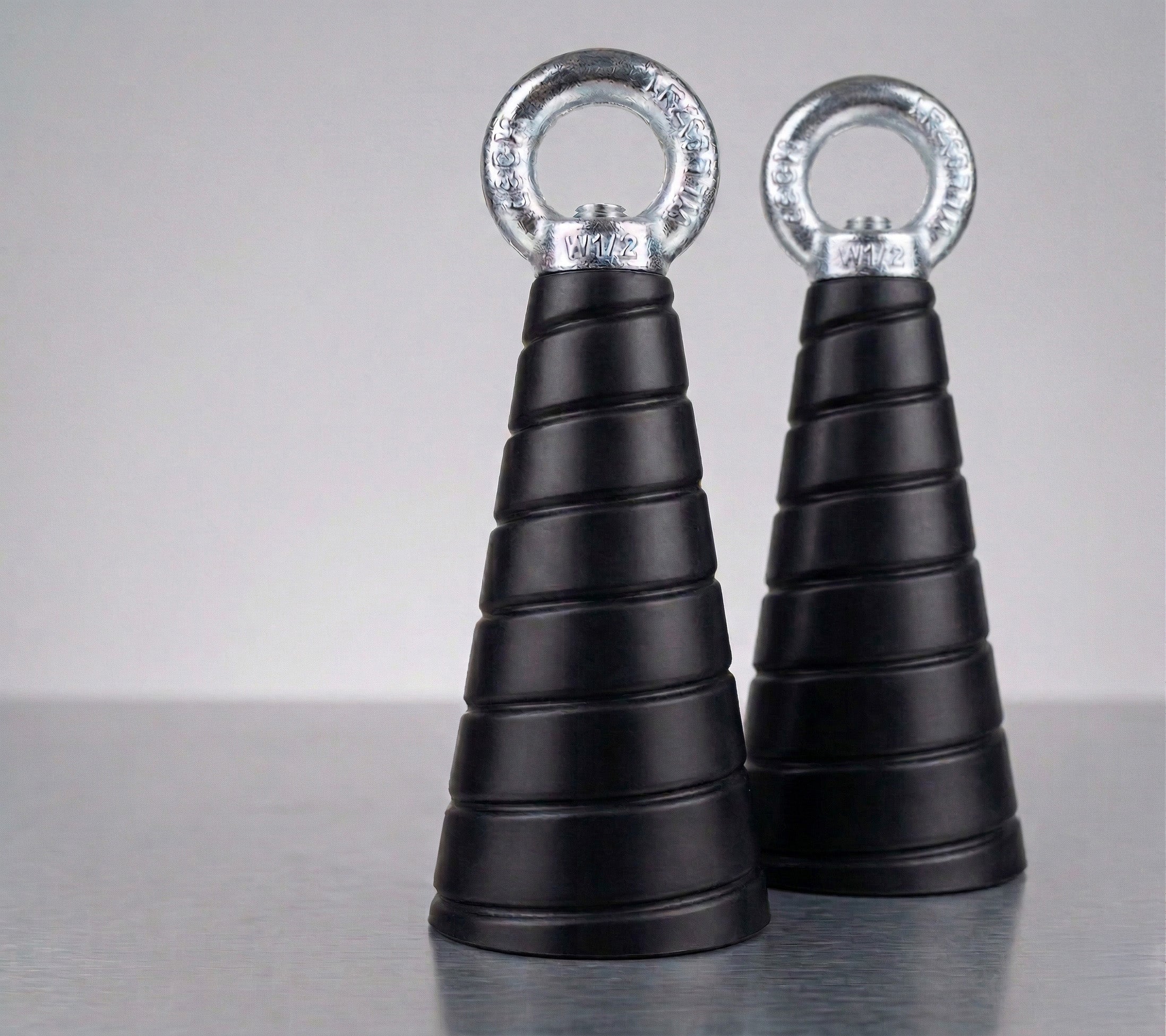
Tapered Tricep Cone
Tapered rubber cable grip for triceps extensions, face pulls and hammer curls.

GymPin D Handle Bar
Multi-use steel D-handle bar for cable rows, pulldowns and other cable exercises.

48in Aluminum Lat Bar
48-inch aluminum lat pulldown bar with knurled grip and rotating center swivel.

Dual Hook EZ Curl Bar
Angled aluminum dual-hook cable bar for biceps curls and pulldown variations.

44in Dual Hook Bar
44-inch aluminum dual-hook straight bar for cable rows, pulldowns, and curls.
Give the variation a clear place in arm training
Use the reverse-grip pushdown as assistance work whose purpose you can state. For example, you might want a repeatable elbow-extension exercise after your main pressing work. That is different from testing the greatest load you can force downward. Choose the resistance around the controlled repetitions you intend to perform, and keep enough recovery between sets to reproduce the task.
Account for what happened earlier in the session. A set after demanding presses or dips is not the same starting condition as a fresh set at the beginning of arm training. Biceps curls also use the hands and cable attachments, although they are a different elbow movement. Arrange the session so you can identify what you actually changed when a set feels harder than expected.
For a practical equipment comparison, record the attachment, pulley setting, load, repetitions and why the set ended. A note such as grip slipping or torso movement increasing is more useful than calling the exercise bad after one attempt. Keep the same choice for enough ordinary sessions to learn the setup before replacing it because another handle looks more interesting.
Progress can mean completing the planned work more consistently before moving the pin. Once you increase resistance, check that the grip and movement remain recognizable. If the smallest available increase disrupts the task, keep the existing load while you assess the available progression options on that machine. Do not add improvised hardware that its manufacturer does not permit.
The bar-versus-handles decision should simplify the session. Keep a fixed bar if it gives you a secure, repeatable underhand position. Choose independent handles if their freedom makes the bilateral movement more workable for you. If neither setup works well, choose another suitable triceps exercise rather than forcing this variation into the program. The attachment is a means of training, not a test of loyalty to a particular grip.

Funny Gym Shirts & Workout Gear
Funny gym shirts, tanks, hoodies and workout gear for lifters who like training hard.


Every Day Is Arm Day
Make gym days more fun with “Every Day is Arm Day Octopus Gym Meme” style.

OnlyGains Big Biceps Sweater & Meme Fans T-Shirt
Bring “OnlyGains Big Biceps” humor to your everyday gym style.

I Love Gym Bicep Heart | Bodybuilding Meme Pullover For Hoodie
Bring “I Love Gym Bicep Heart” gym humor to lazy days and post-workout plans.

Mind Muscle Perfection Brain and Biceps Gym for Science T-Shirt
Show some gym-day personality with “Mind Muscle Perfection Brain and Biceps”.

Routine Stoic – Greek God Marble Sculpture Shirt & T-Shirt
Show some lifting attitude with a playful “Routine Stoic Bodybuilding” tee.

Funny Lift Time Gym | Muscle Shirt For Gym Bros & Bodyb Tank Top
Train hard, laugh a little, and rep “Lift Time”.

Be Happy Lift Heavy Happy Weights Emoji Weight Plate Sm T-Shirt
Make gym days more fun with “Be Happy Lift” style.

One More Rep Shirt: Motivational & T-Shirt
Make gym days more fun with “One More Rep” style.