Advertising disclosure: This page includes affiliate product links that may earn us a commission, as well as products from our own store.
The cable front squat can turn an ordinary cable station into a surprisingly demanding leg exercise. But a squat using one low pulley is not identical to a two-tower setup, and neither behaves like a barbell balanced across your shoulders. The handle position and pull angle can make or break the rep. This guide separates the two versions, explains what the cable actually changes, and offers a six-week plan you can assess without making invented promises about results.
What the cable front squat changes about the squat
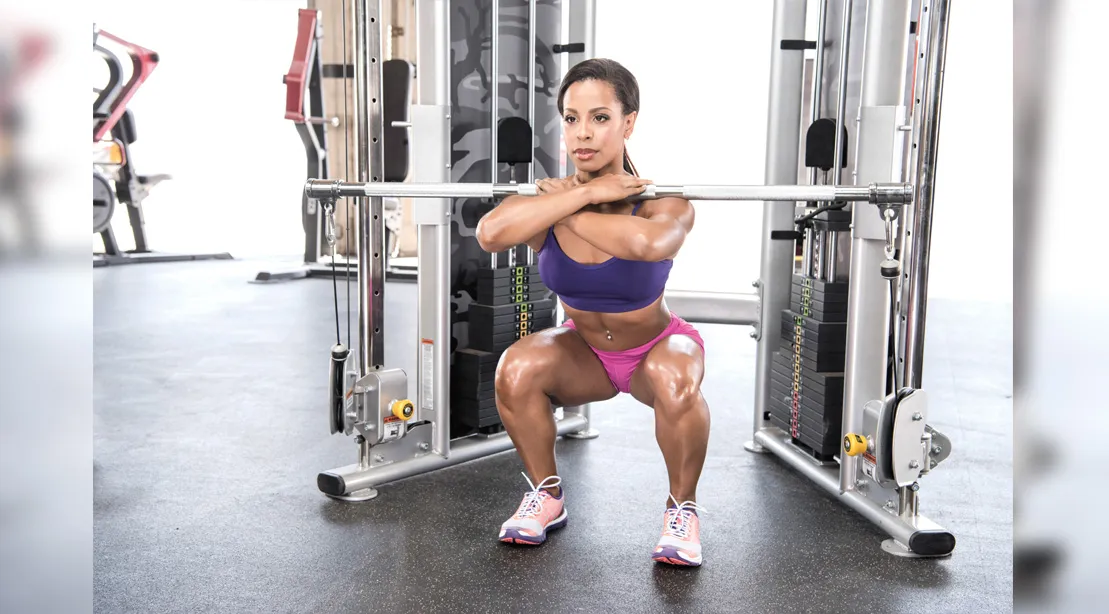
A cable front squat is still a squat: the knees and hips bend together, the quadriceps extend the knees, and the glutes contribute to standing up. The difference is how the load reaches you. Instead of a barbell sitting directly on the front of the shoulders, a cable attachment pulls from a fixed pulley toward the machine. That angled force makes standing position, handle height, and cable travel part of the exercise. You cannot evaluate it only by reading the number on the weight stack.
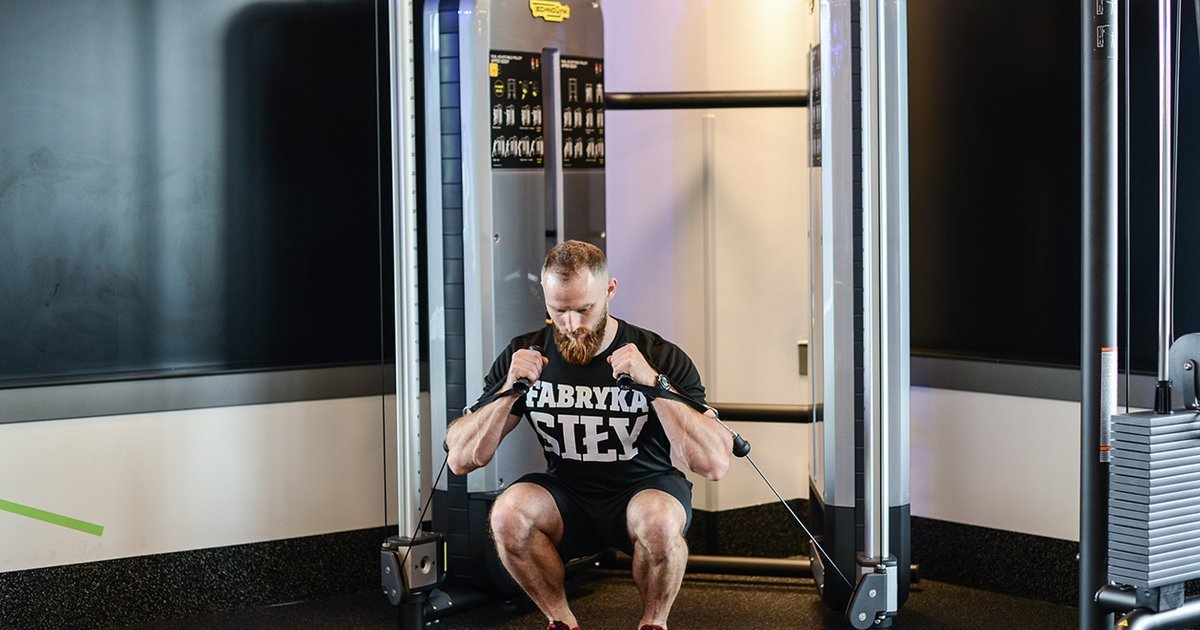
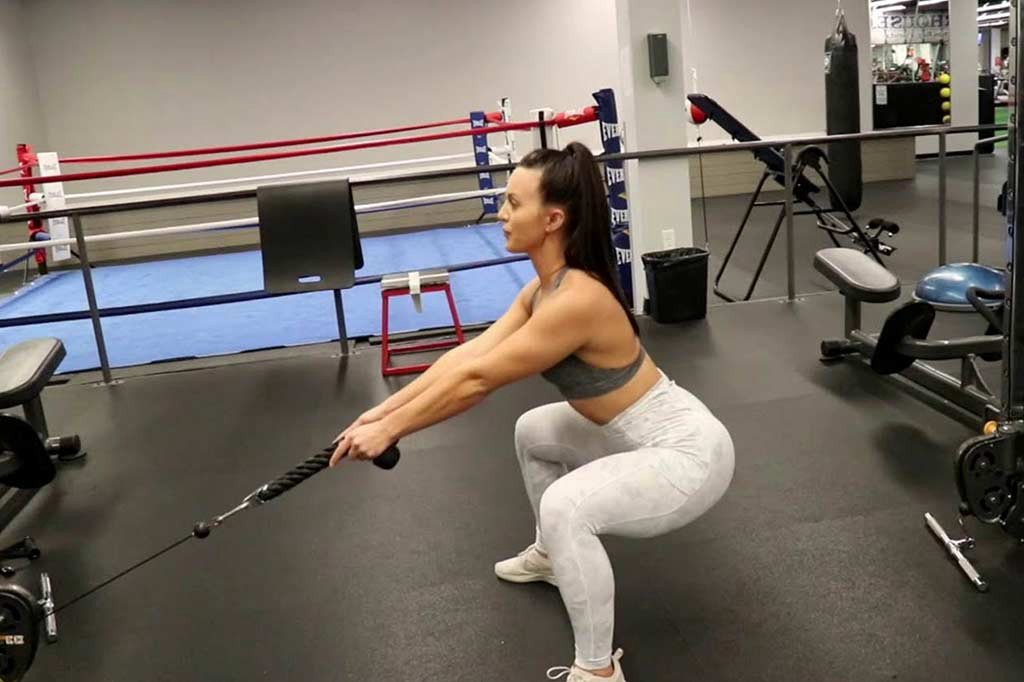
With a low pulley in front of you, the cable usually pulls forward and somewhat downward. Hold the attachment near the upper chest and you must resist that forward tug as you descend and ascend. This often encourages a fairly upright-looking squat, although an upright torso is not guaranteed by the machine and is not itself a measure of quad growth. Move a few inches closer to the tower and the direction of pull changes; choose a different attachment and the arm position changes too.
Think of this variation as a controlled, front-loaded way to accumulate leg work, especially when you want a different loading option from conventional barbell squats. It does not isolate the quads, eliminate balance demands, or prove superior for hypertrophy. An honest comparison needs similar depth, effort, range and weekly training exposure, not merely an exciting claim about continuous cable tension. Start by learning one setup you can repeat, then decide whether the exercise earns a spot in the program.
One useful test is whether you can lower at a measured pace without letting the stack dictate your movement. If you spend the entire set fighting for the handle rather than pushing through your legs, the configuration is probably the limiting factor.
Choose a single low pulley or two matching low pulleys
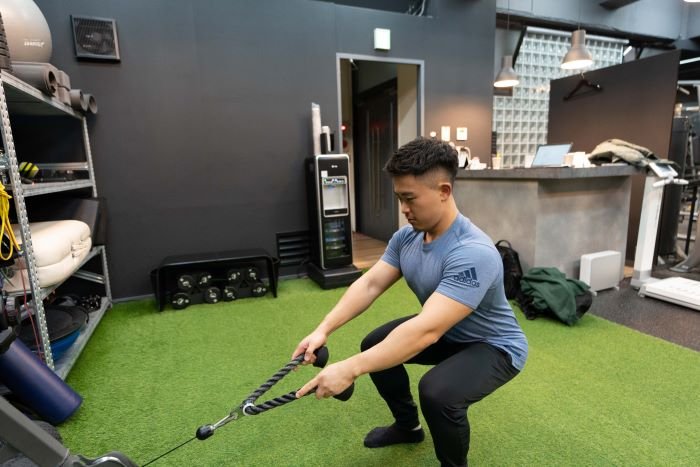
For the simplest version, put one adjustable pulley at or near its lowest setting, clip on a suitable straight bar, short handle, or rope, and face the machine. Bring the attachment close to the upper chest before stepping back enough to establish light tension. A single pulley is convenient, but it sends a single line of pull toward the center of the machine. Make sure you have clear floor space behind you and enough cable travel to complete the squat without the stack bottoming out or crashing against its stops.
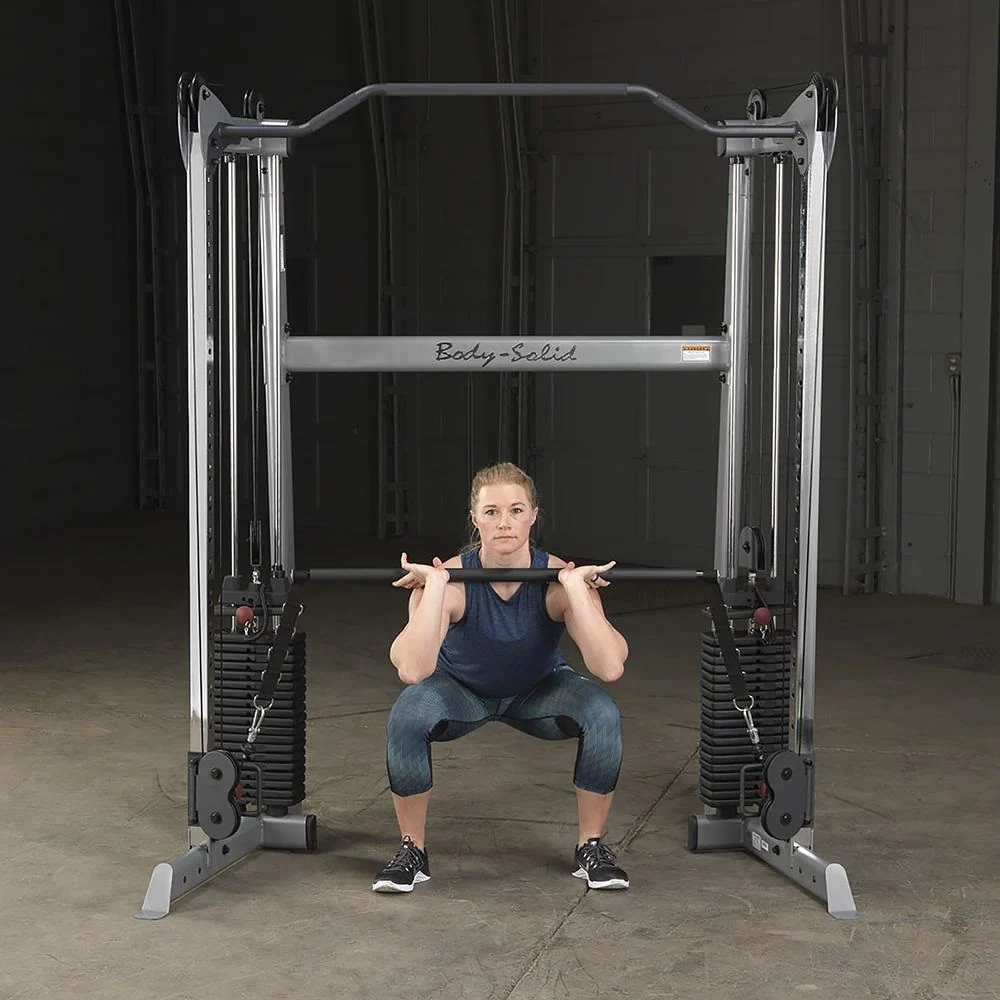
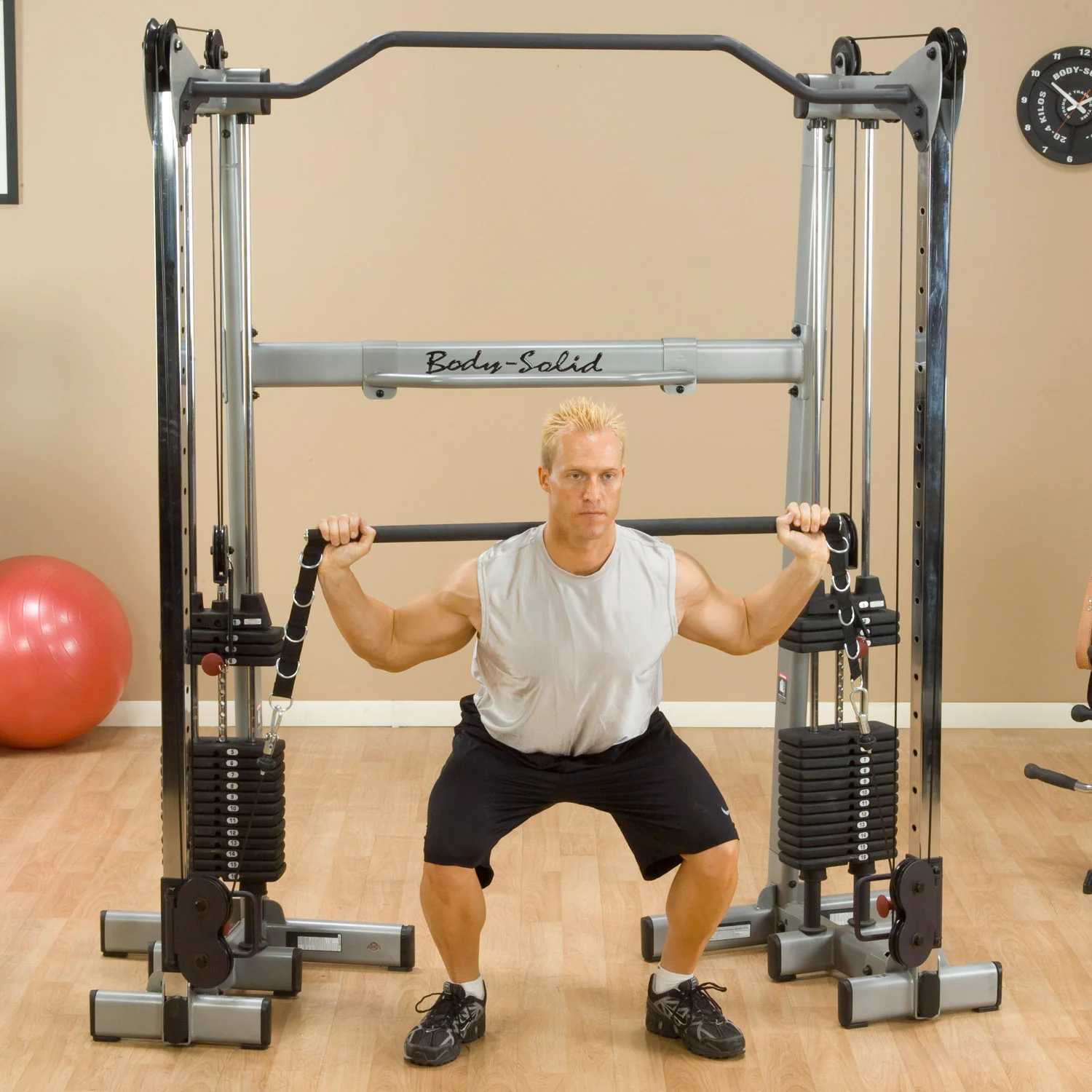
A dual-pulley version can be arranged between two towers. Set both pulleys low and at matching heights, select equal loads, and use two compatible handles near the shoulders. A purpose-made dual-hook bar is another option only when the attachment and both connection points are rated and intended for that use. Some lifters cross the two individual handle paths in front of the chest; others keep them uncrossed, depending on machine geometry and what stays comfortable. Neither layout deserves a blanket claim of being safer or more effective.
Before adding working weight, check that each carabiner is fully closed, the cables are not rubbing against the frame or each other, and the bar or handles cannot slip from the rack position. Do not improvise with a single-hook bar hung from two cables, clip a load to an unrated handle, or stand where an attachment could strike someone if you lose your grip. Confirm the usable cable travel and the machine’s posted loading limits. If you are uncertain about attachment compatibility, switch to a standard single-pulley setup rather than guessing.
For both versions, begin with the lightest resistance that lets you hold the attachment calmly for five slow repetitions. If the dual handles pull unequally, recheck the pulley heights, settings, attachment lengths and your stance before treating the difference as a strength imbalance. Cable ratios vary between machines, so a displayed stack number is not a reliable comparison between different stations.

Equipment Worth Exploring
Explore equipment, accessories and gear from our carefully selected range.
VOLTRA
Compact digital cable trainer with smooth, adjustable resistance.

Go-Tone Pro
Portable digital cable trainer with up to 66 lb (30 kg) of adjustable resistance.

Multi Pull Smith Rack MPHR-780
All-in-one rack with a Smith machine, functional trainer, lat pulldown and low row.

VForce Wall Trainer
Space-saving wall-mounted functional trainer with pivoting cable arms and variable resistance ratios.

VForce 2IN1
Half rack and pivot-arm functional trainer with switchable 1:1 and 2:1 pulley ratios.

VForce 3IN1
All-in-one rack combining an adjustable Smith machine, functional trainer, and free-weight station.

GymPin Ergo Handles
Pair of ergonomic cable handles shaped for comfortable triceps and pulling exercises.
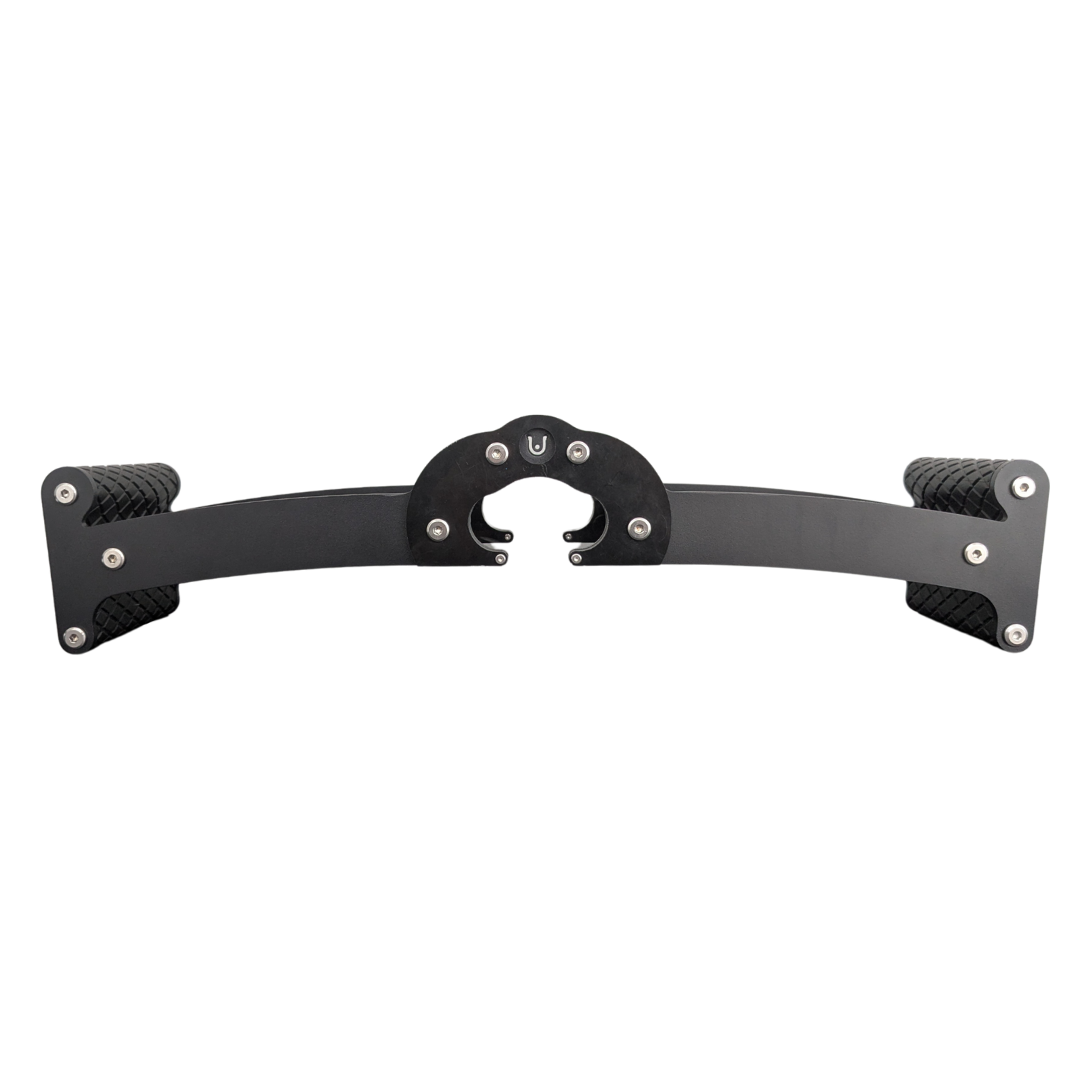
Back Bar
Multi-grip cable and landmine bar with a built-in deadlift jack.

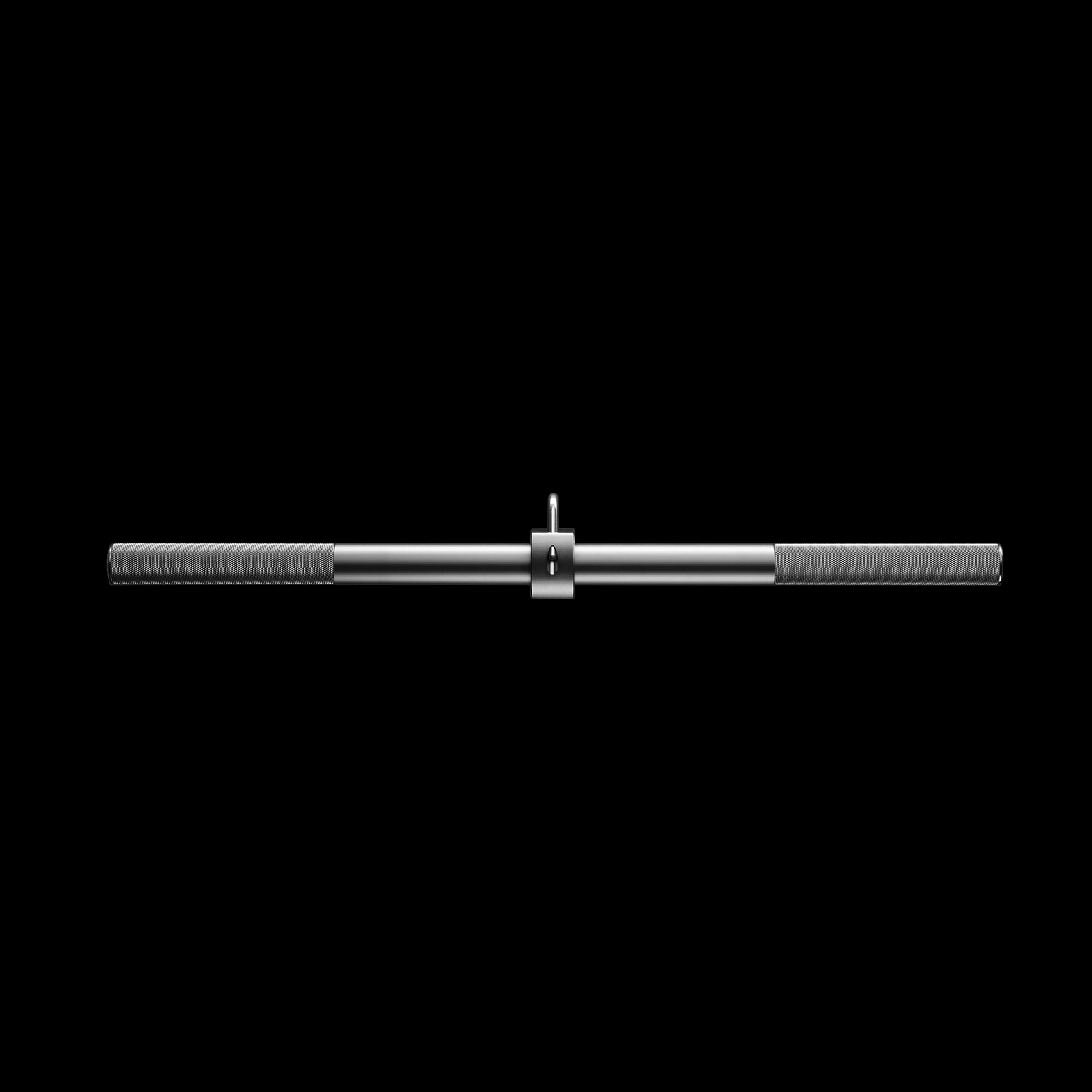
44in Dual Hook Bar
44-inch aluminum dual-hook straight bar for cable rows, pulldowns, and curls.
Build the front rack and own the descent
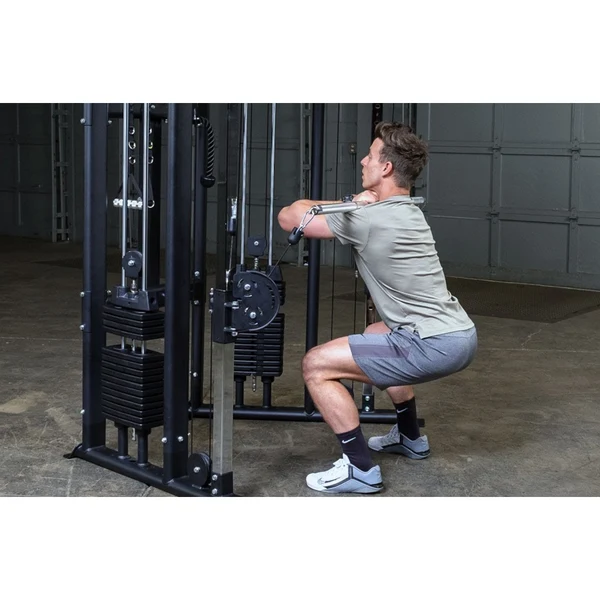
Stand about shoulder width to begin, with toes turned out only as much as your hips and knees find comfortable. Keep the attachment high against the chest or in a secure front-rack position rather than hanging from straight arms. When using a bar, let the attachment rest where the shoulders can support it comfortably and keep your elbows in a position that prevents it from rolling away. Two handles can sit beside the shoulders with the forearms relatively upright. The exact wrist angle is less important than an unhurried, repeatable hold.
Inhale and brace the abdominal wall as though preparing for someone to press firmly against your midsection. Initiate the descent by bending the knees and hips together. Let the knees travel in the general direction of the toes; they do not have to remain behind an imaginary line through the toes. Your foot should stay planted from heel to ball, and the weight should remain distributed over the midfoot rather than tipping entirely to either edge. Keep the handle position steady instead of using a curl or upright row to move it.
Descend to the deepest range you can repeat without losing foot contact, collapsing under cable pull, or provoking pain. Parallel thighs are a reasonable starting reference, not an obligatory depth for every build. Taller lifters, individuals with different hip anatomy and people using different shoes may arrive at different comfortable positions. If you must turn the movement into a forward lean to reach an arbitrary depth, use a slightly shallower squat and earn more range gradually.
Drive through the whole foot to stand, extending knees and hips together. Avoid jerking the cable with the arms or bouncing off the bottom. At the top, pause just long enough to confirm your balance and trunk position. Choose a rhythm such as two seconds down, a controlled transition, and a smooth ascent; it should look similar on the first and last quality rep, even when fatigue rises.

Leg Day Shirts & Workout Gear
Leg-day gym shirts and workout gear for lifters who never skip squats, lunges and lower-body punishment.


Squats R Us Shirt – Leg Day Gains & T-Shirt
Heavy lifts, good laughs, and a little “Squats R Us” energy.

9 Plates Squat Club Meme Shirt – Essential & T-Shirt
Show some leg-day attitude with a playful “9 Plates Squat Club” tee.

Leg Day Leg Sweater Squats & Meme T-Shirt
Bring “Leg Day” humor to your everyday gym style.

Squat Here | Edgy Workout Sweater | Gym Humor Meme Crew T-Shirt
Bring “Squat Here” humor to your everyday gym style.

I Love Squats Gym | Funny Valentine's Workout Pullover T-Shirt
For laid-back days and leg-day humor: “I Love Squats”.

Legendary Leg Day – Squat Meme Hooded Pullover Hoodie
Keep it laid-back with a little “Legendary Leg Day” attitude.

My Leg Hurts Leg Day & Squat Meme Fans Vest Tank Top
Train hard, laugh a little, and rep “My Leg Hurts”.
Troubleshoot the bottom, the weight stack and cable drift
If the stack clangs down at the bottom, the machine may be losing tension before your legs finish their range. Move your standing position slightly or adjust the pulley setting and verify cable travel with an unloaded rehearsal. Do not fix the problem by stepping so far back that the attachment hauls your torso forward. A better working position creates manageable resistance through the squat without dragging you off the spot you chose.
If your heels rise or your knees buckle inward, reduce the load and check whether your stance allows the knees to track comfortably. A small heel lift can change ankle demands, but it is not permission to abandon control or mask pain. If the front rack falls forward, the problem may be too much resistance for your upper body, a bar that will not stay seated, or an attachment that is poorly matched to this use. Try lighter handles held close rather than forcing a wrist position under a heavy bar.
Watch the direction of cable travel as you move. A single cable is not a counterbalance that magically makes every squat easier; it can pull the lifter toward the station. Dual cables can introduce sideways imbalance if the stacks, lines or handle positions differ. Film a moderate set from the side and front if necessary. Look for a stable foot, similar descent depth, cable clearance, and an attachment that barely changes position at the shoulders. Avoid drawing grand conclusions about muscle activation from how difficult your arms feel.
Stop a set if a connector opens, the cable snags, the pulley catches, you cannot stand without lunging toward the tower, or a sudden painful sensation occurs. Those are equipment or tolerance problems, not signs that an extra forced rep would be productive. Also reconsider the exercise if the cable station is too crowded to establish a safe working lane; a free-weight squat may be the more practical choice that day.
Compare cable front squats with goblet and barbell squats
A goblet squat keeps a dumbbell or kettlebell close to the torso. Its vertical weight does not pull toward a machine, so positioning is simpler and moving around the gym is easier. The eventual challenge can become holding a heavy bell securely rather than loading the legs further. A cable front squat trades that limitation for a weight stack and a different force direction, but the cable travel and attachment may then become the bottleneck. Neither automatically fixes a troublesome squat pattern.
A barbell front squat has a load supported on the front of the shoulders and asks you to stabilize it without a line pulling toward an anchor. It is typically the more straightforward option when your goal is to develop proficiency in heavy front-rack squatting and use heavier absolute loads. The cable version may be easier to set up for lighter-to-moderate accessory work, provided you have a suitable station. Compare the actual exercise demands rather than treating the stack display as equivalent to plates on a bar.
For quad-focused training, a stable leg press, hack squat, squat machine or leg extension may also make sense. These tools differ in support, loading and joint motion, so choose by the exercise you can perform consistently, the muscles you want to challenge and what equipment is available. If your knees tolerate deeper squatting well and the cable keeps your torso steady, the cable squat can be a useful part of a leg day. If your shoulders tire before your quads, a machine with more support may better match the goal.
For a short full-body or conditioning session, light cable squats can be paired with an upper-body pull or carry without pretending to be a maximal-strength test. That is a programming option, not a special physiological benefit of the cable itself. Keep the movements separate enough that each can be performed cleanly, especially when fatigue and crowded cable stations raise the chance of a handling mistake.
Equipment Worth Exploring
Explore equipment, accessories and gear from our carefully selected range.

GymPin Squat Wedges
Non-slip 15-degree squat wedges help elevate the heels for deeper quad-focused squats.

Studio V-Squat
Plate-loaded V-squat machine for supported lower-body strength training.

Leg Press/Hack Squat BPR-790
Convertible 45-degree leg press and hack squat machine with a broad footplate and band pegs.

Compact Leg Press CLP-700
Compact reverse-style leg press with a moving seat carriage and an adjustable footplate.


Leg Extension/Curl BCO-780
Leg extension and lying leg curl combo with plate loading, band pegs and a cable-loading option.


Cast Iron Kettlebells
Textured cast-iron kettlebells for swings, squats, carries, and full-body training.


A six-week progression that respects setup and effort
Use this as an optional accessory progression rather than a claim that six weeks will produce a specific amount of muscle growth. Train the cable front squat once or twice each week after your main lift or as the first leg movement on a lighter session. Leave at least enough recovery between hard leg sessions that you can reproduce the same squat depth and attachment control. Start with a load that challenges the legs while you could still complete several additional technically sound repetitions.
Weeks 1–2: establish the pattern. Perform two sets of eight to ten controlled repetitions, leaving about three to four good reps in reserve. Use an identical pulley height, cable attachment, foot position and depth reference across sessions. Record which station you used and where you stood relative to it. If a bar is awkward, return to handles before raising resistance. Finish each set with the same balance you had at the beginning.
Weeks 3–4: add repeatable work. If the setup is stable and the exercise feels productive, progress to three sets of eight to ten with about two or three good reps in reserve. Add repetitions within that range before selecting a heavier plate on the stack. Do not increase both volume and load substantially at the same time. Two pulleys should be progressed symmetrically unless a qualified coach has a specific reason to prescribe otherwise.
Weeks 5–6: earn a small load increase. Aim for three sets of ten to twelve with about two sound reps in reserve. When all three sets reach twelve with the same range and front rack, make the smallest practical machine increment and work back toward the lower end of the rep range. If that increment changes your torso angle, forces the handles forward or makes you chase the machine, keep the lower load and improve the repetitions instead.
After every session, record five things: the exact machine and attachment, the stack setting on each side, your stance or distance reference, reps and range, and the approximate reps you had left. A log that says only “cable squat 60 kg” hides most of what matters for comparison. Review whether the quads were meaningfully challenged, whether the upper body was the limiting factor, and whether your performance improved without equipment instability.
At the end of six weeks, keep the cable squat only if it fits the training goal. If it gives you controllable leg work without disrupting other lifts, retain it as an accessory. If machine setup is too fiddly or upper-body fatigue dominates, switch to a goblet squat, barbell front squat or stable leg machine. The goal is a repeatable stimulus and a clear training decision, not loyalty to a particular attachment.
Functional Fitness Shirts & Workout Gear
Functional-fitness shirts, tanks and workout gear for athletes who train strength, conditioning and everything in between.

Hybrid Athlete – Strength & Endurance Crewneck for Func T-Shirt
For laid-back days and lifting humor: “Hybrid Athlete”.

High Rocks Functional Fitness Tee
Show some lifting attitude with a playful “Hyrox High Rocks Gym Bro” tee.


Hybrid Athlete – HYROX Training Crewneck for Strength & T-Shirt
Show some gym-day personality with “Hybrid Athlete”.

Hybrid Athlete – HYROX Workout Checklist Gym Decal for Sticker
Give your everyday gear a playful “Hybrid Athlete” twist.

Lift Together Grow Stronger for Gym Buddies Who Train T T-Shirt
Show some gym-day personality with “Lift Together Grow Stronger”.


Forged in the Gym Tee
Show some lifting attitude with a playful “Forged in the Gym: Hephaestus God of Fire” tee.


Vive La Resistance Bands – Resistance Bands Warmup Reha Tank Top
Your gym-day look, with a playful “Vive La Resistance Bands” twist.