Advertising disclosure: This page includes affiliate product links that may earn us a commission, as well as products from our own store.
A wall slide can look almost too simple to matter: forearms on a roller, a short reach upward, then back down. For lifters, the useful part is having a repeatable way to practise an overhead reach before adding meaningful load. The drill becomes much less useful when the finish position comes from arching the lower back, forcing the wrists apart or chasing a burning sensation. Here is how to set up a forward-facing serratus wall slide, judge the movement and fit a small amount of practice into a normal upper-body workout.
Face the wall and let the shoulder blades move
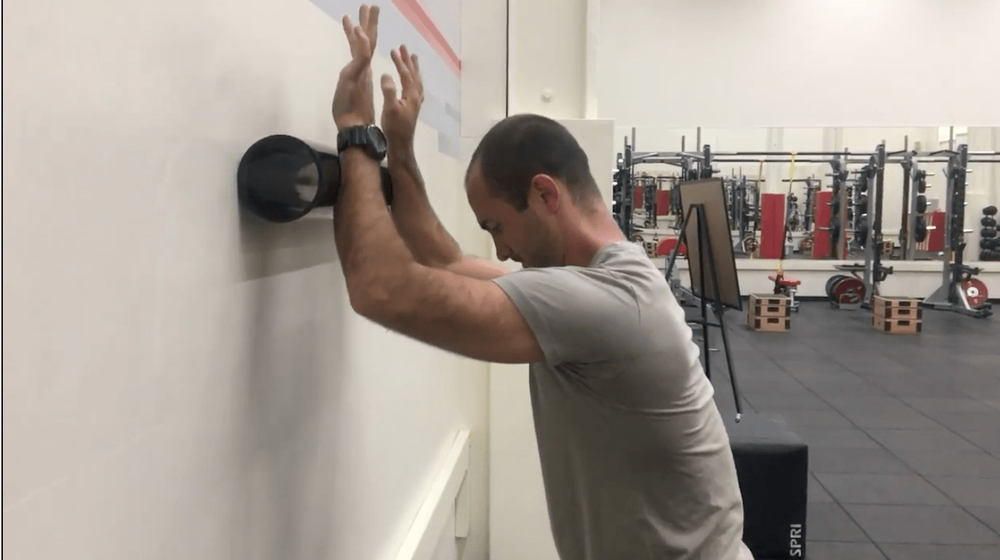
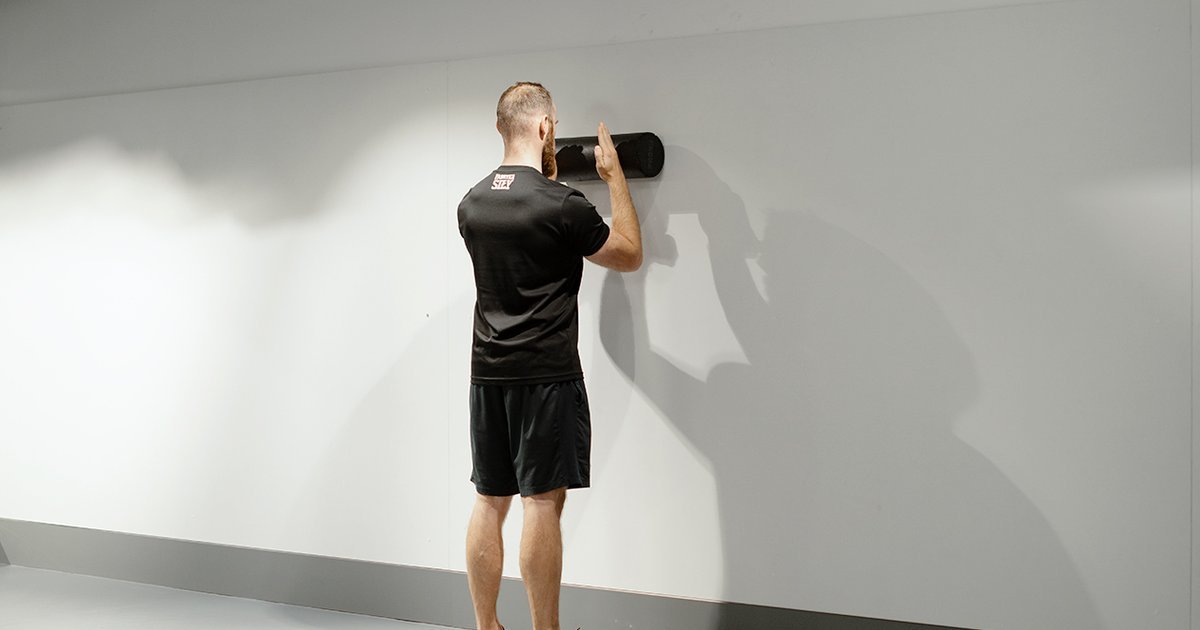
This version starts facing the wall, with a horizontal foam roller between your forearms and the surface. It differs from a wall angel performed with your back against the wall. Both involve raising the arms, but the contact points and movement task differ. Choose one version before comparing repetitions, range or difficulty; changing the exercise while keeping the same name makes a training log difficult to interpret.
The serratus anterior helps the shoulder blade move around the rib cage and contributes to upward rotation as the arm rises. The upper and lower trapezius also contribute to that rotation. Trying to squeeze your shoulder blades together and hold them down throughout an overhead reach works against the movement you are practising. Think about a smooth reach with the arms supported, rather than a rigid military posture.
A small 2006 experiment measured muscle activity in 20 healthy people during wall slides, the plus phase of a wall push-up and arm elevation in the scapular plane. Serratus activity did not differ significantly between exercises at 90 degrees. During wall slides and arm elevation, activity increased at higher arm angles. This supports the drill as an activation option, but it does not establish superior muscle growth, injury prevention or a diagnosis for an uncomfortable shoulder.
Treat the exercise as a movement task with a clear start and finish. An awkward first attempt does not prove that a particular muscle is asleep. The practical question is whether you can repeat a comfortable upward reach while keeping the rest of the setup reasonably consistent.
Build a setup you can repeat without wrestling the roller
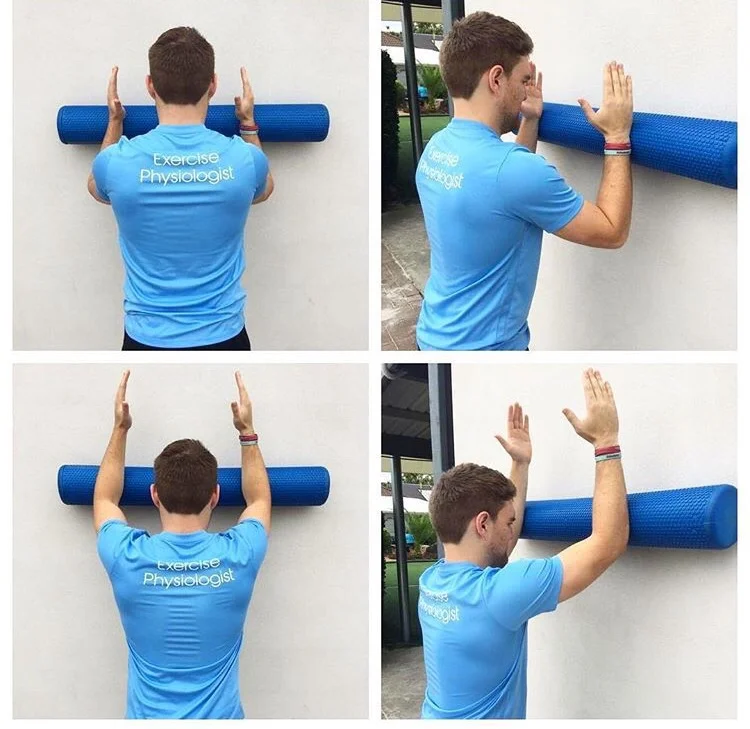
Use a clear wall and enough floor space to stand securely. Position the roller horizontally around shoulder height and rest the lower forearms against it, palms facing each other. Start close enough that you can maintain gentle contact without throwing your body forward. A small staggered stance can be convenient, but there is no prize for copying someone else's foot distance exactly. Different arm lengths and roller sizes change the geometry.
Begin without a band. Check that the roller can travel freely and that you can lower it again without catching an edge or losing contact. Excessively hard pressure can turn a light drill into a contest between your forearms and the wall. Use enough pressure to guide the roller; if it keeps slipping, adjust your stance and contact points before making the exercise harder.
Notice your ribs, pelvis and head in the starting position. You should be able to breathe without tipping your chest upward or jutting the chin forward. A side-view recording can help you see whether the torso position changes as the hands rise. Compare the beginning and end of one repetition rather than judging yourself against a photograph of someone with different proportions.
Make a brief setup note: which roller, approximate starting height, stance and whether a band was used. These details take less time to record than another round of guessing next session. Consistency makes a modest change in control easier to spot, while changing three setup variables at once makes improvement harder to explain.
Reach upward without borrowing range from your lower back
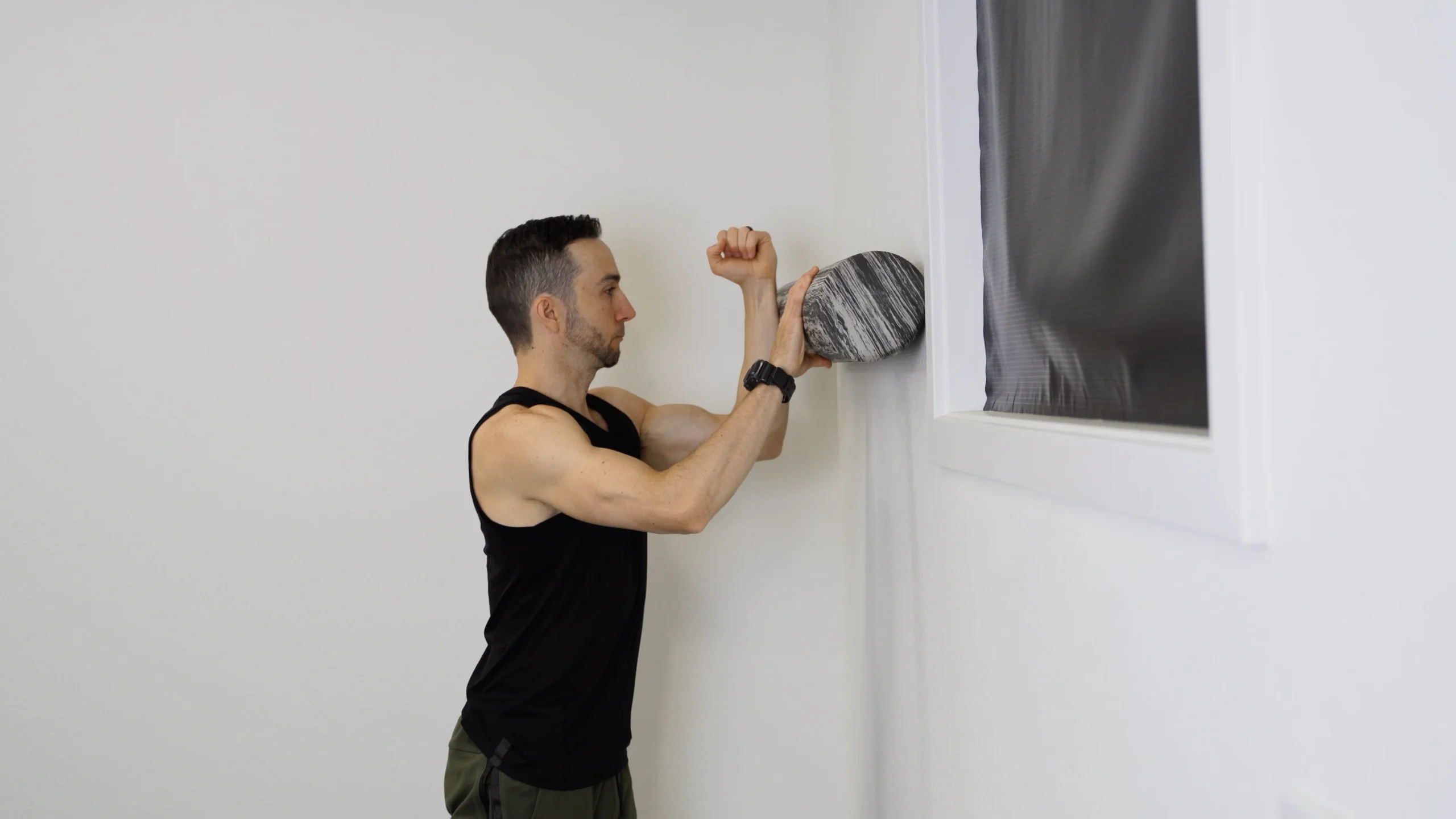
Roll upward slowly enough to notice what moves. Let the shoulder blades travel with the arms, keep gentle pressure through the forearms and return under control. The endpoint is the height you can manage comfortably today. You do not need to force the elbows straight, pin the shoulders down or reach an arbitrary mark above your head to earn a valid repetition.
Watch for a few visible changes: the ribs tipping sharply upward, a growing arch through the lower back, the head reaching forward or one forearm losing the roller. These are useful observations about the task, not proof of a structural fault. Shorten the reach and try again. If the movement becomes smoother at a lower height, record that range instead of counting a much higher but less controlled finish.
Separate effort from discomfort. Mild muscular work is different from a sharp pinch, spreading symptoms or increasing pain. Stop a painful repetition rather than trying to stretch through it. Persistent pain, numbness, weakness or difficulty using the arm warrants an individual assessment. A generic drill cannot tell you which tissue is involved or replace instructions given after an injury or surgery.
For a simple comparison, film one comfortable repetition from the side at the start of a session and another after a few easy practice reps. Keep the camera position and starting setup similar. Look for a steadier torso and a controlled return, rather than assuming that a few extra centimetres immediately represent a lasting mobility gain. Temporary familiarity and a different camera angle can both change what you see.
Add a band only when it preserves the same movement
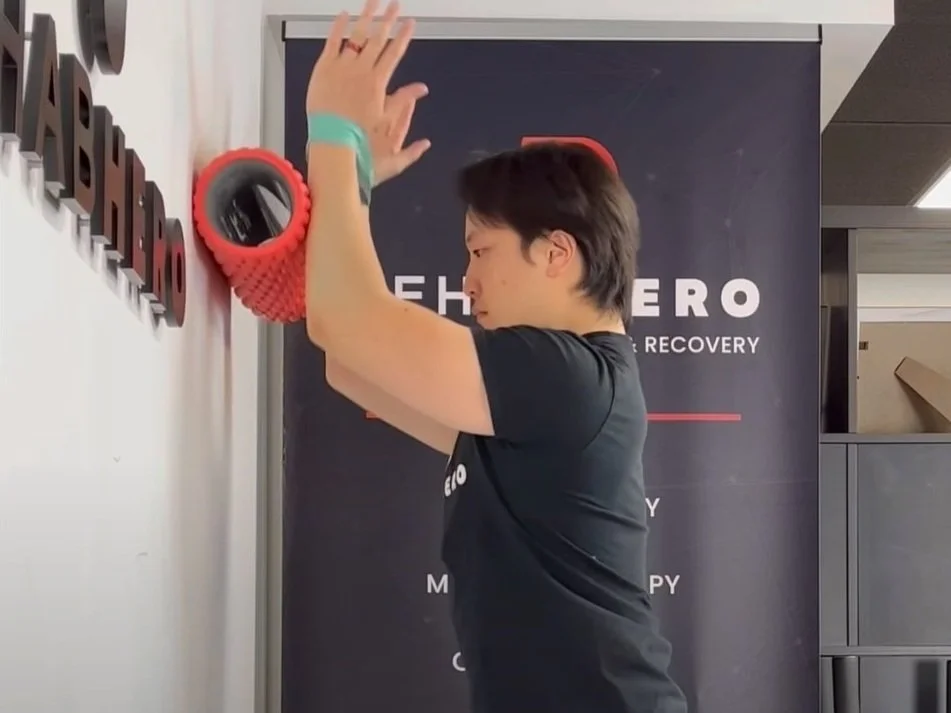
A light loop around the wrists adds another task: maintaining the forearms in a comfortable, roughly parallel position as the roller travels. It should not require maximal outward pulling. If the wrists spread aggressively, the elbows collapse inward or the roller becomes hard to guide, remove the band. More resistance is useful only when you can still perform the movement you intended.
Progress one variable at a time. You could repeat the same reach more consistently, add a brief pause, or try a slightly firmer band. There is no requirement to advance all three. For example, keep the unbanded setup for two comparable sessions, then test the lightest loop while keeping the range and tempo similar. This is a practical coaching example, not a validated progression schedule or a promise about results.
If adding a band makes the movement less comfortable, returning to the easier version is a sensible adjustment. Likewise, a roller that works well for floor massage may feel awkward between the forearms and wall. Choose a size and surface you can guide without strain. The purpose is controlled practice; buying a harder roller or stronger loop is not an achievement by itself.
Keep this small drill separate from your main training loads. Your ordinary workout might still use dumbbells, a bench, cable handles or a cable machine for presses and rows. Those exercises can be progressed and logged on their own terms. None of that equipment is required to make the wall slide count, and an easy warm-up does not give permission to jump straight to a heavy working set.

Equipment Worth Exploring
Explore equipment, accessories and gear from our carefully selected range.


Rubber Hex Dumbbells
Rubber-coated hex dumbbell pairs with a stable shape for home and commercial strength training.


FID Bench MAX
Adjustable bench offering flat, incline, and decline positions + adjustable headrest.

GymPin Ergo Handles
Pair of ergonomic cable handles shaped for comfortable triceps and pulling exercises.

VOLTRA
Compact digital cable trainer with smooth, adjustable resistance.

VForce Wall Trainer
Space-saving wall-mounted functional trainer with pivoting cable arms and variable resistance ratios.
Use a small warm-up dose and judge the workout separately
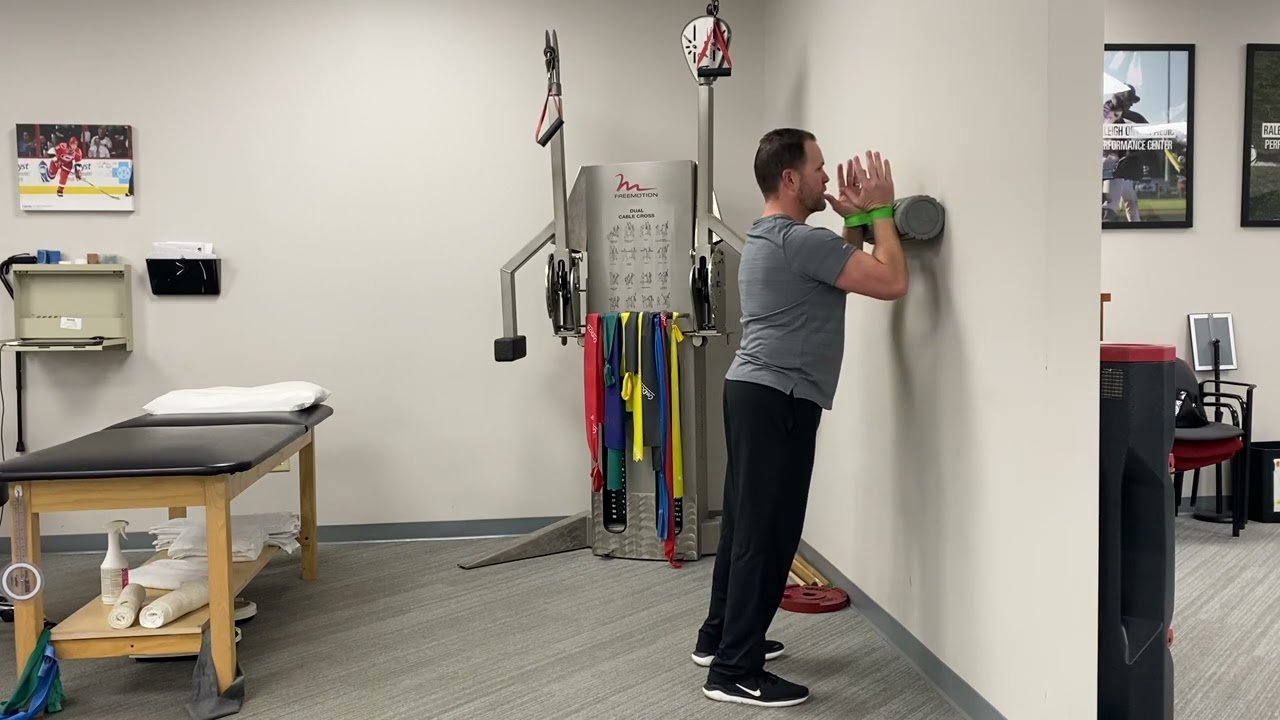
If the movement is comfortable, try one easy set of six controlled repetitions before an upper-body session. Keep enough effort in reserve that the drill does not become a tiring workout of its own. This is an optional starting example for healthy lifters, not a rehabilitation prescription. Follow it with the normal lighter preparation sets for the presses or rows you actually plan to train.
Write down what you did rather than only whether it felt good. A useful entry might read: no band, same roller, six reps, comfortable reach, ribs steady, no symptoms. Next session, repeat the setup before changing it. If you add a loop, note its resistance or colour and keep everything else as similar as practical. Colour alone is not a universal resistance scale across brands.
Evaluate the main workout independently. Record the press or row variation, load, repetitions and effort you normally track. A smoother wall slide does not automatically mean a stronger overhead press, and a better press session cannot establish that this drill caused the improvement. Sleep, overall fatigue, exercise order and load selection can all change the day. Keep the drill because it is useful and manageable, not because you need a new explanation for every good set.
After several comparable sessions, decide whether the practice has earned its place. You may keep the same easy version, gradually adjust one detail or remove it when it adds little. The aim is a dependable preparation habit that leaves time and energy for training. Smooth repetitions and sensible progression are more useful than a complicated warm-up that changes every week.

Funny Gym Shirts & Workout Gear
Funny gym shirts, tanks, hoodies and workout gear for lifters who like training hard.

Shoulder Press Dost Thou Even Press Medieval Knight Cre T-Shirt
Show some gym-day personality with “Shoulder Press”.

Vive La Resistance Bands – Resistance Bands Warmup Reha Tank Top
Your gym-day look, with a playful “Vive La Resistance Bands” twist.

Doctor Delts Gym Villain Funny Gym Hoodie
Show off your superhero humor in a laid-back “Doctor Delts Gym Villain” hoodie.

Control Your Gains & Your Mind Stoic Sigma T-Shirt
Bring “Control Your Gains & Your Mind Stoic Sigma” humor to your next gym day.

Progressive Overload Milo Tee
Bring “Progressive Overload Milo Bull” humor to your next gym day.


Brain and Biceps Tee
Make gym days more fun with “Mind Muscle Perfection Brain and Biceps” style.

Doctor Discipline Gym Villain Sweatshirt Funny Gym
Keep things casual with a little “Doctor Discipline Gym Villain” attitude.

Swole Jesus Lateral Raises Tank
Bring “Swole Jesus Lateral Raises” humor to your next lifting session.

Lift Smart Brain Weight Plate Mind Muscle Connection 45 Sticker
Put “Lift Smart Brain Weight Plate” gym humor on your laptop, bottle, or gym gear.