Advertising disclosure: This page includes affiliate product links that may earn us a commission, as well as products from our own store.
A heavy set often starts fast and finishes with a slow, grinding rep. That change is more than a feeling: as fatigue accumulates, the bar usually moves less quickly even when the weight stays exactly the same. Coaches who care about explosive intent have long experimented with splitting work into smaller chunks. Instead of forcing ten consecutive repetitions, they might pause briefly after every two or three.
A synthesis of 37 studies involving 674 participants compared traditional sets with cluster sets and two varieties of rest redistribution. The result was a consistent acute advantage for spreading recovery through the workout: movement velocity was generally better preserved. But the important qualification is that faster repetitions during a workout do not automatically mean more muscle or bigger one-rep-max gains months later. Here is what the comparison means, where its limits lie, and how a lifter can use it without turning a normal session into a stopwatch marathon.
Traditional Sets, Cluster Sets and Rest Redistribution Are Different Tools
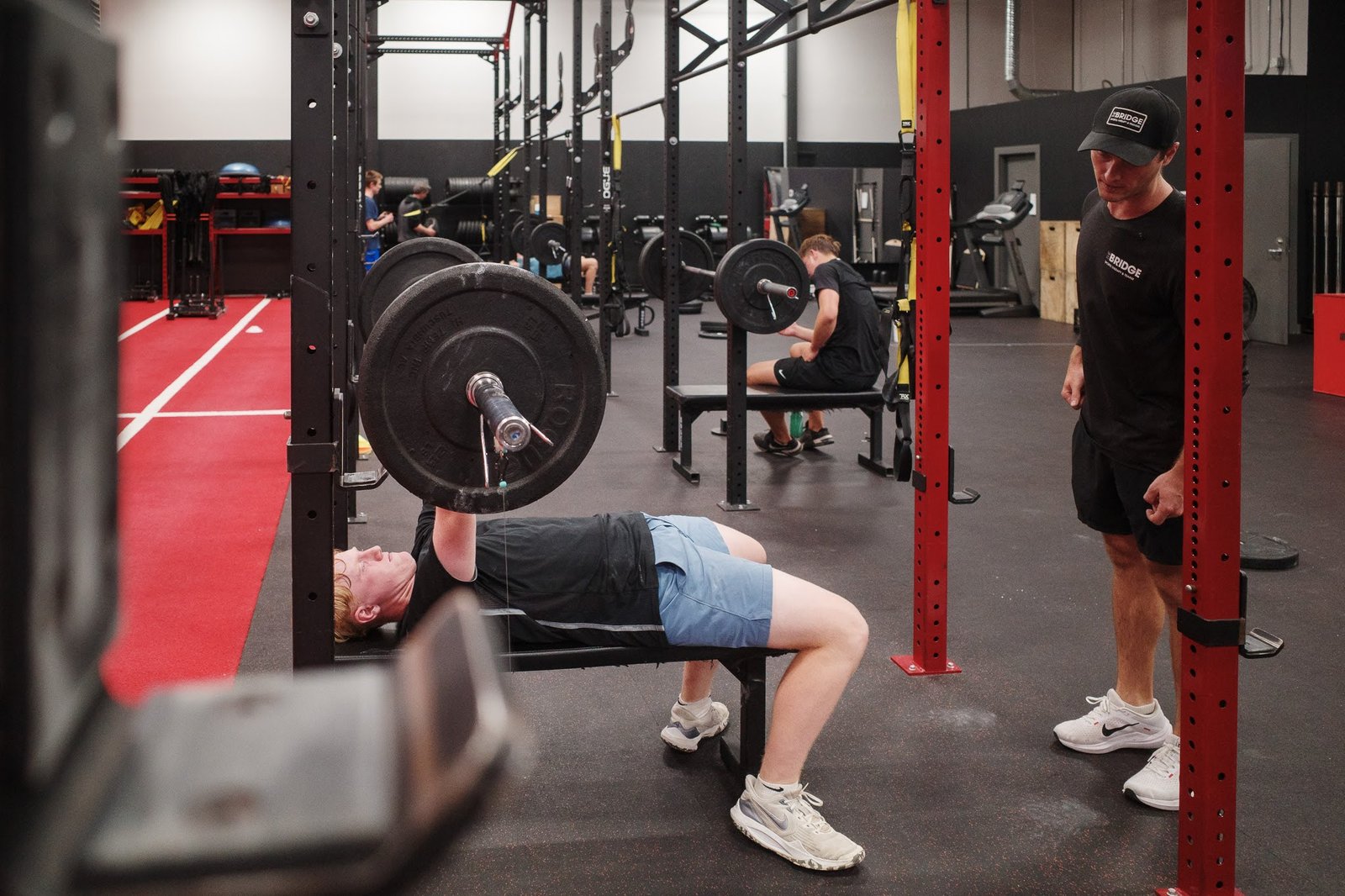
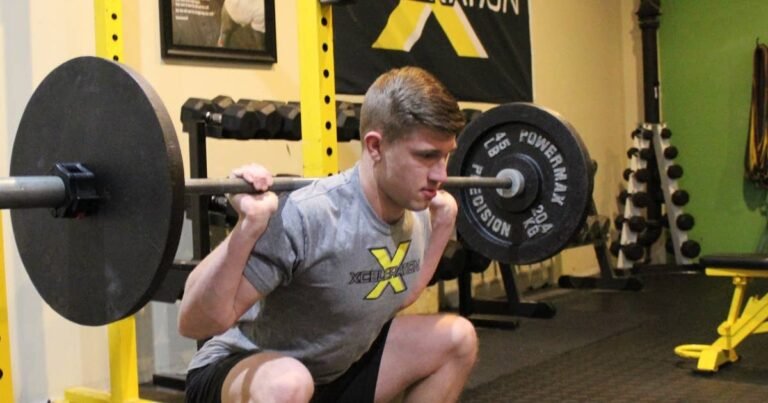
In a traditional structure, a lifter completes the assigned repetitions without planned breaks inside the set, racks the bar and then rests. A prescription of four sets of six squats, for example, means four uninterrupted bouts of six reps. Each set begins after a normal between-set recovery period. By the final repetition, the lifter may have to fight considerably more fatigue than on the first.
A cluster set splits those six reps into smaller groups while inserting brief, planned rests. A six-rep set might become 2 + 2 + 2 reps with 15–30 seconds between pairs. The load and total repetitions can remain the same. Some cluster prescriptions add these mini-rests on top of the usual between-set rest, so the workout becomes longer. That extra recovery is not a free advantage when comparing training efficiency.
Rest redistribution starts with a fixed rest budget and allocates it differently. Instead of four uninterrupted sets followed by long pauses, a lifter can perform more frequent, smaller bouts with shorter recovery periods, preserving roughly the same overall rest time. Intra-set redistribution puts breaks within the original sets; inter-set redistribution modifies the between-set pattern. The labels describe where the rests go, not a single universal exercise plan.
The distinction matters whenever somebody claims clusters are inherently superior. A protocol with much more total recovery should often produce fresher later repetitions. An equal-rest comparison asks the harder practical question: can reorganizing the same minutes keep bar speed higher? Both approaches are legitimate; which one is valuable depends on whether the lifter cares more about movement quality, session density or accumulated fatigue.
What the 37-Study Comparison Found for Bar Speed
The combined evidence included 37 studies and 674 people, most of whom were men. Researchers looked at immediate movement outcomes such as mean, mean propulsive and peak repetition velocity. This was not a trial where hundreds of lifters followed one program for twelve months and then compared muscle scans. It was a network of short-term comparisons that estimated how different set structures affected how quickly repetitions moved within sessions.
Against traditional sets, cluster sets preserved mean velocity with a standardized effect estimate of 0.60. Intra-set rest redistribution showed an estimate of 0.41, and inter-set redistribution 0.42. These are standardized differences, not percentages. They should not be interpreted as a promise that someone’s 100 kg squat will move 60 percent faster. The specific loads, exercises and protocols varied across the underlying experiments.
For peak velocity, cluster sets and intra-set rest redistribution also showed advantages over continuous sets, with estimates of 0.48 and 0.39 respectively. The interval for the inter-set approach crossed the no-difference threshold, leaving greater uncertainty about that particular peak-speed comparison. Overall, the pattern makes intuitive sense: short recovery periods often prevent later repetitions from slowing as dramatically.
However, direct comparisons among cluster sets and the two rest-redistribution versions found no clear evidence of practically meaningful differences in either mean or peak velocity. Ranking probabilities favored cluster sets, but ranking first is not the same as demonstrating a large or decisive advantage. A small difference in study rankings should not make a lifter abandon a schedule that already achieves the intended training outcome.

Equipment Worth Exploring
Explore equipment, accessories and gear from our carefully selected range.


Competition Plates
Competition-style bumper plates for Olympic lifts and loaded strength training.

Foldable Wall Rack
Wall-mounted folding squat rack designed to save floor space between workouts.



Speed Collar
Quick-release collars designed to secure weight plates on standard two-inch Olympic bars.

GymPin Squat Wedges
Non-slip 15-degree squat wedges help elevate the heels for deeper quad-focused squats.

Grip Plates
Rubber-coated weight plates with handholds for loading barbells and machines.

Multi Pull Smith Rack MPHR-780
All-in-one rack with a Smith machine, functional trainer, lat pulldown and low row.
Why a Faster Bar Is Not Proof of More Gains

A set’s mean velocity is a useful performance measurement, especially when the goal is to repeat high-quality explosive efforts. It tells you something about how much speed the lifter could sustain with a particular weight on that day. But a faster bar is not a direct measurement of hypertrophy, future one-rep-max strength or injury risk. These outcomes require different tests and, for muscle growth, a longer period of training.
Consider two lifters who each perform 24 squats. One does four continuous sets of six, and the other divides the work into mini-sets. The second lifter may show less bar-speed decline, but this does not prove that the session delivered a larger stimulus to the quadriceps. Training close to muscular failure, the number of challenging sets, range of motion and progression across weeks remain important variables. Splitting every set can change fatigue and effort, which may also change the training stimulus.
Longer-term evidence is more mixed than a headline about bar speed might suggest. One separate synthesis of 25 studies with 573 participants found a small benefit of cluster training for some lower-body explosive power measures, while pooled strength and jumping results were broadly comparable to traditional training. Another synthesis of 15 studies reported advantages of rest redistribution for certain measures of mean power, torque and perceived effort, but not every strength or speed outcome improved.
These findings fit together without being identical: a method can help keep repetitions crisp today while offering little additional benefit for a particular outcome next season. Ask what you want to improve. If you are practicing speed under load, protecting movement quality is part of the target. If you are mainly chasing larger arms or stronger maximal lifts, it is harder to justify a complicated structure solely from an acute velocity result.

Powerlifting Shirts & Lifting Gear
Powerlifting shirts and gym gear for squat, bench and deadlift lifters who live for heavy numbers.


I Love Iron Crewneck Pullover Sweater Iron Man Gym Appa T-Shirt
For laid-back days and superhero humor: “I Love Iron”.


Funny Lift O'Clock Gym | Workout Sweater For Gym Bros & T-Shirt
Bring “Lift O'Clock” humor to your everyday gym style.

Sir Liftalot Gym | Funny Medieval Knight Bodybuilding V Tank Top
Add some medieval attitude to training with “Sir Liftalot”.

The Lifting King | Bodybuilding Lion Meme Workout Pullo T-Shirt
Keep things casual with a little “The Lifting King” attitude.

Barbell Cross Is My Religion & Bros T-Shirt
Rep “Barbell Cross Gym is My Religion” humor in and out of the gym.

Uncle Sam Squats Funny Patriotic Gym – USA Meme Hooded Hoodie
Make your off-duty look more fun with “Uncle Sam Squats Funny Patriotic”.

Deadlift Pink Skull Gym Decal for Powerlifting Leg Day Sticker
Give your everyday gear a playful “Deadlift” twist.

Iron Is My Therapy – Lifting Bodybuilding Powerlifting Tank Top
Your gym-day look, with a playful “Iron Is My Therapy” twist.
Who Benefits Most from Breaking Sets Into Clusters?
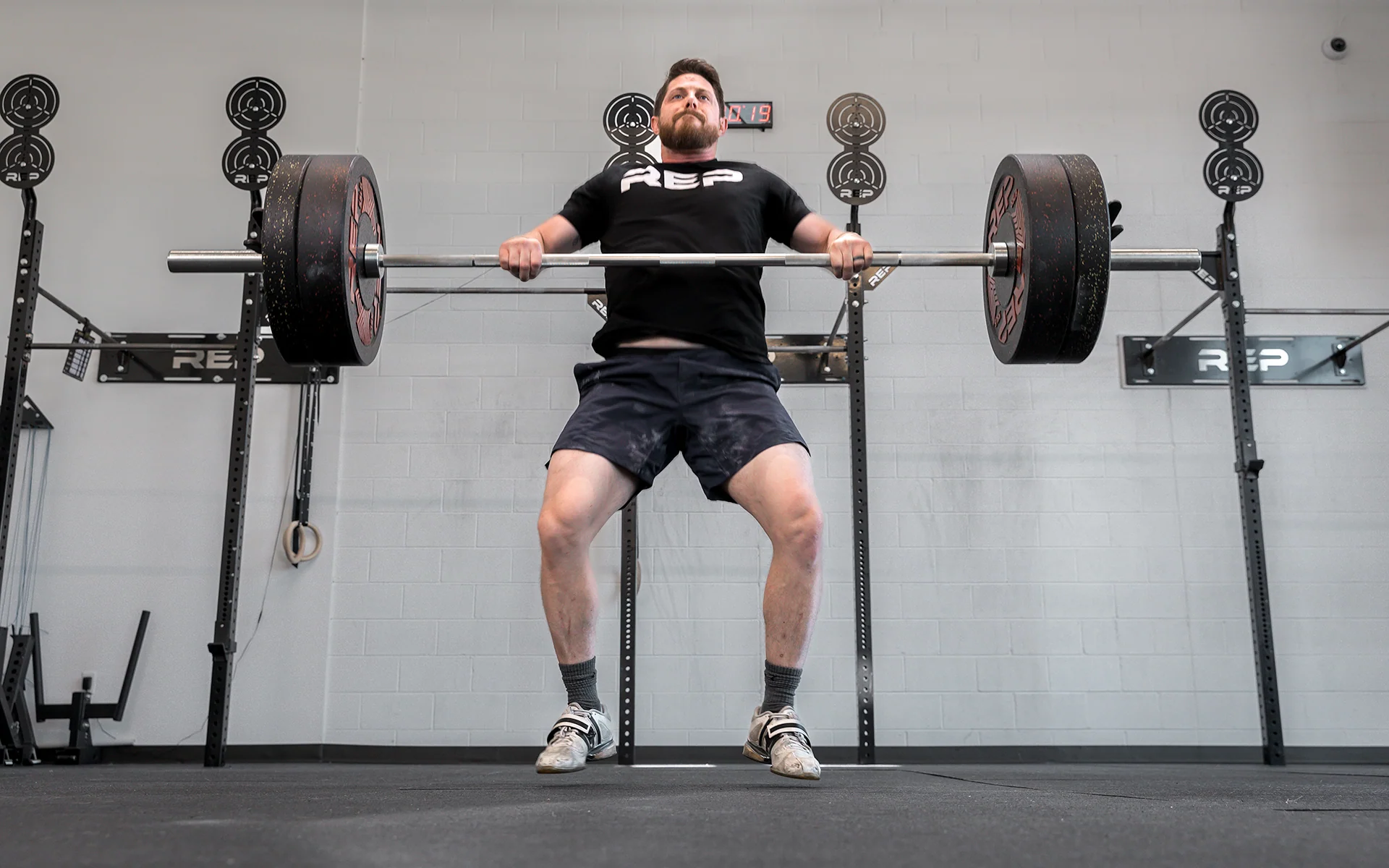
Power-oriented sessions are an obvious candidate. Olympic-lifting derivatives, loaded jumps, speed squats and dynamic presses depend on deliberate acceleration and technical consistency. If the fifth rep of an explosive movement is clearly slower and sloppier than the first, a short pause can preserve intent for the rest of the work. This does not mean trying to move a maximal squat recklessly fast; the exercise and its safety requirements still define what an appropriate repetition looks like.
Sport athletes may also appreciate preserving repetition quality when lifting is only one part of a busy week. A field-sport player who already has sprints, jumps and practices to recover from may prefer shorter clusters rather than a few grinding sets that leave a lot of residual fatigue. The tradeoff is time, particularly if extra intra-set pauses are added to an unchanged between-set rest prescription.
For general strength sessions, rest redistribution may be the more practical compromise. Suppose you have a set amount of rest time available. Breaking a block of work into shorter bouts can make late repetitions feel more controlled without requiring a substantially longer visit. The exact structure should still be tested against the lifter’s workload and exercise. Switching every set from six reps to singles is not necessary, and may make simple training inconvenient.
Technical beginners should establish consistent movement and sensible loading before obsessing about a velocity trace. A new lifter benefits more from learning a stable squat path than from selecting an advanced cluster algorithm. Experienced lifters can use the method selectively: one explosive exercise with mini-rests, followed by straightforward hypertrophy work, often makes more sense than reorganizing every curl, row and calf raise.
Cluster Sets for Power, Traditional Sets for Hypertrophy?
It is tempting to turn the evidence into a rigid split: clusters for athletic power and uninterrupted sets for muscle. Training is not that binary. Both methods provide mechanical loading, both can be programmed hard enough to produce progress, and both can be used by someone who wants strength and size. The real difference is the immediate distribution of effort and recovery.
For muscle-building accessories, uninterrupted sets are often simpler. A ten-rep row or leg extension creates a manageable block of work, and the slow final repetitions are not automatically defective. Going sufficiently close to the intended effort target without breaking form can be useful. Adding 20 seconds after every pair of curls may merely lengthen the workout without improving the overall weekly stimulus.
For heavy compound lifts, clusters might help when fatigue makes technique deteriorate. For example, a lifter who wants six technically consistent moderate-heavy squat repetitions might perform three pairs with a short pause between them. That version can be more comfortable for practice at a challenging load. But do not immediately equate a cleaner set with a superior hypertrophy set; compare the resulting effort, total sets and recovery across the week.
If maximal strength is your priority, keep specific heavy practice and sound progression in the plan. If muscle size is your priority, track hard work across a full range of motion and adequate recovery. If acceleration is your priority, protect fast repetitions and stop or adjust when speed visibly collapses. The set structure should serve that goal rather than becoming a brand-new goal in itself.
Equipment Worth Exploring
Explore equipment, accessories and gear from our carefully selected range.
VOLTRA
Compact digital cable trainer with smooth, adjustable resistance.

VForce 3IN1 Max
Six-post all-in-one rack with Smith machine, functional trainer, and variable-force cables.

VForce 2IN1
Half rack and pivot-arm functional trainer with switchable 1:1 and 2:1 pulley ratios.

Open Hex Bar
Open-frame trap bar with multiple handles for deadlifts, carries, and lower-body training.


Safety Squat Handles
Barbell squat handles that reduce shoulder positioning demands during high-bar squats.

Rubber Hex Dumbbells
Rubber-coated hex dumbbell pairs with a stable shape for home and commercial strength training.

Lever Arm Multi Press LMP-650
Multi-press with independent lever arms and an integrated adjustable bench for upper-body training.

GymPin Barbell Row Handle
Heavy-duty handle attachment for barbell, landmine and T-bar rows.
A Four-Week Experiment to Find Your Useful Rest Pattern
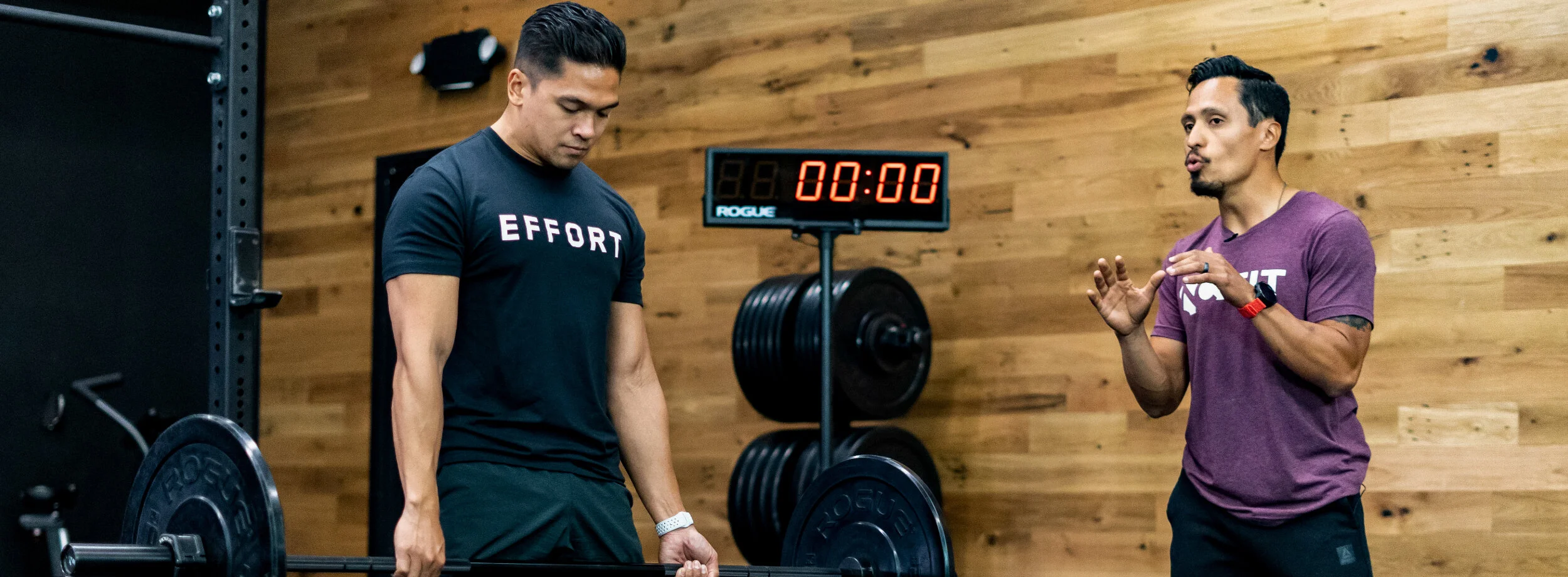
Start with one exercise, not your entire program. Choose a squat, bench press or other well-practiced lift where you can repeat technique reliably. Use a load you handle comfortably for several clean repetitions and log your normal version first. Keep the exercise, load, warm-up and intended total repetition count similar when you compare formats. Do not test with a genuine max-effort lift or without appropriate safeties.
Week 1: perform three traditional sets of six at a controlled, repeatable effort, resting about two to three minutes between sets. Record whether later repetitions become noticeably slower, your approximate reps in reserve and the time the block takes. Week 2: divide each set into three mini-sets of two reps with 15–20 seconds of rest, keeping the external load unchanged. Time the full block carefully because those mini-rests can add minutes.
Week 3: try a rest-redistribution alternative by performing six shorter sets of three with a more frequent rest schedule while keeping the overall planned rest budget comparable to your traditional week. This is a practical illustration, not a direct reproduction of every experiment included in the review. Because the example changes set count and repetition distribution, keep total reps in the block aligned across conditions and document the exact rest pattern you used. If your baseline was 18 repetitions, the comparison remains 18, not 24.
Week 4: return to the format that best matches your goal. Compare the last rep’s visible speed, consistency, perceived effort, session duration and how you feel on the next training day. A reliable velocity tracker can add objective data, but a notebook and consistent technique can still answer the practical question. Prefer the format that gives you the desired performance without consuming disproportionate time or creating a recovery problem.
Do not treat one unusually energetic workout as a verdict. Sleep, food, training order and accumulated fatigue can change performance from week to week. Repeat your preferred approach for several sessions before drawing strong conclusions. The larger message is simple: there are multiple workable ways to distribute your rest, and the research does not require everyone to choose the same one.
Bodybuilding Shirts & Workout Gear
Bodybuilding shirts, tanks and gym gear for lifters chasing muscle, size, symmetry and the pump.

Science Based Lifting Rick And Morty Inspired Hoodie
Bring “Science Based Lifting” gym humor to lazy days and post-workout plans.

Funny Hustle For That Muscle Gym | Greek God Meme Muscl Tank Top
Train hard, laugh a little, and rep “Hustle For That”.

– Muscle Inflation Graph Meme Hooded | Gymbro Economics Hoodie
Bring “Muscle Inflation Graph Meme Hooded” gym humor to lazy days and post-workout plans.

I Lifted Today Patriotic – 4th Of July Shirt & USA Sticker
Give your everyday gear a playful “I Lifted Today Patriotic” twist.

Mike Mentzer Heavy Duty Old School Bodybuilding for Hig Hoodie
Make your off-duty look more fun with “Mike Mentzer Heavy Duty”.

Live Love Lift Crewneck Pullover Sweater Workout Gym Li T-Shirt
Add a playful “Live Love Lift” touch to your casual rotation.

Eat Big Lift Big Get Big Bulking Season Pizza Meme Sticker
A fun “Eat Big Lift Big Get Big” touch for bottles, laptops, and lockers.

I Am The One Who Lifts Breaking Bad Sweater & T-Shirt
Add a playful “I Am The One Who Lifts” touch to your casual rotation.

Massquatch Bigfoot Sasquatch Decal Water Bottles & Sticker
A fun “Massquatch Bigfoot” touch for bottles, laptops, and lockers.

Iron Knight Motivational Sweater & Fans Meme T-Shirt
Show some gym-day personality with “Iron Knight”.