Advertising disclosure: This page includes affiliate product links that may earn us a commission, as well as products from our own store.
Rest-pause sets promise a simple trade: break a demanding effort into smaller bursts, take brief rests and continue with the same load. The important question is what that trade actually buys. An eight-week comparison in trained men found a squat-strength advantage for rest-pause over traditional sets, but no clear difference in thigh muscle-thickness changes between the methods. That makes rest-pause a programming option worth understanding, rather than a shortcut that automatically produces more muscle.
Define the pause before comparing the method
Rest-pause usually means performing an initial demanding set, unloading or safely securing the weight, resting briefly and completing additional repetitions with the same load. A drop set instead reduces the load to extend the effort. Neither term tells you the whole prescription. The starting effort, pause duration, number of additional bouts and stopping rule can all differ between programs.
This matters when someone says they added rest-pause and immediately did more work. Did they replace several traditional sets, or add extra bouts after finishing the existing session? Those are different changes. The name of the method cannot tell you whether total work, effort or session duration stayed comparable. A useful experiment starts by writing down what the new method replaces.
A paused repetition is another different concept. Holding a squat briefly at the bottom keeps the repetition in progress; resting with the bar secured interrupts the work. Likewise, planned clusters that split repetitions before substantial fatigue need not reproduce a demanding initial rest-pause set. Similar-looking rest intervals do not make these approaches interchangeable when interpreting a study or copying a workout.
Use a plain description in your log: exercise, load, first-bout repetitions, pause duration and repetitions in each subsequent bout. An illustrative entry might read 'machine extension, 12 reps, 20 seconds, 3 reps, 20 seconds, 2 reps.' That is an example of notation, not the protocol of the eight-week trial or a recommendation that everyone should use those repetitions.
What the eight-week trial found
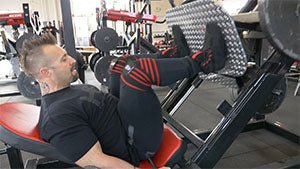
Twenty-eight resistance-trained men were allocated to rest-pause, drop sets or traditional training, with groups of ten, nine and nine. They trained twice weekly for eight weeks, with total training volume equalized. Outcomes included maximum dynamic strength and muscle thickness at three locations along the lateral thigh. This was a small, specific training comparison, not a test of every possible rest-pause program.
Rest-pause produced a greater back-squat one-repetition-maximum improvement than traditional training. The other between-group strength comparisons were not statistically different. Muscle thickness increased over time at the proximal and middle thigh locations, while the distal location did not show that overall change. There was no significant between-group interaction for muscle thickness. A strength finding and a muscle-size finding should therefore stay separate.
The practical reading is narrower than 'rest-pause is best.' The result supports taking the method seriously for trained lifters, but does not establish that every exercise, athlete or training schedule will respond the same way. Twenty-eight participants distributed across three groups cannot settle small differences with high precision. A result that was not statistically different also does not demonstrate perfect equivalence.
Equalized volume is especially important. If your real-world comparison adds several extra hard bouts only to the rest-pause condition, you are testing more than set organization. Conversely, if shorter rests sharply reduce the repetitions you can complete, the new session may contain less work. Compare the actual training that happened, rather than assuming the label guarantees an equal stimulus.
The wider evidence is useful, but protocols differ
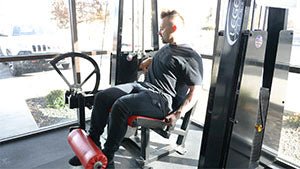
A separate acute experiment had fourteen trained men complete twenty squat repetitions at eighty percent of maximum using three arrangements. The rest-pause condition finished much faster than the traditional long-rest arrangement and showed greater recorded muscle activity. However, that was a single-session experiment. Electrical activity during a workout is not a direct measurement of the muscle growth that will occur over subsequent weeks.
A six-week comparison in eighteen trained participants found no between-group strength difference, while thigh thickness and leg-press endurance favored rest-pause. A four-week bench-press experiment in twenty trained men found greater accumulated lifting volume with its rest-pause approach, without a between-group strength advantage. These results are not interchangeable: the participants, exercises, duration and even the meaning of a pause differed.
A 2026 synthesis of advanced training methods reported a small, non-significant overall hypertrophy effect across methods, alongside a modest rest-pause subgroup advantage. That broader result does not erase the eight-week trial's findings, and the single trial does not erase the broader evidence. Together they support considering the method within context, without promising a universal muscle-building advantage.
For a lifter, this means keeping the desired outcome explicit. More repetitions in a workout, a shorter session, better repetition endurance and a heavier maximum are distinct achievements. If you want to improve one of them, measure that one. Calling all four 'better gains' makes it harder to decide whether a method actually helped the goal you chose.
Choose an exercise with a clear stopping procedure
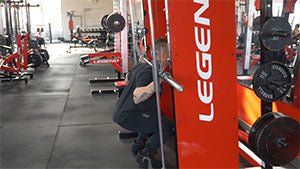
The last repetitions of a demanding set require a practical way to finish. Before experimenting, know how you will secure the load, rest and restart. A familiar machine with an accessible stop may be simpler to manage than a free-weight lift that needs a difficult rerack. That does not make every machine automatically suitable or remove the need to understand its operating instructions.
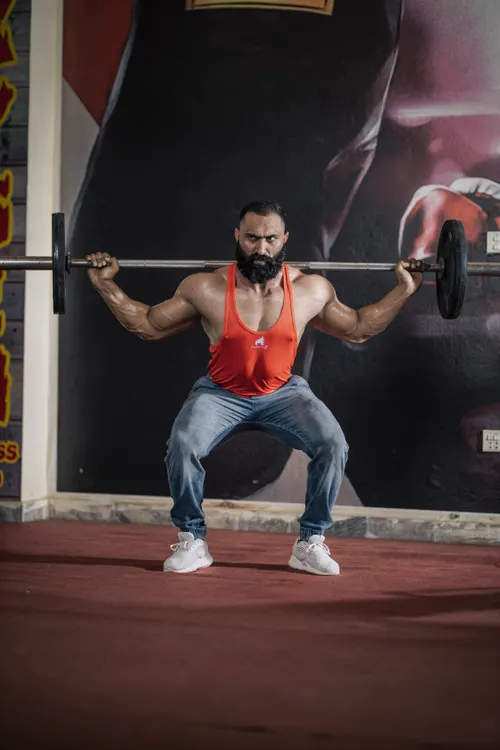
The squat evidence is not an instruction to copy heavy squat-to-failure sessions alone. An appropriate rack setup, correctly positioned safeties and competent assistance matter when a repetition cannot be completed. A Smith machine has its own hooks and stops; it is not identical to a free barbell. Decide on the stopping procedure before fatigue arrives, rather than discovering it during a failed repetition.
For a first trial, replace a limited part of a familiar exercise's existing work instead of extending every exercise in the session. Keep the rest of the routine recognizable. This is an original practical way to reduce the number of changing variables, not a claim that the research established one optimal introductory dose. Stop the experiment if the restart becomes uncontrolled or technique changes substantially.
Equipment should serve that plan. Racks, barbells, benches, plates and an extension or curl station offer different exercise options; they do not create a rest-pause benefit merely by being adjustable. Check load increments, setup and the equipment's own instructions. Choose a movement you already perform reliably, and judge whether the extra transitions preserve that reliability.

Equipment Worth Exploring
Explore equipment, accessories and gear from our carefully selected range.


Competition Plates
Competition-style bumper plates for Olympic lifts and loaded strength training.

Grip Plates
Rubber-coated weight plates with handholds for loading barbells and machines.

Multi Pull Smith Rack MPHR-780
All-in-one rack with a Smith machine, functional trainer, lat pulldown and low row.

Foldable Wall Rack
Wall-mounted folding squat rack designed to save floor space between workouts.


Multi Bench MBX-650 2.0
Adjustable multi-bench with roller adjustment, 15 backrest positions and accessory mounts.

Leg Extension/Curl BCO-780
Leg extension and lying leg curl combo with plate loading, band pegs and a cable-loading option.
Keep the time saving, earn the progression

Record the whole exercise block, including setup and reracking, if efficiency is your goal. A shorter pause between bouts is only one part of elapsed time. If changing the station or recovering before the next exercise consumes the time you saved, the complete session may barely change. A timer can reveal that trade without requiring you to guess from how busy the workout felt.
Track performance across repeated sessions using the same exercise, setup and pause rule. If the first bout improves while later bouts collapse, note both. If you reach a repetition target only by taking longer pauses, that is a change in the prescription. It may be a useful adjustment, but it should not be recorded as though identical conditions produced a straightforward personal record.
Also watch what happens later in the week. A productive session should fit the larger program, including ordinary sets, recovery and the next planned workout. More effort today is not automatically better if it repeatedly prevents the training you intended to do tomorrow. Consistency, good repetitions and manageable fatigue remain useful standards when experimenting with a more demanding set structure.
Keep rest-pause if it helps a specific goal while preserving a workable training routine. Keep traditional sets when they give you clearer technique, easier progression or more predictable recovery. The eight-week evidence offers a reason to test a method thoughtfully; it does not require replacing a successful program. Define the task, record the actual work and let repeated performance determine whether the trade was worthwhile.

Funny Gym Shirts & Workout Gear
Funny gym shirts, tanks, hoodies and workout gear for lifters who like training hard.


Leg Day Is Calling You Squats, Deadlifts & Gains T-Shirt
Rep “Leg Day Is Calling You” humor in and out of the gym.

Lift Smart Brain Weight Plate Mind Muscle Connection 45 Hoodie
Keep it laid-back with a little “Lift Smart Brain Weight Plate” attitude.

Safety Practice Safe Sets Sweater Jumper T-Shirt
Show some gym-day personality with “Gym Safety”.

Consistency King Tee
Make gym days more fun with “Consistency King Stoic Greek God Marble” style.

Repetition Stoic Shirt: Meme Sigma & Greek God Pump T-Shirt
Show some lifting attitude with a playful “Repetition Stoic” tee.

Rest Day Sloth – Essential T-Shirt
Show some bodybuilding attitude with a playful “Rest Day Sloth” tee.

Mind Muscle Perfection Brain and Biceps Gym for Science Hoodie
Show off your lifting humor in a laid-back “Mind Muscle Perfection Brain and Biceps” hoodie.

Off-Season Rest Day Decal Water Bottles & Gear Meme Sticker
Put “Off-Season Rest Day” gym humor on your laptop, bottle, or gym gear.