Advertising disclosure: This page includes affiliate product links that may earn us a commission, as well as products from our own store.
You train your right arm, leave the left arm alone and still see some improvement on the left. It sounds like a gym myth. A 2026 review covering 31 randomized studies and more than 1,200 participants suggests a real but modest strength-transfer effect. The bigger surprise is what did not clearly transfer: muscle growth. Here is what those results mean for unilateral training, rehabilitation discussions and ordinary lifting programs.
What 31 trials actually tested
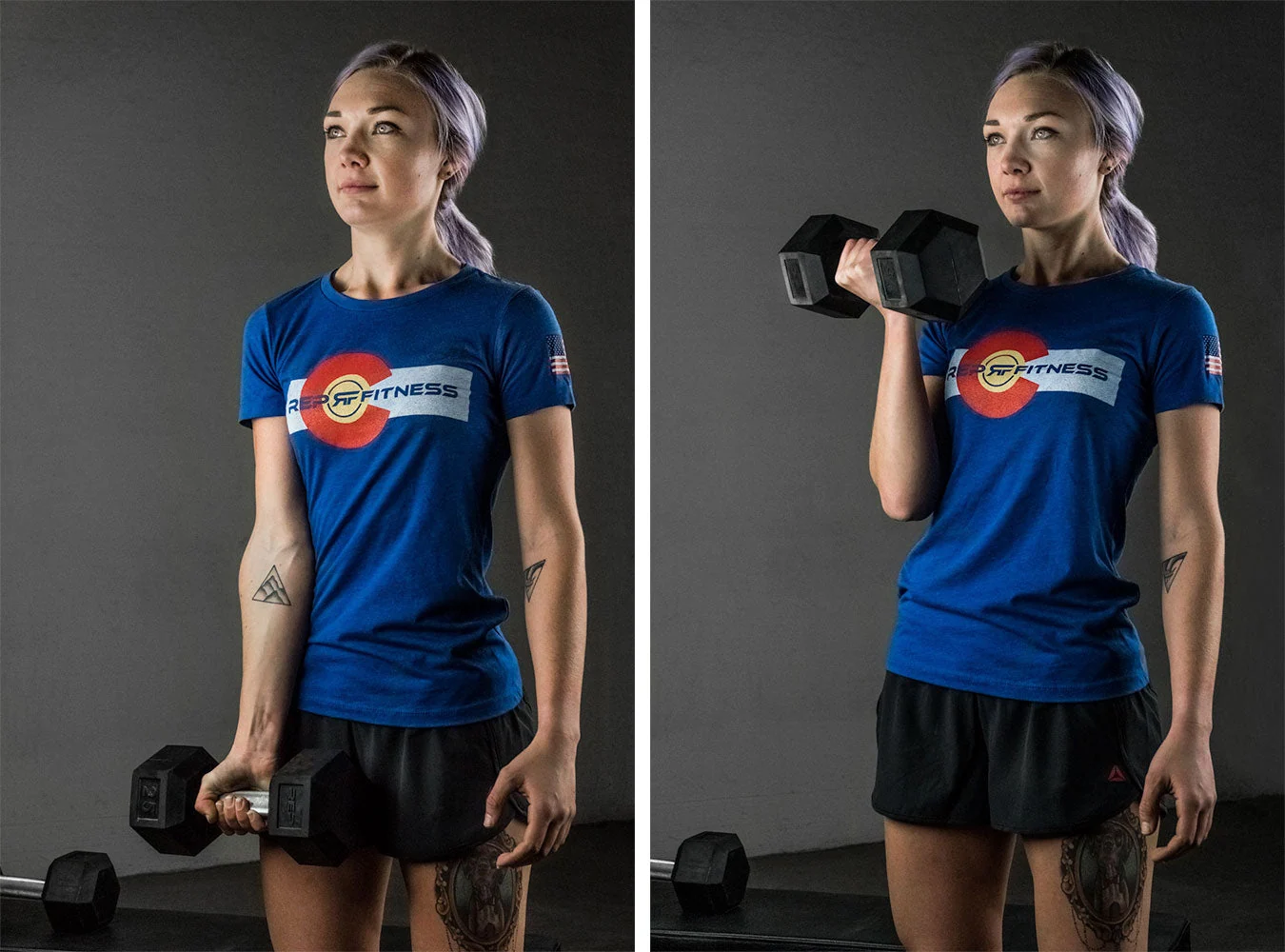
Can working one arm make the other arm stronger, even when the second arm never lifts the weight? That idea is called cross-education. It does not mean that effort magically moves muscle tissue from one side to the other. It describes a measurable change in performance of an untrained limb after a program that trains the opposite limb. A 2026 systematic review focused specifically on the upper body instead of mixing arm and leg studies into one sweeping claim.
The review combined 31 randomized controlled trials with 1,214 participants. The included studies compared unilateral upper-limb resistance training against a non-exercise control group and measured strength or muscle thickness on the contralateral, untrained side. Researchers searched several research databases through January 2026. That matters because the review is broader than a single demonstration in which someone practices curls with one hand and then tests the other.
Think carefully about what the comparison answers. It asks whether measured performance on the untrained side differs from a control condition. It does not establish that one-arm training is superior to training both arms when both are available. It also does not determine the best exact exercise, load or number of weekly sets for every athlete. Participants, protocols and tests differed across the underlying trials, so an average result is a starting point, not a ready-made personal prescription.
If you usually lift with both hands, the finding is most useful as a demonstration that strength is not only a matter of adding contractile tissue. Motor practice, coordination and the way a person produces force can change performance. The interesting question is how much that effect matters for the untrained side and what the data do not show.
How large was the strength transfer?
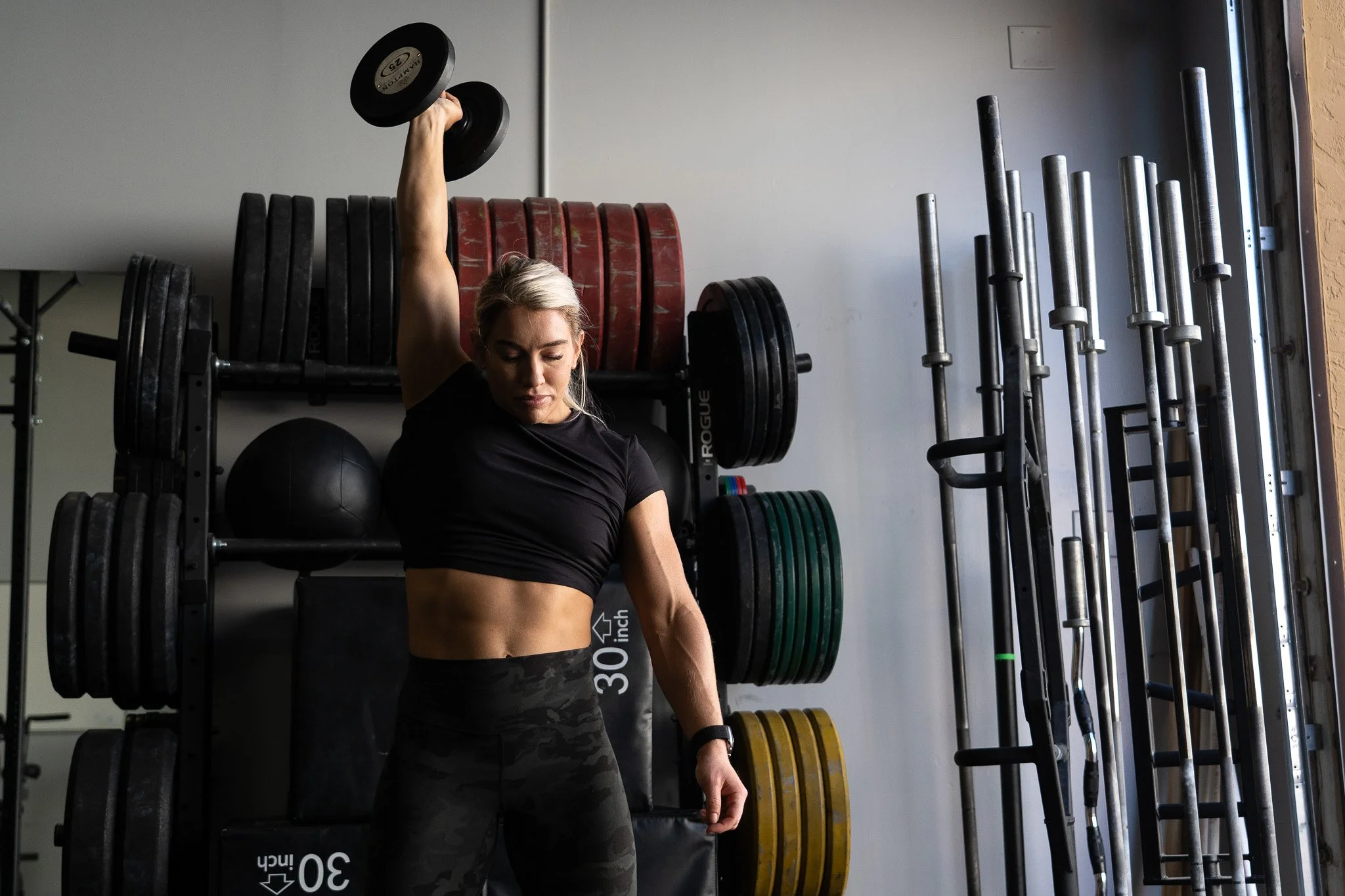
The researchers reported two positive results on the opposite arm. For maximal voluntary isometric contraction, the pooled standardized mean difference was 0.42, with a 95% confidence interval from 0.12 to 0.72. For one-repetition maximum strength, the standardized mean difference was 0.36, with an interval from 0.04 to 0.69. These are small-to-moderate standardized effects, not a promise of a 36% or 42% increase in the weight you can lift.
Standardized mean difference expresses a contrast in units of between-person variation rather than in kilograms or pounds. A change that looks significant in pooled statistics may still have little practical effect on a particular person's curl, row or press. The lower end of the confidence interval for the one-repetition maximum result was also close to zero. That breadth of uncertainty matters whenever someone tries to convert a group average into an individual training forecast.
Another detail is the difference between force tests. An isometric test measures force in a fixed position. A one-repetition maximum asks someone to move an external load through a specified exercise. They overlap, but they are not interchangeable expressions of athletic performance. Transfer observed in a lab force test is not proof that an untrained arm will suddenly handle an unfamiliar heavy press safely.
The review graded certainty across its findings as low to very low. That is a serious qualification. The effect is scientifically interesting, and the pooled results favor some contralateral strength gain, but the total evidence is not precise enough for grand claims. If you read a headline promising that three one-arm workouts will strengthen an injured arm by a specific percentage, that headline is doing more work than the data.
Why did the other arm not show clear muscle growth?
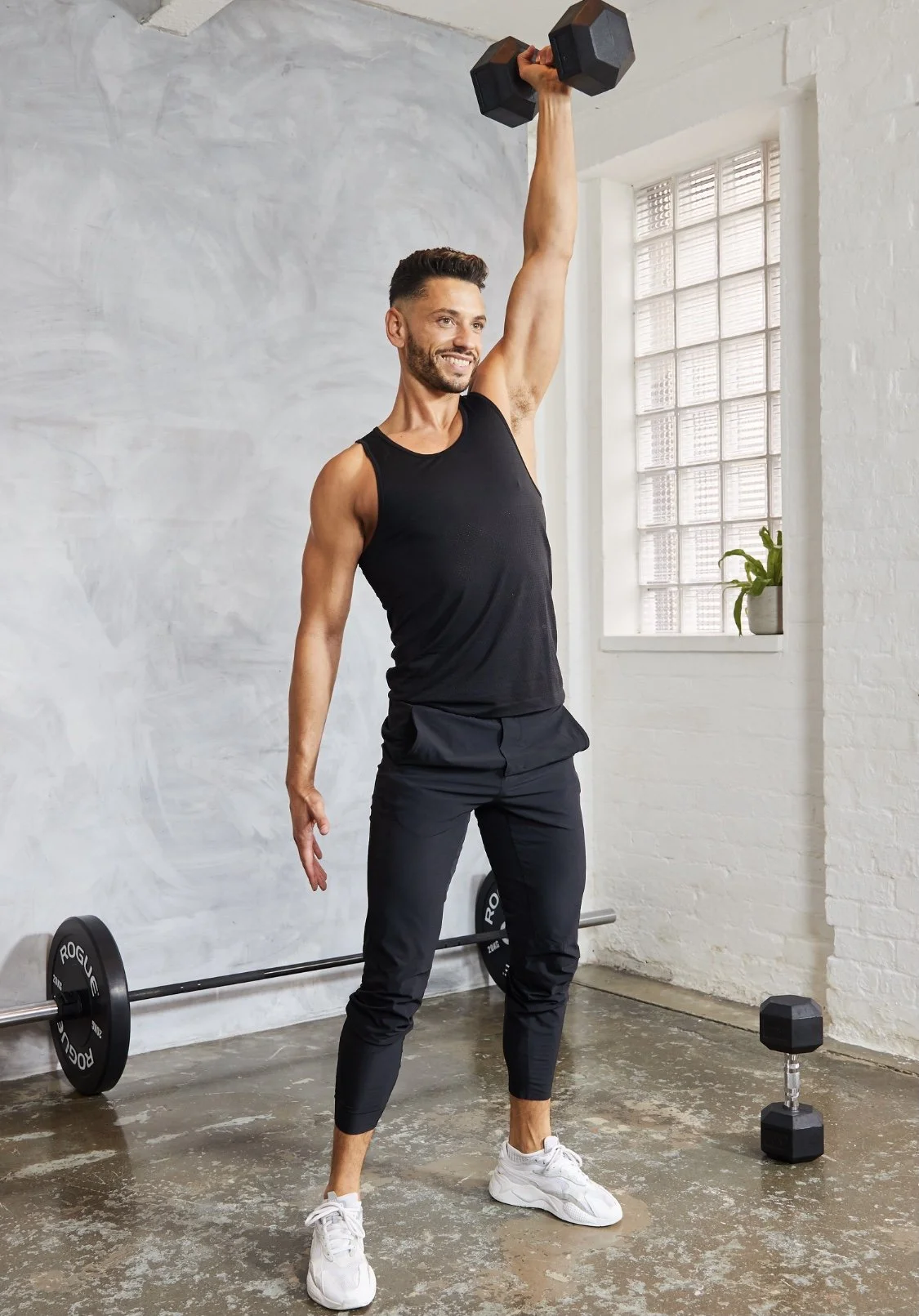
Strength and hypertrophy often develop together during a well-designed program, but they are different outcomes. Strength testing is affected by how effectively a lifter recruits and coordinates muscles, how familiar the task feels and how consistently force is applied. A measurement of muscle thickness tries to capture a structural change. In this review, the two outcomes did not tell the same story.
For the untrained arm's muscle thickness, the pooled standardized mean difference was 0.14, with a 95% confidence interval from minus 0.23 to 0.51. Because that interval includes zero, the review did not detect a clear hypertrophy benefit on the untrained side. This is not mathematical proof that growth is impossible. It means these particular data do not provide convincing evidence of it. Researchers also assessed muscle thickness rather than every possible dimension of body composition or muscle structure.
Neural cross-education is a plausible explanation for improving force on the opposite side. Training may change shared aspects of motor planning or how the nervous system organizes demanding movements. But a mechanism is not automatically established by a headline and a statistical outcome: a review that measures strength and thickness cannot, by those measures alone, trace the exact neural pathway responsible for every participant's improvement.
For a bodybuilder trying to add size to the smaller biceps, the practical takeaway is straightforward: do not substitute work for the opposite arm and assume the neglected one will grow. When both sides are healthy and available, train the muscle you want to develop. For someone interested in performance, the review is a reminder to distinguish improved force production from an actual increase in muscle dimensions. A better curl number and a larger arm circumference are not identical goals.
What about immobilization, injury and rehabilitation?
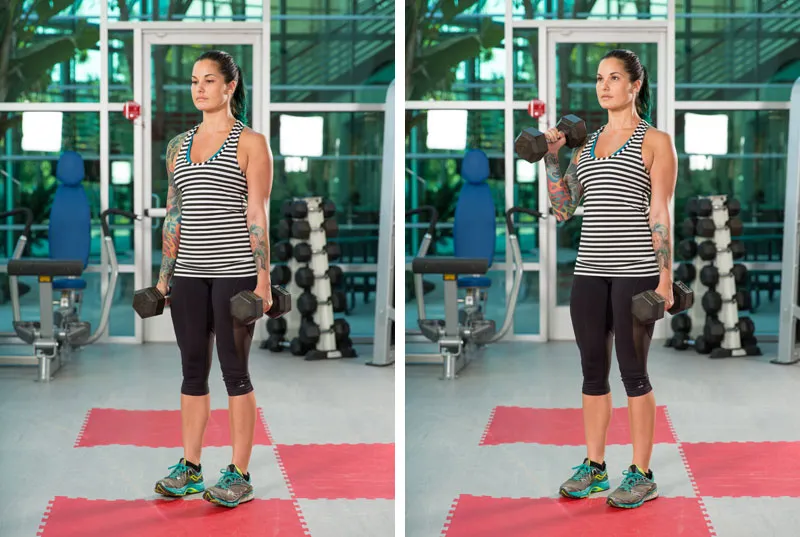
The rehabilitation angle makes this research more than a gym curiosity. When an arm cannot be used normally, maintaining some training activity elsewhere may be attractive. The review's subgroup analyses suggested that strength transfer could be larger when the opposite arm was partially or fully immobilized. Yet that pattern came from a small number of varied studies, and the authors explicitly described the evidence as indirect.
An immobilized arm is not the same thing as an arm cleared to lift. Restrictions may exist because of a fracture, surgery, tendon repair, nerve symptoms or another condition. None of those diagnoses should be treated as interchangeable. The meta-analysis does not tell you when to remove a brace, how much to load tissue that is healing, or whether an exercise is appropriate after a particular operation. Those decisions belong with the treating clinician and rehabilitation team.
If a professional has cleared training of the unaffected side, a unilateral row, press or curl may provide a convenient way to maintain general exercise habits while direct loading is restricted elsewhere. The program must still accommodate balance, setup, fatigue and whatever movement restrictions apply to the individual. It would be irresponsible to prescribe a heavy one-arm press just because the opposite shoulder is immobilized; whole-body bracing and equipment handling can still challenge the injured area.
Another important distinction is that temporary strength preservation and actual tissue repair are not the same endpoint. Being better able to activate a limb on a strength test does not mean that a repaired tendon has healed faster or that pain has been treated. The evidence offers a possible adjunct worth discussing with a clinician, not an alternative to examination, progressive rehabilitation or a return-to-sport decision. Do not deliberately immobilize one arm to chase a larger cross-education effect.
Build a sensible unilateral workout
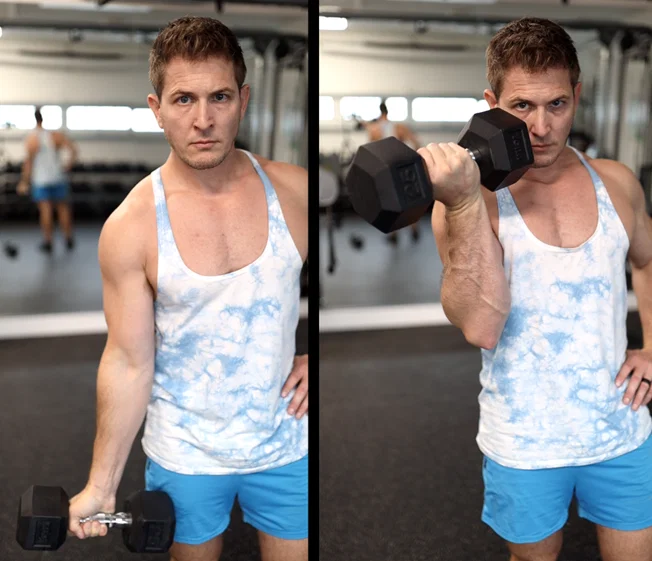
Unilateral training is useful even if you never need cross-education for an immobilized limb. It can make side-to-side differences easier to see, help you practice control through each arm's range and fit into a simple strength program. For a healthy lifter, the goal is usually to train both sides rather than leave one side untouched in the hope that strength transfers. Use the following as a programming example, not as the exact protocol tested by the 31 studies.
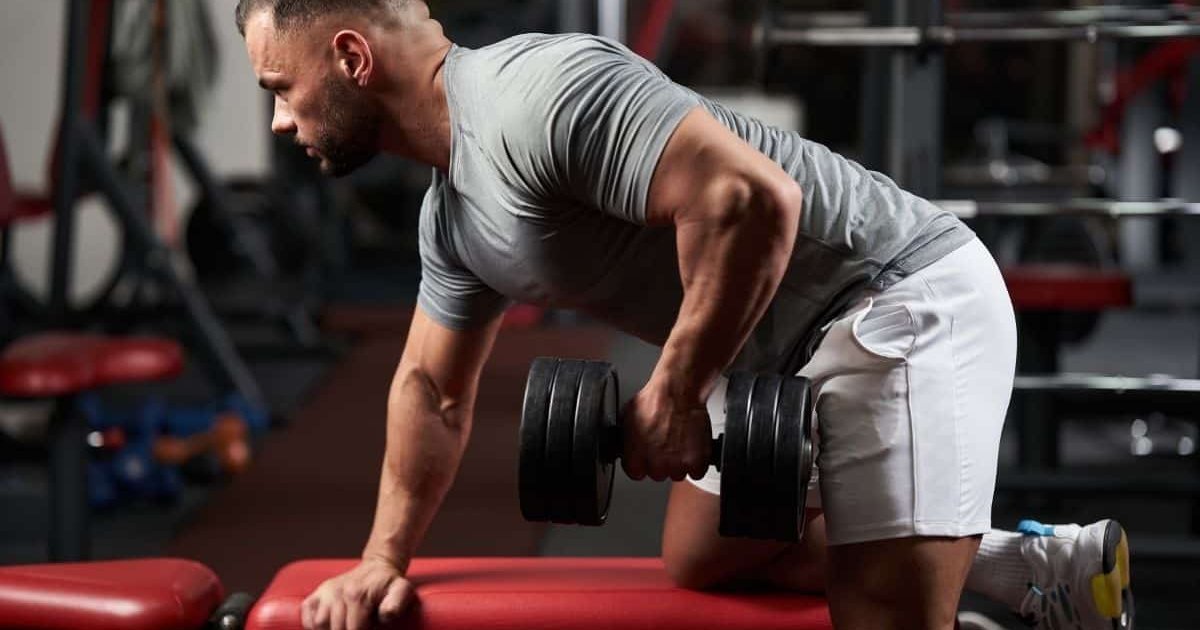
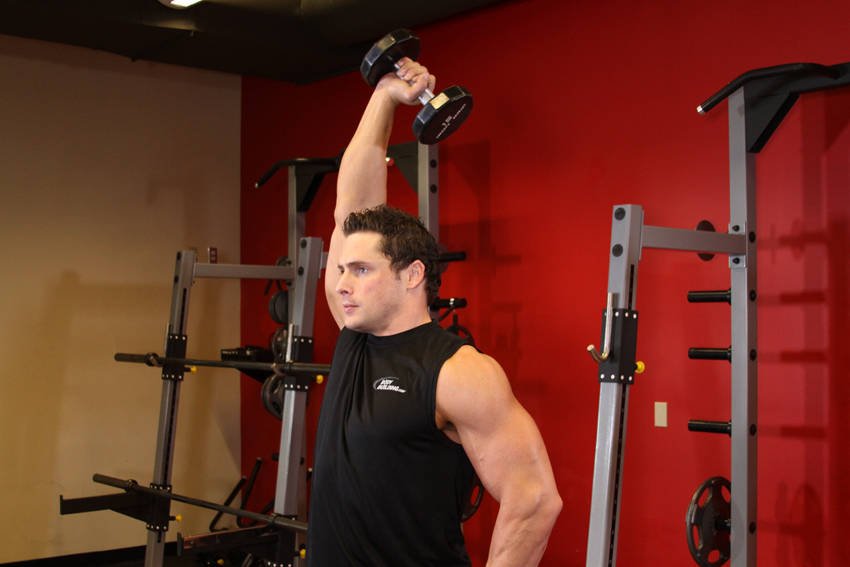
Choose two complementary patterns: a supported one-arm dumbbell row for the back and elbow flexors, and a single-arm cable or dumbbell press for the chest and shoulder complex. Set the bench or cable height so the working arm can follow a stable path. Keep your trunk still enough to recognize whether the arm is moving the load or momentum is doing it for you. The free hand can support your body on a bench for rows; an overhead press should use a load you can control without leaning hard to the side.
On two or three nonconsecutive days each week, you could use two or three sets of roughly six to twelve controlled repetitions per side. Leave a few good repetitions in reserve rather than taking every set to technical failure. Start with the side that feels less coordinated and use an appropriate weight for each side; do not force identical loads if one side cannot perform clean reps. Add load only when your range and tempo remain consistent. For curls, pressing and rows, write down the actual load instead of relying on memory.
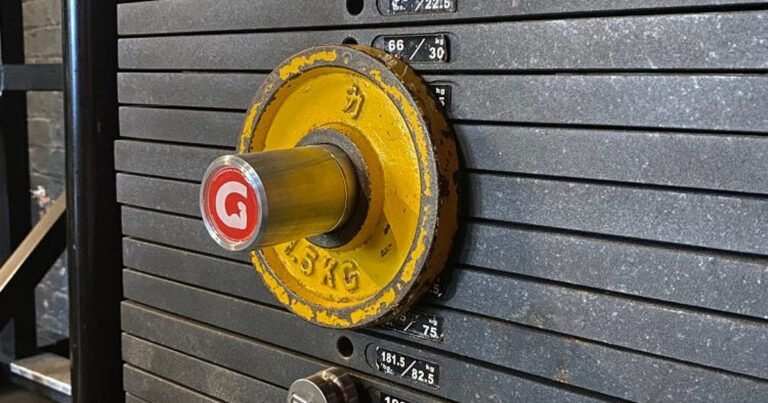
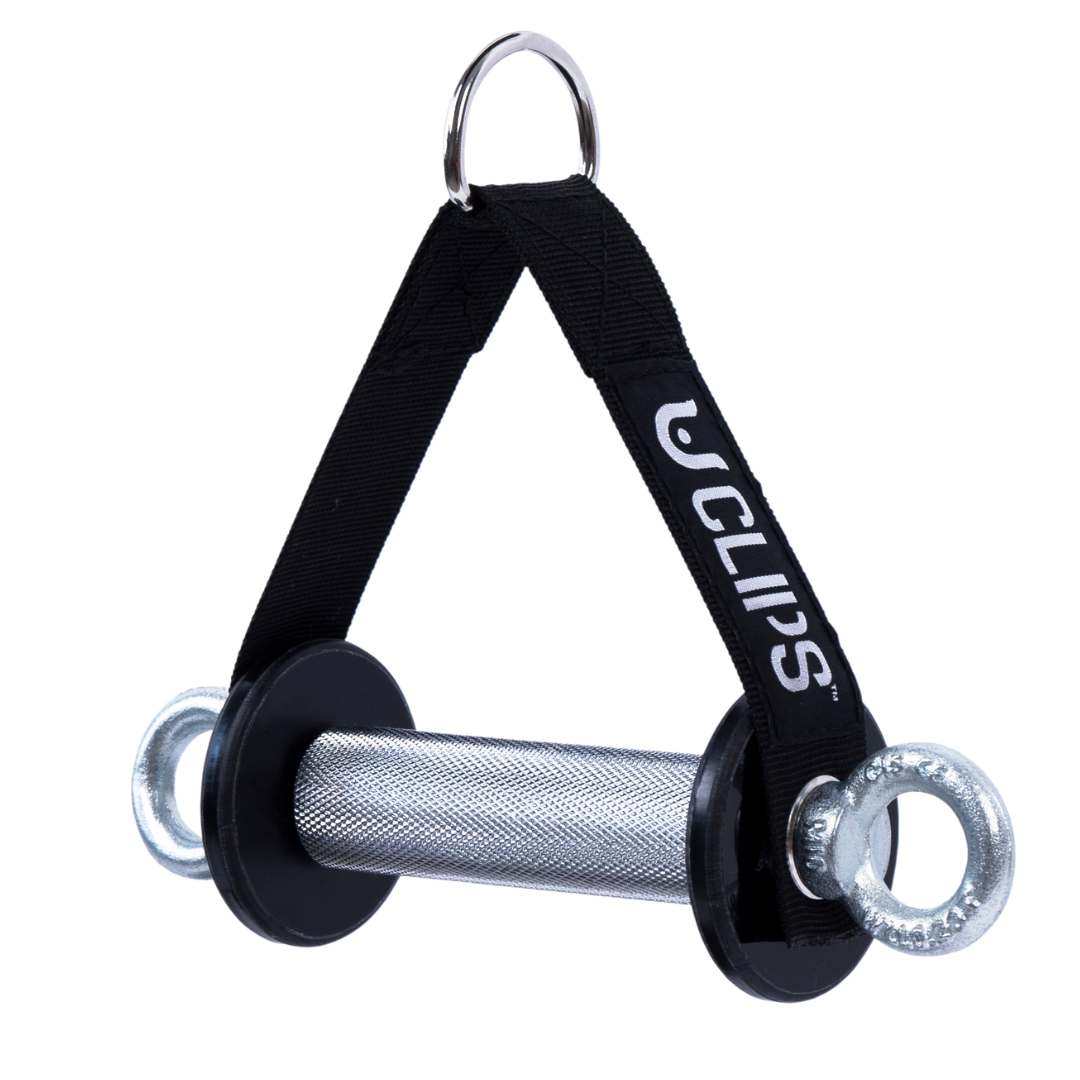
Your equipment needs are modest: an adjustable dumbbell, a stable bench and, optionally, a cable handle. A reliable single cable station can make unilateral work particularly easy because one handle and an adjustable pulley cover curls, rows, presses and some shoulder movements. If the machine's pulley ratio changes, record the actual stack setting and attachment used rather than comparing the stack number directly with a dumbbell. Pick equipment because it allows repeatable loading and good access, not because the cross-education finding requires a particular brand.
The obvious alternative remains bilateral work. Heavy barbell lifts, two-arm pull-ups and ordinary dumbbell sets can coexist with unilateral accessories. The review does not suggest that an athlete should abandon those foundational movements. Treat single-arm work as a useful addition with a defined purpose: balancing exposure, practicing technique or accommodating a medically approved restriction.

Equipment Worth Exploring
Explore equipment, accessories and gear from our carefully selected range.


Rubber Hex Dumbbells
Rubber-coated hex dumbbell pairs with a stable shape for home and commercial strength training.


Multi Bench MBX-650 2.0
Adjustable multi-bench with roller adjustment, 15 backrest positions and accessory mounts.

GymPin Ergo Handles
Pair of ergonomic cable handles shaped for comfortable triceps and pulling exercises.
VOLTRA
Compact digital cable trainer with smooth, adjustable resistance.

Go-Tone Pro
Portable digital cable trainer with up to 66 lb (30 kg) of adjustable resistance.
A four-week check: measure strength, not wishful thinking
Before the first session, choose an exercise, a repeatable starting position and a clear measure such as the heaviest clean set of eight or a comfortable submaximal load performed with steady tempo. Do not attempt a risky one-repetition maximum merely to test a research finding. If you are curious about possible transfer, record performance on both sides; when both sides are being trained, be honest that you cannot isolate a cross-education effect from normal direct practice.
In week one, find a load that produces smooth, consistent repetitions. Film an ordinary working set from the same angle if that helps you catch trunk rotation or an uneven range. Weeks two and three can involve small increases in repetitions at the same load, or a cautious increase in weight after you reach the top of your planned range. In week four, repeat your starting test under comparable conditions. Note exercise, load, repetitions, range of motion and how hard the set felt. These variables make your notes useful even without expensive monitoring equipment.
Do not interpret every difference as neural adaptation. Familiarity with a movement, sleep, fatigue, test technique and the amount of direct practice can all affect a lift. Even if your untrained arm performs better, a single person's progress cannot establish the average effect in a clinical trial or prove which neural circuit changed. Likewise, an unchanged tape-measure reading does not tell you everything about muscle structure.
The strongest conclusion from the 2026 upper-limb review is narrower and more valuable than the hype: training one arm was associated with a modest strength advantage in the opposite, untrained arm, while measurable growth there was not established. For most healthy lifters, keep training both sides productively. For a person unable to use one side, discuss whether work for the unaffected limb belongs in the rehabilitation plan. Different aims, different decisions—and no need to turn a subtle physiological effect into a miracle.

Funny Gym Shirts & Workout Gear
Funny gym shirts, tanks, hoodies and workout gear for lifters who like training hard.

Big Flex Theory Tee
Bring “The Big Flex Theory Science-Based Lifting” humor to your next gym day.

Grip Day Legend Essential Gymbro & T-Shirt
Rep “Grip Day Legend” humor in and out of the gym.


Brain and Biceps Tee
Make gym days more fun with “Mind Muscle Perfection Brain and Biceps” style.

Lift Smart Brain Plate Tee
Show some lifting attitude with a playful “Lift Smart Brain Weight Plate” tee.


Big Biceps Theory Decal Water Bottles & Gear Meme Sticker
Bring “Big Biceps Theory” attitude to your water bottle or laptop.

Gymhead Mind Muscle Connection Sweater Meme T-Shirt
Bring “Gymhead” humor to your everyday gym style.


Gymhead Lifting Is On My Mind Skull Vest Tank Top
Your gym-day look, with a playful “Gymhead” twist.