Advertising disclosure: This page includes affiliate product links that may earn us a commission, as well as products from our own store.
The hang power clean asks a lot from one brief movement: control a barbell above the floor, drive hard through the legs and hips, then receive it across the shoulders without dropping into a full squat. A good repetition looks explosive and organized. A bad one can resemble an upright row followed by a wrist-crushing catch. The difference is timing, not just strength.
This exercise can train rapid force production and Olympic lifting skill while removing the first pull from the ground. But the shorter distance does not remove the need to brace, balance, control the bar path and own a front rack. You should be able to repeat the same starting position and receiving depth rather than relying on momentum from a random bounce.
Below is a practical six-part guide to the hang height, pull, turnover, common faults, useful variations and a realistic four-week progression. It is written for general gym training and assumes a safe lifting platform and a suitably qualified coach when learning technical catches.
Start from a repeatable hang position instead of an improvised hinge
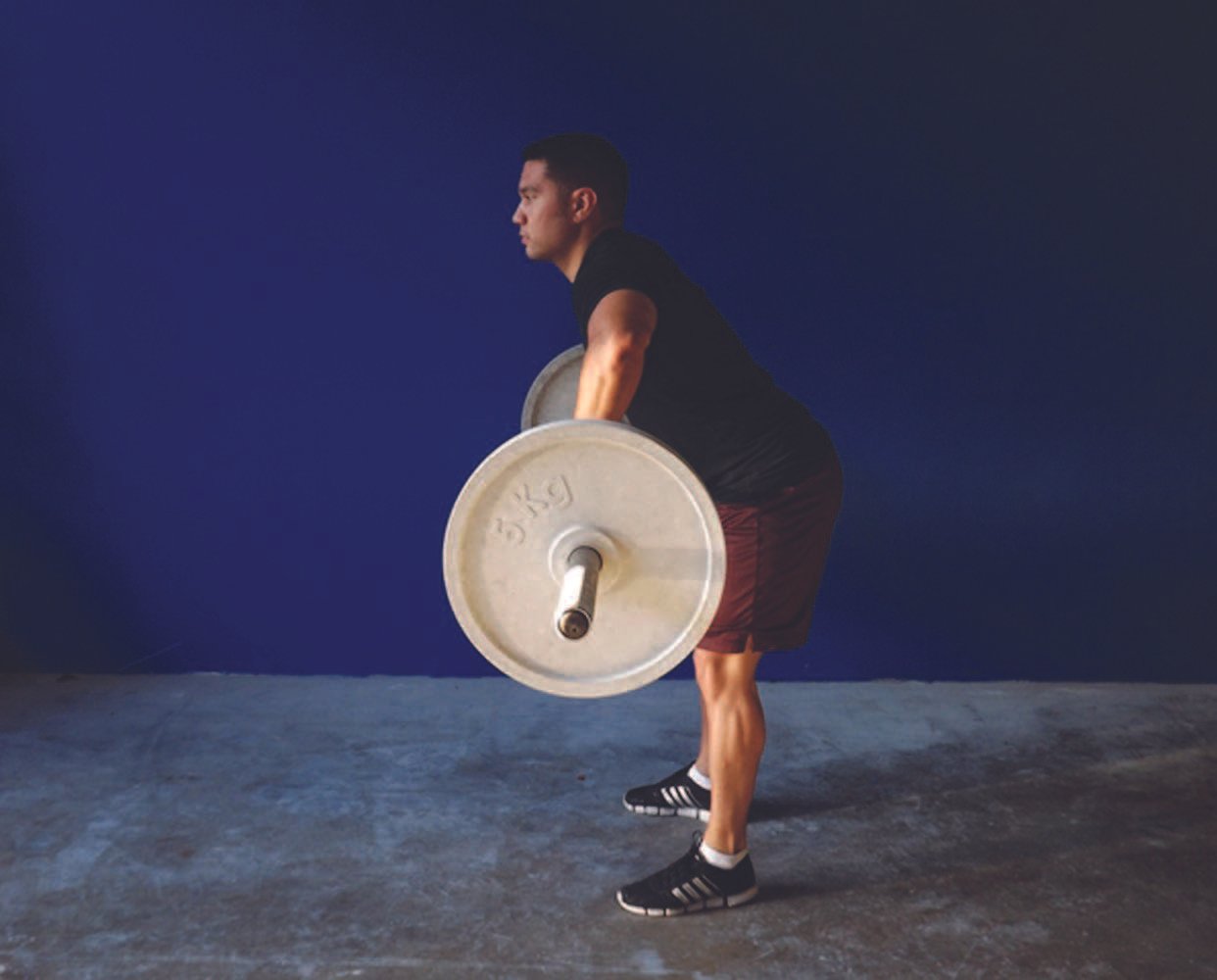
Stand tall with the bar at arm’s length, feet around hip width and hands in a comfortable clean grip outside the legs. Set the ribs over the pelvis and keep the torso braced. Slightly bend the knees and hinge back until the bar settles at the height you intend to use, generally between upper thigh and knee. The bar should stay close to the thighs, and the weight should feel distributed through the whole foot. This is a loaded position, not a loose stretch.
The exercise name is less specific than it sounds. High-hang, mid-thigh, knee-height and below-knee variations impose different demands. A high hang shortens the pull and emphasizes the turnover. A knee-height hang gives more time for leg drive but requires more control of torso angle. An ordinary unspecified hang is commonly understood as around knee height. Choose and record one start height rather than alternating between them without noticing.
Rehearse the lowering phase before performing a fast repetition. Move the bar to the chosen position under control, pause if needed and check that the shoulders have not rolled forward or the knees locked stiff. A useful practice set is three empty-bar hinges to the exact height, each followed by a reset. If the bar drifts away from the legs, correct the hinge before asking the body to accelerate it.
Use bumper plates and secure collars on a bar with properly rotating sleeves. Clear people and obstacles from the front and sides, and follow the facility’s rules for putting down or bailing a failed lift. A crowded walkway is not a suitable place to learn a fast receiving skill. If the wrists or shoulders cannot tolerate a front rack, address that restriction separately rather than forcing a heavy catch.
Accelerate with your legs and finish the extension before pulling under
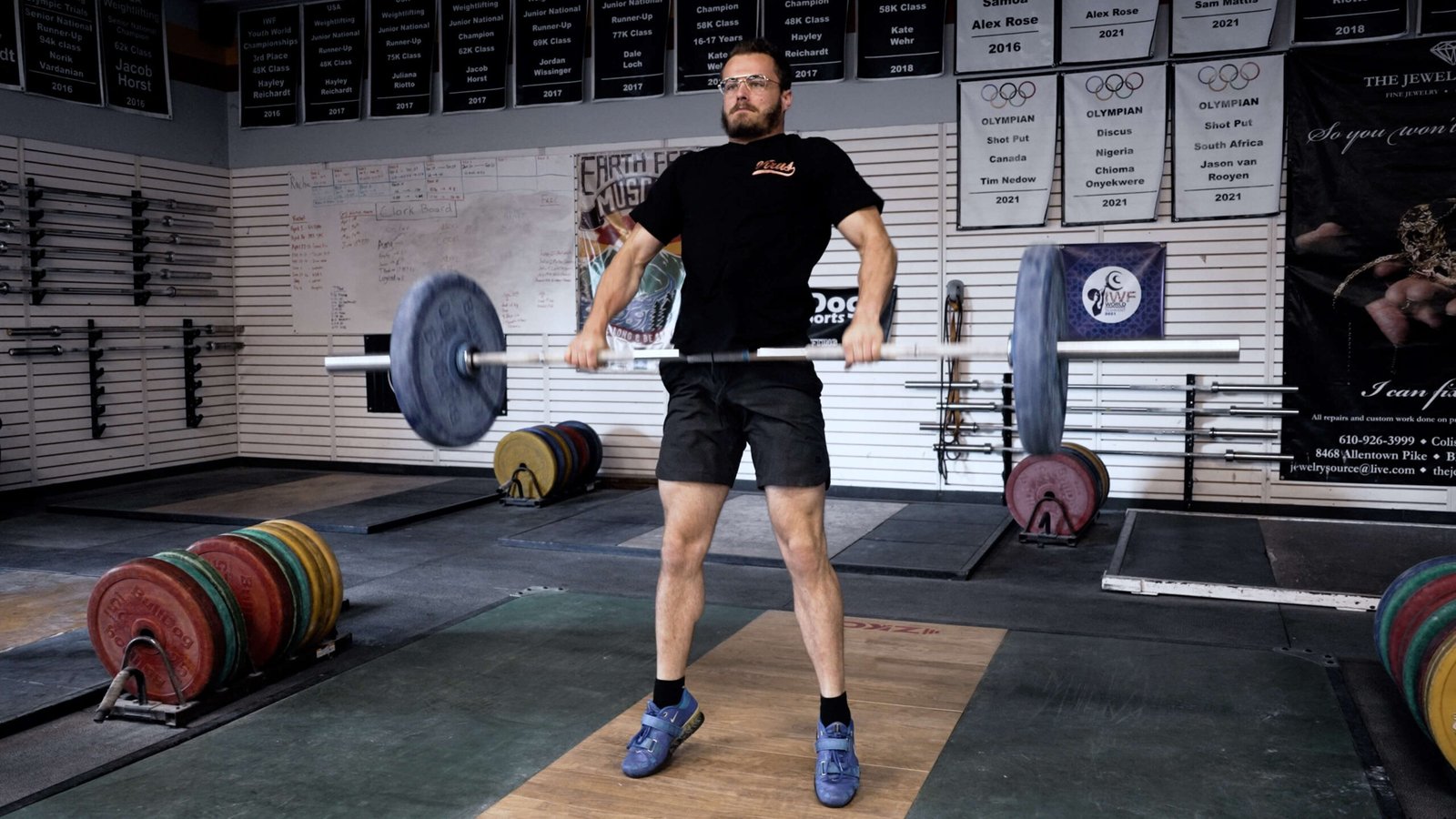
The start of the pull should resemble a powerful drive against the floor. From the hang, keep the bar close and push the feet down as the hips and knees extend. Maintain a solid back and let the torso rise with the legs. The arms should remain long through the initial acceleration; bending them early turns the lift into a slow arm-dominant movement and wastes the bar speed created by the lower body.
As the bar passes the upper thigh, finish the hip and knee extension aggressively. You may feel the shoulders rise and the heels become light, but the objective is not to leap into the air as high as possible. The objective is to impart upward velocity while remaining balanced enough to move beneath the bar immediately. Think tall extension followed by fast relocation, not a backward lean that launches the bar away.
If the bar slams forward off the hips, it often makes a wide arc toward the feet. Reduce load and practice keeping it close instead of trying to reverse the swing with the shoulders. A few clean pulls, without a catch, can isolate this part of the movement. A side-view recording can help show whether the bar travels near the torso and whether the elbows bend before the legs finish extending.
Power practice should stop when rep quality falls apart. A light bar accelerated cleanly gives a better learning stimulus than a heavy bar muscled upward with bent arms. Treat each repetition as a separate attempt to reproduce bar path and body position; reset at the top or after a controlled lowering rather than rhythmically bouncing through ugly repetitions.
Meet the bar in a secure front rack above parallel
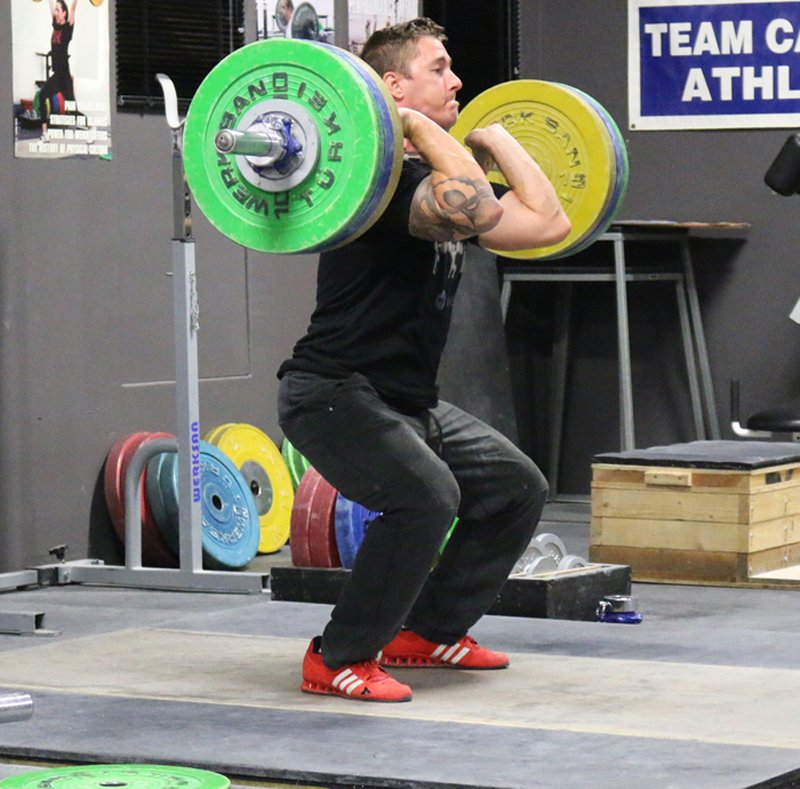
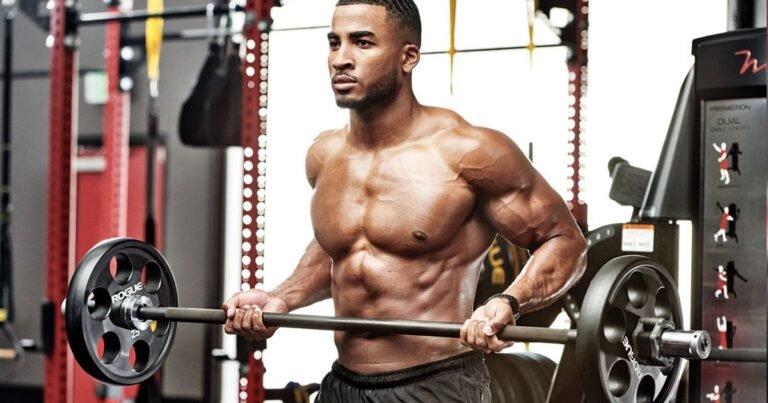
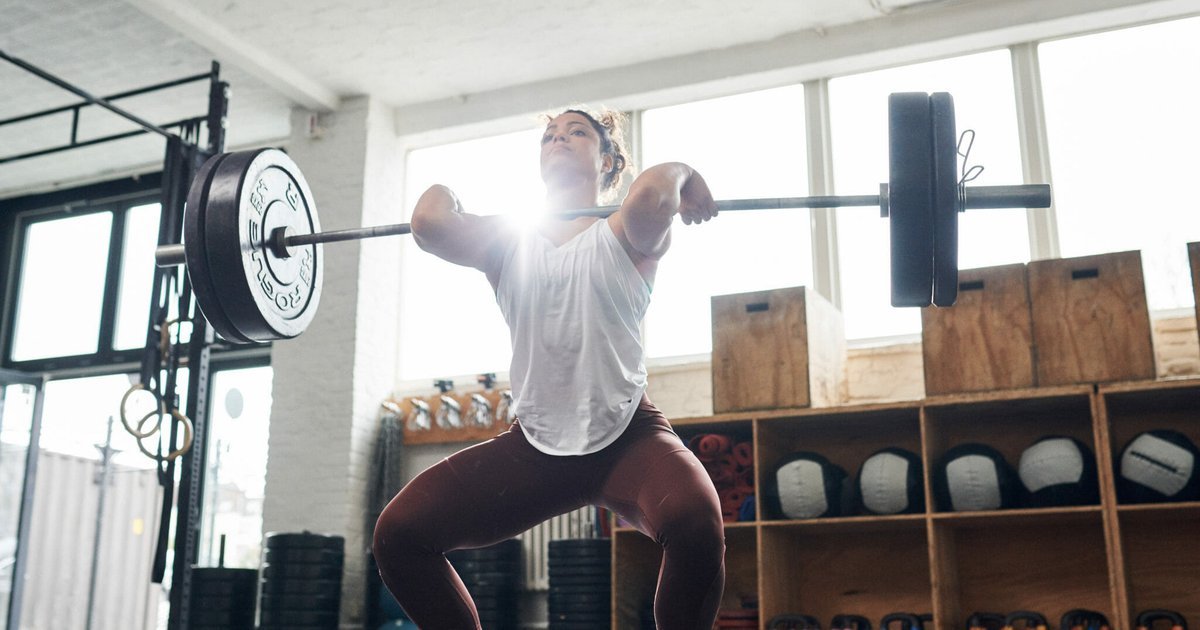
After the leg drive has accelerated the bar, the lifter must move under it. Rotate the elbows rapidly forward and up, allowing the bar to settle onto the front of the shoulders. The hands guide the bar; they should not be the only structure bearing the full load. In a suitable front rack, the elbows stay comfortably elevated and the torso remains upright enough to support the weight over the base of the feet.
A power clean is defined by the receiving height. The hip crease stays above the top of the knees, even though a partial squat is normal and useful. A full-depth squat catch belongs to a different variation. Stand tall after securing the rack to complete each repetition. Avoid the temptation to label a near-missed power clean successful just because the bar eventually reached the shoulders.
The bar should be actively met, not allowed to crash from above. If the bar strikes the collarbones sharply or bends the wrists backward, check the timing of the turnover, the path of the pull and whether the receiver drops too far away from the bar. Light tall cleans and front-rack holds can improve familiarity with the movement. Front squats may help prepare a stable receiving position, though they do not automatically teach an explosive clean.
Landing noisily with scattered feet is not proof of greater power. Choose a natural receiving stance with feet stable and knees following the toes. If you cannot find the rack without shoulder, wrist or elbow pain, reduce the load and seek qualified coaching. A controlled catch and an equally controlled exit are part of the exercise, not optional finishing details.

Equipment Worth Exploring
Explore equipment, accessories and gear from our carefully selected range.


Competition Plates
Competition-style bumper plates for Olympic lifts and loaded strength training.


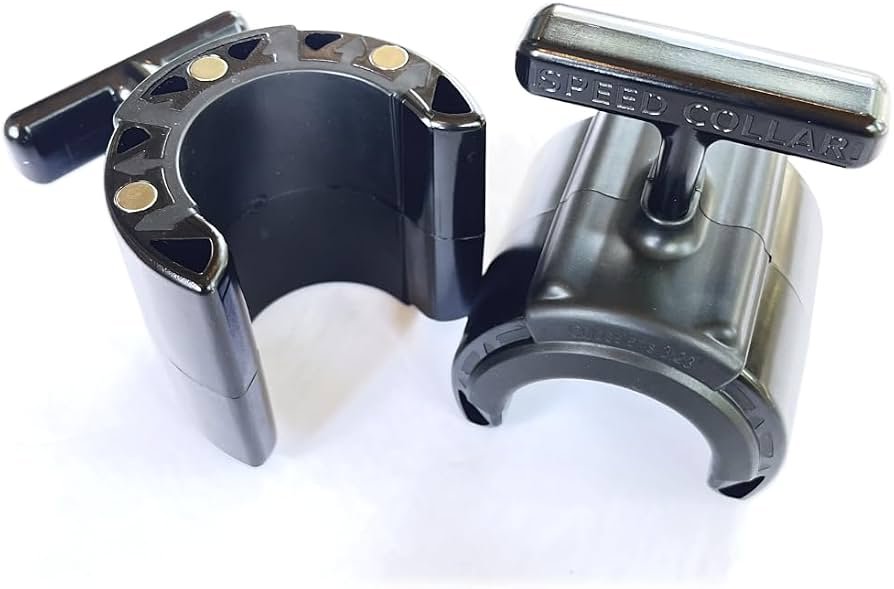
Speed Collar
Quick-release collars designed to secure weight plates on standard two-inch Olympic bars.

Grip Plates
Rubber-coated weight plates with handholds for loading barbells and machines.
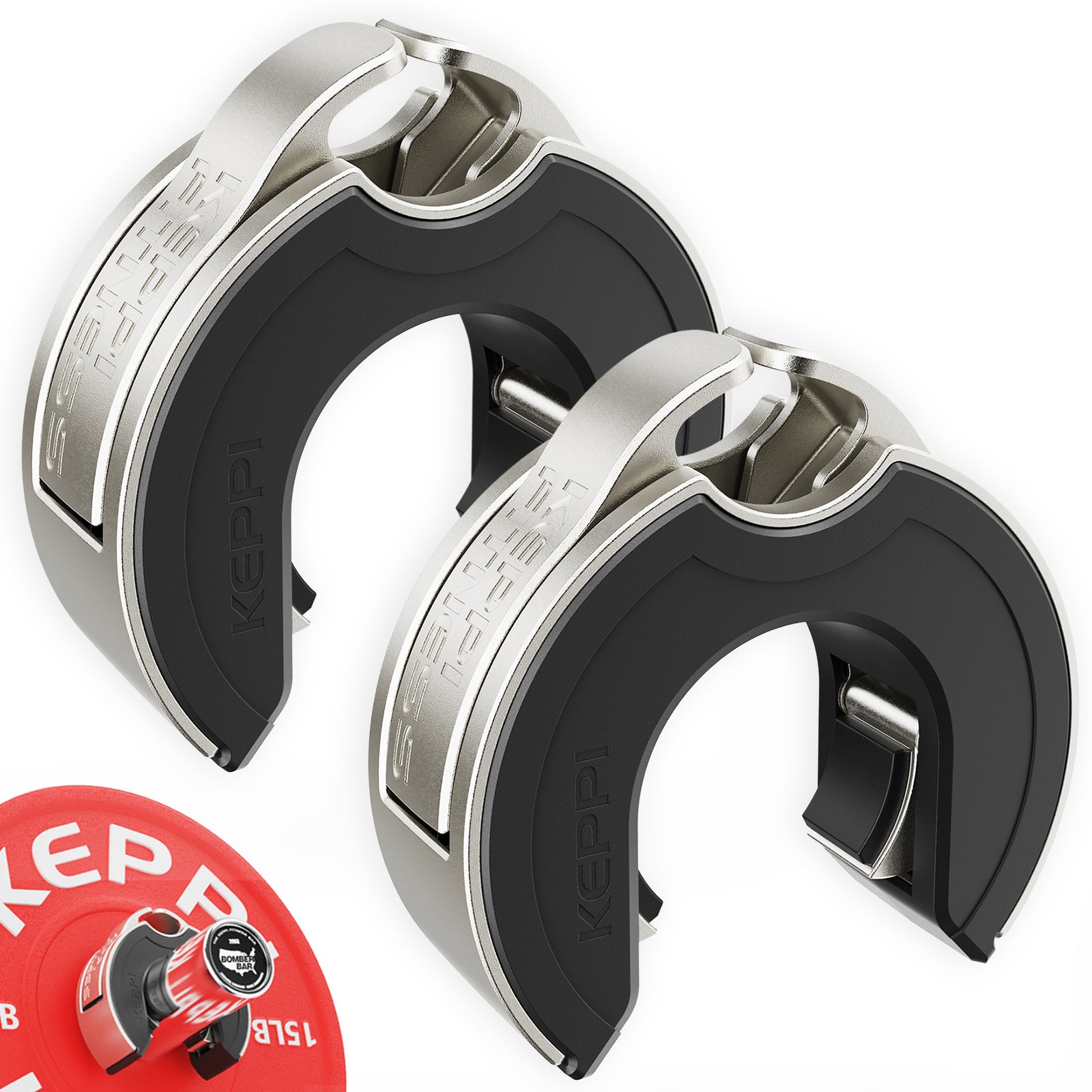
Keppi Open Collars
C-shaped magnetic Olympic barbell collars with a quick-lock mechanism and grippy lining.


Multi Pull Smith Rack MPHR-780
All-in-one rack with a Smith machine, functional trainer, lat pulldown and low row.
Fix early arm pulls, forward loops and crashing catches
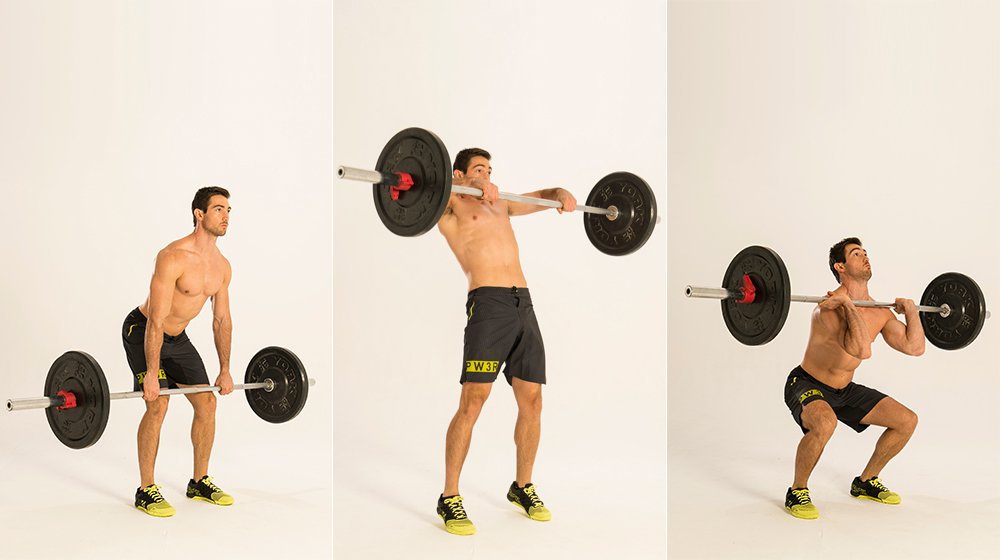
An early elbow bend is usually the easiest fault to recognize. The bar starts to climb before the legs have finished driving. Try two controlled clean pulls followed by one very light hang power clean, keeping the arms long until extension. If the bar travels forward in a loop, practice bringing it close to the body through the hang and resist throwing the hips horizontally into it. A lighter bar with a straighter path is a better correction than a louder impact.
Another common fault begins at the feet. A lifter starts on the toes, drives the hips abruptly forward and ends up chasing the bar. Pause in the hang with full-foot balance; initiate by pushing the floor away. If a knee-height hang makes this difficult, temporarily practice from mid-thigh or the high hang. Change one variable at a time so a successful correction can be reproduced.
A slow turnover produces a bar that hangs in the hands or crashes onto the shoulders. Rehearse tall cleans with a technique bar and quick elbows, then add the lower-body drive back in. Poor rack mobility may need separate gentle work on the wrists, upper back and shoulders. Do not insist that everyone uses the exact same grip width: the proper receiving position has to suit the lifter’s proportions.
Finally, avoid increasing weight because the bar was caught somehow. A deep catch that drops below parallel changes the lift, and a forward stumble signals a lost base. Mark these as technique issues rather than successful power reps. If filming, inspect just two things on each set: bar distance from the body and receiving security. Make one targeted adjustment, then retest at an easier weight.
Choose the hang height and drills to match the training goal
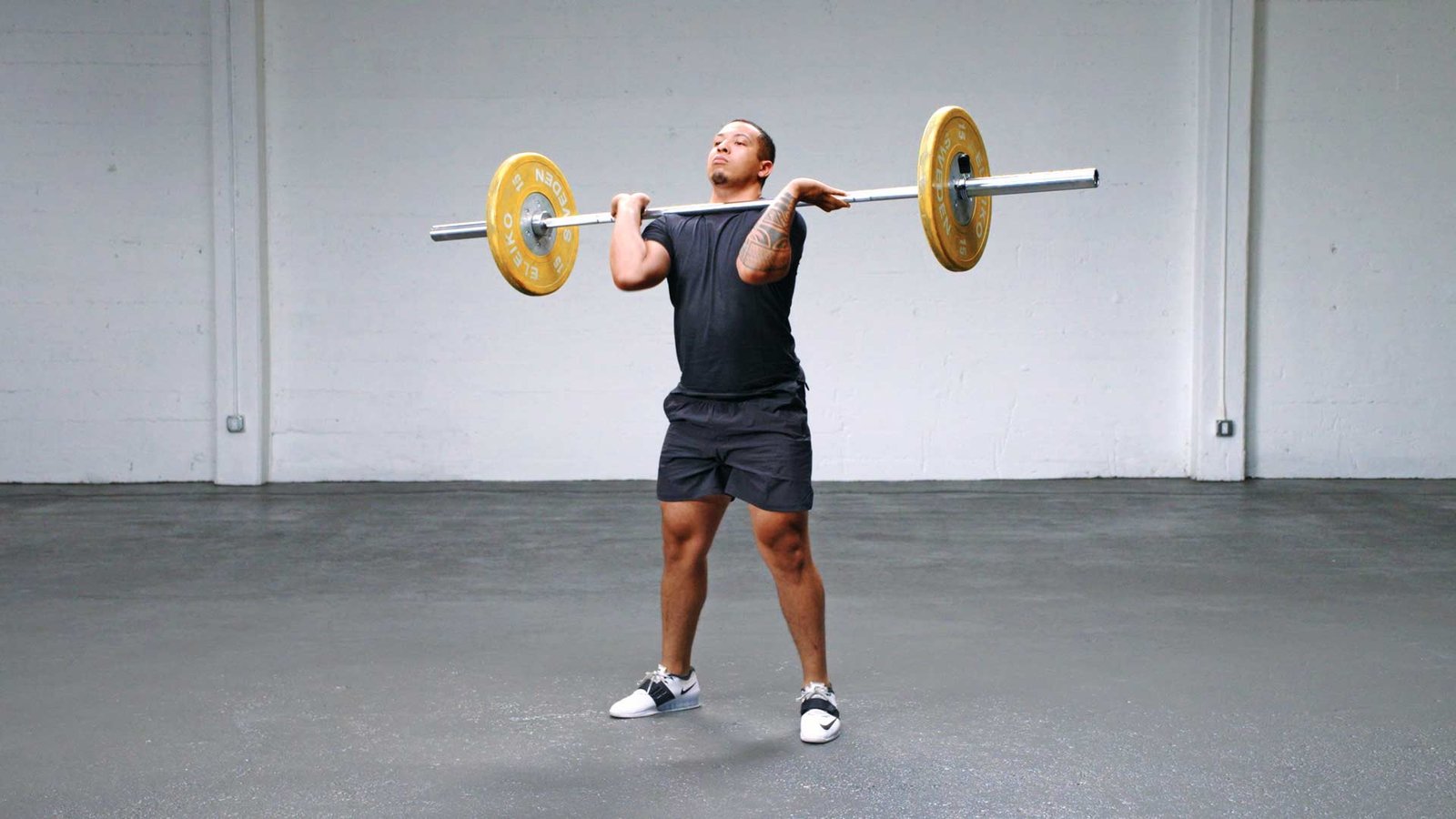
A high-hang power clean makes the available acceleration time short and puts more emphasis on fast elbows and a decisive pull under the bar. A mid-thigh start adds a defined hinge and a clearer transition into extension. A knee-height start requires more postural endurance and precise balance as the bar changes direction. All are legitimate, but the achieved weights need not be identical. Comparing them as if they were one exercise makes the training log misleading.
A paused hang reveals whether you can hold position without a rebound. A controlled dip-and-drive start teaches the quick reversal from lowering to accelerating. Clean pulls omit the catch and help isolate the close, strong second pull; tall cleans focus on the turnover and receiving mechanics. Select a drill for the actual weak phase rather than doing every variation in a long, exhausting warm-up.
The movement is not a direct substitute for traditional squats, deadlifts or rows when hypertrophy is the primary goal. It targets speed and coordination in addition to demanding muscular work. If building muscle is your main priority, put brief technical practice early in the session while fresh, then use slower resistance exercises for the remaining volume. There is no need to disguise an Olympic lifting drill as a universal chest, arm or leg growth shortcut.
Athletes combining strength with conditioning can use cleans in certain circuits, but novices should earn stable mechanics before speeding up the clock. If you are breathless and the front rack becomes sloppy, take longer rests and preserve the technical intent. The best variation is the one you can execute predictably and safely at an intensity that fits the purpose of the session.

Functional Fitness Shirts & Workout Gear
Functional-fitness shirts, tanks and workout gear for athletes who train strength, conditioning and everything in between.

Hybrid Athlete Strength Tee
Show some lifting attitude with a playful “Hybrid Athlete” tee.

Hybrid Athlete – Built Different Crewneck for HYROX, Cr T-Shirt
Show some gym-day personality with “Hybrid Athlete”.


Lift Together Grow Stronger for Gym Buddies Who Train T T-Shirt
Show some gym-day personality with “Lift Together Grow Stronger”.

Gym Equation Kettlebell Makes Me Happy Meme Crewneck an T-Shirt
Bring “Gym Equation” humor to your everyday gym style.

Kettlebell Heartbeat Hooded Pullover Workout Fans Hoodie
Keep it laid-back with a little “Kettlebell Heartbeat” attitude.

Follow a four-week technique progression and judge the right outcome
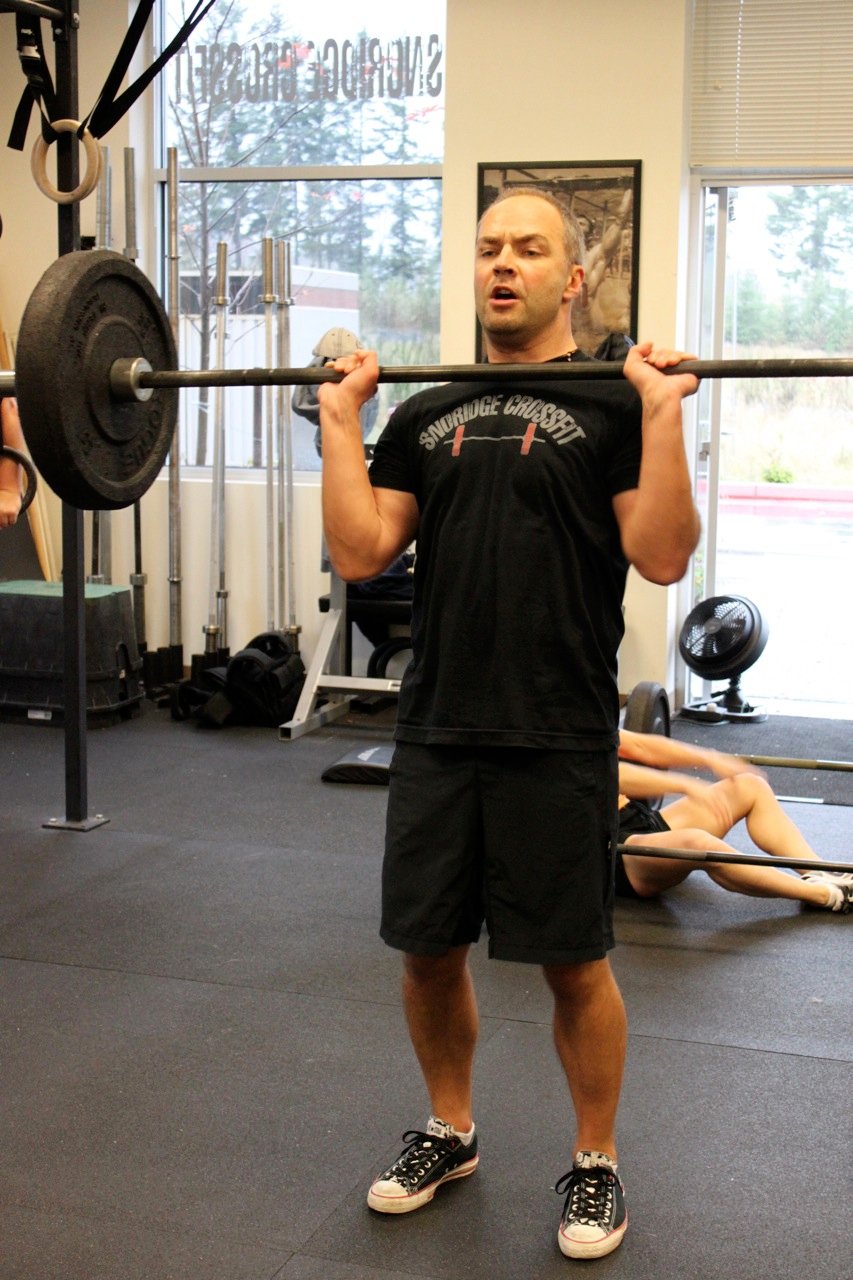
Train the hang power clean once or twice per week, early in a workout when you are not exhausted. Warm up with general movement and progressively lighter pulls and catches before loading the bar. Short sets are appropriate because the intent is high-quality speed. Use one to three repetitions per set, with enough rest to regain crisp movement. A coach can individualize this progression based on mobility, experience and the ability to exit missed lifts safely.
Week 1 – establish a clean hang: Perform five sets of two light high-hang power cleans, pausing briefly in the start. Add a few front-rack holds and unloaded hinge rehearsals. Do not add weight while the bar travels forward or the elbows fail to rotate. The success criterion is five comparable sets, not a number on a plate.
Week 2 – find a consistent mid-thigh pull: Perform five to six sets of two from mid-thigh at a load you can move sharply. Rest roughly 90 to 150 seconds or more when needed. Film a side-view set to compare the bar path against Week 1, without trying to make every minor body position look identical to someone else’s proportions.
Week 3 – contrast starting heights: Do three sets of two from a high hang and three sets of two from a knee-height hang. Use a light enough load for both. Notice whether the longer hinge changes balance, whether the arms bend early and whether the same front-rack catch remains possible. Return to the easier hang height if the deeper one erodes technique.
Week 4 – consolidate: Choose your best hang height for four to six sets of one to three crisp reps. Add a small amount of load only when all repetitions look controlled and explosive. If the bar crashes, the catch drops below parallel or the path swings, stay at the same weight or go lighter. Repeating a successful technique week is progress, even when the top load does not change.
Keep a simple record of bar weight, hang height, sets, reps, video observations and receiving confidence. The aim is repeatable power, not maximal fatigue. If the bar is well accelerated and the shoulders receive it safely every time, the progression is doing its job.
Some product links may be affiliate links, which can support Mind Muscle Perfection at no additional cost to you.