Advertising disclosure: This page includes affiliate product links that may earn us a commission, as well as products from our own store.
A standing cable chest press looks simple until the handles pull you backwards, your feet start moving and the weight stack becomes the loudest part of the set. It is a chest exercise first, but the machine does not supply the backrest or stability that a seated chest press provides. To make it useful, match the pulley position to the path you want, step into a repeatable stance and keep your torso out of the rep.
The goal is not to show how much cable weight you can move by throwing your body forward. It is to build a press you can reproduce, feel in the chest and progressively overload without a different technique every week.
Set the pulleys and take the handles without losing tension
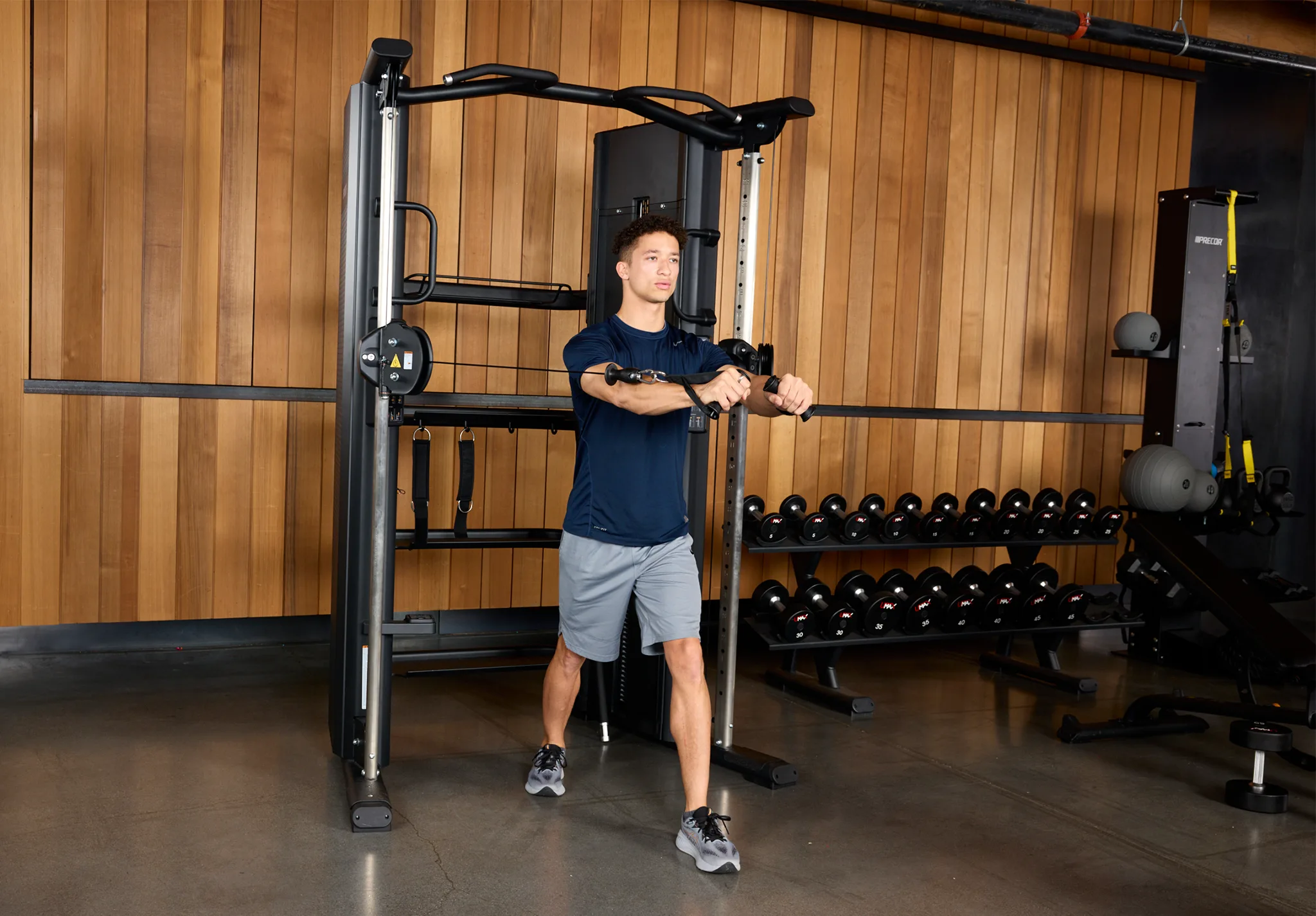
Start with a functional trainer or two independent adjustable cable columns. Put a single-grip handle on each cable, check that the attachment clips close, and set both pulleys at approximately mid-chest height. Match the two heights rather than making one side subtly steeper. This produces a broadly horizontal push; if you deliberately set the pulleys lower and press upward, you are making a different variation with a different shoulder path.
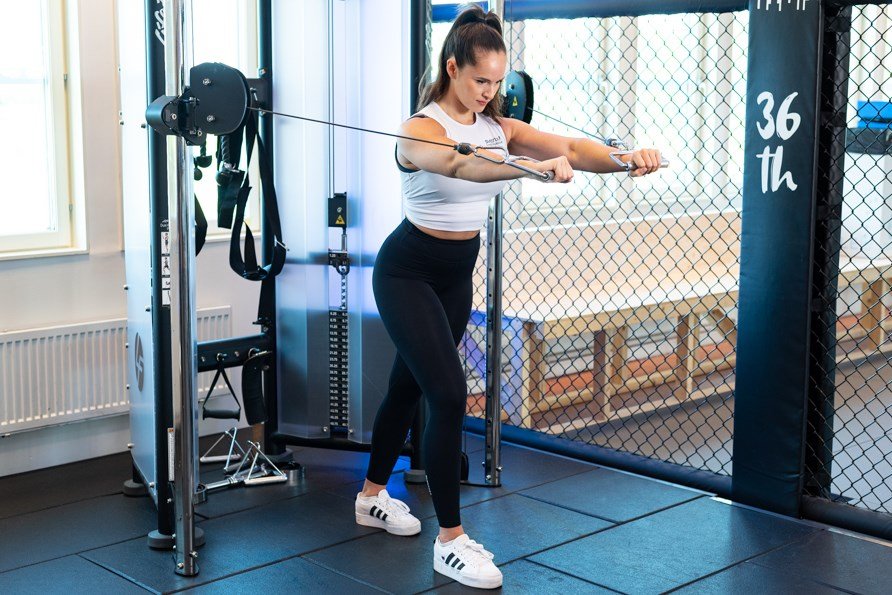
Face away from the stacks with the handles near the sides of your chest and your elbows bent. Take a deliberate step forward, keeping the weight modest enough that the cables cannot jerk you backwards. The weight stacks should be slightly raised in your start position: if the plates settle between every rep, you lose useful resistance in that part of the movement. Check that the cables and handles do not rub against the frame, clothing or each other.
Do not equate the displayed number on a cable machine with the same number on a dumbbell or another trainer. Pulley ratios, stack increments and friction differ. When changing machines, first reproduce your cable height, foot distance and tempo, then find the working load again. Log those setup details alongside the repetitions.
Before beginning a heavy set, perform two slow light reps to confirm the path feels natural on both shoulders. If one cable pulls from an awkward angle, adjust the pulley rather than twisting your torso to make the rep fit. A pair of secure handles and enough space to take a split stance matter more here than a fancy accessory.
Build a stable split stance before the first rep
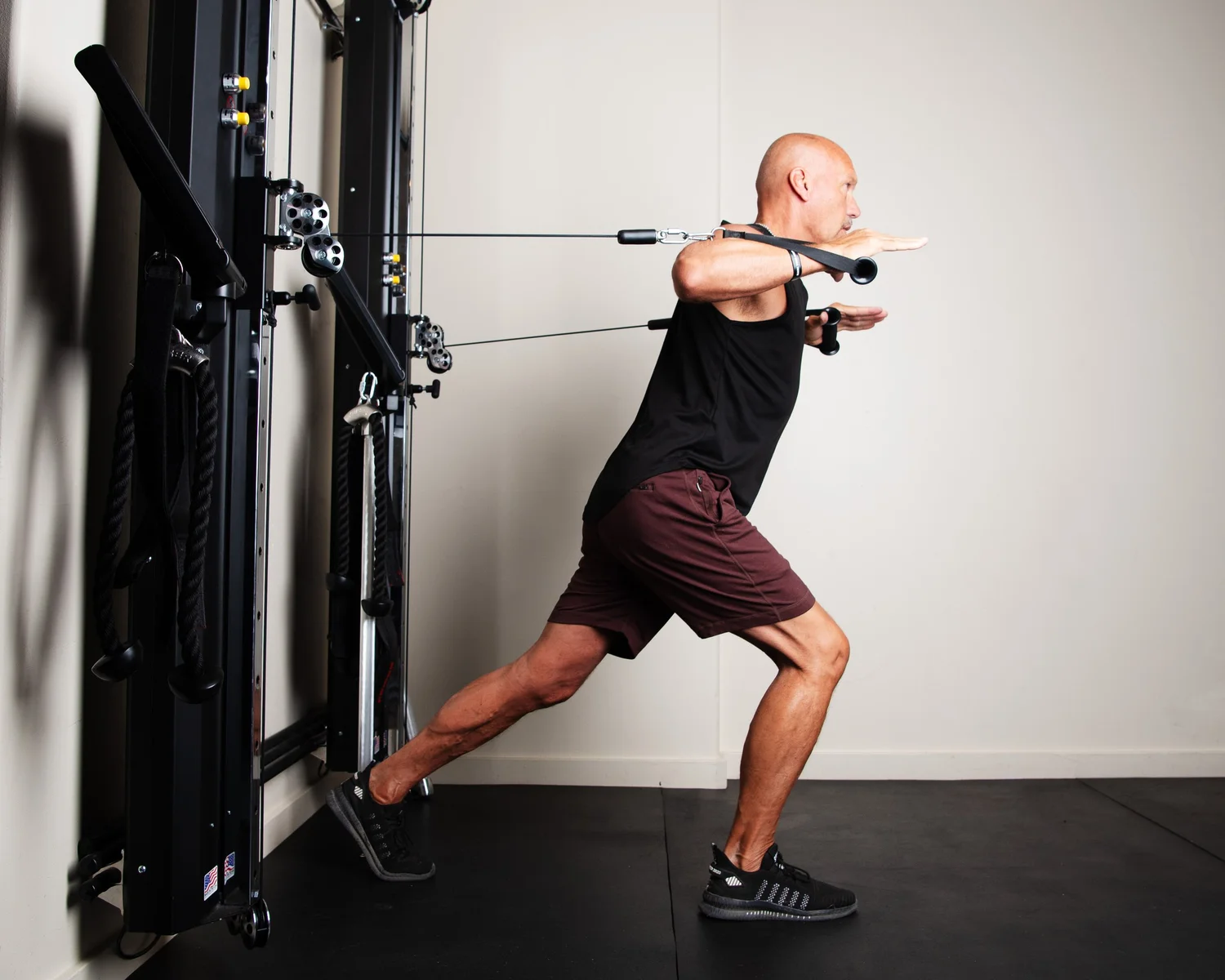
Put one foot forward and the other behind you, roughly hip-width apart rather than on a tightrope. Keep the front knee soft, the rear foot planted or heel lightly raised, and most of your weight centered between your feet. Your stance should counter the backwards cable pull without becoming a deep lunge. Start with whichever foot position feels steadier and alternate the lead foot between sets if one side consistently takes more work.
Bring your ribs over your pelvis before moving your arms. A gentle abdominal brace and lightly active glutes keep the lower back from arching as the load comes forward. A small natural torso inclination is fine; an increasingly dramatic lean with each rep is not. Think of your sternum and belt buckle staying in the same relationship while the handles travel.
Position the feet far enough forward to keep the stack moving, but not so far that you need to tip onto your toes or strain to maintain the starting position. You should be able to pause for a second with both hands by the chest and breathe normally. If you cannot, lower the weight or take a shorter step.
A stable split stance is not proof that the exercise is automatically superior to a bench press. It simply adds a balance demand. The legs and trunk work to prevent unwanted movement, but that same extra challenge can limit how much useful pressing work the chest performs. Choose the load by what your chest and shoulders can control, not by the largest stack setting that leaves you upright.

Equipment Worth Exploring
Explore equipment, accessories and gear from our carefully selected range.

VForce Wall Trainer
Space-saving wall-mounted functional trainer with pivoting cable arms and variable resistance ratios.

Multi Pull Smith Rack MPHR-780
All-in-one rack with a Smith machine, functional trainer, lat pulldown and low row.

VForce 2IN1
Half rack and pivot-arm functional trainer with switchable 1:1 and 2:1 pulley ratios.

VForce 3IN1
All-in-one rack combining an adjustable Smith machine, functional trainer, and free-weight station.

VForce 3IN1 Max
Six-post all-in-one rack with Smith machine, functional trainer, and variable-force cables.
VOLTRA
Compact digital cable trainer with smooth, adjustable resistance.

Go-Tone Pro
Portable digital cable trainer with up to 66 lb (30 kg) of adjustable resistance.

GymPin Ergo Handles
Pair of ergonomic cable handles shaped for comfortable triceps and pulling exercises.


Angles 90 Grips
Flexible grip attachments that allow natural wrist movement during pulling exercises.
Press through your chest without turning the movement into a lunge
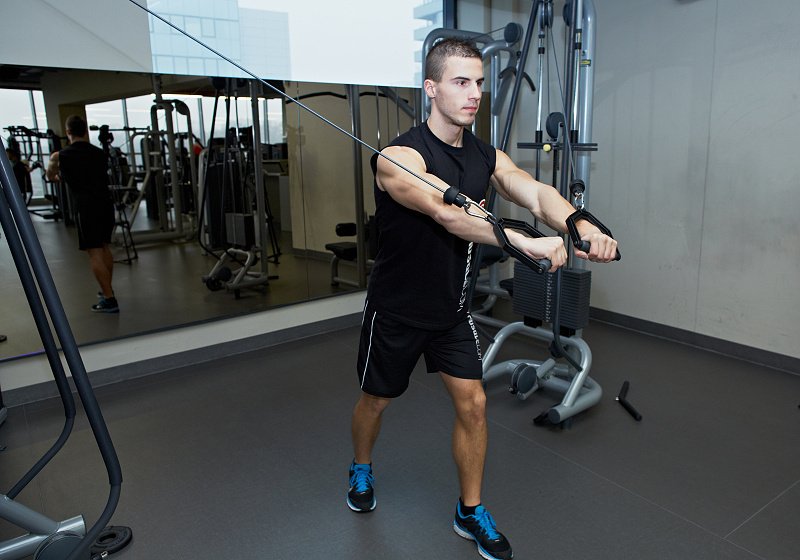
Start with the handles beside the chest, wrists approximately in line with the forearms, and elbows neither jammed into your ribs nor flared straight out at shoulder height. For many lifters, a moderate elbow angle feels smoother than either extreme. Press both handles forward and slightly inward, finishing with nearly straight arms in front of the chest. Do not force the handles to collide or violently lock the elbows.
Let the shoulder blades move naturally on your rib cage as you reach, rather than pinning them rigidly backwards through the entire press. Keep the neck relaxed and avoid shrugging the handles toward your ears. The chest contributes to bringing the upper arms forward and across the body; the triceps help straighten the elbows. The hands move, but the feet, hips and trunk should look almost boring.
Pause briefly in the extended position without snapping the elbows, then reverse the path for a controlled return. Stop when your hands are comfortably beside the chest, before the cables pull your upper arms far behind the torso. More stretch is not automatically better if it requires the shoulders to roll forward or you to lose your rib position.
For a useful working tempo, try about one to two seconds forward, a short controlled finish and two to three seconds back. Those numbers are coaching choices rather than physiological laws. The important part is that neither the first rep nor the last depends on a sudden body swing. If the weight stack crashes at the bottom, change your distance, slow the eccentric or use less weight.

Funny Gym Shirts & Workout Gear
Funny gym shirts, tanks, hoodies and workout gear for lifters who like training hard.

Bob The Bodybuilder & Meme , & Gains Top T-Shirt
Show some powerlifting attitude with a playful “Bob The Bodybuilder” tee.

Shirt – Muscle Inflation Graph Gymbro Meme Top & T-Shirt
Heavy lifts, good laughs, and a little “Muscle Inflation Graph” energy.

My Bench Press Is Stuck Tee
Heavy lifts, good laughs, and a little “My Bench Press is Stuck Funny Horror” energy.

Shirt – I Want You To Bench Press Uncle Sam T-Shirt
Heavy lifts, good laughs, and a little “I Want You To Bench Press Uncle Sam” energy.

Progressive Overload Milo Bull : Greek Mythology T-Shirt
Show some bodybuilding attitude with a playful “Progressive Overload Milo Bull” tee.

I Love Bench Press Muscle | Heart Plate Gym Vest for Ch Tank Top
Add some lifting attitude to training with “I Love Bench Press”.


Know what the cable press trains and how it differs from flyes
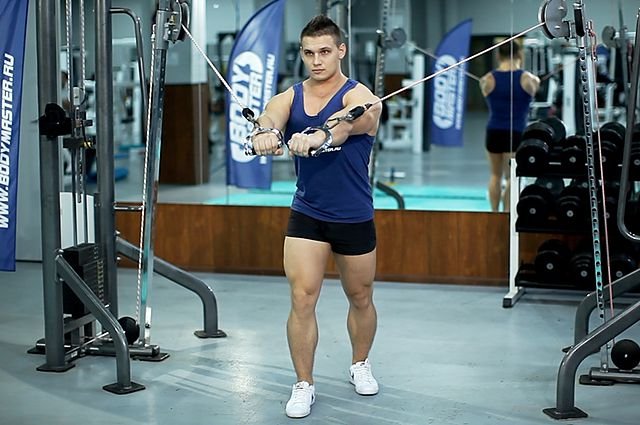
The standing cable chest press is a compound horizontal push. Your pecs supply much of the movement at the shoulder, with the triceps and front delts assisting; your trunk and lower body help you remain in position. Because both hands move independently, the cables can allow a comfortable pressing line rather than forcing every lifter into the same fixed machine path.
It is not a cable fly. In a fly, the elbow angle stays relatively consistent while the upper arms sweep inward. In a press, the elbows actively bend and extend, so the triceps contribute much more. You can use both movements in a chest program, but treating their loading and progression as interchangeable creates confusing records.
A supported machine chest press can make heavy progressive loading easier because the backrest removes much of the standing balance requirement. A bench press or dumbbell press likewise offers a different relationship between stability, resistance direction and available load. The standing cable version is especially useful as a moderate-load accessory when you want independent handles, adjustable height or a pressing pattern without setting up a bench.
Place it after your heaviest bench or machine pressing if your priority is maximum strength on those lifts. If you specifically want to improve the standing cable press, put it earlier while fresh. Neither sequence needs mystical justification: exercise quality, available energy and your actual training goal should decide. For many chest-focused sessions, two or three hard sets after a main press are plenty.
Equipment Worth Exploring
Explore equipment, accessories and gear from our carefully selected range.
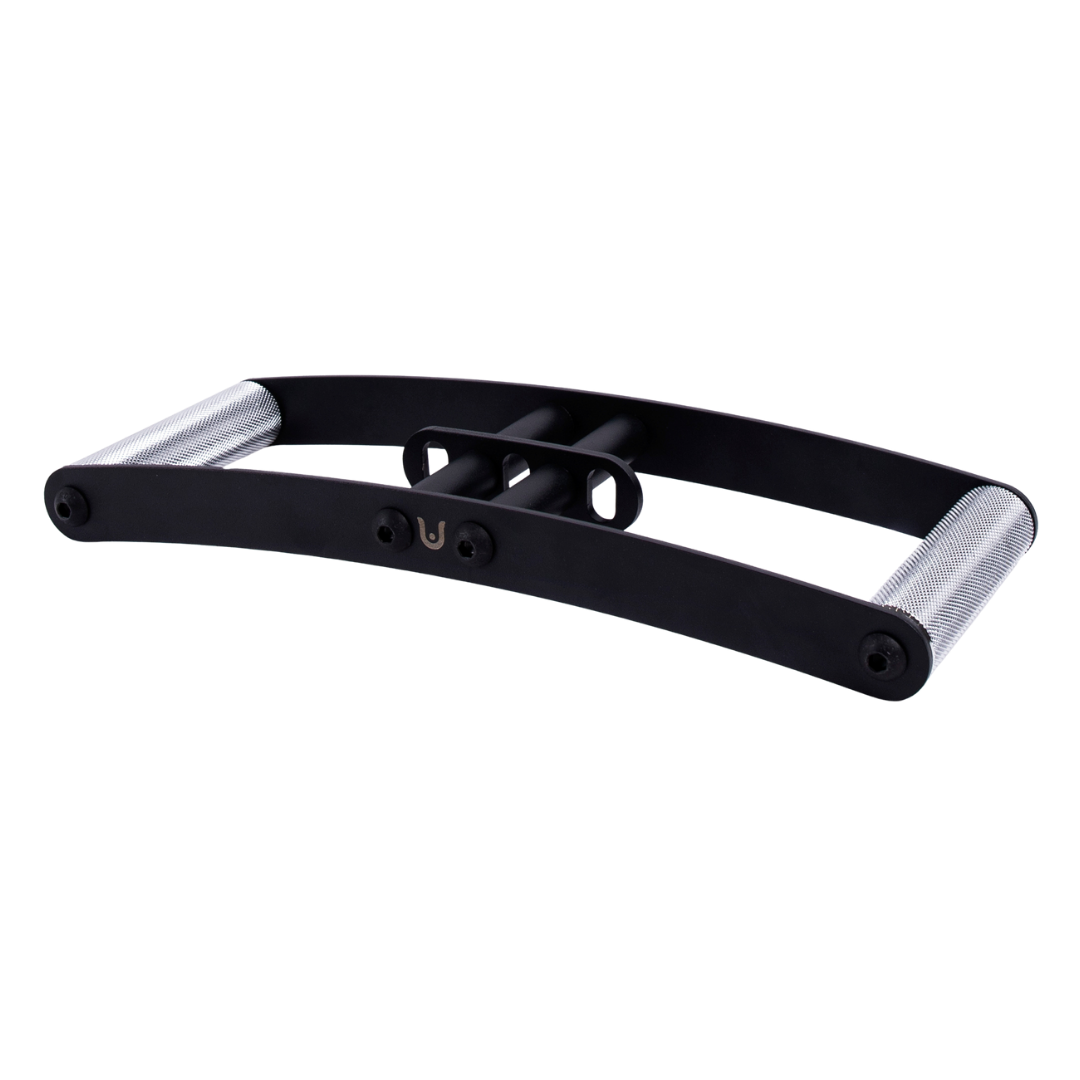
Horizon Grip
Ergonomic V-style cable grip for rows and back training.

GymPin D Cuffs
Adjustable wrist cuffs with textured grips for supported cable-machine exercises.
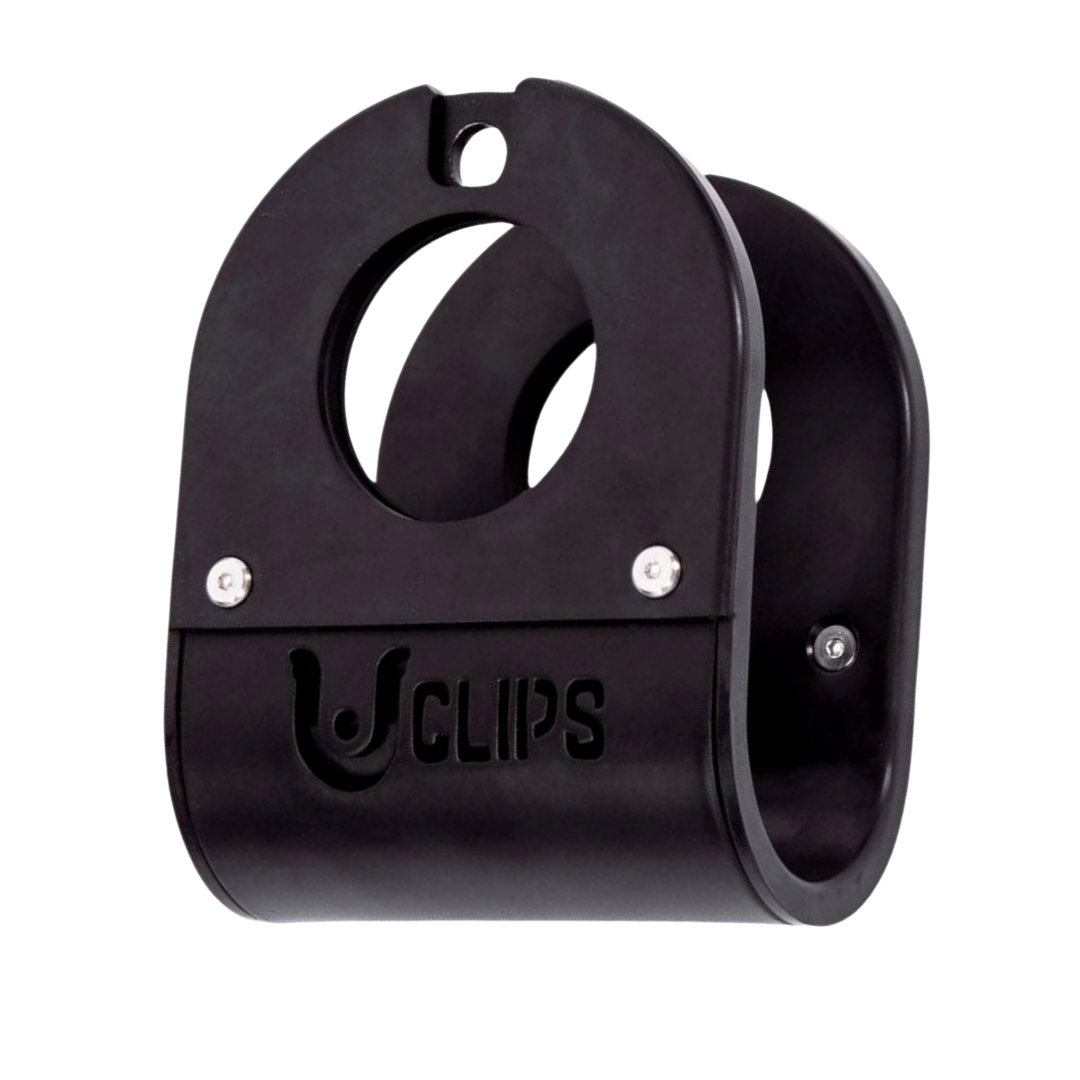
U Clips
Versatile gym clips for barbell, landmine, and attachment setups.
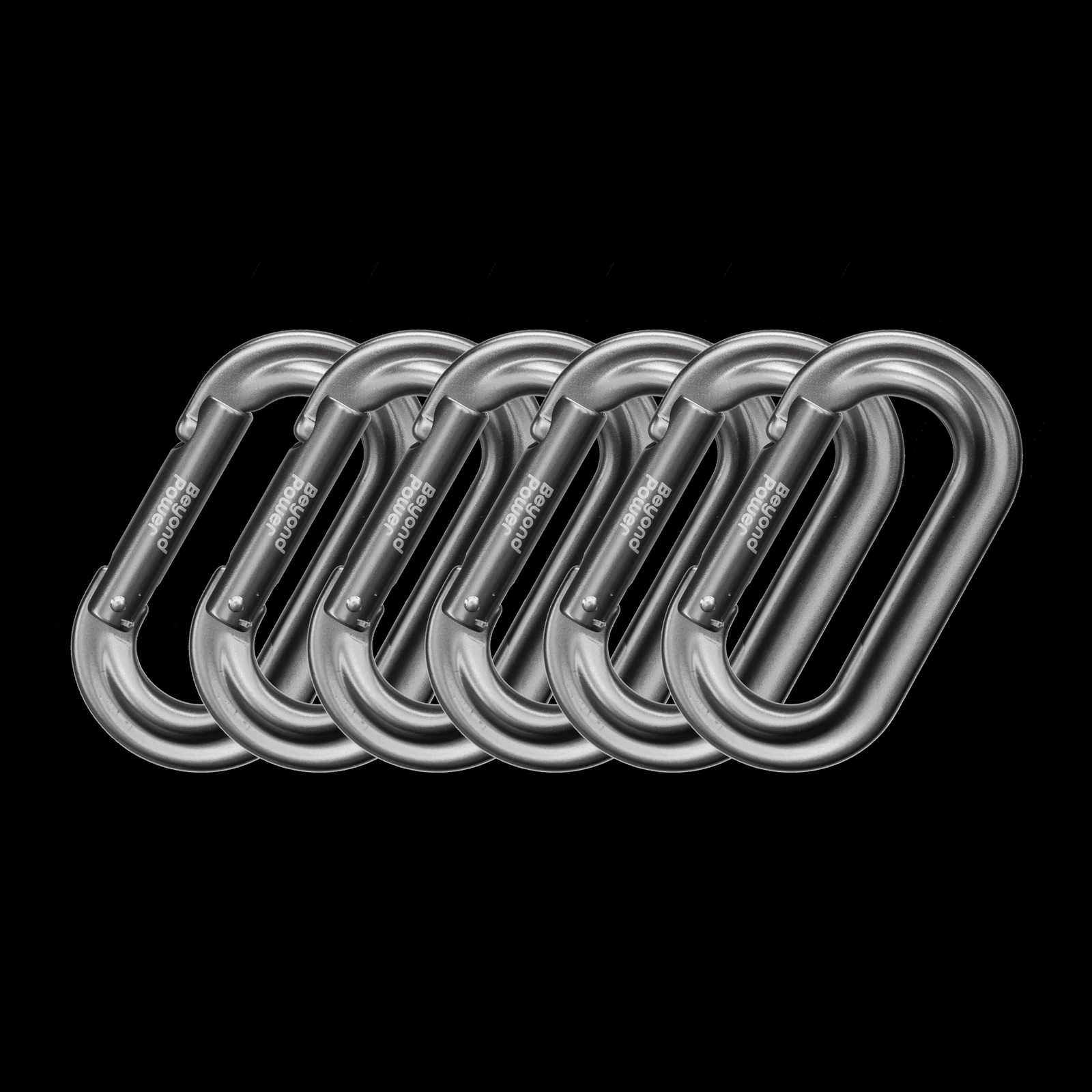
Premium Carabiner
Durable carabiner for connecting cable attachments and training accessories.


GymPin D Handle Bar
Multi-use steel D-handle bar for cable rows, pulldowns and other cable exercises.

VForce Lat Tower
Wall-mounted cable tower with pivot arms and adjustable 1:1 or 2:1 pulley ratios.

Standing Chest Press SCP-760
Standing chest-press machine with adjustable handle positions for chest and close-grip pressing.

Pec Fly/Rear Delt PEC-650
Combination machine with adjustable movement limits for chest fly and rear-delt exercises.
Fix the mistakes that steal work from your chest
The whole body lunges into the handles. If your front knee bends more deeply as the arms extend, your body is helping push the load. Lighten the stack, keep your sternum relatively still and repeat the same foot placement. If the press turns into a balance contest, use a seated or supported version for your hard chest work.
The weight stack rests on every return. This often means you are standing too near the station, especially at the bottom of the rep. Move a small step forward so the plates stay off the stack, without stretching the shoulders into an uncomfortable position. Check that the stack is actually moving freely and that the handles do not hit the machine frame.
Shoulders shrug or elbows flare wildly. Reduce the load and check that the pulleys are near your intended chest-level path. Allow natural shoulder-blade movement, but keep the wrists stacked and avoid reaching by arching your lower back. If a particular joint angle causes pain, shorten the range or change the grip; do not try to train through sharp discomfort.
One arm arrives sooner. The stronger side may steal the finish even when the stacks look identical. Film one set from the front or work with a lighter weight, aiming to finish the handles together without rotating your shoulders. You can add unilateral work, but do not automatically treat every asymmetry as an injury or a diagnosis.
The chest barely feels involved. A sensation of burn or pump is not the sole measure of a good set. Check the basic mechanics before searching for exotic cues: are you pressing rather than swinging, using an appropriate elbow path, and taking the working muscles close enough to a challenging but controlled finish? Keep repetitions honest and review strength progression across sessions.
Use single-arm pressing and a four-week progression wisely
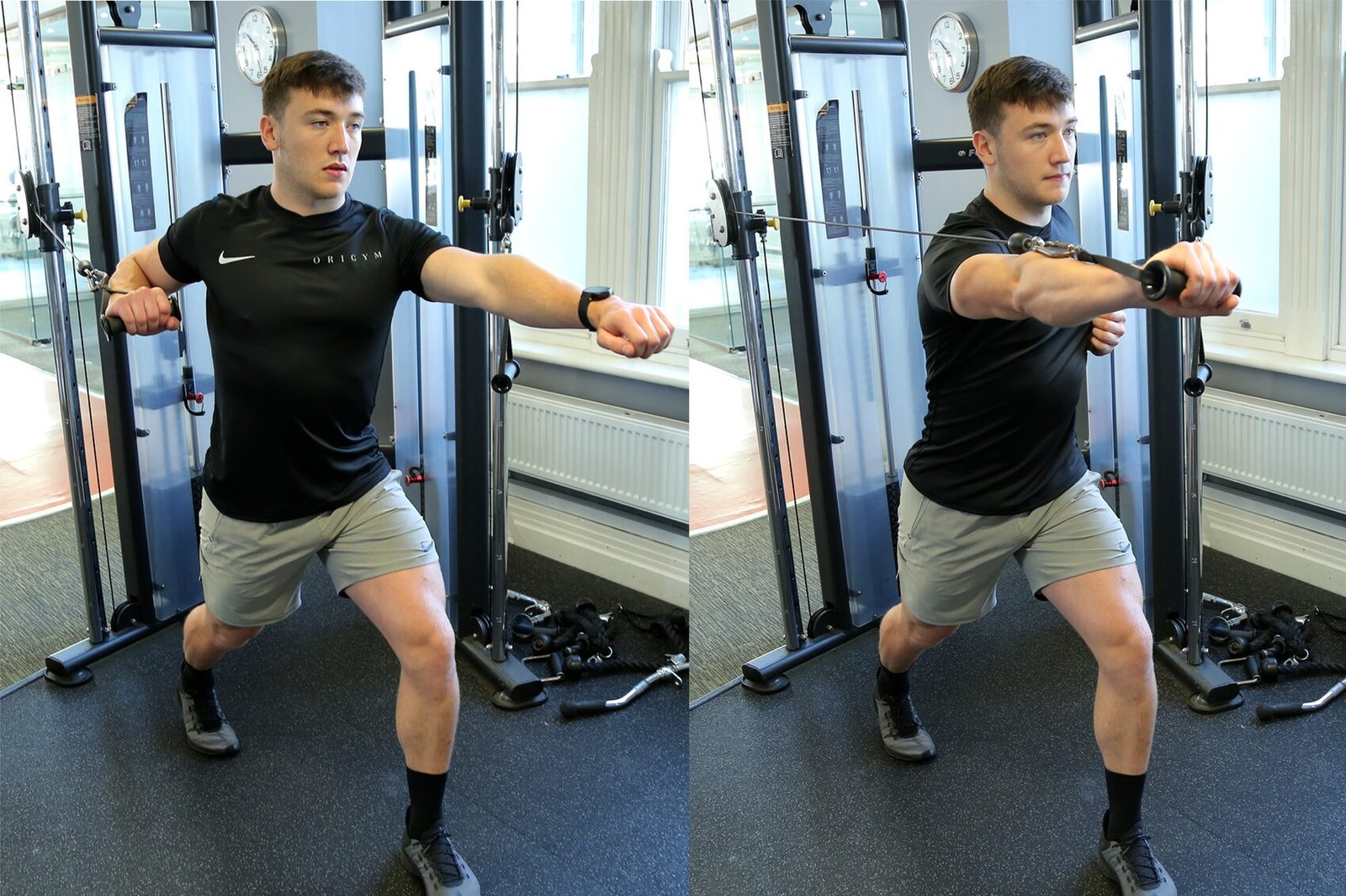
For a single-arm cable chest press, use one handle at about chest height, face away from the station and press one hand forward while resisting the urge to rotate the rib cage or hip toward the working arm. A split stance often helps; you can try either lead leg and choose the position that lets the arm do the pressing. Use a lower load than the bilateral version until you can complete every rep without twisting.
Unilateral work makes the anti-rotation demand more obvious, but it does not need to become a core exercise at the expense of chest work. Start with the weaker or less coordinated side, match its clean repetitions with the other side, and avoid speeding up or lengthening the stronger side’s set to compensate. For comparison, record load per cable rather than adding two independently displayed stack numbers and assuming all machines are equivalent.
A practical four-week starting plan is two chest-press sessions per week with at least a day between them. In week 1, use two sets of 10 to 12 repetitions at a moderate effort, leaving roughly two or three clean reps in reserve. In week 2, retain the load and aim to add one rep per set without changing the stance. In week 3, move toward 12 to 15 controlled repetitions; add a third set only if recovery and your full chest workload allow it. In week 4, increase one small weight increment after you achieve the top of your chosen range with consistent form, then work back toward its lower end.
This is a progression template, not a promise of results in four weeks. If the weight jumps are large, add repetitions or improve your control before increasing the stack. Track cable height, lead foot, number of sets, reps and an honest effort estimate. The best standing cable chest press is the one you can reproduce and improve without turning every set into a different movement.
Bodybuilding Shirts & Workout Gear
Bodybuilding shirts, tanks and gym gear for lifters chasing muscle, size, symmetry and the pump.

Jurassic Pump Dinosaur – Meme , & Gymbro Gains T-Shirt
Rep “Jurassic Pump Gym Dinosaur” humor in and out of the gym.

Shirt – Pumped & Furious Meme – Muscles And Cars & T-Shirt
Rep “Pumped & Furious Gym Meme” humor in and out of the gym.

Train Hard Geek Harder Wizard Fantasy Swoleplaying T-Shirt
Show some gaming attitude with a playful “Train Hard Geek Harder Gym Wizard” tee.

Hustle Stoic Bodybuilder : Meme Shirt & Greek God T-Shirt
Heavy lifts, good laughs, and a little “Hustle Stoic Bodybuilder” energy.

Massive Stoic Bodybuilder Marble Statue Meme T-Shirt
Show some lifting attitude with a playful “Massive Stoic Bodybuilder Marble Statue” tee.

Bodybuilder LEGO Gym | Funny Workout & Fitness Meme Fan Hoodie
Stay casual and show some lifting attitude with “Bodybuilder LEGO”.

Pumping Love Strong Heart Stronger Soul Funny Valentine T-Shirt
Make gym days more fun with “Pumping Love Strong Heart Stronger Soul” style.

Gym Sir Swole of Benchalot Medieval Knight Bench Press T-Shirt
Make gym days more fun with “Sir Swole of Benchalot Medieval Knight” style.

Incredible Pump Hulk Tee
Show some superhero attitude with a playful “The Incredible Pump Hulk” tee.

Optimus Pump | Transformers Workout Sweater | Robot Pul T-Shirt
Add a playful “Optimus Pump” touch to your casual rotation.