Advertising disclosure: This page includes affiliate product links that may earn us a commission, as well as products from our own store.
The landmine lateral lunge combines a side step with the guided arc of an anchored barbell. It can be a demanding lower-body accessory, but only if the pivot is secure, the step is repeatable and the load does not force your knees or torso into an awkward position. Here is how to make the movement train your legs instead of fighting the equipment.
Secure the landmine and leave room for the bar’s arc
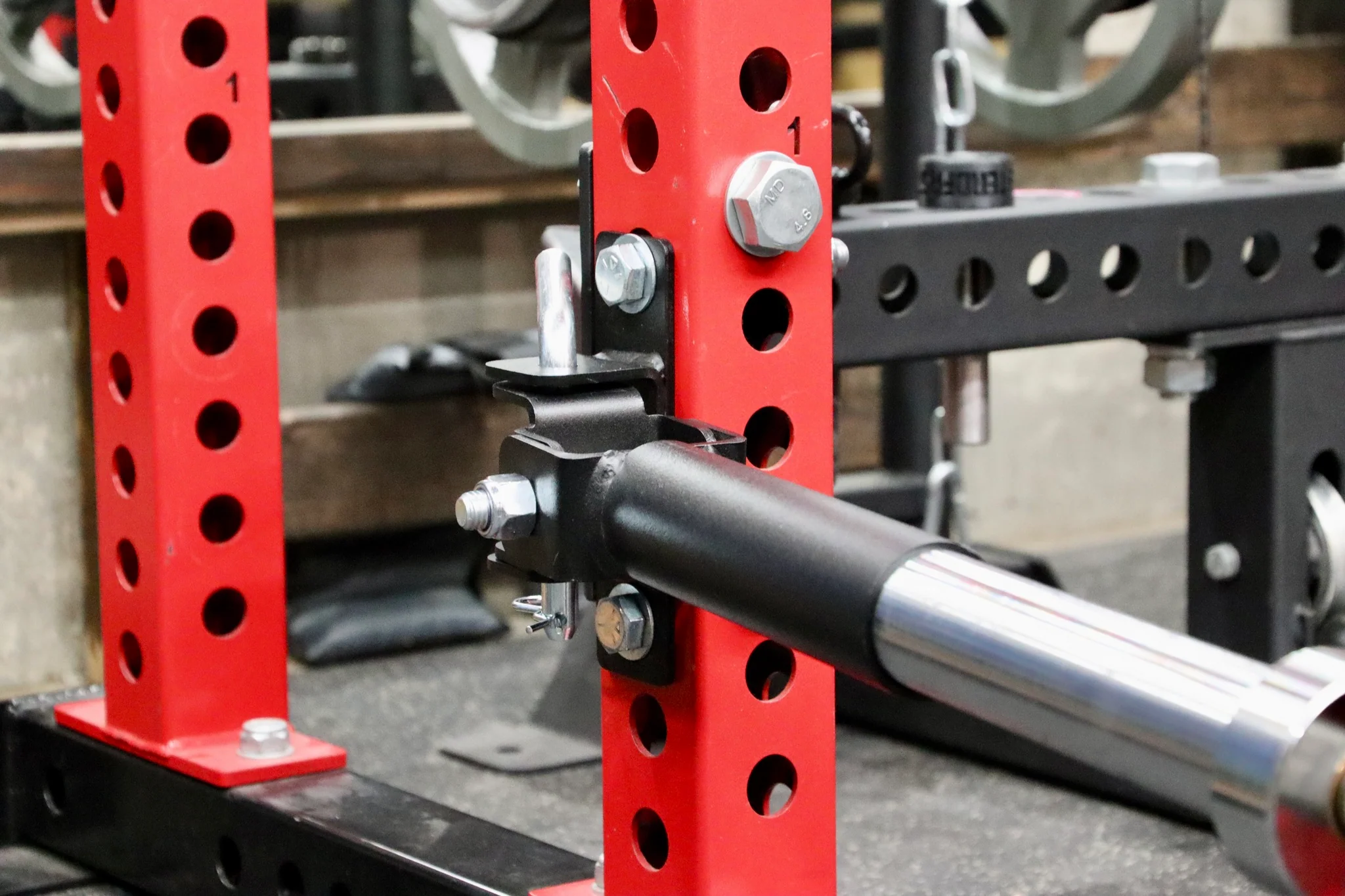
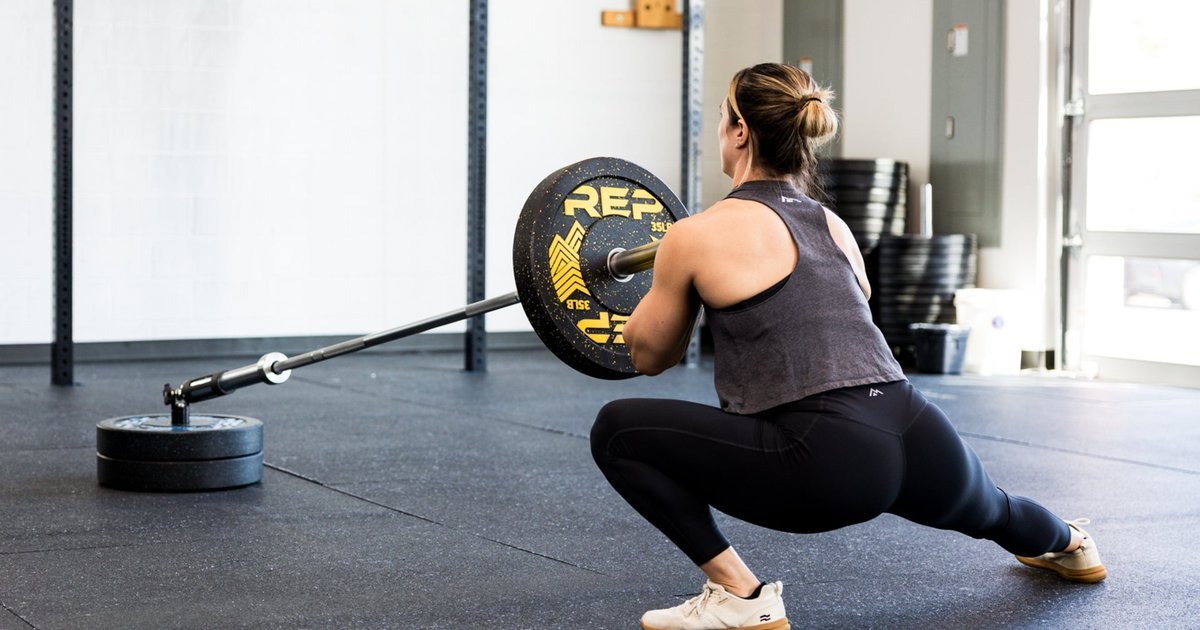
A landmine lateral lunge is a side step with the loaded end of a barbell held near your chest and the other end anchored to a pivot. That last detail matters more than the number of plates. Unlike a dumbbell that can simply hang at your sides, a landmine rotates through a fixed arc. You must position yourself so the bar follows the same general direction as the step rather than twisting your grip or dragging your shoulders away from your hips.
Start by confirming that the landmine base is attached as its manufacturer intended. For a rack-mounted receiver, check the pin or bolts, confirm the rack is stable and make sure the sleeve fits the receiver. For a plate-mounted or floor-standing pivot, verify that the base cannot skate, tip or lift as the bar moves sideways. A barbell stuffed into an unsecured corner is not an equivalent substitute: it can mark a wall, damage the sleeve or slip. Give nearby lifters and equipment plenty of space.
Put a manageable weight on the working end and secure it with the appropriate collar if your setup requires one. Remember that the resistance at your hands is not the same as the number printed on the plate: the bar’s weight, angle, lever arm and pivot location all affect the feel. Start with the unloaded bar when learning. Lift its free end under control, cup the sleeve or designated handle with both hands and hold it comfortably near the lower chest, with wrists neutral and ribs stacked over the pelvis.
Try two shallow unweighted steps before your first working set. Watch the pivot and observe whether you can reach the right and left positions without the bar end colliding with your knees, floor, plates or rack. A slight adjustment in distance from the anchor often improves the path immediately. Choose traction and footwear that let the stepping foot plant securely; a wide lunge on a slippery surface is a poor place to challenge your grip.

Equipment Worth Exploring
Explore equipment, accessories and gear from our carefully selected range.


Foldable Wall Rack
Wall-mounted folding squat rack designed to save floor space between workouts.

Competition Plates
Competition-style bumper plates for Olympic lifts and loaded strength training.



Step laterally without letting the bar drag your torso
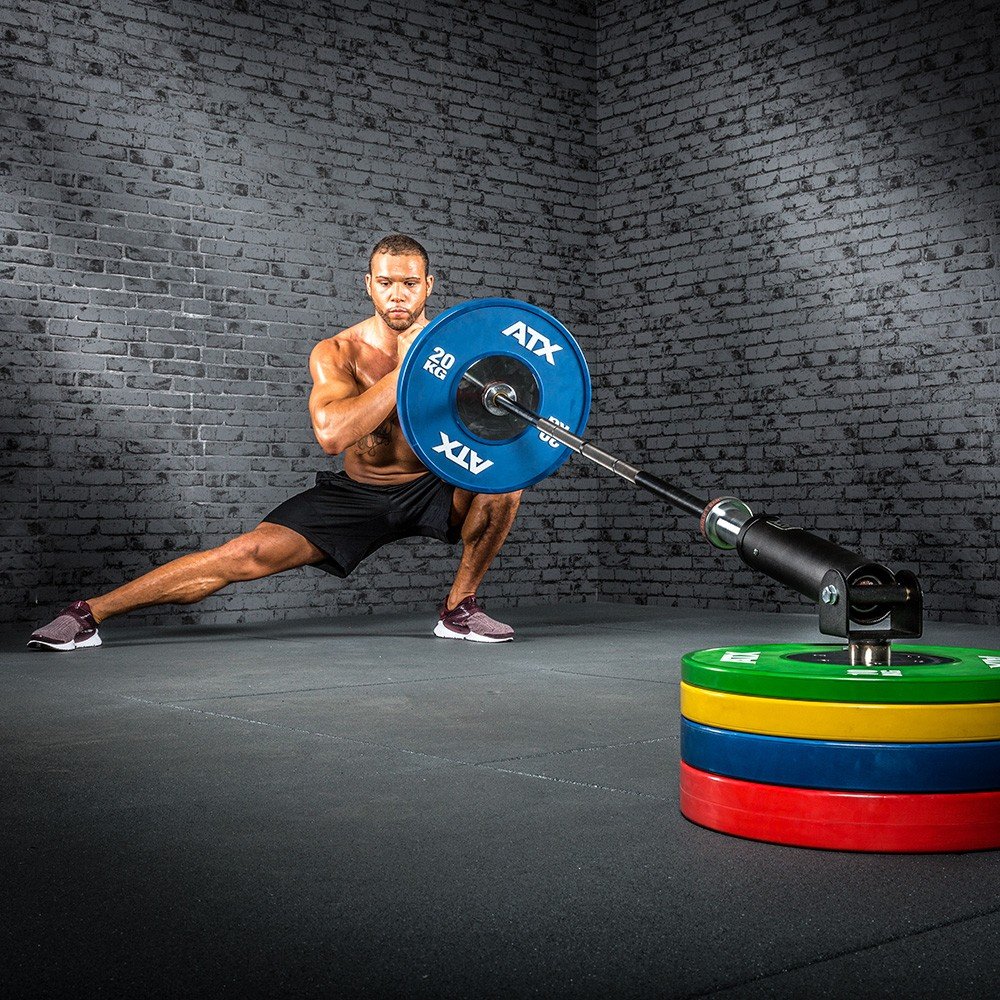
Begin tall in a comfortable stance, with both hands supporting the landmine end at chest height. Brace as if you were about to receive a light push to the ribs. Step one foot out to the side and let the stepping hip travel back as that knee bends. Keep the opposite leg longer, not forcibly locked, while both feet maintain useful contact with the floor. The aim is to lower your body between the hips, not reach the bar forward in front of the shoulders.
Think of the moving knee tracking broadly in the direction of that foot. Toes may turn out slightly if that helps your anatomy and depth, but avoid letting the knee cave abruptly inward as the foot rolls to its inside edge. Your chest can incline forward a little; it does not need to remain perfectly vertical. What matters is keeping a controlled trunk and a hip-dominant shift rather than collapsing at the lower back.
The bar travels in an arc because the far end is fixed. Do not fight that geometry with a sudden arm curl or long reaching motion. Keep the sleeve close enough that your shoulders can stay organized. Your hands are there to guide and support the bar, not make your elbows the prime movers. A smooth tempo is more useful than chasing the deepest possible position.
Drive through the planted stepping foot to bring your hips back toward center. Stand tall without leaning backward, reset your balance and repeat. You can alternate sides one rep at a time, but completing a small set on one side can make it easier to standardize depth, especially when you are new to the equipment. The first goal is a nearly identical start, bottom and return on every repetition.
Use a simple five-point checklist: pivot fixed; sleeve supported at the chest; wide step and full-foot contact; knee following the foot; controlled push back to center. If any element falls apart before the set is finished, lower the load or shorten the range instead of turning the last reps into hurried side bends.

Leg Day Shirts & Workout Gear
Leg-day gym shirts and workout gear for lifters who never skip squats, lunges and lower-body punishment.


Leg Day Is Calling You Squats, Deadlifts & Gains T-Shirt
Rep “Leg Day Is Calling You” humor in and out of the gym.

Never Skip Leg Day Squats & Deadlifts Meme , Top T-Shirt
Show some leg-day attitude with a playful “Never Skip Leg Day” tee.

Legendary Leg Day – Squat Meme Hooded Pullover Hoodie
Keep it laid-back with a little “Legendary Leg Day” attitude.

Leg Day Leg Sweater Squats & Meme T-Shirt
Bring “Leg Day” humor to your everyday gym style.

Leg Day Squats Deadlifts Decal Meme Vinyl Sticker
Give your everyday gear a playful “Leg Day” twist.


Coffee Shots & Heavy Squats for Leg Day, Lifting and Fi Tank Top
Add some leg-day attitude to training with “Coffee Shots & Heavy Squats”.
Find the working hip, whole-foot pressure and useful depth
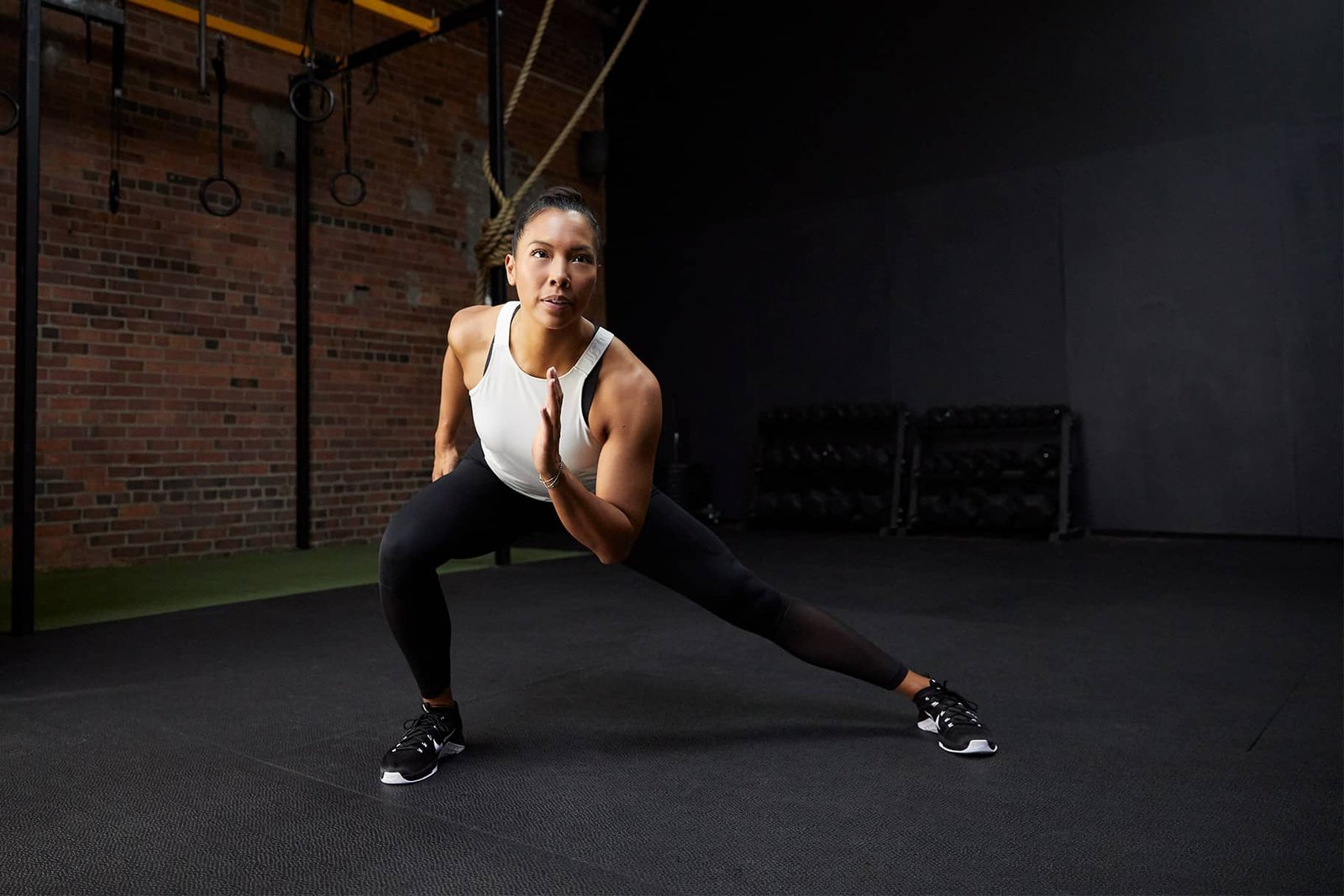
The lateral lunge is a useful contrast to the forward-and-backward patterns that dominate many leg programs. Standard squats, split squats and deadlifts provide plenty of lower-body work, but a deliberate side step asks you to organize hip movement and balance in a different direction. That does not make the landmine version automatically superior. It means you have another way to train a pattern that is easy to neglect.
At the bottom, the bent-leg hip travels back while the knee flexes. Let that whole foot stay connected to the floor. A common mistake is landing too far away and ending up on the toes with the heel floating. The opposite error is stepping too narrowly and turning the exercise into a squat with an awkward stance. Begin with a moderate width and earn depth gradually; your usable range depends on hip mobility, ankle motion and balance, not on copying another lifter’s footage.
If you feel the exercise almost entirely in the groin of the straight leg, stop forcing an end-range stretch. Reduce the step width or depth and rebuild control on the working leg. Some sensation of the adductors lengthening is expected, but sharp pulling or pain is a reason to stop. The straight leg can be softly bent, and its foot can pivot slightly when required. There is no prize for keeping both shoes perfectly parallel at the expense of joint comfort.
Practice one or two bodyweight lateral lunges facing a mirror or filming from the front before adding the landmine. You should see the bending knee move without sudden inward collapse, the foot retain pressure and the trunk remain quiet. A side view can show whether you are actually shifting the hip backward instead of merely leaning at the waist.
Treat depth as a repeatable range, not a flexibility contest. If one side stops five centimeters higher than the other but both feel controlled, use the smaller range initially. The ability to maintain a deliberate movement and regain standing balance is more useful than briefly reaching a dramatic bottom position.
Understand the muscles and what the landmine actually changes
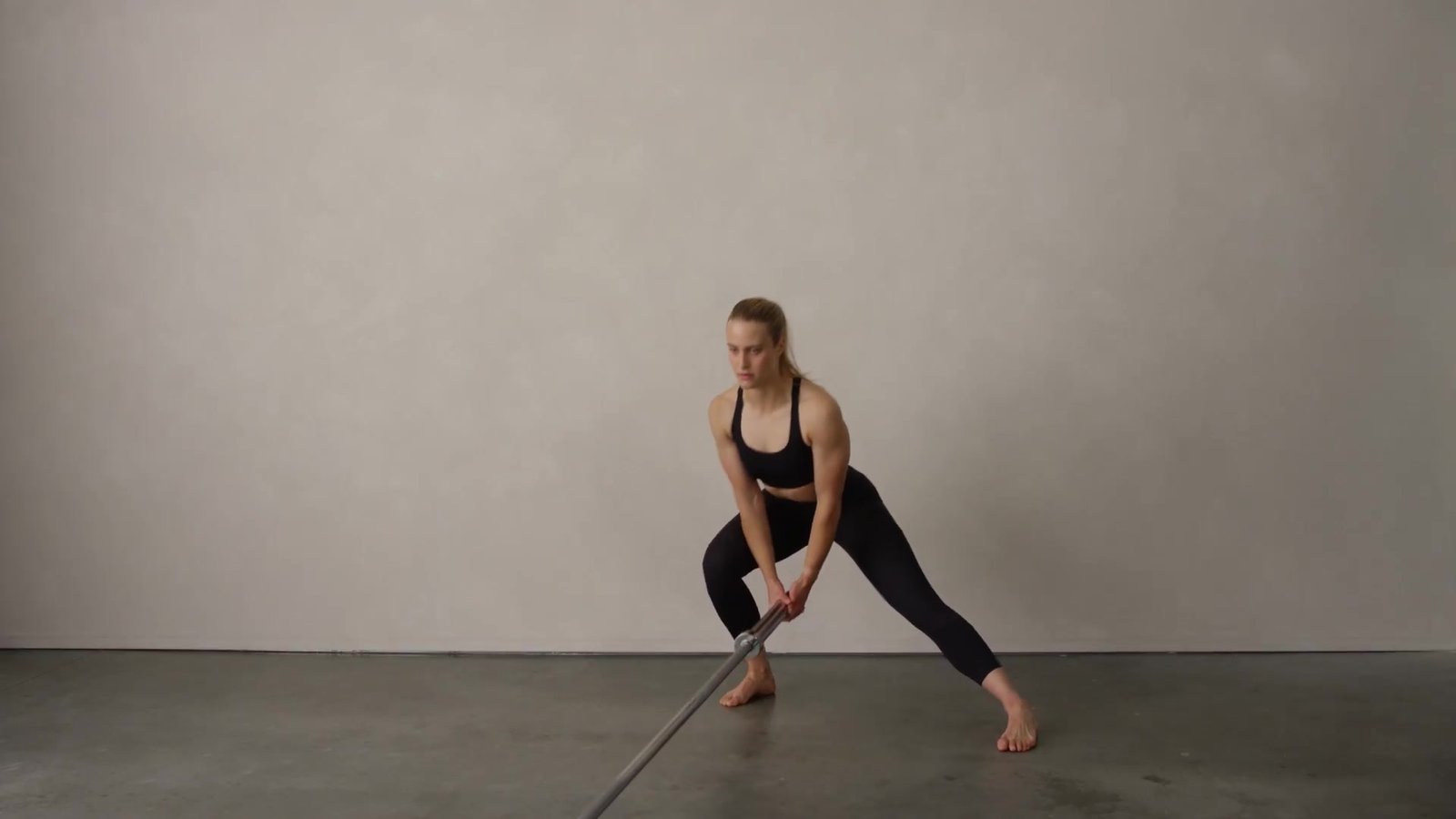
The quads help extend the working knee as you rise. The glutes contribute to hip extension and help control the hip during the side step. The adductors have substantial work to do as the hip moves laterally and returns, while your trunk resists unwanted bending or turning around the bar. Which muscle feels most challenged will vary with your stance, hip angle, depth and the location of the landmine’s pivot.
The landmine changes how resistance is presented: the sleeve follows a curved path, the bar is angled rather than vertical, and supporting it near the chest can feel different from holding dumbbells at the sides. None of these facts proves that this movement builds more muscle than a conventional lateral lunge. A mechanical description is not a head-to-head hypertrophy study. Consider the setup a useful variation, not a shortcut to quad or glute growth.
A weight plate far out on the bar and a plate close to its pivot do not create the same challenge. The force you feel also changes with bar angle throughout the rep, so comparing a landmine number with a dumbbell number is misleading. Track the exact bar, pivot height, plates, stance and depth if you want to evaluate progression. Small improvements are much easier to interpret when you stop changing three variables at once.
For lower-body hypertrophy, the landmine lateral lunge is usually an accessory rather than the only leg exercise. Pair it with your preferred squat or leg press, a hinge or hamstring movement and any needed direct calf work. For field sports, it offers a controlled way to practice force and positioning in a lateral direction, but loaded gym reps alone are not a substitute for actual change-of-direction practice.
Expect coordination to be part of the challenge at first. If balance or the bar path becomes the limiting factor well before the leg muscles are tired, do not conclude the muscles are not being trained; recognize that you need to learn the movement before using it as a serious loading progression.
Equipment Worth Exploring
Explore equipment, accessories and gear from our carefully selected range.

GymPin Squat Wedges
Non-slip 15-degree squat wedges help elevate the heels for deeper quad-focused squats.

Standing Abductor
Plate-loaded standing hip abductor for targeted outer-glute and hip-stability training.

Studio Glute Drive
Plate-loaded hip-thrust machine with supported back pad and adjustable foot platform.

Leg Press/Hack Squat BPR-790
Convertible 45-degree leg press and hack squat machine with a broad footplate and band pegs.

Compact Leg Press CLP-700
Compact reverse-style leg press with a moving seat carriage and an adjustable footplate.

Leg Extension/Curl BCO-780
Leg extension and lying leg curl combo with plate loading, band pegs and a cable-loading option.

Seated Leg Combo BCO-680
Adjustable seated leg extension and leg curl machine with band pegs for added resistance.


Open Hex Bar
Open-frame trap bar with multiple handles for deadlifts, carries, and lower-body training.
Choose regressions, related variations and smarter substitutions
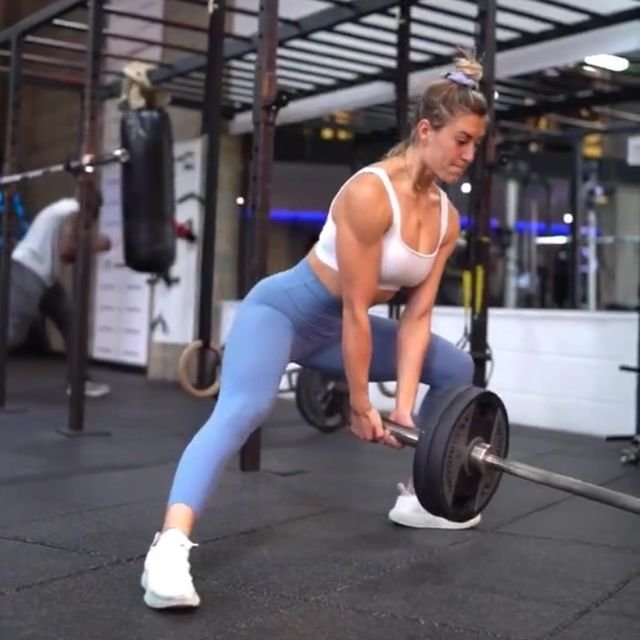
Start with an unloaded bodyweight lateral lunge if you cannot find a stable position while holding the bar. Another option is to hold onto a rack upright lightly for balance, but only if you are outside the bar’s travel path. Once your knee and foot behave consistently, add a light goblet weight or the empty landmine bar. A short-range pause can make it easier to feel the working hip without forcing the bottom position.
A static side lunge is an alternative when stepping out and back repeatedly makes your rhythm sloppy. Place the feet in a comfortable wide stance, shift into one leg and return toward center without changing foot position. A landmine squat shift also uses a fixed bar and a wide stance, but it is not identical: the bar position and side-to-side load transfer can differ considerably. Make the variation deliberate and record which one you actually performed.
A dumbbell lateral lunge is often the simplest direct comparison. It allows the weights to hang without a pivot, although the grip may become the limiting factor. The Cossack squat generally asks for more end-range hip and ankle mobility and deserves its own progression. A reverse lunge trains a different stepping direction; it does not replace all side-to-side work. You do not need to force every option into the same session.
Regress immediately if the pivot moves, the sleeve jams, you feel a sharp groin pinch, the knee wobbles without correction, or the working heel repeatedly leaves the ground. Check setup before assuming the problem is a strength deficit. A shorter stride, slightly different toe angle or lighter bar often restores a good repetition. Persistent or worsening pain merits a qualified professional’s assessment.
Alternatives matter because the goal is training quality, not loyalty to an attachment. If the equipment cannot accommodate your stance safely, use a bodyweight or dumbbell version. Returning to the landmine when you can control it is a progression, not a failure.
Build four weeks of repeatable reps and troubleshoot your form
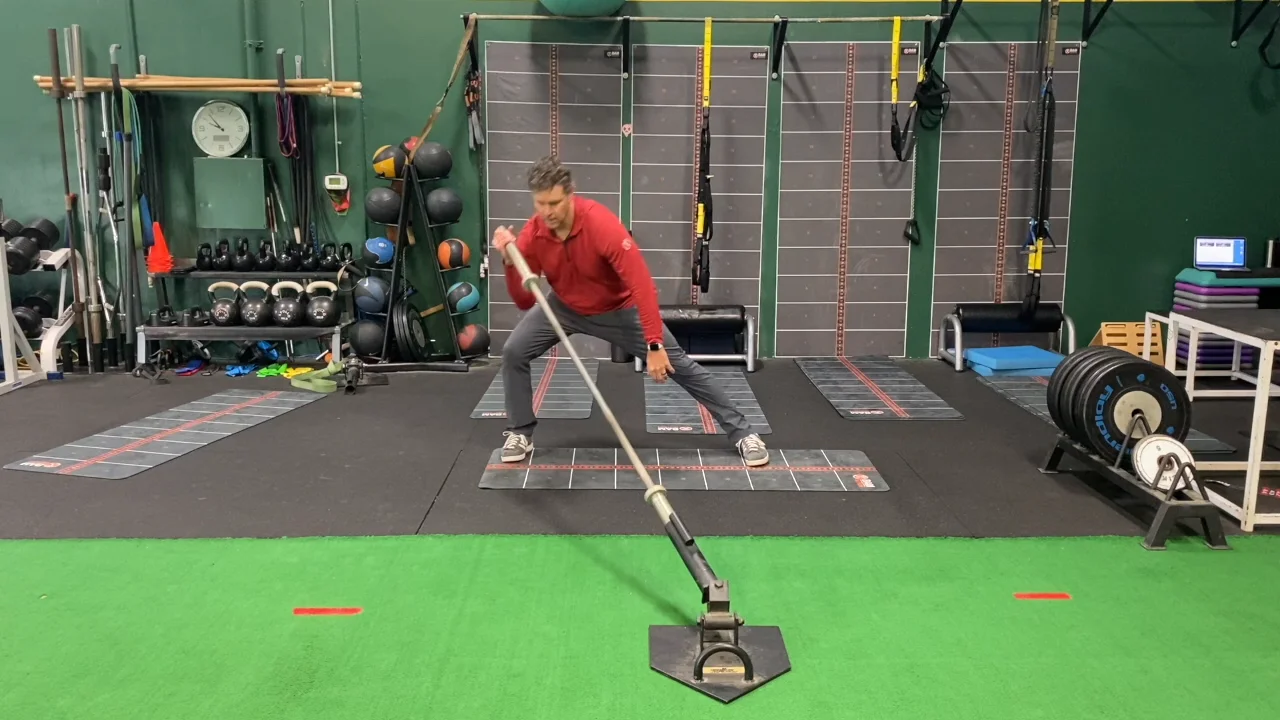
For the first week, do two sessions with two sets of six controlled repetitions per side. Use the unloaded sleeve or a modest plate load and pause briefly at the bottom if it helps you own the position. Allow enough rest to restore balance; that may mean 60 to 90 seconds, more if a hard set leaves you winded. Record how far you step, which foot angle feels comfortable and whether each side returns cleanly.
In the second week, move toward three sets of six to eight repetitions per side without changing the range. Keep the same tempo and use a stable camera angle on one set. If the bar end has begun circling unpredictably or your knees are dancing, you have increased complexity faster than control. Solve the movement first. Do not add weight just because a calendar says you should.
During week three, keep two or three sets, consider a one-second bottom pause, and increase load in the smallest practical increment only when both sides look consistent. Your total repetitions should leave a little room in reserve rather than finish with a compensatory twist. In week four, choose either another small loading increase or slightly cleaner, deeper reps; making both changes aggressively gives you little information about which caused any soreness or instability.
Put the exercise after your principal squat or hinge if strength and hypertrophy are the session priority, or earlier after warm-ups when learning the pattern is the main goal. A sensible leg session might open with squats, follow with landmine lateral lunges, continue with a hinge and finish with hamstring or calf accessories. Adjust set counts to the rest of your weekly workload instead of copying a template regardless of fatigue.
The best progress marker is not how much weight you can stack on the sleeve once. It is how reliably you can brace, step to a repeatable width, control the bottom and push back on both legs over several weeks. Once those pieces are in place, the landmine lateral lunge earns its spot as a practical, measurable addition to your lower-body training.
Bodybuilding Shirts & Workout Gear
Bodybuilding shirts, tanks and gym gear for lifters chasing muscle, size, symmetry and the pump.

Get In Loser We'Re Gonna Squat Booty Leg Day Meme T-Shirt
Show some leg-day attitude with a playful “Get In Loser We're Gonna Squat” tee.

I Love Squats – Valentine's Day Leg Day Meme Jumper T-Shirt
For laid-back days and leg-day humor: “I Love Squats”.

Drake Leg Day Hoodie
Bring “If You're Reading This Its Leg Day” gym humor to lazy days and post-workout plans.

Funny Squat Queen Gym | Burger King Parody Workout Swea T-Shirt
Add a playful “Squat Queen” touch to your casual rotation.

Thick Thighs Crush Guys Shirt – Leg Day Meme & T-Shirt
Bring “Thick Thighs Crush Guys” humor to your next gym day.

Cutie With A Booty Decal Water Bottles & Gear Bunny Sticker
Bring “Cutie With a Booty” attitude to your water bottle or laptop.

Sleeping Booty Bootybuilding Meme Decal Water Sticker
A fun “Sleeping Booty” touch for bottles, laptops, and lockers.

Witch Leg Day & Booty Building Meme Athletic Shirt Tank Top
Add some leg-day attitude to training with “Gym Witch”.

Heavy Metal Skeleton Squat for Powerlifting, Bodybuildi Tank Top
Bring “Heavy Metal Skeleton Squat” humor to your next lifting session.

Zombie Deadlift Sweater Deadlift Lovers & Leg Day T-Shirt
Bring “Zombie Deadlift” humor to your everyday gym style.