Advertising disclosure: This page includes affiliate product links that may earn us a commission, as well as products from our own store.
The muscle snatch is useful only if you keep its defining constraint: move the bar overhead without a second knee bend to receive it. That makes it different from a power snatch, even when the final standing position looks similar. Here is how to organise the start, review the turnover and keep technical practice from becoming a different lift as the load increases.
Keep the muscle snatch distinct from a power snatch
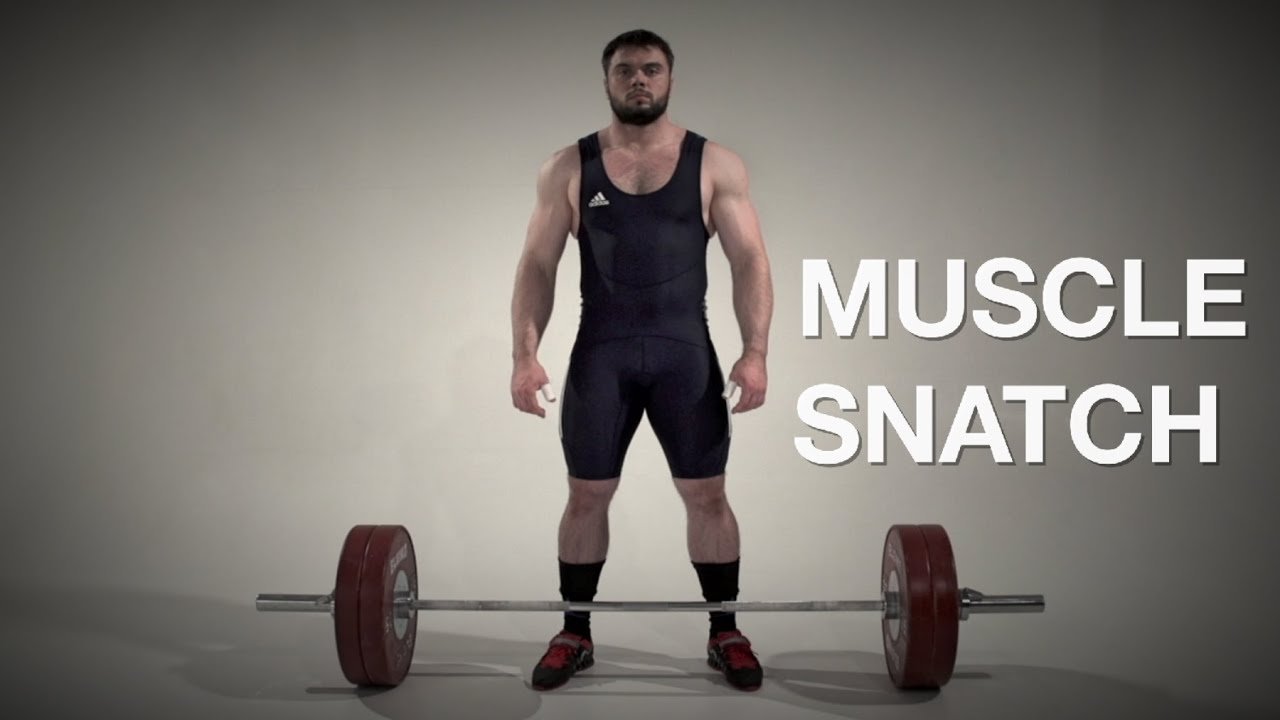
A muscle snatch takes the bar overhead without dropping underneath it after the upward drive. Once you have extended, keep the legs extended while the arms complete the turnover. In a power snatch, you bend the knees again to receive the bar. That difference is the most useful starting point for recognising which exercise you actually performed.
This is a weightlifting assistance exercise, not a competition lift with its own medal table. Its purpose is to give a particular part of the movement more attention. Turning a practice drill into a contest for the heaviest possible bar can make it harder to see whether that purpose is being served. A successful finish needs to preserve the movement you set out to practise.
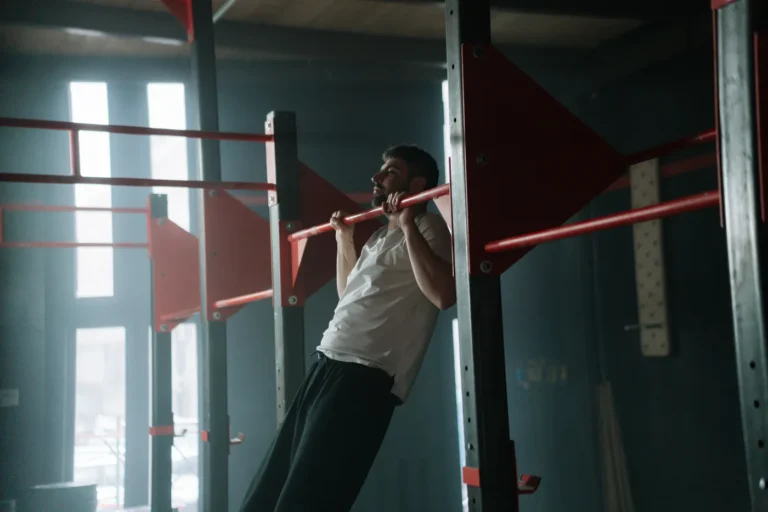
The opening section photograph shows an athlete preparing beside a barbell. It is useful context for the stance and equipment, but a still image cannot establish the timing of a whole repetition. To assess the no-rebend distinction, watch the movement from the end of extension until the bar settles overhead. Do the knees dip to make room for the bar, or does the athlete remain tall?
Different coaches use muscle-snatch variations for different purposes. Agree on your version before comparing loads. A floor start, a hang start and an upper-body-only drill are not interchangeable entries in a training log. Write the start position and the intended finish, so a heavier repetition is judged against the same task rather than a vaguely similar exercise name.
Keep the regular snatch in perspective too. Removing the receiving dip creates a constraint for practice; it does not make every detail of the drill identical to the full lift. Use the assistance movement for a reason, then assess the skill it was meant to support.
Choose a floor or hang start deliberately
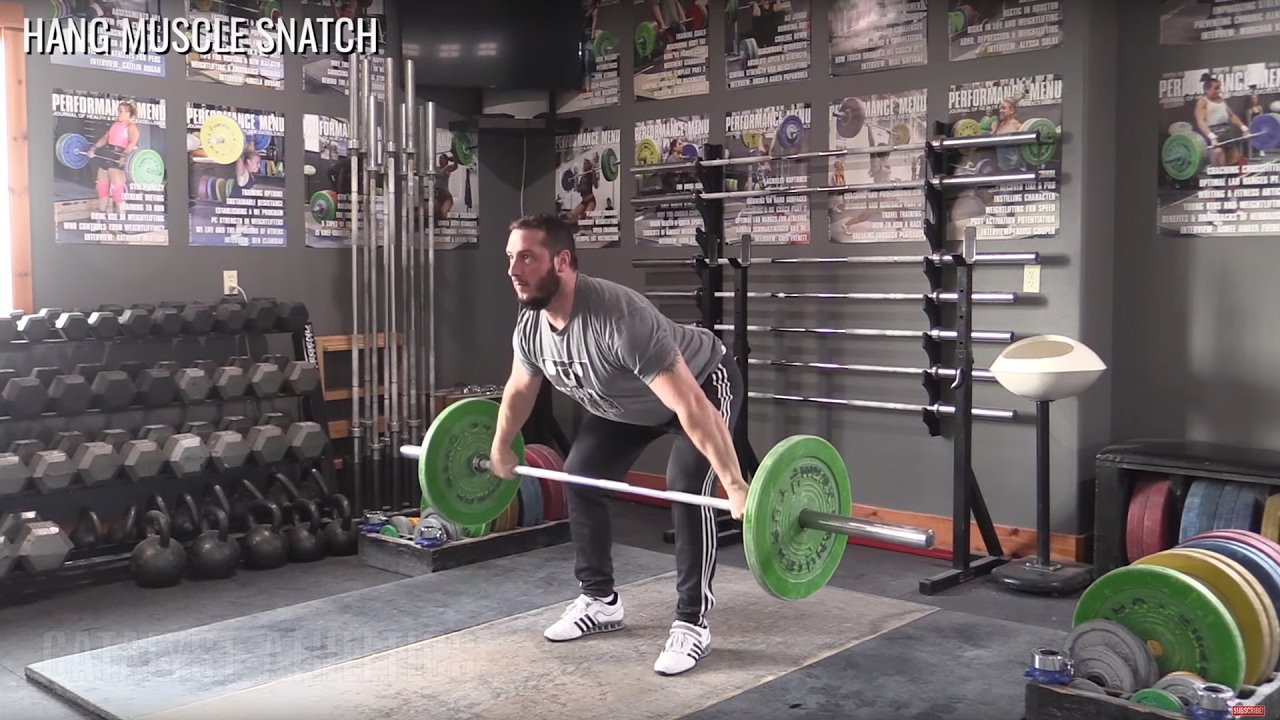
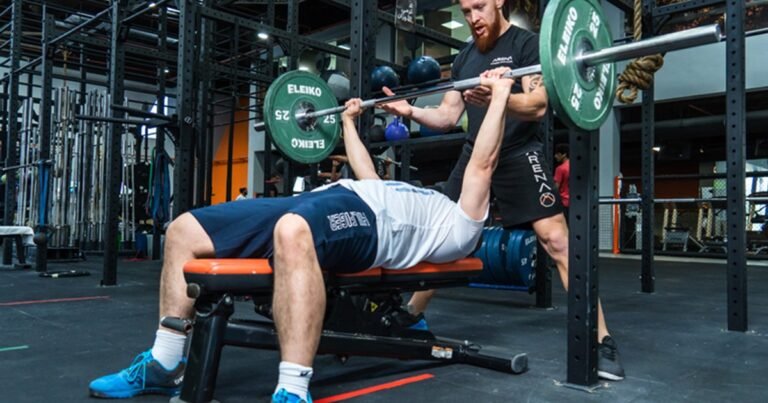
From the floor, set a familiar snatch-width grip and establish a balanced starting position before moving the bar. The initial leg drive and the route past the knees belong to the repetition. A hang version begins with the bar already in the hands, so you must also specify how far you lower it before driving upward. The image here illustrates a hang position rather than a floor start.
That distinction matters when a session feels unusually easy. If last time you lifted from the floor and today you started near the hips, the shorter route is part of the explanation. It may be a useful choice, but it is not evidence that your floor muscle snatch suddenly improved. Keep separate records and compare the same starting position across sessions.
Before the working sets, establish the available space around and above the bar. Check that the plates and collars fit the bar, that the floor is suitable for the way you will return the weight, and that nobody is about to cross your lifting area. If you are using an empty practice bar, choose one you can move confidently instead of assuming every empty bar weighs the same.
A rack can help organise a light hang-start rehearsal, but it is not part of a floor-start repetition. Set it out of the bar's travel path and avoid stepping around protruding supports during an overhead movement. Equipment should make the task easier to organise, not force an awkward route before the first pull.
For an initial check, take one unhurried setup, perform the movement you intended and reset. Notice whether your grip and stance are recognisable when you repeat it. Once those details stop changing accidentally, there is a much clearer basis for reviewing the pull and turnover.
Give the pull and turnover a clear sequence
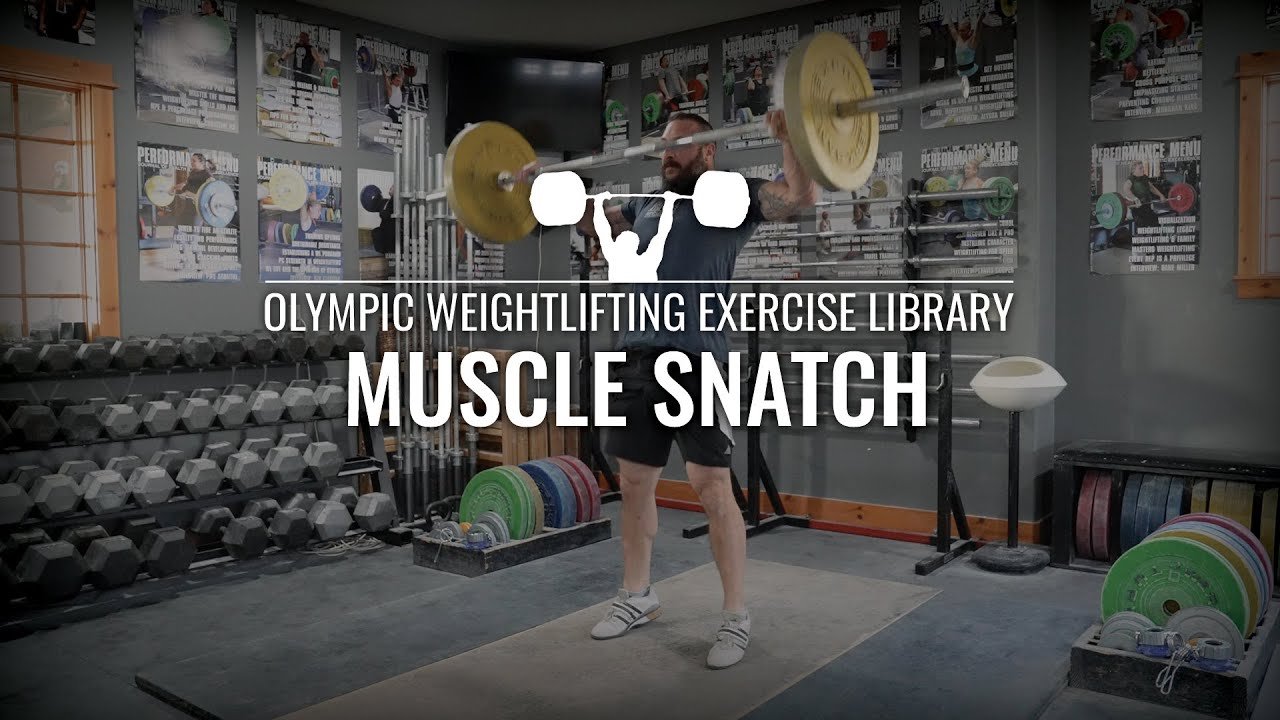
A useful coaching model is a rising pull followed by a turnover, with the bar staying close. The legs begin the upward drive; the arms then guide the bar into its overhead position. Pulling the elbows upward and outward before turning over is a common way to organise this drill. Avoid treating it as a large forward swing that must be rescued above your head.
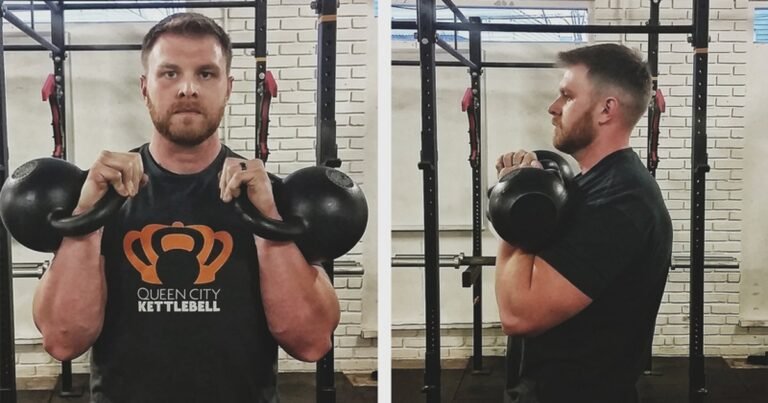
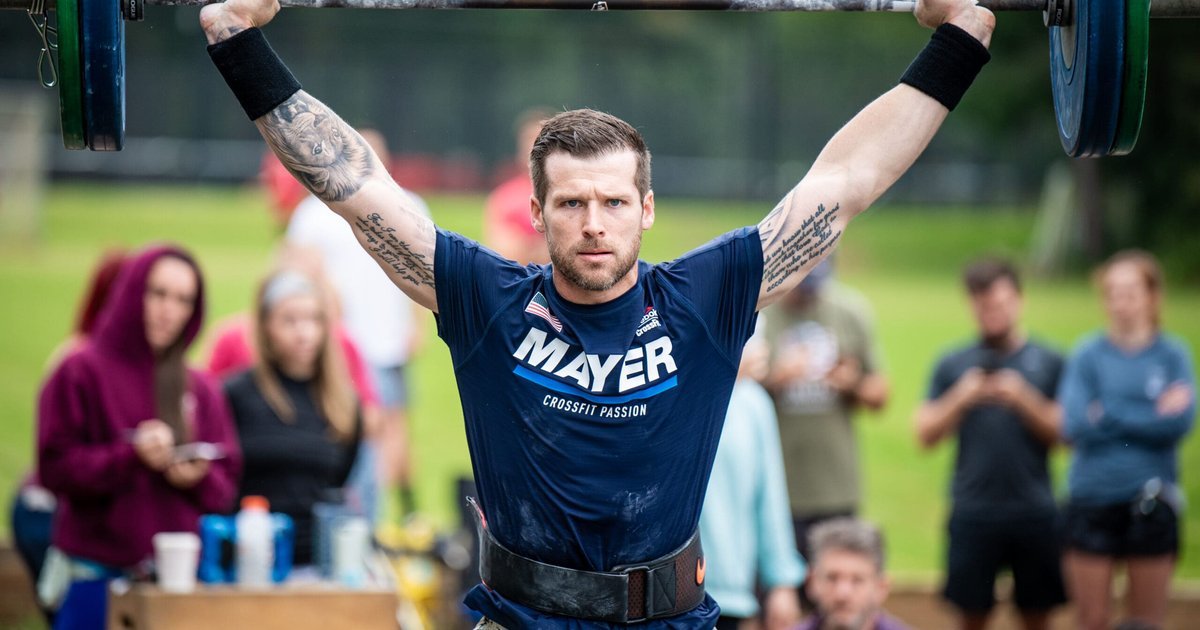
The section photograph captures a lifter with the bar high in front of the upper body. It shows a moment within the turnover sequence, not a complete assessment of the repetition. In your own review, look at what happened just before and after that moment. A high elbow position in one frame does not prove that the bar travelled well throughout the lift.
Give yourself one observation at a time. For example, first check whether the bar stays reasonably close as it rises. On another set, check whether the knees remain extended through the turnover. Trying to judge grip, foot pressure, elbow height, torso position and overhead balance simultaneously can leave you with many impressions and no clear next action.
A simple video comparison can be more useful than a dramatic cue. Keep the camera angle and start position similar, then compare an easy repetition with the first repetition that loses the intended sequence. Look for the earliest visible change rather than blaming the final position alone. If the bar moved away earlier, the overhead struggle may be a consequence rather than the first problem.
Do not turn these checkpoints into claims about a universally perfect path measured to the centimetre. Individual proportions and coaching methods vary. The useful question is whether the movement is consistent with your chosen drill and whether your coach can identify a practical adjustment from what is actually visible.
Finish tall and make the return part of the lift
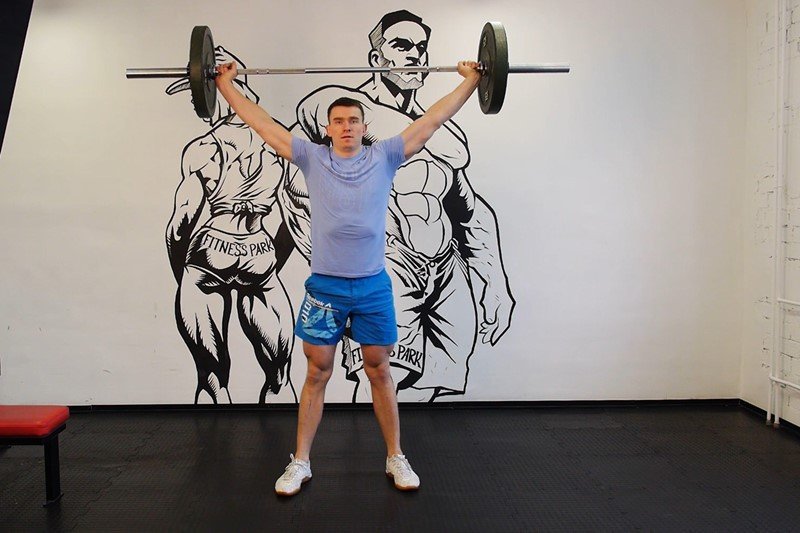
Finish with an actively supported overhead position and establish control before returning the bar. For the muscle-snatch version described here, do not add a second knee dip to complete the repetition. If you have to lean farther and farther backward or turn the finish into a prolonged struggle, reconsider the load rather than counting overhead arrival as the only success criterion.
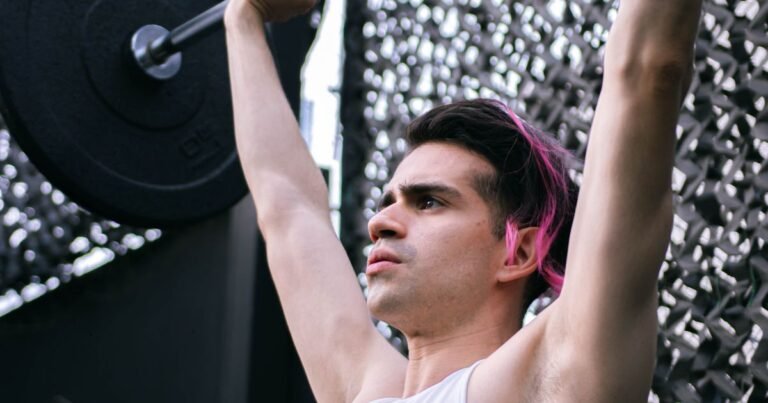
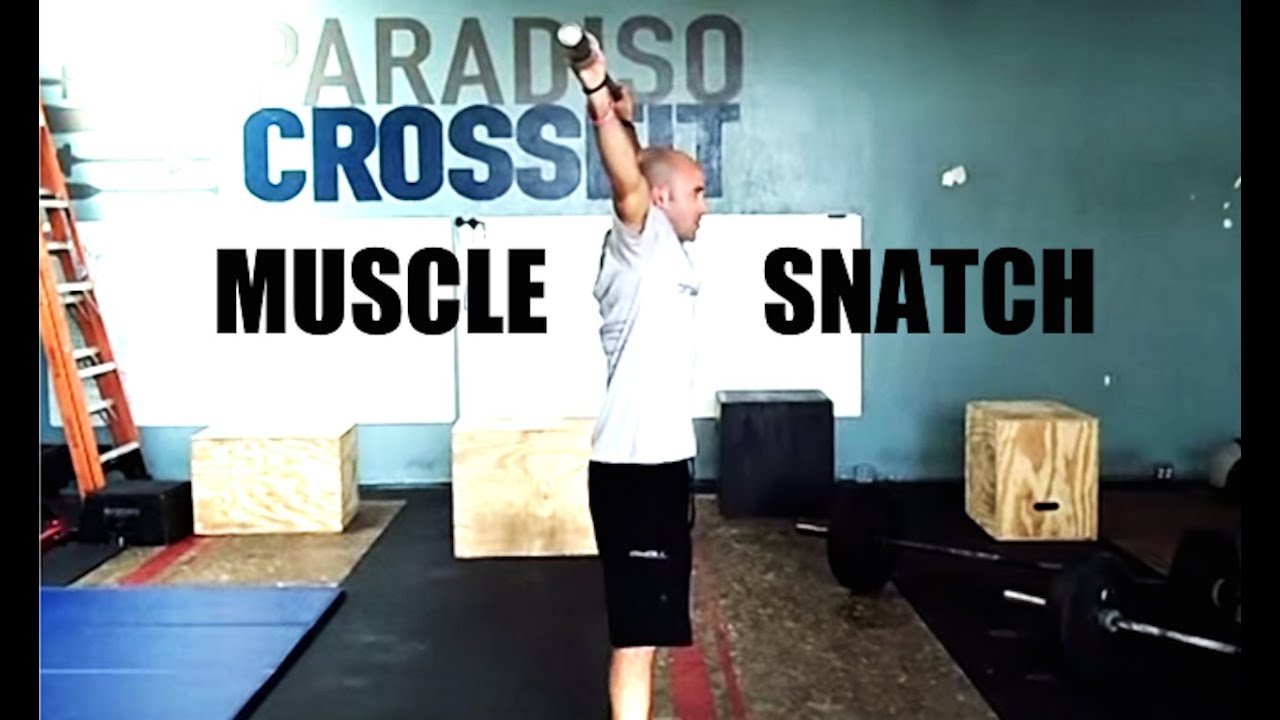
The photograph shows a lifter standing with the bar overhead. It illustrates the destination, but it cannot by itself distinguish a muscle snatch from a power snatch that has already been stood up. This is why reviewing the transition matters. A convincing final frame is not a substitute for seeing how the bar got there.
Decide how you will return the bar before lifting it. An empty bar, iron plates and bumper plates do not all allow the same handling. Use equipment and a platform appropriate to your plan, follow the facility's rules and keep the area clear. Do not assume that a plate's appearance makes dropping it acceptable, or that a collar being secure resolves every equipment question.
The equipment options below cover bars, plates and collars for different training arrangements. Check compatibility and intended use instead of treating every item as suitable for dropped Olympic lifts. Small plates can help make a modest change in load, while a different bar can change the starting height or feel. Record those changes when they affect your practice.
Grip accessories also deserve a deliberate decision. This drill is commonly practised without straps, especially when learning how the hook grip changes overhead. Straps in a backup equipment list are not an instruction to use them for beginner turnover practice. Ask your coach about grip and release rather than adding an accessory simply because it is available.

Equipment Worth Exploring
Explore equipment, accessories and gear from our carefully selected range.


Competition Plates
Competition-style bumper plates for Olympic lifts and loaded strength training.



Speed Collar
Quick-release collars designed to secure weight plates on standard two-inch Olympic bars.
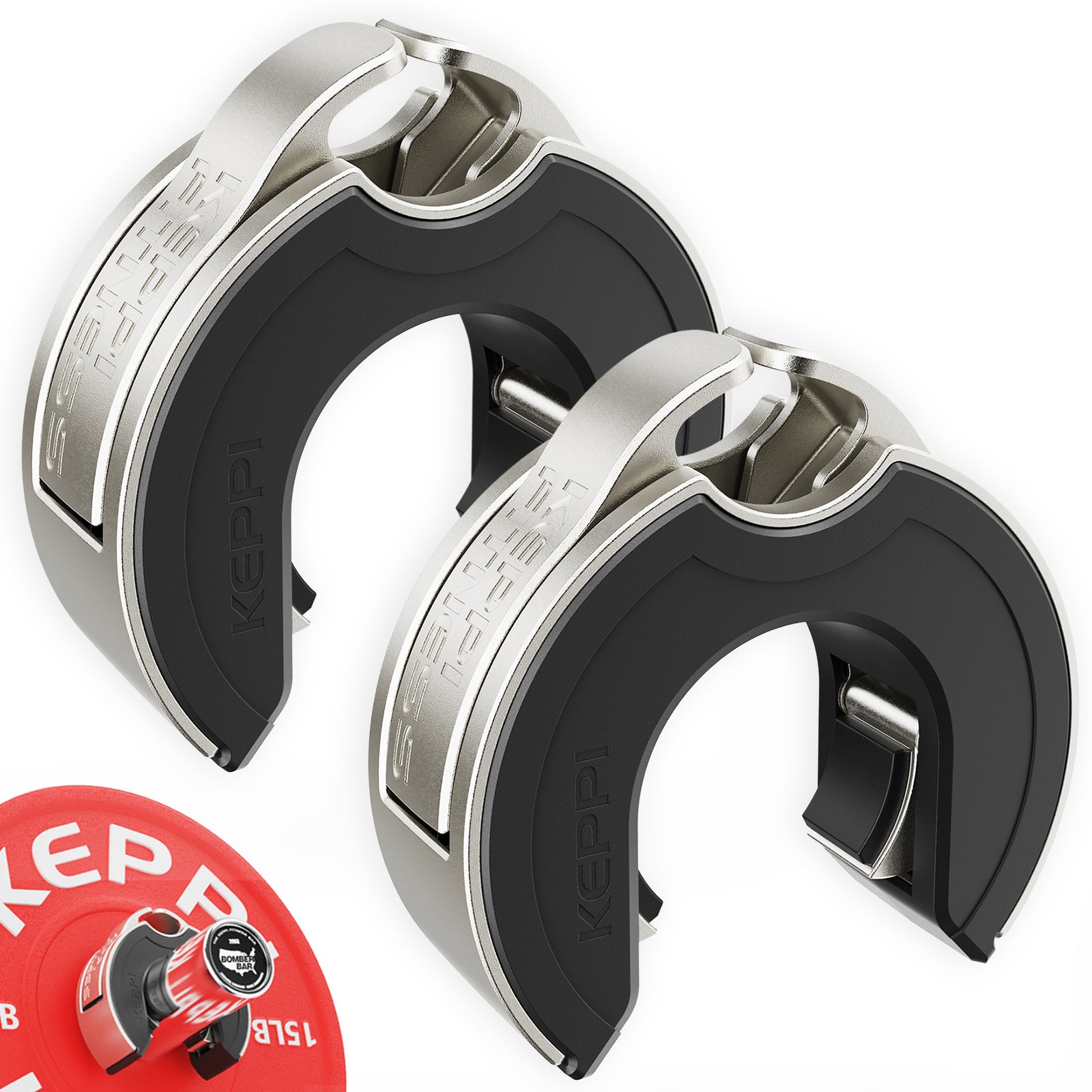
Keppi Open Collars
C-shaped magnetic Olympic barbell collars with a quick-lock mechanism and grippy lining.

Grip Plates
Rubber-coated weight plates with handholds for loading barbells and machines.

Use short practice sets and a useful training log
Give the muscle snatch a defined place in the session. It can be used as an early technique exercise or as assistance work, but those contexts differ. A crisp rehearsal before heavier lifting and a tired set at the end should not be compared as though the circumstances were identical. Write where it appeared in your session and what you wanted to practise.
Short sets make it easier to notice when the task changes. A few deliberate repetitions with a manageable bar can give you useful feedback without turning the drill into a conditioning test. Choose the set length with your coach, and finish the set when the intended movement is disappearing rather than continuing only because the bar can still be forced overhead.
An example log entry might read: hang muscle snatch, above-knee start, light bar, three controlled repetitions, no receiving dip. The numbers are an illustration of how to record a session, not a tested prescription. Add one observation such as bar moved forward on the last rep, then choose the next adjustment from that observation.
Progress does not always require an immediate weight increase. You might repeat the same start more consistently, remove an unintended dip, or make the overhead finish less hesitant. Those are worthwhile practice outcomes to discuss before loading more plates. When you do increase the weight, use a change small enough that you can still judge whether the same exercise is being performed.
Keep a connection between the drill and the skill it is supposed to assist. If your purpose is turnover practice, review that part of the regular snatch over time instead of judging the programme only by the muscle-snatch number. A stronger assistance lift and a better competition lift are related questions, but they are not the same measurement.
The simplest productive record is specific: which variation, which load, how many comparable repetitions and one useful note. Keep practising the version you named. If the knees rebend to receive the bar, label the repetition honestly and adjust the next set rather than quietly changing the standard of success.

Bodybuilding Shirts & Workout Gear
Bodybuilding shirts, tanks and gym gear for lifters chasing muscle, size, symmetry and the pump.

Raise The Barbell Shirt – Motivational & T-Shirt
Show some powerlifting attitude with a playful “Raise The Barbell” tee.

Safety Practice Safe Sets Vest Weightlifting Tank Top
Bring “Gym Safety” humor to your next lifting session.

Meme – "Shhh I'M Doing Plate Math" Sweater & Jumper T-Shirt
Keep things casual with a little “"Shhh I'm Doing Plate Math" Workout Sweater” attitude.

Focus Stoic Bodybuilder Greek God Marble Sculpture T-Shirt
Heavy lifts, good laughs, and a little “Focus Stoic Bodybuilder Greek God Marble” energy.

Gym Skull Weightlifting Pullover for Powerlifters Bodyb Hoodie
Bring “Skull Weightlifting” gym humor to lazy days and post-workout plans.

Disco Weight Plate Meme – Lifting Party Gymbros T-Shirt
Show some powerlifting attitude with a playful “Disco Weight Plate” tee.

Shirt: Plants Weight Plate & Plant Lovers T-Shirt
Show some powerlifting attitude with a playful “Pump Cover” tee.

Shirt – Weightplate Heartbeat Bros & Meme Lovers T-Shirt
Make gym days more fun with “Weightplate Heartbeat” style.

Iron Addict Shirt – Weights & Lifting Meme & Gains T-Shirt
Bring “Iron Addict” humor to your next gym day.