Advertising disclosure: This page includes affiliate product links that may earn us a commission, as well as products from our own store.
Can changing the bar in your warm-up help preserve bench-press performance later in the session? A small experiment offers a specific answer about first-repetition speed. Understanding the setup, the comparison and the limits matters more than treating a percentage as a promise of extra strength.
Start with the question the experiment actually tested
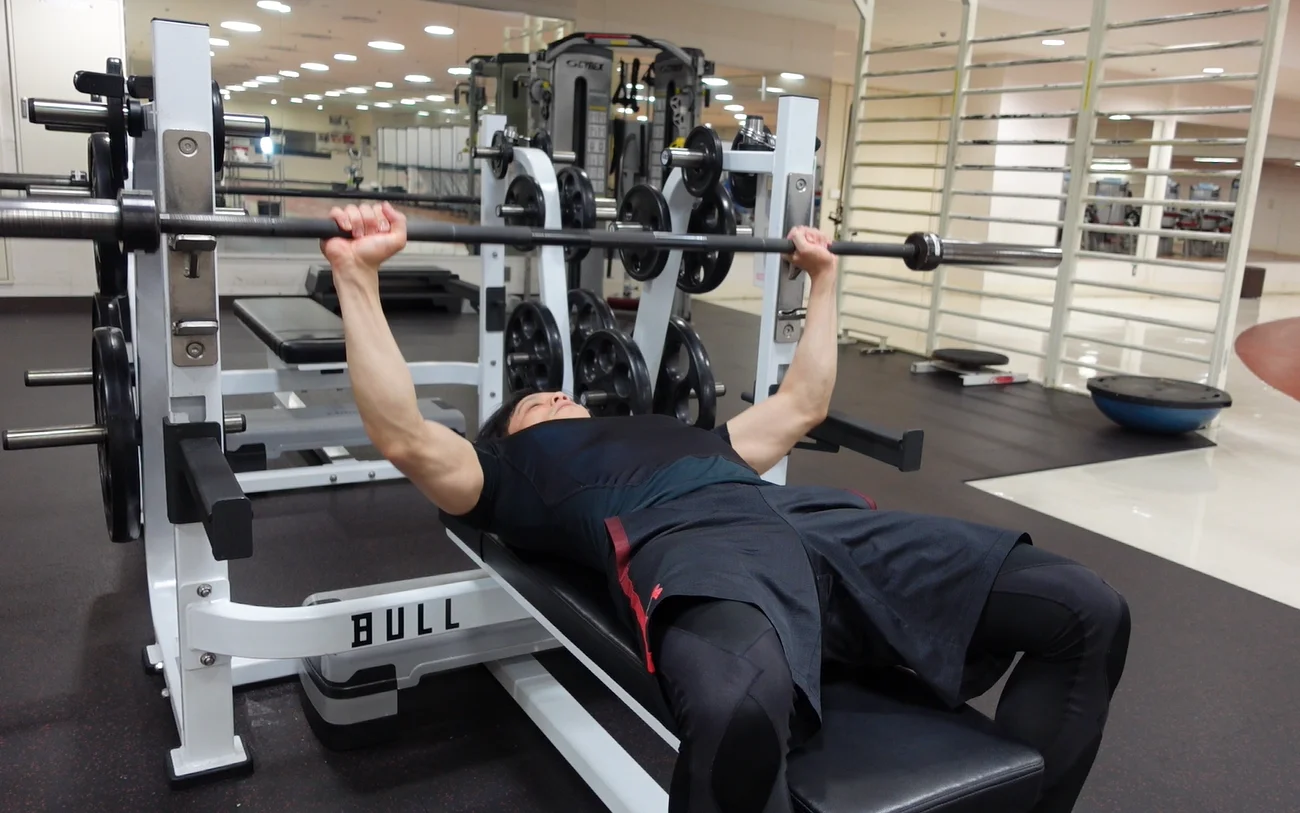
A July 2026 experiment assigned 20 trained men to a standard-bar or cambered-bar warm-up, with ten in each group. Both then performed the main work with a standard bar. This was a comparison of preparation methods, not a long-term contest between two bench-press programmes. Keeping that distinction clear prevents a useful small experiment from becoming an exaggerated equipment claim.
The progressive warm-up used four sets at 30%, 50%, 60% and 70% of estimated one-repetition maximum, for 12, ten, eight and five repetitions. After ten minutes, the main task was four sets of five at 75%, with two-minute rests. Those details define the tested situation; they are not automatically the warm-up every lifter should copy.
An exercise intervention is a package of choices. Bar shape, repetitions, loading, recovery and the subsequent task all contribute to what happens. If you remove the recovery period, add several heavy singles or use the specialty bar for the main work too, you have created a different session. That may be sensible training, but it no longer reproduces this comparison.
This is also why an exciting result should first change the question you ask, rather than immediately changing your shopping list. Ask whether a familiar, slightly different preparation method helps you perform your intended work. Then decide what you would measure to answer that question. Without a defined task and outcome, almost any hard warm-up can feel convincing on the day.
More range changes the exercise, not just the bar label
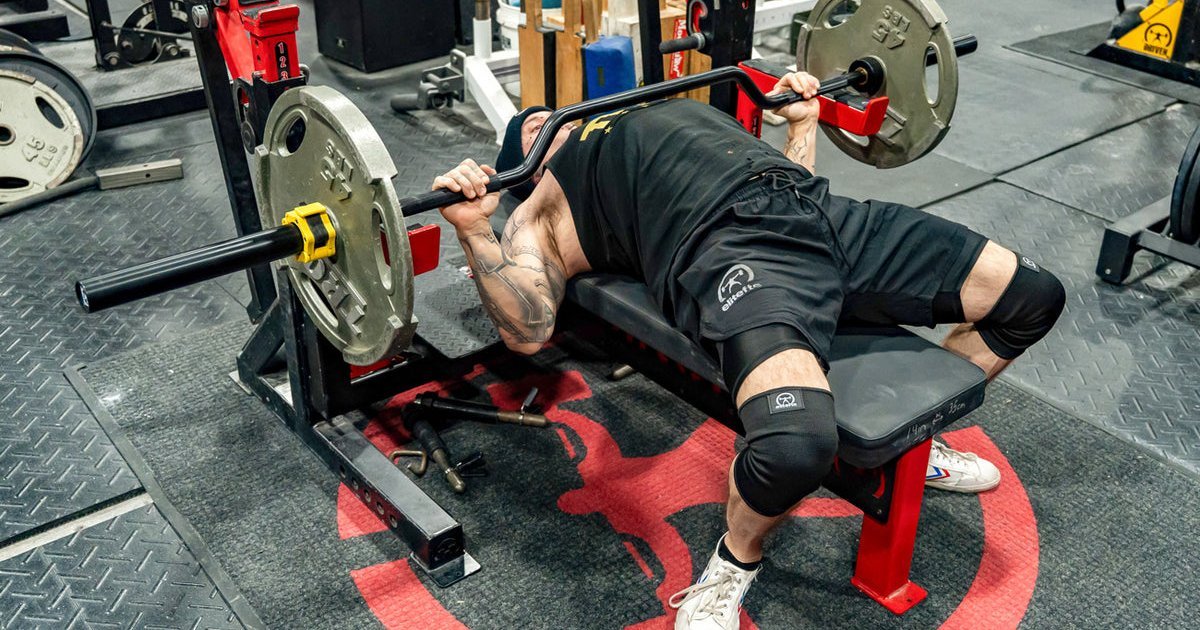
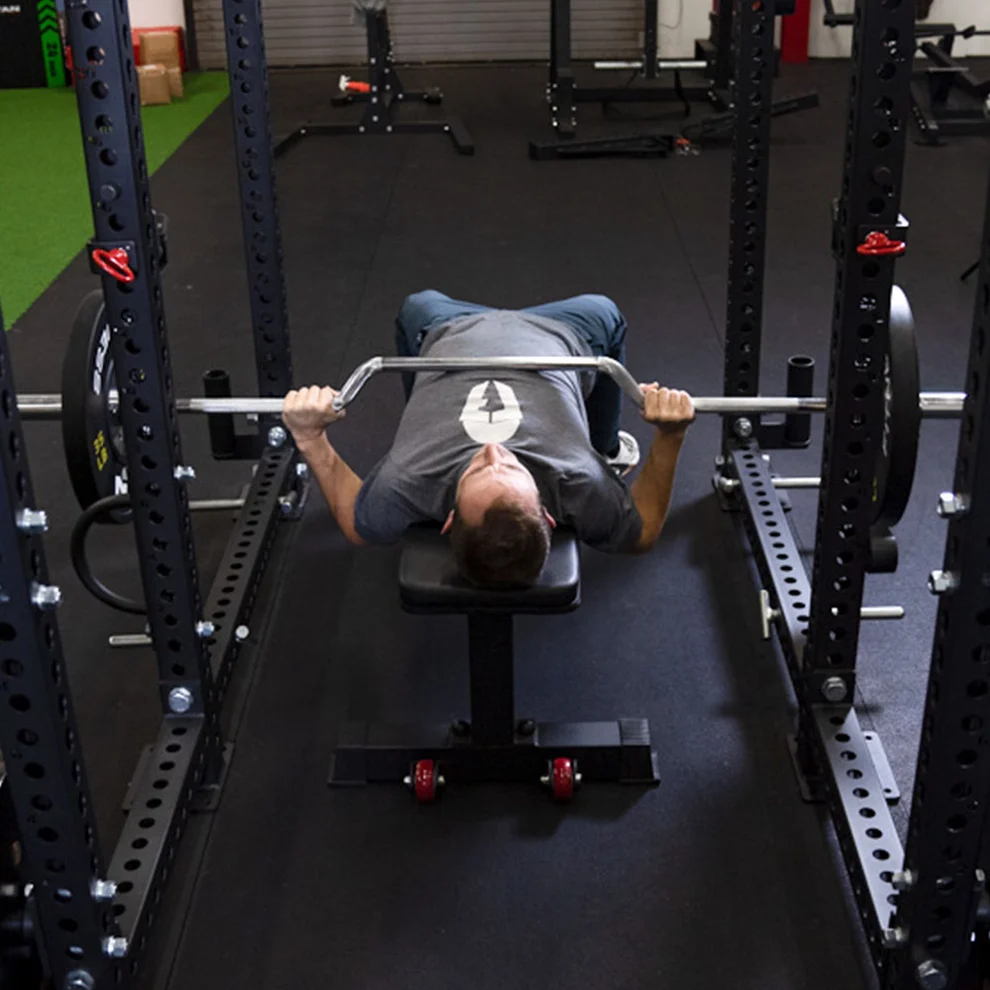
A cambered bench bar can let the hands travel farther down than a straight bar allows when its centre reaches the chest. That changes the movement you have to control. It is a different feature from the neutral-grip handles on a Swiss bar, and a commercial specialty bar should not be assumed identical to another model simply because both have bends.
Earlier acute comparisons have also found that cambered and straight-bar pressing can differ in displacement, bar speed and time under load. These observations make range of motion a plausible variable to investigate. They do not establish that every lifter needs the largest possible range, or that a larger displacement will necessarily make the next set better.
Consider a simple measurement problem. Two repetitions with the same load and repetition count can involve different travel distances. Calling them equal work because the training log says five reps hides that difference. This does not make one repetition dishonest; it means the exercise definition needs to stay consistent when you interpret performance.
For ordinary training, establish a comfortable and controlled range before thinking about a warm-up effect. A bar that permits extra depth does not require you to use all of it. Check the rack, bench, grip and the way the bar sits on the hooks. Specialist bars can differ in mass, bend depth and balance, so load calculations and safety arrangements deserve the same attention as the exercise itself.
The equipment below covers broader bench-training options. The registered cambered bar is not the model tested in this experiment. Standard bars, benches, plates and collars are alternatives or supporting equipment, rather than products proven by this result.

Equipment Worth Exploring
Explore equipment, accessories and gear from our carefully selected range.




FID Bench MAX
Adjustable bench offering flat, incline, and decline positions + adjustable headrest.

Read first-rep retention as a ratio, not extra strength
The cambered warm-up group showed higher first-repetition velocity and power retention by 9.82 and 11.65 percentage points. These were retention outcomes, not increases in one-repetition maximum. The additional warm-up displacement averaged 6.34 centimetres. The result concerns how performance held up across the repeated standard-bar sets.
To understand retention, imagine an illustrative lifter whose first repetition moves at 0.60 metres per second in the first set and 0.54 later. The later value is 90% of the starting value. Another lifter starting at 0.50 and later moving at 0.48 retains 96%, while still moving more slowly in absolute terms. These invented numbers demonstrate the arithmetic; they are not study participants or published results.
That distinction matters whenever a percentage is presented without its reference value. Better preservation of a starting performance is meaningful, but it is not the same claim as being faster at every point, lifting more weight or completing more total repetitions. Always identify the numerator, denominator and particular repetition being compared before turning the number into a training recommendation.
First repetitions also do not describe everything that happens inside a set. A session can begin each set reasonably well and still become difficult by the fifth repetition. If your goal is to improve all five repetitions, you would want information about the full set as well as its opening rep. One well-chosen outcome can answer a focused question without answering every question that a lifter cares about.
Separate performance preservation from recovery between sets
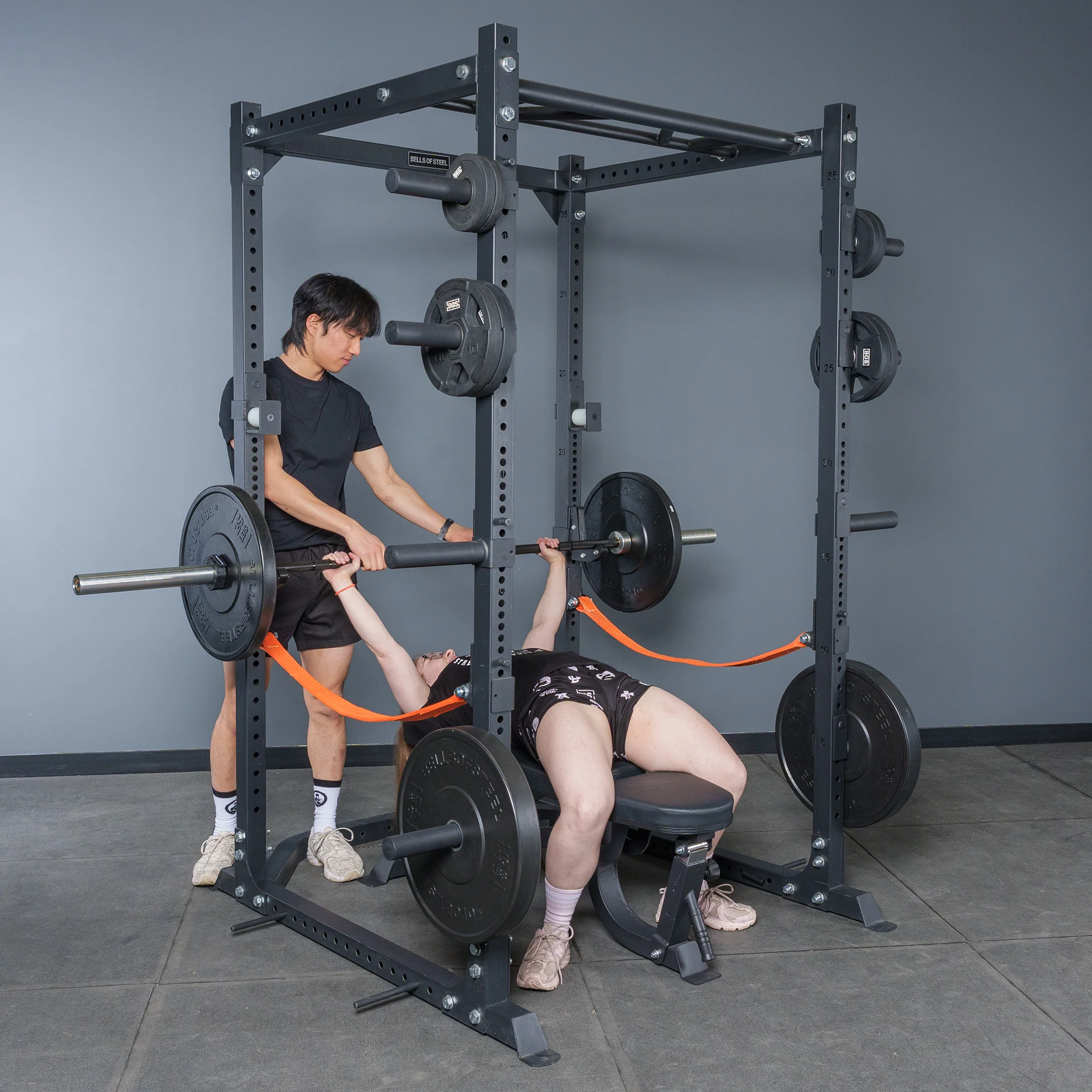
The experiment found no clear between-group advantage in the immediate velocity rebound across the rest intervals. That is an important boundary. Higher first-rep retention should not be translated into a claim that the muscles recovered faster during every two-minute break. The two measurements ask related but different questions.
Imagine another arithmetic example. A final repetition moves at 0.35 metres per second and the first rep after resting reaches 0.50. The rebound is 0.15 metres per second. That calculation compares the two sides of one rest interval. Retention compares later first reps with the original first rep. The same set of velocities can therefore produce different impressions depending on which comparison you choose.
Warm-up discussions often use the term potentiation loosely. A more precise distinction separates changes in an electrically evoked muscle response from improvements in a voluntary task such as a press or jump. An athlete can perform a task better after preparation without that observation proving one particular cellular mechanism. Fatigue and preparation can coexist, and the observed performance is their practical result.
For your training, resist the temptation to shorten rests because a new warm-up feels powerful. Keep recovery stable while you assess the preparation method. Otherwise a change in the later sets could come from the altered rest period rather than the warm-up. If time is limited, it may be more useful to simplify the preparation than to preserve an elaborate warm-up and rush the main work.
Check how closely the experiment resembles your training
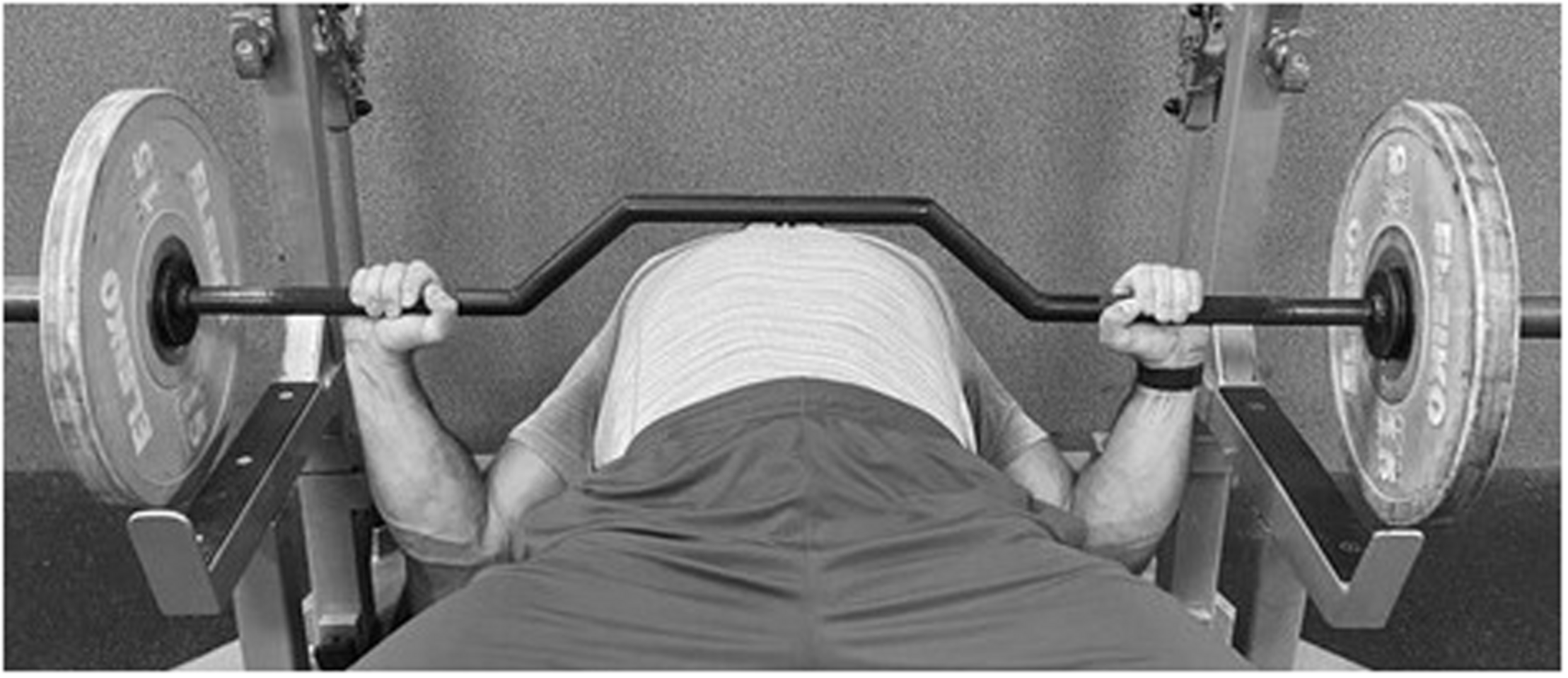
The sample was small and the groups were separate. The participants were experienced with both bench pressing and cambered bars, so this was not a test of beginners encountering a new specialty bar. No muscle-growth outcome was measured. The immediate result provides a reason for further investigation, not a guarantee of larger pecs after several months.
A parallel-group comparison also differs from testing both preparations in every participant. Random assignment helps, but with ten people per group, individual differences still deserve attention. A future crossover experiment could let the same lifters perform both conditions on separate days. Repeated measurements would also help distinguish a reliable response from an unusually good or bad session.
The warm-up itself was substantial, and the main work was a particular submaximal task. Results from that arrangement do not automatically transfer to a maximum single, a high-repetition set near failure or a different pressing exercise. A lifter who already uses an effective preparation may also have less room for improvement than someone whose starting routine is inconsistent.
Other acute work has compared different conditioning ranges before explosive bench-press throws and found an advantage for the standard-bar condition in that task. That does not cancel this newer result. It reinforces the need to match the preparation, recovery and outcome before declaring a universal winner. The best question is which preparation helps which performance, in which lifters, under which conditions.
Make a small, repeatable comparison before changing your programme
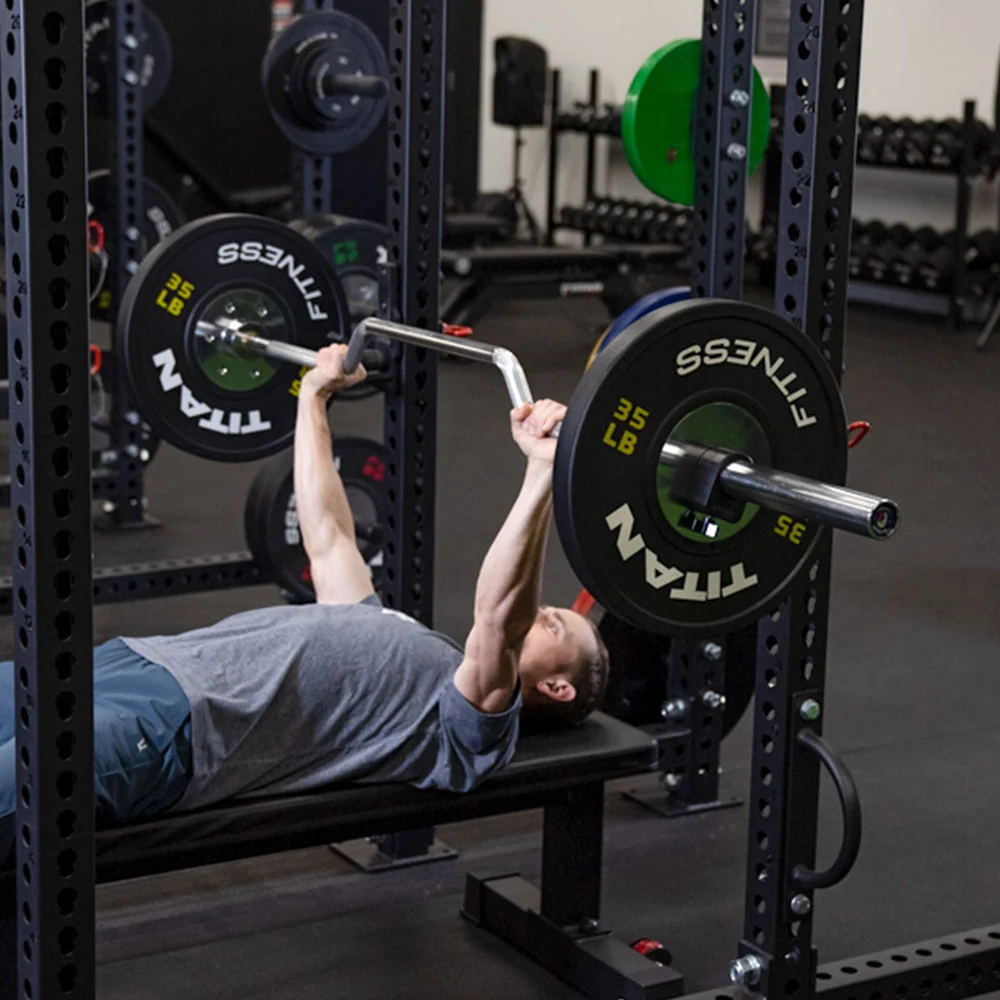
Keep your normal, progressive straight-bar preparation as a clear baseline. If you already know the cambered bar, tolerate its range and have an appropriate setup, you can consider comparing a familiar alternative on separate sessions. Do not turn a first exposure to extra depth into a heavy performance test. Learning the implement and evaluating a warm-up are separate jobs.
Define the comparison in advance. Keep the main exercise, working load, number of sets, repetitions, rest periods and intended technique as consistent as practical. Log the warm-up sets and the time between preparation and work. A note saying warm-up felt great is useful feedback, but it cannot replace a record of what you actually did.
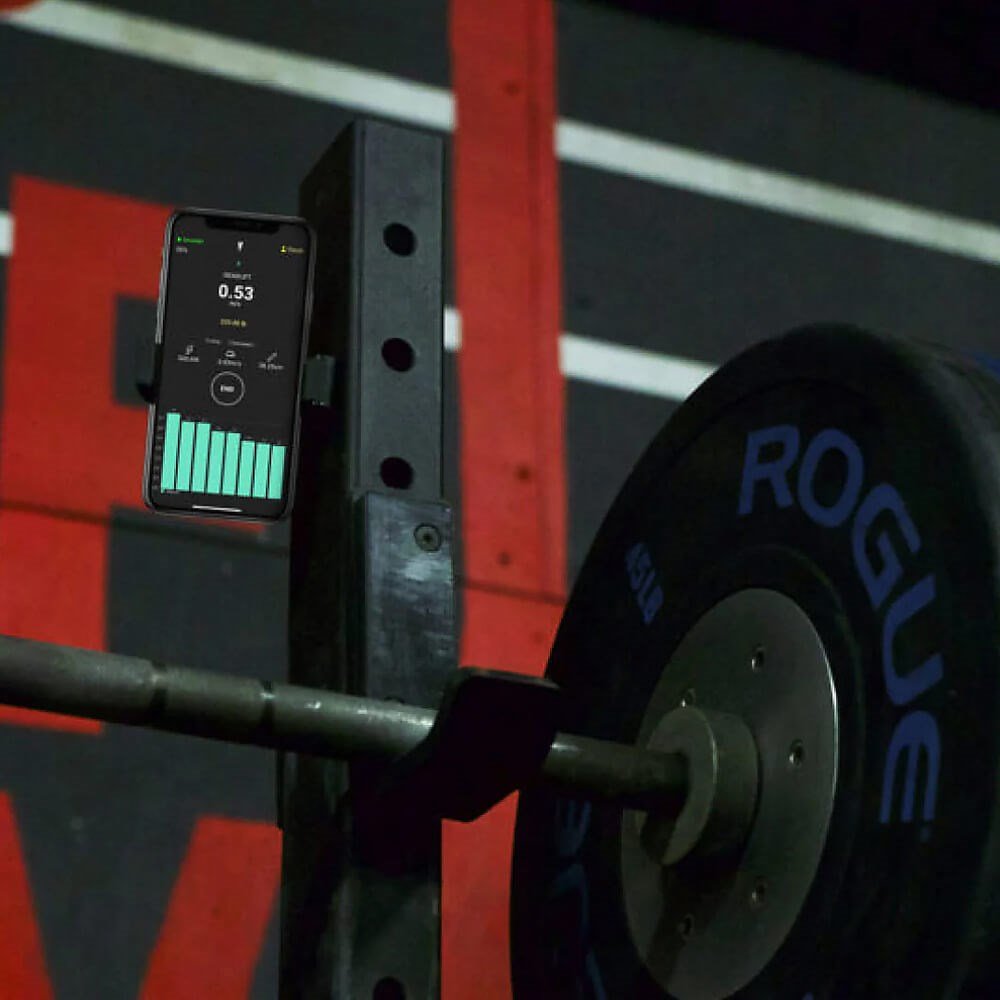
If you use a velocity device, keep the device, attachment and selected metric consistent. Compare like with like rather than mixing peak velocity, mean velocity and a visually estimated speed. If you do not use a device, record completed repetitions, perceived effort and any clear technique change. Those observations can guide ordinary programming, while remaining different from the laboratory outcome.
Review several comparable sessions before making a decision. Sleep, recent training and day-to-day readiness can affect a single workout. If the alternative adds time, discomfort or fatigue without a repeatable benefit to the work you care about, keep the simpler method. If it appears useful, treat it as one adjustable preparation option rather than a reason to rebuild your entire bench programme.
Use suitable safeties and an attentive spotter for the setup, and stop a variation that causes pain rather than forcing deeper movement. The practical lesson is to preserve the quality of the main work. A warm-up earns its place by preparing you for that work, not by being the most complicated or exhausting part of the session.

Powerlifting Shirts & Lifting Gear
Powerlifting shirts and gym gear for squat, bench and deadlift lifters who live for heavy numbers.

I Love Bench Press Gym | Funny Heart Plate Muscle Shirt Tank Top
Add some lifting attitude to training with “I Love Bench Press”.

Chest Day Sweater Bench Press & Meme T-Shirt
Add a playful “Chest Day” touch to your casual rotation.

Bending Bars Meme Breaking Bad Barbell Hoodie
Keep it laid-back with a little “Bending Bars Gym Meme” attitude.

Bench Press and Chill Funny Gym T
Make gym days more fun with “Bench Press and Chill” style.

Shirt: Good Argument But I Bench More Than You – T-Shirt
Make gym days more fun with “: Good Argument But I Bench More Than You” style.

1 Plate Bench Club Meme – Top T-Shirt
Heavy lifts, good laughs, and a little “1 Plate Bench Club” energy.


Shirt – Squat Bench Deads Gains T-Shirt
Heavy lifts, good laughs, and a little “Squat Bench Deads” energy.

Ultimate Bench Press Tee
Heavy lifts, good laughs, and a little “Ultimate Bench Press” energy.

Lift Smart Brain Weight Plate Mind Muscle Connection 45 Sticker
Put “Lift Smart Brain Weight Plate” gym humor on your laptop, bottle, or gym gear.