Advertising disclosure: This page includes affiliate product links that may earn us a commission, as well as products from our own store.
A pause deadlift makes a simple demand: lift the bar a few inches, hold it absolutely still, and only then finish the pull. That brief stop turns familiar mechanics into a test of balance, bracing and patience. It is especially useful for lifters whose hips rise too fast, whose barbell drifts away from the legs, or whose setup feels different from rep to rep.
The goal is not to prove toughness by hanging onto the heaviest possible bar. It is to learn what a stable pull feels like under a load you can control. Here is how to choose a pause point, keep the bar over midfoot and fit the exercise into a strength program without turning every session into a deadlift test.
Why a paused deadlift is harder without being heavier
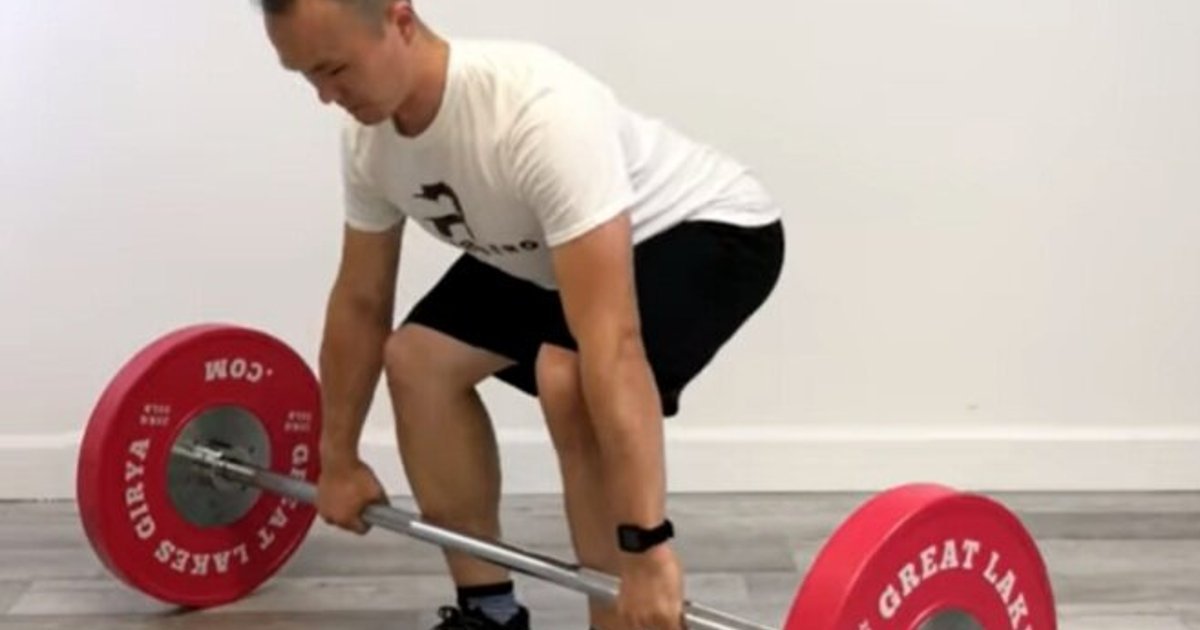
The pause deadlift uses the same basic hip-hinge pattern as a conventional deadlift, but deliberately interrupts the upward pull for a brief, motionless hold. Most lifters choose a point only a few inches above the floor or around mid-shin. Instead of riding through that position with momentum, they must keep the bar suspended while holding the same body shape. That makes a relatively moderate load feel unusually demanding.
The glutes and knee and hip extensors still drive the lift, while the spinal erectors and abdominal muscles resist unwanted movement. The upper back and lats help keep the bar close, and the forearms must maintain the grip. A pause changes the duration and the demands of the position, not which muscles suddenly exist in the movement. It is a deliberate skill and strength variation rather than a magical new muscle-building exercise.
That distinction matters if your conventional deadlift looks clean on the floor but becomes loose as soon as the plates rise. A pause exposes the moment when the hips shoot upward, the bar swings forward, or the torso folds. It can teach better awareness of those changes because you cannot hide them behind speed. However, an isometric hold in one joint position does not automatically guarantee a bigger one-rep maximum everywhere in the lift.
Treat the paused variation as an accessory that helps you practice a specific task. A controlled two-second hold at a repeatable height is more informative than a random five-second struggle. Keep regular deadlifting in the overall program when competition specificity and lifting the heaviest possible weight remain the priority.
Set the bar over midfoot and remove the slack
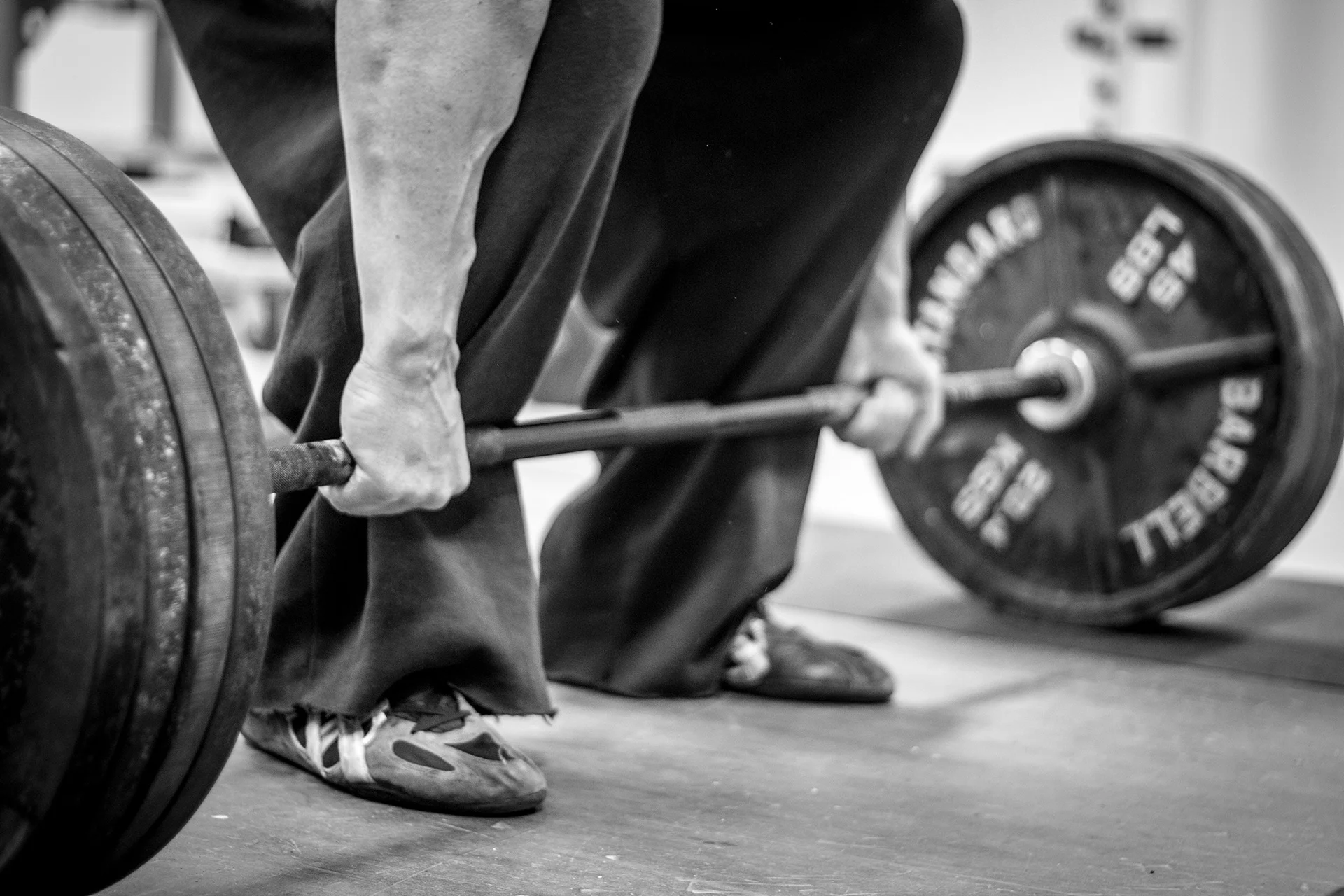
Stand with the bar above the middle of your foot, not pressed against your toes and not far in front of your shins. A conventional stance is generally around hip width, with your grip just outside your legs. Hinge down, bend the knees enough to reach the bar, and let your torso angle reflect your build rather than forcing everybody into the same starting picture. Very long femurs, long arms and shorter torsos do not create identical setups.
Before the plates leave the ground, take a controlled breath into the trunk and brace against it. Think about connecting your hands to the weight and gradually increasing tension until the looseness between the plates, sleeves and bar is gone. You should feel the bar become heavy in your hands before you initiate the actual pull. Do not yank suddenly from a relaxed position and hope to find your brace in midair.
Keep your whole foot loaded against the floor. Push the floor away while the chest and hips rise as a coordinated system. Your shoulder blades do not need to be squeezed together as if you were performing a row; the goal is a firm upper-back position with straight arms and a short, repeatable bar path. The lats can create a sense of bringing the bar toward the legs, but they should not pull it into a loop around your knees.
Use a filming angle from the side for the first warm-up sets. If the bar drifts several centimetres forward on every rep, check midfoot placement, balance and how aggressively you lift your hips. A short pause is most useful when the setup is consistent before it starts. A solid floor, appropriate plates and securely fitted collars are practical safety details, not performance hacks.

Equipment Worth Exploring
Explore equipment, accessories and gear from our carefully selected range.


Leather Lifting Straps
Padded leather straps support grip during heavy rows, deadlifts and pulling exercises.


Competition Plates
Competition-style bumper plates for Olympic lifts and loaded strength training.

Speed Collar
Quick-release collars designed to secure weight plates on standard two-inch Olympic bars.

Grip Plates
Rubber-coated weight plates with handholds for loading barbells and machines.

Open Hex Bar
Open-frame trap bar with multiple handles for deadlifts, carries, and lower-body training.

Pause just off the floor without drifting or bouncing

Choose the pause point before loading the bar. A low pause a few inches off the ground challenges the earliest part of the pull and makes it easier to notice whether you lose tension as the plates break contact. A mid-shin pause holds a slightly more extended knee and hip position. Some lifters use a spot just below the knee to inspect bar clearance and torso control. These are related variations, but they are not precisely the same drill.
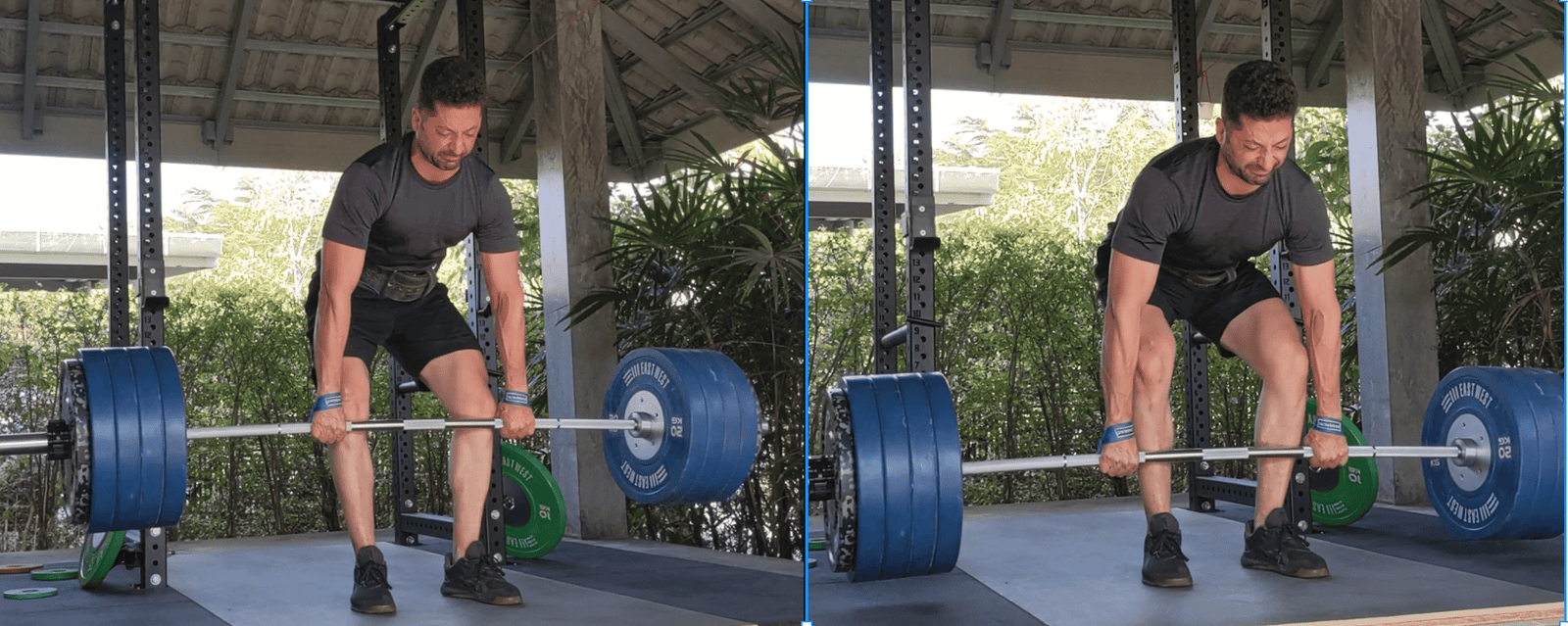
Lift to the chosen height, stop the plates completely and count a genuine one or two seconds. The bar must remain suspended: setting it back down turns the pause into two separate pulls, and constantly inching upward turns the pause into an unusually slow rep. Video can expose a rushed count that felt like two seconds but barely lasted half a second. Use an audible or mental count and the same duration on every repetition.
During the hold, keep your shoulders and hips in the relationships they reached when the bar stopped. Your knees should not abruptly straighten as your hips rise and your shoulders stay low. Maintain contact or very close proximity between the bar and legs, without forcing it to scrape harshly. Pressure should remain balanced across the feet rather than shifting onto the toes.
After the pause, push steadily into the floor and finish the lift. Do not try to turn the resumed pull into a violent backward lean. If the bar pitches forward, your brace dissolves, or you cannot hold the chosen height, the load or pause duration is too ambitious. Dropping weight until the pause looks completely stationary will often provide a better training stimulus than forcing an ugly repetition.

Powerlifting Shirts & Lifting Gear
Powerlifting shirts and gym gear for squat, bench and deadlift lifters who live for heavy numbers.

Uncle Sam Deadlift Patriotic – 4th of July Workout Jump T-Shirt
Keep things casual with a little “Uncle Sam Deadlift Patriotic” attitude.

The Ultimate Deadlifter Jesus Christ – Deadlifts Liftin Hoodie
Make your off-duty look more fun with “The Ultimate Deadlifter Jesus Christ”.

Deadlift Military Skull Gym Decal for Powerlifters, Har Sticker
Put “Deadlift” gym humor on your laptop, bottle, or gym gear.

Deadlift Cyberpunk Skull Gym Crewneck for Powerlifters, T-Shirt
Keep things casual with a little “Deadlift” attitude.

Funny Minecraft Deadlift Gym | Pick Up Heavy Blocks Mus Tank Top
Show some personality between sets with “Minecraft Deadlift”.

I Love Deadlifts Gym | Funny Valentine's Weightlifting Sticker
Put “I Love Deadlifts” gym humor on your laptop, bottle, or gym gear.

Patriotic Eagle Deadlift Stars Stripes and Deadlifts Cr T-Shirt
Show some gym-day personality with “Patriotic Eagle Deadlift”.

Deadlift Electric Skull Graphic , High Voltage Workout Hoodie
Show off your deadlift humor in a laid-back “Deadlift” hoodie.

Deadlift Purple Skull Gym Shirt for Powerlifters Heavy T-Shirt
Make gym days more fun with “Deadlift” style.

Deadlift Wasteland Skull Graphic , Hardcore Fitness Pul T-Shirt
For laid-back days and deadlift humor: “Deadlift”.
Finish tall, lower with control and solve the common errors
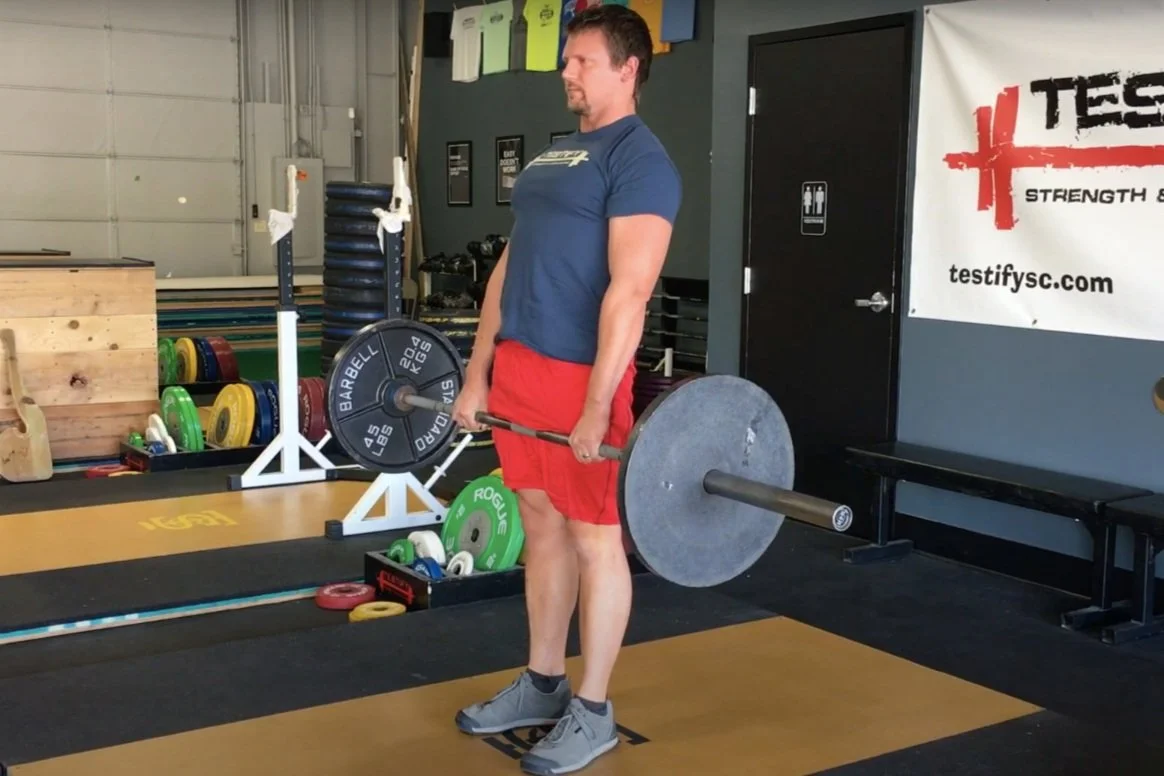
Once the bar clears the knees, finish by extending the hips while keeping the ribs stacked over the pelvis. Stand tall with straight legs and hips, but avoid bending backward to demonstrate a dramatic lockout. The bar should stay close to the body. An exaggerated lean can turn a simple finish into unnecessary motion through the lower back, especially when fatigue is rising.
To lower, lead with the hips as the bar travels down the thighs, then allow the knees to bend once the bar can pass them. Place the plates on the ground in a controlled way and reset the next rep rather than bouncing off the floor. Each repetition should offer another clean opportunity to brace, break the plates free, pause and finish. Letting the bar crash and rebound defeats the precision you are trying to build.
Watch for three common technical leaks. First, the hips rise before the bar moves: reduce the load and rebuild coordinated leg drive. Second, the bar moves away from the shins: inspect your starting balance and how you keep your upper back connected to the bar. Third, the pause becomes a soft knee bounce: stop completely at a predetermined height and count it out. These problems often occur together, so do not try to fix all three by adding more cues at once.
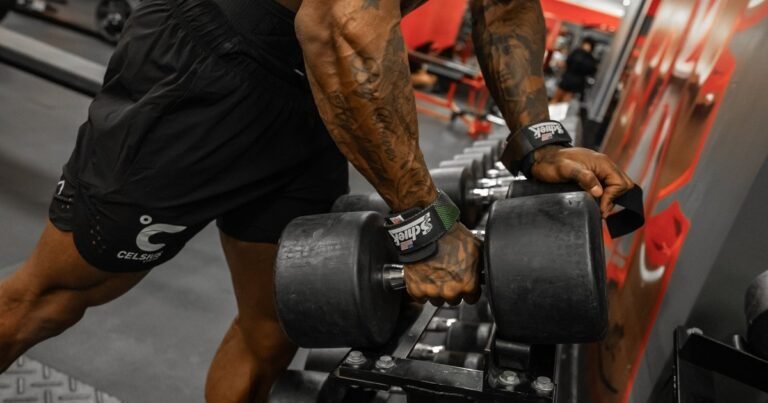
Grip may also be the limiting factor during longer holds. Start with your regular competition-style grip whenever it is tolerable, and consider straps on secondary sets if grip exhaustion prevents productive hinge work. Straps change the grip demand; they do not repair a weak brace. If you feel sharp pain, dizziness or numbness rather than ordinary muscular effort, stop the set and investigate before continuing.
Choose the right variation for the weak point
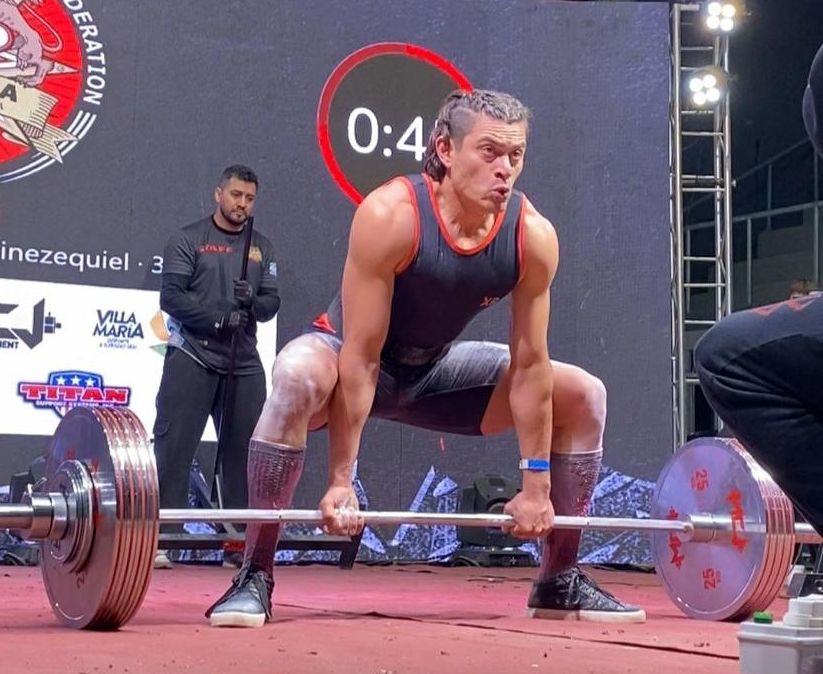
A low paused conventional deadlift best fits lifters who want to practice staying organised immediately after the plates leave the floor. A pause just below the knee may be more useful when the bar tends to drift away or the hips rise too early around mid-shin. In either case, the assistance exercise should resemble the portion of your normal pull you are trying to improve. Recording a few conventional heavy sets can reveal the actual problem better than guessing.
Deficit deadlifts lengthen the starting range of motion and change the required position at the floor. Block pulls reduce the range and focus attention on higher portions of the lift. Romanian deadlifts begin from the top, emphasize a controlled hip hinge and generally use more knee extension. Each has its place, but none is interchangeable with a brief isometric stop in the upward deadlift. Choose according to the problem, not the novelty of the variation.
Trap-bar deadlifts can provide a different handle position, torso angle and loading experience. They are useful strength exercises, yet a trap-bar pull cannot be assumed to transfer perfectly to a straight-bar competition deadlift. Sumo and conventional paused pulls also impose different stance and joint-position requirements. If your primary lift is sumo, a paused sumo rep can offer more specific practice than automatically switching to conventional.
One useful diagnostic is to compare two videos at similar relative intensity: an ordinary pull and a pause pull. If the pause requires your hips to shoot up before the bar resumes, the position you selected may be unsupported at that load. If it stays still and the finish looks smooth, you have found a repeatable drill. Do not treat this as proof that a particular muscle is weak; technique, load selection, fatigue and limb proportions all contribute.
Powerlifting Shirts & Lifting Gear
Powerlifting shirts and gym gear for squat, bench and deadlift lifters who live for heavy numbers.

The Walking Deadlift | Zombie Workout For Leg Day & Pow Hoodie
Make your off-duty look more fun with “The Walking Deadlift”.

Thou Art Not Yet Ripped Medieval Knight Deadlift Gym Sticker
Give your everyday gear a playful “Sticker Thou Art Not Yet Ripped Medieval” twist.

Deadlift Zombie Skull Gym Decal for Powerlifters, Hallo Sticker
Stick a little “Deadlift” humor on your favorite gear.

Deadlift PR or ER Bloody Skull Gym Pullover , Horror Wo Hoodie
Bring “Deadlift” gym humor to lazy days and post-workout plans.


Deadlift or Die Tryin Muscle Shirt Athletic Vest Deadpo Tank Top
Show some personality between sets with “Deadlift or Die Tryin”.

Do You Even Deadlift Tee
Heavy lifts, good laughs, and a little “Do You Even Deadlift?” energy.

Deadlift Stone Skull Gym Decal for Powerlifters, Hardco Sticker
Stick a little “Deadlift” humor on your favorite gear.

Día de los Muertos Deadlift Gym – Mexican Calavera Musc Tank Top
Bring “Día de los Muertos Deadlift” humor to your next lifting session.
A four-week pause deadlift plan that respects recovery
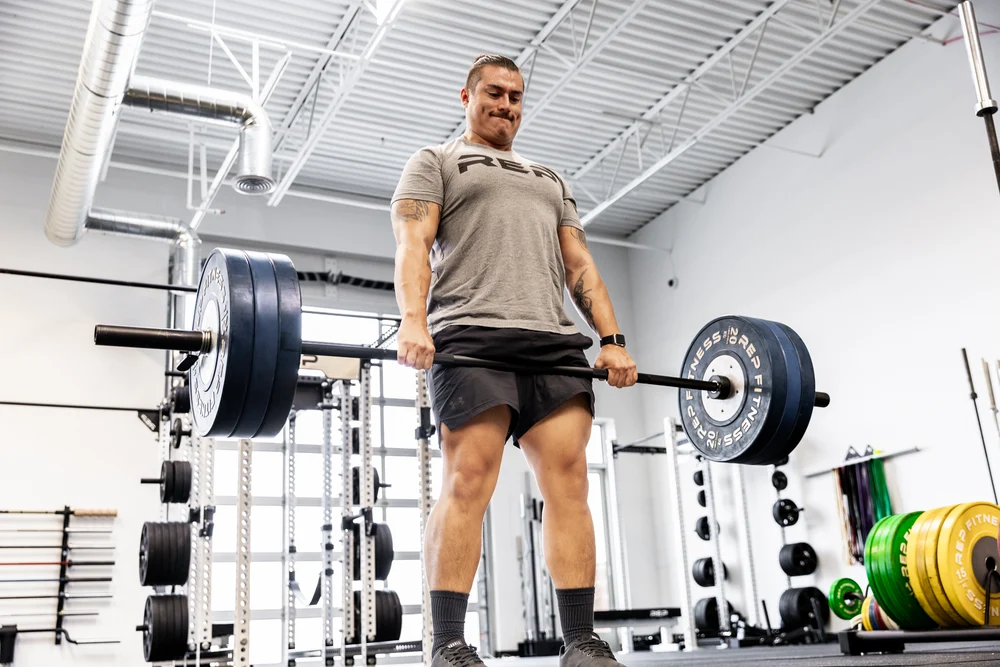
Start with one paused-deadlift exposure each week on a day that is not already overloaded with heavy hinging. For week one, try three sets of three reps with a one-second low pause, using a weight that feels clearly easier than your usual three-rep deadlift. Many experienced lifters find roughly sixty to seventy percent of their conventional one-rep maximum to be a workable starting region, but that is only a starting estimate, not a requirement.
In week two, use three or four sets of three while maintaining exactly the same pause height and duration. Add a small amount of weight only if all previous sets stayed smooth. Week three can move to four sets of two with a genuine two-second hold, again allowing load to rise only when the position does not deteriorate. In week four, use two or three sets of two at a comfortable effort, then compare video against week one before deciding on another training block.
Rest enough between hard sets to keep technique representative. Around two to four minutes often works better for this assistance movement than rushing between sets, particularly when the pause challenges your brace and grip. You can retain a normal deadlift session elsewhere in the week, but account for the total work from squats, rows, Romanian deadlifts and back extensions. More hinge sets are not automatically more productive if they make your conventional pulling deteriorate.
Judge success by repeatable bar height, an honest motionless count, and a stable torso position, not by the largest number you can grind through a pause. Once the target position looks reliable, rotate the exercise out or keep a few controlled sets as maintenance. Paused deadlifts are a way to practice strength where you need it; they should make the rest of your training more coherent, not become another compulsory max-effort event.