Advertising disclosure: This page includes affiliate product links that may earn us a commission, as well as products from our own store.
Bayesian Cable Curls: Set the Pulley, Load the Stretch and Build Your Biceps
A Bayesian cable curl can feel completely different at two stations even when the selector pin shows the same number. Move a step closer to the machine and the first few inches may suddenly feel easy. Move forward, or raise the pulley, and the straight-arm position can demand a great deal more effort. That is why this exercise rewards careful setup rather than an impressive weight-stack number.
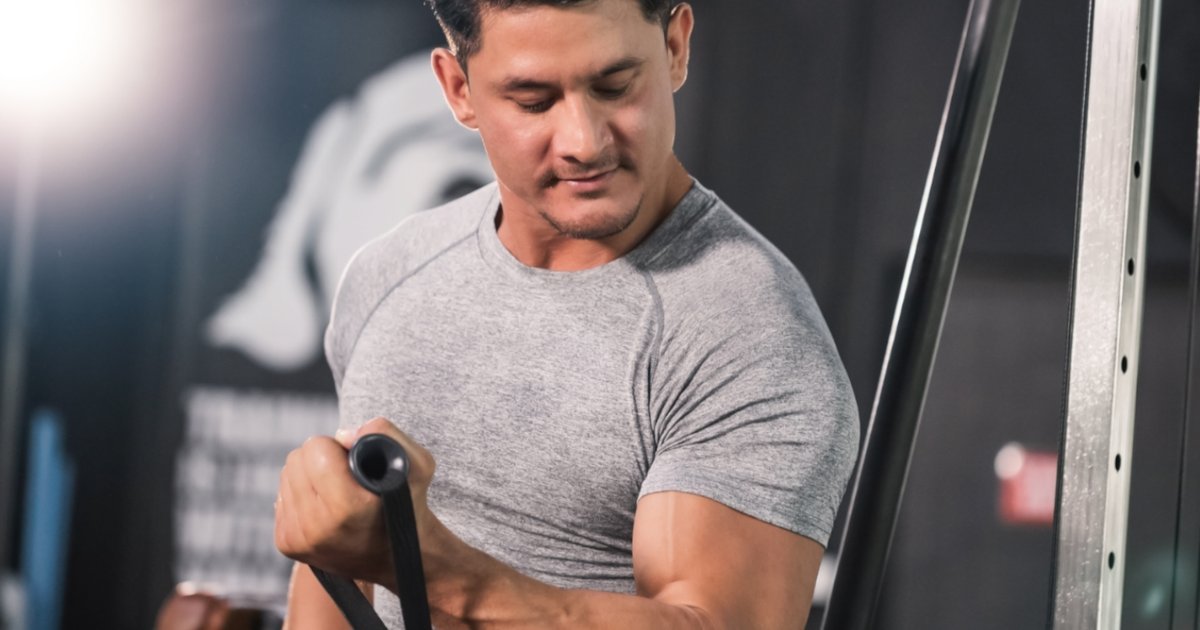
The movement is simple: stand facing away from an adjustable cable station, keep the working arm a little behind your torso and bend the elbow to curl a single handle toward your shoulder. The interesting part is how the angle of the cable changes the leverage at your elbow. A recent technical guide puts that geometry ahead of vague promises about a special biceps peak, and that is the approach we will use here.
This is a practical coaching guide, not an argument that one curl is the undisputed champion. You will learn to choose the pulley position, feel the intended range without irritating your shoulder, decide when to use another variation and progress your sets over six weeks.
1. Understand why cable direction changes the hard part
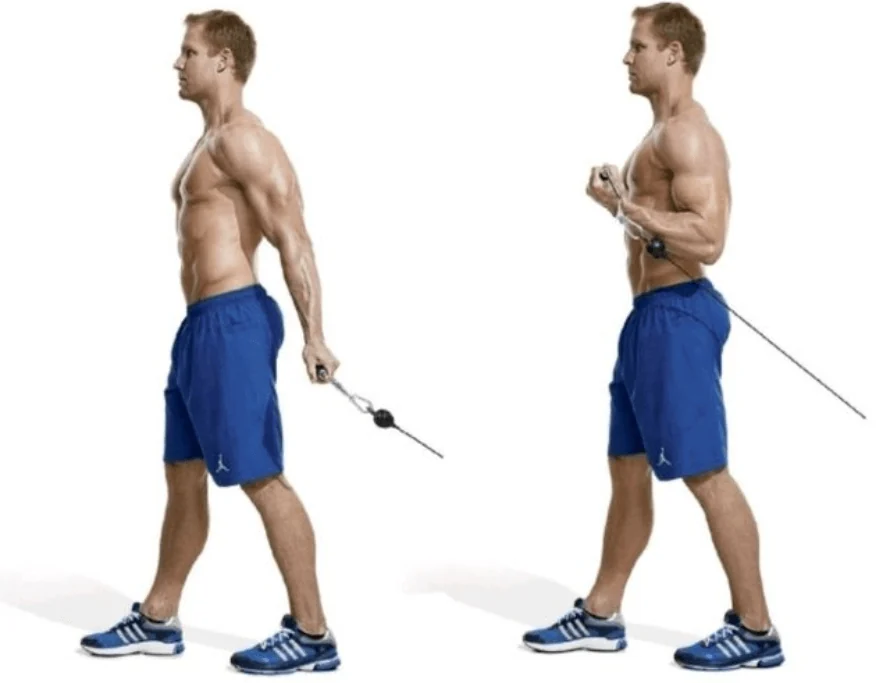
A weight stack provides a broadly consistent cable pull, but that does not mean your elbow faces the same turning force throughout a curl. At any moment, the relevant question is how far the cable’s line of action passes from the elbow joint. If the cable runs nearly along your forearm while the arm is straight, the turning force there is small. If the cable cuts across the forearm, that position becomes harder. Neither the size of the stack nor the amount of shoulder stretch tells the whole story.
Picture three setups. With the pulley almost on the floor and your body standing close, the cable may follow the lower arm near the bottom and demand more force in the middle. Step farther forward and the line rises toward horizontal, changing where the difficulty concentrates. Raise the pulley toward hip height and a nearly horizontal cable can make the lower portion comparatively demanding. These are mechanical tendencies, not guarantees about a particular machine, since pulley position, arm length and the height of your hand also matter.
That difference explains why the same exercise name does not guarantee an identical stimulus. Someone performing a behind-the-body cable curl with a steep downward cable may not load the stretch in the same way as another lifter standing farther forward. Both can train the biceps effectively. If your specific goal is resistance near the straighter-elbow position, check the cable angle rather than assuming that merely stepping behind a machine solves it.
Try a simple test with a light load: pause briefly at the bottom, one-third up and around the middle. Keep the upper arm quiet. Notice where your elbow flexors must work hardest to prevent movement. Adjust your distance until the exercise has the resistance profile you actually want. Do not try to engineer an extreme stretch by forcing your shoulder farther back; geometry and comfort should work together.
2. Set the pulley, handle and stance before the first rep
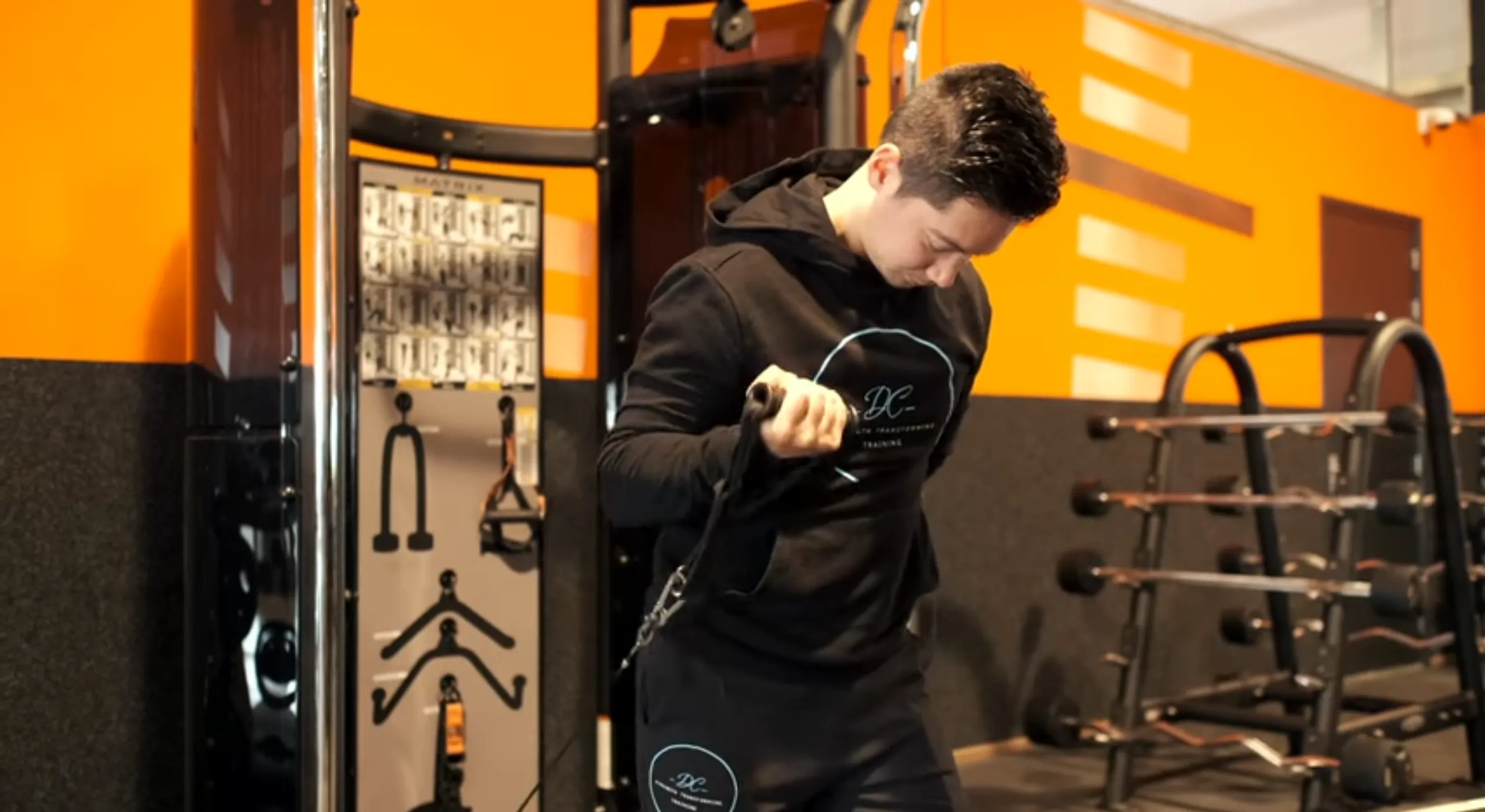
Attach a single D-handle to an adjustable pulley, set a light resistance and face away from the machine. A hip-height pulley can produce a useful, fairly level pull in the lengthened position; a floor-level pulley may also work if you walk far enough forward. Grip the handle with a palm-up orientation, take a balanced split stance and let the cable draw your working upper arm only slightly behind your ribs. A small offset is plenty for most lifters.
Check two things before you curl. First, the cable must clear your hand, forearm, clothing and the edge of the machine throughout the movement. Second, the stack must not slam into its resting position at the bottom or run out of travel near the top. Walk a little farther forward or adjust the pulley if needed. Keep the path free of other users and make sure the attachment and carabiner are fully secured, especially in a crowded home gym.
Keep your ribs stacked over your pelvis, soften your knees and brace as though you were preparing for a controlled row. Avoid arching your lower back to manufacture a bigger shoulder angle. Let your shoulder blade settle naturally instead of rigidly pinching it back. Your elbow should track in a predictable position just behind your side, not swing outward to dodge the cable. This setup gives the forearm room to curl without turning the exercise into a torso movement.
Begin with a weight you could curl for several extra clean repetitions. The aim of the first session is to learn the station and record the setup, not to establish a personal record. Note the pulley notch, how far you stand from the column, the handle type and whether the machine has a pulley ratio. Different cable systems can feel different at the same displayed pin load.

Equipment Worth Exploring
Explore equipment, accessories and gear from our carefully selected range.
VOLTRA
Compact digital cable trainer with smooth, adjustable resistance.

Go-Tone Pro
Portable digital cable trainer with up to 66 lb (30 kg) of adjustable resistance.

VForce Wall Trainer
Space-saving wall-mounted functional trainer with pivoting cable arms and variable resistance ratios.

VForce 2IN1
Half rack and pivot-arm functional trainer with switchable 1:1 and 2:1 pulley ratios.

VForce 3IN1
All-in-one rack combining an adjustable Smith machine, functional trainer, and free-weight station.

VForce 3IN1 Max
Six-post all-in-one rack with Smith machine, functional trainer, and variable-force cables.

VForce Lat Tower
Wall-mounted cable tower with pivot arms and adjustable 1:1 or 2:1 pulley ratios.

Multi Pull Smith Rack MPHR-780
All-in-one rack with a Smith machine, functional trainer, lat pulldown and low row.

GymPin D Handle Bar
Multi-use steel D-handle bar for cable rows, pulldowns and other cable exercises.

GymPin Ergo Handles
Pair of ergonomic cable handles shaped for comfortable triceps and pulling exercises.
3. Curl through the elbow without turning it into a shoulder swing
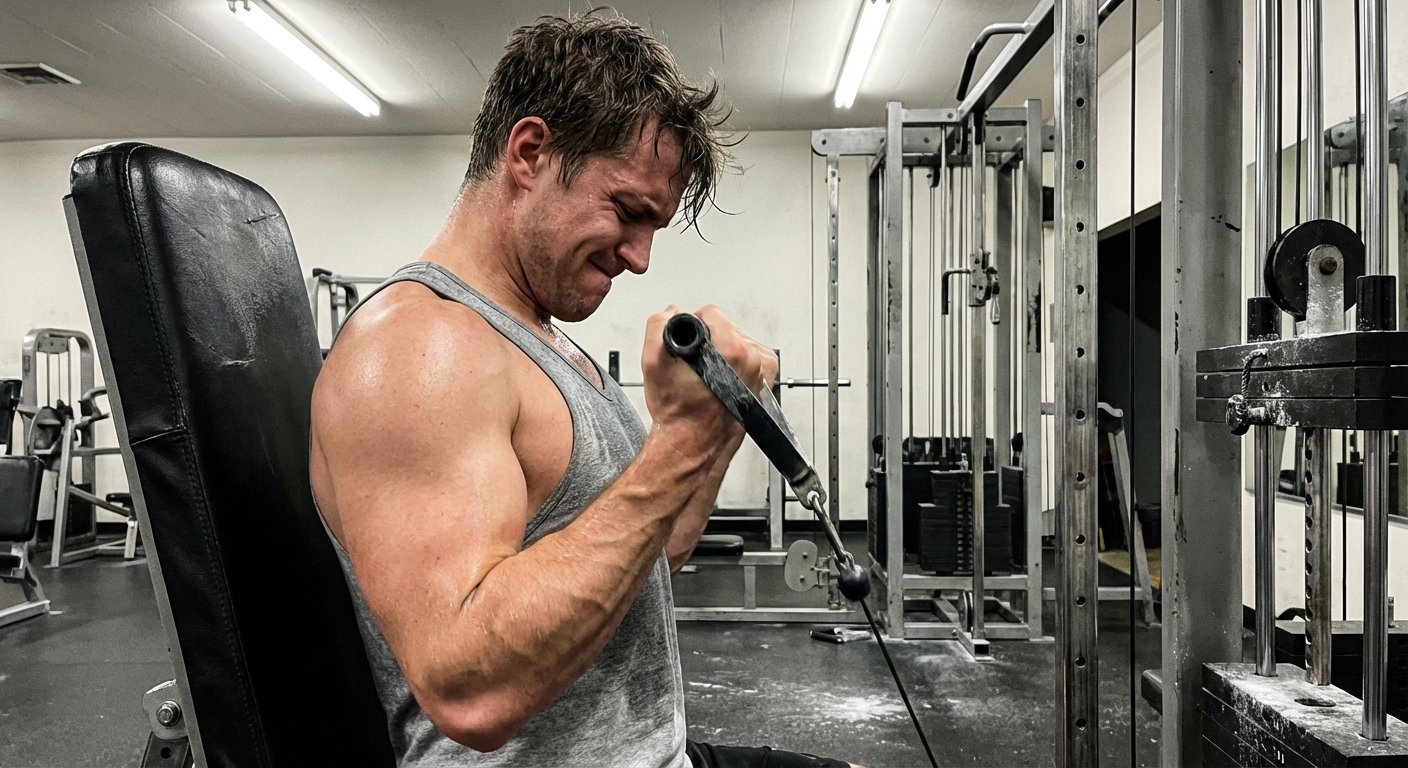
Start with an almost straight elbow, a relaxed but controlled shoulder and a neutral wrist. Breathe out as you bend your elbow and bring the handle toward the front of your shoulder. You do not need to touch your collarbone. Stop the upward movement when the elbow begins to wander, the wrist folds back or your body wants to twist. Then lower deliberately for two to three seconds until you return to your chosen comfortable bottom position.
The upper arm can move a little during a natural rep, but deliberate big swings are a poor way to track progress. Some lifters drift the elbow forward at the top, changing the movement into a conventional cable curl with extra shoulder assistance. Others lean forward sharply or bend their knees to launch the handle. Both techniques can move more weight while providing less useful information about whether the elbow flexors are getting stronger.
Your wrist should feel like a stable link between the handle and forearm. Let the grip rotate if your hardware allows it and your forearm prefers it. Do not twist aggressively into supination or force your palm into an angle that hurts. If your front shoulder feels pinched with the arm behind the body, step closer, reduce the backward position, lower the load or choose a regular standing cable curl. Sharp joint pain is a stop signal, not something to stretch through.
Filming one set from the side can be useful. Look for repeatable bottom depth, roughly the same upper-arm position from first to last rep and a lowering phase that does not speed up as fatigue builds. If the final two repetitions require a noticeable whole-body lean, count only the clean work, reduce resistance slightly next session and rebuild from there. Technical consistency is what makes this movement measurable.

Bodybuilding Shirts & Workout Gear
Bodybuilding shirts, tanks and gym gear for lifters chasing muscle, size, symmetry and the pump.

Bicep Heart I Love Gym Funny Workout | Swole Heart Musc Tank Top
Train hard, laugh a little, and rep “Bicep Heart I Love Gym”.

Gym Dost Thou Even Curl Medieval Knight Bicep Shirt & B T-Shirt
Make gym days more fun with “Dost Thou Even Curl Medieval Knight Bicep” style.

Big Guns Rock Gym Funny Workout Decal Who Love Rock Mus Sticker
Give your everyday gear a playful “Big Guns Rock” twist.

Micro Biceps Club President Gym | Funny Workout Sweater T-Shirt
Keep things casual with a little “Micro Biceps Club President” attitude.


GymTok – TikTok Parody Bicep Crewneck for Gymbros and F T-Shirt
Show some gym-day personality with “GymTok”.

Big Biceps Theory & Weightlifting Bro Science Hoodie
Stay casual and show some lifting attitude with “Big Biceps Theory”.

For Whom The Bell Curls Dumbbell Metallica Workout Musc Tank Top
Your gym-day look, with a playful “For Whom The Bell Curls” twist.

Every Day Is Arm Day
Make gym days more fun with “Every Day is Arm Day Octopus Gym Meme” style.

The Real Rocky Mountains – Bicep Mountain Meme Decal fo Sticker
Stick a little “The Real Rocky Mountains” humor on your favorite gear.
4. Compare the Bayesian curl with incline dumbbells and preacher work
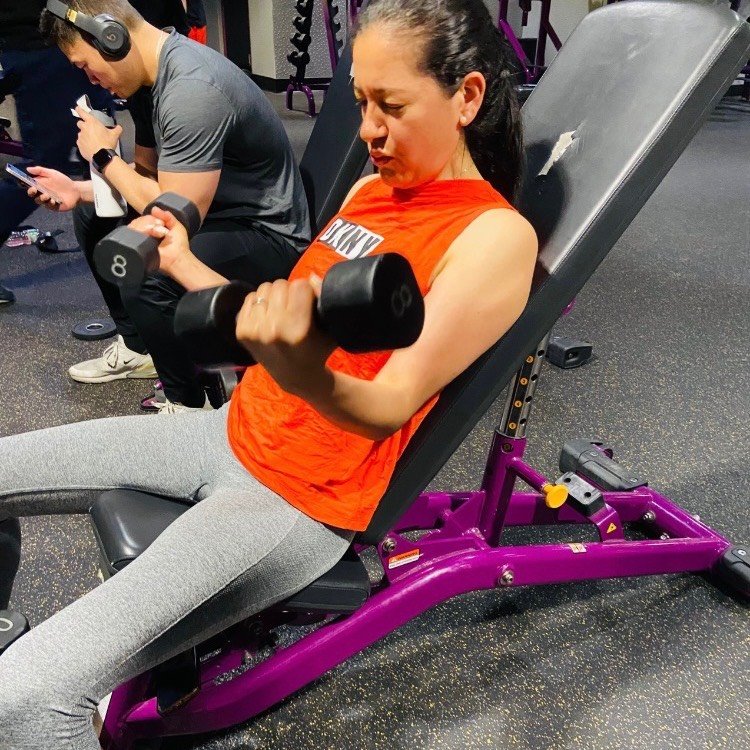
An incline dumbbell curl also places your upper arm behind the body, but gravity produces a different resistance curve. When the dumbbell hangs directly beneath the elbow, the turning force can be relatively small even if the biceps feels stretched. As the forearm rises away from vertical, the demand generally grows. A cable set to pull nearly horizontally can challenge a straighter-elbow position more strongly, but a badly positioned low cable can lose much of that advantage.
A preacher curl puts the upper arm in front of the torso and supports it against a pad. That support can make cheating more difficult and may be useful when you want to concentrate on elbow flexion without spending much attention on balance. It also creates a different shoulder position and resistance curve. The correct comparison is not simply standing versus seated or cable versus dumbbell; it is how much controlled work you can perform at the relevant joint angles while remaining comfortable.
In a small home gym, the best choice is often the one you can repeat consistently. If your pulley can only sit at floor level in a narrow corner, a regular curl or an incline bench might be easier to set up safely than a long step forward with a cable behind you. Conversely, a compact motor-driven cable unit or functional trainer with a movable anchor can make single-arm work convenient, particularly when a light weight-stack increment would otherwise be a big jump.
You can use more than one curl without treating them as separate muscle-growth secrets. A behind-the-body curl, a preacher variation and a neutral-grip hammer curl are reasonable ways to add variety across a training week. They overlap heavily in the elbow flexors, so count their hard sets together rather than giving each one a completely new recovery budget.
5. What the growth evidence supports, and what it does not
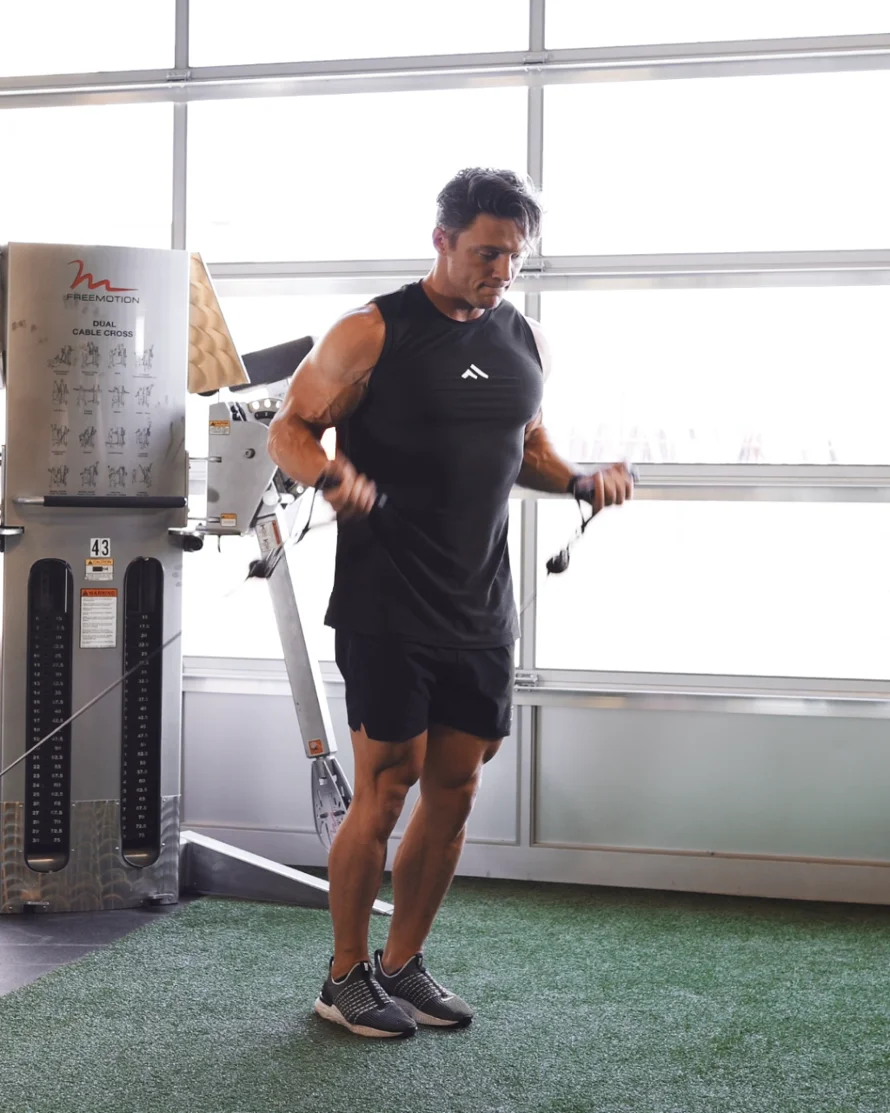
There is a real reason to be interested in loading the elbow flexors at longer lengths, but the strongest claim is not that the Bayesian curl uniquely isolates one biceps head. In one ten-week comparison involving fifteen previously untrained men, behind-the-body cable curls and preacher cable curls both produced meaningful growth. The reported differences between variations were not strong enough to establish one as the clear overall winner. Results from a small training trial should not be treated as a universal ranking for every athlete.
Another controlled comparison examined cable curls performed with the shoulder farther behind the body versus a more neutral position while attempting to match the resistance profile. It likewise did not justify a sweeping claim that one shoulder angle always builds substantially more muscle. A muscle can be longer at a particular joint position without that alone proving superior regional hypertrophy in the long term. Resistance, range, effort, volume and adherence all matter.
The Bayesian setup is still valuable. It is unilateral, easy to adjust on a suitable cable station and can make the bottom part of the movement demanding when the cable is aligned appropriately. That is a practical reason to include it, not proof of a magical biceps peak. Be cautious about articles that equate an impressive stretch sensation, muscle pump or one acute activation measurement with better growth over months.
For most lifters, an intelligently programmed curl that allows full comfortable movement, sufficient effort and repeatable progression will outperform an exotic variation performed inconsistently. If elbows or shoulders dislike the position, do not force it out of fear of missing gains. Use a variation you can train hard without symptoms and let your progression log, not a slogan, guide the decision.
Equipment Worth Exploring
Explore equipment, accessories and gear from our carefully selected range.


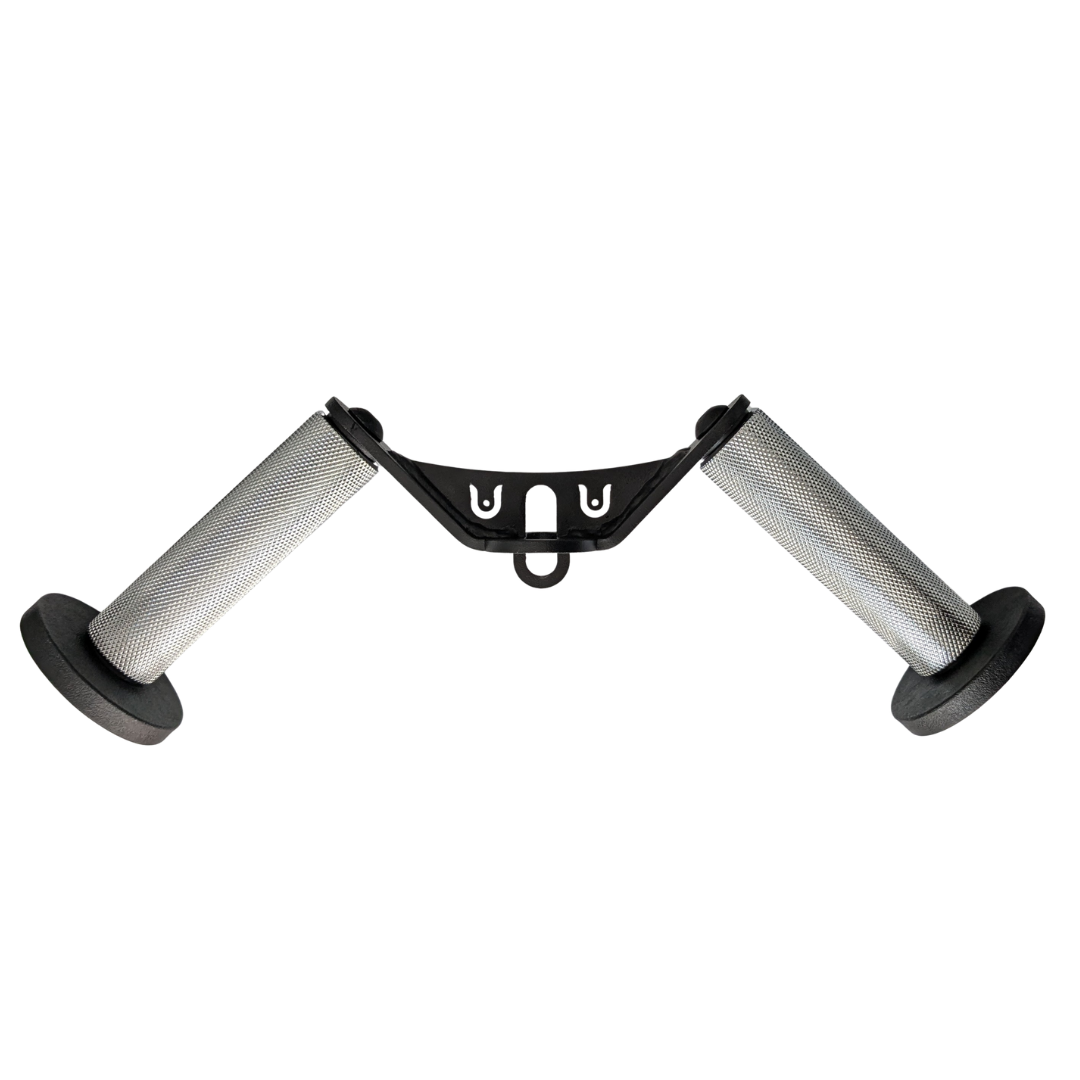
W Grip
Angled cable grip for comfortable rows, pushdowns, and curls.

Angles 90 Grips
Flexible grip attachments that allow natural wrist movement during pulling exercises.
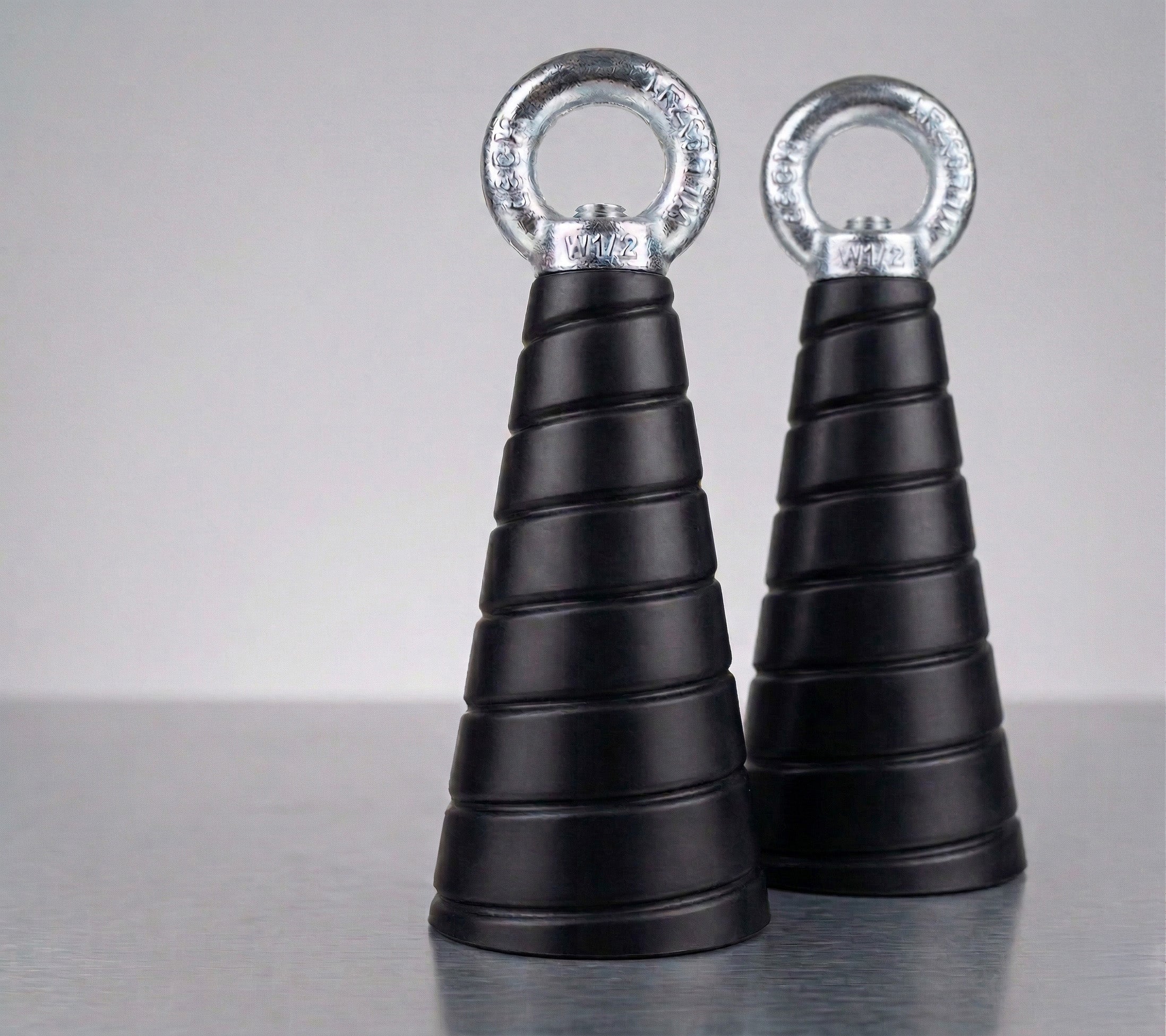
Tapered Tricep Cone
Tapered rubber cable grip for triceps extensions, face pulls and hammer curls.
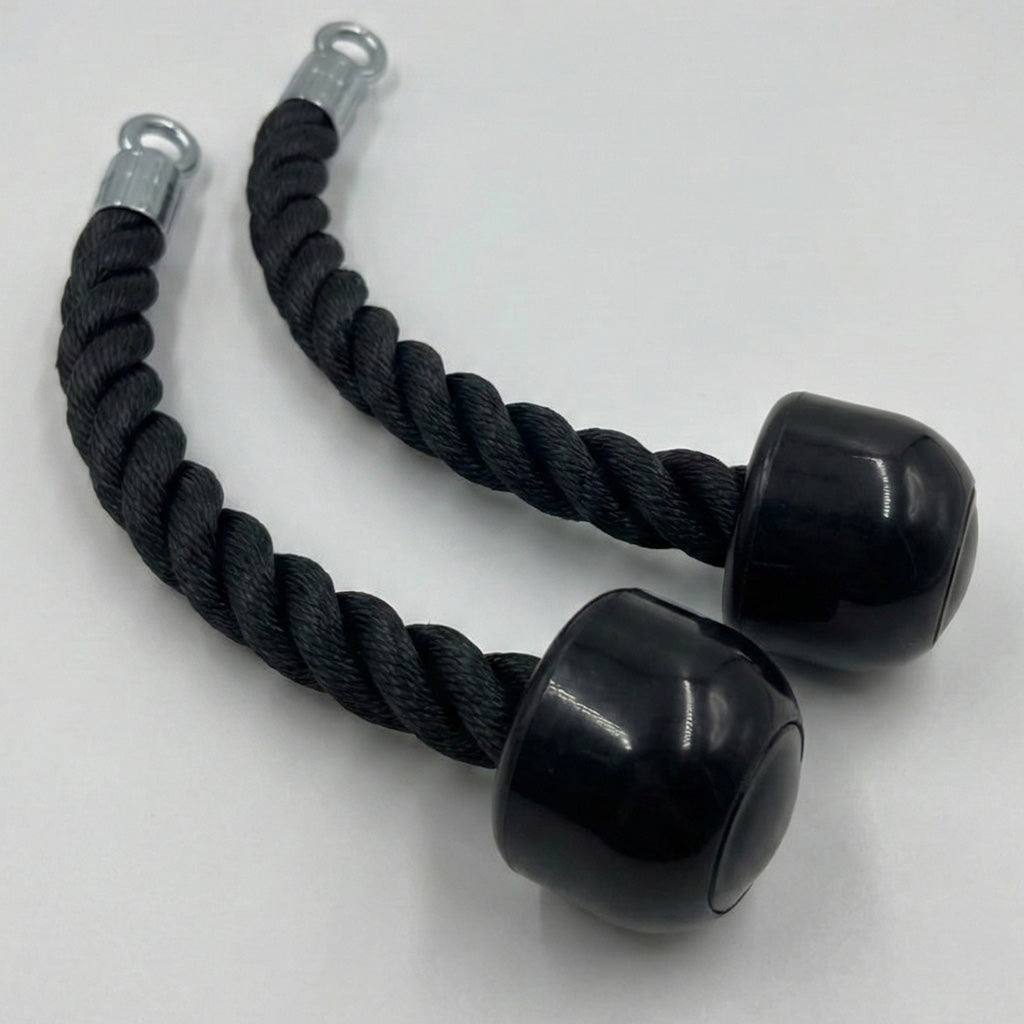
Individual Tricep Ropes
Pair of individual cable ropes for triceps pressdowns and cable hammer curls.


EZ Curl Barbell
Olympic EZ curl bar with angled grips for curls and triceps exercises.


6. Build a six-week progression around clean unilateral sets
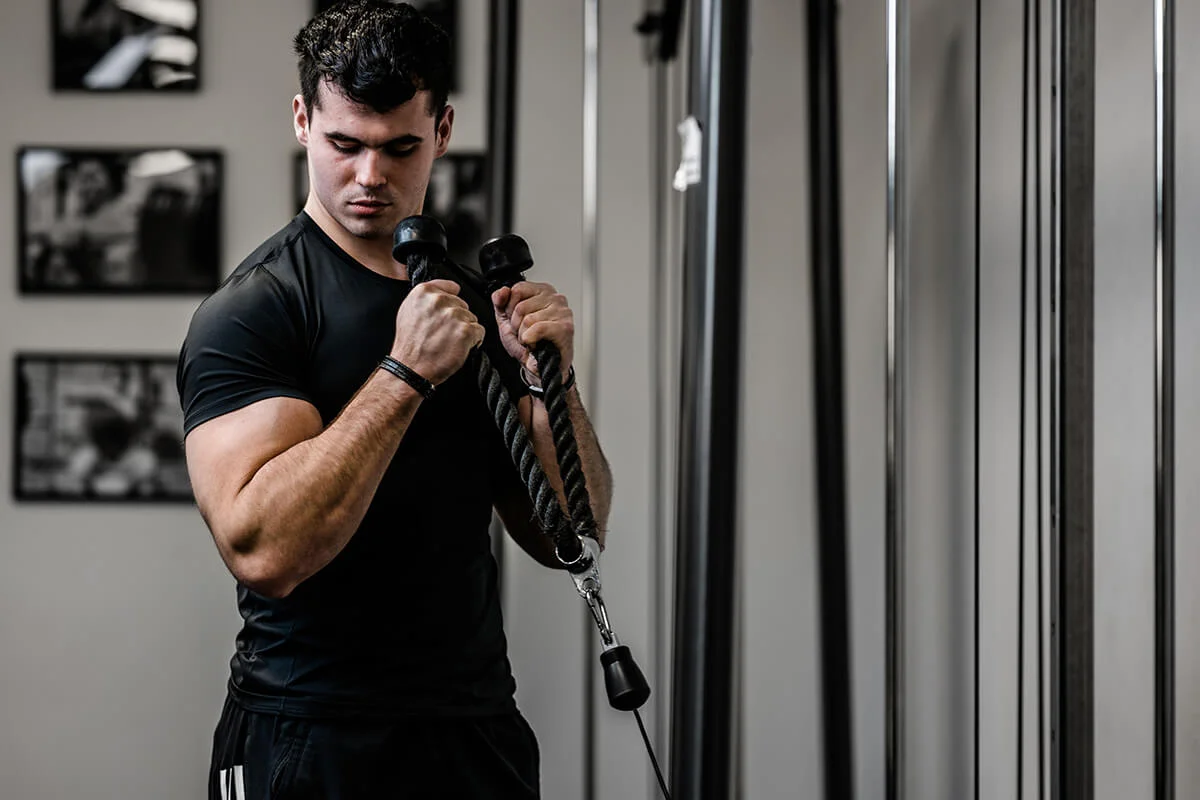
Treat the Bayesian curl as accessory work after rows or pulldowns, not as a test of maximal single-arm strength. For weeks one and two, choose two sessions per week with two sets per arm, aiming for eight to twelve controlled reps while leaving about two good repetitions in reserve. Start with the weaker side, match its repetitions on the stronger side and write down the same pulley notch, standing distance and handle every time.
During weeks three and four, add a third set per arm if recovery and elbow comfort are good. Progress repetitions before pin weight. If you perform twelve, twelve and twelve clean reps with the same setup and without swinging, increase by the smallest available resistance increment and let the reps fall toward eight or nine. If the next pin is a huge jump, keep the original load and build toward fifteen reps first, or use safe fractional loading designed for your equipment.
In weeks five and six, hold total curl work steady and aim for slightly better execution or a modest load increase. You can pair the Bayesian curl with one other elbow-flexor pattern, such as a regular cable curl, preacher curl or rope hammer curl, but do not accidentally double all your biceps volume. If you already have substantial pulling volume, two quality Bayesian sets per session may be enough. The example is a flexible progression, not a prescription that everyone needs six weeks of identical exercises.
Rest long enough that the second arm and later sets receive real effort; roughly sixty to one hundred twenty seconds is a reasonable starting range. Avoid racing between arms when the breathing or grip has not recovered. Keep the lowering phase controlled, resist the temptation to yank the first rep out of the bottom, and stop when elbow position no longer looks like the first rep. Training close to failure does not mean turning every set into a form breakdown.
At the end of week six, compare your log using the same machine and anchor. More clean repetitions at the same load, or the same clean repetitions with slightly more load, is useful progress even if your upper arm does not look different in the mirror. If a new setup feels dramatically heavier, record it as a new variation instead of a strength regression. The Bayesian cable curl earns its place by being adjustable, trackable and comfortable—not because it can promise an exclusive kind of biceps growth.
Funny Gym Shirts & Workout Gear
Funny gym shirts, tanks, hoodies and workout gear for lifters who like training hard.


Welcome to the Gun Show for Big Biceps Lifters | Rock W T-Shirt
For laid-back days and metalhead humor: “Welcome to the Gun Show”.


– Flex Armstrong Astronaut Moon Huge Arms Muscle Shirt Tank Top
Bring “Flex Armstrong Astronaut Moon Huge Arms” humor to your next lifting session.

Shirt Pull Day – Back & Biceps Meme Top T-Shirt
Heavy lifts, good laughs, and a little “Pull Day Graphic” energy.


Curls The Girls Shirt – Bicep Curls Top & Gymbros T-Shirt
Rep “Curls For The Girls” humor in and out of the gym.

Brain and Biceps Tee
Make gym days more fun with “Mind Muscle Perfection Brain and Biceps” style.