Advertising disclosure: This page includes affiliate product links that may earn us a commission, as well as products from our own store.
Reverse-Grip Lat Pulldowns: Find Your Grip, Drive Your Elbows and Progress
An underhand lat pulldown is familiar enough to look simple: sit under a high pulley, turn the palms toward you and pull. Yet small choices in seat position, grip width and torso angle determine whether the set stays focused on a controlled vertical pull or becomes an awkward mixture of curling and rocking backward.
The main reason to use the reverse grip is not a secret lower-lat shortcut. It is another way to train the lats and elbow flexors while finding a hand position you can load and repeat. Below is a setup you can reproduce, a clear look at what the grip actually changes, and a four-week progression that keeps the technique honest.
1. Set the thigh pad and choose an underhand grip
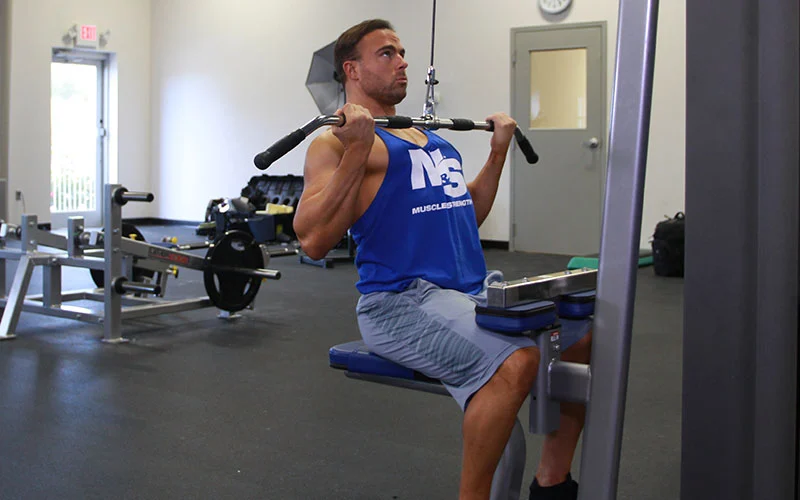
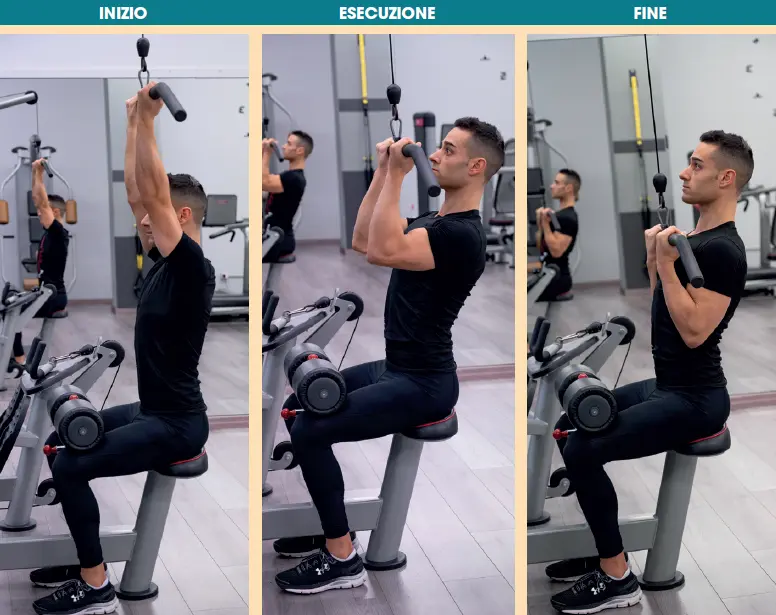
A reverse-grip lat pulldown is a vertical pull with the palms facing you rather than away from you. That orientation is called supination, and it resembles the hand position in a chin-up. For a repeatable first session, start with a straight or gently curved bar and place your hands around shoulder width. A grip that forces your wrists to bend sideways is not a bonus challenge. Move your hands slightly, try a different attachment, or use a neutral-grip handle instead.
Adjust the machine while the weight stack is resting. Set the knee pad close enough to hold your thighs without painfully compressing them. Your feet should reach the floor, and the seat should allow the cable to travel vertically rather than scraping your face. Stand up to take the bar with both hands, then sit down carefully; avoid jumping upward to a heavy hanging bar. If the apparatus has no thigh restraint, start lighter and arrange a stable kneeling or seated alternative.
Begin with arms nearly straight overhead, chest gently lifted and ribs controlled over your pelvis. You can let your shoulder blades move upward naturally at the top rather than pinning them rigidly down throughout the repetition. Set a modest backward torso angle that creates clearance for the bar. Once the set begins, keep that angle reasonably consistent. A fixed ten-degree lean is not a mandatory measurement: the important difference is between a stable starting position and a progressively larger rock backward.
Choose a first weight you could move for several additional clean repetitions. You are learning an elbow path and a range of motion, not testing the stack. If your knees rise off the pad as soon as you pull, the pad, load or both need attention.
2. Understand the lats, biceps and the limits of grip claims
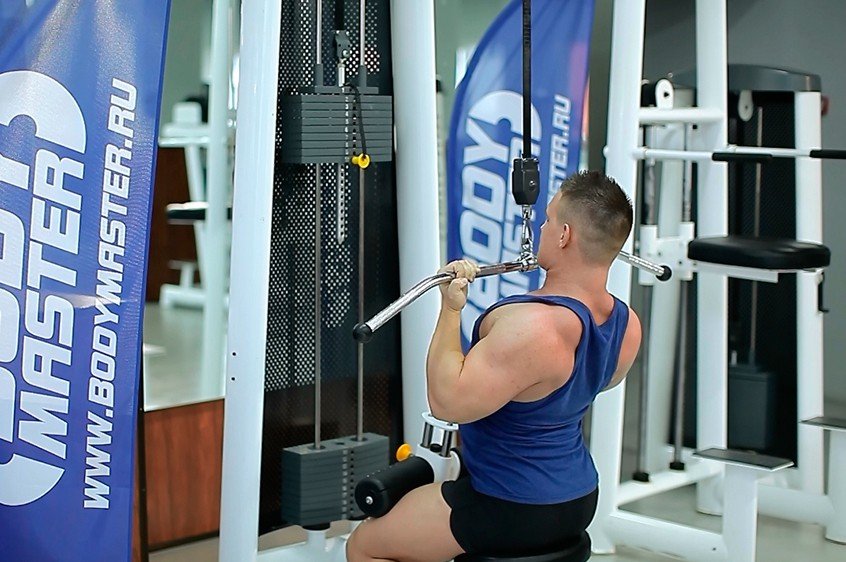
Your latissimus dorsi helps bring the upper arm down and toward the torso. That is the central job in a pulldown. The teres major and muscles around your shoulder blades contribute to the movement, while the biceps and other elbow flexors bend your arms so the bar can descend. Your abdominal muscles and trunk extensors also work to keep your body from swinging. This is a coordinated back exercise, not an isolated lat contraction.
The underhand grip often feels more like a chin-up and may make the arms easier to recruit, but a stronger biceps sensation is not proof that the variation produces more biceps growth. Likewise, describing the movement as a special lower-lat builder overstates what grip studies can tell us. In a 2025 experiment involving forty trained men, muscle-activity measurements across several pulldown grips did not show a significant difference for the lats or biceps overall. Surface electromyography measured electrical activity during the tested repetitions, not muscle size after months of training.
This matters for exercise choice. You do not need to reject the underhand grip because it feels arm-dominant, or chase it because someone promises an extra strip of lower-lat muscle. A grip that lets you train through a comfortable motion, control the eccentric and add repetitions over time is a useful option. People with limited wrist supination or irritated elbows can find an underhand straight bar awkward; comfort is individual, not guaranteed by the grip name.
For back development, use the same quality standard you would apply to an overhand pulldown: controlled repetitions, sufficiently challenging effort and gradual progression. Log which grip and attachment you used so changes in the numbers reflect actual progress rather than an unrecorded equipment change.

Equipment Worth Exploring
Explore equipment, accessories and gear from our carefully selected range.

VForce Lat Tower
Wall-mounted cable tower with pivot arms and adjustable 1:1 or 2:1 pulley ratios.

Trinity Lat Machine LSW-850
Weight-stack pulldown tower offering three cable directions and adjustable seated support.

VForce Lat Seat
Rack-mounted seat attachment for supported lat pulldowns and seated cable exercises.

Lat Pulldown Set
Multi-grip cable attachment set for pulldowns, rows, and varied upper-body training.

48in Aluminum Lat Bar
48-inch aluminum lat pulldown bar with knurled grip and rotating center swivel.

44in Dual Hook Bar
44-inch aluminum dual-hook straight bar for cable rows, pulldowns, and curls.

Dual Hook EZ Curl Bar
Angled aluminum dual-hook cable bar for biceps curls and pulldown variations.

Multi Pull Smith Rack MPHR-780
All-in-one rack with a Smith machine, functional trainer, lat pulldown and low row.

VForce Wall Trainer
Space-saving wall-mounted functional trainer with pivoting cable arms and variable resistance ratios.
3. Pull your elbows down rather than throwing your chest back
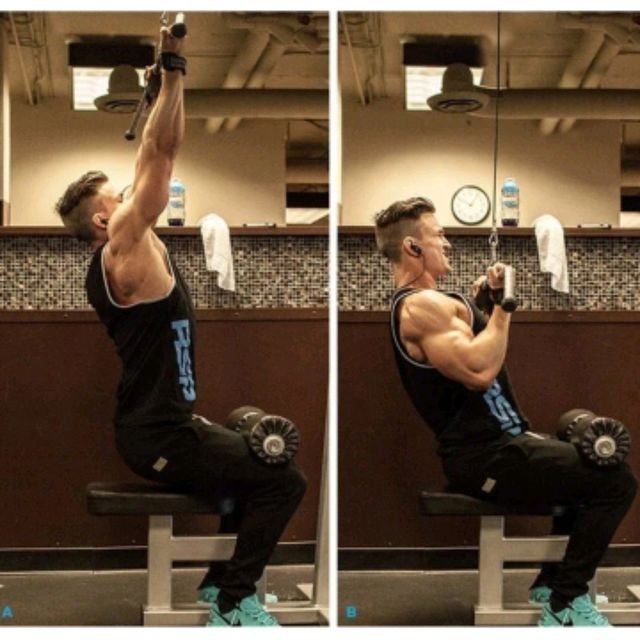
At the top, let the arms extend to the range you can control without shoulder discomfort. Start the pull by thinking about lowering your elbows toward your sides and the back pockets of your trousers. Allow the shoulder blades to travel naturally with your upper arms. As the elbows bend, the bar will approach your upper chest. Keep your wrists aligned with your forearms instead of curling them toward you to steal the final inches.
A small, steady torso lean is useful because it gives the bar a path past the chin. It is not a license to turn every repetition into a seated cable row. If you begin upright and finish almost horizontal, the movement has changed. Reduce the weight, move slightly behind the cable if the station permits, and practice matching your first and last repetitions. Someone watching from the side should see broadly the same torso angle each time.
How low should the bar travel? Stop near the upper chest or just below the chin when the elbows have reached their natural range and your shoulders remain comfortable. Your anatomy, torso angle and attachment all affect the endpoint. Forcing the bar into your abdomen usually means your shoulders and wrists are rearranging themselves to continue the path. Briefly pause at the bottom without pinching your shoulder blades together so aggressively that you lose the natural arm movement.
Return over roughly two controlled seconds as the elbows straighten and the shoulders rise with the overhead reach. Do not let the machine yank your arms upward or slam the weight plates. The top position is not wasted time: it is where you prepare the next repetition from the same start. If the cable momentarily goes slack or you have to lift your seat to reach full extension, change the setup rather than forcing the range.

Bodybuilding Shirts & Workout Gear
Bodybuilding shirts, tanks and gym gear for lifters chasing muscle, size, symmetry and the pump.

Dost Thou Even Pull Tee
Make gym days more fun with “Dost Thou Even Pull Medieval Knight Lat” style.


Shirt Pull Day – Back & Biceps Meme Top T-Shirt
Heavy lifts, good laughs, and a little “Pull Day Graphic” energy.


Wide Privilege – Wide Back Meme Jumper Crewneck Pullove T-Shirt
Bring “Wide Privilege” humor to your everyday gym style.

Demon Back Big Back & Lat Workouts Vest Tank Top
Your gym-day look, with a playful “Demon Back” twist.

Back Sabbath Back Day Funny Gym Hoodie
Bring “Back Sabbath Back Day” gym humor to lazy days and post-workout plans.

Nice Traps Big Back – Halloween Horror Jigsaw Meme Deca Sticker
Put “Nice Traps Big Back” gym humor on your laptop, bottle, or gym gear.

Lat Man Big Back – With Huge Lats – Vest Back Day Tank Top
Your gym-day look, with a playful “Lat Man Big Back” twist.

Big Back SpongeBob Sweater Back Day & T-Shirt
Bring “Big Back” humor to your everyday gym style.
4. Fix common mistakes without complicated cues
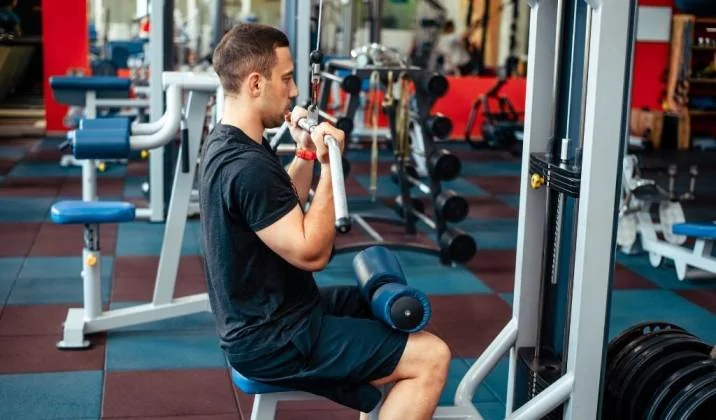
The biceps take over: Every reverse-grip pulldown uses elbow flexors, so arm involvement is normal. The more helpful question is whether your elbows actually travel down toward the torso. If you pull mainly with your wrists while the upper arms stay forward, the motion can resemble a cable curl. Lower the stack and lead with your elbows. Do not try to eliminate the biceps entirely; they are doing legitimate work.
Your shoulders or wrists complain: Recheck hand spacing and wrist alignment first. A grip too narrow for your body can create uncomfortable forearm angles, while a very wide supinated grip can feel restrictive. Slightly alter the width or switch to a neutral handle. A painless variation that you can train consistently is preferable to stubbornly preserving the words reverse grip. Persistent pain, numbness or radiating symptoms call for assessment rather than a load increase.
Your torso moves more than the bar: Use a lighter weight, tighten the thigh pad and film a side view. Compare the angle of your trunk during the first two repetitions with the last two. A common pattern is gaining a few extra kilograms on paper while losing the upper-back control that made the exercise useful. Progress is only comparable when the movement remains similar.
The weight stack crashes: Let the arms rise smoothly and keep a little tension as the plates approach the rest. There is no need to turn every rep into slow-motion theatre, but a deliberate return gives you more practice controlling the overhead position. If you cannot stop the plates colliding loudly, drop a pin and reset.
You chase the bar into a deep bottom position: Your target is a clean arm-and-shoulder path. Neither touching the sternum at any cost nor keeping the bar high at all times makes sense. Let joint comfort and stable positioning determine the endpoint, then record it consistently.
5. Compare underhand, neutral and overhand pulldowns
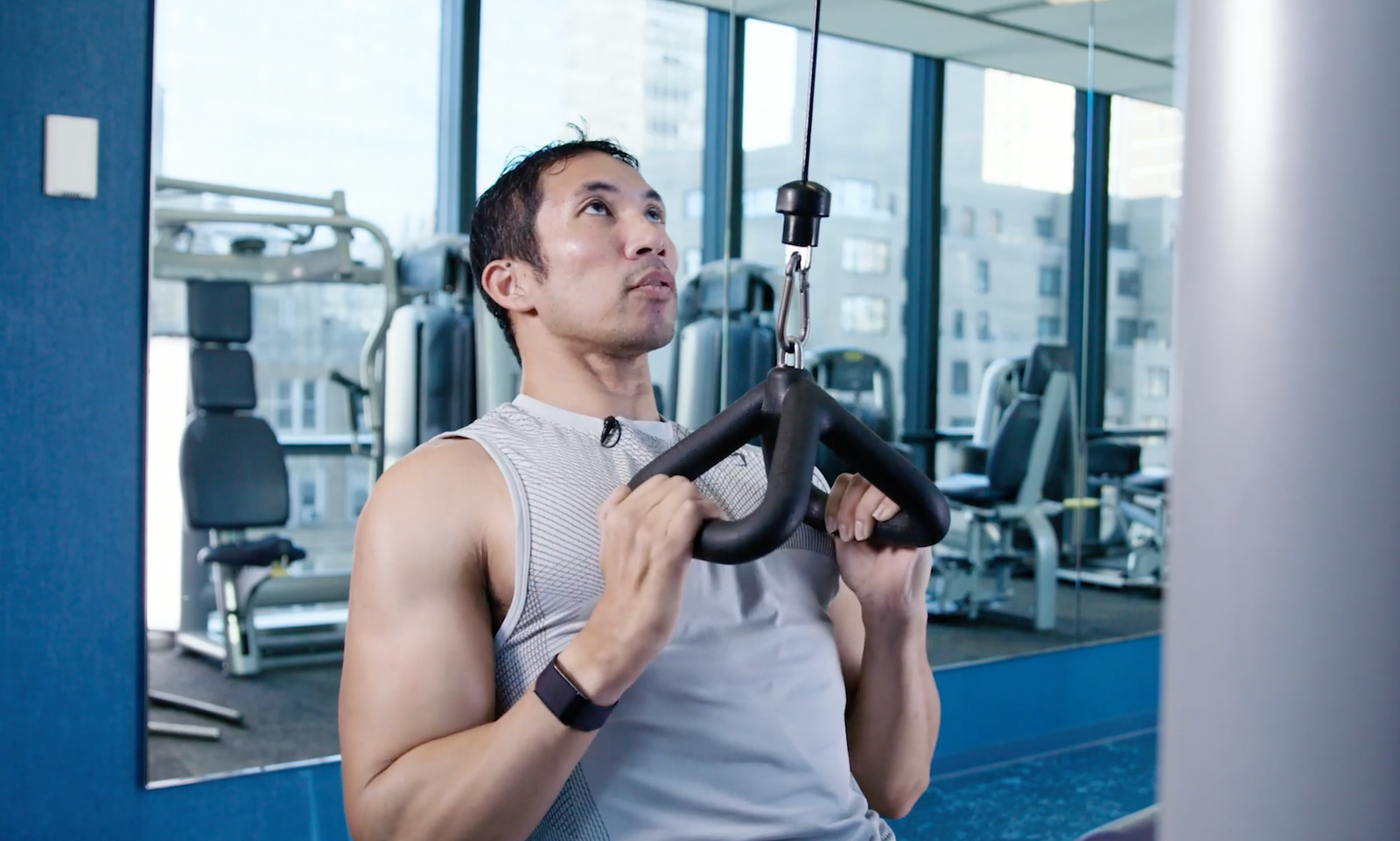
The words close, wide, underhand and neutral describe different things. Underhand refers to palm orientation; close describes hand spacing. You can use a moderately spaced underhand grip on a long bar, while a V-shaped handle usually places the palms facing each other. That distinction matters when you compare loads or shoulder comfort because the attachment may change both wrist orientation and elbow travel.
Underhand: Palms toward you, elbows often close to the body as they come down. Many lifters like the chin-up-like feel, particularly when their wrists tolerate supination well. The biceps contribute, but that is true in the other versions too. Do not claim a guaranteed lower-lat advantage.
Neutral: Palms face one another on a V-handle or parallel handles. This is a sensible experiment when a straight bar irritates the wrist, and the closer handle may let you bring the elbows toward the ribs without fighting the grip. Be aware that a V-handle and a wide parallel-grip bar can feel very different despite sharing the neutral label.
Overhand: Palms face away. A moderate or moderately wide placement allows a familiar vertical pull. Extremely wide hand spacing often shortens the usable bar path and need not improve the training effect. In a 2014 grip-width study that tested three different overhand widths in fifteen men, a wider grip did not clearly translate into more lat activity. These short-term muscle-activity results do not identify a universal winner for muscle growth.
If you have time for just one pulldown pattern, use the version you can repeat confidently. If you enjoy variety, alternate attachments between training blocks rather than swapping every set and expecting the numbers to be directly comparable. Complement pulldowns with a row for horizontal pulling and keep enough recovery between demanding sessions.
Equipment Worth Exploring
Explore equipment, accessories and gear from our carefully selected range.
VOLTRA
Compact digital cable trainer with smooth, adjustable resistance.

Go-Tone Pro
Portable digital cable trainer with up to 66 lb (30 kg) of adjustable resistance.
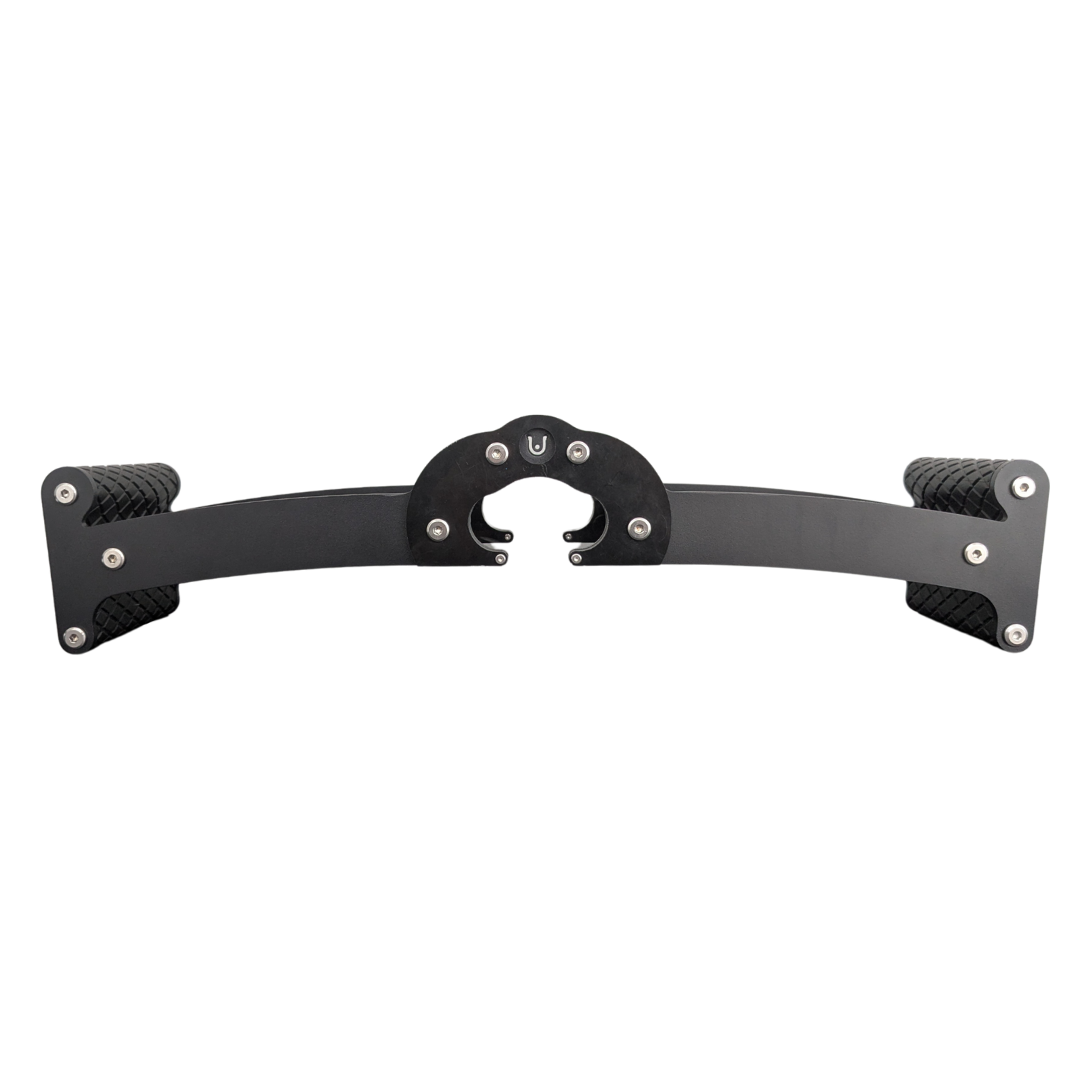
Back Bar
Multi-grip cable and landmine bar with a built-in deadlift jack.
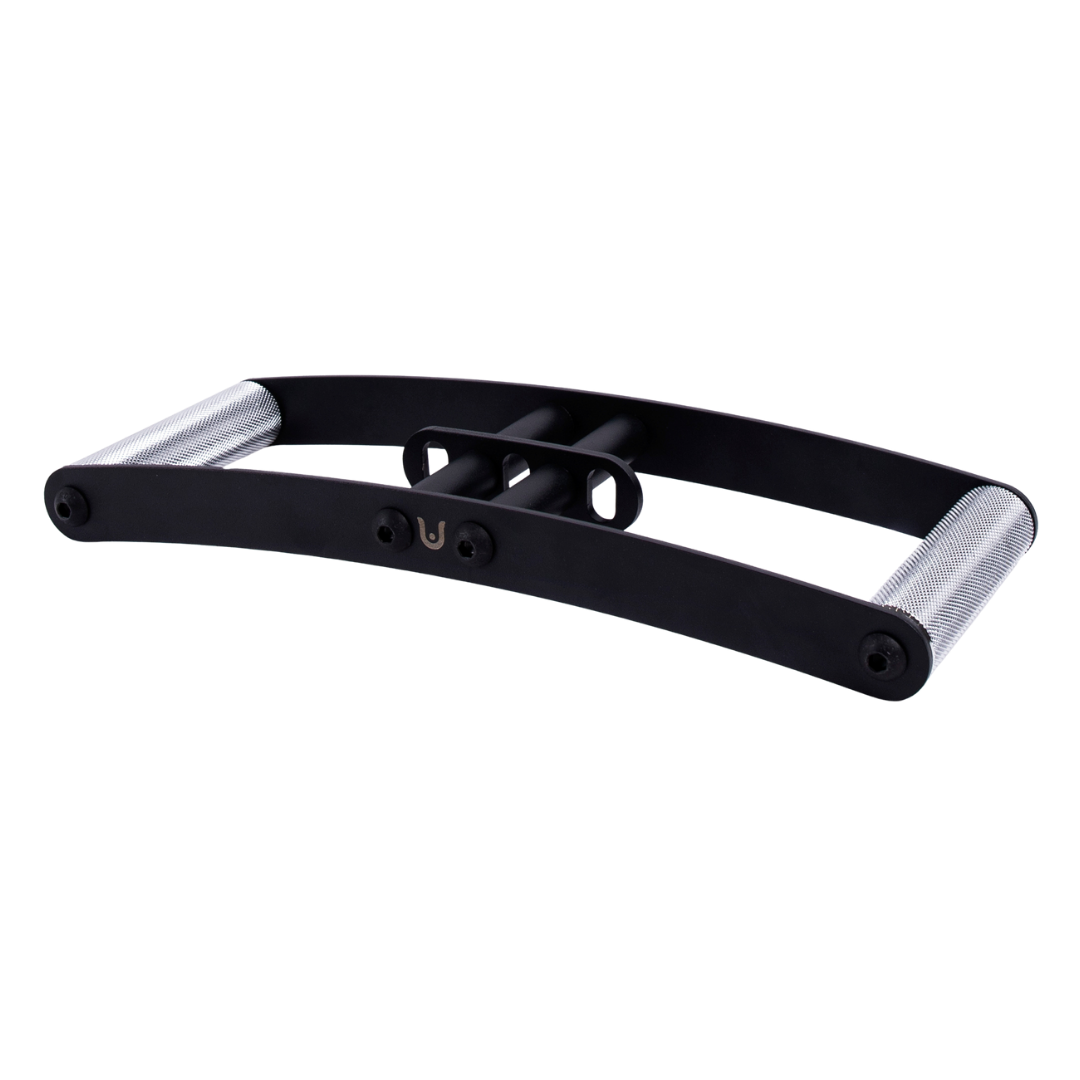
Horizon Grip
Ergonomic V-style cable grip for rows and back training.
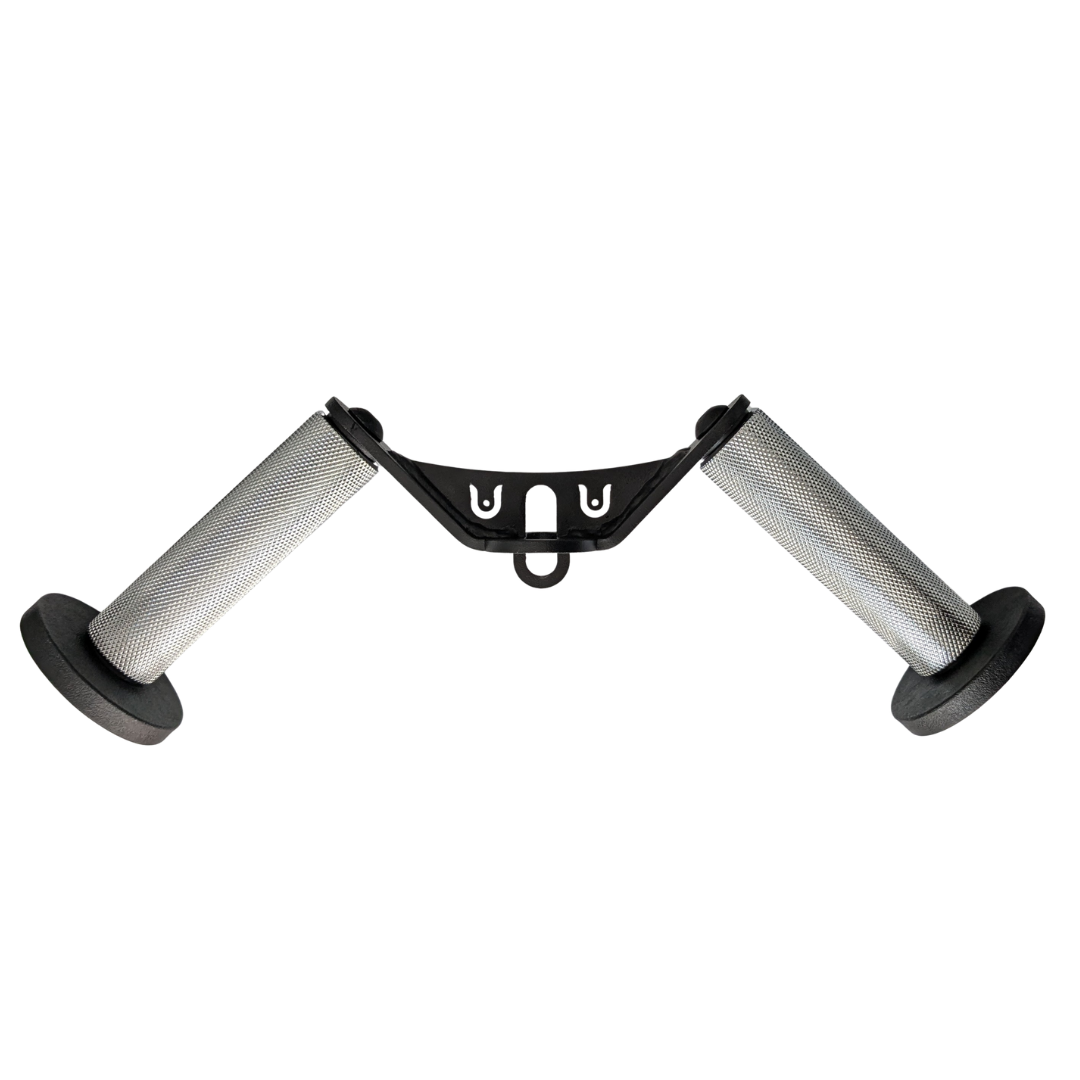
W Grip
Angled cable grip for comfortable rows, pushdowns, and curls.


GymPin Ergo Handles
Pair of ergonomic cable handles shaped for comfortable triceps and pulling exercises.

Angles 90 Grips
Flexible grip attachments that allow natural wrist movement during pulling exercises.

Leather Wrist Grips
Padded leather lifting grips help support the hands and wrists on heavy pulling exercises.
6. Use a four-week plan with progression you can audit
Begin with two pull sessions per week, leaving at least one day between them. On each session, take one or two progressively heavier warm-up sets and then perform two or three work sets of eight to twelve clean repetitions. Rest roughly ninety seconds to two minutes, or longer if you need it to keep the same form. Choose a load that leaves about two repetitions in reserve on the first work set. Stop a set if the next repetition would require a pronounced body swing or wrist collapse.
Week one: Establish the setup: attachment, grip marks, knee-pad height, chair position and a repeatable endpoint. Record both weight and completed repetitions. Spend more attention on the top and bottom positions than on maximal loading. Film one set from the side if possible to establish a movement reference.
Week two: Keep the load unchanged and aim for a few more clean total repetitions. For example, if your three work sets were ten, nine and eight, try reaching ten, ten and nine without altering the torso angle. If the next rep becomes a pull-and-rock, end the set and accept that result.
Week three: When your best repeatable sets approach the top of the eight-to-twelve range, add the smallest practical increment. Some cable towers have large jumps, so it is reasonable to remain at the current pin longer or use compatible microloading hardware rather than sacrifice clean repetitions. The heavier load will usually bring the rep count back toward eight.
Week four: Compare like with like. Did you improve repetitions at a fixed load, or increase load while preserving the same comfortable elbow path and range? Those are useful signs. If your elbows or wrists feel beat up, choose a neutral handle for a block or reduce the volume instead of pushing through pain. The progression target is better controlled work, not winning a grip contest.
For a practical pull day, pair the pulldown with a chest-supported row, a rear-delt exercise and an optional curl. The pulldown already recruits your elbow flexors, so there is no need to assume you must add endless curling volume. A home pulley system can also work if the anchor, seat and restraint are secure and the cable travels cleanly; do not improvise a heavy pulldown from an unstable high point.