Advertising disclosure: This page includes affiliate product links that may earn us a commission, as well as products from our own store.
Bottoms-Up Kettlebell Carries: Secure the Bell Before You Walk
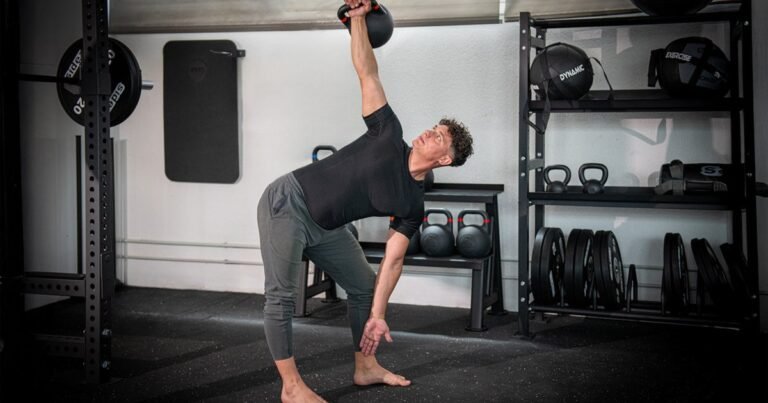
A bottoms-up carry changes a familiar piece of equipment into a balancing task. Instead of letting the kettlebell hang below your hand or rest against your forearm, you hold its handle with the weighted body pointing upward. Now a small change in position can tip the bell. Your grip and arm have to manage that position while you move.
That makes the exercise useful to explore, but it also changes how you should select the load. A weight you can carry comfortably at your side may be entirely unsuitable upside down. Start with a manageable stationary hold, learn how to return the bell safely and only then add a short walk. Distance is a progression, not the starting test.
1. Choose a kettlebell you can position and put down
The exercise begins before you take a step. Select a light kettlebell with a handle you can grip securely. If the bell is adjustable, check that its loading system is assembled and secured exactly as intended. Do not assume a model is appropriate simply because it can be set to the same nominal weight as another bell.
Handle thickness, shape and surface affect how the grip feels. The body of the bell also changes what sits above your hand. Learn the specific implement you are using rather than treating all kettlebells as identical. Your initial choice should allow you to establish the position without a rushed swing or a dramatic struggle.
Experienced lifters may clean the bell into position, but the clean is a separate skill. If you do not already control that movement, get the setup coached instead of improvising a fast flip near your face. With a suitably light bell, a controlled assisted setup can help you learn the hold. The return to a secure resting position needs just as much attention as the pickup.
Clear space around you, including below the bell. Keep other people out of the practice area. The answer to a repeatedly tipping kettlebell is a lighter load or an easier version, not trying to become better at last-second catches. Do not begin walking if positioning and lowering the bell are still the hardest parts of the exercise.
2. Establish the hold with a steady wrist and elbow
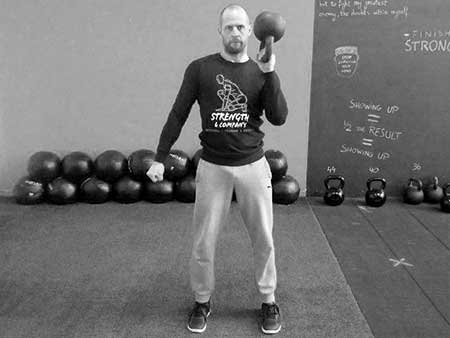
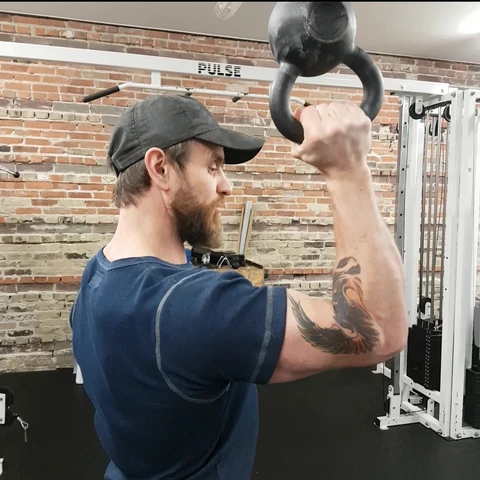
For the single-arm version discussed here, begin with the elbow bent and the bell near shoulder level. Grip the handle firmly and arrange the bell, wrist and elbow in a reasonably stacked line. Keep the wrist from collapsing backward or sideways under the load. The goal is a position you can maintain, not an exaggerated squeeze that forces an awkward joint angle.
Stand tall without leaning backward to get underneath the weight. Keep your ribs and pelvis in a comfortable relationship, and continue breathing. You should not need to turn the hold into a standing backbend. If the bell only stays upright when your whole body moves around it, reduce the difficulty before considering a carry.
Pause long enough to notice what is happening. Is the bell reasonably steady? Can you keep your elbow position without repeatedly dropping it? Can you breathe without losing the hold? These are more useful entry checks than copying someone else’s kettlebell weight from a demonstration.
Some movement is inevitable when balancing an implement. A small correction is different from a bell that repeatedly tips toward your head or shoulder. Keep the attempt within your control and end it deliberately. A short successful hold provides a clearer basis for the next attempt than an extended struggle that finishes unpredictably.

Equipment Worth Exploring
Explore equipment, accessories and gear from our carefully selected range.


Cast Iron Kettlebells
Textured cast-iron kettlebells for swings, squats, carries, and full-body training.


Rubber Hex Dumbbells
Rubber-coated hex dumbbell pairs with a stable shape for home and commercial strength training.




3. Add short, deliberate steps on a clear route
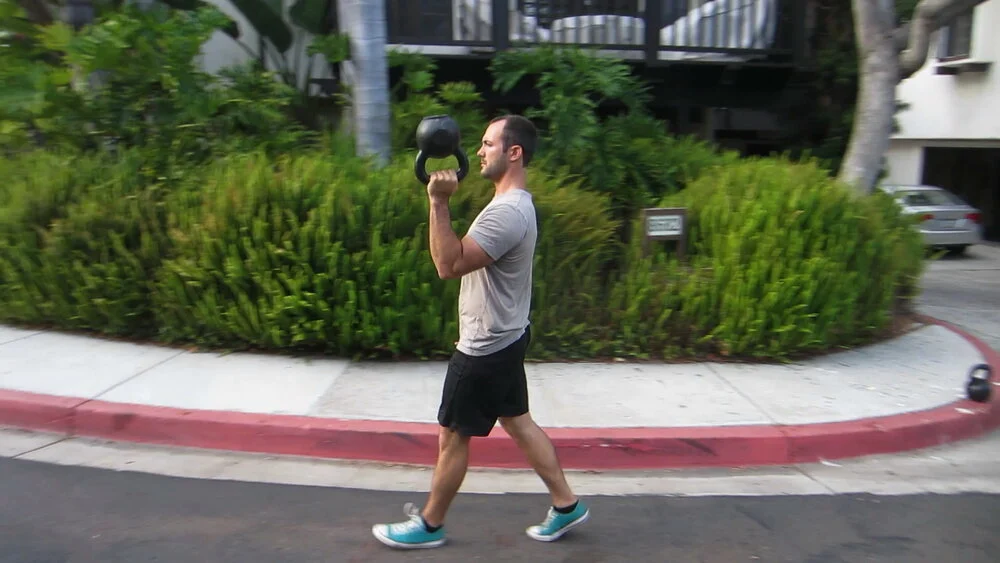
Once the stationary position is manageable, take a few small steps on a clear, level surface. Keep the bell in approximately the same position as you walk. Avoid rushing to reach a distance marker before the grip gives out. The purpose of the carry is to manage the load while moving, so the walking should not become a rescue strategy.
Choose a short route that you can inspect before starting. Remove loose plates, bags and other obstacles. Leave room to stop and lower the bell without blocking a busy walkway. A straight route is easier to compare than a path that includes several tight turns or steps around equipment.
Watch for changes rather than waiting for a complete loss of balance. The elbow may drift, the wrist may bend or the torso may start leaning noticeably. If those changes keep increasing, finish the attempt and reset. Do not continue simply because your legs could walk farther; they are not necessarily the limiting part of this exercise.
Practice both sides with the same basic standard. One side may initially feel less coordinated, but that observation alone does not diagnose an injury or tell you how much extra training it needs. Record the difference, keep the load manageable and seek individual coaching if the position consistently feels uncomfortable or difficult to organize.
4. Keep ordinary, double and overhead carries distinct
A conventional suitcase carry lets the kettlebell hang beside you. A normal front-rack carry rests it against the forearm. Those positions can suit different training aims and may allow loads that you cannot balance bottoms-up. They are useful alternatives, not easier versions that somehow fail to count as real training.
Inverting the bell changes the task because its weighted body is above your grip. That creates a demand for control, but it does not prove that the variation is automatically better for every strength goal. If your priority is carrying a heavier total load, an ordinary carry may be the more appropriate choice.
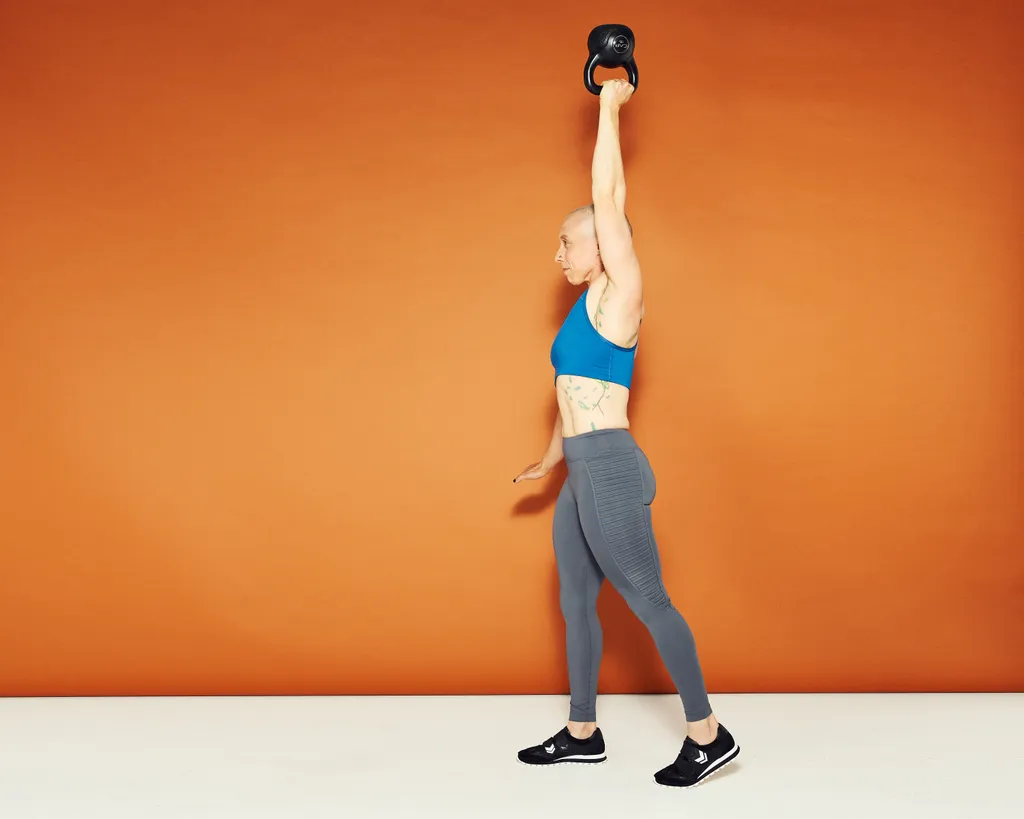
The overhead bottoms-up carry is another distinct variation. Raising the arm changes the shoulder position and the space through which the bell must be controlled. Do not assume that a comfortable bent-elbow hold makes the overhead version an automatic next step. Learn it separately with appropriate load selection and coaching when needed.
A double bottoms-up carry also deserves its own setup practice. Both hands are occupied, and you have two bells to position, monitor and lower. Establishing controlled holds before walking is especially relevant here. None of these variations needs to become a race or a test to complete after the grip is already exhausted.
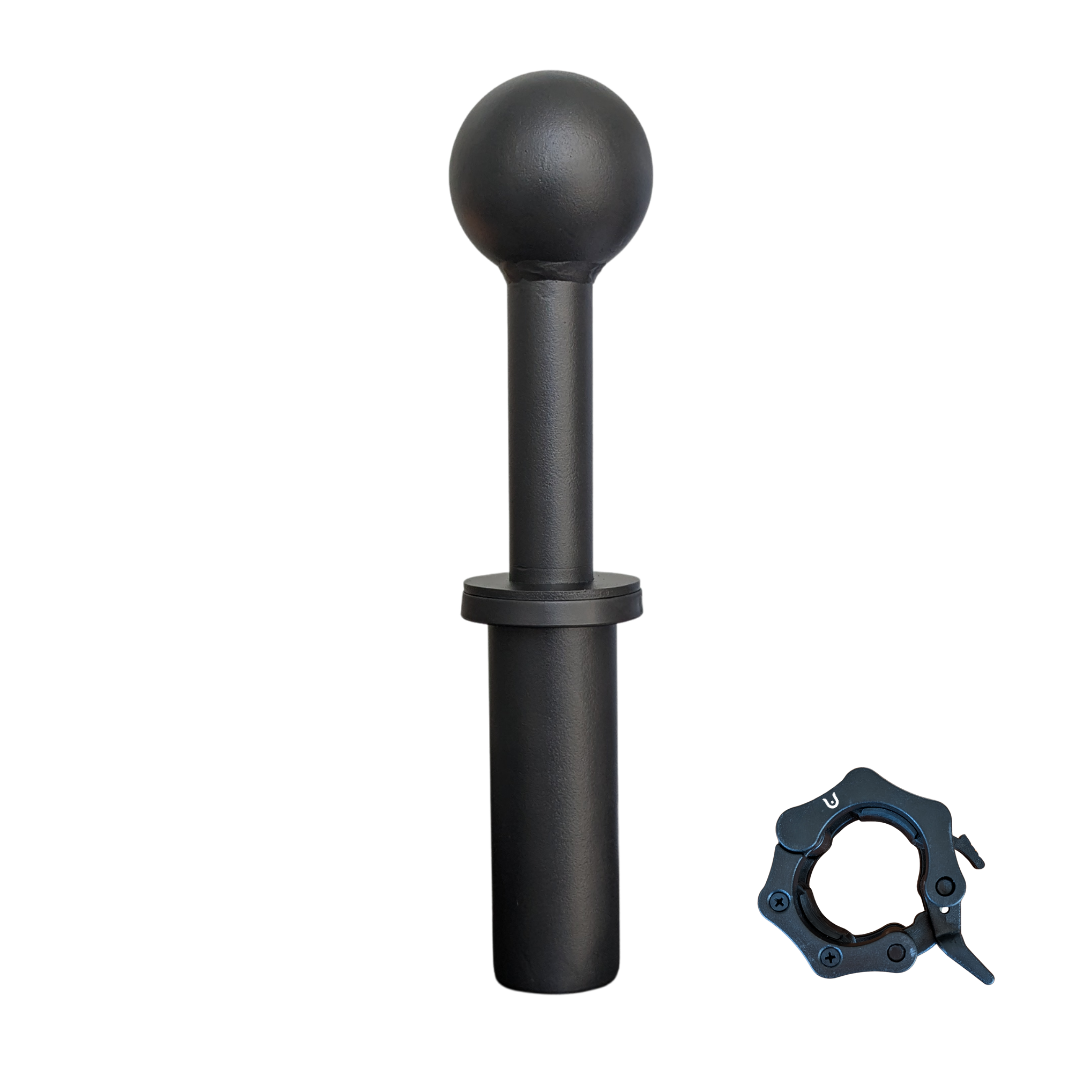
For other grip work, ordinary dumbbell carries and dedicated forearm exercises offer different demands. Thick grips and loading accessories belong only on compatible equipment and in exercises suited to them. Adding an attachment to a bell you are already struggling to balance is not a sensible substitute for selecting a manageable starting load.
5. Progress a repeatable task rather than collecting near misses
Record the kettlebell, load, side and a simple measure such as a short distance or hold duration. Note whether you used a stationary hold or a carry. A few words about control can help: “steady throughout” describes a different result from “wrist bent and elbow dropped halfway.” Keep the distinction visible instead of recording both as identical completed sets.
Use a small progression you can explain. First make the current hold repeatable. Then add a short walk, or extend the same clear route a little. Increasing weight, distance and pace together makes it difficult to identify which change disrupted the exercise. A larger kettlebell is not progress if it requires a completely different position.
For example, two controlled trips on the same short lane provide a useful comparison between sessions. If the second trip becomes markedly less steady, repeat the current task or reduce it next time. This is a practical logging example, not a scientifically established two-trip prescription or a reason to force a predetermined distance.
Consider the rest of your workout as well. Demanding grip work can affect later exercises that depend on the hands and forearms. Place the carry where it fits your priorities, and avoid practicing a balance-sensitive version when you are too fatigued to control the setup.
The useful standard is simple: hold the intended position, walk deliberately when ready and finish with a controlled return. Bottoms-up carries can provide variety for grip and coordination work without needing promises about fixing shoulders, preventing injuries or improving every other lift.

Funny Gym Shirts & Workout Gear
Funny gym shirts, tanks, hoodies and workout gear for lifters who like training hard.


Earth Kettlebell Meme Shirt – Lifting The Earth T-Shirt
Show some lifting attitude with a playful “Earth Kettlebell” tee.


Consistency Is Key Stoic Greek God Marble Sculpture T-Shirt
Make gym days more fun with “Consistency is Key Stoic Greek God Marble” style.

Kettlebell Heart X-Ray – Valentine's Workout Jumper Pul T-Shirt
Keep things casual with a little “Kettlebell Heart X-Ray” attitude.

Mind Muscle Perfection Brain and Biceps Gym for Science T-Shirt
Show some gym-day personality with “Mind Muscle Perfection Brain and Biceps”.

Gym Is My Happy Place Happy Kettlebell Emoji Hoodie
Show off your gym-girl humor in a laid-back “Gym Is My Happy Place” hoodie.

Heart Shaped Kettlebell Valentine’s Day Gym for Kettleb Tank Top
Bring “Heart Shaped Kettlebell Valentine’s Day” humor to your next lifting session.

Gym Equation Kettlebell Makes Me Happy Workout Decal Sticker
A fun “Gym Equation” touch for bottles, laptops, and lockers.