Advertising disclosure: This page includes affiliate product links that may earn us a commission, as well as products from our own store.
Caffeine and Taurine Together: What the Workout Evidence Actually Shows
Caffeine and taurine often share a label. That makes them easy to treat as a proven performance partnership: two familiar ingredients, one drink, a better workout. The useful question is more specific. Does the combination outperform a placebo, or does adding taurine improve on caffeine itself? Those comparisons answer different questions, and a positive result in the first cannot settle the second.
For lifters, the decision should involve the whole session and the following night. An energising drink is optional. A repeatable training plan, tolerable ingredients and a realistic bedtime still need to fit together. Here is how to read the evidence without turning an interesting result into a promise that a particular can, powder or ingredient stack will transform your training.
1. Separate a better test result from a better training programme
An October 2026 systematic review included 11 randomised trials and 234 participants. Its primary comparisons paired caffeine and taurine against placebo. Pooled results favoured the combination for time to exhaustion and peak anaerobic power, with standardised effects around 0.54 and 0.55. These are statistical effect sizes, not 54% longer workouts or 55% more power. Evidence certainty varied, and the samples were small and largely young adults.
That is a reason to examine the idea, rather than a reason to redesign a programme around it. Time to exhaustion, a short power test and your fourth set of rows are separate tasks. If a test asks someone to continue until they stop, it describes that protocol. It does not tell you how much additional weekly training they can recover from, whether their technique stays consistent or how their muscles change over several months.
Start by naming the outcome you care about. A cyclist comparing sustained efforts needs a different record from a lifter comparing repetitions at a fixed load. Someone who simply wants to enjoy an early workout has another question again. Mixing all three into “more energy” makes a product feel easier to judge while making the actual judgement less precise.
Think of an example involving two identical training days. Finishing a set with the same repetitions but a lower perceived effort might be useful to that person. It is still different from doing more work. Completing more repetitions by shortening the movement is a different result again. Decide in advance which observation would count as helpful, and which would merely mean the session changed.
2. A combination beating placebo does not identify the extra ingredient
The review did not establish that caffeine plus taurine beats caffeine alone: isolated-ingredient arms were outside its prespecified pooled comparison. It also separated unmatched multi-ingredient products into secondary analyses. Those choices prevent the results from demonstrating synergy or assigning a benefit specifically to taurine. A convincing interaction test would compare placebo, caffeine, taurine and their combination under matched conditions.
Caffeine already has substantial performance research behind it. Benefits occur in many, though not all, studies, and responses differ between people. A separate 2025 review of acute taurine supplementation found a small overall effect with considerable variability and low to very low certainty. Neither finding supplies the missing head-to-head answer for every commercial blend.
Imagine comparing a plain drink with a coffee, then concluding that the coffee’s added flavouring caused the difference. The comparison has not isolated the flavouring. The same logic applies when several ingredients arrive together. A plausible mechanism can suggest a useful experiment; it cannot replace that experiment or tell you the size of an added benefit.
For shopping, distinguish “contains an ingredient that has been studied” from “this exact formula has shown an advantage over an appropriate alternative”. Keep the comparison concrete. If you already tolerate a familiar caffeine source, the practical question is whether a more complicated option offers something you value at its actual price and serving size. An additional ingredient is a feature on a label, not an automatic upgrade.
Coffee and pre-workout slogans are part of gym culture, but merchandise is not evidence for a supplement claim. The following designs are a light nod to that culture; the ingredient decision still depends on the comparison and your own tolerance.

Bodybuilding Shirts & Workout Gear
Bodybuilding shirts, tanks and gym gear for lifters chasing muscle, size, symmetry and the pump.

Caffeine & Weights Tee
Show some powerlifting attitude with a playful “Caffeine & Weights” tee.

Coffee Shots & Heavy Squats for Caffeine Addicts and Sq Hoodie
Keep it laid-back with a little “Coffee Shots & Heavy Squats” attitude.

Pre-Workout Cosmic Muscle Shirt , Caffeine Gym Workout Tank Top
Bring “Pre-Workout” humor to your next lifting session.

Coffee and Weights Retro Cartoon for Coffee Lovers and Hoodie
Show off your bodybuilding humor in a laid-back “Coffee and Weights Retro Cartoon” hoodie.

Preworkout – Heavy Metal Gym Decal for Hardcore Lifters Sticker
Give your everyday gear a playful “Preworkout” twist.

Caffeine Skull Coffee Gym Pullover Hardcore Workout Ene Hoodie
Show off your powerlifting humor in a laid-back “Caffeine Skull” hoodie.

Off-Season Rest Day Sweater & Bros Meme T-Shirt
For laid-back days and powerlifting humor: “Off-Season Rest Day”.

Lift Eat Sleep Repeat Hoodie
Make your off-duty look more fun with “Lift Eat Sleep Repeat”.

Rest Day Sloth – Essential T-Shirt
Show some bodybuilding attitude with a playful “Rest Day Sloth” tee.

Spit Preworkout In My Mouth Savage Meme Hooded Hoodie
Show off your gym-girl humor in a laid-back “Spit Preworkout In My Mouth” hoodie.
3. Read the whole serving, not just the two familiar names
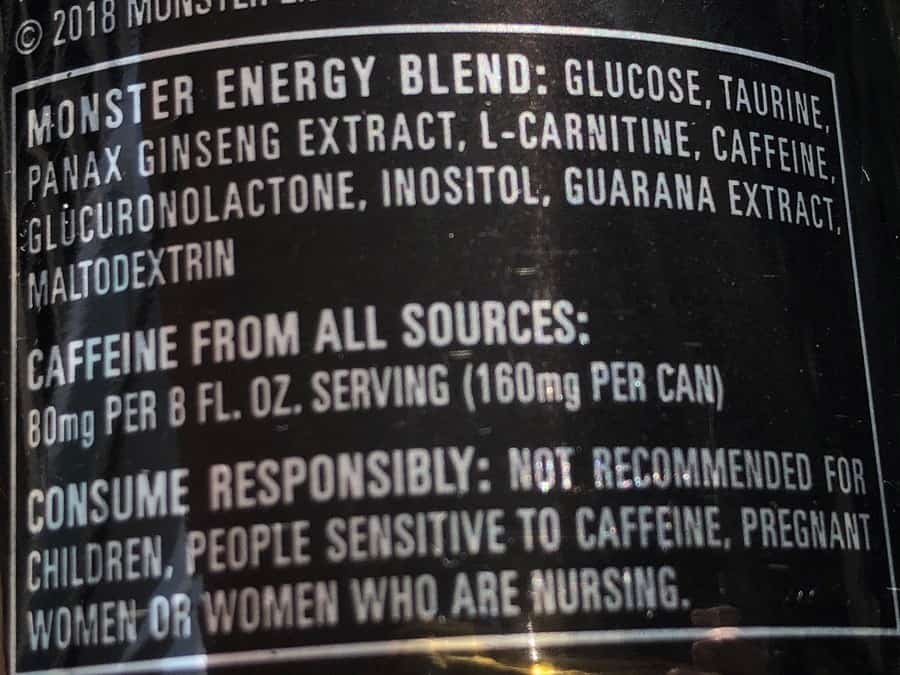
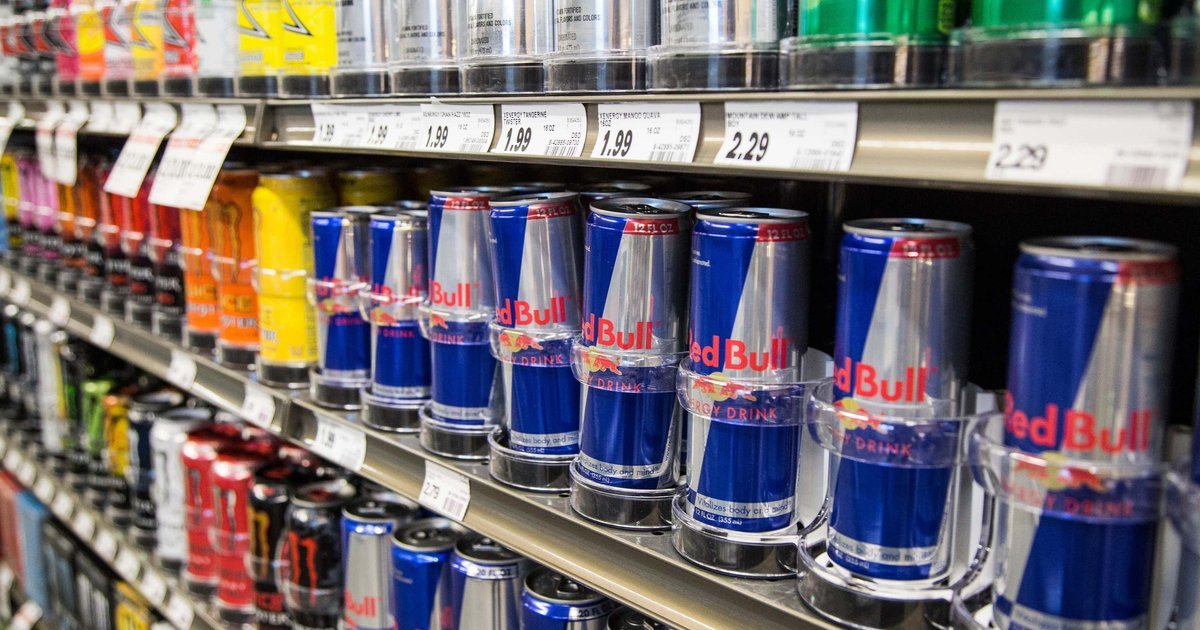
Turn the container around before comparing products. Find the serving size, the number of servings in the container and the declared caffeine amount. Check whether a scoop, bottle or can is actually the unit used on the nutrition panel. The photographed label is an illustration of where ingredient and caffeine information can appear, rather than a statement that every market or current version uses that formula.
Then list the other active ingredients and how much information the label provides. A blend with additional compounds creates a product-level question. If you change the entire formula, a different session cannot identify which component was responsible. “It felt stronger” is a description of the experience, not a breakdown of ingredient effects.
Use simple arithmetic when combining sources. As an illustrative example, a drink labelled 160 mg plus another labelled 100 mg totals 260 mg. That example does not establish a suitable amount for you. It shows why a coffee, an energy drink and a pre-workout should not be treated as three unrelated purchases when they contribute to the same day’s intake.
Write down the actual amount consumed, too. Half a container and a full container are different exposures. Avoid estimating from the colour of the packaging, how bitter a drink tastes or the word “strong”. If the amount is unclear, uncertainty belongs in the decision rather than being filled with a convenient guess.
Finally, separate buying criteria from performance claims. Taste, convenience, price per serving and clear labelling are legitimate preferences. None requires claiming that an ingredient combination creates superior strength or muscle growth. A simpler product may suit someone better; another person may prefer a particular drink. The honest choice is the one supported by the information actually available.
4. Count sleep and tolerability in the cost of the workout

For healthy, non-pregnant adults, general caffeine safety assessments identify up to 200 mg in a single dose and 400 mg over a day from all sources as amounts that generally do not raise safety concerns. These are population-level reference amounts, not performance targets or guarantees for every person. Even 100 mg close to bedtime can affect sleep in some adults. Individual medical circumstances, medicines and pregnancy require separate consideration.
Sports research sometimes uses body-mass-based caffeine doses. That does not make every calculated dose an appropriate everyday choice, particularly for a heavier athlete. More is not required simply because a formula permits a larger number. Caffeine responses can include unwanted anxiety and sleep effects, so tolerability belongs beside any possible performance benefit.
A useful personal record includes when you trained, when you consumed caffeine, when you went to bed and how the night went. That cannot diagnose a sleep problem or isolate every cause. It can stop a narrowly positive workout memory from erasing a repeated pattern you would otherwise overlook. Keep the observation factual: “finished training at seven, struggled to settle at bedtime” is more useful than declaring a drink perfect after one lively session.
You can also choose the simplest alternative: do the planned session without adding another stimulant-containing product. A late workout does not need to become a contest between missing training and escalating caffeine. Adjust the session to what you can complete well, and avoid using an energised feeling as permission to ignore uncomfortable symptoms or deteriorating technique.
5. Make the comparison small enough to learn something
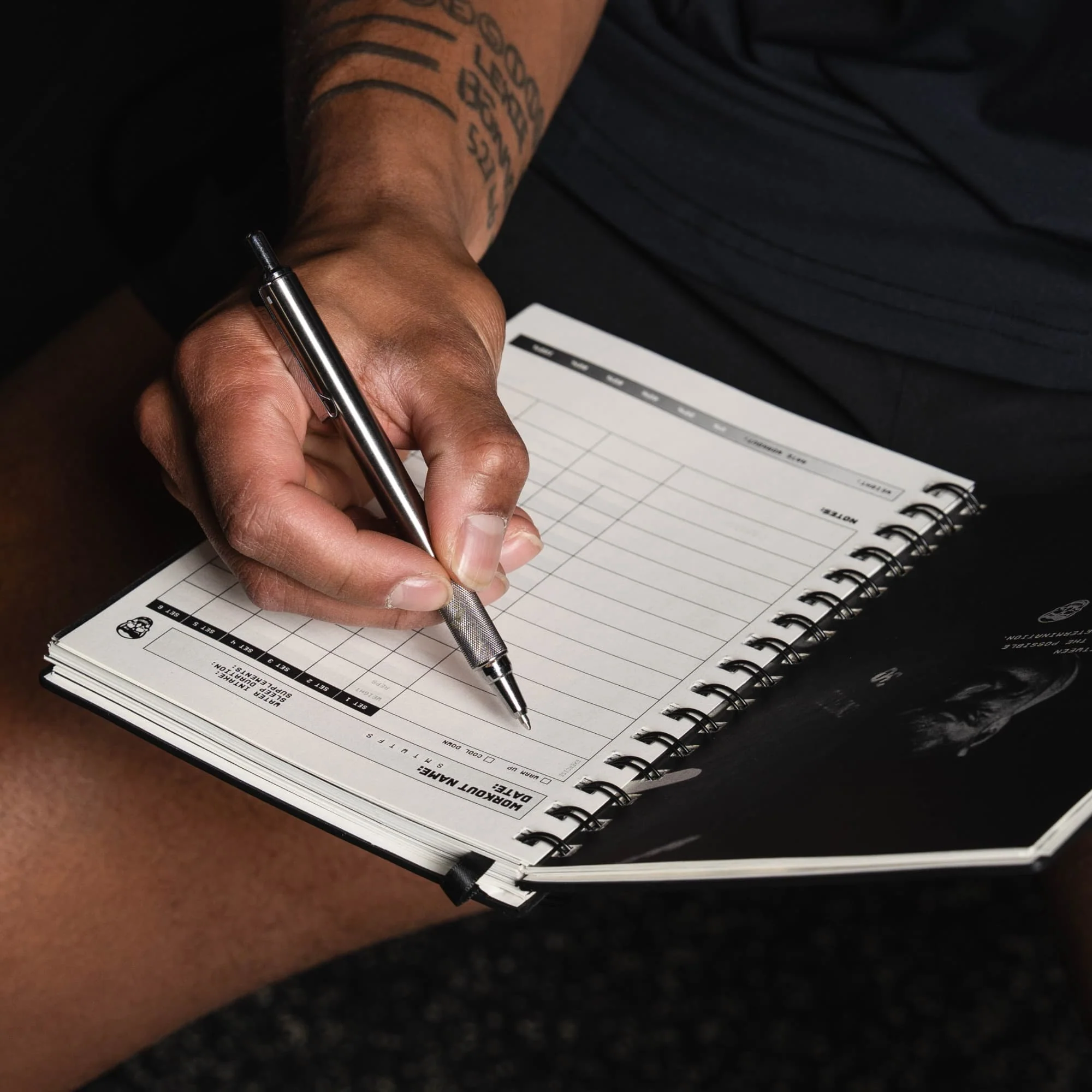
If you already use caffeine and want to assess whether a familiar option suits your training, keep the surrounding workout recognisable. Choose a normal session, maintain the exercise order and use the same equipment settings. Record the load, repetitions, rest periods and how the sets felt. This is practical tracking, not a blinded experiment or proof that one ingredient caused a change.
For example, compare a fixed-load dumbbell exercise with the same range of motion across comparable sessions. Do not simultaneously switch to a new cable ratio, shorten the rest and add extra sets, then attribute the outcome to a drink. For conditioning, select a task you can repeat rather than swapping between unrelated challenges each time.
The equipment below is for carrying out those ordinary strength and conditioning sessions: cables, dumbbells, kettlebells, a rope and a sled. It is not needed to make a caffeine–taurine combination effective, and none of these products validates a supplement claim. Keep your usual setup when it already serves the comparison.

Equipment Worth Exploring
Explore equipment, accessories and gear from our carefully selected range.
VOLTRA
Compact digital cable trainer with smooth, adjustable resistance.

Go-Tone Pro
Portable digital cable trainer with up to 66 lb (30 kg) of adjustable resistance.


Rubber Hex Dumbbells
Rubber-coated hex dumbbell pairs with a stable shape for home and commercial strength training.


Cast Iron Kettlebells
Textured cast-iron kettlebells for swings, squats, carries, and full-body training.


Use a compact log: session date, caffeine sources and labelled amounts, timing, the planned work, completed work, perceived effort, unwanted effects and the following night’s sleep. Mark unusual circumstances such as a different meal or a disrupted night beforehand. A few comparable entries are more informative than a dramatic memory of a single best day, although they still cannot establish clinical safety or ingredient synergy.
The purchase does not have to follow the strongest advertising claim. Caffeine plus taurine remains an interesting combination with some positive acute findings. For your training, keep the claim narrow, the label clear and the routine repeatable. A product earns its place through a useful overall fit, not through the assumption that two studied ingredients must outperform one.