Advertising disclosure: This page includes affiliate product links that may earn us a commission, as well as products from our own store.
Nordic Hamstring Curls: How Much Is Enough? A 42-Study Guide
Nordic hamstring curls ask a lot from the back of your legs. You kneel, secure the ankles and resist your own bodyweight as the torso moves forward. For someone new to eccentric hamstring training, even a few reps can feel formidable. So how much is enough—and when do extra repetitions become more fatigue than useful practice?
A 42-study research synthesis offers perspective without a magic target. This guide translates the evidence into sound setup decisions, manageable assisted repetitions and a gradual six-week introduction, without pretending a single exercise replaces a full leg programme.
1. What the 42-study volume review actually found
Nordic hamstring curls look simple, but the difficulty makes programming surprisingly inconsistent. One lifter crashes through two negative repetitions while another copies an advanced athlete’s routine. A synthesis of 42 studies helps explain why a bigger rep count is not automatically a better programme.
Across the research, weekly prescriptions ranged from 3 to 103 Nordic repetitions, with a median of 50. The median programme lasted six weeks and trained twice weekly. Eccentric Nordic strength improved across studies, as did some other dynamic strength measures. However, isometric strength was not clearly improved.
The analysis did not detect a reliable relationship between strength gains and training duration, frequency, sets or repetitions. That does not demonstrate that volume never matters. Studies differed in participants, loading, technique and measurement, and overall certainty was low to very low. It means a high weekly target should not be sold as a universally necessary dose.
Remember what was measured. Better strength while resisting knee extension is useful, but it does not by itself guarantee a larger hamstring, faster sprint or zero injury risk. Those results require other measurements and are influenced by the rest of training and recovery.
2. Set up a Nordic you can repeat
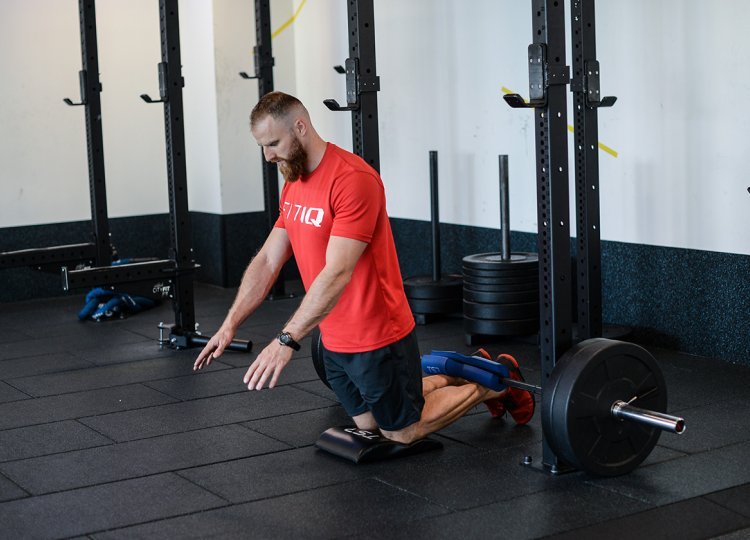
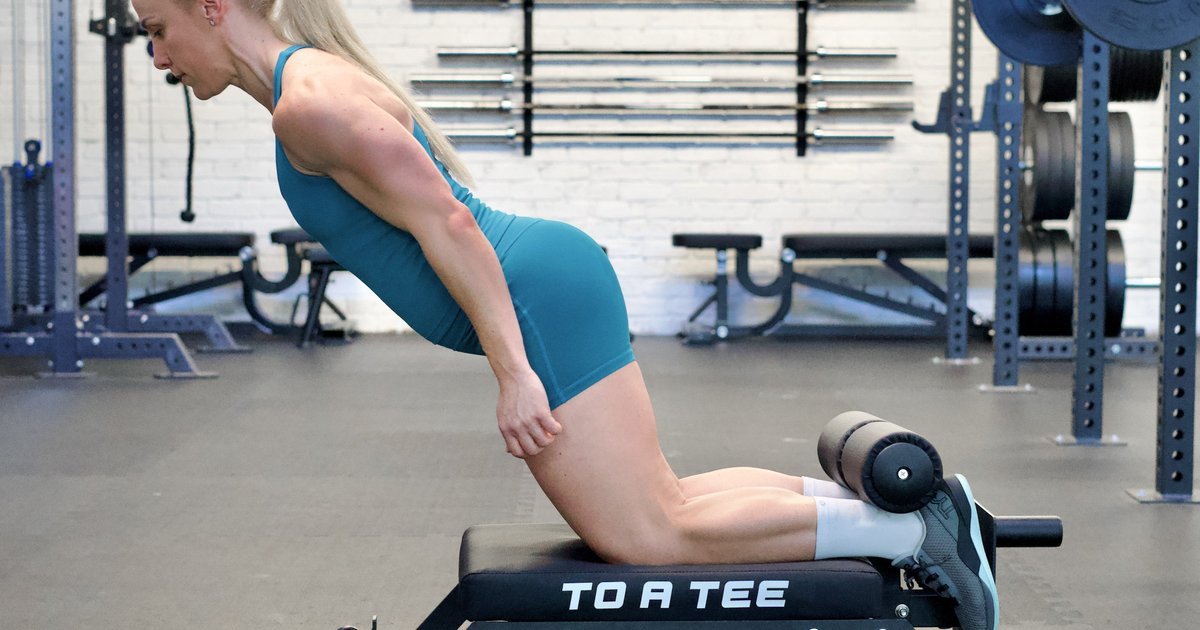
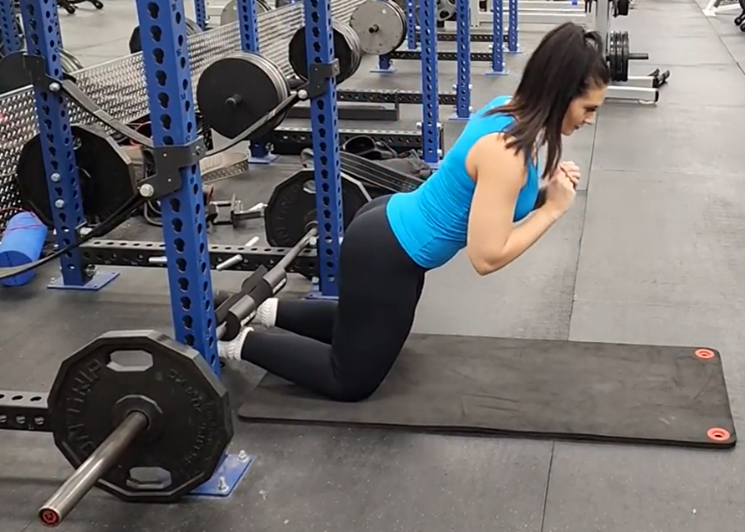
Begin with the ankles anchored securely and the knees on comfortable padding. A dedicated Nordic bench, a compatible anchored rack roller or a training partner can work. Test the restraint gently before committing bodyweight. Leave clear space in front and plan where the hands will land if you need to catch yourself.
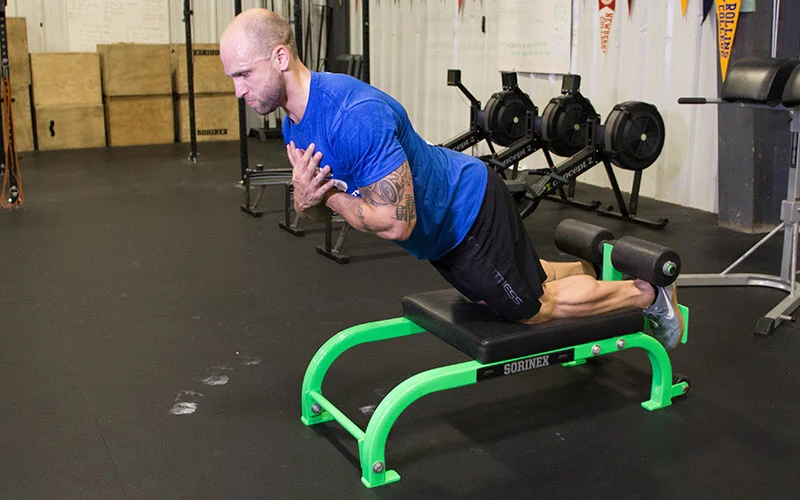
Start tall with the hips extended, ribs roughly stacked above the pelvis and a reasonably straight line from shoulders to knees. Lean forward as one long lever rather than folding suddenly at the hips. A small amount of natural variation is fine; what matters for tracking progress is using a consistent standard.
Lower only as far as you can control. As strength runs out, put your palms down safely and push back to upright if you cannot lift yourself unassisted. The exercise can be performed as deliberate eccentrics without a full bodyweight return. Avoid dropping onto the chest or springing off the floor.
Use the same range, assistance and lowering tempo as closely as practical between sessions. A quarter-range descent under control is a more meaningful starting point than a dramatic fall accompanied by a big hip hinge. Record your actual execution instead of calling every bodyweight forward drop a strict Nordic.
3. Assistance is a progression tool, not a shortcut
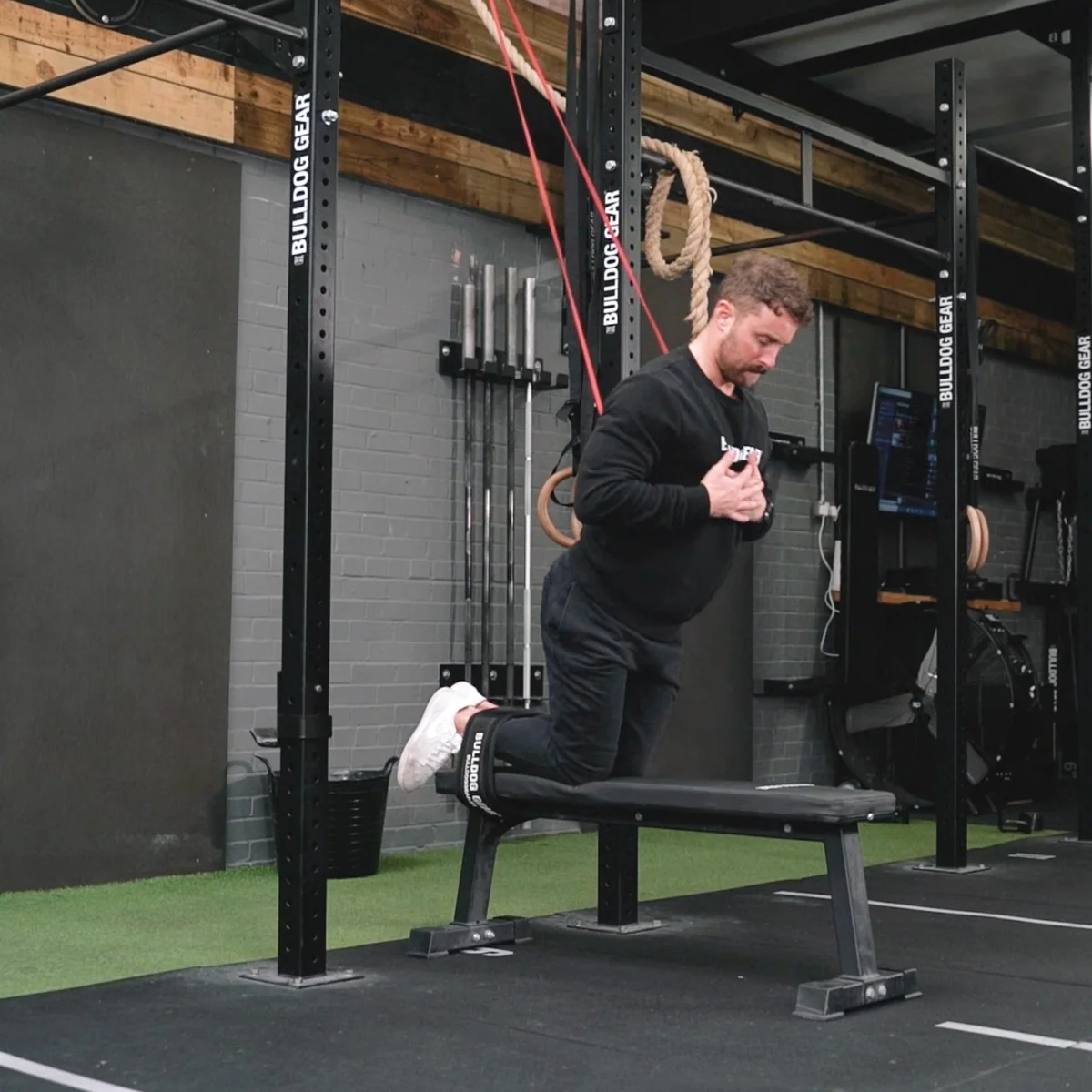
A strict full Nordic is advanced. If you lose control after a few centimetres, assistance lets you train the desired movement rather than practise falling. A sturdy overhead resistance-band anchor can reduce the load; some machines provide adjustable assistance; a partner can help you move through the difficult portion.
Set the band so its pull does not drag the pelvis backward or throw you off balance. If a partner helps, agree on support position and keep it reasonably consistent. On an assisted machine, log the assistance setting. No two systems necessarily create the same loading curve, so it is misleading to compare their rep counts as equal.
Hands-to-floor negatives are another practical option. Lower deliberately, catch with the palms, then use the hands to help back to the tall kneeling start. Shortening the range is sensible if a controlled negative is impossible that day.
Only change one challenge at a time. You can lower slightly farther, reduce assistance, add a rep or improve control. Doubling weekly volume at the same time as removing band support gives you no clear way to judge why the session suddenly feels excessively hard.

Equipment Worth Exploring
Explore equipment, accessories and gear from our carefully selected range.



Glute Ham Developer GHD-820
Adjustable glute-ham developer with contoured pads and a fold-out knee support.


Leg Extension/Curl BCO-780
Leg extension and lying leg curl combo with plate loading, band pegs and a cable-loading option.

Seated Leg Combo BCO-680
Adjustable seated leg extension and leg curl machine with band pegs for added resistance.

45° Hyperextension HPX-650
Angled back-extension trainer with split padding, a ribbed footplate and resistance-band pegs.

HUSLA Leg Extension Pad
Pad attachment designed to increase usable range of motion on compatible leg-extension machines.


Multi Bench MBX-650 2.0
Adjustable multi-bench with roller adjustment, 15 backrest positions and accessory mounts.
4. A six-week Nordic introduction: volume before bravado
The review discussed roughly 29–64 weekly repetitions as a potentially productive range after progressive introduction, based on the middle spread of the research. It also cautioned that high volume is not necessary during the first six to eight weeks for people inexperienced with Nordics. Neither number is a personal medical prescription.
Here is an illustrative starting plan for a healthy lifter who can perform controlled, assisted repetitions. Train twice weekly, with at least two days between sessions. Work within a repeatable range and use enough assistance that each lowering phase stays controlled.
| Week | Each session | Weekly total | Focus |
|---|---|---|---|
| 1 | 2 × 3 | 12 | Find a controlled assisted range |
| 2 | 2 × 4 | 16 | Repeat the same descent |
| 3 | 3 × 3 | 18 | Add a set if recovery is good |
| 4 | 3 × 4 | 24 | Consolidate form |
| 5 | 3 × 5 | 30 | Consider a little less assistance |
| 6 | 4 × 4 | 32 | Repeat clean, recoverable reps |
Repeat a week whenever soreness or lost control suggests you are not ready to advance. Training history matters: an experienced Nordic lifter may tolerate more, whereas someone new to demanding eccentric work may need less. Do not inflate your log by counting uncontrolled falls, and do not chase a reported study median at the expense of the next training session.
5. Combine Nordics with curls and hip hinges
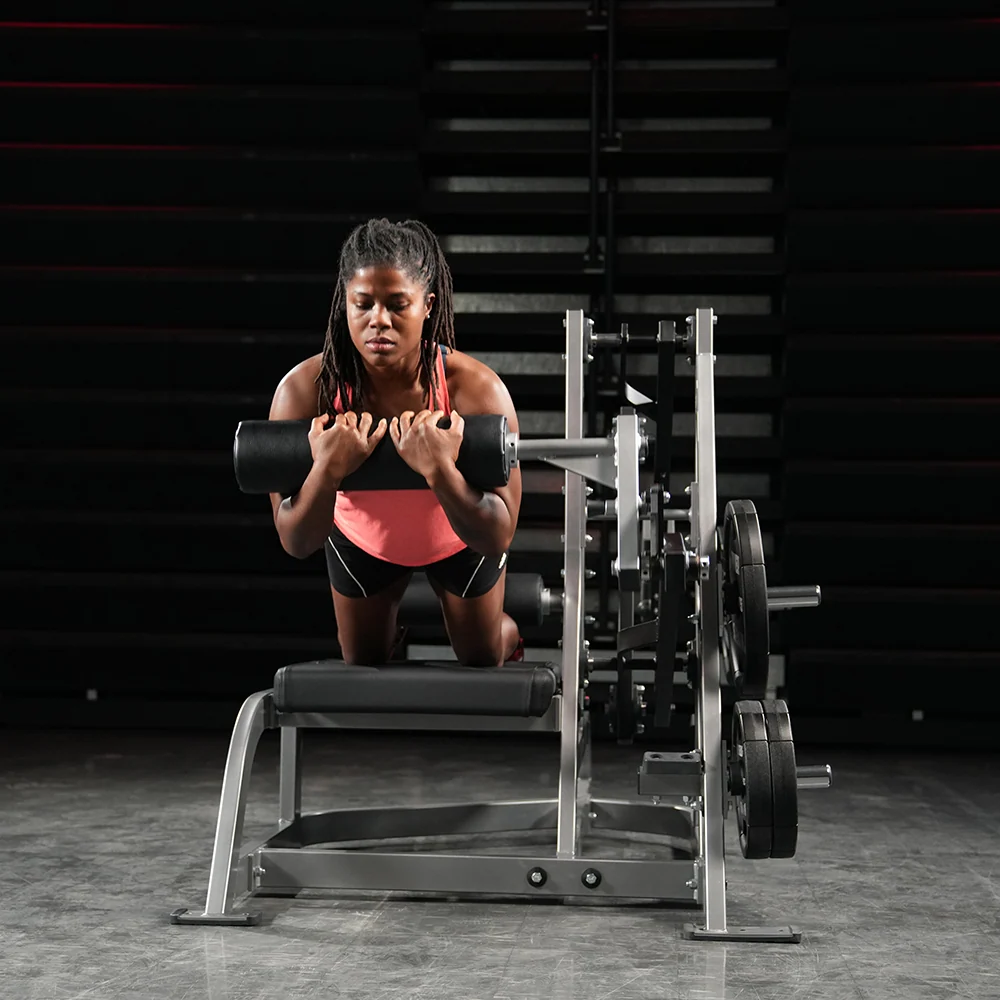
Nordics strongly load the hamstrings while the knee extends, but a complete lower-body programme should also develop other strength qualities. A seated or lying leg curl lets you adjust the resistance and train knee flexion through a controlled range. A Romanian deadlift challenges the posterior thigh during a hip hinge under load. These exercises are complementary rather than interchangeable.
One practical two-day leg schedule places controlled Nordics near the beginning of the first session, followed later by a hinge if recovery permits. The second leg day can prioritize squats and include a machine leg curl as an accessory. Athletes with important sprinting sessions may choose a different placement to avoid excessive eccentric soreness beforehand.
Choose tools for what they do. A well-secured Nordic station makes the descent repeatable. A leg developer offers adjustable curls but does not automatically reproduce Nordic mechanics. Dumbbells support hinges and other lower-body lifts, while racks, benches and plates support the broader programme.
Monitor total stress rather than adding every available hamstring exercise. Track Nordic reps, support level, controlled range, recovery and how your other lifts feel. If each added Nordic session makes the next hinge workout worse, reducing dose may produce a better long-term training week.
Equipment Worth Exploring
Explore equipment, accessories and gear from our carefully selected range.

Rubber Hex Dumbbells
Rubber-coated hex dumbbell pairs with a stable shape for home and commercial strength training.


Studio V-Squat
Plate-loaded V-squat machine for supported lower-body strength training.

Leg Press/Hack Squat BPR-790
Convertible 45-degree leg press and hack squat machine with a broad footplate and band pegs.


Grip Plates
Rubber-coated weight plates with handholds for loading barbells and machines.

Belt Squat Collar
Heavy-duty collar adapter for compatible belt-squat and landmine bar setups.

VForce 2IN1
Half rack and pivot-arm functional trainer with switchable 1:1 and 2:1 pulley ratios.

Leg Day Shirts & Workout Gear
Leg-day gym shirts and workout gear for lifters who never skip squats, lunges and lower-body punishment.

Patriotic Uncle Sam – I Want You To Train Legs Meme Mus Tank Top
Show some personality between sets with “Patriotic Uncle Sam”.

Funny Patriotic Gym – The Only Thing To Fear Is Leg Day T-Shirt
Show some gym-day personality with “Patriotic”.

Freedom To Skip Leg Day Patriotic Statue Of Liberty T-Shirt
Make gym days more fun with “Freedom To Skip Leg Day Patriotic” style.


Never Skip Leg Day Gym | LEGO Workout Decal for Water B Sticker
Stick a little “Never Skip Leg Day” humor on your favorite gear.

The Walking Deadlift | Zombie Muscle Shirt For Leg Day Tank Top
Show some personality between sets with “The Walking Deadlift”.

Santa Quads Is Coming To Town Shirt – Leg Day Fitmas T-Shirt
Bring “Santa Quads Is Coming To Town” humor to your next gym day.

Girl She-Hulk Sweater Weightlifting & Leg Day Meme T-Shirt
For laid-back days and superhero humor: “Gym Girl”.

Captain Deadlift Decal for Water Bottles Laptops Gym Ge Sticker
Bring “Captain Deadlift” attitude to your water bottle or laptop.

Deadlift Electric Skull Graphic , Hardcore Gym Shirt Le T-Shirt
Make gym days more fun with “Deadlift” style.
6. Soreness, mistakes and the right time to progress
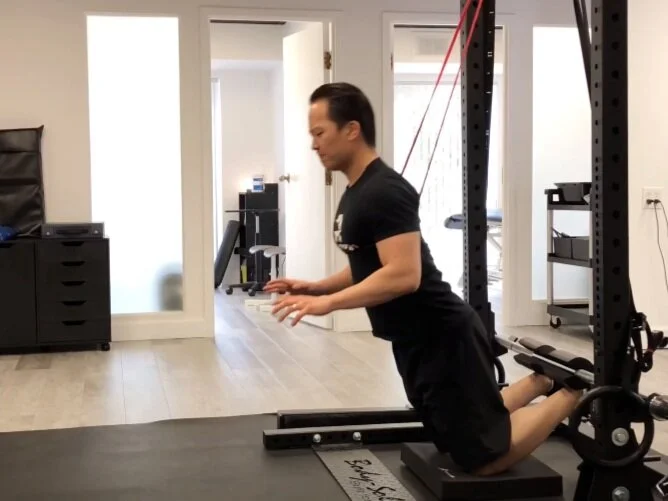
An unfamiliar lengthening-focused exercise can produce significant delayed soreness. The biggest mistake is doing a heroic first session and then struggling to walk normally or complete other training. Introduce demanding negatives gradually, especially when leg curls, deadlifts or sprinting already create substantial posterior-chain fatigue.
Watch for restraints that slide, hips that fold dramatically, bands with unstable tension, bouncing on the palms and an increasing number of uncontrolled catches. Fix these problems before loading more volume. If the bench or anchor shifts, stop and make it safe rather than finishing the planned set.
Progress after several repeatable workouts, not one lucky repetition. Add a controlled rep, a little range or slightly less assistance—never all at once. If you have a recent hamstring injury, sharp pain, or a sudden pulling sensation during training, stop and seek individualized professional guidance rather than relying on a generic progression chart.
Bottom line: the evidence supports Nordic training as a way to build eccentric hamstring strength, but it does not establish a universal advantage from piling on weekly reps. Anchor the ankles securely, own the lowering phase, progress gradually and leave enough recovery for the rest of your training.