Advertising disclosure: This page includes affiliate product links that may earn us a commission, as well as products from our own store.
Suitcase Deadlifts: Start Height, Torso Control and One-Sided Progression
A suitcase deadlift means picking up a weight beside your body with one hand while both feet stay on the floor. The task is different from walking with that weight, and different again from holding a dumbbell in each hand. The offset load gives you a reason to practise keeping your torso steady as your hips and knees move. Start with an implement you can control, a sensible handle height and a clear stopping point. There is no prize for reaching the floor if the final inches turn the repetition into a twist.
1. Set the handle height before choosing your working load
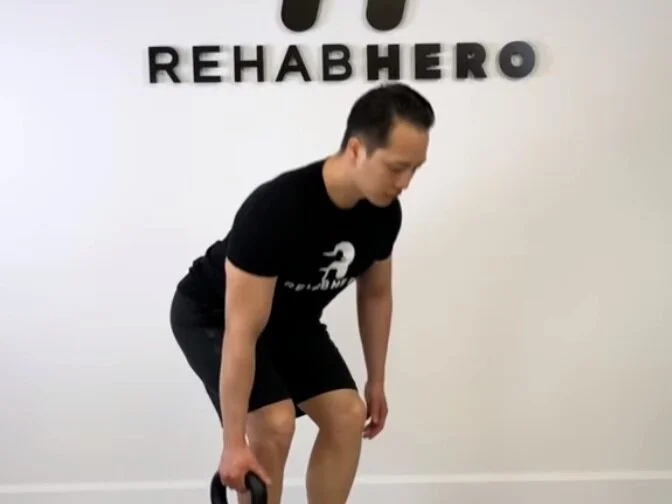
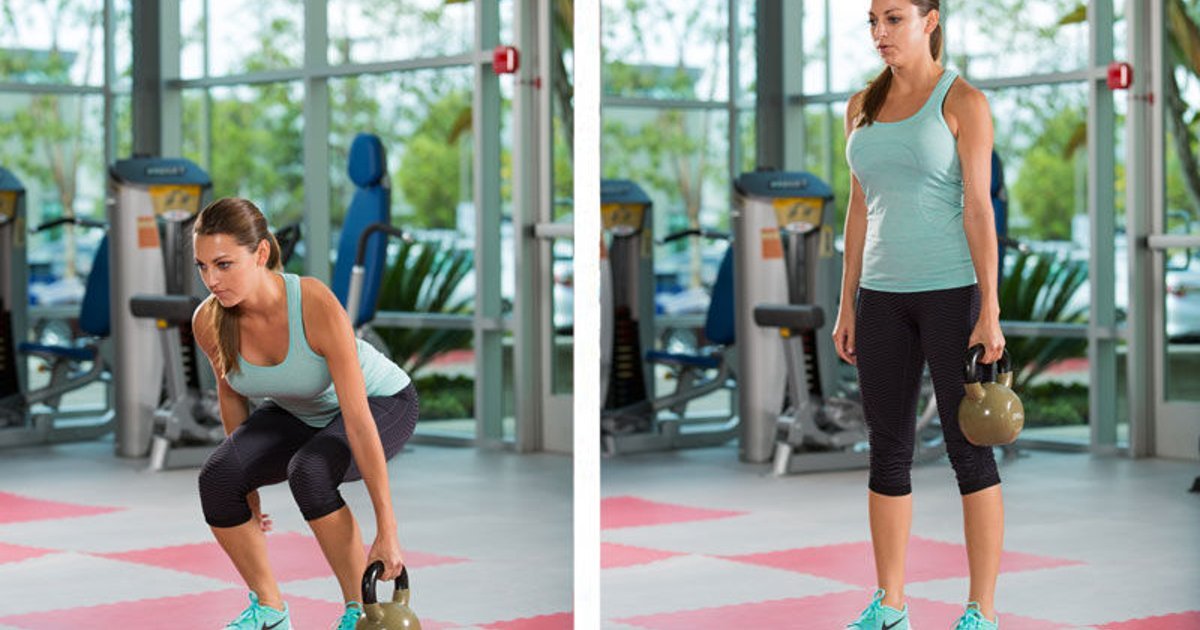
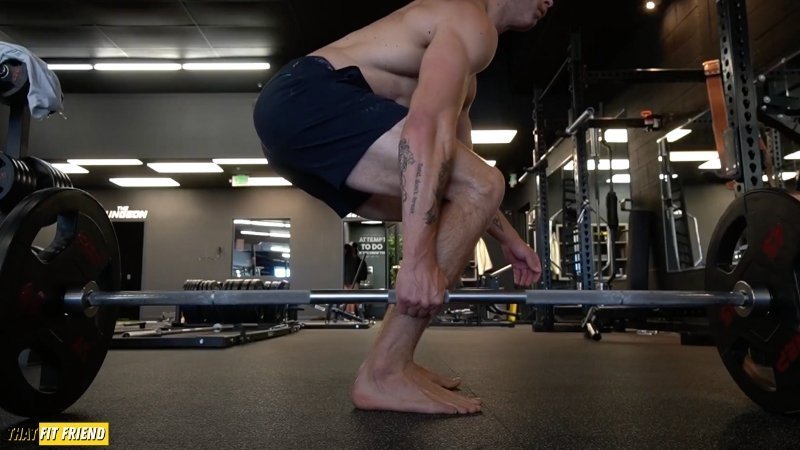
Place a kettlebell or dumbbell outside one foot, close enough to reach without leaning sideways. Begin with a comfortable stance and both feet planted. Bend at the hips and knees to reach the handle while keeping your shoulders and hips facing broadly forward. Your working arm should hang long rather than curl the weight toward you.
A small dumbbell can put its handle much lower than a kettlebell or a barbell resting on full-size plates. That makes the setup a different task, even if the printed weight is identical. If you cannot reach the handle while maintaining a controlled position, raise it on a stable, load-appropriate support. Record the height so the next session is comparable.
Check the whole base, not just the top surface. The implement should sit securely without rocking, rolling off or tipping its support when you release it. Avoid a precarious tower of loose objects. Leave enough room for the weight to return beside your foot without touching your shoe.
Rehearse the pickup with a light load. Notice whether you can distribute pressure through both feet and reach without the opposite hip drifting away. Adjust the starting position before turning the set into a strength test. The lowest possible handle is not automatically the most useful starting point.
If you change height later, treat it as a planned progression in range. Reducing the load while learning a lower start can be sensible. A heavier lift from a higher support and a lighter lift from the floor are separate performances; neither should silently replace the other in your log.
2. Stand up without letting the weight steer your torso
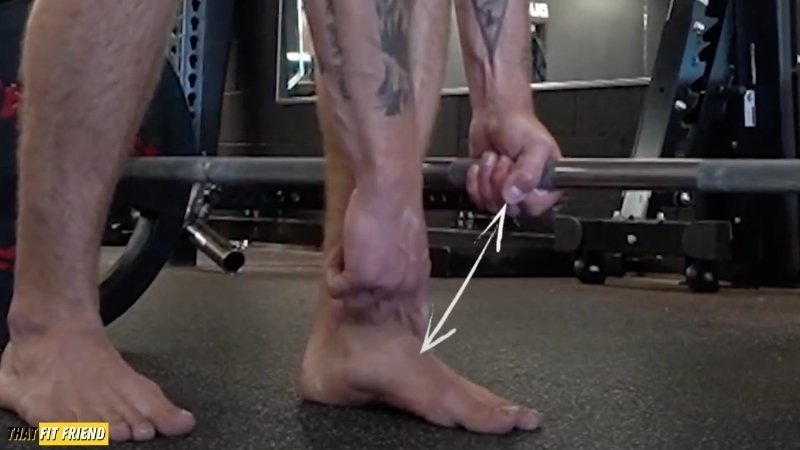
Take a secure grip and brace before the weight leaves its support. Drive through both feet as your hips and knees extend. The goal is a controlled rise with the load close beside you, rather than pulling it up with the arm or shifting your whole body away from it.
At the top, stand tall without leaning backward or shrugging the weight toward your ear. Let the arm remain long. A clear finish makes the exercise easier to repeat: hips and knees extended comfortably, torso facing forward and the implement steady rather than swinging.
The off-centre load creates a tendency to bend or turn. Your trunk muscles work to manage that demand while the lower body produces the lift. This is a useful training challenge, but it does not make the exercise a treatment for a spinal condition or a guarantee against future back pain.
Lower by bending at the hips and knees again, keeping the weight beside you. Return it to the same place and allow it to settle before resetting. If it lands tilted or a different distance from your foot each time, examine the setup and descent before adding load.
A front or diagonal video can show whether one shoulder rotates forward or the pelvis shifts noticeably. A side view helps check whether the hips shoot upward before the torso follows. Use those observations to choose a more manageable load or height, rather than chasing a visually perfect pose that your proportions do not comfortably allow.
3. Choose the implement for the skill you want to practise
A kettlebell is a straightforward starting option because its handle is easy to identify and the bell can sit beside the foot. Check that the handle suits your hand and that the bell clears your leg. An adjustable model can make load changes convenient, but its shape and handle height still matter.
A dumbbell is also useful, especially when you have access to small increments. Hexagonal ends help it stay put when set down; round ends need particular attention to prevent rolling. Keep the implement oriented consistently and make sure an adjustable dumbbell is securely locked before the set.
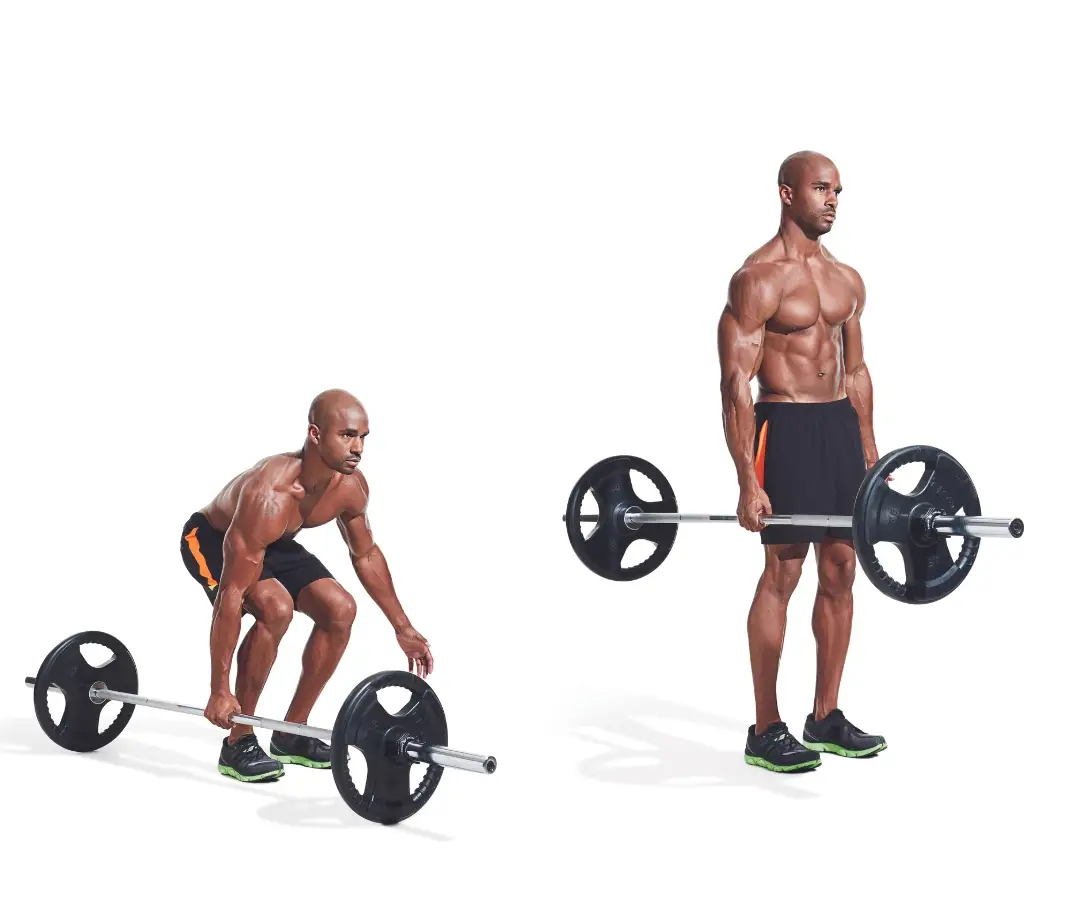
A barbell adds a different balance problem. Grip its centre so that neither end tips, leave clearance in front and behind you and secure the plates appropriately. A long bar can rotate or catch nearby equipment even when its load is modest. Start light if you try this version, and do not assume your conventional deadlift number predicts a sensible suitcase load.
For all three, the nominal mass is only part of the comparison. Handle thickness, start height, implement length and the distance from your leg can change the experience. Choose the version that matches your purpose and available space, then give yourself time to make it consistent.
Grip fatigue can become the limiting factor, particularly with a barbell. That may be acceptable if grip is part of your aim. If you wanted controlled lower-body work and the handle slips first, use a more manageable implement instead of extending the set through repeated regrips and rushed pickups.

Equipment Worth Exploring
Explore equipment, accessories and gear from our carefully selected range.


Cast Iron Kettlebells
Textured cast-iron kettlebells for swings, squats, carries, and full-body training.


Rubber Hex Dumbbells
Rubber-coated hex dumbbell pairs with a stable shape for home and commercial strength training.


4. Distinguish the one-sided lift from a carry or two-weight deadlift
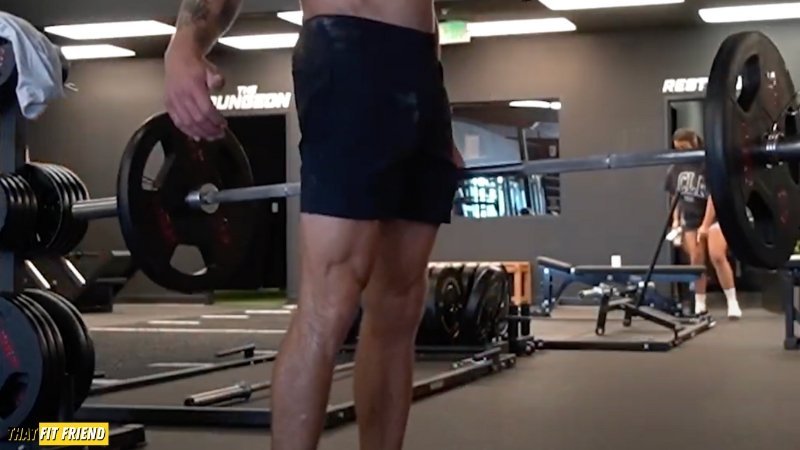
A suitcase carry begins after the pickup and adds walking. That introduces route length, turns and repeated steps, none of which are necessary for the stationary deadlift. Learn the pickup and return as their own task before adding a journey across the gym.
Holding a weight in each hand also changes the exercise. Two reasonably balanced loads reduce the side-to-side counterbalancing problem, while potentially allowing a larger total mass. That can be useful lower-body work, but it does not reproduce the same offset demand as one weight beside the body.
You can use these differences to simplify a session. Practise an ordinary two-handed kettlebell deadlift or a two-dumbbell version if managing the hinge and the sideways load together is too much at first. Then introduce a light one-sided version with the same attention to start height.
A single-leg Romanian deadlift is another separate exercise. Standing on one foot introduces a much greater balance component and changes the lower-body task. You do not need to lift the unloaded foot during a suitcase deadlift; both feet provide the base throughout the repetition.
These distinctions matter when choosing accessories around your main lifts. A suitcase deadlift can provide practice with an asymmetric load without becoming your only hinge exercise. Keep a main movement that suits your strength goals, and use the one-sided variation only if it contributes something useful and manageable.
5. Progress comparable repetitions on both sides
Begin with a small amount of work while you learn the setup. For example, try two sets of five to eight controlled repetitions on each side, leaving enough reserve to lower the final rep securely. This is an illustrative coaching starting point, not a proven optimal programme or a target you must reach despite discomfort.
Use the same implement, support height and intended range for both sides when possible. Start with the side that feels less coordinated, then match its controlled repetitions on the other. Avoid giving the more confident side extra work simply because it can move a bigger number.
Add repetitions within your chosen range before making a modest load increase. If the next available increment makes the torso shift or the weight difficult to settle, stay with the lighter option and improve consistency. You can also change the starting height, but changing load and height together makes progress harder to interpret.
Write down mass, implement, handle height, sets, clean repetitions and a short note about grip and torso control. Include where the exercise sits in the session. The same weight may feel quite different after demanding rows or heavy deadlifts, so compare sessions with similar preceding work.
Review the variation after several sessions rather than judging it from one tiring attempt. Keep it if the pickup becomes more repeatable and it fits your recovery. Reduce the demand or choose another exercise if twisting, slipping or discomfort keeps returning. The aim is a dependable one-sided lift, not an impressive weight rescued by a different movement on every repetition.

Bodybuilding Shirts & Workout Gear
Bodybuilding shirts, tanks and gym gear for lifters chasing muscle, size, symmetry and the pump.

Skeleton Deadlift – Meme Deadlift Lovers, Leg Day & T-Shirt
Heavy lifts, good laughs, and a little “Skeleton Deadlift” energy.

Bending Bars Meme – Barbell Squat Bench Deadlift, & T-Shirt
Heavy lifts, good laughs, and a little “Bending Bars Gym Meme” energy.

Nice Try Gravity Astronaut Workout | Funny Space Gym Pu T-Shirt
Bring “Nice Try Gravity Astronaut” humor to your everyday gym style.

Grim Reaper Deadlift Skeleton Bros & Leg Day Tank Top
Your gym-day look, with a playful “Grim Reaper Deadlift” twist.

Deadlift Stone Skull Gym Crewneck for Powerlifters, Hea T-Shirt
For laid-back days and deadlift humor: “Deadlift”.

Deadlifter Life Shirt – Halloween Ghost T-Shirt
Rep “Deadlifter For Life” humor in and out of the gym.

Control Your Gains Stoic Greek God Marble Sculpture T-Shirt
Make gym days more fun with “Control Your Gains Stoic Greek God Marble” style.

Meme – "Shhh I'M Doing Plate Math" & Weightlifting Sticker
Stick a little “"Shhh I'm Doing Plate Math" Workout &” humor on your favorite gear.

Shirt – Dumbbell Heartbeat Gymbros, & Meme Lovers T-Shirt
Show some bodybuilding attitude with a playful “Dumbbell Heartbeat” tee.

The Only Difference Between Good And Great Is One T-Shirt
Bring “The Only Difference Between Good And Great” humor to your next gym day.