Advertising disclosure: This page includes affiliate product links that may earn us a commission, as well as products from our own store.
RowErg Damper Settings: Use Drag Factor, Not the Biggest Number
The lever marked one to ten on a Concept2 RowErg is not a score for how seriously you train. Moving it to ten changes the flywheel’s feel, but it does not automatically create a better conditioning workout. A productive session starts with a setting you can control, a clear effort target and repeatable strokes.
For lifters adding rowing to their week, this matters immediately. You want your breathing and whole-body work to match the session’s purpose, rather than letting a heavy-feeling catch turn every interval into an awkward arm pull. Here is how to choose a sensible starting setting, check the actual drag and compare workouts without confusing machine setup with fitness.
What the Damper Changes—and What It Does Not
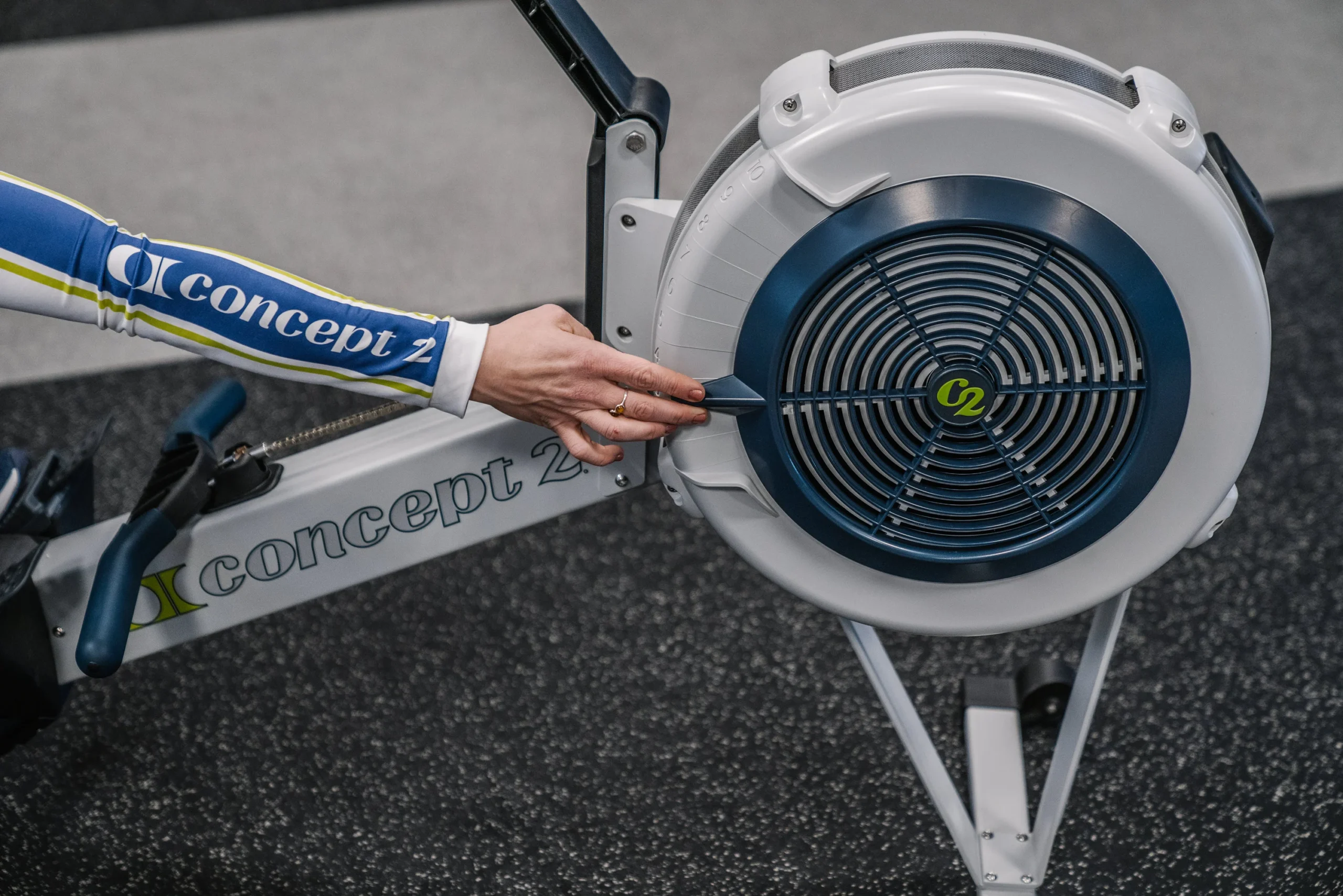
The damper changes airflow through the fan housing. Opening it farther increases the air involved in each stroke, changing how quickly the flywheel slows between pulls and how much force the next acceleration demands. Closing it gives a lighter-feeling pickup. Think about choosing how a stroke feels, rather than selecting a fixed resistance that dictates your effort.
You can row gently at a high setting and work extremely hard at a lower one. Power still comes from what you put into the stroke. That is the useful distinction from a machine where selecting a heavier stack changes the external load directly. On an air rower, pulling more powerfully also changes the resistance you experience.
A heavier pickup may suit a particular short effort, but it can also expose poor sequencing or exhaust a beginner before the intended cardiovascular work is complete. A setting that feels impressive for five pulls may be a poor choice for twenty minutes. Judge it over the workout you actually intend to perform.
Start around three to five rather than assuming the top setting is the standard. Treat that as an initial experiment, not a rule that every rower must obey. If you cannot accelerate smoothly without jerking the handle, lower the setting and rebuild the stroke. Change the lever while resting, and keep it fixed during a comparison interval.
Use the PM5 to Check the Actual Drag
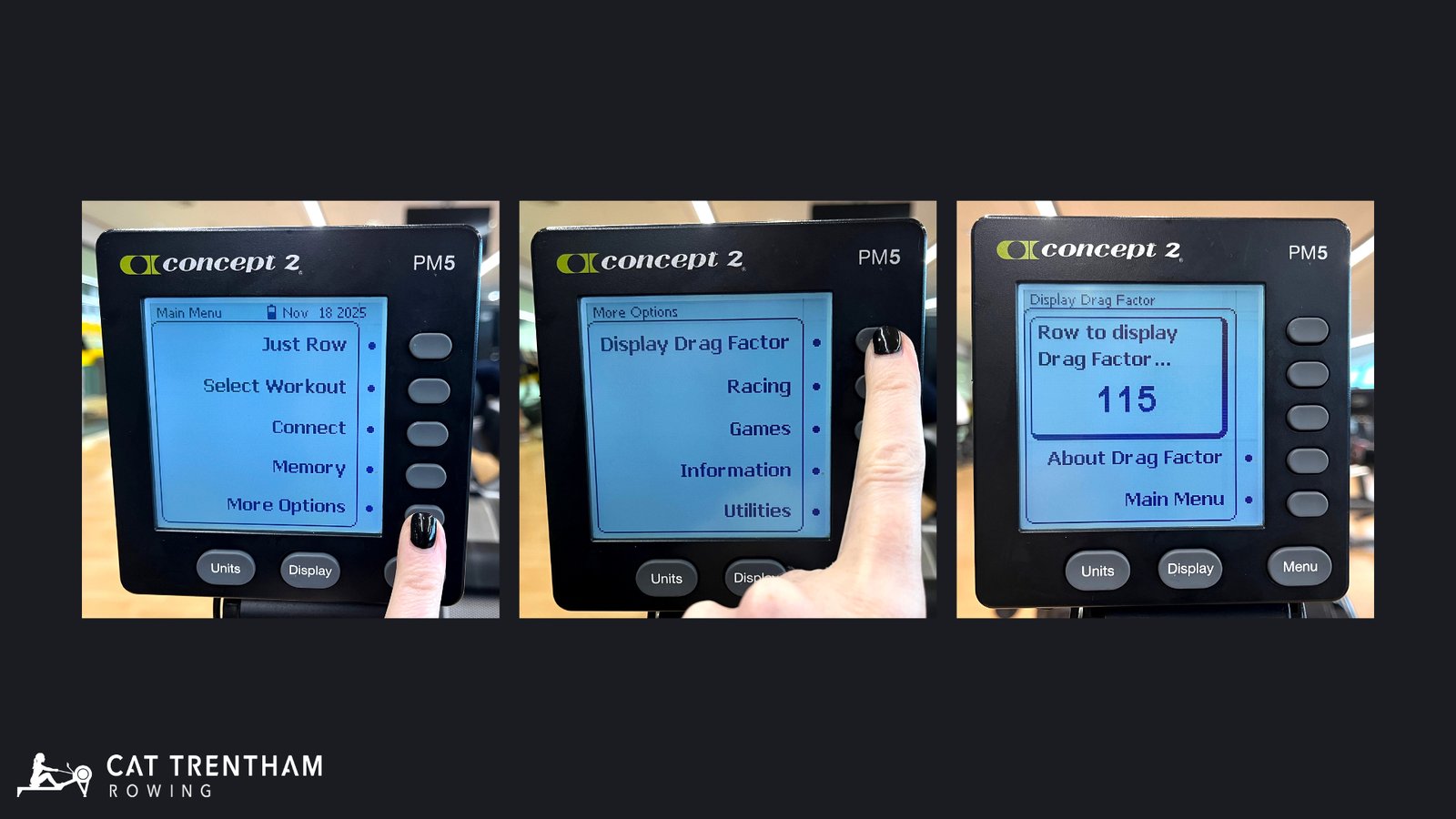
The number beside the lever describes its position. Drag factor describes the fan load the monitor detects. Two machines can feel different at the same lever number because airflow conditions differ. A dusty fan enclosure, for example, changes the relationship between lever position and the load you feel. Simply copying “damper four” from yesterday’s machine is therefore an incomplete setup note.
On the PM5 main menu, choose More Options, then Display Drag Factor. Begin rowing and allow a few seconds for the reading to appear. Adjust the lever during a pause, take more strokes and check again. Menu wording can vary with firmware, so return to the main menu if the screen does not match the expected path.
The monitor accounts for flywheel deceleration when calculating work. That is why moving the lever upward is not a shortcut to a better displayed pace. Use watts or pace to describe output, strokes per minute to describe cadence, and drag factor to document the machine’s feel. Those measurements answer different questions; none replaces the others.
Keep a simple setup record: machine, drag factor, workout format, average pace or watts and perceived effort. Avoid chasing another athlete’s drag number as if it were a strength standard. The valuable result is a setup you can repeat while meeting your own session goal. If changing gyms alters the lever position needed for similar drag, your notebook explains why.
Fix the Stroke Before Making the Catch Heavier
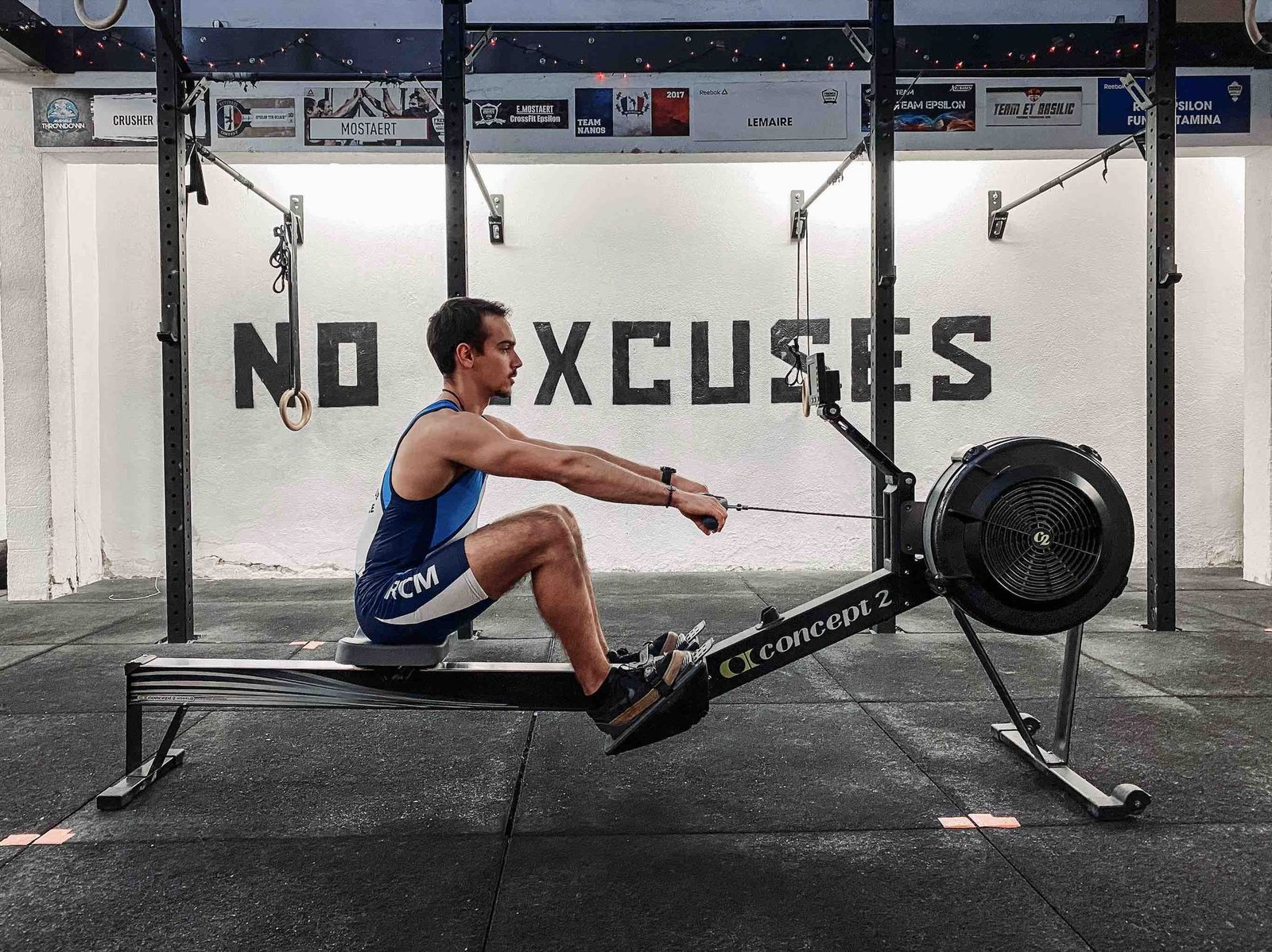
A row is a sequence, not an arm exercise performed while sliding back and forth. From the front position, initiate the drive with the legs, add the hip swing as the legs extend, then finish the handle pull. On the way forward, send the hands away, hinge forward and let the knees bend after the handle has cleared them. Blend the phases rather than making three abrupt movements.
Keep the shoulders relaxed and the wrists comfortable. Finish with the handle around the lower ribs and a modest torso lean, rather than hauling it toward the neck or throwing yourself backward. At the front, do not chase extra compression by collapsing the trunk or forcing the shins far beyond vertical. A repeatable position is more useful than an exaggerated reach.
Give the recovery time. Rushing up the rail makes the next catch harder to organize and can leave you taking many strokes without producing much useful work. For technique practice, think of a relatively quick drive followed by a more patient return. A rhythm near twice as much recovery time as drive time is a useful starting cue, not a metronome every athlete must follow perfectly.
Try five easy strokes focusing only on leg initiation, then five focusing on the hands clearing the knees during recovery. Return to normal rowing and see whether those cues survive. A short side-view video can reveal an early arm bend or rushed slide that feels invisible while rowing. If your movement becomes less controlled when you raise drag, that is feedback to step back.
Test Settings With a Repeatable Conditioning Session
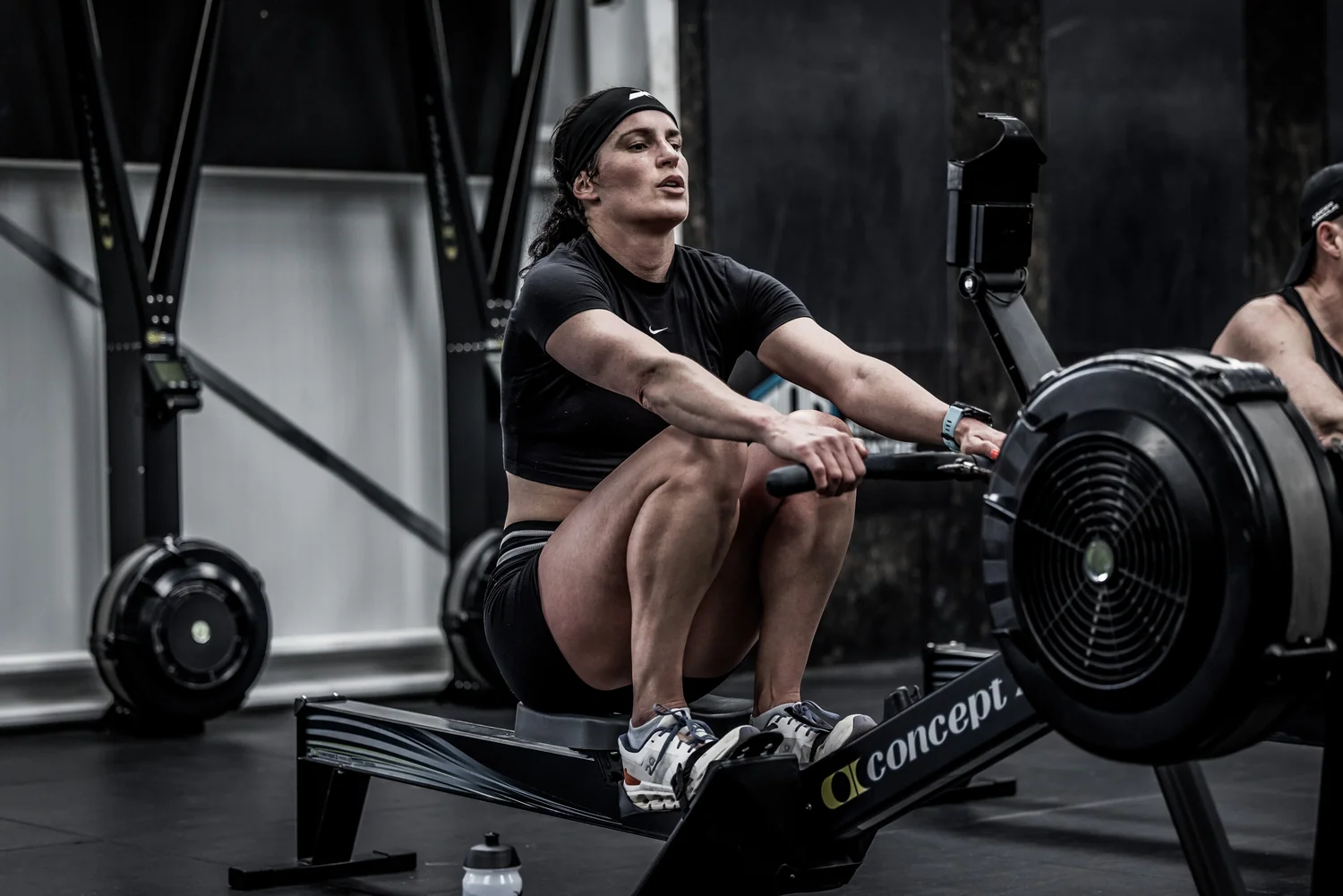
Here is a practical comparison session, not a race prediction or a promise of faster times. Warm up easily for several minutes, then perform three two-minute rowing blocks with two easy minutes between them. Begin at your normal moderate setting. Use a slightly lighter feel for the next block and a slightly heavier feel for the last. Stop and adjust the lever between blocks, never while trying to sustain a measured effort.
Keep cadence roughly consistent and aim for the same manageable effort. Record average pace or watts, drag factor and a brief technique note after each block. Do not declare a winner from a single faster opening burst. Look for a setting that lets you sustain output without a deteriorating catch, frantic recovery or unusually early local fatigue.
The order introduces fatigue and learning effects, so repeat the comparison on another day with the order reversed before drawing strong conclusions. Keep the format, warm-up and intended effort similar. This small test is for finding a comfortable working range; it cannot isolate every variable or prove one setting is universally optimal.
For an easy conditioning day, choose a pace at which breathing remains controlled and avoid turning the session into another maximal lower-body workout. For hard intervals, keep enough recovery to preserve recognizable technique. A novice can begin with less total work than this example and add time gradually. If a hard rowing session consistently harms the next lifting session, reduce its dose or move it farther away.

Cardio Shirts & Workout Gear
Cardio and conditioning gym gear for runners, endurance athletes and anyone who earns the sweat.


Anti Rowing Rowing Club Shirt – Meme & Top T-Shirt
Show some cardio attitude with a playful “Anti Rowing Rowing Club” tee.

Cardio Heartbeat for Runners, Cyclists and Endurance Fa Tank Top
Bring “Cardio Heartbeat” humor to your next lifting session.

Cardio Is Hardio – Workout Meme Pullover Jumper T-Shirt
For laid-back days and cardio humor: “Cardio Is Hardio”.

Cardio Is Calling Decline Bros Meme Hooded Hoodie
Make your off-duty look more fun with “Cardio Is Calling”.

Straight Outta Shape – Out Of Shape Meme Decal Water Sticker
Bring “Straight Outta Shape” attitude to your water bottle or laptop.

Don't Quit Do It – Motivational Workout Vest Muscle Shi Tank Top
Bring “Don't Quit Do It” humor to your next lifting session.

Exercise I Thought You Said Extra Fries Vintage Fast Fo Hoodie
Show off your cardio humor in a laid-back “Exercise I Thought You Said Extra Fries” hoodie.

Anti Cardio Cardio Club Shirt Meme & Top T-Shirt
Bring “Anti Cardio Cardio Club” humor to your next gym day.

Negative Cardio Review 1 Star Sweater Cardio Sucks T-Shirt
Show some gym-day personality with “Negative Cardio Review”.
Rowing is one option, not a compulsory addition to every program. Jump-rope work, loaded carries, kettlebell sessions and sled pushes offer different conditioning demands. Dumbbells, adjustable kettlebells, a suitable weighted vest or a jump rope may support those alternatives; they are not RowErg attachments and will not change its drag. Choose equipment for the task, rather than buying accessories to solve a technique problem.

Equipment Worth Exploring
Explore equipment, accessories and gear from our carefully selected range.


Pro Sled System
Heavy-duty push-pull training sled for loaded conditioning, speed, and strength work.

Cast Iron Kettlebells
Textured cast-iron kettlebells for swings, squats, carries, and full-body training.


Powerbeats Fit
Secure-fit wireless workout earbuds with active noise cancellation and a charging case.
Keep the Machine Consistent, Then Progress the Workout
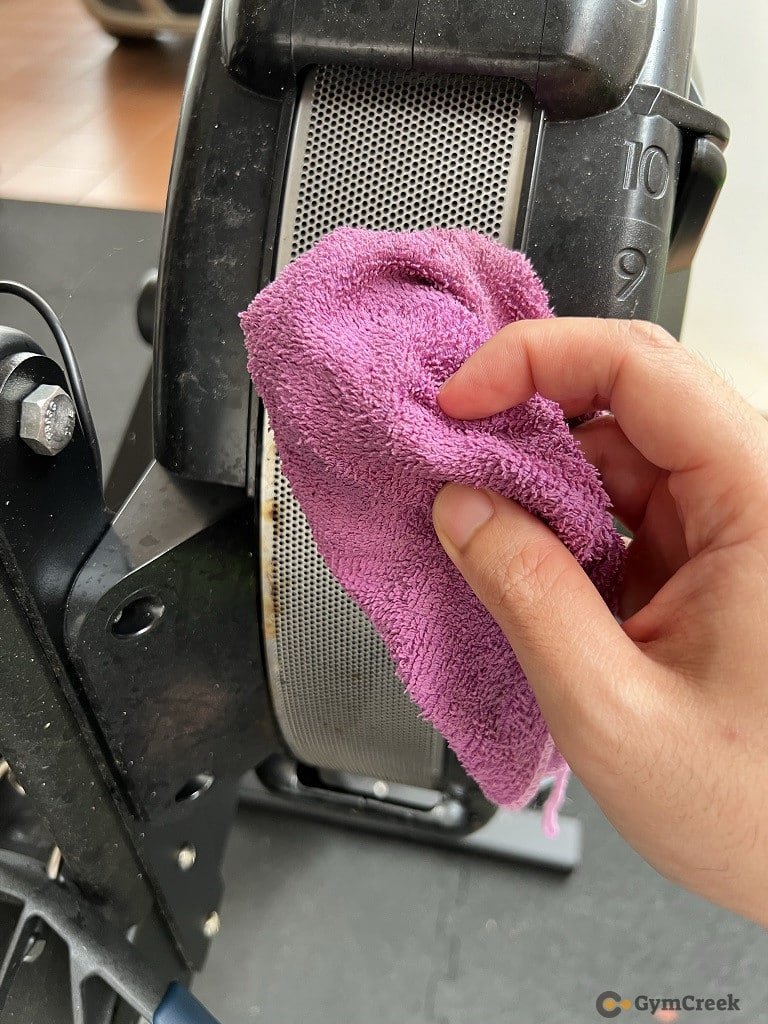
If a familiar machine suddenly feels different, check the basics before deciding that your fitness disappeared. Confirm the same drag reading, a sensible footrest position and an unobstructed fan area. Ask the gym staff about servicing when the machine seems poorly maintained. Moving the lever to ten is not a substitute for correcting restricted airflow.
For an owned RowErg, wipe the monorail after use and keep contact surfaces clean. Periodically inspect the fan enclosure for dust and follow the instructions for that exact model before opening or servicing it. The maintenance schedule distinguishes routine wiping from chain care and less frequent inspections. Do not spray cleaner directly onto the monitor, and do not improvise a lubricant or repair procedure because another machine used it.
Make progress with the workout variables you actually care about. You might row a little longer at the same comfortable effort, hold a steadier pace across intervals or complete the same session with cleaner strokes. Change one main variable at a time. Raising drag every week is not the rowing equivalent of adding plates to a squat and should not be your default progression system.
Consider a four-session learning block: repeat an easy session twice with the same setup, test one small adjustment on the third session, then return to the original setting on the fourth. Compare the records rather than trusting the most dramatic sensation. Keep the setting that supports the intended work; leave the lever alone while you improve your ability to deliver that work.
The useful setup is the one you can explain and repeat. Choose a moderate starting point, record the drag, organize the stroke and evaluate the whole session. A lower number paired with smooth, purposeful rowing is a stronger training decision than a maximum setting chosen out of habit.