Advertising disclosure: This page includes affiliate product links that may earn us a commission, as well as products from our own store.
Is a brutally heavy set of five building a different kind of muscle than a controlled set of twenty? A 2026 research synthesis examined a surprisingly specific question: whether the weight on the bar changes the growth of slow-twitch and fast-twitch muscle fibers. The results hint at a pattern, but the uncertainty is much larger than a catchy “heavy for fast-twitch” rule suggests. Here is what the data actually measured, what it cannot prove, and how to program both heavy and lighter work without overcomplicating your training.
What the eight-study comparison actually investigated
Muscle size is commonly assessed with ultrasound, MRI, or other whole-muscle measurements. Those tools can show whether a muscle becomes larger, but they do not directly tell you which individual fiber types drove the change. The 2026 synthesis instead examined studies that measured type I and type II muscle-fiber hypertrophy, generally with samples taken from muscle tissue. It pooled eight studies covering 195 participants and investigated how growth related to training load expressed as a percentage of one-repetition maximum, or 1RM.
A load of 80% 1RM means roughly four-fifths of the most weight you could lift once in that exercise under comparable conditions. It is not itself a rep prescription: technique, exercise, experience, recovery and the distance from failure all affect the number of repetitions possible. A 30% load is light relative to your maximum, but a set taken close to muscular failure can become very demanding as fatigue accumulates.
The investigators modeled training load as a continuous variable rather than simply labeling every intervention “light” or “heavy.” That distinction matters. If studies group 30% and 60% loads under broad categories, you cannot easily see whether a response gradually changes across the range. A continuous analysis can explore the pattern; it cannot manufacture measurements at loads that were barely or never tested.
One critical detail: the sample consisted mostly of people with minimal resistance-training experience. Results from early-stage lifters are useful for identifying possible physiological responses, but they do not automatically forecast the changes a competitive powerlifter or an experienced bodybuilder will make after years of training.
Type I and type II fibers: different roles, not separate switches

Type I fibers are often called slow-twitch fibers. They generally resist fatigue better and support repeated, sustained contractions. Type II fibers are faster and tend to be more capable of generating high force and power, although they fatigue faster during demanding work. Real muscles contain a mixture, and both types contribute to movements such as squats, presses, curls and rows.
It is tempting to imagine that light dumbbells exclusively activate slow-twitch fibers, while heavy barbells switch on only fast-twitch fibers. That is not how recruitment works. Your nervous system generally recruits motor units as force demands rise. During a lighter set, additional higher-threshold units can become involved as the initially recruited fibers fatigue and you keep producing force. Heavy loads make high-force recruitment necessary sooner.
Neither fiber label tells you exactly how much muscle you will gain. Two people can have different fiber proportions, movement skills, training histories and recovery responses. A single muscle may also show different changes in different regions. A biopsy samples a small area of one muscle; it is not a complete map of every muscle in your body.
The practical conclusion is simple: do not treat rep ranges as exclusive lanes for different fibers. Choose loads that let you challenge the target muscles while practicing the skills you care about. A balanced routine can include demanding low-rep compounds and lighter, higher-rep accessories without pretending each session trains only one type of tissue.

Equipment Worth Exploring
Explore equipment, accessories and gear from our carefully selected range.


Grip Plates
Rubber-coated weight plates with handholds for loading barbells and machines.

Competition Plates
Competition-style bumper plates for Olympic lifts and loaded strength training.


Foldable Wall Rack
Wall-mounted folding squat rack designed to save floor space between workouts.

Multi Pull Smith Rack MPHR-780
All-in-one rack with a Smith machine, functional trainer, lat pulldown and low row.

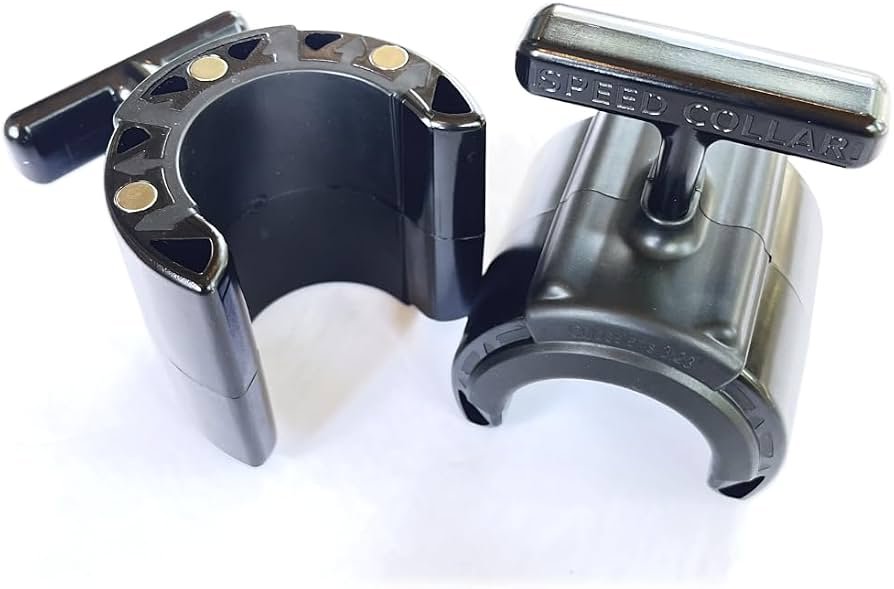
Speed Collar
Quick-release collars designed to secure weight plates on standard two-inch Olympic bars.
The apparent load pattern—and why it is not a proven rule
The 2026 model showed an intriguing tendency. At lower loads, around 20–30% of 1RM, its point estimates leaned toward relatively more type I growth. At higher modeled loads, around 60–90%, estimates leaned more toward type II growth. This is a hypothesis-generating pattern, not evidence that one load range reliably isolates a fiber type or outgrows another.
The most important statistical fact is that the 95% confidence intervals for the reported fiber-type contrasts included zero. That means the data were compatible with no clear load-related difference as well as with some positive or negative differences. The prediction intervals were wider still, signaling how variable results could be in a new training setting.
The source studies had substantial gaps. In particular, the analyzed data included no directly observed loads from roughly 53% to 70% 1RM. Some of the neat percentages displayed in modeled contrasts were therefore estimates rather than directly tested prescriptions. Differences in exercises, set volume, participant experience, failure proximity, and biopsy techniques further complicate comparisons.
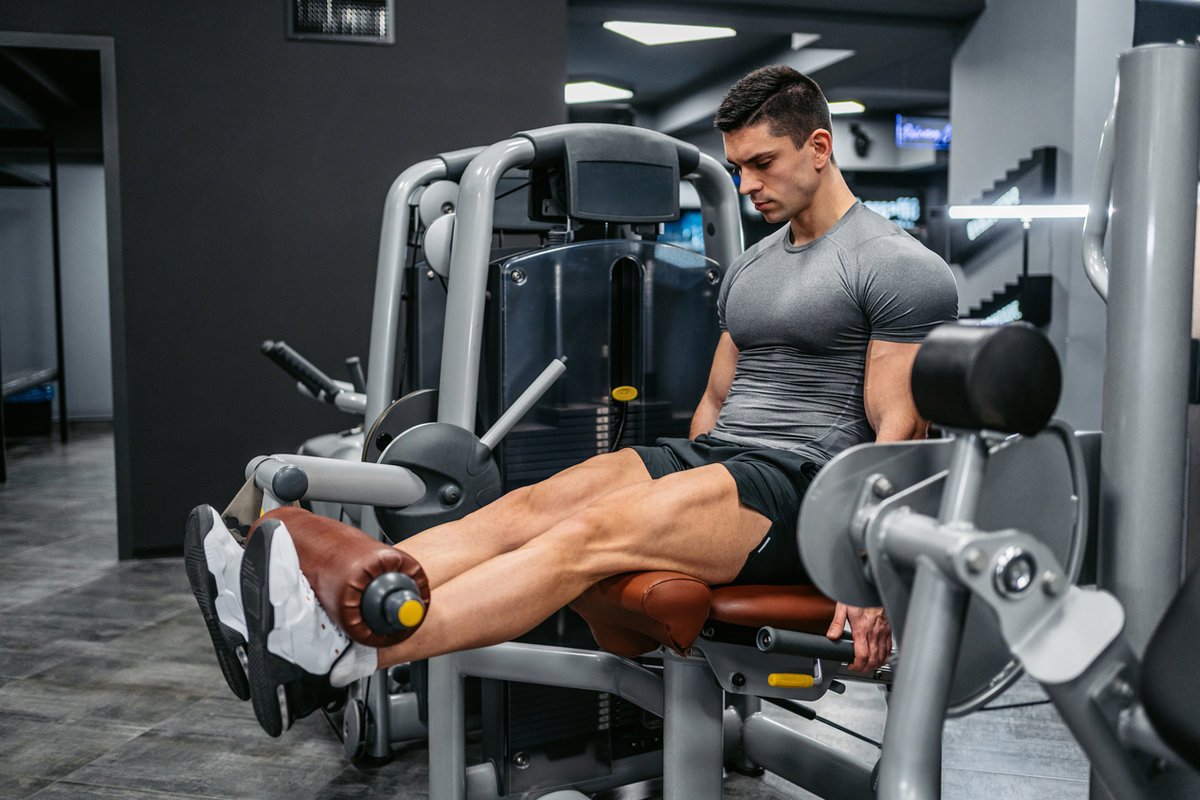
Picture two lifters training quads. One uses controlled leg extensions for 20 reps; another works through a challenging heavy set. Both may recruit and grow a mixture of fibers, but exercise choice, execution, total effective work and individual response can alter the outcome. A tiny sample from one thigh region would not justify declaring either routine universally superior.
For a lifter reading a headline, the safest interpretation is: training load might influence relative fiber-type adaptation, but current direct evidence is too uncertain to select an exact load threshold. It would be a mistake to replace a productive program with a rigid 30%-versus-85% prescription solely because of this model.

Bodybuilding Shirts & Workout Gear
Bodybuilding shirts, tanks and gym gear for lifters chasing muscle, size, symmetry and the pump.

Shredonomics Shirt Bro Science Muscle Graph & Meme T-Shirt
Show some lifting attitude with a playful “Shredonomics” tee.

Broscientology Muscle Shirt Athletic Vest Bro Science W Tank Top
Bring “Broscientology” humor to your next lifting session.

E = mc² Energy Muscle Confidence Albert Einstein Scienc T-Shirt
For laid-back days and lifting humor: “E = mc² Energy Muscle Confidence”.

Swole Scientist Bro Science | for Bodybuilding & Powerl Hoodie
Bring “Swole Scientist Bro Science” gym humor to lazy days and post-workout plans.

The Big Flex Theory Gym | Science Based Lifting Workout Sticker
Put “The Big Flex Theory” gym humor on your laptop, bottle, or gym gear.

Physical Mass Albert Einstein Science Based Lifting Bro Tank Top
Add some bodybuilding attitude to training with “Physical Mass”.

E=mclift Albert Einstein Science Based Lifting Bro Scie Tank Top
Add some powerlifting attitude to training with “E=mclift”.

Bro Science Graph Shirt – Essential & Gains T-Shirt
Heavy lifts, good laughs, and a little “Bro Science Graph” energy.

Bro Science Theory Big Bang Jumper T-Shirt
Add a playful “Bro Science Theory” touch to your casual rotation.

Bro Science Albert Einstein Science Based Lifting Worko Sticker
Put “Bro Science” gym humor on your laptop, bottle, or gym gear.
Why heavier weights still have a clear place in strength training
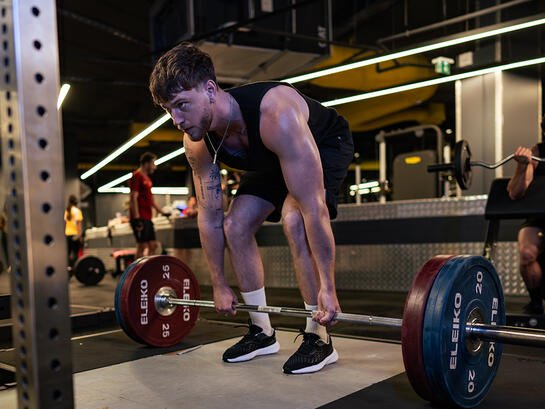
Even if lighter and heavier sets can both add muscle, they are not identical practice. To lift a challenging single or triple efficiently, you need to get skilled at bracing, controlling a loaded implement, coordinating the lift and producing high force. Heavy practice makes those demands specific. Someone who trains only high-repetition light sets may grow muscle and still be less prepared to express a very heavy one-rep maximum.
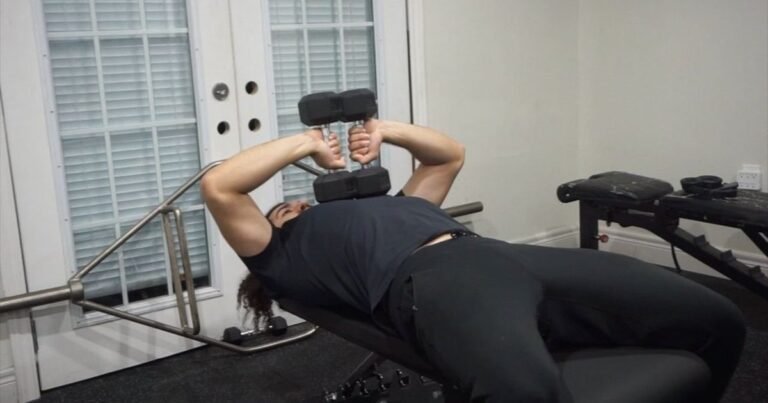
For barbell squats, bench presses and deadlifts, place your most demanding technical work when you are fresh enough to execute it well. A practical heavy session might include two or three warm-up steps followed by three working sets of three to six controlled repetitions, resting long enough to preserve speed and position. This is an example, not a mandatory protocol or a claim that the study tested those exact sets.
Load does not excuse ugly technique. Stop a squat when you can no longer maintain a controlled depth and stable bracing; stop a bench when shoulder position, touch point or bar path become erratic. A technically sound set of five with one or two reps left in reserve often provides more repeatable training information than an all-out grinder performed every week.
Beginners may progress strongly with moderate loads because they are also learning the lifts. Experienced lifters often benefit from periodically handling heavy weights to keep those skills sharp. At either level, fatigue management and sustainable progression matter more than chasing a personal best every time you enter the gym.
How lighter sets can grow muscle—without being easy sets
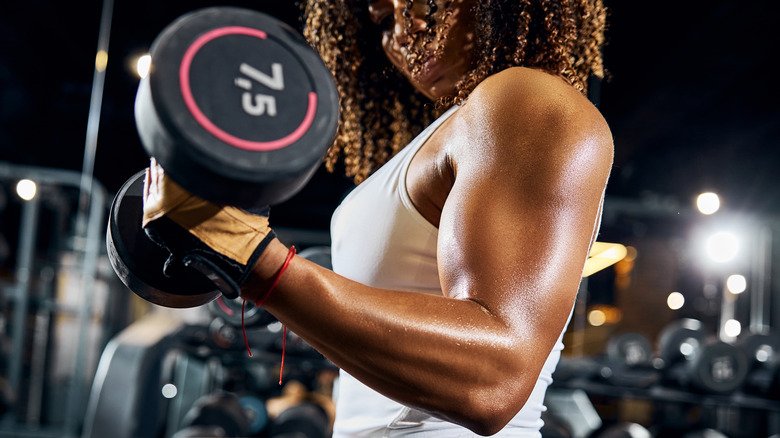
Whole-muscle comparisons over multiple training programs have repeatedly found that a reasonably broad range of loads can produce hypertrophy when sets are sufficiently challenging and training volume is appropriate. That does not mean every light set is equal to every heavy set. Ten relaxed reps with a weight you could lift forty times may not provide the same stimulus as a longer set that becomes genuinely difficult near the end.
For many lifters, moderate sets of roughly eight to fifteen reps are convenient. They let you accumulate useful work without extreme bar weights or very long bouts of discomfort. Higher repetitions—say fifteen to twenty-five on a machine or curl—can also be effective, especially when the exercise remains stable enough to keep the intended muscle working. The final repetitions should become demanding while form remains recognizable.
There are tradeoffs. Very light training can create substantial local discomfort, breathlessness and time costs before you reach a hard effort. On technical free-weight compounds, exhaustion can make bracing and bar control less reliable. In contrast, leg extensions, cable curls and lateral raises often lend themselves to higher-rep work because setup is predictable and balance is less of a limitation.
You do not have to reach complete muscular failure on every set. An honest one to three reps in reserve works well for many normal sessions, with occasional harder finishing sets on exercises where failure is reasonably safe. Monitor joint comfort and technique rather than using a burning sensation as proof of greater muscle growth.
If you have a limited range of available weights, use slower controlled lowering, longer range of motion where comfortable, or a few additional reps before immediately seeking an exotic intensity technique. Once a set becomes easy at its target rep ceiling, increase resistance if available and reset toward the lower end of the range.
Equipment Worth Exploring
Explore equipment, accessories and gear from our carefully selected range.


Rubber Hex Dumbbells
Rubber-coated hex dumbbell pairs with a stable shape for home and commercial strength training.



VOLTRA
Compact digital cable trainer with smooth, adjustable resistance.

Go-Tone Pro
Portable digital cable trainer with up to 66 lb (30 kg) of adjustable resistance.

FID Bench MAX
Adjustable bench offering flat, incline, and decline positions + adjustable headrest.

VForce Wall Trainer
Space-saving wall-mounted functional trainer with pivoting cable arms and variable resistance ratios.
A six-week mixed-load plan for strength and size
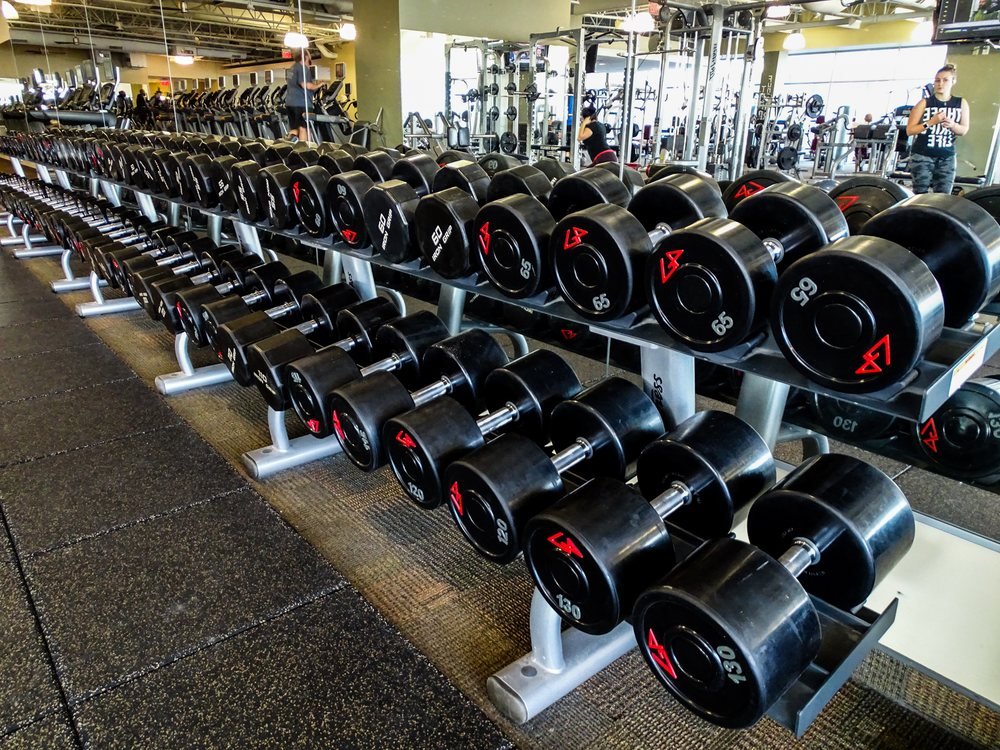
Here is one practical example of combining load ranges without turning your week into a fiber-type experiment. Perform two full-body sessions separated by at least a day, or use the same principles for two upper-body and two lower-body sessions if your schedule already supports more training. Select exercises you can perform consistently and replace unfamiliar movements with stable equivalents.
Day A — heavier skill emphasis: squat or leg press for three sets of four to six reps; bench press or machine chest press for three sets of five to eight; row for three sets of six to ten; then a curl or lateral raise for two sets of twelve to twenty. Take about two to three minutes between demanding compounds and enough time for the accessories to maintain form.
Day B — moderate and lighter work: Romanian deadlift or hip hinge for three sets of eight to ten; split squat or leg extension for three sets of ten to fifteen; pulldown for three sets of eight to twelve; incline press for two or three sets of ten to fifteen; then a cable or dumbbell accessory for two sets of fifteen to twenty-five. These are training choices, not protocols established as best by the fiber review.
- Weeks 1–2: choose conservative loads and leave about three reps in reserve on most sets. Learn repeatable depth, range and tempo.
- Weeks 3–4: add repetitions within each prescribed band while preserving technique. Increase load only when the top of the band feels controlled.
- Week 5: maintain the exercise menu; make a modest increase in load or add one work set to a priority lift only if recovery has been consistently good.
- Week 6: repeat or slightly improve the clean performance from week five. If fatigue has accumulated, reduce total sets rather than testing a maximum.
For a set marked five to eight reps, suppose you perform eight, eight and seven. Keep the load and work toward eight on all three sets. Only then consider the smallest practical load increase. For a twenty-rep accessory, use the same principle. This approach lets the training log—not a speculative fiber-growth percentage—drive progression.
Powerlifting Shirts & Lifting Gear
Powerlifting shirts and gym gear for squat, bench and deadlift lifters who live for heavy numbers.

Squats Leg Day Heavy Weights Meme – Essential Top T-Shirt
Bring “Squats Leg Day Heavy Weights” humor to your next gym day.

Heavy Barbell – Meme Shirt & Top T-Shirt
Make gym days more fun with “Heavy Barbell Powerlifting Graphic” style.

1000lb Club Meme Stack Of Weights T-Shirt
Heavy lifts, good laughs, and a little “1000lb Club Gym Meme” energy.

Lifting Is In My DNA Shirt – & Meme T-Shirt
Rep “Lifting Is In My DNA” humor in and out of the gym.

Rep God Gym | Funny Workout Sweater for Powerlifting & T-Shirt
Add a playful “Rep God” touch to your casual rotation.

Lifting Cult Meme Bodybuilding Powerlifting Workout Cre T-Shirt
Show some gym-day personality with “Lifting Cult”.

I Want You To Lift Heavy Gym | Funny Uncle Sam Patrioti Hoodie
Stay casual and show some powerlifting attitude with “I Want You To Lift”.

I’m Strong Barbell Heartbeat Muscle Shirt for Powerlift Tank Top
Show some personality between sets with “I’m Strong Barbell Heartbeat”.

Deadlift Skull Explosion Muscle Shirt for Powerlifting Tank Top
Bring “Deadlift Skull” humor to your next lifting session.

Be Happy Lift Heavy Happy Weights Emoji Weight Plate De Sticker
Give your everyday gear a playful “Be Happy Lift” twist.
What to track before you change your rep ranges
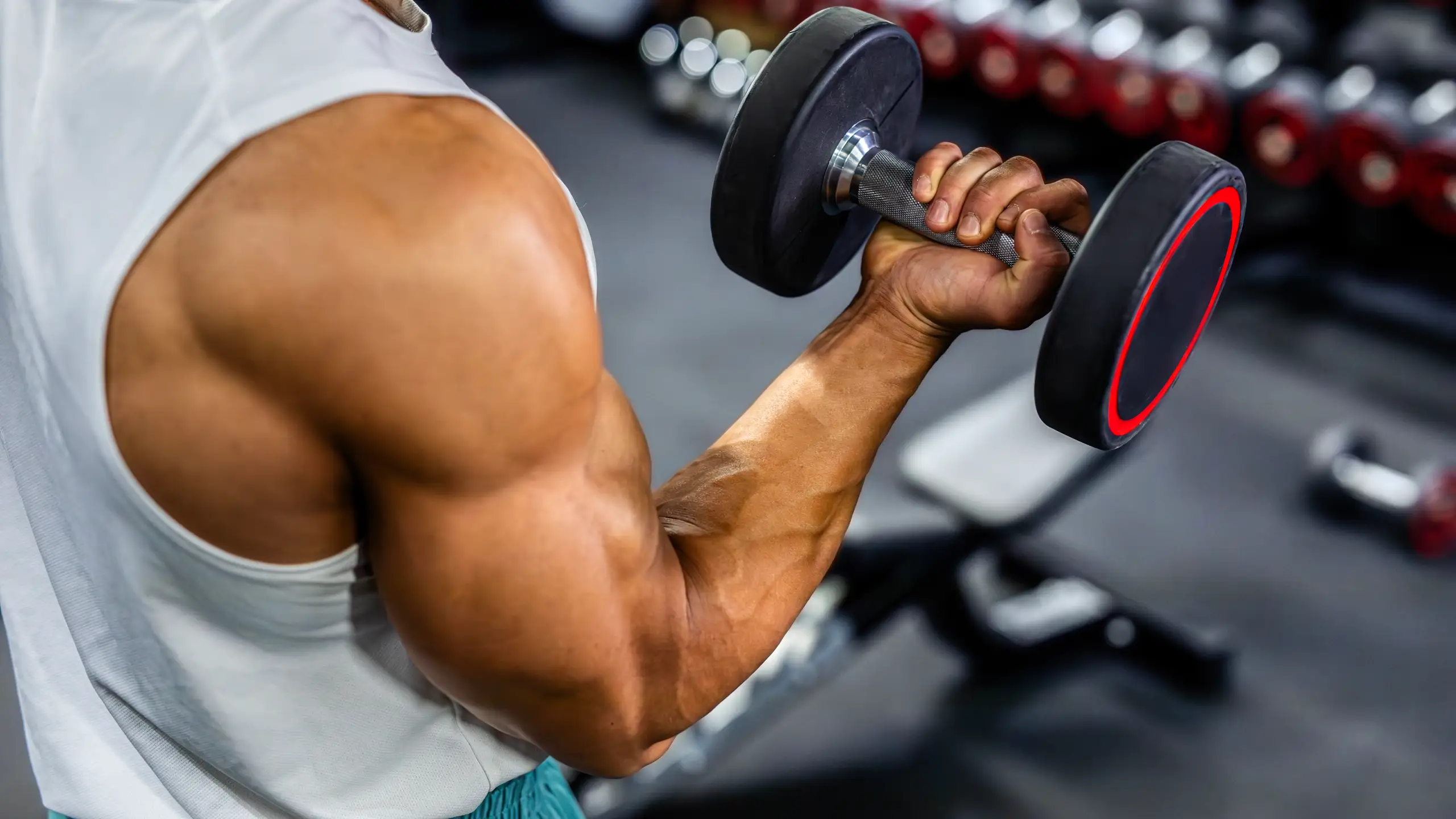
Track the exercise, working weight, repetitions, sets, approximate reps in reserve and any unusual pain or fatigue. You can also note sleep and recovery when a session is unexpectedly poor. Review trends across several weeks; a single weak workout is not evidence your muscle fibers require another rep range.
For strength goals, watch your quality repetitions with challenging weights or use a conservative estimated maximum. For hypertrophy goals, look at whether you can accumulate more controlled reps or resistance over time, alongside changes in measurements and appearance evaluated under consistent conditions. Neither a pump nor soreness alone is a reliable growth meter.
If the heavy work aggravates a joint, reduce load and refine the movement or choose an alternative while assessing why it feels uncomfortable. If high-rep work turns into uncontrolled flailing or long, miserable sets, shift toward a moderate range. Exercise selection, effort, adherence and enough recovery are often more useful levers than deciding whether type I or type II fibers are theoretically favored.
Bottom line: the newest fiber-level analysis suggests a possible load-specific difference but does not establish one confidently. Heavy lifting remains valuable for heavy-lift performance; moderate and lighter challenging sets can contribute to muscle growth. Use multiple rep ranges when they serve your goals, progress them deliberately, and do not let an uncertain physiological model replace a program you can sustain.