Advertising disclosure: This page includes affiliate product links that may earn us a commission, as well as products from our own store.
Barbell shrugs look simple: hold a loaded bar and lift your shoulders. Yet the difference between a useful set and a barely moving bar is often a pause, a sensible load and enough range to train the upper trapezius rather than your patience. Here is how to set up a controlled shrug, compare the main variations, decide whether to use straps and progress the exercise for six weeks without turning every rep into a bounce.
What Barbell Shrugs Train—and What They Do Not
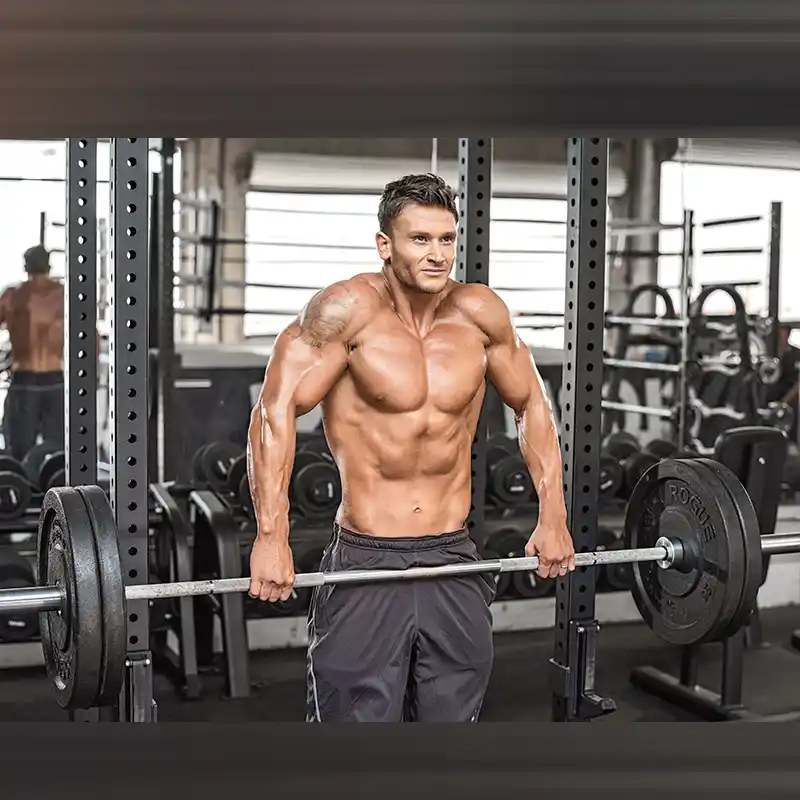
The trapezius is a broad muscle extending from the back of the skull and upper neck toward the shoulder blades and down the upper back. Different regions have different jobs. The upper fibers contribute to elevating and upwardly rotating the shoulder blade, making a loaded shrug a straightforward way to challenge that action. The middle and lower regions also help stabilize, retract, depress and rotate the scapula during rows, presses and other exercises; a shrug is not a complete replacement for those movements.
Your forearm flexors work to retain the bar, and your trunk and legs keep your posture steady. Those supporting roles should not turn the lift into a partial deadlift. Arms remain long and the bar travels only as far as the shoulder girdle moves. Some lifters feel an intense contraction near the neck, while others feel the area between the neck and shoulders. That sensation is useful feedback, but not an objective measurement of muscle growth.
A heavier bar does not automatically create a better trap stimulus. If added load reduces the shoulder-elevation range or forces a hip extension, you may be changing the exercise rather than progressing it. There is no need to claim that a certain grip width or machine has been proven to grow the traps faster over months. Start with a repeatable bar path, count complete repetitions and track performance under comparable conditions.
Set Up a Stable Barbell Shrug
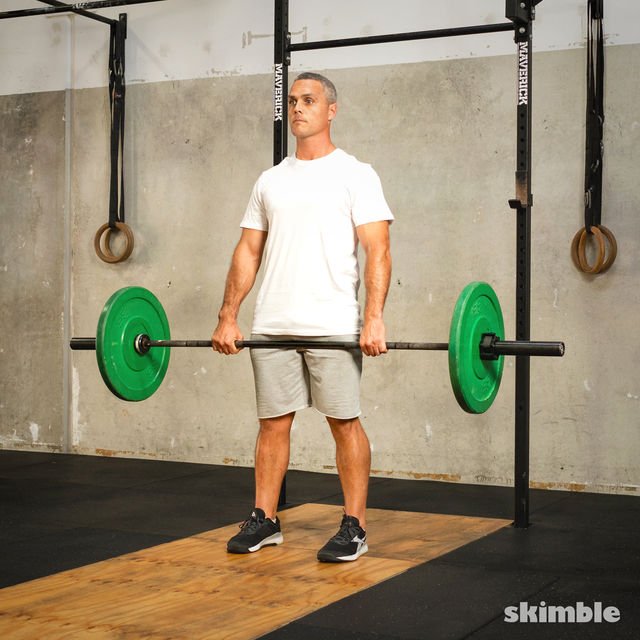
Place the loaded bar in a rack around mid-thigh height or lift it safely from the floor using your normal hinge mechanics. Stand with feet about hip width, knees unlocked and a grip just outside the thighs. Let the bar settle against the front of the legs without resting it on the body. Straighten your elbows, brace your abdomen and keep your chin in a comfortable neutral position. A wider grip is an option, not a requirement for a better shrug.
Begin the actual rep by moving both shoulders vertically toward your ears. Do not try to row the bar with your arms. Pause briefly at a height you can reach without craning your head or throwing your torso backward. Lower under control until the shoulders can settle naturally. The descent is part of the repetition: avoid dropping the bar, crashing the plates or forcing an exaggerated neck stretch. Keep the bar close to the body and your balance centered over your feet.
Try one light set of 12 slow reps before selecting a work weight. The test is whether the first and last reps use similar height, posture and tempo. If the bar travels an inch while your whole body jerks, reduce the load. If your grip fails before the traps approach fatigue, consider a lighter bar or straps rather than improvising wrist positions. For a basic working rhythm, raise smoothly, pause for roughly one second, then lower deliberately; use the rhythm as a quality cue rather than a stopwatch competition.

Equipment Worth Exploring
Explore equipment, accessories and gear from our carefully selected range.


Grip Plates
Rubber-coated weight plates with handholds for loading barbells and machines.


Rubber Hex Dumbbells
Rubber-coated hex dumbbell pairs with a stable shape for home and commercial strength training.


Leather Lifting Straps
Padded leather straps support grip during heavy rows, deadlifts and pulling exercises.
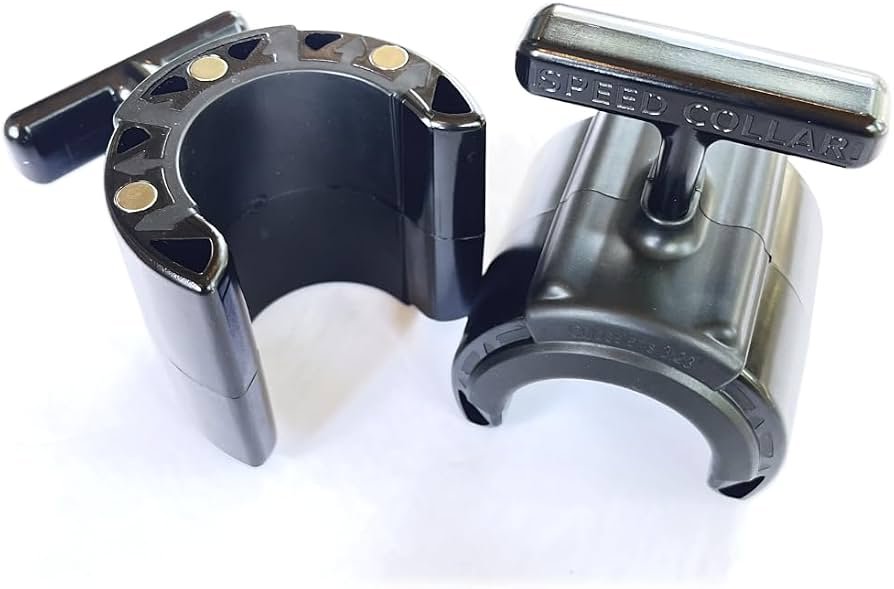
Speed Collar
Quick-release collars designed to secure weight plates on standard two-inch Olympic bars.

Six Mistakes That Make Shrugs Less Productive
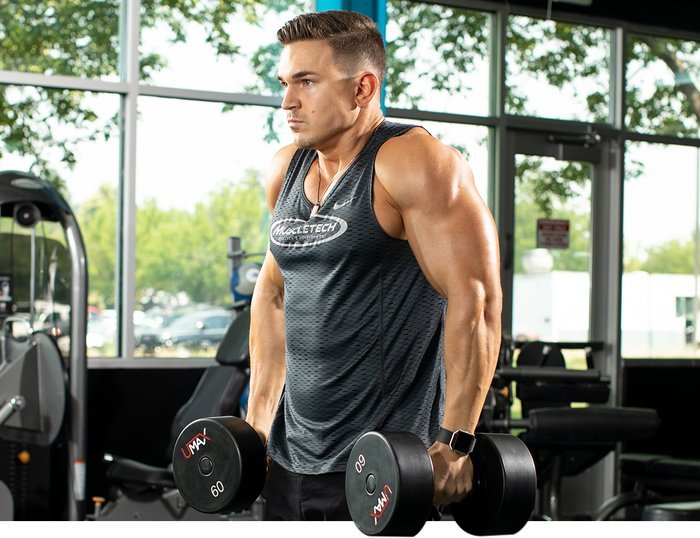
One: rolling the shoulders. Circling the shoulders forward and backward does not create a useful extra loaded range for upper-trap training. A simple upward motion is easier to load, measure and repeat. Two: bending the elbows. Turning a shrug into a short upright row shifts some work to the elbow flexors and changes the movement. Keep the arms long and think of the hands as hooks.
Three: chasing a personal record with tiny reps. A heavy bar that barely rises is not the same exercise as a full-range working set. Reduce the weight until you can elevate the shoulders visibly. Four: bouncing through the bottom. A quick dip of the knees or torso can move the bar without a meaningful controlled contraction. Reset the body before lifting the next repetition.
Five: leaning the head forward. Craning the neck does not help the traps shorten. Keep the gaze neutral and the chest comfortably tall. Six: letting the last reps turn into a different exercise. End the set when the range and posture noticeably degrade, even if the written target said 12 and you have reached only 10. That is still a usable data point for next time.
For a practical form check, record a side or front-quarter view of a moderate set. Ask whether the bar rises because the shoulders elevate, whether the knees and elbows stay quiet and whether each rep reaches approximately the same top position. Video is a comparison tool, not a requirement to look perfectly rigid.
Barbell vs Dumbbell, Trap-Bar and Cable Shrugs
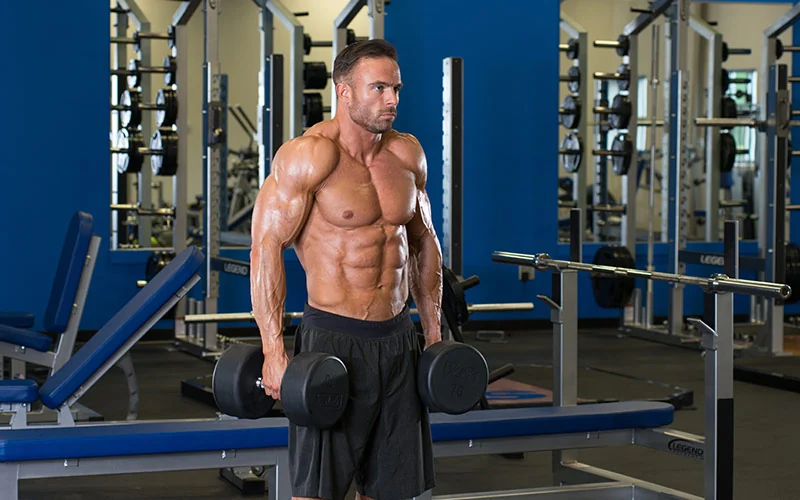
The barbell is convenient for small plate increments and heavier absolute loading. It also fixes both hands in front of the body, which some lifters find less comfortable. Dumbbells let the hands sit beside the thighs with a more neutral orientation. They are especially useful when you want to train one side at a time or avoid the bar brushing your legs, although the maximum available dumbbell size may limit progression.
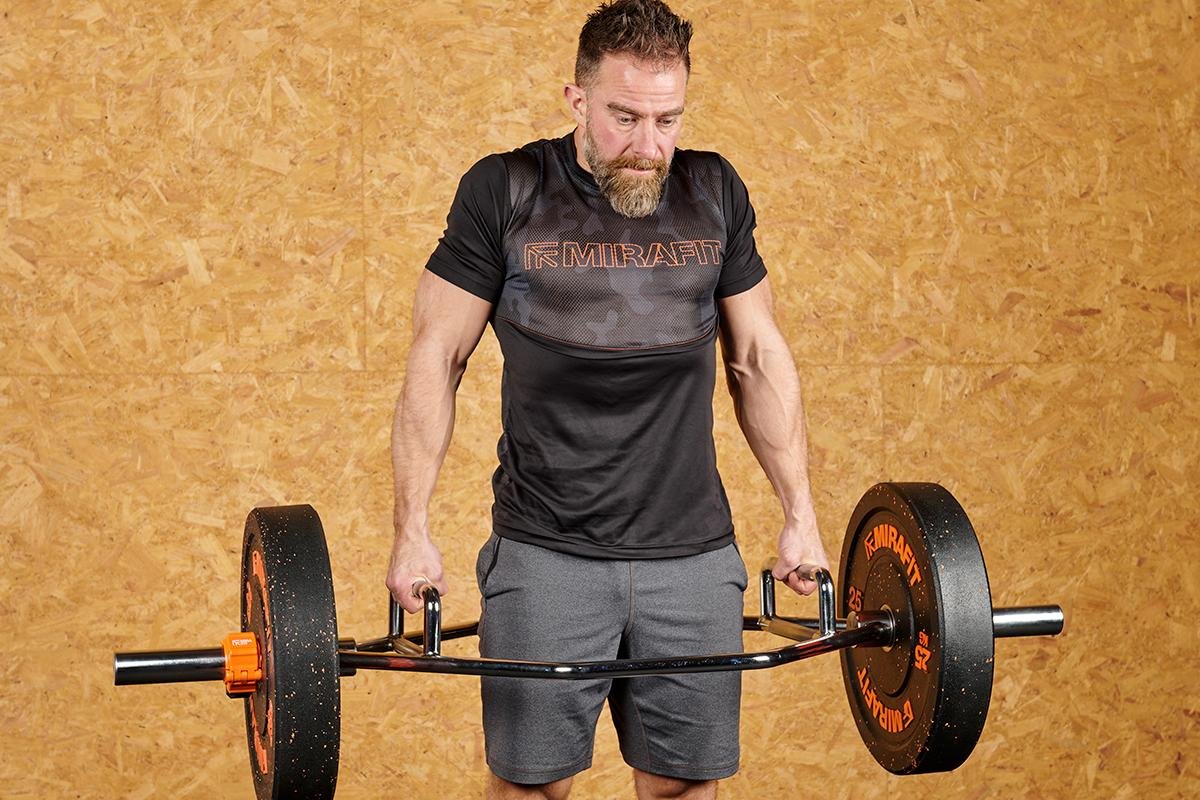
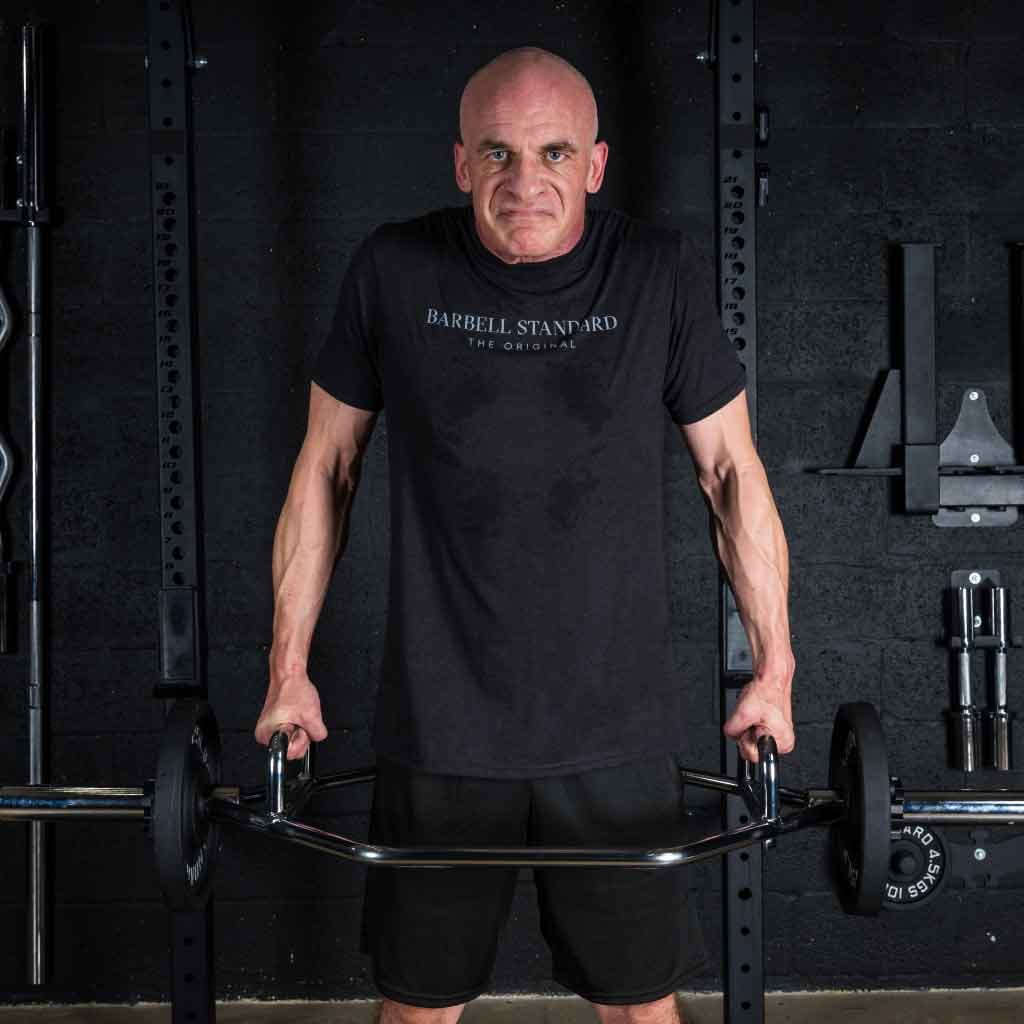
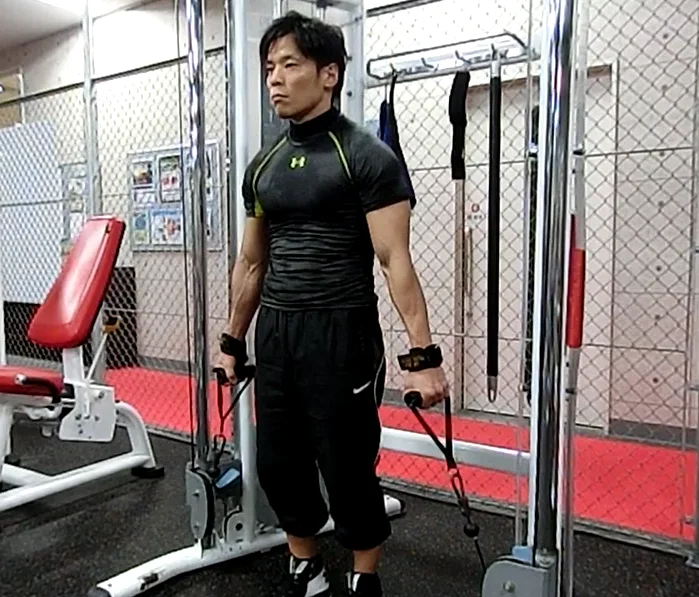
A trap bar places the handles beside the torso and often offers a comfortable neutral grip with room for substantial weight. Verify the manufacturer’s loading limits and keep the bar level rather than letting one end tilt. Some open trap bars are useful for carries as well as shrugs, but that versatility does not prove they are better at growing traps. Cable shrugs provide another approach: the line of pull and starting tension depend on pulley placement, handle choice and body position. Choose a cable setup that allows a near-vertical shoulder movement rather than a full-body lean.
These variations have overlapping training goals. It is not necessary to rotate among all of them every week. If you can keep a stable range of motion, comfortably grip the equipment and add a little work over time, that is a strong reason to stick with one variation. If a barbell position irritates the wrists, try dumbbells or a neutral-grip trap bar. If available loading is limited, use a longer controlled lowering phase or more reps before purchasing a heavier implement.

Bodybuilding Shirts & Workout Gear
Bodybuilding shirts, tanks and gym gear for lifters chasing muscle, size, symmetry and the pump.

GymRat Ingredients Label Shirt Meme T-Shirt
Heavy lifts, good laughs, and a little “GymRat Ingredients Label” energy.

Anti Social Gymrat Club Sweater & Meme Fans T-Shirt
Bring “Anti Social Gymrat Club” humor to your everyday gym style.

Gymrat Mousetrap | Rat Workout Decal | Next Cult Brand Sticker
Stick a little “Gymrat Mousetrap” humor on your favorite gear.

Heavy Metal Lifting Skull | Hardcore Workout & Graphic T-Shirt
Bring “Heavy Metal Lifting Skull” humor to your next gym day.

Psychosocial Lifting Club – Heavy Metal Lifting Vest Mu Tank Top
Bring “Psychosocial Lifting Club” humor to your next lifting session.

Survival of the Swolest – Swole Darwin Evolution Hooded Hoodie
Stay casual and show some bodybuilding attitude with “Survival of the Swolest”.

I Love Weights Valentine's Gym – Red Bumper Plate Heart Tank Top
Train hard, laugh a little, and rep “I Love Weights Valentine's”.

Gym Nerd Pixel Lifter Meme Crewneck Workout Bodybuildin T-Shirt
Bring “Gym Nerd” humor to your everyday gym style.

Mike Mentzer Heavy Duty Bodybuilding Muscle Shirt for H Tank Top
Show some personality between sets with “Mike Mentzer Heavy Duty”.

Hercuflex Greek God Gymbro | Funny Bodybuilding & Power Sticker
Bring “Hercuflex Greek God Gymbro” attitude to your water bottle or laptop.
Grip, Straps and How Heavy to Go
Shrugs train the traps and also challenge the ability to hold a load. Whether grip fatigue should be part of the exercise depends on your training goal. If your priority is building the upper traps, and your fingers open before your shoulders have performed enough quality reps, lifting straps can help you continue loading the intended movement. Straps are not cheating; they are a tool that changes the limiting factor.
If grip development is also a goal, perform some lighter strapless warm-up sets or a separate farmer carry, timed hold or dead hang when those tasks fit your program. You do not have to sacrifice every heavy shrug set to train your hands. Avoid assuming straps make the traps grow faster; that specific long-term comparison is not established here. Instead evaluate whether straps improve your ability to repeat controlled shoulder elevation.
Load selection can start with a weight you could perform for about two more clean reps than you actually do. This leaves enough room to maintain a visible top position and resist swinging the torso. Most lifters can begin with eight to fifteen controlled reps per set. A very high-repetition approach can also work if the available bar is light, but once fatigue turns the movement into hurried bouncing, extra reps are not extra productive work. Use collars on loaded Olympic bars, keep the lifting area clear and do not put an uncontrolled bar down in the middle of a gym walkway.
Equipment Worth Exploring
Explore equipment, accessories and gear from our carefully selected range.


Open Hex Bar
Open-frame trap bar with multiple handles for deadlifts, carries, and lower-body training.


Leather Wrist Grips
Padded leather lifting grips help support the hands and wrists on heavy pulling exercises.
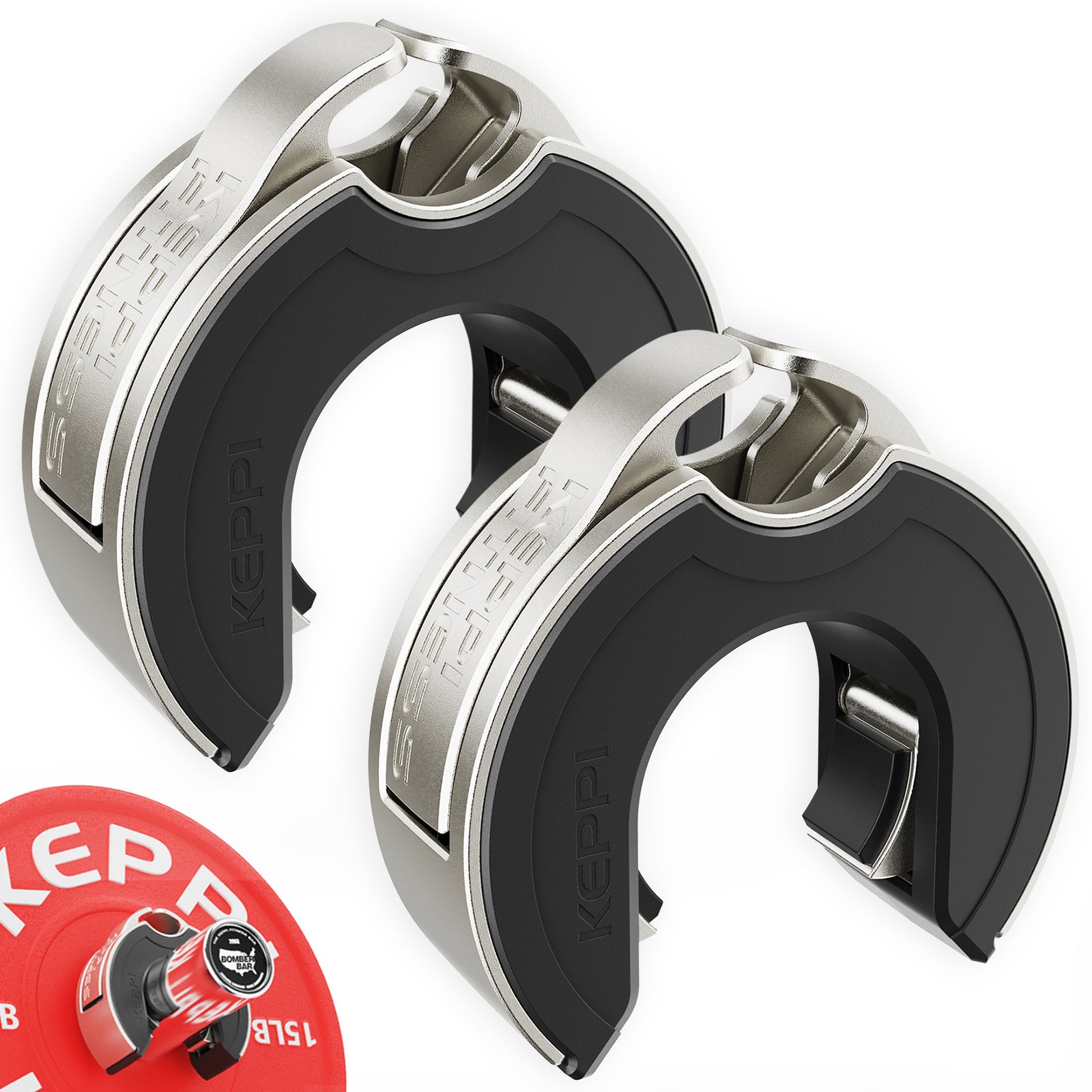
Keppi Open Collars
C-shaped magnetic Olympic barbell collars with a quick-lock mechanism and grippy lining.


Foldable Wall Rack
Wall-mounted folding squat rack designed to save floor space between workouts.
VOLTRA
Compact digital cable trainer with smooth, adjustable resistance.
A Six-Week Shrug Plan You Can Actually Track
Train shrugs twice per week after your main back or shoulder exercise, with at least one non-shrug day between sessions. This example assumes you already lift consistently; if upper-trap work is new, begin with just two sets per session. Choose one version for the block so the numbers mean something. Day A emphasizes controlled heavier work, while Day B uses a slightly higher repetition range without turning into a rushed endurance test.
| Weeks | Day A | Day B | Progression focus |
|---|---|---|---|
| 1–2 | 2–3 × 8–10 | 2 × 12–15 | Find a full, consistent range and keep roughly 2 reps in reserve |
| 3–4 | 3 × 8–12 | 3 × 12–15 | Add reps first; use a small load increase only after all sets reach the top of the range |
| 5 | 3 × 8–12 | 3 × 10–15 | Keep clean pauses, and progress weight only if range remains stable |
| 6 | 2 × 8–10 | 2 × 12–15 | Reduce total sets and assess a repeatable benchmark |
Rest around 90–150 seconds between work sets, extending the break if your breathing or grip prevents normal control. At the end of each session record the equipment used, weight, repetitions and whether you maintained a pause at the top. When all sets reach the upper end with similar form, try the smallest practical increase next time. If an increase costs you most of your range, return to the previous load.
This is a practical illustrative progression, not a six-week shrug protocol experimentally shown to outperform another schedule. Deadlifts, rows, carries and heavy presses already ask the traps to contribute to stability. If you do those frequently, you may need fewer direct shrug sets than the example. The purpose of week six is to leave you able to train well again, not to test a maximal, jerky single repetition.
Fit Shrugs Into Back and Shoulder Training
The simplest place for barbell shrugs is toward the end of a back or shoulder session, after your highest-priority compound lifts. Doing them before heavy pulling can tire the grip and upper back and make technique harder to manage. That does not mean every lifter must perform shrugs last; it means exercise order should reflect what you want to improve first. If upper traps are your priority, one moderate shrug session can go earlier, provided it does not disrupt the lifts that follow.
Upper-trap development is only one part of a well-trained back. Keep rowing and vertical pulling for the lats, middle-back muscles and elbow flexors, and include suitable scapular-control and shoulder exercises for the other trapezius regions. It is reasonable to count shrugs as direct upper-trap work without treating rows and deadlifts as zero. Nobody needs seven separate shrug variations in a single week.
Muscle soreness is not a reliable scorecard. More important questions are whether you can reproduce the same controlled movement, progress within your available equipment and recover before the next session. If a position causes sharp neck, shoulder or radiating pain, stop the set and seek individualized guidance rather than forcing more weight. For most healthy trainees, a simple barbell shrug performed patiently is a useful tool—not a secret shortcut to an impressive upper back.
Powerlifting Shirts & Lifting Gear
Powerlifting shirts and gym gear for squat, bench and deadlift lifters who live for heavy numbers.

Patriotic Barbell Flag Shirt | Distressed USA & Gymbros T-Shirt
Show some powerlifting attitude with a playful “Patriotic Barbell Flag” tee.

Skull & Weights 45LB Plate Skull Weight Plate Dark Fitn T-Shirt
For laid-back days and Halloween humor: “Skull & Weights 45LB Plate”.

Tulips & Weights 45LB Plate Floral Barbell Workout Spri T-Shirt
Show some Easter attitude with a playful “Tulips & Weights 45LB Plate” tee.

Atlas Weight Plate Meme Earth Lifting & Top T-Shirt
Heavy lifts, good laughs, and a little “Atlas Weight Plate Gym Meme” energy.


Funny Patriotic Deadlift Gym – Statue Of Liberty 4th Of Hoodie
Show off your deadlift humor in a laid-back “Patriotic Deadlift” hoodie.

Gym Is My Religion Barbell Cross Decal for Christian Li Sticker
Stick a little “Gym Is My Religion Barbell Cross” humor on your favorite gear.

Roses & Weights 45LB Plate Romantic Barbell Workout Val Hoodie
Keep it laid-back with a little “Roses & Weights 45LB Plate” attitude.

Donut Weight Plate 45LB Plate Donuts & Weights Workout T-Shirt
Show some donut-loving attitude with a playful “Donut Weight Plate” tee.

Dark Side of the Weights Pullover | Parody Crewneck T-Shirt
Show some gym-day personality with “Dark Side of the Weights”.
Bottom line: Choose a load you can elevate through an honest range, pause without neck strain, and progress clean work over weeks. Barbell, dumbbell and trap-bar shrugs are different tools for the same basic upper-trap movement.