Advertising disclosure: This page includes affiliate product links that may earn us a commission, as well as products from our own store.
An ab wheel can humble a strong lifter in a handful of repetitions. The challenge is not rolling as far as possible; it is keeping the ribs, pelvis and shoulders organized as the wheel moves away from the knees.
This practical guide covers the mechanics, a kneeling setup, six troubleshooting cues, safe ways to increase range, meaningful alternatives and a six-week plan you can fit around your normal lifting.
The Ab Wheel Is an Anti-Extension Exercise, Not Just a Crunch
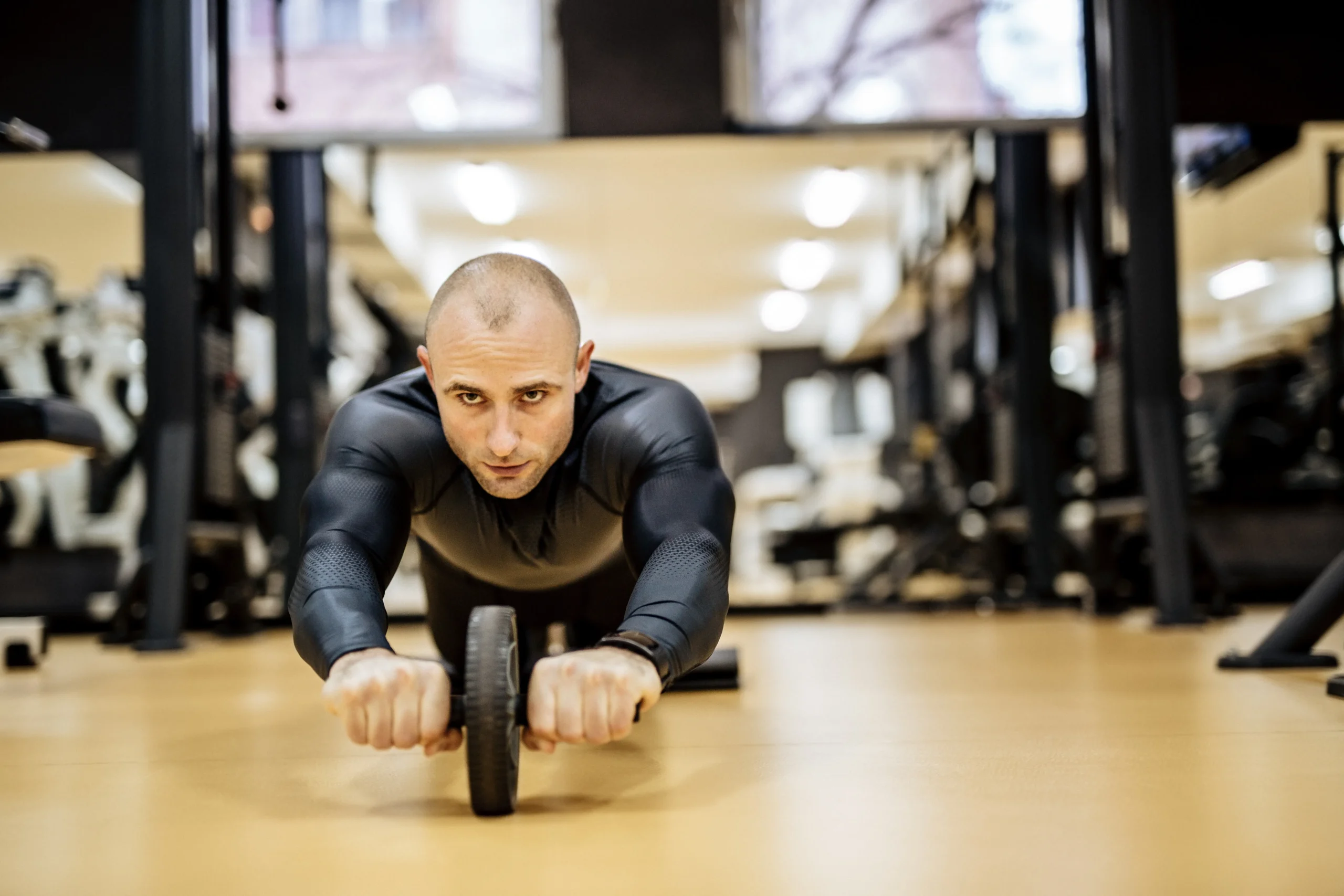
At first glance, an ab wheel appears to be a tiny piece of equipment that should be easier than a weighted cable crunch. The first careful repetition usually changes that impression. As the wheel travels forward, your hands move farther from your knees and the distance between the load and the center of your body increases. Your abdominal wall has to resist the tendency for the ribs to flare and the lower back to sag. A few inches of additional travel can therefore feel like a major jump in difficulty.
This is primarily an anti-extension task. The rectus abdominis and obliques create trunk stiffness while the shoulders, lats and arms control the wheel. Your glutes help keep the pelvis from tipping forward. The movement also requires usable overhead shoulder range; a person with strong abs but limited shoulder motion might reach a sensible stopping point sooner than somebody more mobile. Being unable to roll to the floor does not automatically mean your midsection is weak.
Exercise-activation comparisons support the idea that rollout-style tasks can demand a great deal from the anterior trunk, but electromyography measures muscle electrical activity, not long-term muscle growth. Different studies also test different devices: an assisted abdominal rocker is not the same as a modern wheeled rollout. Those measurements cannot establish that an ab wheel builds a better six-pack than every other exercise. It is a challenging, scalable option alongside crunches, leg raises and loaded carries.
For hypertrophy, the useful questions remain familiar: can you perform the exercise with control, accumulate repeatable challenging work, and gradually progress without the lower back taking over? For general strength, the attraction is teaching the trunk to stay organized while the arms move away from the body. Neither benefit requires chasing a dramatic floor-level finish.
Set Up a Kneeling Rollout From the Floor
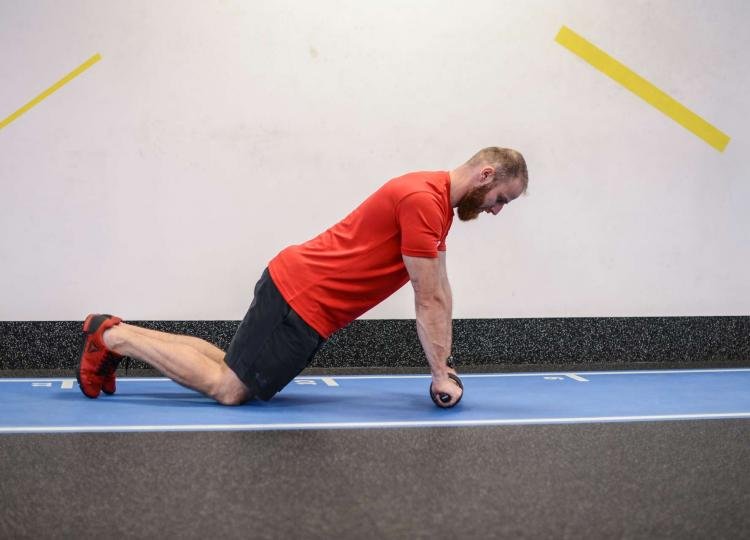
Begin with a compact two-hand wheel, a stable nonslip floor and enough clear space in front of you. Place a folded pad under both knees if the floor is hard. Set your knees approximately hip-width apart; a very wide stance can make balance easier but is not mandatory. Hold the handles directly below the shoulders with straight, comfortable elbows. Before moving, gently exhale, bring your ribs toward your pelvis and squeeze your glutes just enough to establish a firm torso.
- Brace first. Imagine preparing for a moderate punch to your abdomen, without locking your breath for the entire set.
- Move the wheel forward slowly. Let the shoulders flex and the arms travel away from your knees while your hips and rib cage move together.
- End where control ends. Stop before your waist droops, the ribs flare or you need to shrug aggressively to gain another inch.
- Pause briefly. A half-second of control at your farthest clean position is more useful than bouncing.
- Return under tension. Draw the wheel back while keeping your trunk braced; do not simply sit your hips onto your heels to escape the hard portion.
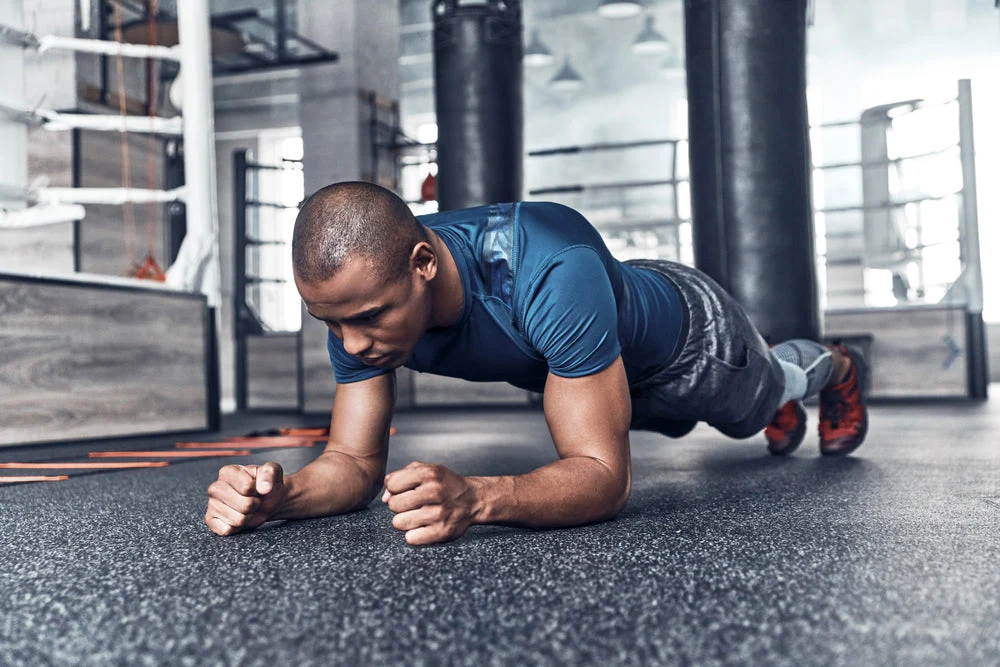
Think of the movement as a long, moving plank rather than a crunch that folds the body in half. The pelvis can make small natural adjustments, but exaggerated lumbar arching should not be the method for extending farther. Keep the gaze down and a little ahead of the wheel instead of craning the neck upward. Your breathing should remain controlled, especially during multiple reps.
Two sets of four to six short, technically consistent repetitions make a sensible first exposure for a healthy lifter. If the sixth repetition is substantially worse than the first, end the set sooner. The amount of distance you cover is an outcome of your current strength and mobility, not a target imposed by the photograph on a product package.

Equipment Worth Exploring
Explore equipment, accessories and gear from our carefully selected range.


Power Tower
Freestanding pull-up and dip station with adjustable handles for bodyweight training.



FID Bench MAX
Adjustable bench offering flat, incline, and decline positions + adjustable headrest.


Six Errors That Make Rollouts Harder for the Wrong Reason
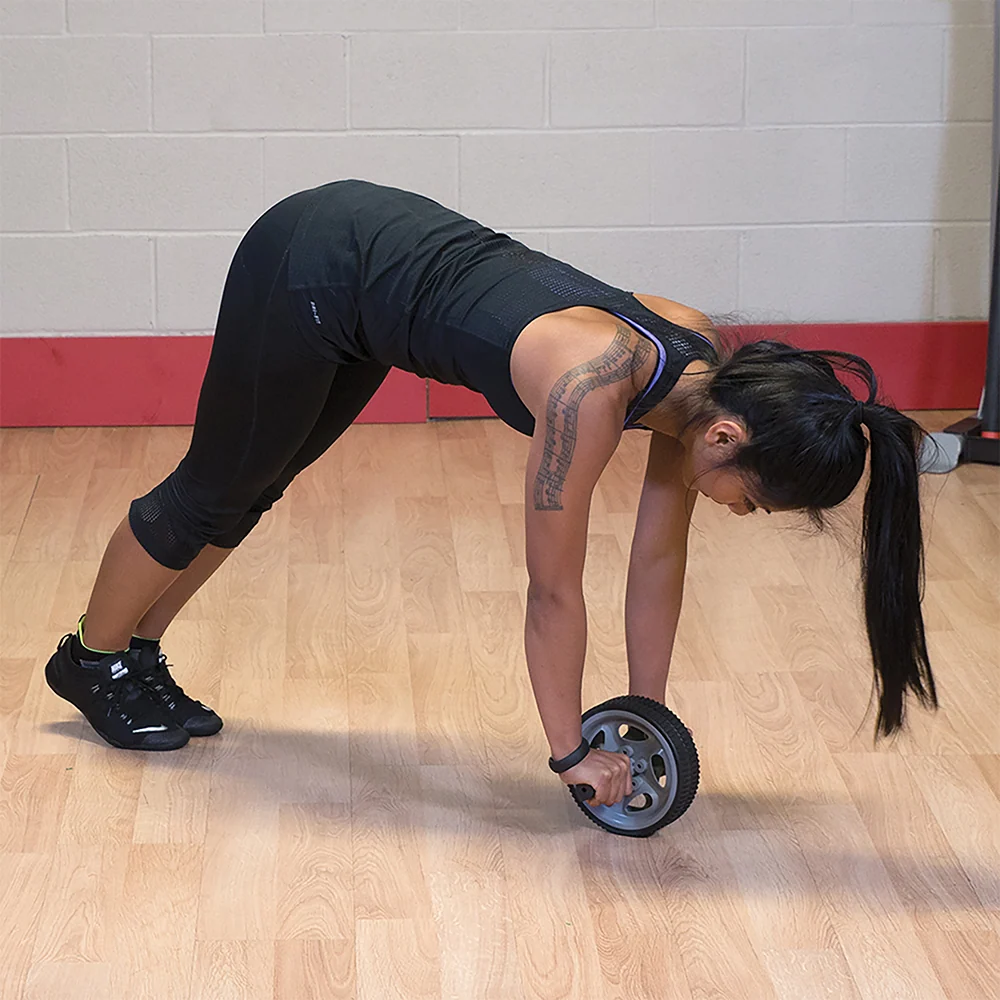
1. The ribs flare before the wheel moves. You begin with an extended lower back and never establish a solid brace. Reset the rib cage over the pelvis before each repetition. A short breath out can help you find the position without forcing an extreme rounded spine.
2. The hips dive toward the ground. The wheel keeps traveling while the torso becomes a hanging bridge. This is usually a sign that the range is beyond your current ability. Bring the stopping point closer or use a wall to create a dependable endpoint.
3. You race the return. Throwing the body backward may make the wheel look as if it is moving under your control, but momentum can hide the challenging phase. Count roughly two seconds forward and one to two seconds back. Smoothness matters more than matching a rigid tempo.
4. The elbows bend into a pseudo-pullover. Some arm involvement is inevitable, but turning the exercise into a hard elbow pull changes the challenge. Keep the arms comfortably long, use the shoulders and lats to guide the wheel, and let the trunk resist extension.
5. You hold your breath throughout a long set. Strategic bracing is useful; prolonged breath holding is not a requirement for basic abdominal training. Breathe around the hard portion as needed, particularly if you become light-headed or your technique deteriorates.
6. You treat discomfort as proof of effectiveness. A working sensation in the abdominal wall is different from sharp, pinching or rapidly escalating lower-back or shoulder pain. Stop a painful set rather than pushing through, reduce the range on the next attempt and seek appropriate professional advice for persistent symptoms.
Record the specific failure, not merely “bad form.” If the waist drops at 40 centimeters, a clean 30-centimeter rollout is a more productive training repetition. If your shoulders become uncomfortable only at deep reach, use a shorter target while addressing mobility separately. The goal is to train the limiting quality without making every repetition an avoidable test of tolerance.

Bodybuilding Shirts & Workout Gear
Bodybuilding shirts, tanks and gym gear for lifters chasing muscle, size, symmetry and the pump.


Six Pack Tacos Gym Tee
Rep “Check Out My Six Pack Tacos Gym Meme” humor in and out of the gym.

6Pack Panther – Six Pack Abs Bros & Meme Lovers T-Shirt
Heavy lifts, good laughs, and a little “6Pack Panther” energy.

6Pac Shakur Gym | Hip Hop Parody Pullover Chasing Six P Hoodie
Bring “6Pac Shakur” gym humor to lazy days and post-workout plans.

Check Out My Six Pack Donut – Donut Meme Hooded Pullove Hoodie
Make your off-duty look more fun with “Check Out My Six Pack Donut”.

Check Out My Six Pack Beer – Gym Meme Hooded Pullover Hoodie
Stay casual and show some bodybuilding attitude with “Check Out My Six Pack Beer”.

Calisthenics Pullups Heartbeat Hoodie
Bring “Calisthenics Pullups Heartbeat” gym humor to lazy days and post-workout plans.

Spider Hero Pullups Crewneck Pullover Sweater Gymbros W T-Shirt
Add a playful “Gym Spider Hero Pullups” touch to your casual rotation.

Pull Up or Shut Up Crewneck Pullover Sweater for Calist T-Shirt
For laid-back days and bodybuilding humor: “Pull Up or Shut Up”.

Earn More Range Before Adding More Repetitions
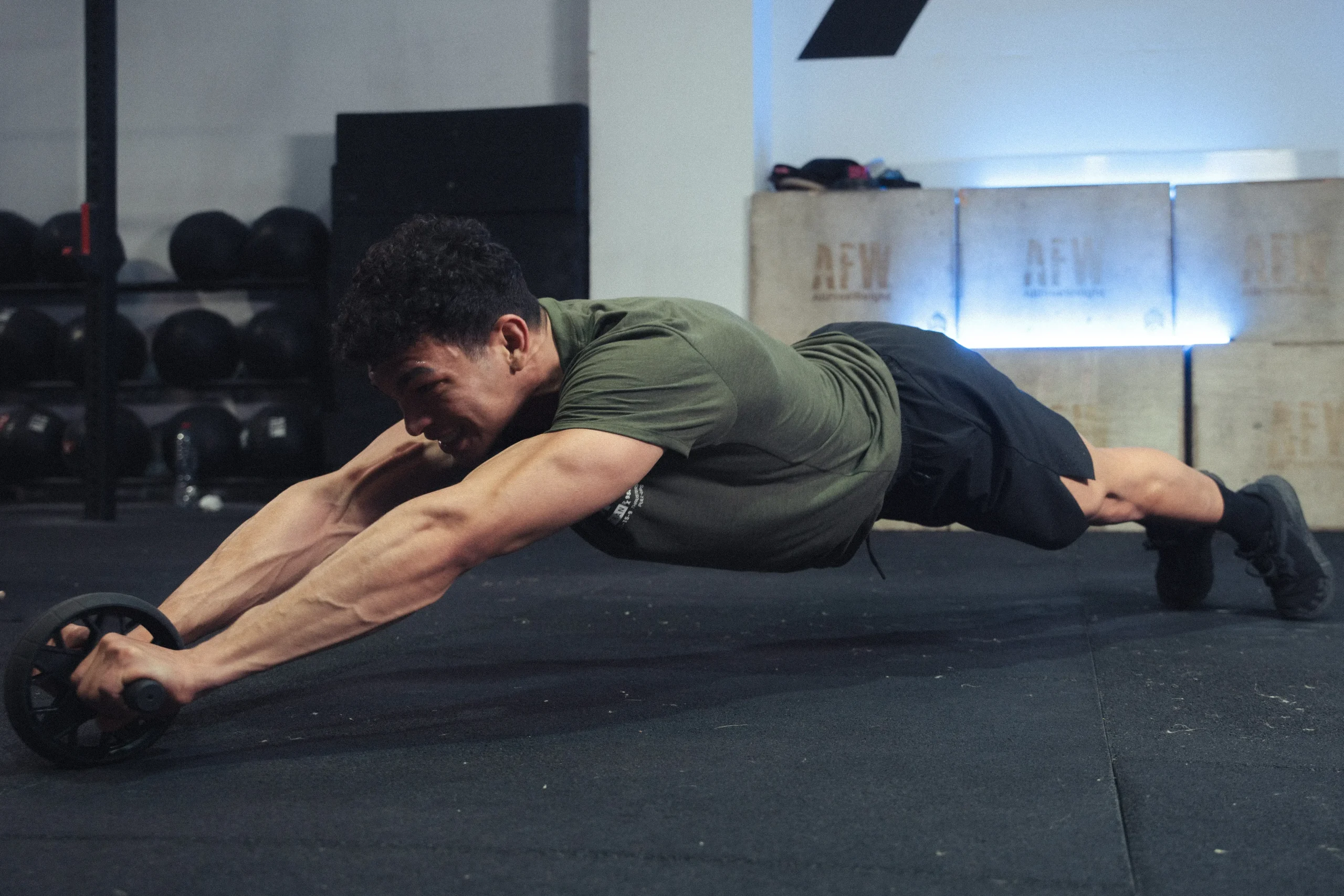
The simplest regression is a deliberately short rollout. Place the wheel a handspan in front of the knees, brace and move it only as far as you can reliably reverse. Another practical approach is to face a wall and let the wheel stop against it. Start close enough that a clean position is easy; increase the distance by a few centimeters as control improves. A wall is a repeatable limiter, not a license to crash the wheel into it.
A towel under the knees changes comfort but not the exercise’s basic leverage. A resistance band anchored overhead or behind the body can assist an advanced rollout, but only if the anchor is secure and the resistance trajectory is predictable. Some wheels have spring-assisted return mechanisms; those may make the return feel easier, yet do not assume the same assistance across different products. If equipment changes, recalibrate your range before comparing performance.
Use a three-part quality standard. First, the rib cage and pelvis remain in a similar relationship throughout the reach. Second, the wheel returns without a bounce or sudden hip snap. Third, the final repetition looks substantially like the first. If all three criteria hold across two sessions, add a little distance or one repetition next time. If they fail, repeat the current level rather than forcing progress.
It helps to distinguish movement difficulty from muscle fatigue. A beginner may be limited by shoulder mobility, wrist comfort or confidence before the abs approach a training limit. Adjusting hand position, stopping earlier or temporarily substituting a stable plank gives you room to build the pattern. A challenging but controlled partial repetition is real training, not an incomplete version of somebody else’s workout.
Kneeling, Standing and Equipment-Free Alternatives
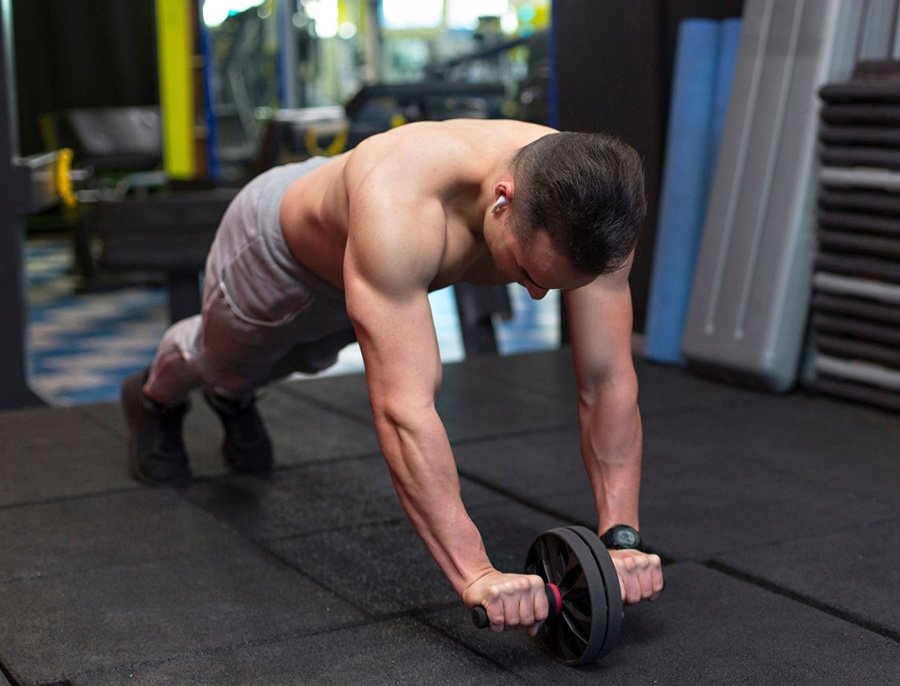
Kneeling rollouts should remain the default for most recreational lifters. They allow precise range control and enough challenge for meaningful progression. Moving the knees farther from the wall or extending the arms farther changes leverage without requiring external weight. Better tension is often available before the deepest possible reach.
Standing rollouts are a substantially harder variation, not a compulsory graduation. The wheel starts on the floor in front of your feet, your body opens into a much longer lever and the movement requires strength through a demanding shoulder position. Even very strong squatters and deadlifters may not control it safely. Build toward it with shallow standing reaches against a wall or a well-designed incline, and return to kneeling if your spine position breaks.
Stability-ball rollouts can offer a softer, more controllable starting point. Place forearms or hands on a firm ball and move it only a short distance away while bracing. Forearm planks offer a static anti-extension option with no moving equipment. Body saws—sliding the feet or forearms slowly while maintaining a plank—add a modest moving lever, although surface friction can alter the load. Each option trains some overlapping qualities without being identical.
In equipment comparisons, an ab wheel’s appeal is portability and a clearly increasing challenge as your arms travel forward. It does not replace a full program of varied trunk movement. Cable crunches may be easier to load progressively for spinal-flexion training; Pallof presses emphasize resisting rotation; hanging knee raises require their own shoulder and hip control. Choose the tools for the qualities you want rather than treating one tool as the entire definition of “core.”
Equipment Worth Exploring
Explore equipment, accessories and gear from our carefully selected range.
VOLTRA
Compact digital cable trainer with smooth, adjustable resistance.

Go-Tone Pro
Portable digital cable trainer with up to 66 lb (30 kg) of adjustable resistance.

VForce Wall Trainer
Space-saving wall-mounted functional trainer with pivoting cable arms and variable resistance ratios.


GymPin Ergo Handles
Pair of ergonomic cable handles shaped for comfortable triceps and pulling exercises.


A Six-Week Rollout Plan That Fits Around Lifting
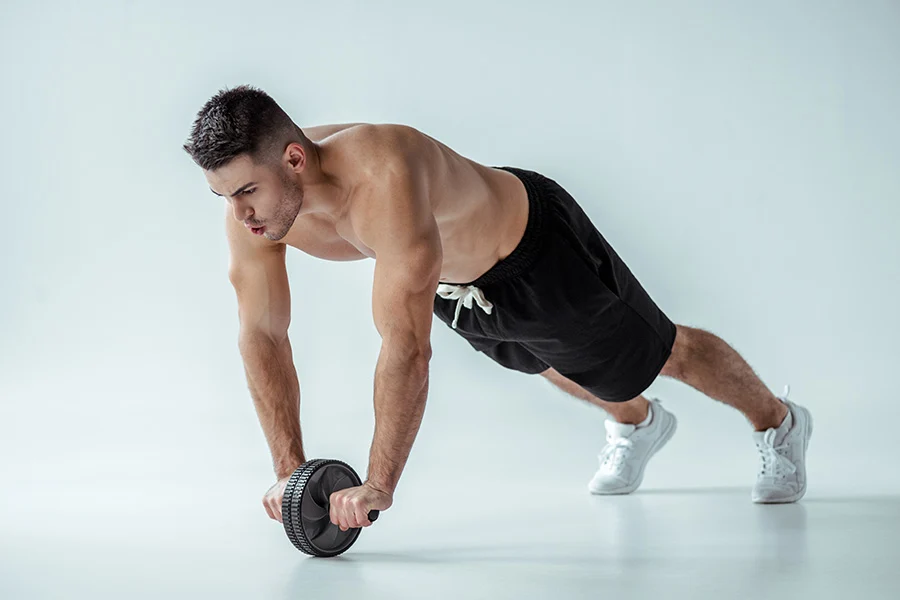
Train rollouts two or three times weekly after the main lift or on a separate short accessory session. The following progression is an example, not a promise that every beginner will reach a full extension in six weeks. If a phase makes your back or shoulders compensate, repeat it. Give yourself at least a day between demanding rollout sessions at first, and keep overall abdominal work sensible when heavy squats, carries and loaded hinge exercises are also in the week.
| Week | Sets × reps | Focus |
|---|---|---|
| 1 | 2 × 4–6 | Short kneeling range; learn a firm brace and a quiet return |
| 2 | 2 × 6–8 | Repeat the same distance without a rib flare or bounce |
| 3 | 3 × 5–7 | Move the wall target a little farther away if technique holds |
| 4 | 3 × 6–8 | Keep a controlled pause near the end of the clean range |
| 5 | 3 × 6–10 | Progress distance only if every rep is smooth |
| 6 | 3 × 8–10 | Consolidate clean range; compare filmed reps from week 1 |
Warm up with a few easy dead bugs or plank breaths and one short trial rollout. Use controlled repetitions rather than high-speed burnout sets. Rest roughly 60 to 120 seconds, longer if you need it to repeat the same quality. When the final two repetitions are still clean, add a small amount of range at the next session. If fatigue from deadlifts or another demanding workout makes your trunk position unreliable, reduce the set count or shift rollouts to another day.
Track four things: distance to the wall, clean reps, number of sets and whether you felt any back or shoulder symptoms. Video from the side can expose the quiet lower-back sag that is hard to notice from above the wheel. Resist the urge to increase distance, reps and weekly frequency simultaneously. Gradual progression makes it easier to attribute improvements to a specific change and distinguish muscular fatigue from technique problems.
Where Rollouts Belong in a Stronger Training Program
The ab wheel belongs near the end of a session for most lifters. A heavy squat or deadlift benefits from fresh trunk bracing; fatiguing it first with difficult rollouts may reduce the quality of your main sets. If you are using rollouts as a technique drill rather than a hard accessory, a very small low-fatigue dose earlier can be reasonable. What matters is how the exercise affects the session around it.
Pair an anti-extension movement with different trunk demands instead of stacking five nearly identical abdominal exercises. One option is rollouts on Monday and Thursday, a side plank or loaded carry on another day, and a measured cable crunch on a separate accessory slot. Rotational or anti-rotational exercises may also fit, especially for athletes who need to transfer force between the hips and shoulders. These are examples, not a magical sequence of exercises.
Visible abdominal definition depends substantially on overall body fat and individual muscle development. An ab wheel cannot selectively remove fat from the stomach, and feeling a strong burn does not mean more fat is being burned there. Nutrition, consistent resistance training, sleep and a sustainable training schedule remain central. Training the abdominal muscles can build strength and size, but the wheel alone cannot settle the question of appearance.
Use the same standards you would use for a squat or a curl: repeatable range, honest sets, gradual progression and no ego-driven technical collapse. When kneeling rollouts become manageable, you do not have to chase standing rollouts immediately. More consistent repetitions at a slightly longer lever, a controlled pause or an extra set may be enough stimulus. A steady six-week progression built on sound reps is more valuable than one impressive-looking repetition that you cannot reproduce.
Funny Gym Shirts & Workout Gear
Funny gym shirts, tanks, hoodies and workout gear for lifters who like training hard.


Calisthenics Workout Sweatshirt
Add a playful “Calisthenics” touch to your casual rotation.


Hardcore Gains Meme – – Fire Top & T-Shirt
Bring “Hardcore Gains Gym Meme” humor to your next gym day.

Calisthenics Evolution Hooded Pullover for Bodyweight W Hoodie
Keep it laid-back with a little “Calisthenics Evolution” attitude.

Lord of the Calisthenics Rings Gym | Gollum My Precious Hoodie
Show off your lifting humor in a laid-back “Lord of the Calisthenics Rings” hoodie.

Calisthenics Hanging Out Hoodie
Make your off-duty look more fun with “Calisthenics Hanging Out”.

Big Dip Energy Crewneck Pullover Sweater for Calistheni T-Shirt
Show some gym-day personality with “Big Dip Energy”.

Turn Off Gravity Funny Calisthenics Gym Decal for Water Sticker
Give your everyday gear a playful “Turn Off Gravity Funny Calisthenics” twist.

Be Stronger Than Your Excuses Motivational Workout for Sticker
A fun “Be Stronger Than Your Excuses” touch for bottles, laptops, and lockers.