Advertising disclosure: This page includes affiliate product links that may earn us a commission, as well as products from our own store.
The Copenhagen plank looks like an unusually difficult side plank, but its main challenge is somewhere many lifters neglect: the inner thigh. It can strengthen the hip adductors without a cable stack or an adductor machine. An often-repeated injury-prevention statistic is also worth unpacking, especially because a separate high-profile research review was withdrawn in 2026.
Here is how to use this movement intelligently, what an actual season-long football trial measured, and how to start without turning your first set into a groin-strain contest.
Why the Copenhagen plank is different from a normal side plank
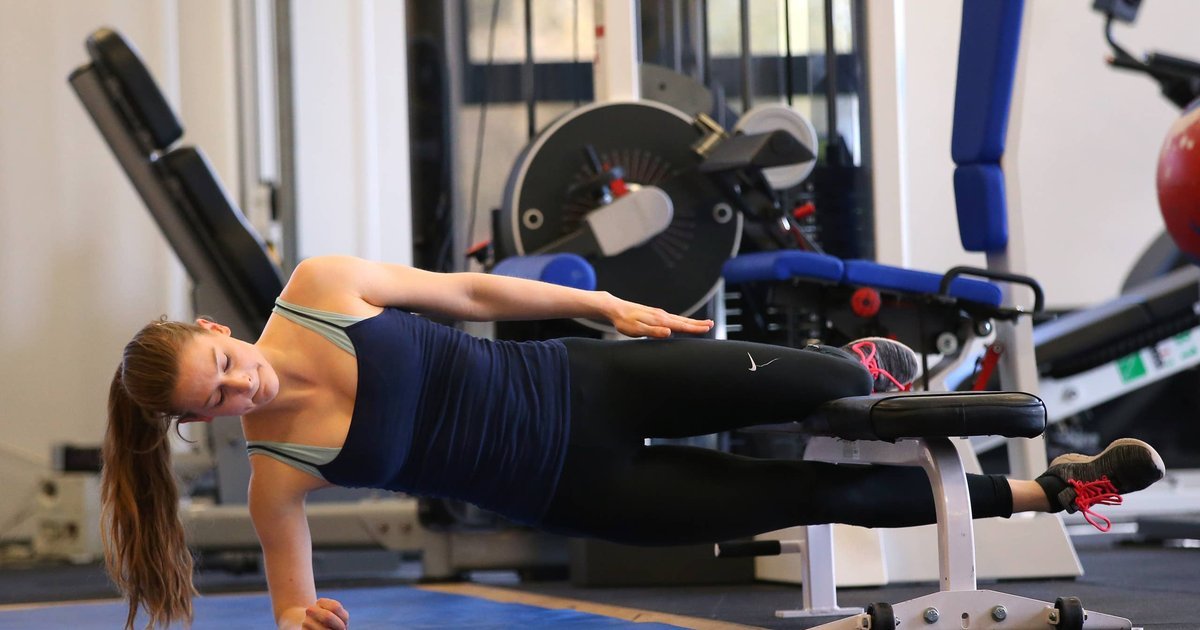
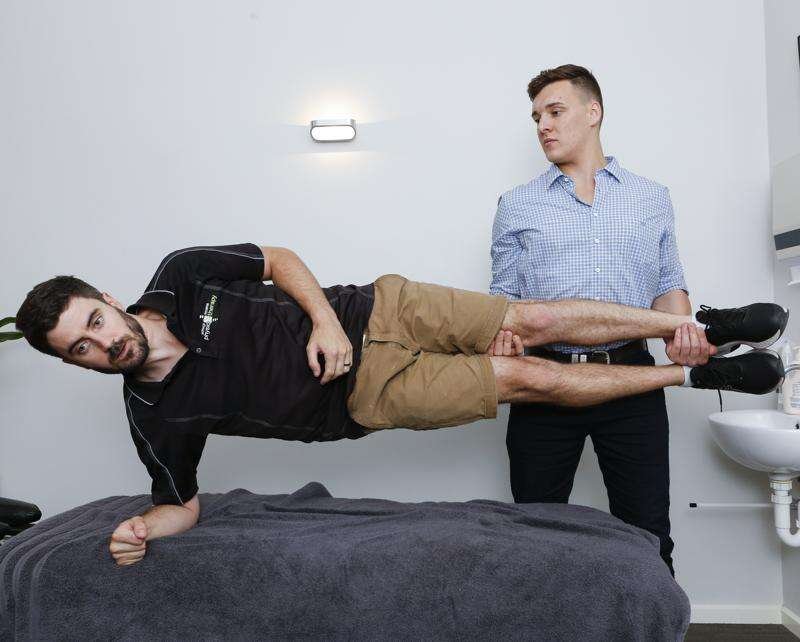
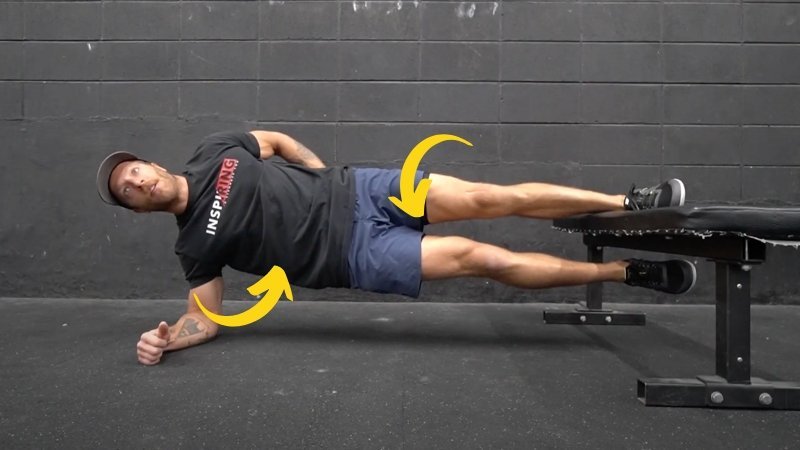
A regular side plank uses the side of your trunk to resist sagging toward the floor. In the Copenhagen variation, the inside of your upper leg presses into a bench while the body hangs to its side. That upper leg has to create hip adduction force to support much of the body. Your obliques, shoulder, gluteal stabilizers and supporting arm contribute to keeping the whole body aligned, but the adductor demand is the distinctive feature.
Those inner-thigh muscles help pull the leg toward the midline and contribute to controlling the pelvis when you run, cut, change direction or stand on one leg. They also play roles in squatting and other lower-body patterns. Training them directly can fill a gap in a program that already includes squats, hinges and calf work yet rarely challenges adduction itself.
This is not an ab exercise that happens to involve a bench. Treat it as focused lower-body strength work that also tests your side-plank control. The sensation should be muscular effort through the inside of the supporting thigh, not a sharp pinch at the groin or a tug through the knee. A shorter lever makes that distinction much easier to learn.
You need a sturdy flat bench, a mat and enough clear floor space. You do not need maximal bodyweight leverage on day one, and there is no prize for continuing once your pelvis twists or your shoulder collapses. Build quality positions first.
Short lever and long lever: the support point changes everything
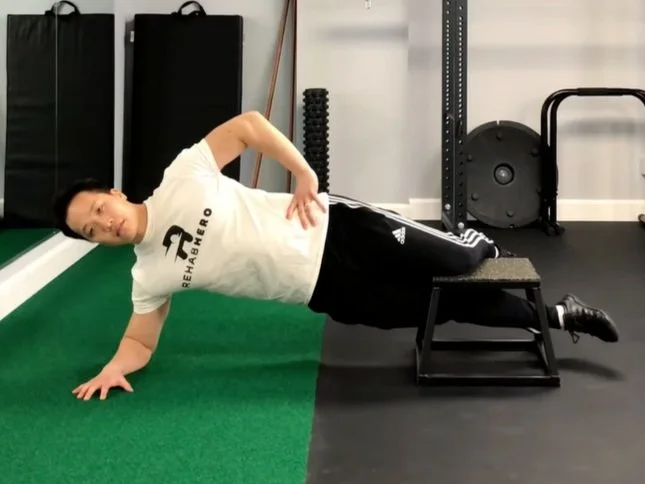
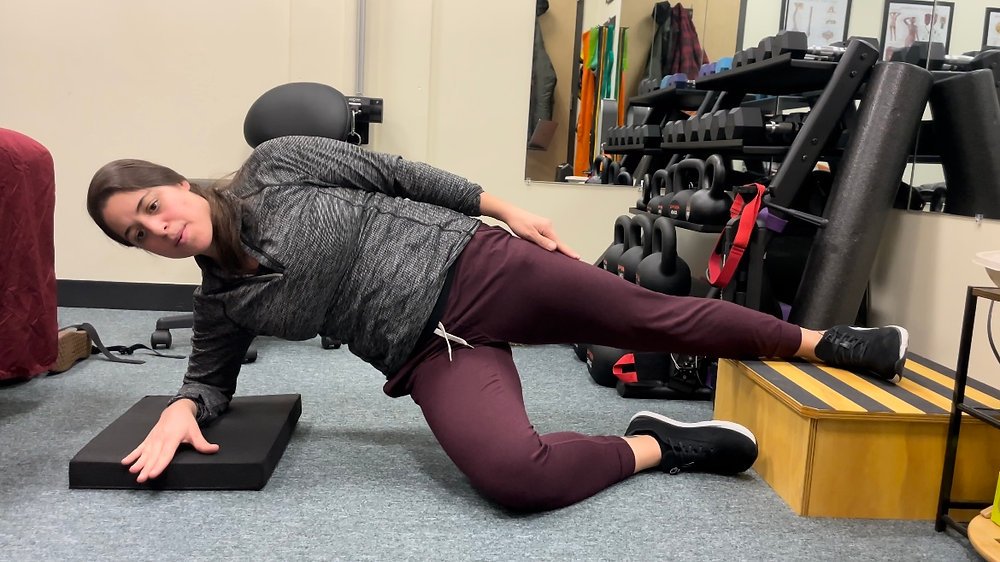
For the short-lever version, lie sideways beside a stable bench and place the inside of your upper knee or lower thigh on the pad. Put the supporting elbow roughly underneath the shoulder with the forearm pointing forward. Brace, push the supported leg down into the bench and raise your hips into a straight line. Bend the bottom knee if necessary so it can provide a little assistance while you learn.
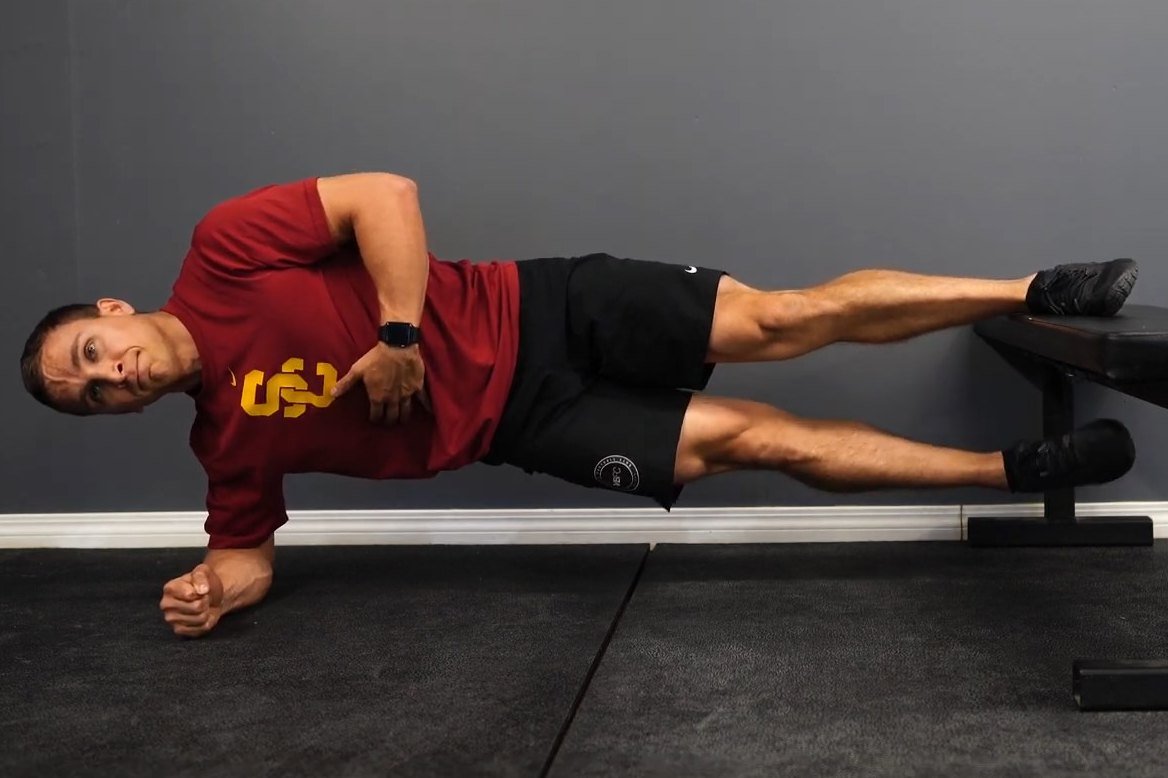
Once you can hold that position without a twisting torso, sagging pelvis or discomfort, gradually move your support point farther down the top leg. The long-lever version uses the ankle or lower shin on the bench while the lower leg may hover under it. Your adductors must then resist a longer external lever; the exercise becomes substantially harder even though you have not added a kilogram.
Do not rush from a five-second knee-supported hold to ankle support because a video makes it look impressive. You can build volume through brief holds first, then longer controlled holds, then repetitions that lower and raise the hips. Changing only one difficulty variable at a time makes both progress and aggravation easier to interpret.
The bench height should let your shoulder, elbow, pelvis and supporting leg line up without forcing an awkward twist. A low, firm step can be more sensible than a high bench for a beginner. And if your bottom leg taps the floor while learning, that is a useful regression rather than a failed repetition.

Equipment Worth Exploring
Explore equipment, accessories and gear from our carefully selected range.


FID Bench MAX
Adjustable bench offering flat, incline, and decline positions + adjustable headrest.


Power Tower
Freestanding pull-up and dip station with adjustable handles for bodyweight training.

Ultimate Power Seat
Rack-mounted power seat for lat pulldowns, leg extensions, and leg curls.

Foldable Wall Rack
Wall-mounted folding squat rack designed to save floor space between workouts.


What the 35-team football trial actually found
A large cluster-randomized football study involved 35 semi-professional teams and 652 male players. Eighteen teams were assigned an adductor-strengthening program built around a single progressive exercise, while 17 teams continued their usual training. The intervention was scheduled three times weekly during a six-to-eight-week preseason and then once weekly during a 28-week competitive season.
Season-long weekly reports found an average prevalence of groin problems of 13.5% in the intervention teams and 21.3% in controls. The analysis reported a 41% lower odds of reporting groin problems, with an odds ratio of 0.59 and a confidence interval that did not cross one. This is genuine supportive evidence for the program in that population, not a universal promise that any gym user who performs the plank becomes 41% less likely to get hurt.
Two distinctions matter. First, the trial studied a structured progressive program integrated with football training and followed symptoms across a season, not a one-off maximal plank hold in the gym. Second, groin problems were tracked as reports of pain and effects on participation; the number cannot simply be translated into prevention of every medically confirmed tear.
The athletes’ sport, exposure to sprinting and cutting, adherence to sessions and prior injury history all affect how those findings might transfer to someone whose main goal is muscle growth or powerlifting. The practical lesson is more conservative: strengthen the adductors gradually and consistently, without turning a promising study result into guaranteed injury insurance.
The evidence got messier in 2026—and that matters
It is tempting to count every paper containing the words Copenhagen adduction as another vote for injury prevention. Research quality is not a scoreboard. A separate systematic review and meta-analysis released in 2025 was formally retracted in April 2026 after errors were found in how it handled the results of some included trials. Its pooled conclusions should not be used to settle the question of how much injury risk changes.
That retraction did not erase the original team trial, nor did it prove the exercise is ineffective. Other independent randomized-trial syntheses report improvements in eccentric hip-adduction strength, particularly among football players. Yet getting stronger on a particular test is not identical to preventing all future groin injuries, and the exact best dosage for every athlete is still unsettled.
For a general strength trainee, a more defensible goal is measurable adductor capacity: longer technically clean holds, better control during the lower-and-raise variation, or more consistent sets without irritation. For a competitive field-sport athlete, the exercise belongs inside a wider plan that addresses running load, sprinting, change-of-direction mechanics, strength and medical history.
Do not throw out useful exercises because research changes, but do update the size of the claim. Copenhagen training has a plausible strength-training role and encouraging prevention data in some settings; it is not a substitute for a full conditioning program, diagnosis or rehabilitation.

Leg Day Shirts & Workout Gear
Leg-day gym shirts and workout gear for lifters who never skip squats, lunges and lower-body punishment.

Shirt Never Skip Leg Day Flamingo Meme – Gymbros, & T-Shirt
Rep “Never Skip Leg Day Flamingo Meme” humor in and out of the gym.

Everyday Is Leg Day Octopus Meme & Top T-Shirt
Show some leg-day attitude with a playful “Everyday Is Leg Day Funny Octopus” tee.

I Love Squats Valentine'S Day Shirt – & T-Shirt
Heavy lifts, good laughs, and a little “I Love Squats Valentine's Day” energy.

My Leg Hurts Leg Day , Meme Lovers & Bros Casual T-Shirt
Bring “My Leg Hurts” humor to your next gym day.


Shirt Meme – Leg Day Yesterday Wheelchair Top T-Shirt
Rep “Funny Gym Shirt Meme” humor in and out of the gym.


Motivation – Barbell Meme Strong , Leg Day Squats & T-Shirt
Make gym days more fun with “Gym Motivation” style.

Negative Leg Day Review 1 Star Not Recommended Decal Sticker
Stick a little “Negative Leg Day Review” humor on your favorite gear.

Captain Deadlift Leg Day Tee
Show some superhero attitude with a playful “Captain Deadlift Leg Day” tee.
How to perform clean repetitions without compensating
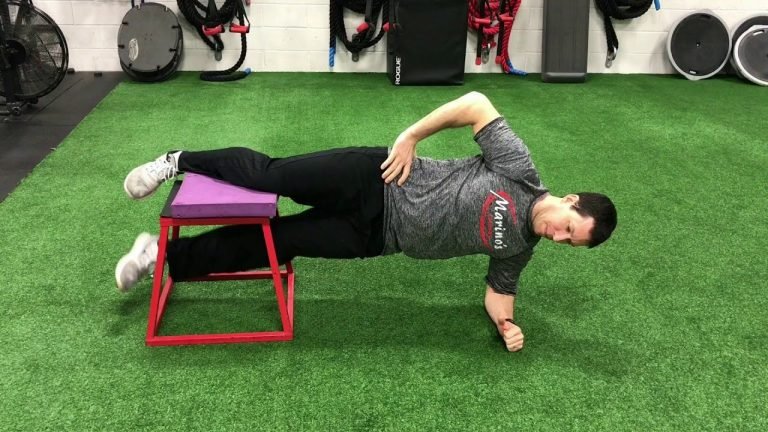
Line up perpendicular to the bench and set the forearm beneath the shoulder. Rest the inside of the top knee on the bench for your first set, with the hip, shoulder and supporting elbow stacked as comfortably as possible. Before lifting, lightly brace the abdomen and press the top leg downward into the pad. Raise the pelvis, leaving the lower leg on the floor for assistance if needed.
Check the line from ear through shoulder and hip toward the knee. Hold a steady, manageable position while breathing rather than trying to outlast a breath hold. The supporting shoulder should not feel jammed into the ear. If you cannot maintain the position for a clean five-to-ten-second effort, bring the bench closer to your hip, give the bottom foot light support or shorten the set.
When you are ready for dynamic reps, lower the pelvis only as far as you can control, then push through the supported inner thigh to return to neutral. A quick bounce from the floor makes the repetition easier to count and harder to use. Keep the movement smooth and stop before loss of trunk alignment.
Switch sides and compare quality rather than assuming the two hips need identical loads from the start. Uneven effort is common; persistent pain is not a cue to push harder. If the forearm or shoulder fails before the adductors get challenged, try a different arm angle or a more comfortable support height instead of compensating with a twisted spine.
Five mistakes that hide the adductor work
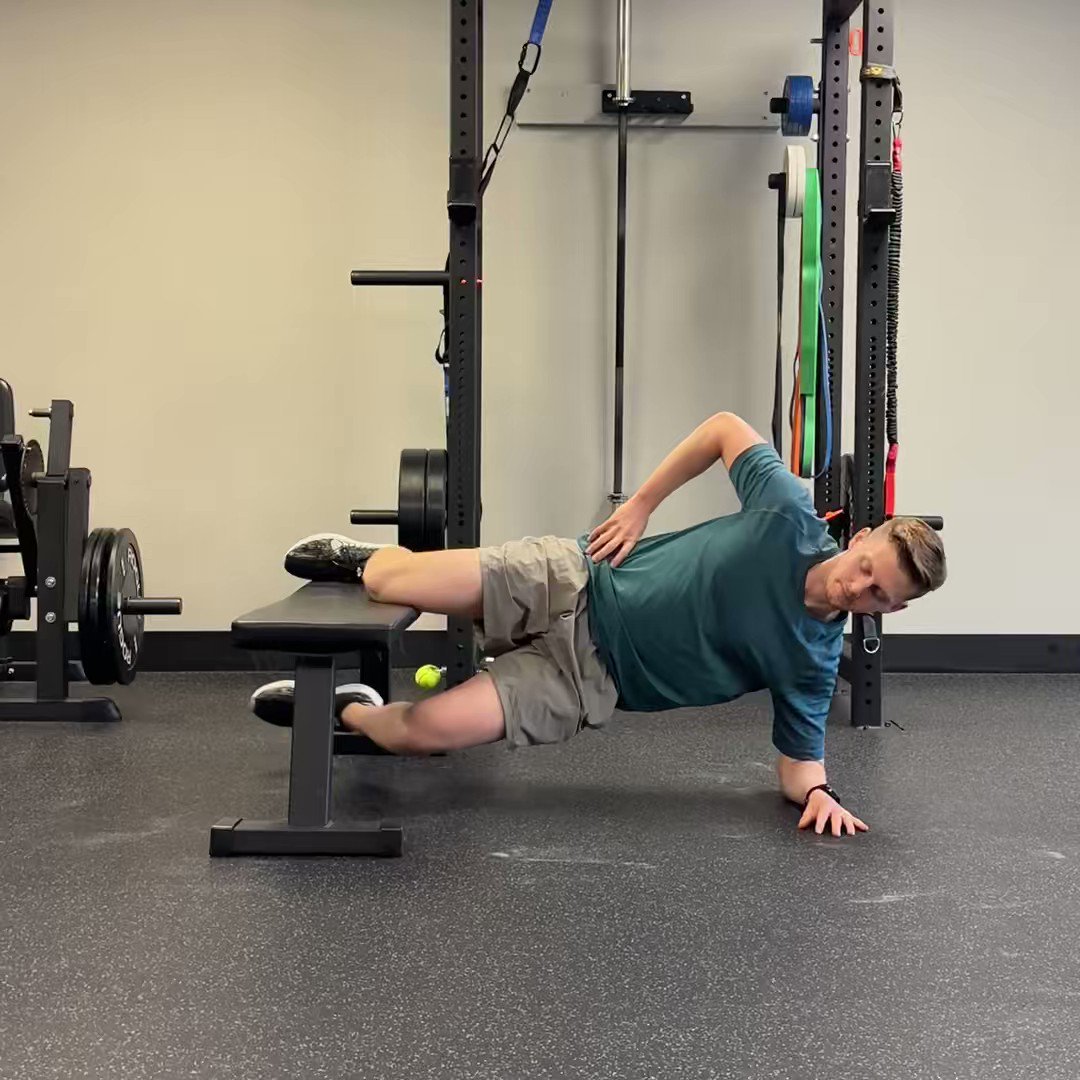
Starting at the ankle: The long lever is often much harder than it appears. Begin supported near the knee, especially if your adductors rarely receive direct work. Moving the support point outward is a meaningful progression even without extra weight.
Rolling the pelvis forward: When the hips rotate toward the floor, you can change the stress away from the intended position. Keep the front of the torso mostly facing forward and use a mirror or short side-on video to spot twisting.
Turning the set into a maximal hold: Hanging on while the hips drop turns a crisp strength set into a demonstration of fatigue. Stop while you can still breathe and hold a repeatable line. Add time only after the current time is genuinely clean.
Ignoring the supporting arm: A collapsed shoulder can end the set before the target muscles work. Drive the forearm into the floor and keep the upper arm stable without aggressively shrugging. A thicker mat may improve comfort but cannot replace positioning.
Treating groin pain as normal soreness: Local muscular fatigue is expected; sudden sharp pain, pinching or symptoms that linger or worsen are reasons to stop and seek qualified assessment. If you are returning from a groin injury, work with a clinician rather than copying an aggressive team-sport progression.
Finally, keep the exercise in perspective. A hip-adduction machine, side-lying adduction, split squats or cable adduction may also help you build strength, especially when the bodyweight lever is inconvenient. The useful exercise is the one you can perform consistently and progress safely.
Equipment Worth Exploring
Explore equipment, accessories and gear from our carefully selected range.

Standing Abductor
Plate-loaded standing hip abductor for targeted outer-glute and hip-stability training.

Studio Glute Drive
Plate-loaded hip-thrust machine with supported back pad and adjustable foot platform.


HUSLA Leg Extension Pad
Pad attachment designed to increase usable range of motion on compatible leg-extension machines.

Rubber Hex Dumbbells
Rubber-coated hex dumbbell pairs with a stable shape for home and commercial strength training.


A six-week Copenhagen plank progression for lifters
This is an illustrative beginner-to-intermediate plan, not the protocol from the football injury-prevention trial and not a rehabilitation prescription. Put the exercise near the end of two lower-body or accessory sessions per week, after your heavy squats or hinges. Leave recovery between sessions and choose the easier variation whenever form deteriorates.
- Weeks 1–2, own the short lever: Do two sets per side of approximately 8–12-second holds, resting as needed. Use knee or thigh support and a bottom-foot assist if you cannot hold the body level.
- Weeks 3–4, add controlled time: Progress toward three sets of 12–20 seconds per side, still at the short lever. Alternatively use two or three sets of four-to-six smooth lower-and-raise reps. Do not increase both duration and lever length in the same session.
- Weeks 5–6, make one variable harder: If sets remain crisp and pain-free, move the bench support slightly farther toward the shin or add a few controlled dynamic reps. Some lifters will still be best served by knee support; advancing is optional.
Record the support point, hold time or repetitions, and whether you had to tap the bottom foot down. Those details tell you more than an impressive-looking long lever with an uncontrolled pelvis. On days with hard sprints, lateral cuts or a lot of adductor work, lower the plank volume rather than stacking every stressor.
If your main goal is physique or general strength, two measured exposures can complement the adductor machine and your usual leg exercises. If you compete in a field sport, discuss the appropriate progression and symptom monitoring with your coach or physiotherapist. No fixed plank time proves you are protected against injury.
Bottom line: Start with a stable knee-supported Copenhagen plank, respect the long lever, and build strength you can actually repeat. The injury-prevention numbers are worth understanding, not exaggerating; clean progression is the part you control.
Functional Fitness Shirts & Workout Gear
Functional-fitness shirts, tanks and workout gear for athletes who train strength, conditioning and everything in between.


High Rocks Functional Fitness Tee
Show some lifting attitude with a playful “Hyrox High Rocks Gym Bro” tee.


Vive La Resistance Bands Painting Meme – Resistance Ban T-Shirt
Rep “Vive La Resistance Bands” humor in and out of the gym.


Kettlebell Heartbeat Muscle Shirt Athletic Vest Workout Tank Top
Add some lifting attitude to training with “Kettlebell Heartbeat”.

Happy Kettlebell Emoji Smiley Kettlebell for Fitness Lo Hoodie
Show off your gym-girl humor in a laid-back “Happy Kettlebell Emoji” hoodie.

Live Love Lift – Gymbro Meme & Gains – Shirt T-Shirt
Rep “Live Love Lift” humor in and out of the gym.

Anti HYROX HYROX Club Meme Shirt Gymbro T-Shirt
Make gym days more fun with “Anti HYROX HYROX Club” style.