Advertising disclosure: This page includes affiliate product links that may earn us a commission, as well as products from our own store.
Can a Smith squat and a free-weight squat feel equally hard but leave different fatigue behind? A 2026 comparison in 19 strength-trained men suggests yes. Here is what the researchers actually measured, what the data cannot tell us about growth, and how to choose the right squat for a demanding leg-training week.
What the 19-lifter squat comparison actually tested
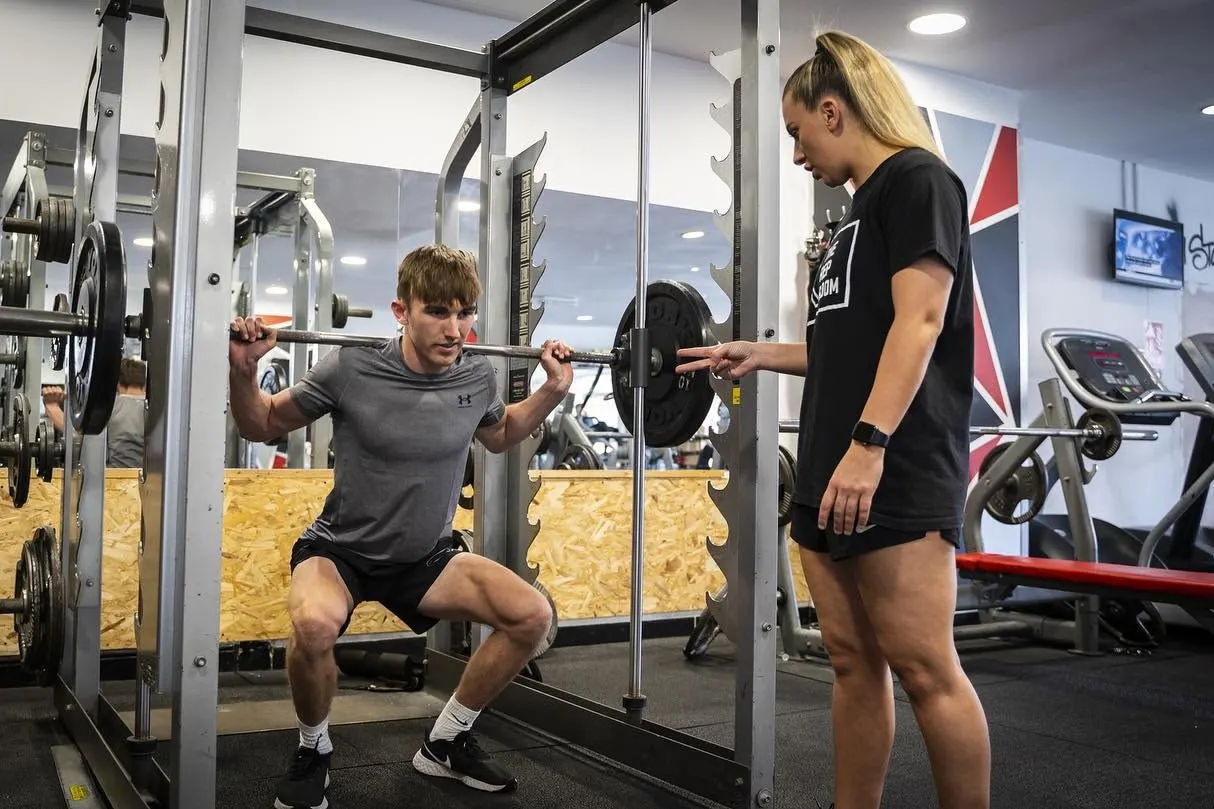
Two squat workouts can feel almost identical but leave different types of fatigue behind. In a randomized crossover experiment, 19 experienced young men completed one free-weight back-squat session and one Smith machine squat session. The prescription stayed the same in both conditions: four sets of nine repetitions at 70 percent of the respective one-repetition maximum. What changed was the training implement, rather than the number of sets or intended relative intensity.
These were not novices learning the squat from scratch. The group averaged about 23.5 years of age and 4.7 years of strength-training experience. Each participant took part in both squat conditions, helping researchers compare the responses within the same person. That design is useful because differences between individuals in skill, strength and recovery cannot so easily masquerade as a difference between exercises.
The research team measured three related but separate outcomes. Bar-velocity loss during the work sets provided a mechanical fatigue indicator, repetitions in reserve gave a subjective measure of effort, and tests of knee-extension force and neuromuscular activation described how the quadriceps functioned after the session. These are not interchangeable measurements, and each tells a different part of the training story.
The central finding was not that Smith squats felt dramatically easier. Measures of how the sets moved and how hard they seemed did not differ significantly between conditions. Yet a more detailed post-workout examination identified greater central and peripheral knee-extensor fatigue after the free-bar session. That finding is worth considering when an athlete is trying to distribute hard leg training across a crowded week.
Central fatigue, peripheral fatigue and why the difference matters
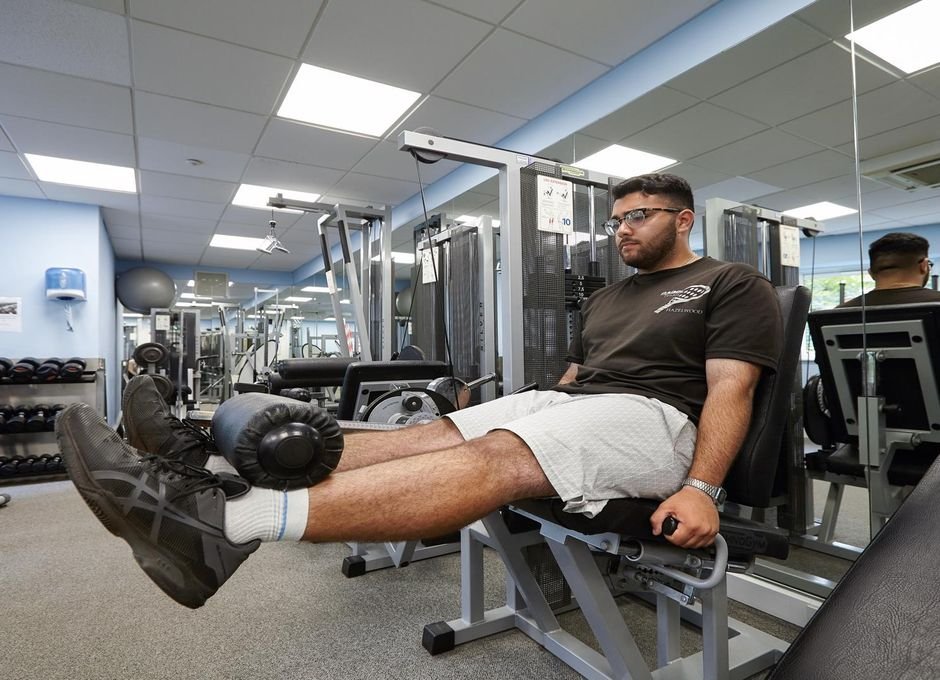
Peripheral fatigue refers to a temporary decline in the muscle’s ability to generate force. Central fatigue is a decline in the nervous system’s ability to fully activate the working muscle. Neither category can be reliably diagnosed by looking at a flushed face or listening to someone describe an intense burn. A hard set may create several kinds of fatigue at once, and no single sensation tells us how much of each is present.
The study used a twitch-interpolation technique during an isometric single-leg knee-extension test. Electrical stimulation assists the assessment of voluntary activation and contractile function, allowing researchers to estimate different contributions to force loss. This gives more specific information about the knee extensors than simply timing how quickly the bar travels during a squat repetition.
Why could the free-weight version show a different response? A barbell squat asks the lifter to control the load path while coordinating the trunk, hips, knees and ankles. A Smith machine constrains bar travel and alters the movement demands. Those differences offer a plausible explanation for the neuromuscular findings, but the experiment did not isolate balance or stabilization as the cause. Presenting that possible mechanism as established fact would go beyond the evidence.
For actual programming, the lesson is to distinguish effort during a set from the quality of work you can perform later. Track reps, load, range of motion and the next training session rather than assigning a universal fatigue score based solely on perceived exertion. A movement can be appropriate for muscle-building work even if it is not the most specific way to practice the free-weight back squat.
Similar bar speed and effort, but different fatigue afterward
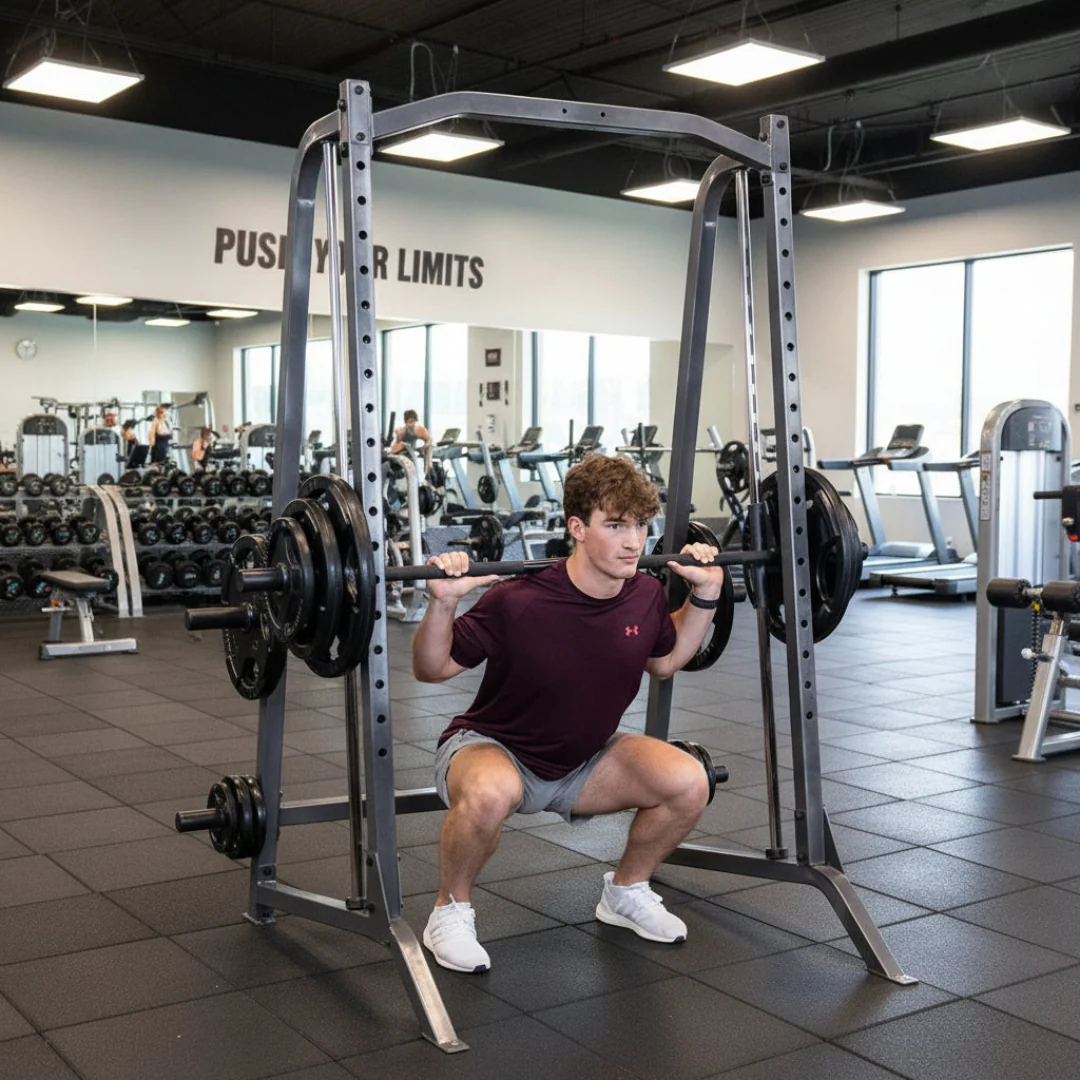
One of the most interesting results was the agreement between what participants experienced during the sets. Velocity-loss measures and estimated repetitions in reserve were not significantly different across free-weight and Smith sessions; reported comparisons had probability values from .136 to .313. The work looked similarly challenging through two familiar gym measures, even though the post-exercise neuromuscular tests did not agree.
Most of the measured central and peripheral fatigue variables were significantly more affected after the free-weight squats. That does not mean the Smith sets were effortless or that guided squats produce no fatigue. Four demanding sets at a moderate-to-heavy relative intensity are still real work. The result is more specific: the free-weight session placed greater immediate fatigue on the knee-extension system assessed by the researchers.
A competitive powerlifter cannot replace every free-bar squat with guided work and expect barbell skill to stay identical. In contrast, a bodybuilder who already has plenty of free-weight compounds may appreciate an exercise that allows additional quad work without exactly the same neuromuscular demands. Those are programming inferences, not directly measured long-term outcomes from this one-session experiment.
The practical question is not which squat is morally superior. It is whether the exercise provides the stimulus, skill practice, range of motion and recovery profile needed on that particular day. A Smith machine can be a useful tool for leg training, while the barbell remains important when competence at free-weight squats is itself the goal.

Equipment Worth Exploring
Explore equipment, accessories and gear from our carefully selected range.

VForce 3IN1
All-in-one rack combining an adjustable Smith machine, functional trainer, and free-weight station.

VForce 3IN1 Max
Six-post all-in-one rack with Smith machine, functional trainer, and variable-force cables.


Studio V-Squat
Plate-loaded V-squat machine for supported lower-body strength training.

GymPin Squat Wedges
Non-slip 15-degree squat wedges help elevate the heels for deeper quad-focused squats.

Squat Harness
Wearable harness for hands-free cable squats, sled work, and lower-body training.

Belt Squat Collar
Heavy-duty collar adapter for compatible belt-squat and landmine bar setups.


Open Hex Bar
Open-frame trap bar with multiple handles for deadlifts, carries, and lower-body training.

What the evidence does not prove about hypertrophy and injury
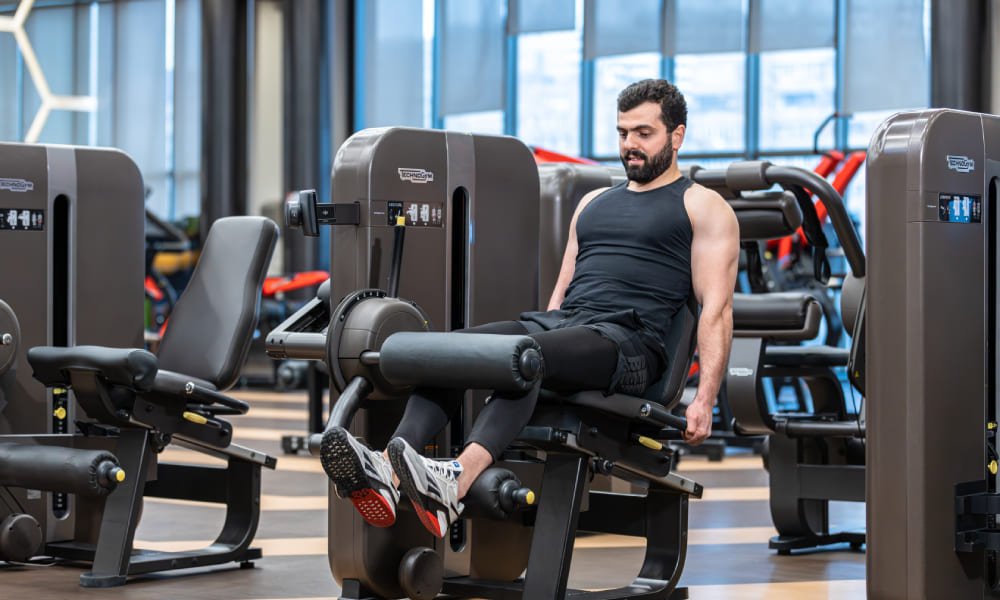
The trial compared acute fatigue responses. It did not assign lifters to months of Smith-only or free-weight-only training and then measure their quadriceps growth. It therefore cannot demonstrate that guided squats build more muscle, produce less soreness at every time point, or allow everyone to accumulate more productive weekly sets. Avoid turning an immediate laboratory difference into a permanent rule about hypertrophy.
A broader comparison of machine and free-weight resistance training has not identified a clear overall muscle-growth advantage for either equipment category. Strength changes are more specific: people tend to improve the particular skills and patterns they practice. Those findings provide context for a mixed approach, but they do not erase differences in machine design, exercise technique or individual joint comfort.
The sample was small and specific, consisting of 19 strength-trained young men. Results should not automatically be extended to untrained beginners, older adults, women, elite powerlifters, or every possible Smith setup. The fatigue measures also emphasized the knee extensors rather than a complete assessment of lower-body muscles and the entire nervous system. Different squat depths, bar paths, stances, footwear and training loads might change the pattern of responses.
Nor should greater measured central or peripheral fatigue be confused with injury risk. A more fatiguing task is not automatically an unsafe one. Sensible loading, competent technique, stable equipment and realistic recovery still matter. If a guided bar path irritates the hips or knees, that personal response counts more than a generic claim that all machines are inherently easier on the body.

Leg Day Shirts & Workout Gear
Leg-day gym shirts and workout gear for lifters who never skip squats, lunges and lower-body punishment.


Heavy Squatter Meme Squats & Gains Leg Day Wizard Top T-Shirt
Heavy lifts, good laughs, and a little “Heavy Squatter” energy.

OnlyGains Only Gains Meme – Booty & Leg Day Squats, T-Shirt
Show some leg-day attitude with a playful “OnlyGains Only Gains” tee.


Leg Day Is Calling You Squats, Deadlifts & Gains T-Shirt
Rep “Leg Day Is Calling You” humor in and out of the gym.

SwoleBob Squatpants – Leg Day Meme , Top & T-Shirt
Heavy lifts, good laughs, and a little “SwoleBob Squatpants” energy.

Leg Day No Thanks – Skip Legday Meme , Squats & T-Shirt
Heavy lifts, good laughs, and a little “Leg Day No Thanks” energy.

Negative Leg Day Review Leg Day Sucks Meme Squats, T-Shirt
Show some leg-day attitude with a playful “Negative Leg Day Review” tee.

Squats Booty Builder Barbie Meme Sweater Leg Day & T-Shirt
Show some gym-day personality with “Squats Booty Builder”.
How to program both squat variations
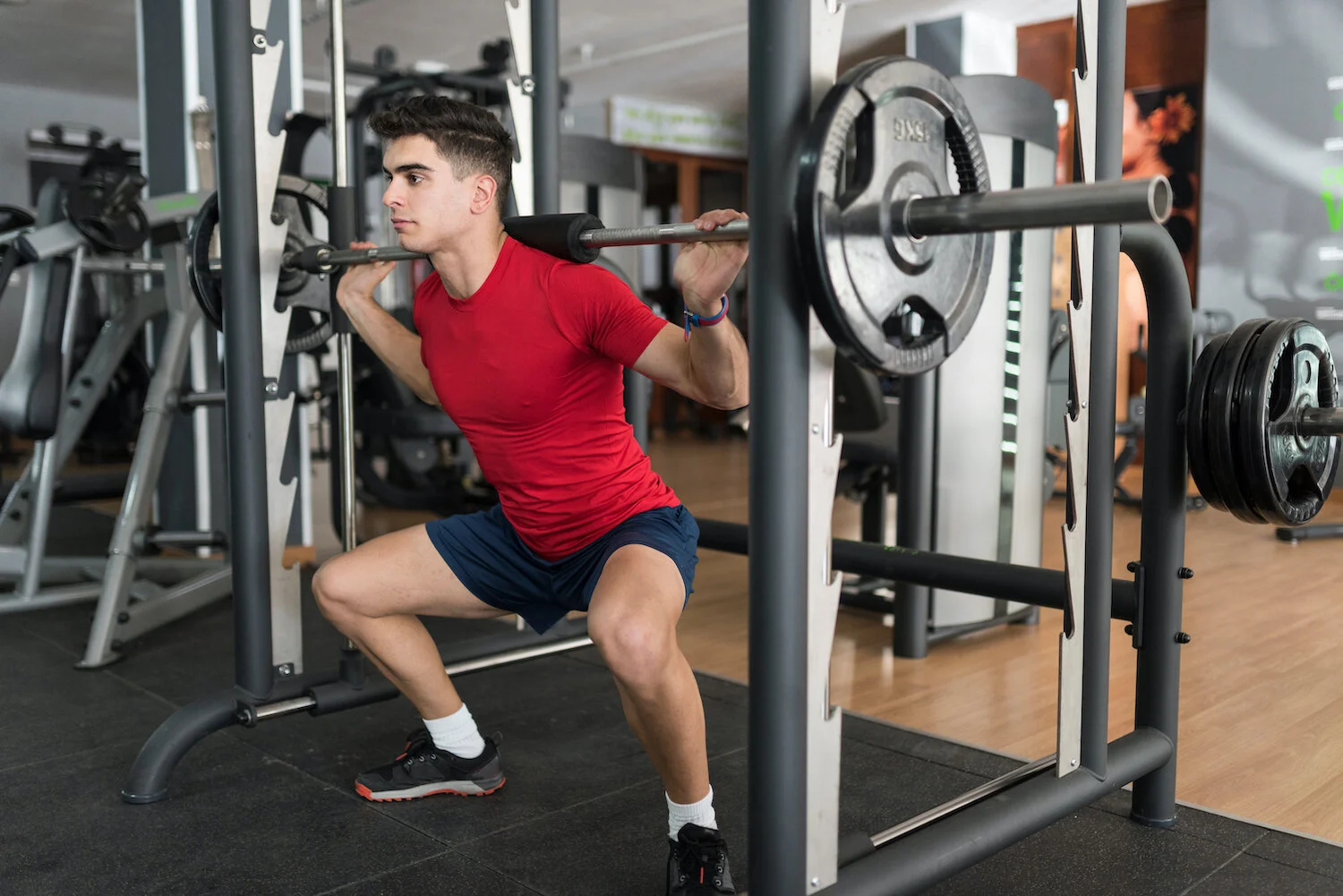
A productive option is to keep a free-weight squat as the primary strength movement and use a more stable guided variation for additional leg work. This is a practical application rather than a program tested by the researchers. The exact number of sets should reflect training age, previous workload, available equipment and the ability to recover before the next lower-body session.
On an early-week leg day, a healthy experienced lifter might perform three sets of six to eight controlled barbell squats, followed by a hip hinge and calf training. Later in the week, two to four sets of eight to twelve Smith machine squats, belt squats or leg presses could precede a hamstring curl and single-joint quadriceps exercise. That distribution creates room to practice the free bar while varying some of the demands of accessory work.
Keep several useful variables stable while experimenting. Set a repeatable squat depth, rest long enough to avoid technique falling apart, and estimate how many honest repetitions remain at the end of each set. For challenging squat work, a two-to-three-minute rest is a practical starting point, adjusted as needed to preserve bar control and output. Increase reps or load only when consistent movement quality justifies it.
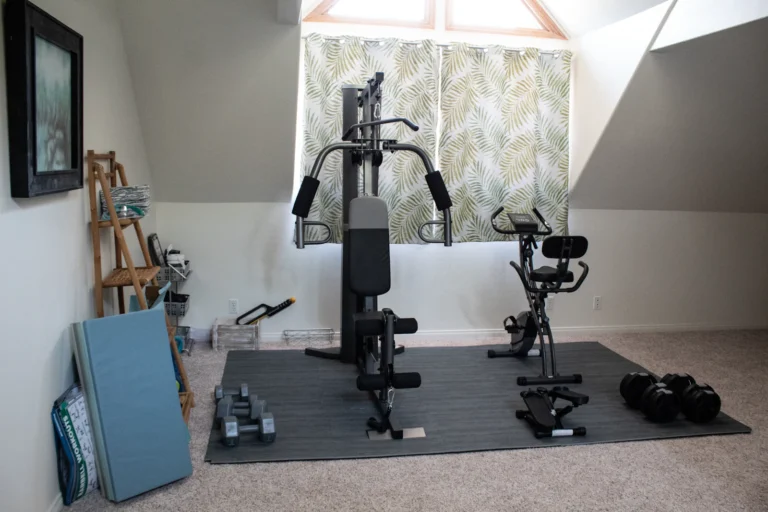
An all-in-one home-gym system with a Smith bar can simplify equipment choice, but it does not automatically improve the plan. Check ceiling clearance, safety stops, bar start height, usable bench space, plate clearance and the angle of the guided track. If your Smith system imposes an uncomfortable bar path, a split squat or belt-squat setup might be the better alternative for your legs.
A four-week way to monitor training quality and recovery
To learn something useful about your own squat selections, start with a simple log. Record the sets, reps, loads, rest periods, perceived repetitions in reserve and whether the working range of motion stayed consistent. Note how the second lower-body session of the week performs, not just whether the first workout left you exhausted. These observations do not replace laboratory tests, but they are more useful for day-to-day decisions than a vague sense that one movement feels harder.
For the first two weeks, keep the program familiar and note your normal response. In weeks three and four, if the equipment and technique are suitable, replace one accessory movement with a guided squat while keeping approximate working-set effort and total session volume similar. Do not change the entire exercise menu at once. Otherwise, any improvement or setback becomes difficult to interpret.
Watch for the quality of your last few repetitions, the ability to reach planned targets at the next leg workout, persistent joint discomfort, and the gradual progression of load or reps. If a machine squat creates discomfort or a consistently poor movement pattern, do not force it solely because a small study observed less knee-extensor fatigue in one setting.
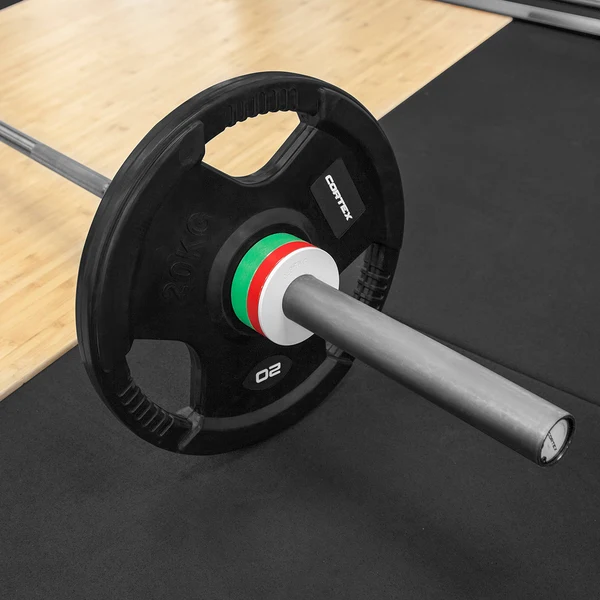
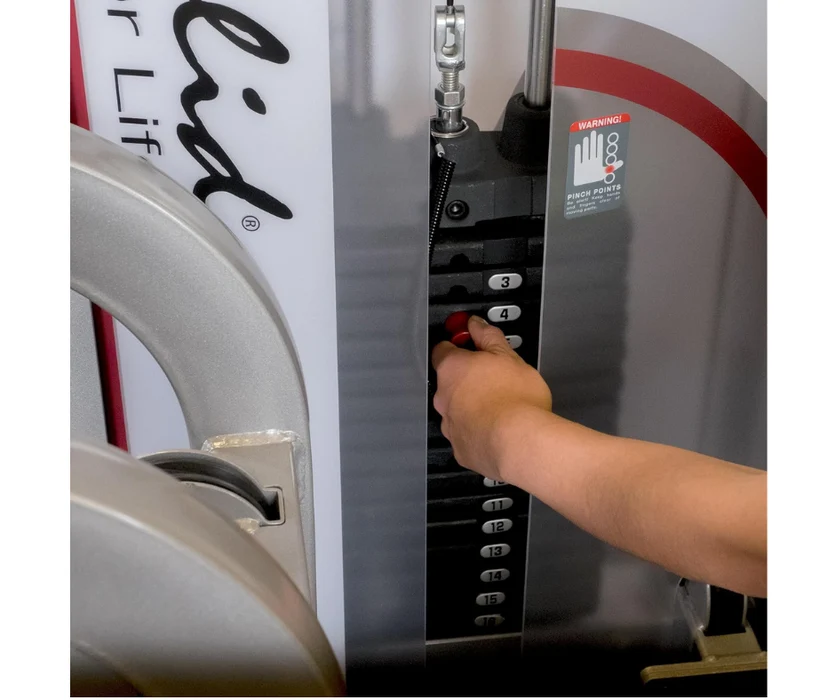
Microloading can make the comparison easier. Small change plates help barbell progressions, while a cable or stack-equipped machine may use selector pins to adjust resistance in larger fixed jumps. When the next jump feels too large, earn extra clean reps before adding weight. More predictable progression produces better information than chasing a different personal record with shortened depth every workout.
Equipment Worth Exploring
Explore equipment, accessories and gear from our carefully selected range.


Competition Plates
Competition-style bumper plates for Olympic lifts and loaded strength training.

Grip Plates
Rubber-coated weight plates with handholds for loading barbells and machines.


GymPin Mag Pin V2
Magnetic selector pin designed to secure weight selection on compatible pin-loaded machines.

FID Bench MAX
Adjustable bench offering flat, incline, and decline positions + adjustable headrest.
The decision: use the squat that fits the session
Select a free-weight squat when the purpose includes practicing the barbell squat, developing proficiency under an unconstrained load and preparing for that movement’s specific strength demands. Select a Smith squat when a guided path is comfortable and supports the desired leg stimulus within the rest of the training week. Neither choice needs to be defended as the single best squat for everyone.
Equipment fit matters especially in compact training spaces. A machine may advertise multiple workout stations, but the important questions include whether its Smith track feels natural, whether the available weight increments suit your strength, and whether the safety positions allow the depth you use. Measure the actual footprint, including the area required for bench movement and loading plates, rather than trusting a marketing photograph.
The tested comparison was four sets of nine at 70 percent of one-repetition maximum in 19 trained young men. Researchers saw similar bar-speed changes and reported exertion but greater measured knee-extensor neuromuscular fatigue after the free-bar condition. That result is interesting precisely because an ordinary workout log might not detect it, and precisely because a single acute trial still leaves substantial long-term questions unanswered.
Bottom line: you can keep heavy free-weight practice in a program while using guided or supported leg work to distribute training demands. If the Smith feels better and helps you accumulate consistently high-quality quadriceps sets, it is a legitimate tool. If your main target is barbell squat performance, keep the free bar in regular rotation. Judge the balance by months of progress, technical quality and recovery across the week.
Bodybuilding Shirts & Workout Gear
Bodybuilding shirts, tanks and gym gear for lifters chasing muscle, size, symmetry and the pump.

Movin Metal Shirt – Heavy Metal , Gymbro Meme Top & T-Shirt
Rep “Movin Metal” humor in and out of the gym.


Shirt – Lift O'Clock Bros – Meme & Gains T-Shirt
Rep “Lift O'clock” humor in and out of the gym.


Heavy Metal – , & Gains – Rock Music Meme Shirt T-Shirt
Rep “Heavy Metal” humor in and out of the gym.

Spread Cheeks Not Hate Leg Day & Glutes Lovers Meme Tank Top
Bring “Spread Cheeks Not Hate” humor to your next lifting session.

Stranger Gains – Lifting Things Getting Gains Crewneck T-Shirt
Keep things casual with a little “Stranger Gains” attitude.

Venomous Gains Muscle Shirt Athletic Vest Bodybuilding Tank Top
Bring “Venomous Gains” humor to your next lifting session.

Pizza Dumbbell Barbell Bulk T-Shirt
For laid-back days and pizza-loving humor: “Pizza Dumbbell Barbell”.

Bulking Season Bulk T-Shirt
Heavy lifts, good laughs, and a little “Bulking Season” energy.