Advertising disclosure: This page includes affiliate product links that may earn us a commission, as well as products from our own store.
Bench Press Velocity Loss: Stop Sets Earlier or Chase the Pump?
When a bench press set slows down, what should you do: rack the bar while each rep still moves cleanly, or keep grinding until the last rep is a fight? That decision changes how much fatigue you accumulate and potentially which training qualities you emphasize. It does not automatically decide whether you gain strength or build your chest.
An eight-week comparison involving 24 resistance-trained men put two ways of managing rep-speed decline against each other. Both approaches improved bench press performance. One showed a within-group improvement in chest-muscle size; the other showed a within-group improvement in the ability to move an unloaded bar quickly. The crucial detail: the researchers did not establish a statistically significant difference in the overall changes between the two groups.
Here is what that means for a lifter whose goals include a stronger bench, bigger pecs and enough energy to train again next week—without mistaking a small study for a universal rule.
Velocity loss is a fatigue signal, not a magic rep count
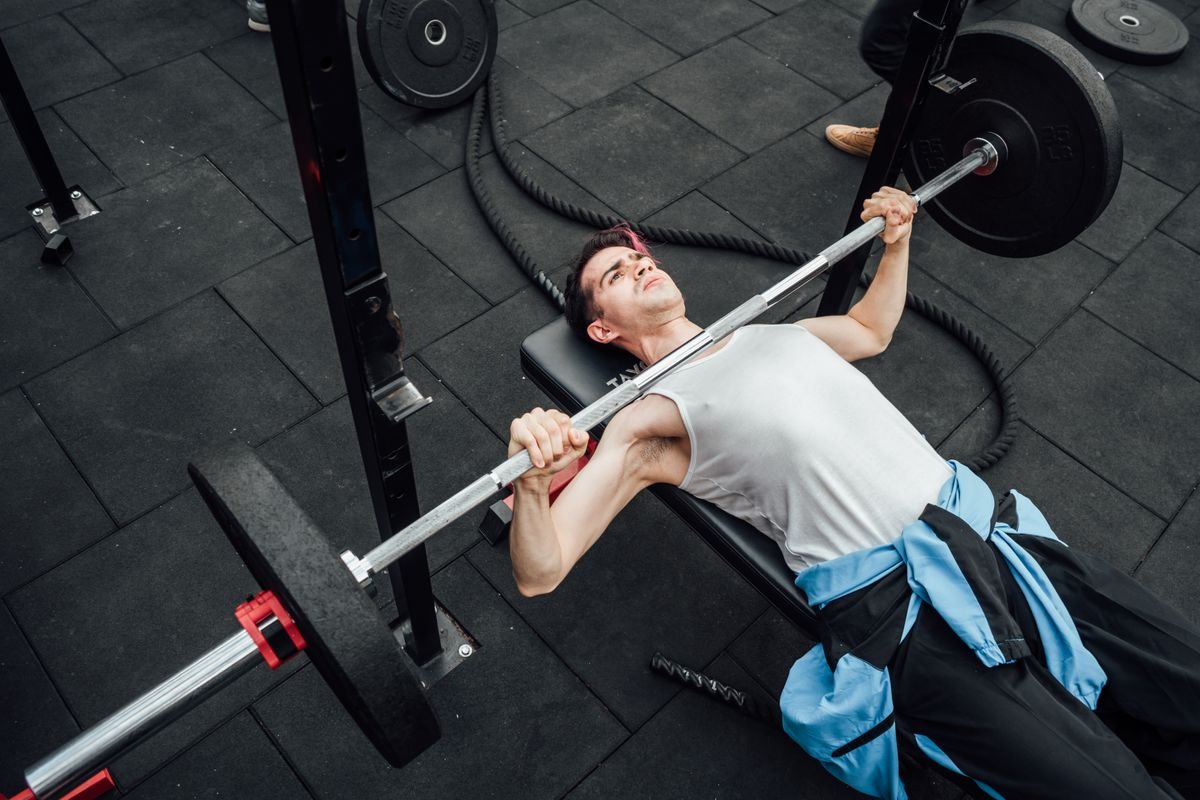
Velocity loss describes how much slower a repetition becomes compared with an earlier, faster repetition in the same set. If your fastest rep moves at a given speed and a later one is about a quarter slower, you have crossed roughly a 25% velocity-loss threshold. A sensor can measure it directly; without one, you can still understand the basic principle by noticing whether a rep snaps upward or crawls. That observation is less precise than an instrument and should not be treated as a measured percentage.
The percentage is specific to the set, load and exercise. It is not the same as losing 25% of your strength or lifting 25% less weight. A bench press at 70% of a recent one-rep max may begin briskly and then slow as the triceps, chest and other pressing muscles fatigue. A higher allowed loss typically means doing more repetitions before the set ends, although the actual number varies considerably between people.
Why use speed at all? Traditional prescriptions such as three sets of eight tell you what to lift, but not necessarily how tired you should become on each set. A speed-based stopping rule adds another dimension. On a day when the same weight moves unusually slowly, the lifter may accumulate fewer hard reps before reaching the cutoff. On a day when it moves unusually quickly, the cutoff may allow more work.
Rep speed is still only one piece of the picture. Technique, bar path, intentional acceleration, rest periods and the measurement device can change the reading. A slow rep caused by a wobbly setup is different from a slow rep caused by muscular fatigue. Consistent bench technique matters before any number on an app can be useful.
What 24 trained men actually did for eight weeks
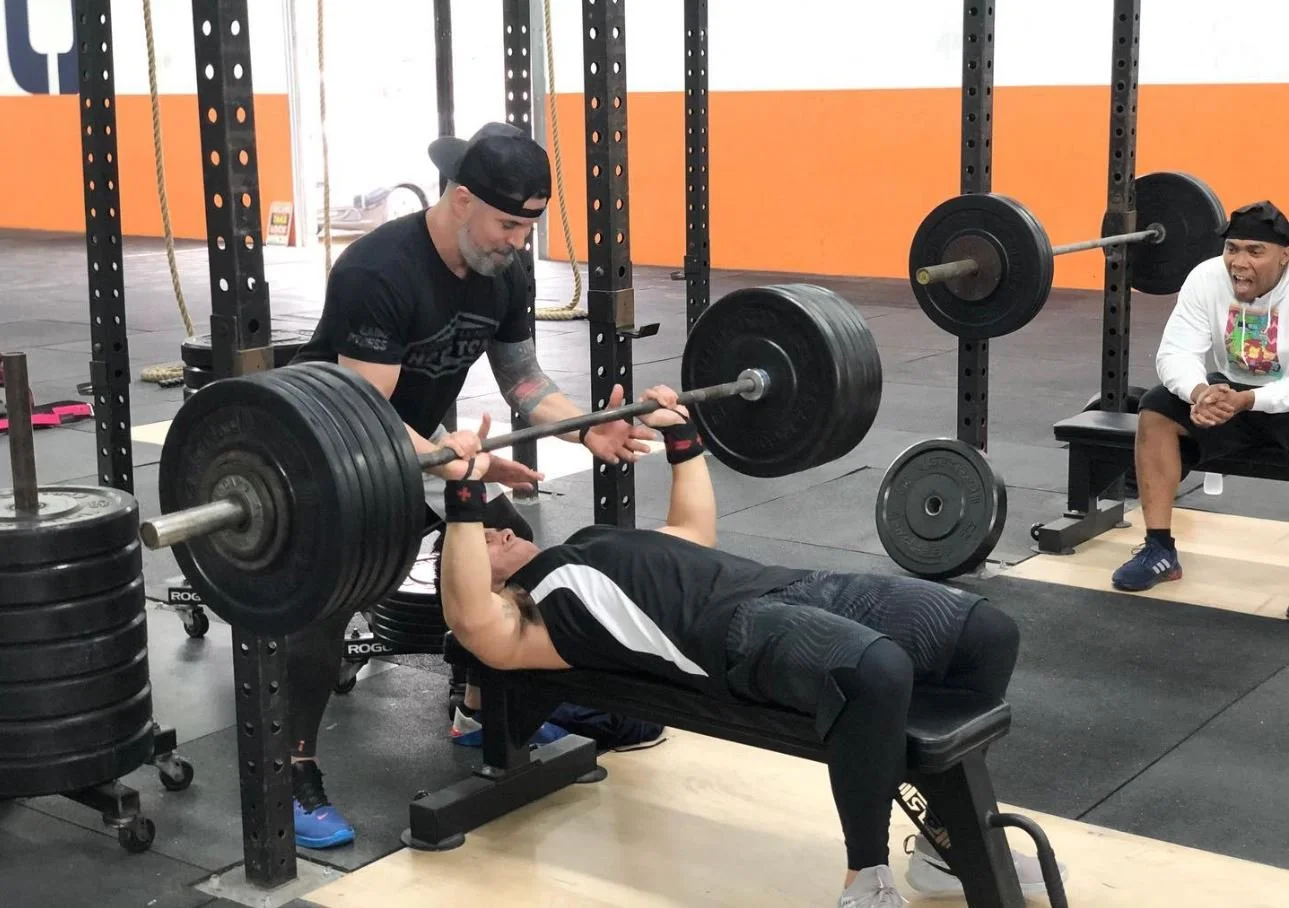
The comparison followed 24 men who already trained with weights, not a group trying the bench press for the first time. Across eight weeks they completed 15 bench press sessions, performing three sets per session with working loads around 65% to 75% of their one-repetition maximum. That is moderate-to-challenging loading, substantial enough to build a training effect but not the same as attempting maximal singles every session.
One group used a stable rule: finish each set once lifting velocity had dropped by 25%. The other varied its limit over time, moving through a progression of 0%, 12.5%, 25%, 37.5% and 50%. In practical language, one plan kept a relatively consistent amount of rep-speed fatigue while the other changed how deep into a set participants were permitted to go.
The investigators examined chest-muscle cross-sectional area as well as measures of pressing strength, repetition performance and movement speed. Interestingly, the two groups ended up with similar average velocity loss over the entire program—approximately 26%. That makes the intervention more nuanced than a simple comparison of easy sets versus brutally hard sets. The changing distribution of fatigue across training sessions was the distinction, not a dramatic difference in average fatigue across all sessions.
Both groups improved their strength-related performance. There were also different within-group findings: the progressive group showed a significant increase in pectoralis major size, while the stable group showed a significant improvement in maximal unloaded movement velocity. Those separate findings are worth exploring, but they should not be described as proof that one plan beat the other. The overall group-by-time comparisons did not show significant differences.
The stronger-bench takeaway is consistency, not constant grinding
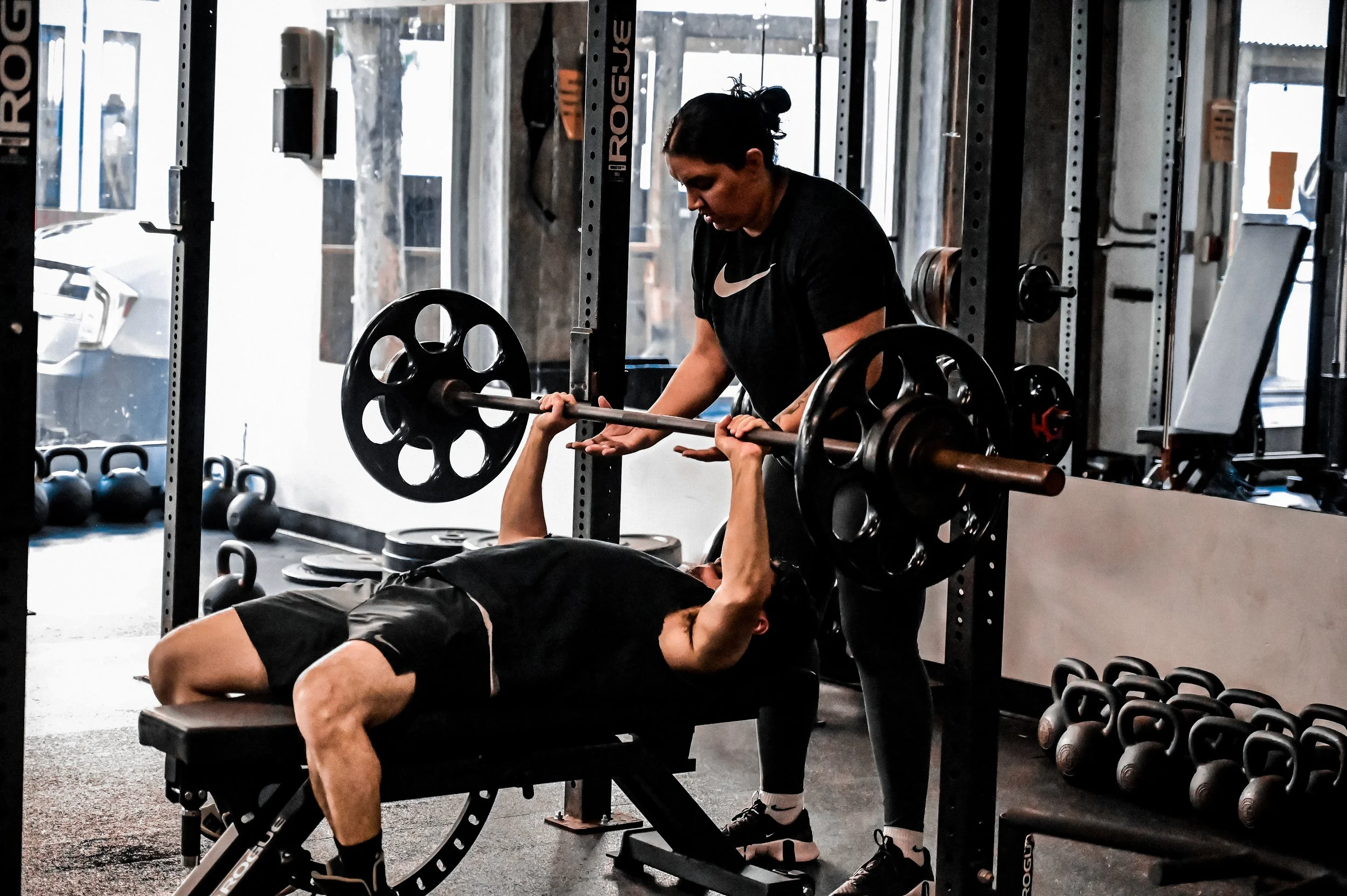
For a lifter chasing a bigger bench press number, the encouraging result is that both strategies worked. Neither required every set to reach failure. The fixed 25% approach delivered progress while limiting how long each set continued after reps began slowing. The progressive approach also delivered progress while introducing heavier fatigue on some occasions and much lighter fatigue on others.
Strength is a skill as well as a muscular quality. Repeating a stable setup, touching the bar to a consistent spot and driving it upward with intent are skills worth practicing under loads you can control. When every working set turns into an unpredictable last-rep struggle, there is less opportunity to accumulate clean, repeatable reps. That does not make hard sets useless; it simply means the last ugly rep is not automatically the most valuable rep.
The study did not report a statistically clear winner for overall strength adaptation. So an attractive headline like ‘slower sets make you stronger’ would be misleading. A lifter can reasonably choose an approach based on recovery, the rest of the weekly program and the competition demands of their sport. If you also squat and deadlift heavily, limiting bench fatigue may preserve energy for other work.
A practical test is to track the same benchmark load under similar conditions. Watch whether it feels easier, whether your top sets become more repeatable and whether you can add weight without losing position. If one plan leaves your elbows sore or your second pressing session flat, that matters even if the average training metrics look impressive on paper.

Equipment Worth Exploring
Explore equipment, accessories and gear from our carefully selected range.




FID Bench MAX
Adjustable bench offering flat, incline, and decline positions + adjustable headrest.


Powerlifting Shirts & Lifting Gear
Powerlifting shirts and gym gear for squat, bench and deadlift lifters who live for heavy numbers.

I Love Bench Press Hooded | for Bench & Chest Day Lifti Hoodie
Keep it laid-back with a little “I Love Bench Press Hooded” attitude.

Six Plates Bench Club Meme Shirt – Chest Day T-Shirt
Heavy lifts, good laughs, and a little “Six Plates Bench Club” energy.

Chest Day Sweater Bench Press & Meme T-Shirt
Add a playful “Chest Day” touch to your casual rotation.


Gym Sir Swole of Benchalot Medieval Knight Bench Press T-Shirt
Make gym days more fun with “Sir Swole of Benchalot Medieval Knight” style.


Squat Bench Deadlift Pet Dogs Shirt Dog Lovers T-Shirt
Make gym days more fun with “Squat Bench Deadlift Pet Dogs” style.

Barbell Heartbeat Hooded Pullover for Powerlifting Lift Hoodie
Bring “Barbell Heartbeat” gym humor to lazy days and post-workout plans.


3 Plates Bench Club Chest Day Meme & Top T-Shirt
Rep “3 Plates Bench Club” humor in and out of the gym.
The chest-growth signal is interesting, but not a verdict
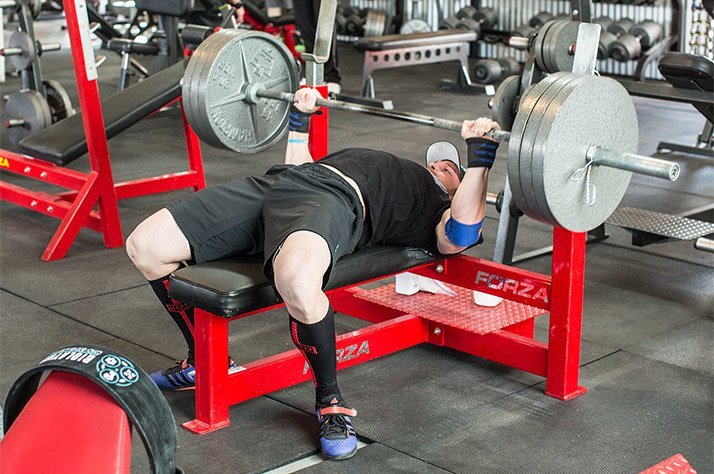
The progressive group showed a significant within-group increase in measured pectoralis major cross-sectional area, with a small reported effect size. The stable group did not show the same within-group statistical finding. It is tempting to turn that into ‘variable fatigue builds more chest muscle,’ but that conclusion goes beyond the available comparison because the difference between groups was not statistically established.
Muscle growth usually benefits from enough challenging training volume, gradually increasing demands and recovery. Letting some sets slow farther can allow additional repetitions at the same load, which may increase the amount of demanding work. But extra fatigue is not free: technique quality can drop, soreness may climb, and subsequent sets or sessions may suffer. A plan that chases maximum exhaustion every workout is not automatically an efficient hypertrophy plan.
Also consider the scale and duration. Twenty-four trained men over eight weeks offer useful clues, not a lifetime rule for every lifter. Measurements of one muscle area do not tell you how every chest region, shoulder or triceps head responds. Sleep, food intake, exercise selection, past training and individual response can all change the picture.
For lifters whose main target is chest size, a defensible interpretation is to include sufficient hard pressing volume and use deeper-fatigue sets selectively when recovery allows. Whether that means a measured velocity threshold, one or two reps in reserve, or simply well-controlled challenging work matters less than progressing across months. The best set is one that moves your training forward without sabotaging the next one.
Fast bar speed has a purpose beyond looking explosive
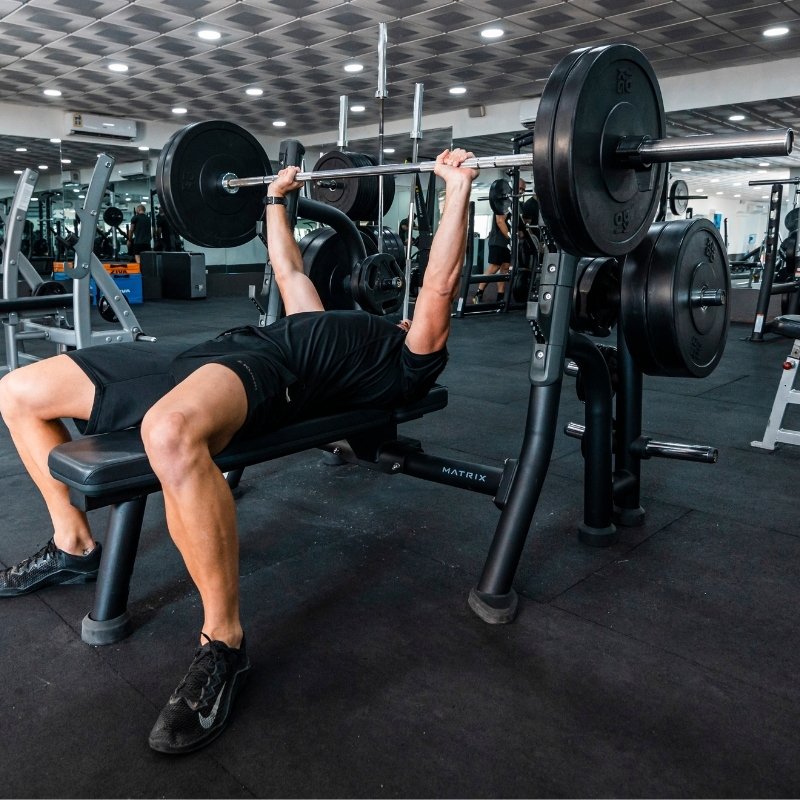
Only the stable-threshold group showed a statistically significant within-group improvement in maximal unloaded velocity. That supports a plausible practical idea: spending more time moving the bar crisply, instead of repeatedly grinding near the end of each set, may help preserve the high-speed quality of a pressing session. It does not show a confirmed between-group advantage, so the claim must remain modest.
For an athlete who needs explosive upper-body force, that may be meaningful. Fast presses can teach intent to accelerate, provided the load and technique permit it. A powerlifter also benefits from moving a heavy bar efficiently, although the sticking point of a maximal bench press is not identical to an unloaded speed test. Transferring a laboratory speed gain to a specific sporting outcome takes more evidence.
Rep speed also requires context. A heavier bar usually moves slower even before fatigue sets in. Compare speed at a similar load and with a similar pause, grip and range of motion, rather than treating an intentionally controlled warm-up as proof that your power has disappeared. If your shoulders lift from the bench, your feet shift or the bar drifts wildly, cleaning up technique takes precedence over chasing a speed reading.
One way to protect speed is to give it its own space in the program: moderate loads, full recovery and crisp repetitions stopped before the bar visibly grinds. Later in the week, you can perform more conventional hypertrophy sets that challenge the chest and triceps more deeply. The lesson is not that everybody needs an expensive sensor; it is that the purpose of the set should influence when the set ends.
How to apply the idea to two weekly bench sessions

If you bench twice a week, make the first session strength-oriented and the second more focused on controlled volume. For example, after a proper ramp-up, perform three working sets of four to six reps at a weight you can press with the same stable bar path. Stop the set when technique or concentric speed noticeably deteriorates, leaving roughly one to three good reps in reserve instead of forcing a maximal grind. Rest long enough to reproduce your first-set quality.
On the second day, use three or four sets of six to ten controlled reps, ideally with a similarly consistent technique but a little more tolerance for fatigue. Add an incline dumbbell press or cable fly if chest volume is otherwise limited. You do not need to reach failure on every set, and the exact repetitions should reflect your experience and how much pressing you do elsewhere. Treat those numbers as an illustrative plan, not as the protocol that the 24 men used.
If you own a reliable velocity tracker, record the fastest rep of a work set and notice when subsequent repetitions slow substantially. A 25% threshold can be a reasonable reference for experimenting with consistent effort, but it is not a clinically validated stopping point for every lifter. If you lack a device, video your sets from the same position and judge whether the movement remains smooth. Do not claim to know an exact velocity-loss percentage by eye.
Progress patiently: when all prescribed sets are clean, add a modest amount of load or one rep per set. Keep the same grip, pause and bench position for meaningful comparisons. Write down working weight, reps, approximate reps in reserve, sleep and soreness. If your chest training volume is already high from dips, machine presses and shoulder work, the answer may be better recovery rather than more sets to failure.
Equipment Worth Exploring
Explore equipment, accessories and gear from our carefully selected range.


Competition Plates
Competition-style bumper plates for Olympic lifts and loaded strength training.

Grip Plates
Rubber-coated weight plates with handholds for loading barbells and machines.

Foldable Wall Rack
Wall-mounted folding squat rack designed to save floor space between workouts.
VOLTRA
Compact digital cable trainer with smooth, adjustable resistance.


VForce Wall Trainer
Space-saving wall-mounted functional trainer with pivoting cable arms and variable resistance ratios.
Bodybuilding Shirts & Workout Gear
Bodybuilding shirts, tanks and gym gear for lifters chasing muscle, size, symmetry and the pump.

Progressive Overload Milo Bull : Greek Mythology T-Shirt
Show some bodybuilding attitude with a playful “Progressive Overload Milo Bull” tee.

Bench Press and Chill Funny Gym T
Make gym days more fun with “Bench Press and Chill” style.


Lift Heavy – Hardcore Heavy Metal Powerlifting for Seri Hoodie
Show off your metalhead humor in a laid-back “Lift Heavy” hoodie.

Listen Heavy Lift Heavy – Heavy Metal & Gymbros – Top T-Shirt
Heavy lifts, good laughs, and a little “Listen Heavy Lift” energy.

Heavy Metal Lift Heavy – Hardcore Powerlifting Gym Crew T-Shirt
Show some gym-day personality with “Heavy Metal Lift”.

Liftionaire Money Barbell Meme Workout Bodybuilding Fit Tank Top
Add some lifting attitude to training with “Liftionaire”.

Gym Cult Occult Barbell Meme Graphic – Powerlifting Bod T-Shirt
Make gym days more fun with “Gym Cult” style.

Stronger Things Meme Shirt – Upside Down Gains T-Shirt
Rep “Stronger Things Gym Meme” humor in and out of the gym.

I Love Bench Press Gym | Funny Pink Heart Weight Plate Sticker
Put “I Love Bench Press” gym humor on your laptop, bottle, or gym gear.
What this study cannot tell you, and the bottom line
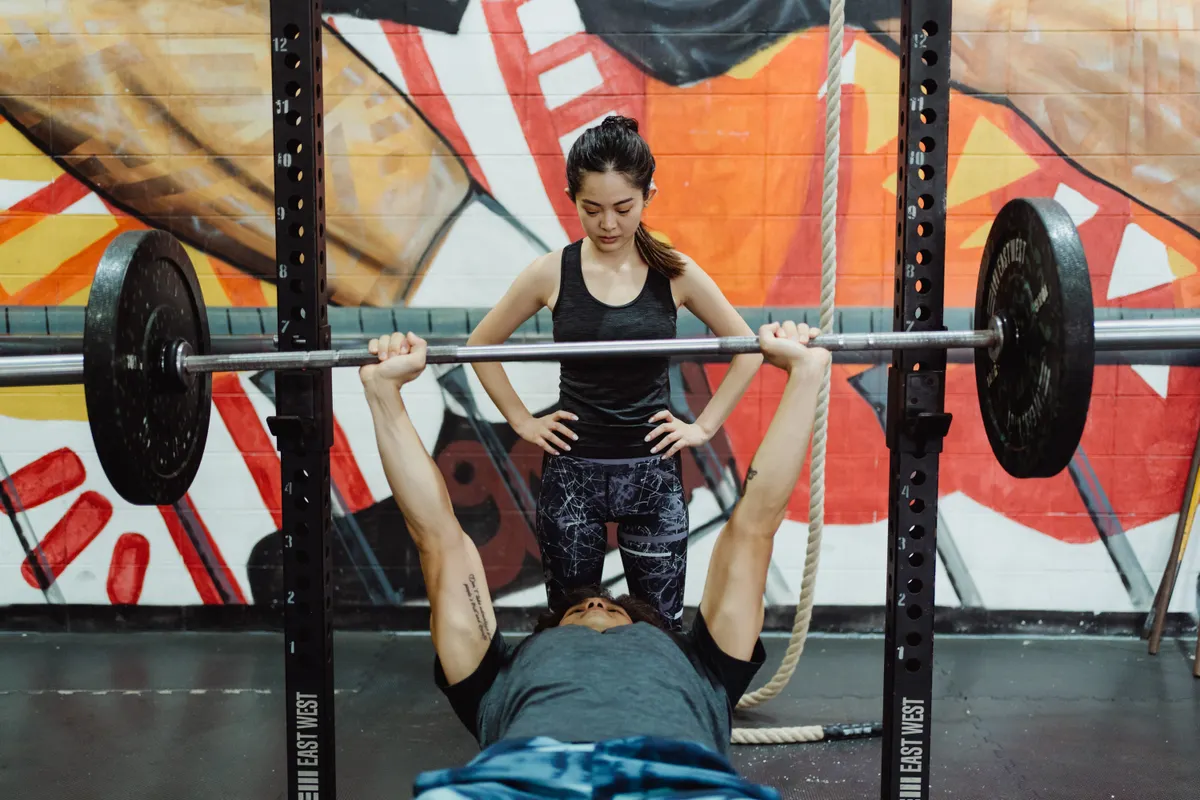
This was a small, short program in trained men using a specific exercise, loading range and measurement approach. It did not compare every possible fatigue progression, it did not prove one method superior for women or beginners, and it did not test every real-world chest-training routine. Most importantly, the lack of significant group-by-time interactions prevents a strong claim that the groups truly differed in strength or muscle growth outcomes.
Other bench press research has found that how much speed you allow to fall, and how heavy the working load is, can influence strength and muscle-size responses. That body of evidence is useful precisely because it reminds us not to fixate on one tiny difference. Training is an interaction of intensity, volume, specificity, effort and recovery. Looking only at the percentage of speed lost leaves too much out.
If you are already getting stronger and recovering well, you do not need to overhaul your program because of one trial. If you finish every bench session with multiple technical breakdowns and then struggle to repeat your planned work, try capping fatigue earlier for a few weeks. If your strength is stable but your chest growth has stalled, review total productive chest volume, range of motion, exercise selection and food intake before adding endless grinders.
The measured results suggest both consistent and changing set-fatigue limits can be workable routes to bench progress. A steady cutoff may fit speed-focused training; selectively deeper sets may fit a muscle-building emphasis. Neither approach gets a blank cheque. The smart move is to pick a clear goal, preserve good reps, track your performance and adjust based on a trend across several weeks—not the drama of the final rep.