Advertising disclosure: This page includes affiliate product links that may earn us a commission, as well as products from our own store.
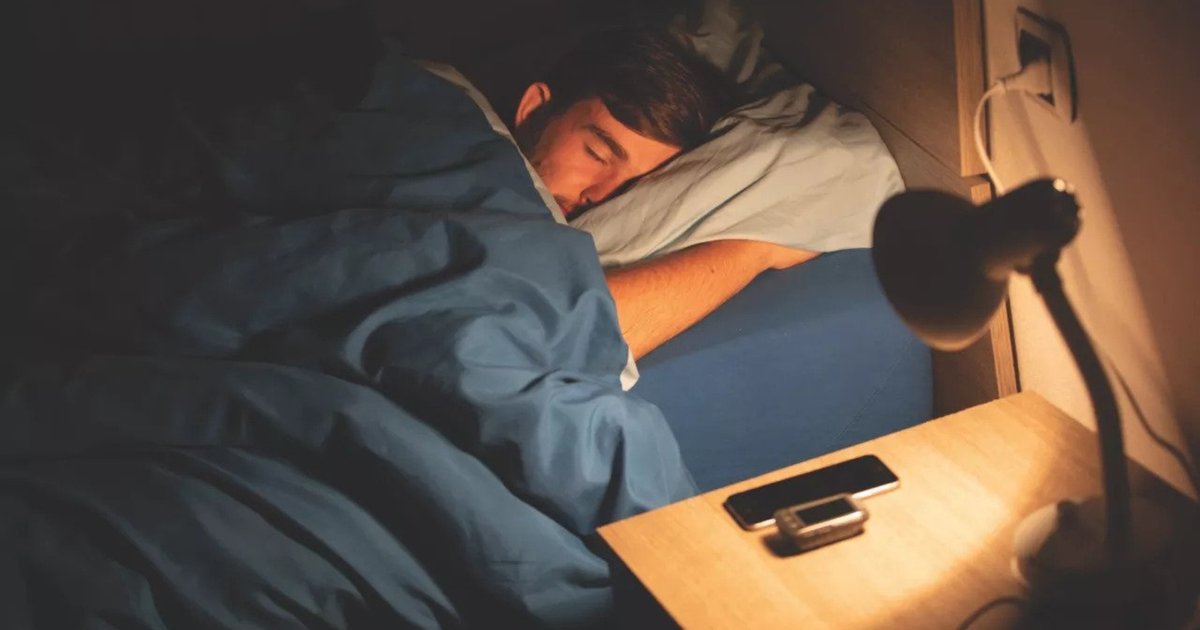
Sleep can make an ordinary working weight feel expensive. You warm up, the first rep moves, and then the set seems to run out of runway faster than it should. That sensation is familiar, but is it a measurable loss of muscle performance or simply a bad mood under the bar? A controlled experiment with 35 participants gives a sharper way to ask the question.
The key result: sleeping less than four hours was followed by significantly shorter endurance during a sustained biceps contraction, compared with a normal-sleep condition above seven hours. That does not prove your one-rep max drops by any particular percentage, and it does not tell us how much muscle you can build. It does offer a useful reason to stop treating sleep as optional whenever your weekly training gets busy.
The experiment: 35 participants, two sleep conditions and one biceps test
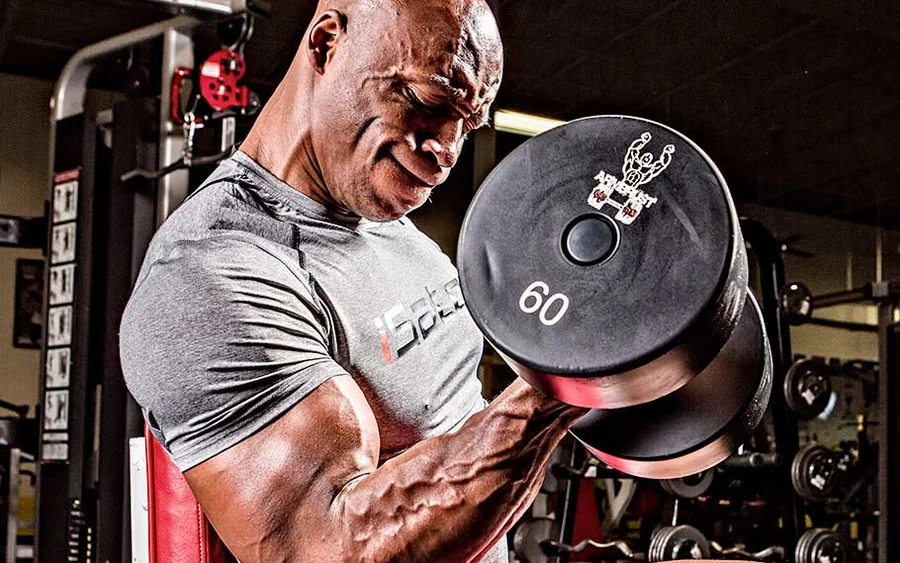
The volunteers were healthy college students with some recent strength-training habits, rather than a squad of elite bodybuilders. They entered a randomized protocol comparing a normal sleep period of more than seven hours with a restricted period of under four hours. Researchers then tested a very specific physical task: holding a right-arm biceps contraction at 30% of maximal voluntary contraction for as long as the participant could maintain it.
A constant-force hold is different from a curl set. The arm is not completing repeated concentric and eccentric repetitions. Instead, it must sustain a submaximal effort while fatigue builds. This makes it useful for examining motor endurance without the extra technique variables of a barbell lift, but it also limits what we can infer about squats, sprinting or bodybuilding programs.
The setup measured both muscle and nervous-system signals. Surface muscle recordings tracked electrical activity, while scalp electrodes recorded patterns from the brain at rest and during the contraction. Comparing these measurements across sleep conditions allowed the team to examine whether poorer staying power appeared alongside changes in how motor-related networks communicated.
One detail deserves particular attention: the comparison was not between eight and six hours of sleep. The restricted condition was severe, below four hours. A lifter averaging six and a half hours should not pretend the experiment established an identical effect for their routine. It illustrates what happened under the tested conditions, not a universal conversion table from hours lost to repetitions lost.
What actually changed: endurance time and fatigue signals
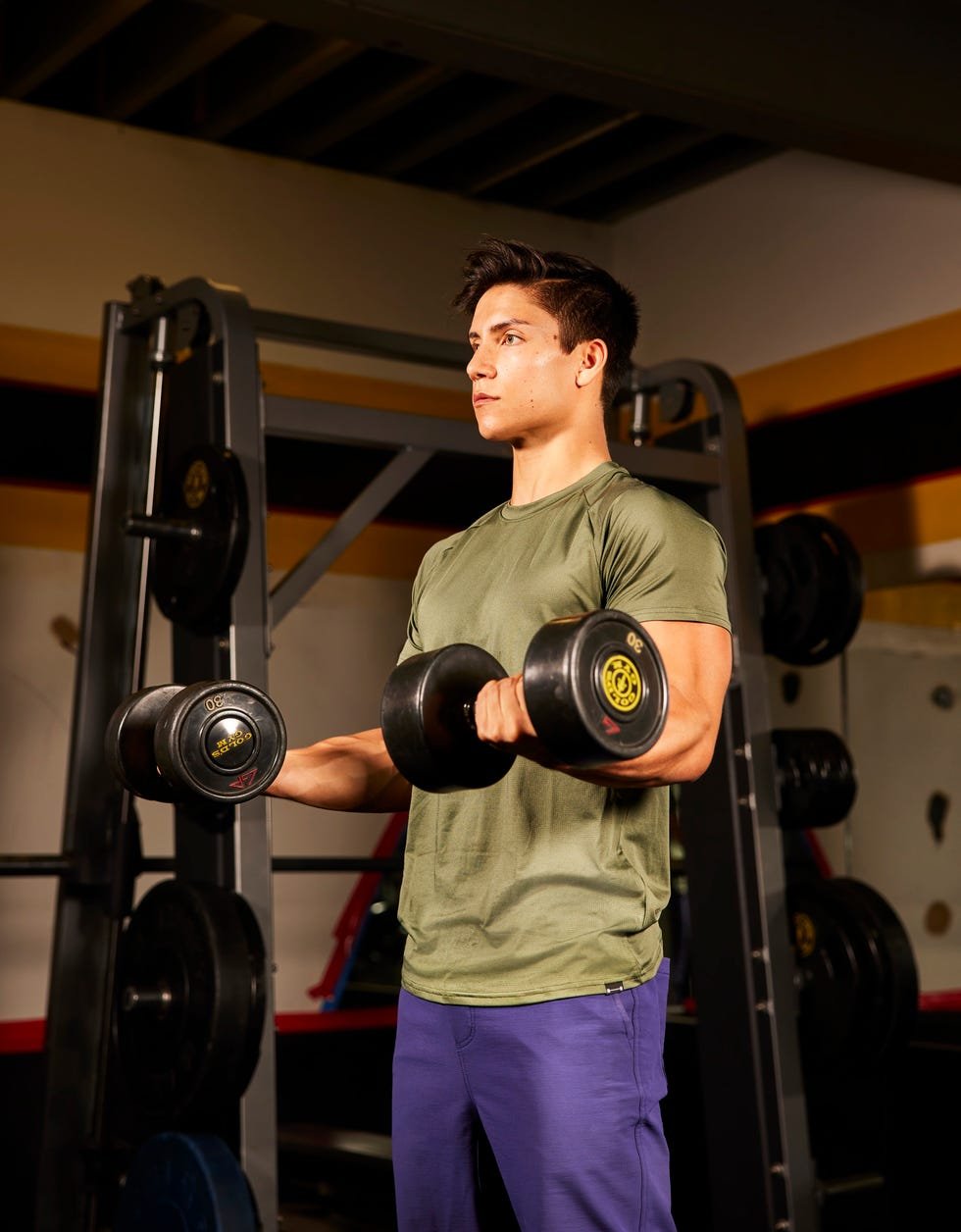
The headline result was a shorter time to exhaustion during the isometric biceps task after sleep restriction. The reported difference in contraction duration was statistically strong, with p below 0.001. In plain language, this protocol detected a clear reduction in how long participants could sustain the required force after the short-sleep condition.
The muscle recordings also changed. Frequency-based measures of the electrical signal decreased before exhaustion in the restricted-sleep state, consistent with altered fatigue behavior. Those measurements add context to the endurance result, but they are not a direct image of muscle fibers being damaged or proof that the participant lost muscle tissue overnight.
Notice what was not measured as a training outcome. There was no multiweek hypertrophy intervention, no change in biceps circumference attributed to sleep, and no reported comparison of bench-press or squat one-repetition maximum. You cannot turn this finding into a claim that one poor night costs a fixed amount of muscle growth, or that every lift gets weaker by the same fraction.
That distinction matters when you use the information. If you are choosing between sets of 12 and sets of five, the sustained endurance task is probably more closely related to your ability to tolerate prolonged effort than to the force of a single near-maximal attempt. It suggests caution about fatigue-sensitive work while leaving plenty of questions open about individual exercises and sleep doses.

Equipment Worth Exploring
Explore equipment, accessories and gear from our carefully selected range.


Rubber Hex Dumbbells
Rubber-coated hex dumbbell pairs with a stable shape for home and commercial strength training.


EZ Curl Barbell
Olympic EZ curl bar with angled grips for curls and triceps exercises.

Dual Hook EZ Curl Bar
Angled aluminum dual-hook cable bar for biceps curls and pulldown variations.
VOLTRA
Compact digital cable trainer with smooth, adjustable resistance.

Go-Tone Pro
Portable digital cable trainer with up to 66 lb (30 kg) of adjustable resistance.

GymPin D Cuffs
Adjustable wrist cuffs with textured grips for supported cable-machine exercises.

GymPin Ergo Handles
Pair of ergonomic cable handles shaped for comfortable triceps and pulling exercises.
Why your brain matters when the muscle is still capable of contracting
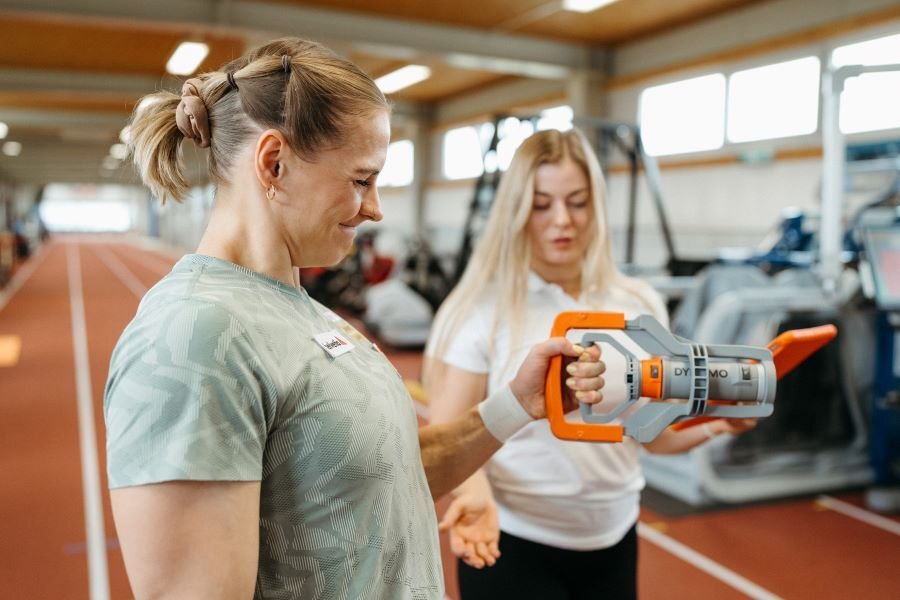
It is tempting to imagine fatigue as a simple battery inside the biceps. In reality, a sustained effort requires continuing commands from the nervous system and continuing feedback from the working muscle. You have to produce enough force, interpret how hard it feels, regulate the effort and keep the motor pattern steady while discomfort rises.
The recordings showed a complicated pattern after restricted sleep. Some measures of functional connectivity increased while participants rested, especially within networks linked to executive function. During the actual contraction, other connections generally weakened across several frequency bands. In other words, an apparently more connected resting brain did not necessarily translate into more effective coordination during the hard task.
One signal of interest involved connections between sensorimotor processing and a network often associated with internally directed thought. Under normal sleep, the relationship of certain connections to contraction duration differed from the relationship observed after restriction. These were correlations within a controlled experiment, however, not proof that toggling a single connection would restore your endurance.
For the gym, the most defensible interpretation is modest: muscle performance depends on a functioning control system as well as on muscle capacity. When sleep is sharply reduced, the way that system organizes a sustained task can change. You do not need to memorize brain-network acronyms to act on the finding. You need to recognize that poorer sleep can change how hard a familiar effort becomes.

Funny Gym Shirts & Workout Gear
Funny gym shirts, tanks, hoodies and workout gear for lifters who like training hard.

Lift Eat Sleep Repeat Hoodie
Make your off-duty look more fun with “Lift Eat Sleep Repeat”.

Everything Hurts And I'M Tired Duck Meme Gains T-Shirt
Add a playful “Everything Hurts And I'm Tired” touch to your casual rotation.

Off Season Rest Day – Meme , Gymbro, – Relaxing T-Shirt
Show some lifting attitude with a playful “Off Season Rest Day” tee.

Rest Day Sloth – Essential T-Shirt
Show some bodybuilding attitude with a playful “Rest Day Sloth” tee.

More Rest More Test Meme Testosterone Bro Hoodie
Keep it laid-back with a little “More Rest More Test Gym Meme Testosterone” attitude.

Endurance Stoic Tee
Bring “Endurance Stoic Sigma Greek God Marble” humor to your next gym day.


Hybrid Athlete Strength Tee
Show some lifting attitude with a playful “Hybrid Athlete” tee.

Caffeine Skull Coffee Gym Pullover Hardcore Workout Ene Hoodie
Show off your powerlifting humor in a laid-back “Caffeine Skull” hoodie.

Coffee and Weights Retro Cartoon Decal for Caffeine-Fue Sticker
Give your everyday gear a playful “Coffee and Weights Retro Cartoon” twist.
What a biceps hold can—and cannot—tell you about real workouts
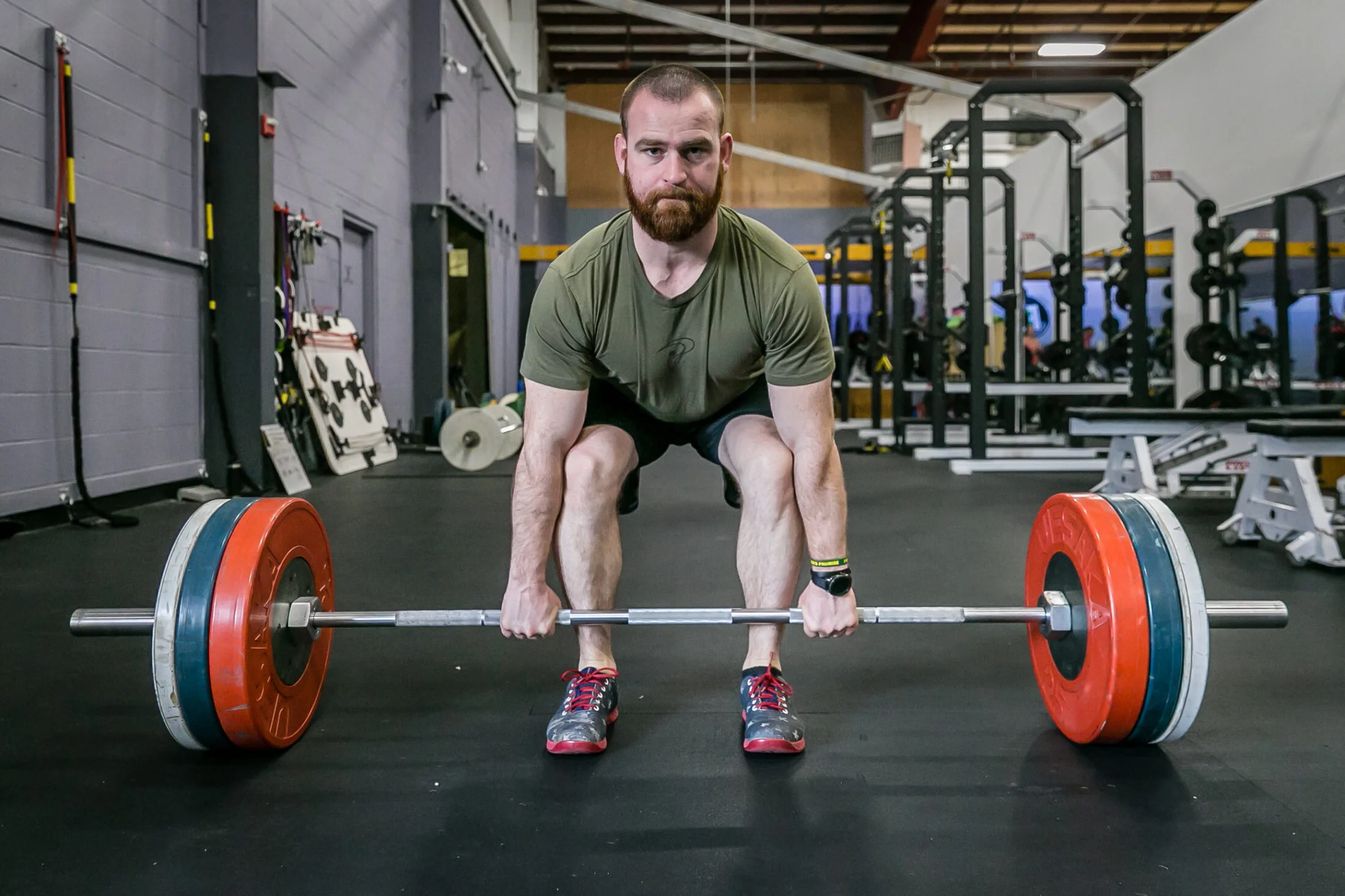
A hard preacher curl, a long cable curl set and a sustained biceps hold all require elbow-flexor effort, but they are not the same physical test. A dynamic set includes acceleration, changing lever arms, the stretch and shortening of muscle, and often a decision about when a repetition is no longer clean. The experiment isolated one piece of that larger problem: maintaining a set force over time.
For bodybuilding, the likely practical overlap is the quality of repeated work. If a poor night leaves you less tolerant of sustained effort, long sets, slower-tempo finishers, high-repetition accessories and short-rest circuits may feel especially punishing. That is an inference from the task and wider fatigue knowledge, not a measured ranking of which gym exercises are most affected.
There is also a reason not to panic about a single night. Related tests of maximum force do not all show the same response to sleep loss, and the size of the effect depends on the population, the sleep protocol and the task being measured. A heavy double could remain technically good on a day when your fifth accessory set feels unusually difficult. Use the warm-up and actual performance to make the decision rather than guessing from a headline.
Keep the difference between acute performance and long-term adaptation clear. Muscle growth is shaped by weeks and months of sufficiently hard, repeatable training, nutrition and recovery. A study of one isometric endurance bout cannot calculate the growth you would sacrifice by sleeping badly for a week. The sensible conclusion is to protect the consistency that lets productive training accumulate.
Training after a terrible night: adjust the session, not your identity
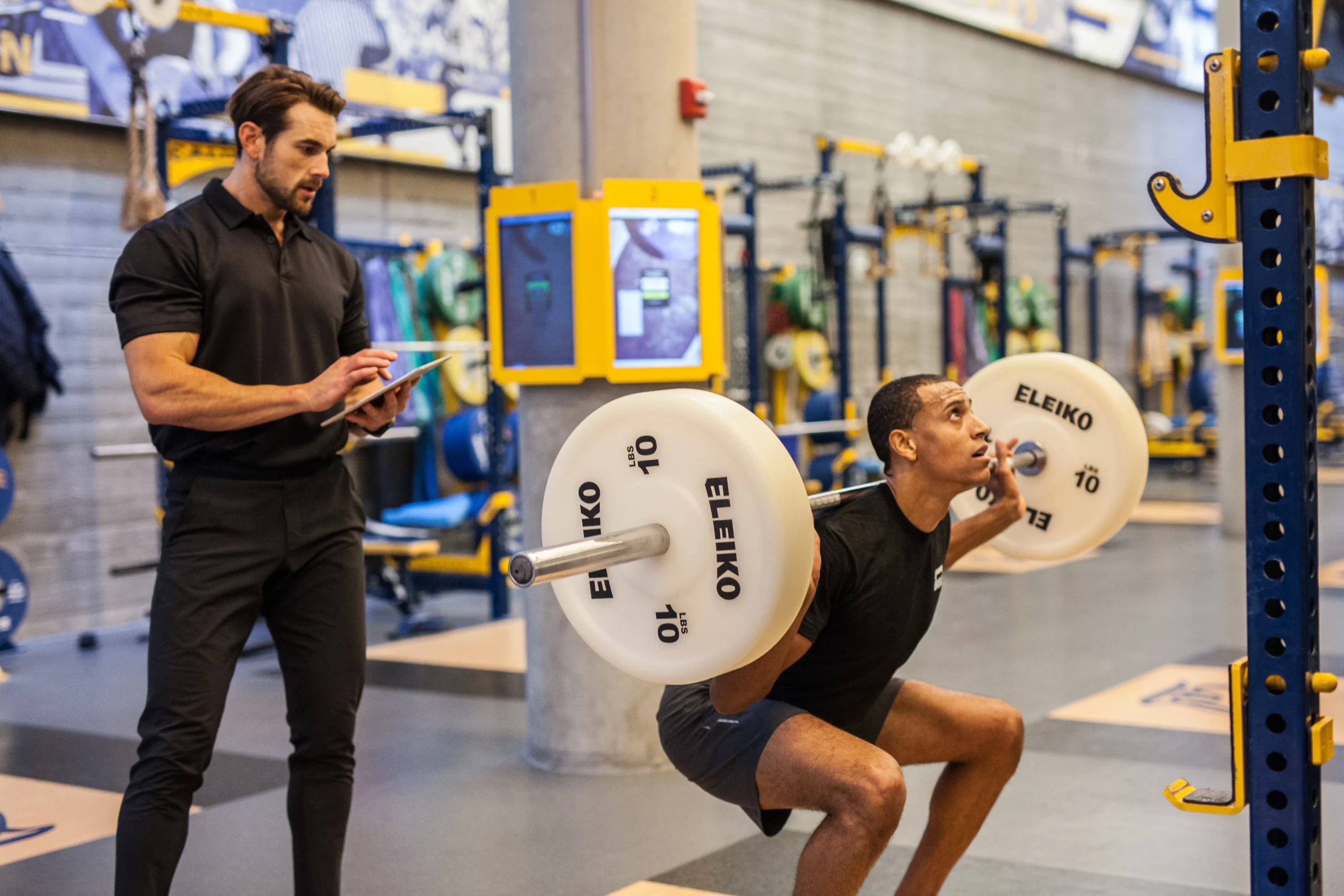
If you slept three hours, the goal does not have to be either a heroic personal record or abandoning movement entirely. Start with an honest check: are you dangerously drowsy, dizzy, sick or struggling to focus? If so, avoid high-risk loaded lifts and consider rest or light activity instead. When alertness is clearly impaired, safety outranks proving that your program is tougher than your sleep schedule.
If you feel reasonably alert, begin with your normal movement preparation and two or three progressive warm-up sets. Watch bar speed, balance and the ability to follow familiar cues. A weight that usually feels like a warm-up but now requires grinding is useful information. It is more objective than insisting you should feel strong because the calendar says heavy day.
You can preserve the training habit while trimming the fatigue cost. Keep an easy technical top set instead of a maximum attempt; reduce the number of hard accessory sets; leave two or three clean reps in reserve; and take longer rests when movement quality drops. For a curl session, three controlled sets of eight may be more productive than eight desperate sets to failure on that particular day.
Do not mistake coffee for a replacement for sleep. Caffeine can sometimes improve alertness and exercise performance, but it does not reproduce the full restorative effects of adequate sleep. Late doses may also push the next bedtime later, creating a second poor night. Make the decision in the context of your usual caffeine tolerance, health and bedtime rather than escalating the dose to rescue every workout.
If your schedule permits, move the most technical or demanding session to a better-rested day and do a lower-risk session now. The program is a tool, not a courtroom. Swapping Tuesday’s heavy squat session with Thursday’s moderate upper-body work can protect both lifting quality and the week’s overall training target. One flexible adjustment is very different from repeatedly dodging hard sessions.
Equipment Worth Exploring
Explore equipment, accessories and gear from our carefully selected range.


FID Bench MAX
Adjustable bench offering flat, incline, and decline positions + adjustable headrest.


VForce Wall Trainer
Space-saving wall-mounted functional trainer with pivoting cable arms and variable resistance ratios.

VForce 2IN1
Half rack and pivot-arm functional trainer with switchable 1:1 and 2:1 pulley ratios.

VForce 3IN1
All-in-one rack combining an adjustable Smith machine, functional trainer, and free-weight station.

Open Hex Bar
Open-frame trap bar with multiple handles for deadlifts, carries, and lower-body training.

Cast Iron Kettlebells
Textured cast-iron kettlebells for swings, squats, carries, and full-body training.

Power Tower
Freestanding pull-up and dip station with adjustable handles for bodyweight training.
Build a weekly routine that gives sleep a fighting chance
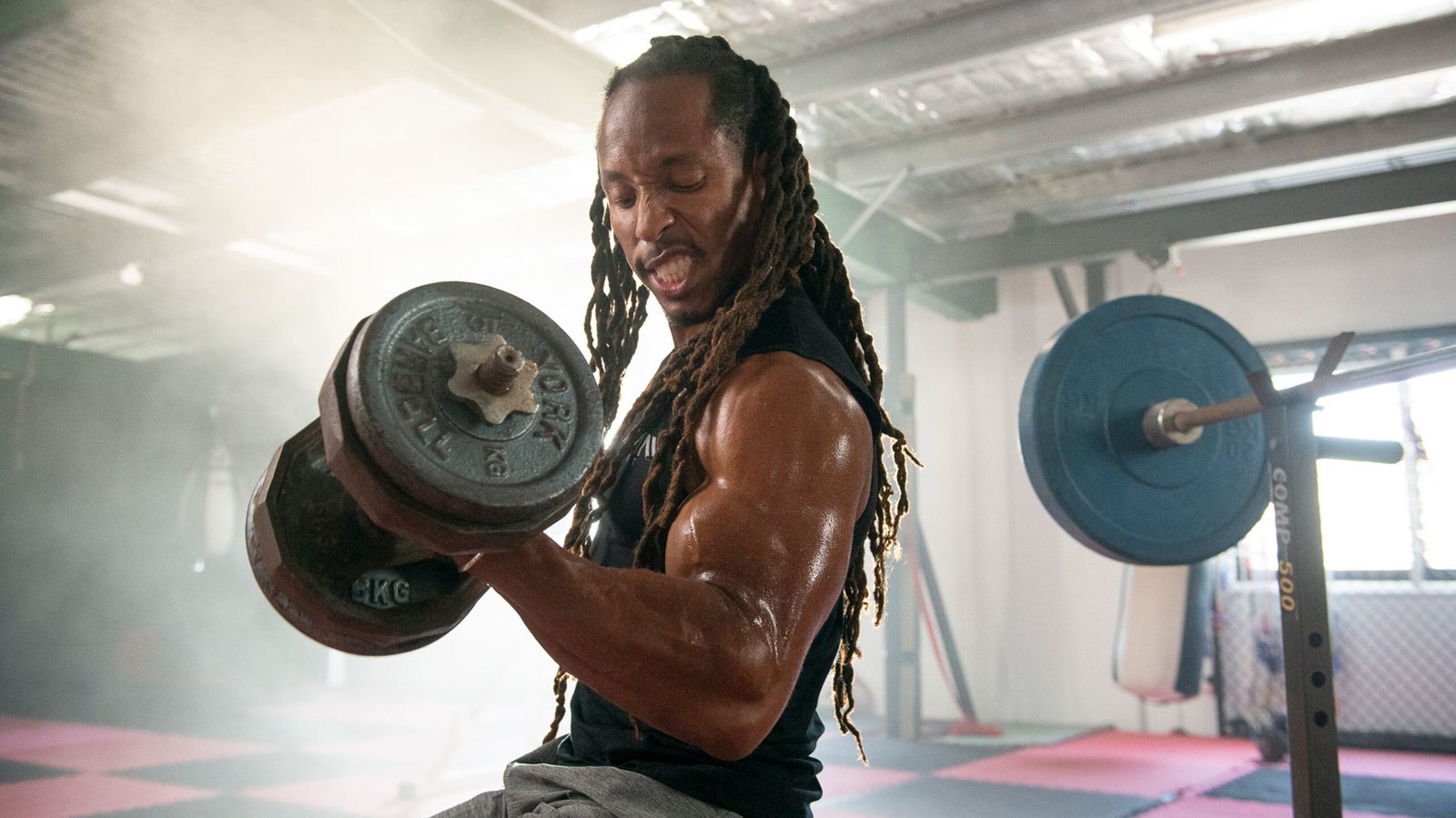
The best sleep intervention for most recreational lifters is rarely a special supplement or a perfect wearable score. It starts with enough time in bed and a schedule that is repeatable. Many adults do well with roughly seven to nine hours, but individual needs vary. If you regularly wake unrefreshed, struggle to stay awake or cannot recover, a personal assessment matters more than copying someone else’s number.
Try protecting a consistent wake time first, then count backward to create a realistic sleep opportunity. That may mean moving a late training session earlier, preparing the following day’s meals in advance or putting the phone out of reach. A routine that works four nights per week is more useful than a beautiful sleep plan that collapses whenever work gets demanding.
Think about exercise timing as a personal variable. Some people train hard in the evening and fall asleep normally; others find very late, stimulating sessions disruptive. Track how your own bedtime and sleep onset respond before deciding that every late session is bad. The same applies to pre-workout caffeine: the amount and clock time may matter more than the brand on the tub.
Programming can help too. Place your highest-skill or heaviest work on days when you can usually sleep well beforehand. Avoid stacking unnecessary all-out finishers onto weeks already full of travel, shift work or early starts. If sleep is chronically constrained, a sustainable minimum effective training dose may outperform an ambitious split that you constantly abandon or perform exhausted.
Consistent sleep is not a guarantee of bigger arms, and a rough night is not evidence that your gains vanished. It is a practical way to protect alertness, training quality and the ability to show up prepared again. Treat it as one more important training variable, alongside progressive overload, food and how you manage effort.
A two-week test: measure the difference in your own gym log

Rather than trying to recreate the severe sleep-restriction experiment, gather a simple observational record of your ordinary habits. For two weeks, write down bedtime, wake time, approximate hours slept, caffeine timing, and the quality of your warm-up. Pair that with a repeatable accessory exercise such as cable curls or dumbbell curls at a familiar load. Do not intentionally deprive yourself of sleep to collect a data point.
Use a consistent protocol: same grip, range of motion and first working-set load whenever practical. Record the number of clean repetitions at a chosen two-rep-in-reserve stopping point, plus a one-to-five rating of how energetic you felt before lifting. Keep the rest interval similar. You now have something more useful than a vague memory that all your workouts were worse last week.
Look for patterns without inventing certainty. If shorter nights tend to coincide with worse energy and fewer clean reps, that may inform when you schedule your hard training. It could also reflect stress, illness, meal timing or another variable. A personal log is not a randomized study, and two weeks is too short to identify long-term muscle adaptation. Its value is helping you make small, sensible adjustments.
Finish with a weekly review. Identify the bedtime changes that were actually realistic, one kind of session you managed well despite moderate fatigue, and one situation where the smarter choice was to reduce the load. Then keep the habits that make strong work repeatable. The 35-person biceps experiment does not tell you what your next curl set will be—but it makes a compelling case that sleep belongs in the same training conversation as sets, reps and resistance.
Bodybuilding Shirts & Workout Gear
Bodybuilding shirts, tanks and gym gear for lifters chasing muscle, size, symmetry and the pump.

Pre-Workout Gym Cosmic Crewneck , Caffeine T-Shirt
Show some gym-day personality with “Pre-Workout”.

Crazy Preworkout Energy – Skull & Flames Meme T-Shirt
Bring “Crazy Preworkout Energy Graphic” humor to your next gym day.

Caffeine & Weights for Coffee Lovers, Lifting Motivatio Sticker
Put “Caffeine & Weights” gym humor on your laptop, bottle, or gym gear.

Coffee and Weights for Coffee Lovers, Lifters and Bodyb T-Shirt
Make gym days more fun with “Coffee and Weights” style.

The Real Rocky Mountains – Bicep Mountain Meme Decal fo Sticker
Stick a little “The Real Rocky Mountains” humor on your favorite gear.

E = mc² Energy Muscle Confidence Albert Einstein Scienc T-Shirt
Show some lifting attitude with a playful “E = mc² Energy Muscle Confidence” tee.

Coffee Shots & Heavy Squats for Caffeine Fueled Lifting T-Shirt
For laid-back days and leg-day humor: “Coffee Shots & Heavy Squats”.

Muscle Mountain – Shirt , Bicep Mountain Meme T-Shirt
Heavy lifts, good laughs, and a little “Muscle Mountain” energy.

Let It Grow Girl – Motivation , Biceps , T-Shirt
Rep “Let It Grow Gym Girl” humor in and out of the gym.

Neverest – Muscle Mountain , Gymbros & Meme Lovers T-Shirt
Show some lifting attitude with a playful “Neverest” tee.