Advertising disclosure: This page includes affiliate product links that may earn us a commission, as well as products from our own store.
A chest-and-back session sounds simple: press something, pull something, repeat. But the difference between a productive upper-body workout and a two-hour collection of random exercises is how you manage movement patterns, exercise order, hard sets and fatigue. Pressing and pulling in one session can be an excellent way to train the torso, provided that neither muscle group becomes an afterthought.
The goal is not to prove that chest and back are perfect opposites or that every exercise must be paired. It is to distribute high-quality work across the pectorals, lats and upper back while leaving enough energy to progress. This guide gives you a clear exercise-selection framework, two original workouts, and a six-week progression that works in a commercial gym or with equivalent equipment.
Why a chest-and-back pairing can work
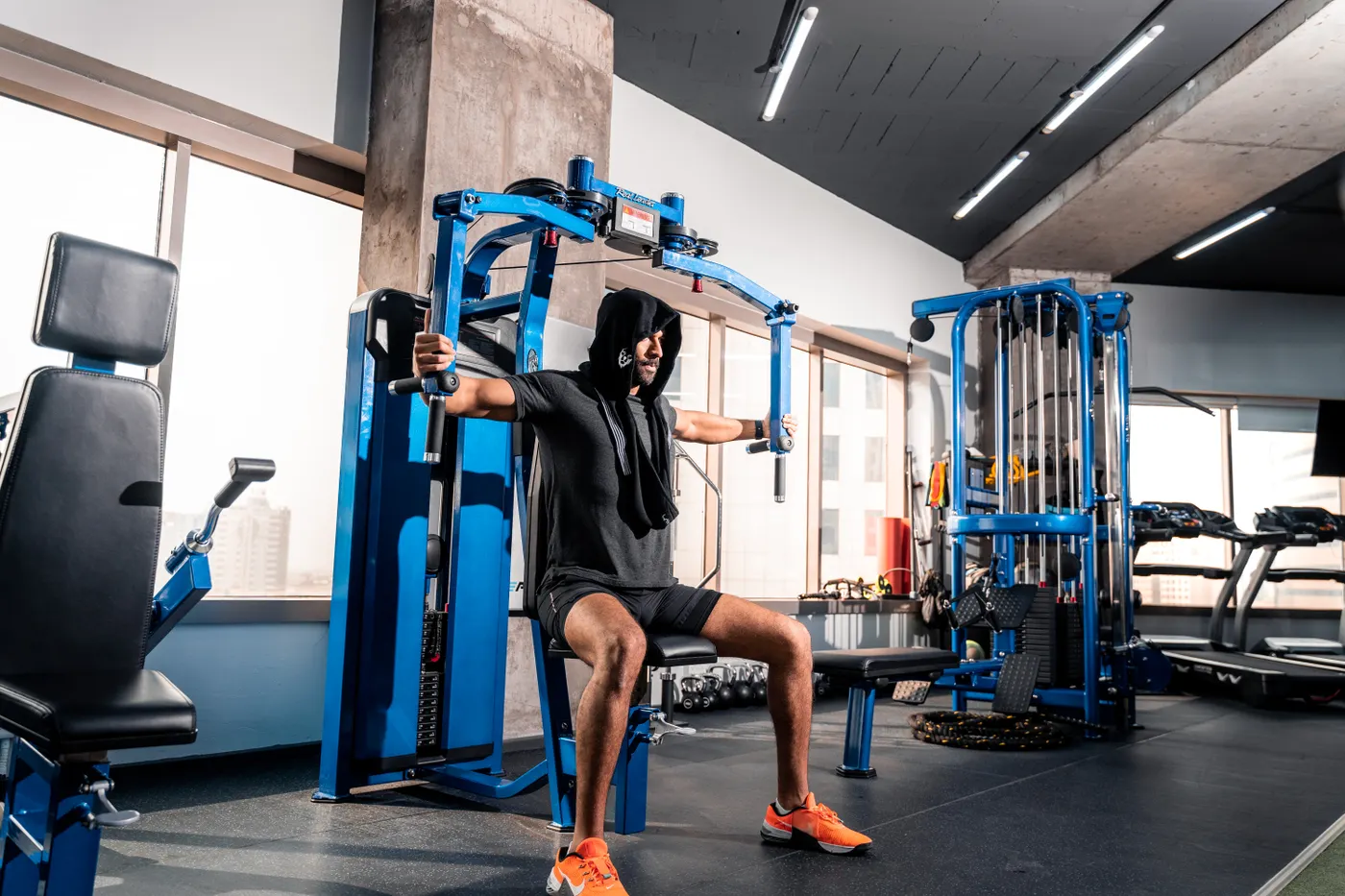
Most chest presses involve shoulder horizontal adduction or flexion, with help from the triceps and front deltoids. Rows and pulldowns emphasize shoulder extension or adduction, with important contributions from the elbow flexors and the muscles controlling the shoulder blades. Alternating these patterns can give one prime mover some respite while another works. It does not mean your whole body recovers instantly: gripping, bracing, breathing and general effort still accumulate.
There are two sensible ways to organize the session. In a straight-set format, finish your pressing sets before moving to a row or pulldown. This makes load progression and rest easier to control, especially when strength is the priority. In a paired-set format, perform a press, transition to a pull, then take a real recovery interval before repeating. The pairing can save time when the equipment is available and your technique remains consistent.
Neither approach is automatically superior for muscle growth. A 2025 synthesis of 19 studies involving 313 participants found that supersets generally shortened training time while producing broadly comparable long-term strength and hypertrophy outcomes to traditional sets. Supersets also tended to feel harder and create greater acute metabolic strain. That is a reason to use them strategically, not a reason to turn every heavy set into a race.
A useful starting principle is to match movement categories rather than trying to balance every individual muscle one-for-one. Include at least one substantial press, one horizontal row, one vertical pull, and enough additional work to cover the angles your main lifts miss. A row cannot replace a pulldown completely, and a fly is not a substitute for learning to press.
Choose chest exercises that complement one another
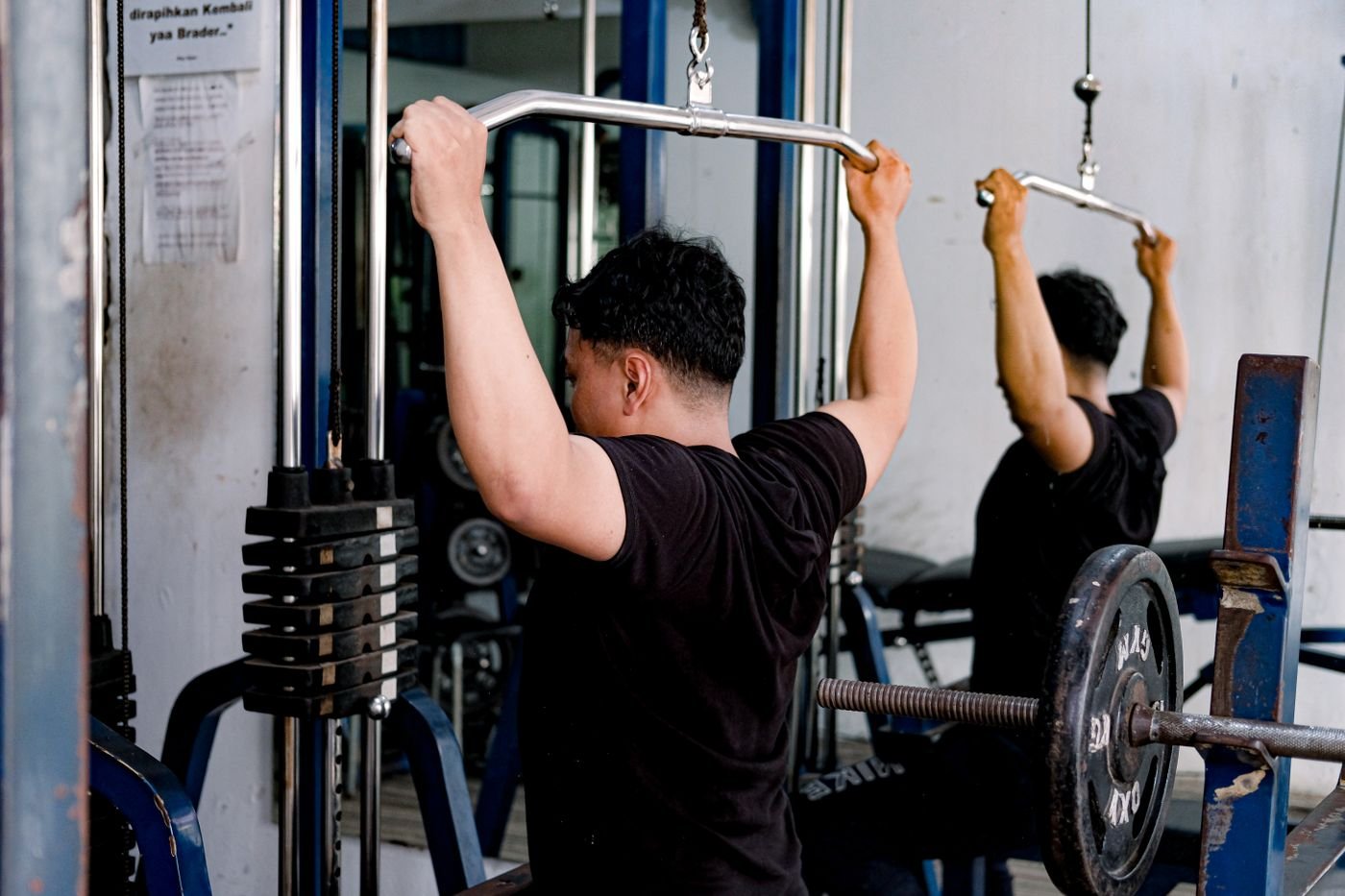
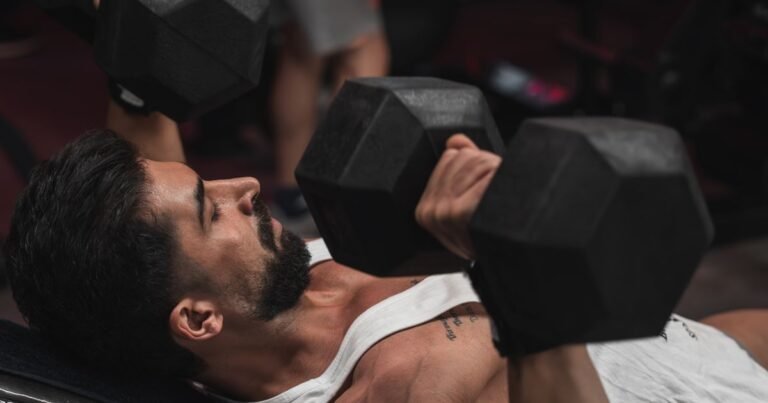
Your chest does not need five variations of the same press in one workout. Start with a stable compound press you can progress and repeat accurately. A flat barbell press, dumbbell press, or machine chest press can all serve that role. Select the tool that lets you train the target muscles through a comfortable range of motion while maintaining consistent control and an appropriate effort level.
Incline pressing changes the emphasis, but the angle matters. In a controlled electromyography experiment involving 30 trained adults, approximately 30 degrees produced the highest measured activity in the upper portion of the pectoralis major among the tested inclinations. Higher inclines shifted more activity toward the anterior deltoid. Surface muscle activity is not a direct measurement of long-term hypertrophy, however, so do not treat 30 degrees as a universal magic setting. A modest incline is simply a practical option when you want an additional pressing angle.
After one or two presses, a fly can add chest-focused work with relatively little triceps demand. Cable, pec-deck and dumbbell flies each have different resistance curves and stability requirements. Keep the elbows slightly bent, move the upper arms through a comfortable arc, and avoid forcing a painful stretch for the sake of a bigger number on the stack.
For most intermediate lifters, two chest patterns per session are enough: a press plus either a second press at another angle or a fly. If you train chest twice weekly, you can rotate the secondary exercise rather than cramming every variation into both days. Record your actual repetitions and load, not just whether the session felt like a good pump.

Equipment Worth Exploring
Explore equipment, accessories and gear from our carefully selected range.

FID Bench MAX
Adjustable bench offering flat, incline, and decline positions + adjustable headrest.


Build the back with rows and vertical pulls
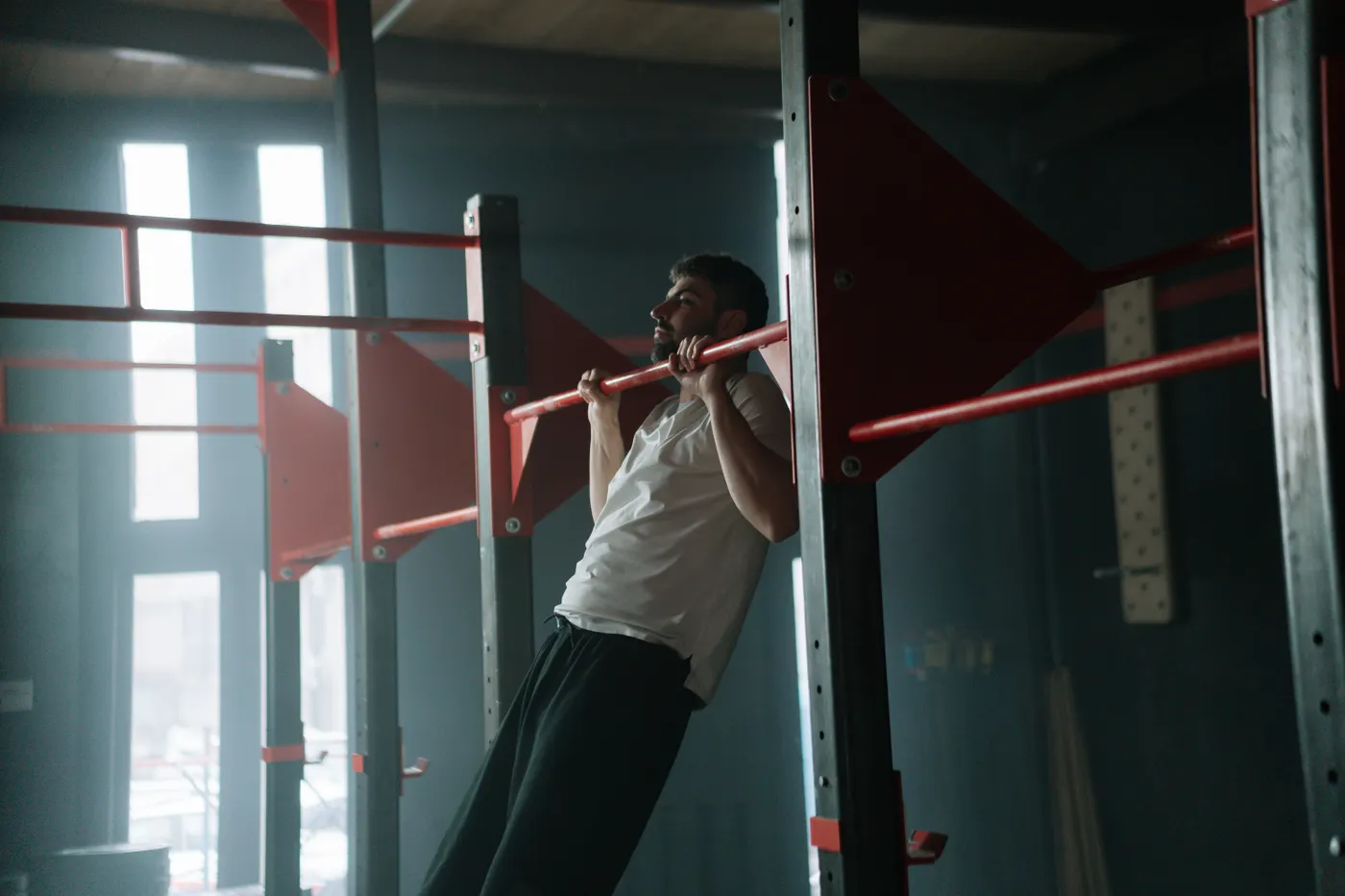
Back training is a family of movements, not one muscle. Horizontal rows can emphasize the mid-back, rear shoulder and scapular retractors while also training the lats. Vertical pulling such as pull-ups and pulldowns is a straightforward way to challenge shoulder adduction and the lats through a different line of pull. Both deserve a place in a balanced program, though the exact grip and equipment can be adapted.
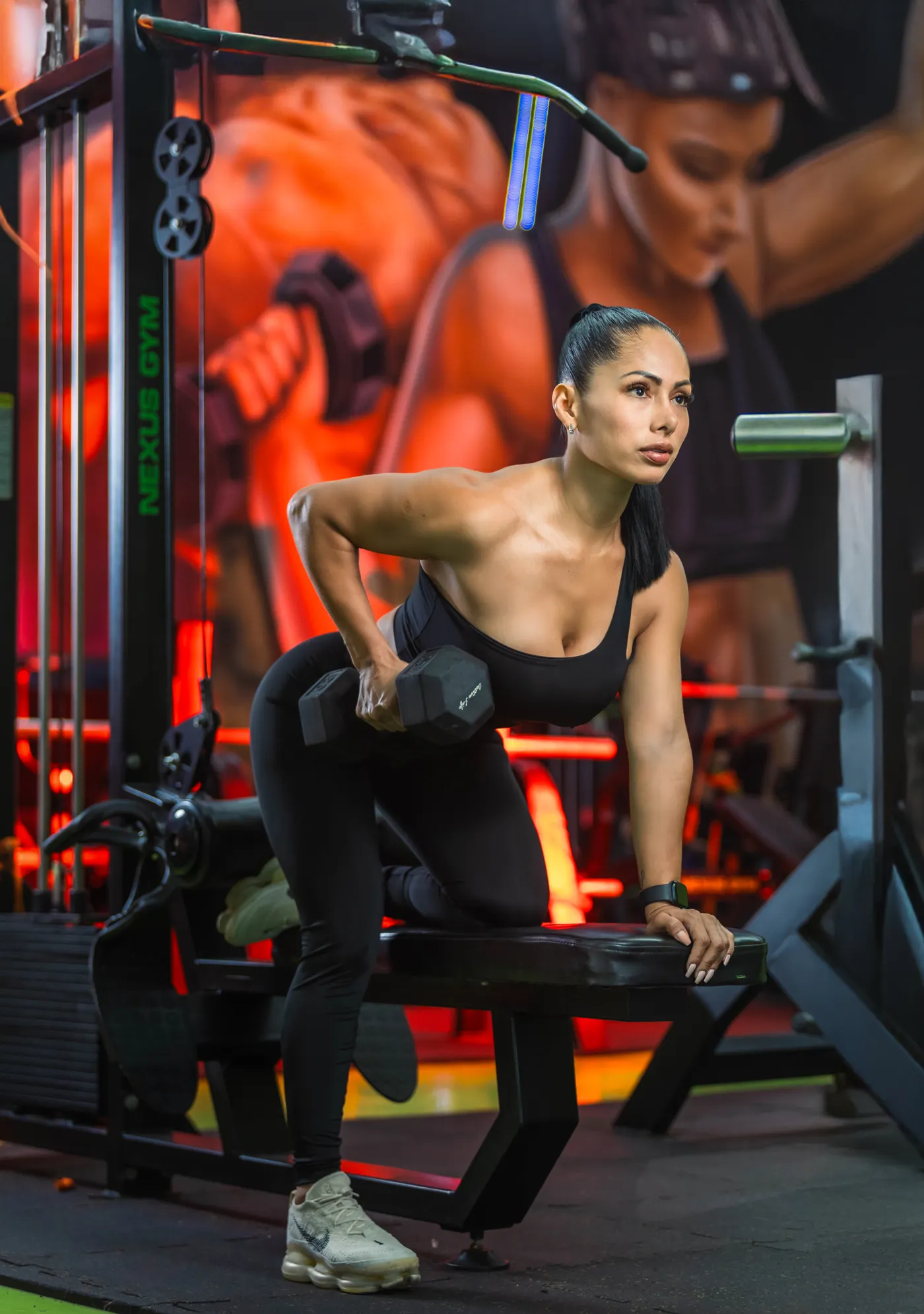
For a row, choose a version you can stabilize. A chest-supported row reduces the need to hold a bent-over torso position, which can be useful after heavy pressing or when lower-back fatigue is high. A one-arm dumbbell row offers more freedom of movement but asks for more control. Let the shoulder blade move naturally, bring the elbow back without twisting the whole torso, and lower the weight under control.
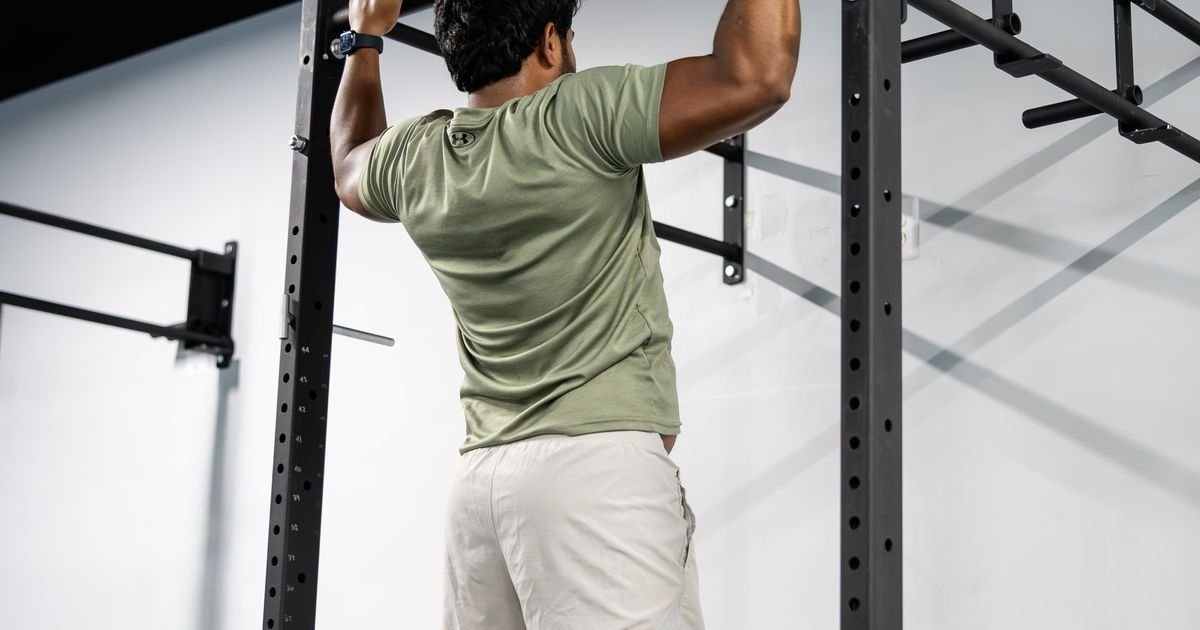
For a vertical pull, use a pull-up if you can perform consistent repetitions without swinging, or a pulldown if that makes progressive loading easier. Neutral, pronated and slightly varied grip widths can all be workable. The best grip is the one that gives you a reliable shoulder path and allows meaningful effort without elbow or shoulder irritation. A very wide grip is not a shortcut to an exceptionally wide back.
Use lifting straps when grip fatigue would otherwise stop the intended back set prematurely, but keep some unassisted gripping in the program if grip strength is itself a goal. The priority is honest range of motion: a controlled row with a brief stretch usually tells you more about progress than a heavier load moved with repeated torso heaving. Pair a horizontal row and a vertical pull across the week even if you prefer one of them.

Bodybuilding Shirts & Workout Gear
Bodybuilding shirts, tanks and gym gear for lifters chasing muscle, size, symmetry and the pump.


Ultimate Bench Press Tee
Heavy lifts, good laughs, and a little “Ultimate Bench Press” energy.


Meme – "Shhh I'M Doing Plate Math" Hooded Hoodie
Bring “"Shhh I'm Doing Plate Math" Workout Hooded” gym humor to lazy days and post-workout plans.


Nice Traps Big Back Tee
Heavy lifts, good laughs, and a little “Nice Traps Big Back” energy.

Supersets, exercise order and rest without the guesswork
Pairing a chest press with a row is attractive because the exercises do not share exactly the same prime movers. But it is not the same as taking complete rest. A hard press raises breathing demand, uses the trunk for stability and can leave the arms and shoulders generally fatigued. If you immediately perform a demanding pull, your second exercise may suffer even when the target muscles differ.
Try a conservative paired-set structure: press for six to ten controlled reps, spend roughly 20 to 40 seconds moving to the row, perform eight to twelve reps, then rest 90 to 150 seconds before the next press. Those are practical starting ranges, not laboratory-derived universal prescriptions. If performance drops sharply, lengthen the interval. Heavy strength work often deserves two to three minutes or more between hard exposures to the same exercise.
A systematic synthesis of rest intervals found a small overall hypertrophy advantage for resting longer than about a minute, with little clear additional difference beyond roughly 90 seconds in its pooled analysis. The key practical implication is not to force tiny rest periods at the expense of repeated quality sets. Track whether your second and third sets stay within the planned rep range at similar technique.
Exercise order should reflect priority. If improving your bench press is the central goal, perform your main bench sets fresh and pair only the lighter accessories later. If lat strength is lagging, start with a pull-up or row. If overall size is the goal, alternate which movement leads across two weekly sessions. You do not need a perfectly symmetrical workout to achieve balanced development; you need enough high-quality exposure to both regions over time.
Two complete chest-and-back sessions to rotate
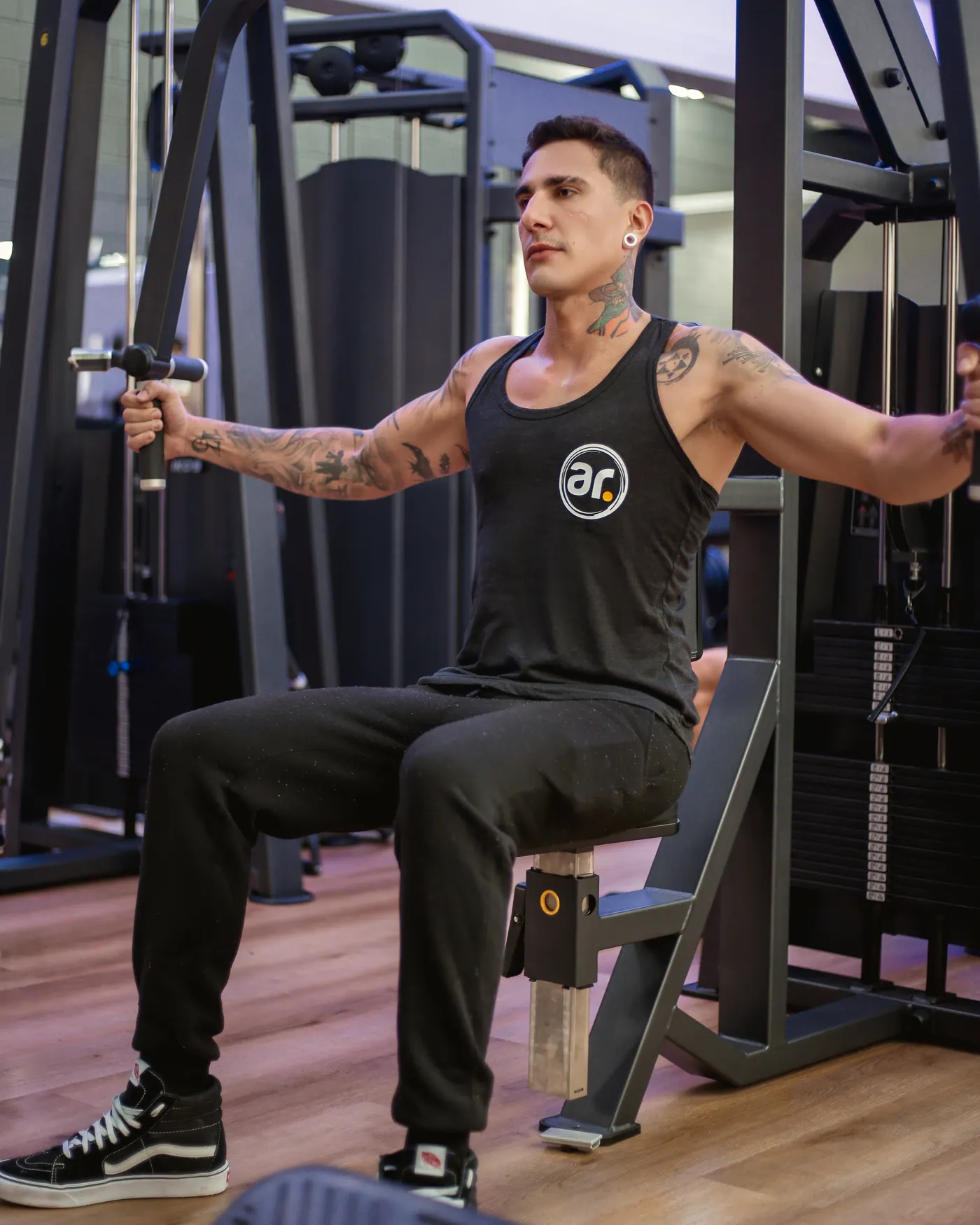
The following sessions are original examples for an intermediate lifter who can already perform basic presses and pulls with control. They are not a requirement to use any particular brand or machine. Leave one to three repetitions in reserve on most working sets, warm up with lighter loads, and adjust the exercise if a joint position is uncomfortable.
Session A: strength-leaning push and pull
| Exercise | Sets x reps | Rest |
|---|---|---|
| Barbell or machine chest press | 3 x 4-6 | 2-3 min |
| Chest-supported row | 3 x 6-8 | 2 min |
| Pull-up or neutral-grip pulldown | 3 x 6-10 | 2 min |
| Low-incline dumbbell press | 2 x 8-10 | 90-120 sec |
| Cable rear-delt fly | 2 x 12-15 | 60-90 sec |
Complete the first two movements as straight sets if strength is your priority. A heavy press and a heavy row do not have to become a superset simply because they share a session. Keep the accessory work controlled and stop when technique or range of motion degrades.
Session B: hypertrophy-leaning push and pull
| Exercise | Sets x reps | Rest |
|---|---|---|
| Incline machine or dumbbell press | 3 x 8-12 | 90-150 sec |
| Seated cable row | 3 x 8-12 | 90-150 sec |
| Lat pulldown | 2 x 10-15 | 90 sec |
| Cable or pec-deck fly | 2 x 12-15 | 60-90 sec |
| One-arm dumbbell row | 2 x 10-12/side | 90 sec |
On Session B, the first press and row can be paired if both stations are accessible and you still recover adequately. Do not occupy multiple machines in a crowded gym when that prevents others from training; straight sets work perfectly well. Leave at least one or two days between these demanding upper-body sessions, depending on your total weekly training.
Equipment Worth Exploring
Explore equipment, accessories and gear from our carefully selected range.
VOLTRA
Compact digital cable trainer with smooth, adjustable resistance.

Go-Tone Pro
Portable digital cable trainer with up to 66 lb (30 kg) of adjustable resistance.
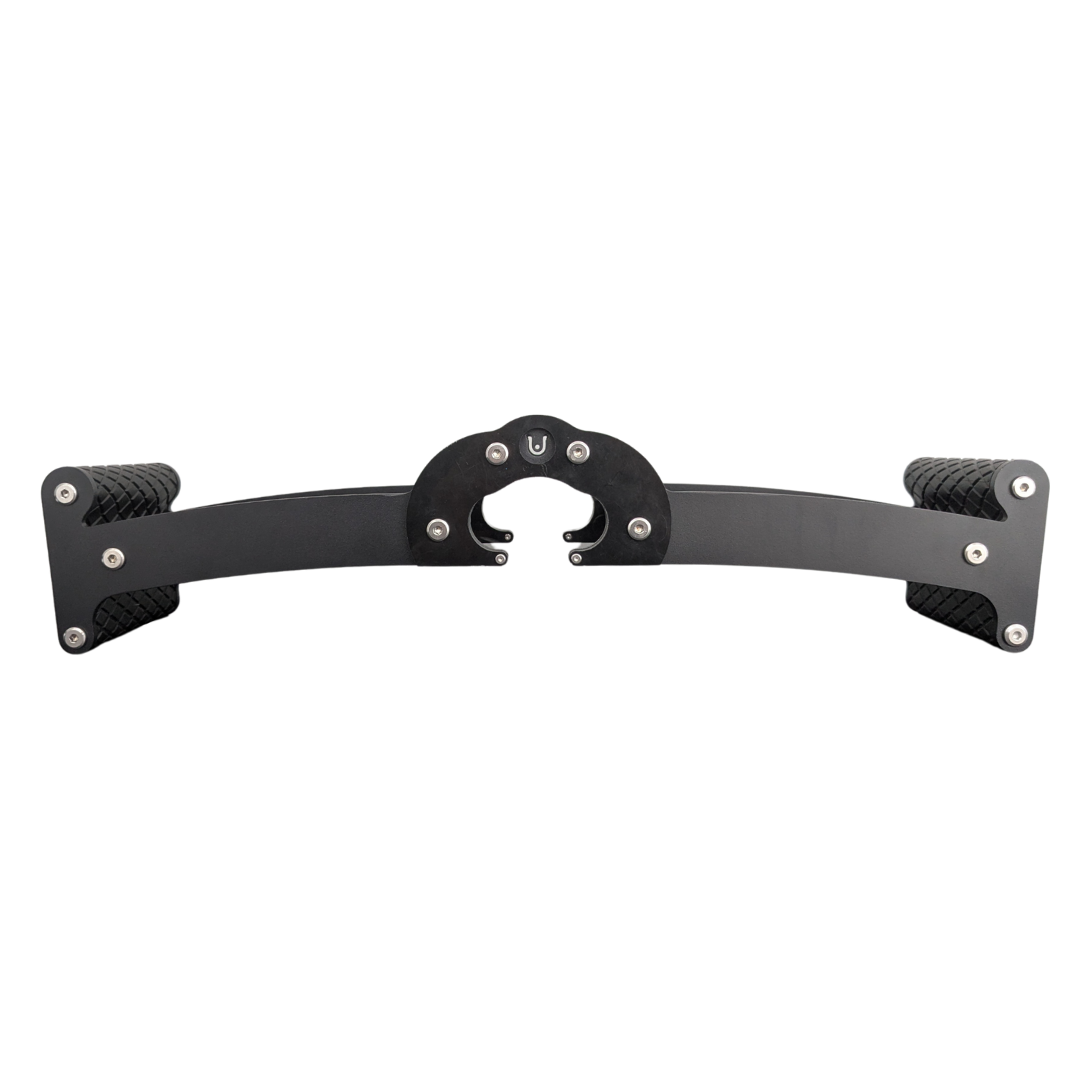
Back Bar
Multi-grip cable and landmine bar with a built-in deadlift jack.
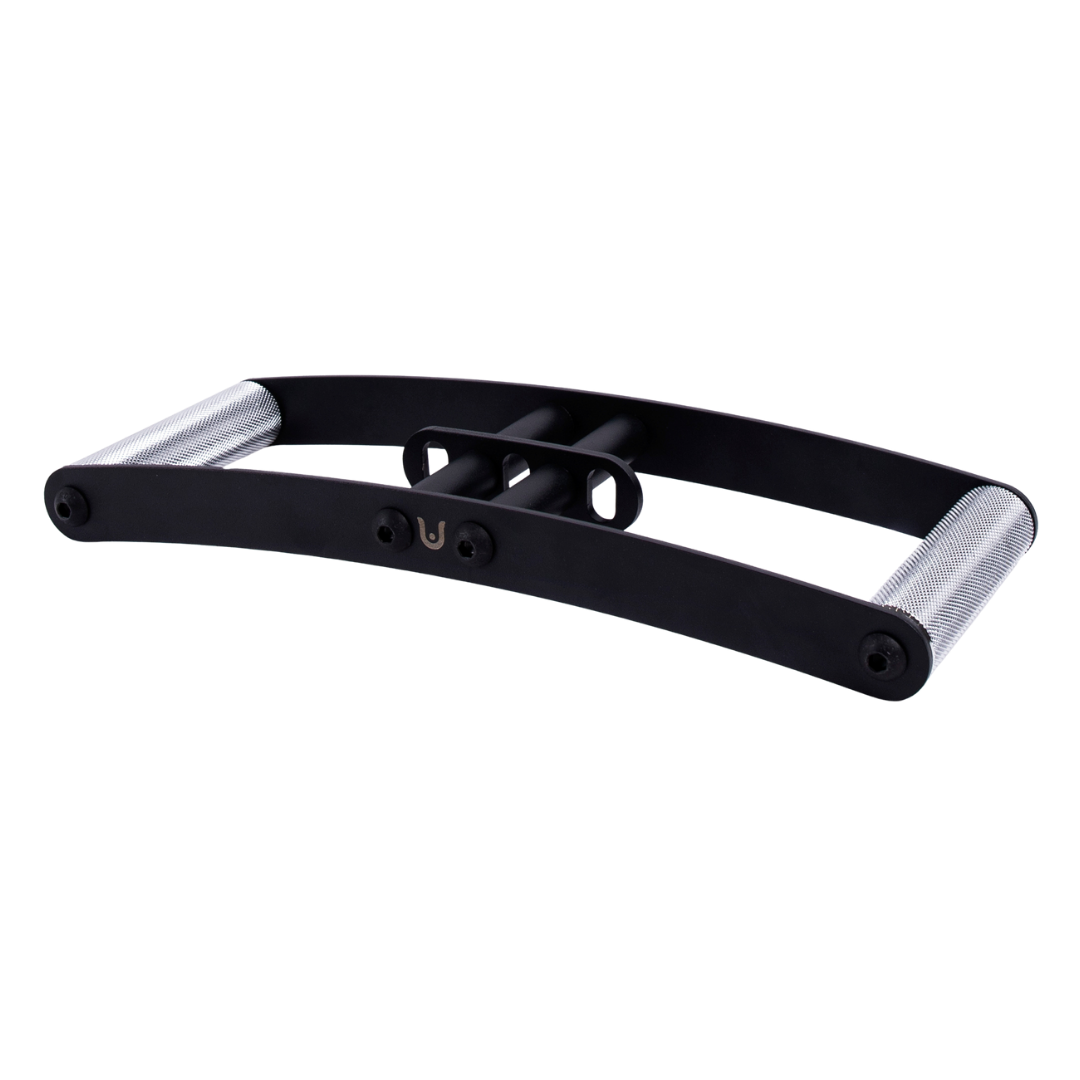
Horizon Grip
Ergonomic V-style cable grip for rows and back training.


T-Bar Row Attachment
Welded barbell attachment that connects a D-handle bar for landmine and T-bar rows.

GymPin Barbell Row Handle
Heavy-duty handle attachment for barbell, landmine and T-bar rows.

Angles 90 Grips
Flexible grip attachments that allow natural wrist movement during pulling exercises.

Leather Lifting Straps
Padded leather straps support grip during heavy rows, deadlifts and pulling exercises.

Power Tower
Freestanding pull-up and dip station with adjustable handles for bodyweight training.
Progress for six weeks without accumulating junk volume
Progressive overload means a measurable improvement in the work you can perform with consistent technique, not necessarily adding weight every time. Start Week 1 with loads that leave roughly two or three clean reps in reserve on most sets. Keep exercise selection stable so your logbook can distinguish genuine improvement from the novelty of a new movement.
Use a double-progression method. For a prescribed range of eight to twelve reps, hold the weight steady until you can complete all work sets near the top of the range without sacrificing control. Then increase the load by the smallest practical increment and rebuild the reps. For pull-ups, increase repetitions before adding a small amount of external weight; for machine work, the next pin may be a larger jump than you expect.
Weeks 1-2 establish repeatable technique and realistic starting loads. Weeks 3-4 aim to add repetitions or small load increases while preserving the same range of motion. Week 5 can be the hardest normal week if sleep, soreness and performance are good. In Week 6, either continue progressing if recovery remains solid or reduce total sets by roughly one-third to one-half for a lower-fatigue week. This is a flexible coaching model, not a claim that every lifter needs a deload on the sixth week.
Weekly hard-set volume matters, but more is not automatically better. Count pressing sets toward chest exposure and rows and pulldowns toward back exposure, while remembering that some movements train multiple regions. A useful starting point for an intermediate lifter might be around eight to twelve challenging sets for chest and ten to fourteen for back across the week, then adjust based on recovery and progress. These are illustrative ranges, not a fixed optimal dose for everyone. Adding a fourth chest fly when the first three movements already exhausted you is not evidence of a better program.
Common mistakes, shoulder comfort and recovery
The first common mistake is treating push-pull balance as a numerical law: one set of pressing must be matched by exactly one set of pulling. Different exercises recruit different tissues, and training history, goals and recovery vary. A second mistake is using momentum to turn rows into whole-body lifts. A third is assuming that a chest pump or back soreness proves the stimulus was optimal. Better evidence is consistent execution, improving performance and manageable fatigue over several weeks.
Warm up with a few minutes of easy movement and gradually heavier rehearsal sets for the first press and pull. On pressing exercises, keep the upper arm in a path your shoulders tolerate; a slight elbow tuck often feels better than aggressively flaring the elbows. On pulling exercises, avoid wrenching the neck forward to meet the handle or forcing the shoulder into an uncomfortable end position. Persistent pain, weakness or neurological symptoms warrant assessment rather than a heroic attempt to finish the prescribed sets.
Recovery is part of the program. If you also train shoulders, arms, deadlifts or hard conditioning during the week, those sessions can overlap with chest-and-back fatigue. Sleep, sufficient energy intake and adequate protein support training adaptation, but they cannot rescue an unsustainable workload. Reduce accessory sets before abandoning the major movements if performance is consistently falling.
Finally, choose equipment for function rather than novelty. A stable bench, a press option, a row and a vertical pull cover most of the essentials. Cables, adjustable dumbbells and different handles can improve convenience or comfort, but no single attachment guarantees growth. The best chest-and-back workout is the one that lets you repeat high-quality hard sets, recover, and make small, measurable improvements over months.
Funny Gym Shirts & Workout Gear
Funny gym shirts, tanks, hoodies and workout gear for lifters who like training hard.

Unbreakable Gains Back Tee
Make gym days more fun with “Unbreakable Gains: Strong Back Greek God” style.

Welcome To The Gun Show Bro Meme Hooded Weightlifting Hoodie
Bring “Welcome to the Gun Show” gym humor to lazy days and post-workout plans.

Lift Eat Repeat Sweater & Meme Fans T-Shirt
For laid-back days and lifting humor: “Lift Eat Repeat”.

Gymhead Skull Plate Water Bottles Laptop Decal Sticker
Put “Gymhead Skull Plate Funny Powerlifting” gym humor on your laptop, bottle, or gym gear.

– Dost Thou Even Hoist Sir? Vest & Tank Top
Add some lifting attitude to training with “Dost Thou Even Hoist Sir?”.

Shirt Pull Day – Back & Biceps Meme Top T-Shirt
Heavy lifts, good laughs, and a little “Pull Day Graphic” energy.


Be Stronger Than Your Excuses – Motivational T-Shirt
Rep “Be Stronger Than Your Excuses” humor in and out of the gym.

Safety Practice Safe Sets Vest Weightlifting Tank Top
Bring “Gym Safety” humor to your next lifting session.

Chest Day Sweater Bench Press & Meme T-Shirt
Add a playful “Chest Day” touch to your casual rotation.