Why the Bulgarian split squat belongs in serious leg training
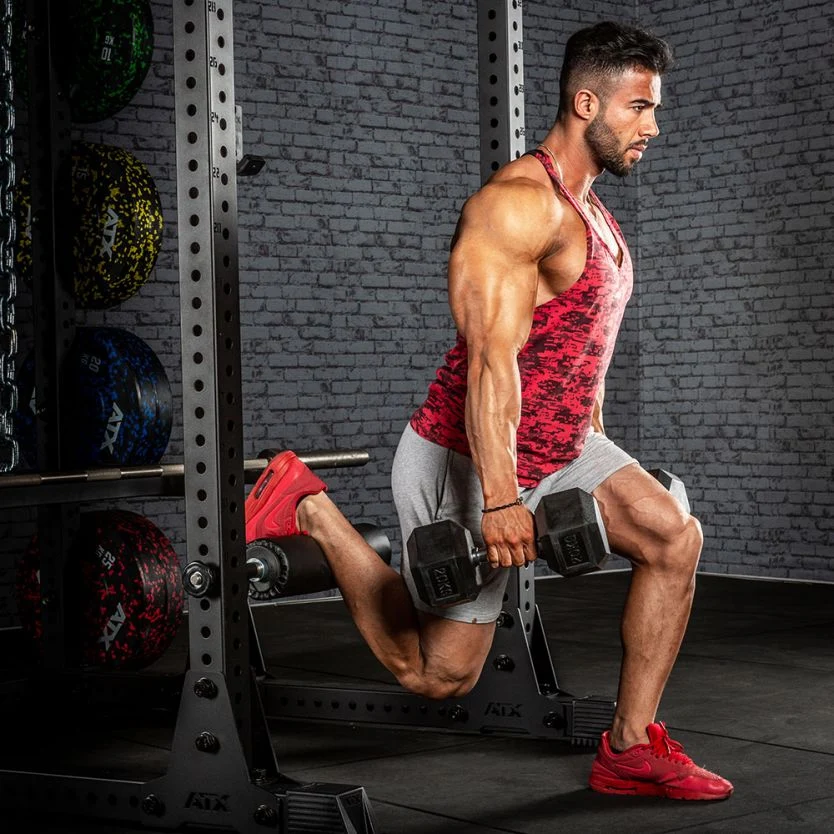
The Bulgarian split squat looks simple until the first demanding set. With the rear foot elevated, the front leg must produce most of the force while the hips and trunk prevent wobbling. A few hard repetitions can make the quads, glutes and adductors work without the enormous total weight required for a bilateral back squat. That makes it a valuable accessory for bodybuilders, powerlifters, field athletes and anyone building a compact home gym.
The real question is how heavy that front leg needs to work. Conventional strength advice emphasizes progressively heavier resistance. Blood flow restriction, or BFR, takes another route: a properly calibrated cuff high on the thigh increases the difficulty of light-load exercise. The load in your hands can be dramatically lower while the set still feels punishing. Neither method is automatically superior, and the choice should reflect your training objective rather than novelty.
A controlled six-week experiment directly compared these approaches in trained young men. One leg used heavy Bulgarian split squats and the other used light split squats with individualized BFR. The study offers a useful way to think about quad growth, unilateral strength and practical programming, although it does not turn BFR into a mandatory bodybuilding accessory.
For a typical leg day, the split squat is best viewed as a scalable tool. You can train it with dumbbells, a barbell, a cable resistance unit or even bodyweight while learning the pattern. If balance is limiting the quads before they become fatigued, a lightly supported variation may be more productive than forcing an unstable circus act.
The six-week trial: 24 trained men, two loading methods
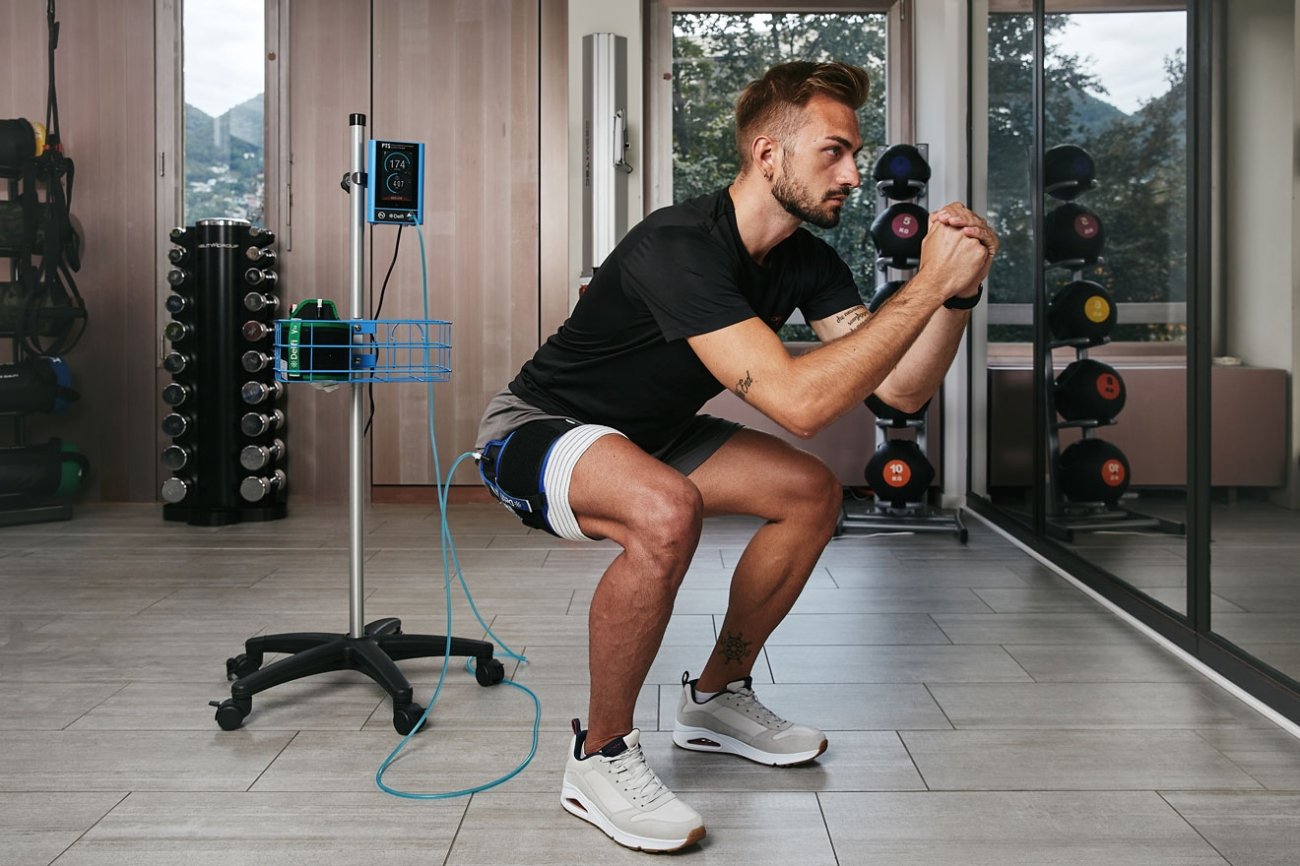
Twenty-four resistance-trained men, averaging roughly 21 years old and with several years of lifting experience, completed eighteen supervised sessions across six weeks. Each participant trained both legs, but the conditions differed. One leg performed Bulgarian split squats at about 80% of its one-repetition maximum for four sets of ten. The other used 30% of its one-repetition maximum with BFR for a 30-15-15-15 repetition sequence. This within-person design helped reduce differences caused by genetics, diet and general training history.
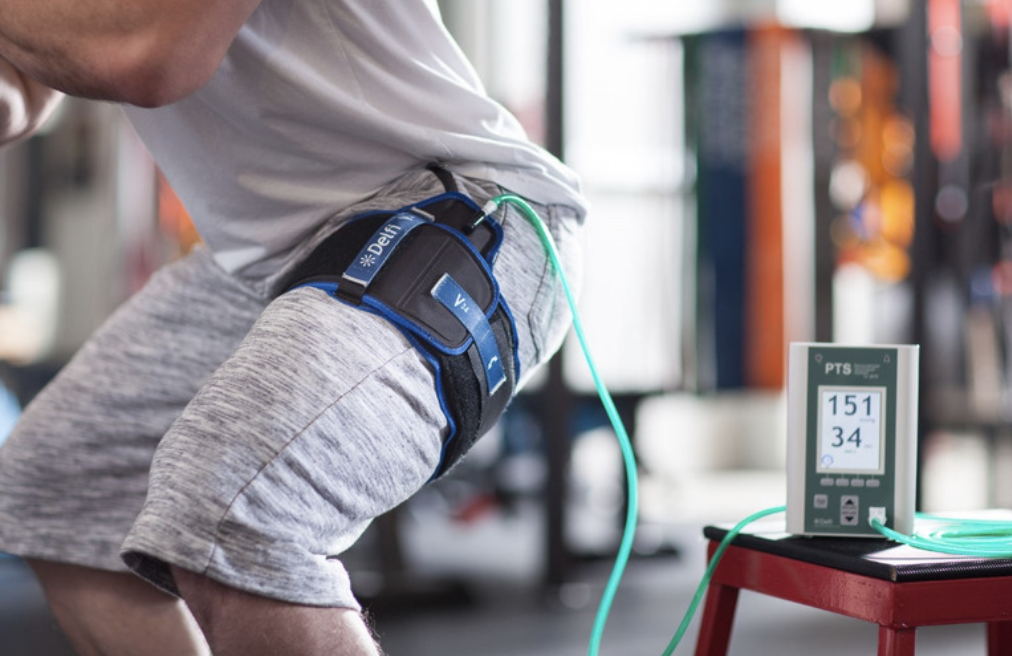
The BFR condition used pneumatic thigh cuffs and individualized pressure based on estimated arterial occlusion pressure. It was not a casual elastic band tied tightly around the leg. Heavy sets received longer rests, while the light-load BFR sets used brief recovery periods. The programs therefore differed in more than weight: repetitions, rest and cuff pressure were also part of the training stimulus.
Both legs improved. In the study’s abstract, Bulgarian split squat maximal strength rose approximately 10.7% with BFR and 13.0% with heavy loading. The outer quadriceps muscle thickness increased in both conditions, and single-leg jumping measures improved as well. Statistical testing did not identify a significant difference in the changes between conditions. That is not proof that the methods are identical; it means the experiment did not establish a clear winner over six weeks.
One important limitation is that the participants trained the two conditions in opposite legs of the same body. Neural adaptations, recovery and general physiological responses may be shared. The trial was also short and measured one region of quadriceps thickness, not complete leg hypertrophy over a year. These results support BFR as a credible option, not a reason to abandon heavy lifting.

Equipment Worth Exploring
Explore equipment, accessories and gear from our carefully selected range.


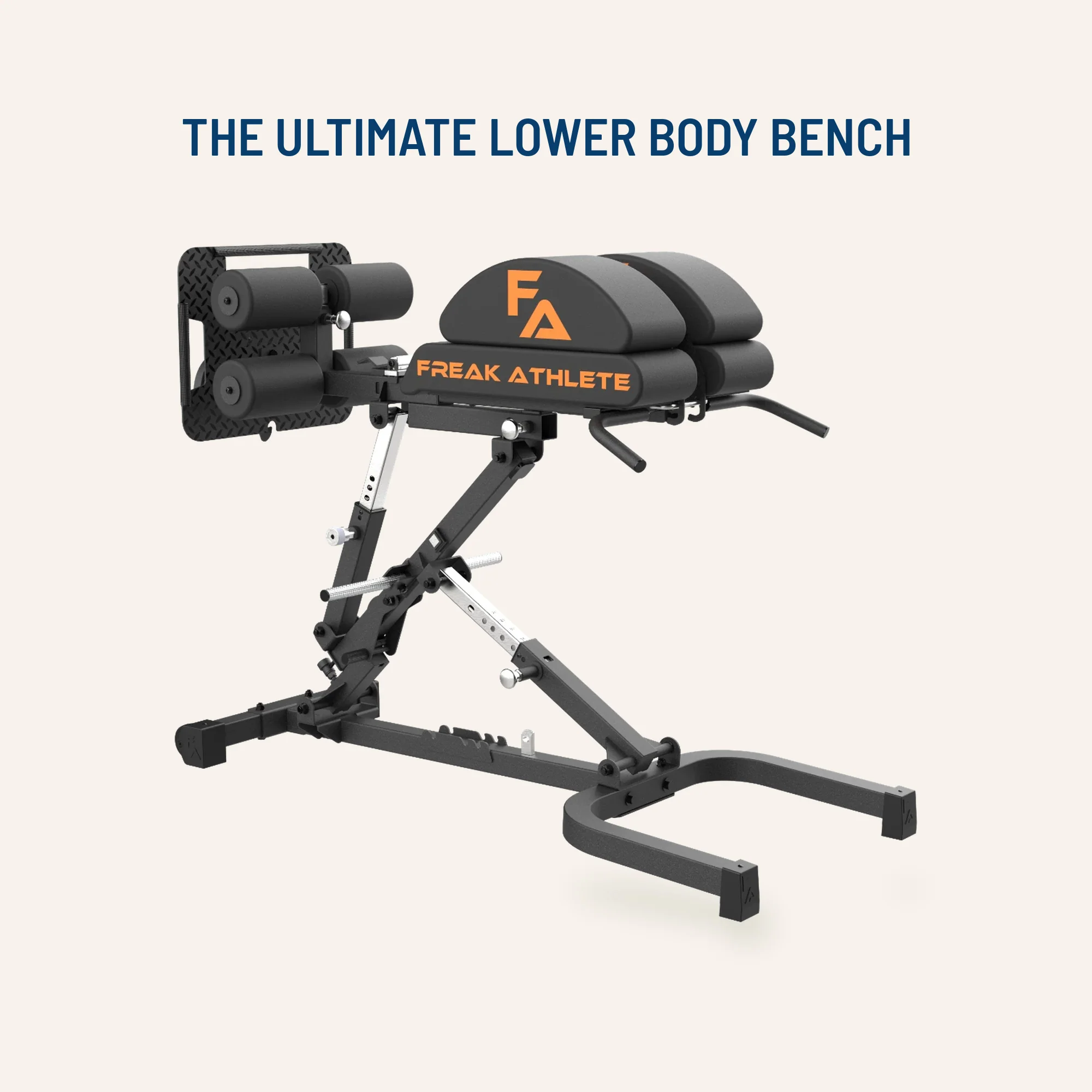
FID Bench MAX
Adjustable bench offering flat, incline, and decline positions + adjustable headrest.



GymPin Squat Wedges
Non-slip 15-degree squat wedges help elevate the heels for deeper quad-focused squats.
How light loads with BFR challenge the quads
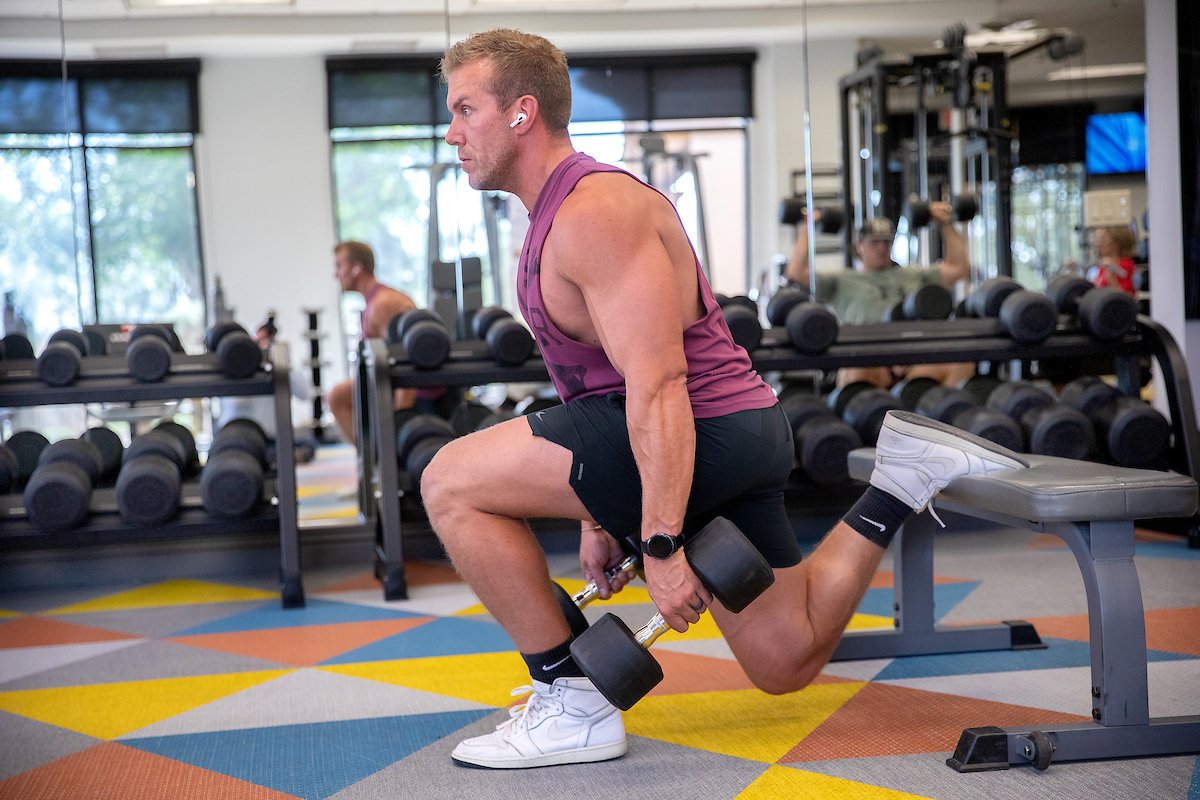
Blood flow restriction training uses a specialized cuff around the upper portion of a limb to modify blood flow during exercise. Under a light external load, repeated contractions and short rests can generate substantial local fatigue. The quad muscles may feel as though they have completed a much heavier workout, even though the dumbbells or bar are relatively light. The sensation is not a reliable substitute for progressive training records, but it helps explain why the method can be demanding.
The crucial distinction is between muscular effort and mechanical loading. Heavy split squats expose the working leg to substantial external resistance and teach the lifter to produce force against it. BFR split squats emphasize repeated contractions under a low load with an additional metabolic challenge. Muscle growth can respond to both, but sport-specific maximum strength still benefits from regular practice with heavy weights.
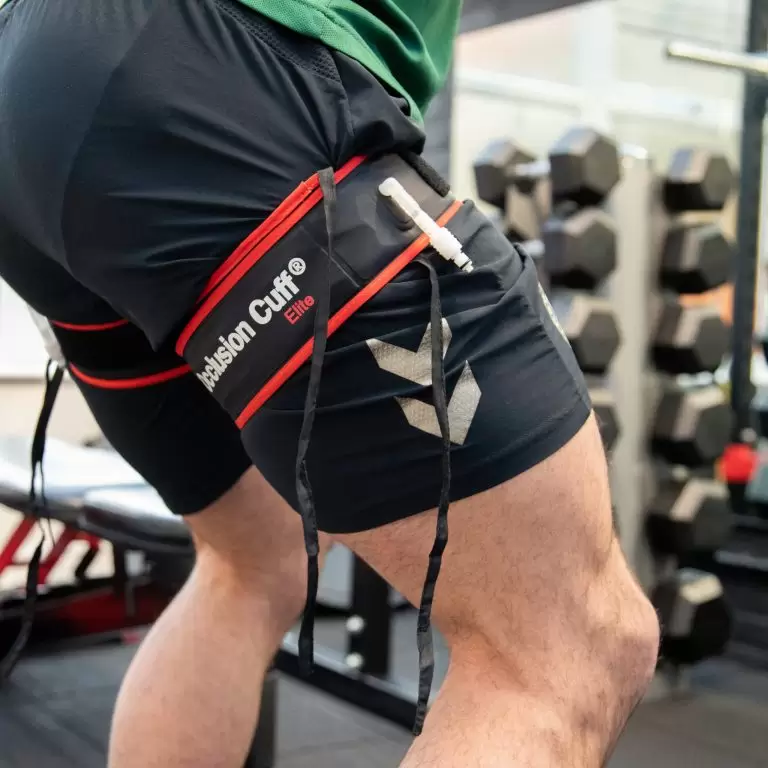
Do not confuse the BFR protocol with simply doing high-repetition bodyweight split squats. The research condition used equipment to estimate and control pressure, and it employed a defined set structure. That is different from pulling an ordinary knee sleeve as tight as possible. Pressure that is too high can create unnecessary risk, while an uncontrolled setup makes the training dose impossible to reproduce.
For most healthy lifters, BFR is an optional supplement rather than the foundation of leg training. If your knees and hips tolerate conventional loading, standard hard sets of squats, lunges and split squats remain straightforward. BFR becomes more interesting when equipment is limited, a lower-load session is desired, or a qualified clinician recommends it during a carefully managed return to training.
Bulgarian split squat form that actually loads the front leg
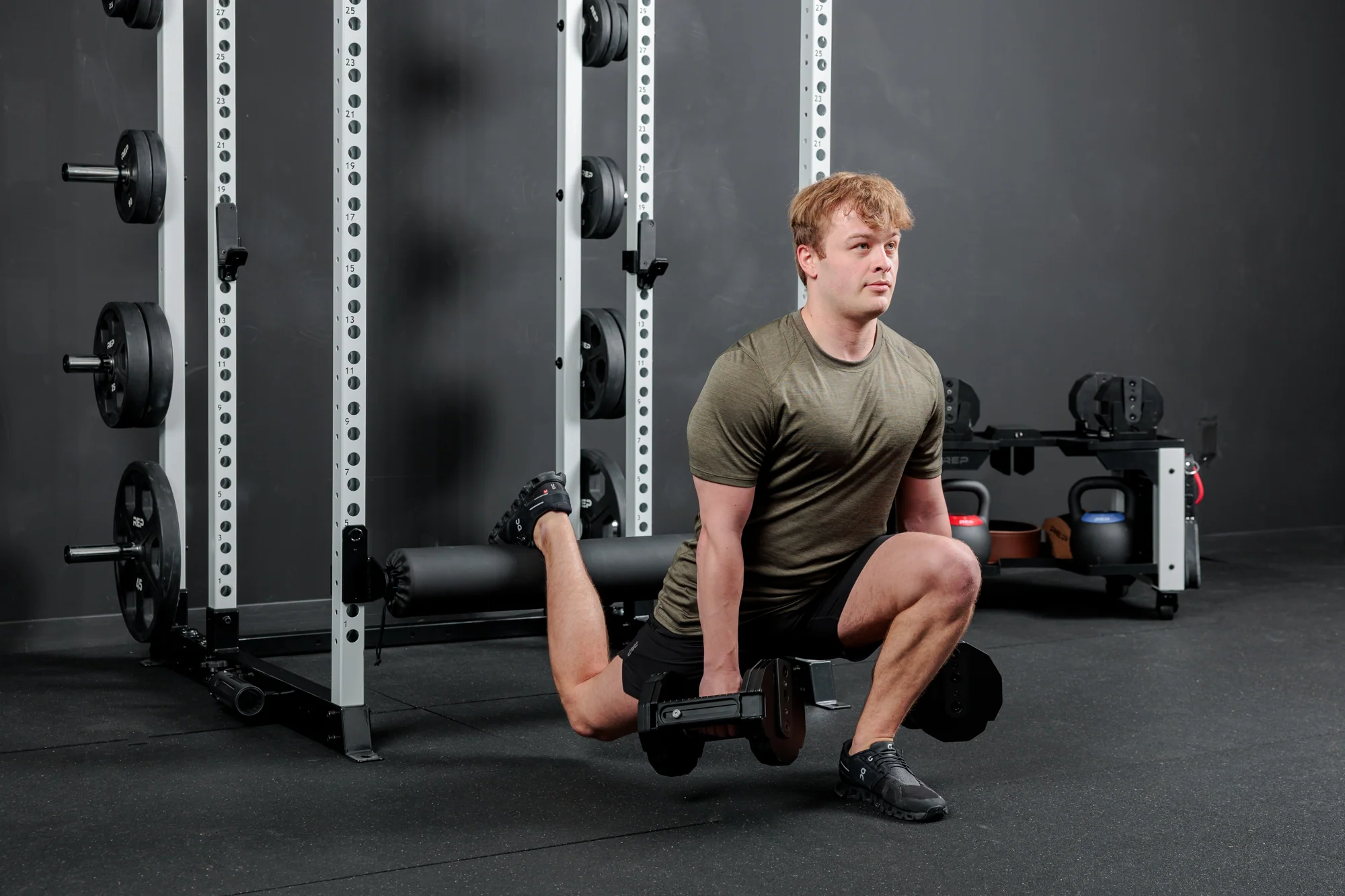
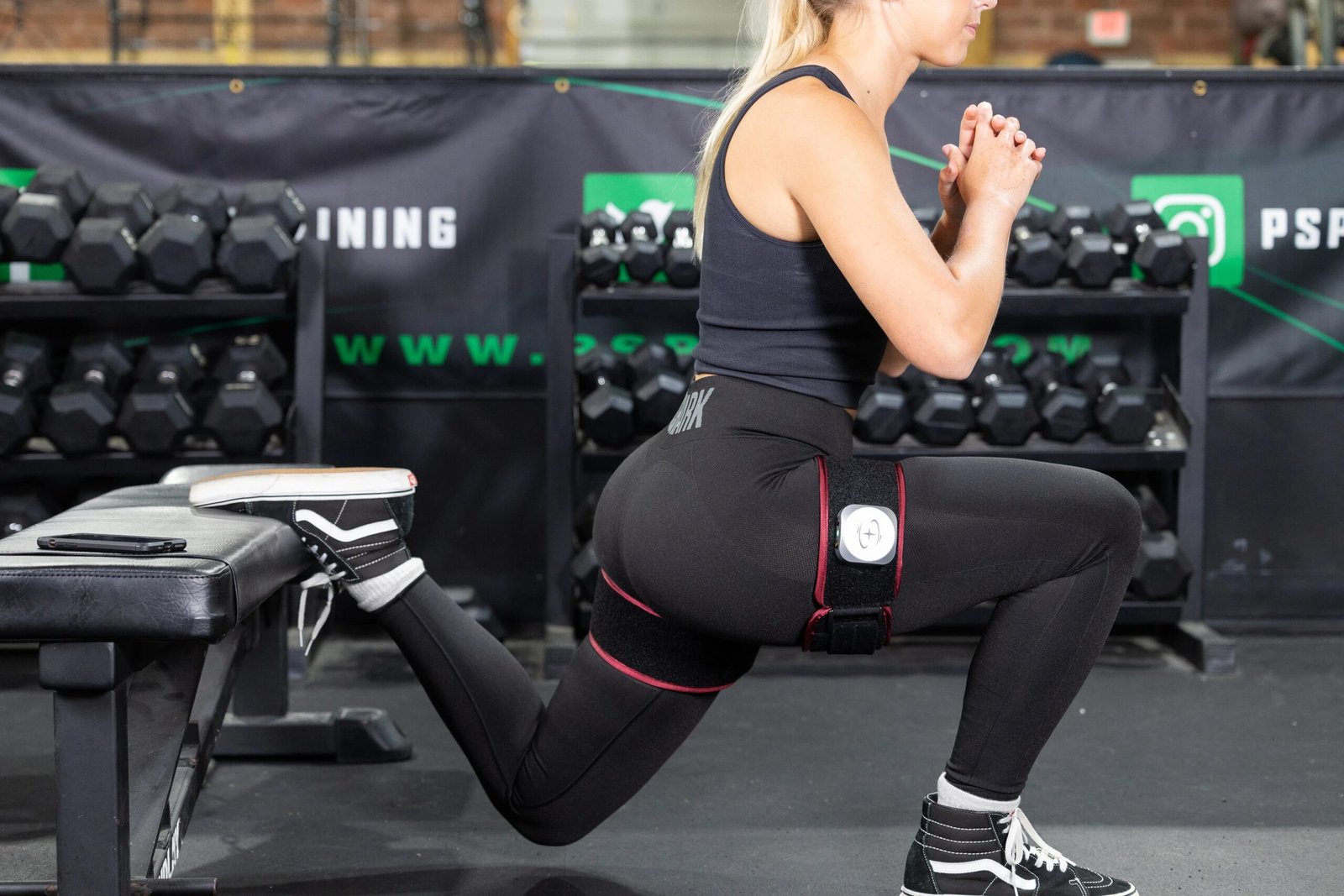
Start with a bench or stable rear-foot support at approximately knee height or slightly lower. Place the top of the rear foot on the support and step forward until you can lower under control without being pulled backward. Keep the front foot planted with pressure spread across the heel, big-toe base and little-toe base. Your rear leg helps with balance; it should not drive the repetition.
Lower by bending the front knee and hip together. A modest forward torso lean is normal and often makes the glutes work harder, while a more upright posture can shift the feeling toward the quadriceps. Neither position is inherently wrong. What matters is a consistent depth, a stable front knee and enough control to repeat the movement without bouncing off the bottom.
Allow the front knee to travel forward when your ankle mobility and comfort permit it. Knee travel is not automatically dangerous. Avoid deliberately forcing a vertical shin if it makes your stance awkward or shifts effort away from the intended muscles. At the bottom, keep your pelvis organized, then push through the front foot to stand tall without springing off the rear toes.
Before adding heavy dumbbells, perform a set of eight slow bodyweight repetitions per side. If balance limits you, use a rack upright or another stable support with one hand. You can still overload the working leg effectively while removing needless coordination noise. Track the same rear-foot height, stance distance and depth each week so an increase in load represents genuine progress.

Leg Day Shirts & Workout Gear
Leg-day gym shirts and workout gear for lifters who never skip squats, lunges and lower-body punishment.

Heavy Squatter Gym Wizards | Funny Harry Potter Workout Hoodie
Make your off-duty look more fun with “Heavy Squatter Gym Wizards”.

Swolebob Squatpants Gym | Funny SpongeBob Leg Day Meme Hoodie
Show off your leg-day humor in a laid-back “Swolebob Squatpants” hoodie.


Squat You Must Star Wars Leg Day Meme Sweater T-Shirt
Show some gym-day personality with “Squat You Must”.

Leg Day Is Calling You Sweater Squats & Deadlifts T-Shirt
Add a playful “Leg Day Is Calling You” touch to your casual rotation.

Negative Leg Day Review 1 Star Not Recommended Tank Top
Train hard, laugh a little, and rep “Negative Leg Day Review”.

Squatbucks Gym Coffee Funny | Starbucks Parody Workout T-Shirt
Keep things casual with a little “Squatbucks Gym Coffee” attitude.

Never Skip Leg Day – NSLD Meme Fried Chicken Jumper Pul T-Shirt
Add a playful “Never Skip Leg Day” touch to your casual rotation.

Viking Squats – Norse Workout Meme Pullover Jumper T-Shirt
Bring “Viking Squats” humor to your everyday gym style.

Leg Press Dost Thou Even Press Medieval Knight Muscle S Tank Top
Bring “Leg Press” humor to your next lifting session.
Heavy weights or BFR: which should you choose?
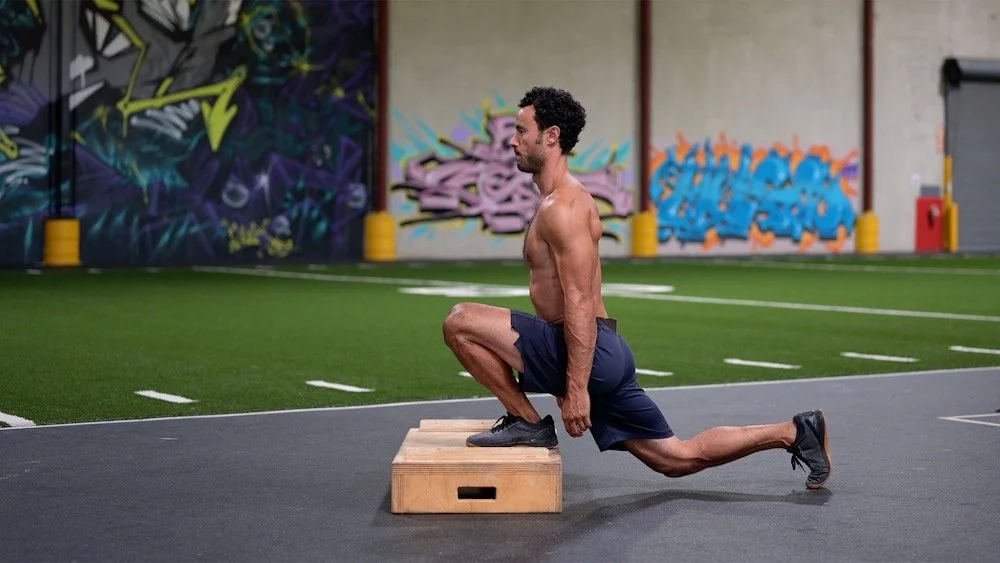
If the priority is a bigger squat, greater absolute strength or stronger heavy unilateral positions, make conventional loading your default. Sets of six to ten controlled Bulgarian split squats per leg at a challenging effort can fit after squats or deadlifts. The weight should be heavy enough to demand focus but not so heavy that every repetition becomes a balance recovery.
For bodybuilding, the decision is more flexible. The trial found improvements in quad thickness under both methods, and other resistance-training research supports muscle growth across a broad loading range when sets are sufficiently challenging. Heavy work often offers an efficient route to high tension, while BFR can deliver a strong local stimulus with smaller dumbbells. Neither replaces adequate weekly volume, protein intake, sleep and gradual progression.
Equipment matters. A home gym with adjustable dumbbells and a bench already has almost everything required for heavy split squats. A rack and barbell provide more loading options, while a cable resistance machine can offer smooth resistance and easy increments. A belt squat or supported setup may be useful when grip or upper-body loading becomes the bottleneck.
Keep expectations realistic. A six-week comparison in 24 men does not prove that BFR is better for advanced bodybuilders, that it prevents injury, or that it produces the same results in every muscle. The most defensible conclusion is narrower: under a carefully supervised protocol, lower-load BFR split squats produced meaningful improvements that were not statistically distinguishable from the heavy condition in this sample.
Equipment Worth Exploring
Explore equipment, accessories and gear from our carefully selected range.
VOLTRA
Compact digital cable trainer with smooth, adjustable resistance.

Go-Tone Pro
Portable digital cable trainer with up to 66 lb (30 kg) of adjustable resistance.

Squat Harness
Wearable harness for hands-free cable squats, sled work, and lower-body training.



Home-gym equipment, cuff safety and common mistakes
For conventional split squats, a sturdy bench and adjustable dumbbells are the most practical starting point. A rack can provide a handhold and improve repeatability. If you use a barbell, set safeties and avoid awkwardly stepping backward with a heavy load while one foot is on a bench. For tall lifters, rear-foot support height and stance length may need adjustment; the aim is stable hip and knee motion, not copying somebody else’s exact setup.
With BFR, equipment quality and screening are non-negotiable. The research used calibrated pneumatic cuffs and individualized arterial occlusion pressure. Do not reproduce the reported pressure as a universal setting. Cuff width, limb size, device calibration and individual circulation all matter. Anyone with a history of blood clots, vascular disease, uncontrolled blood pressure or relevant medical concerns should seek qualified medical advice before considering BFR.
Stop if you experience unusual pain, numbness, marked discoloration, dizziness or other concerning symptoms. Ordinary exercise fatigue is not a reason to ignore warning signs. BFR should not be used as a challenge to see how tightly a band can be wrapped. If you lack appropriate equipment or qualified guidance, skip the cuffs and use conventional resistance training instead.
Other frequent errors are easier to fix: changing stance length every set, allowing the rear leg to do the work, cutting depth when the load rises, and comparing a high-repetition pump set with a heavy strength set as though they measure the same thing. Film a few reps from the side, choose a repeatable range and let the logbook rather than the burn guide progression.
A practical six-week leg plan without gimmicks
Here is a simple framework for a lifter training legs twice weekly. On the first day, prioritize a bilateral squat or leg press, then perform three sets of Bulgarian split squats per leg for six to ten repetitions. Rest roughly two to three minutes between hard sets, using a weight that leaves one to three good repetitions in reserve. Finish with hamstring work and calf training as needed.
On the second lower-body day, use a slightly lighter split-squat variation for two or three sets of ten to fifteen repetitions per leg. Add a hip hinge, a hamstring curl and whatever smaller movements fit your recovery. If you have professional BFR supervision and an individualized protocol, this lighter session is where a controlled low-load BFR block could replace conventional split-squat sets. Otherwise, standard dumbbell or bodyweight work is entirely adequate.
During weeks one and two, establish your stance, range of motion and a baseline load. In weeks three and four, add repetitions while preserving depth. Once all sets reach the top of the target range with stable technique, increase the load by the smallest practical increment. In weeks five and six, continue the progression but reduce a set if fatigue from other leg work starts to compromise movement quality.
Record weight, repetitions, depth consistency and perceived effort for each leg separately. If one side is weaker, start with that side and let it determine the target repetitions rather than giving the stronger side extra work. The goal is not to erase every small asymmetry in six weeks; it is to build two stronger legs with repeatable training. Heavy split squats are a reliable default, and properly supervised BFR is an option—not a requirement—for lower-load phases.
Powerlifting Shirts & Lifting Gear
Powerlifting shirts and gym gear for squat, bench and deadlift lifters who live for heavy numbers.
Heavy Metal Skeleton Squat for Powerlifters, Bodybuilde T-Shirt
A t-shirt featuring the Heavy Metal Skeleton Squat for Powerlifters, Bodybuilders and Leg Day Lifters artwork, bringing lifting-inspired humor and distinctive gym graphics to your everyday gear.

Thundersquat – AC/DC Rock Music , Gymbro & Meme Top T-Shirt
Heavy lifts, good laughs, and a little “Thundersquat” energy.


If The Bar Ain't Bending You're Just Pretending – Power T-Shirt
For laid-back days and powerlifting humor: “If The Bar Ain't Bending You're Just”.

Gym The Bar Does Not Lie Medieval Knight Lifting Shirt T-Shirt
Make gym days more fun with “The Bar Does Not Lie Medieval Knight” style.

3 Plates Squat Club : Essential Meme & Leg Day T-Shirt
Make gym days more fun with “3 Plates Squat Club” style.


Lord of the Weights Gym | My Precious Funny Workout Pul Hoodie
Bring “Lord of the Weights” gym humor to lazy days and post-workout plans.

Coffee Shots & Heavy Squats for Caffeine Lovers, Liftin T-Shirt
Show some leg-day attitude with a playful “Coffee Shots & Heavy Squats” tee.