Four shoulder presses, four different training demands
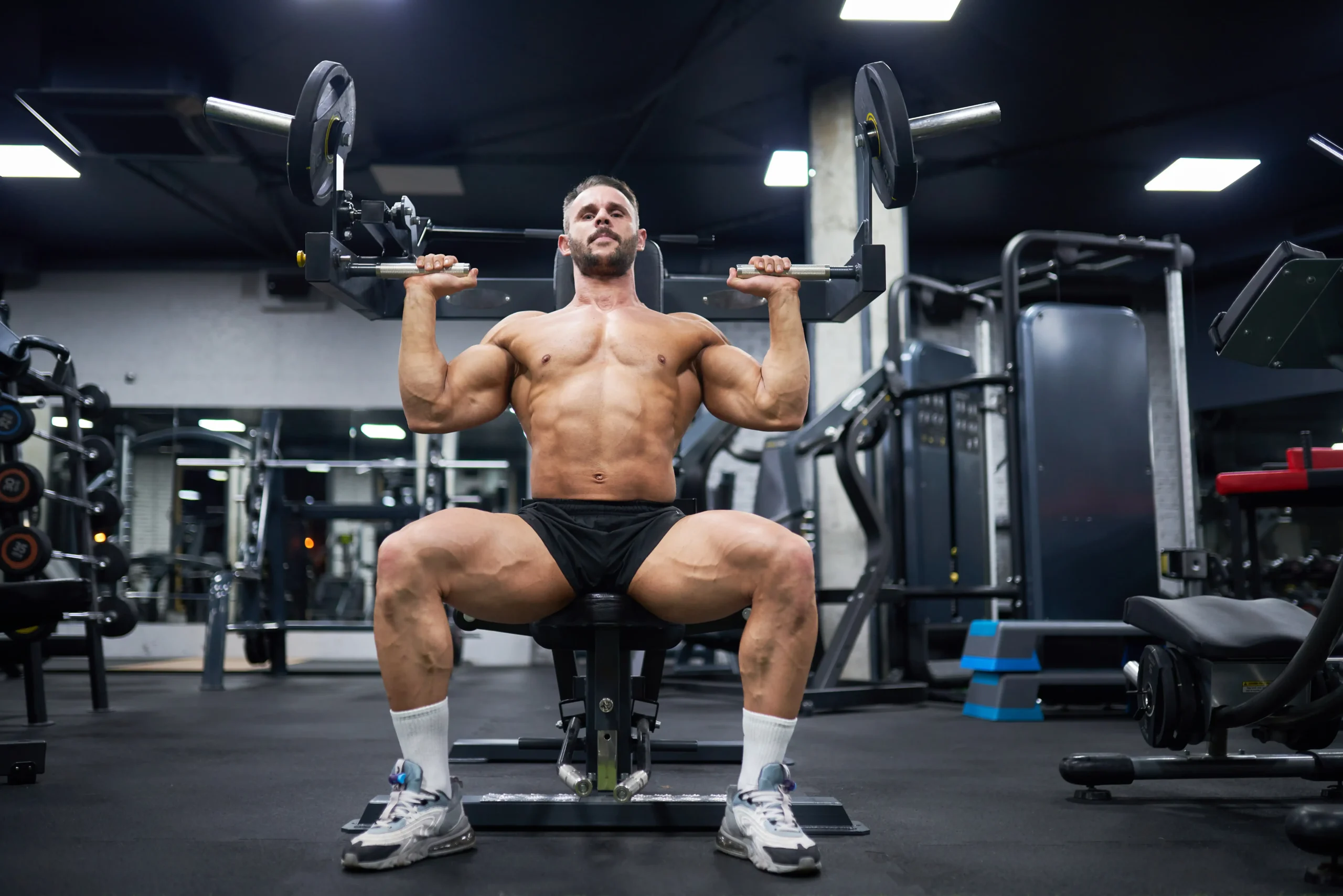
The shoulder press is a staple for building stronger delts, but the phrase covers four noticeably different lifts: a barbell press while standing, a barbell press while seated, a dumbbell press while standing, and a dumbbell press while seated. All raise weight overhead. They do not impose the same balance demand, permit the same load, or ask the same amount of work from the trunk.
Standing removes the backrest and asks your feet, hips, abdomen and upper back to keep the body organized while the weight travels. Sitting on a stable bench reduces some of that whole-body demand, especially with back support. A barbell joins both hands into one implement, making it easier to coordinate a heavier total load. Dumbbells allow the arms to travel more independently but introduce extra stabilization work.
These differences matter because “better” depends on the goal. A lifter preparing for a strict standing barbell press should practice that lift. Someone pursuing shoulder size may prefer the setup that allows repeatable, hard sets without technique collapsing. A beginner may need a simple, stable entry point before chasing maximal loading. None of the variations is a universal winner, and none automatically replaces lateral raises or pulling work for complete shoulder development.
Instead of asking which version activates the most muscle in one repetition, consider the amount of productive training you can repeat across months. That is where exercise selection starts to matter.
What a 15-man shoulder-press experiment actually found
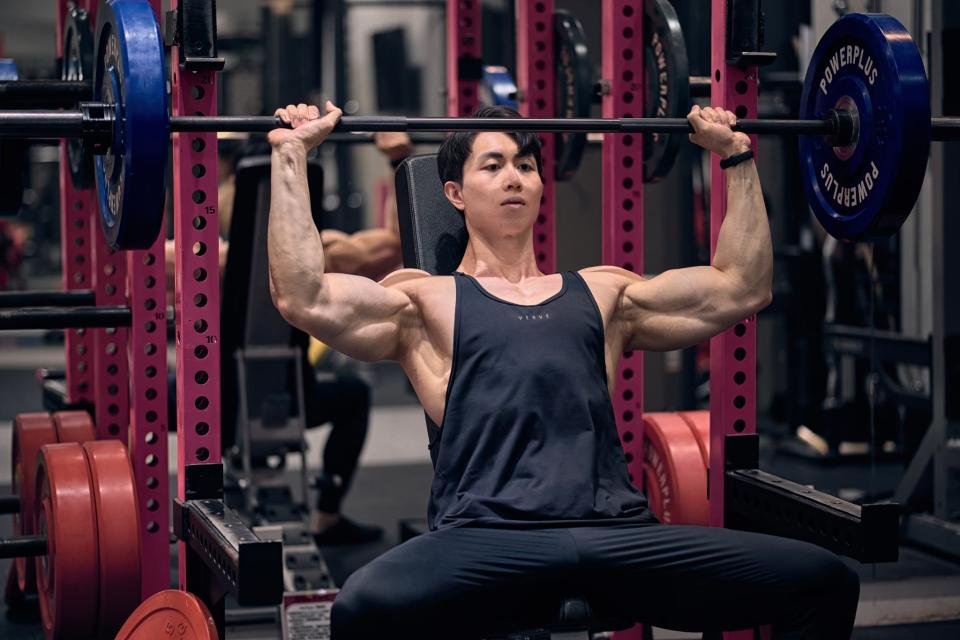
A controlled comparison tested fifteen healthy men across seated and standing barbell and dumbbell shoulder presses. The investigators measured one-repetition maximum strength and electrical activity in the front, side and rear deltoids, biceps and triceps during loaded repetitions. This was a snapshot of performance and muscle activation, not a multiweek muscle-growth experiment.
The most demanding stability combination, standing with dumbbells, generally produced higher deltoid activation while allowing less weight. For example, front-deltoid activity was about fifteen percent greater with standing dumbbells than standing barbells in the reported comparison. Side-deltoid activity was approximately fifteen percent higher standing than seated with dumbbells. Rear-deltoid activity was about a quarter higher standing than seated in both barbell and dumbbell comparisons.
The load findings ran in the other direction. Standing dumbbell one-rep maximum was approximately seven percent below standing barbell and ten percent below seated dumbbell in the measured participants. Triceps activity was also substantially greater during standing barbell pressing than standing dumbbell pressing in one comparison. The precise percentage depends on the muscle and the pairing: do not generalize one number to every muscle or every athlete.
The useful interpretation is a tradeoff. A less stable exercise can demand more coordination and electrical activity while limiting the load you can lift. A more stable exercise may let you apply more external resistance and accumulate consistent repetitions. Neither result establishes which variation builds more muscle after twelve weeks.

Equipment Worth Exploring
Explore equipment, accessories and gear from our carefully selected range.


FID Bench MAX
Adjustable bench offering flat, incline, and decline positions + adjustable headrest.


Why more EMG does not guarantee bigger delts
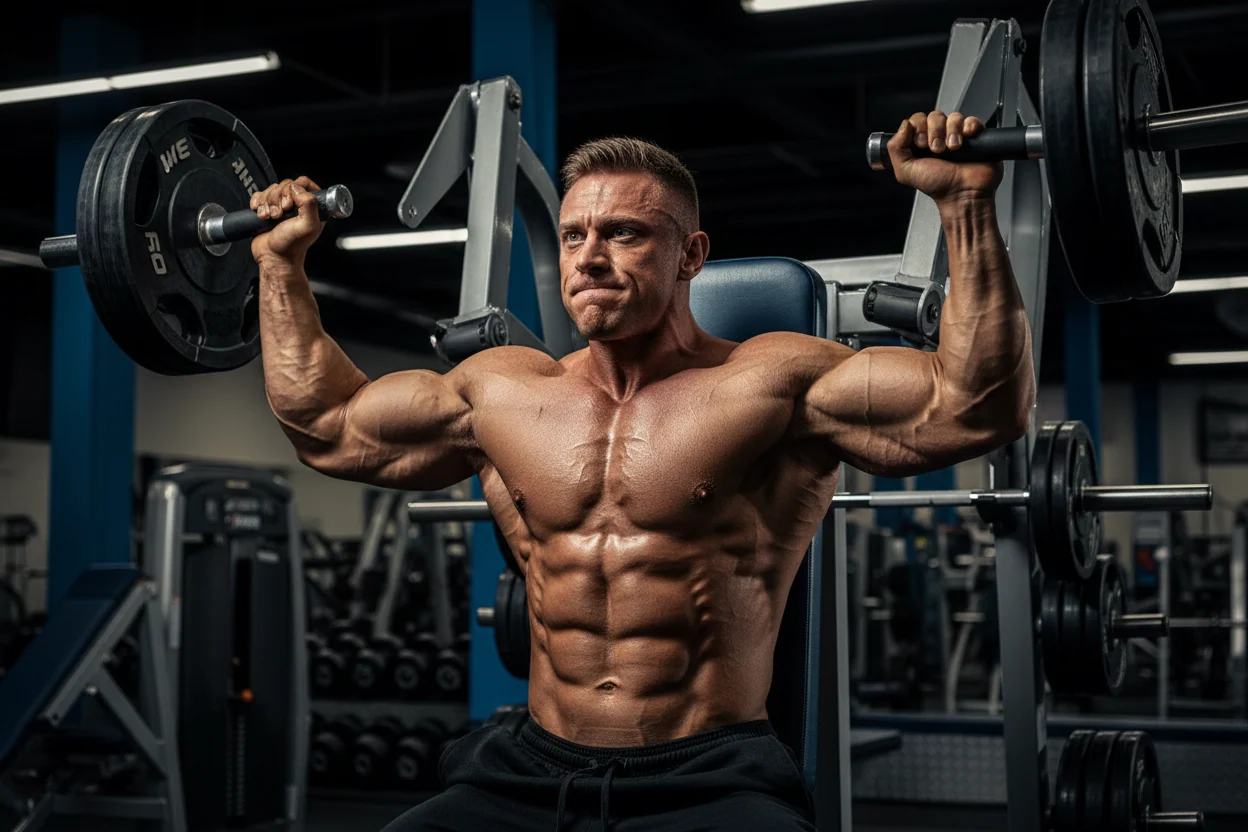
Electrical muscle activity is useful for describing what happened during a particular exercise trial, but it is not a direct measurement of hypertrophy. Greater activity in a difficult balancing condition can reflect stabilization, altered recruitment or fatigue rather than a larger long-term growth stimulus. Muscle growth also depends on mechanical tension, sufficiently challenging sets, total training, recovery and the ability to progress.
There is another complication: a press works more than the front deltoid. The triceps extend the elbows, the shoulder blades rotate upward, and the torso keeps the ribs and pelvis organized. A standing dumbbell press can ask more of those supporting systems without being the best way to isolate the target muscle. A seated press can remove some balance demands so the shoulders become the clearer limiting factor.
Do not use the study’s percentages as a promise that standing dumbbells will build fifteen percent more shoulder mass. Fifteen participants and acute EMG testing cannot support that claim. The trial also does not settle injury risk, individual shoulder comfort or the ideal number of weekly sets.
For practical bodybuilding, compare your own repeatable performance: range of motion, joint comfort, proximity to failure, technique consistency and whether the same load becomes easier over time. If standing presses always turn into a backward lean and leg drive, a seated variation may make the intended shoulder work easier to control. If you enjoy a strict standing press and can load it progressively, there is no need to abandon it for an EMG ranking.
Standing barbell press: build strength without turning it into a push press
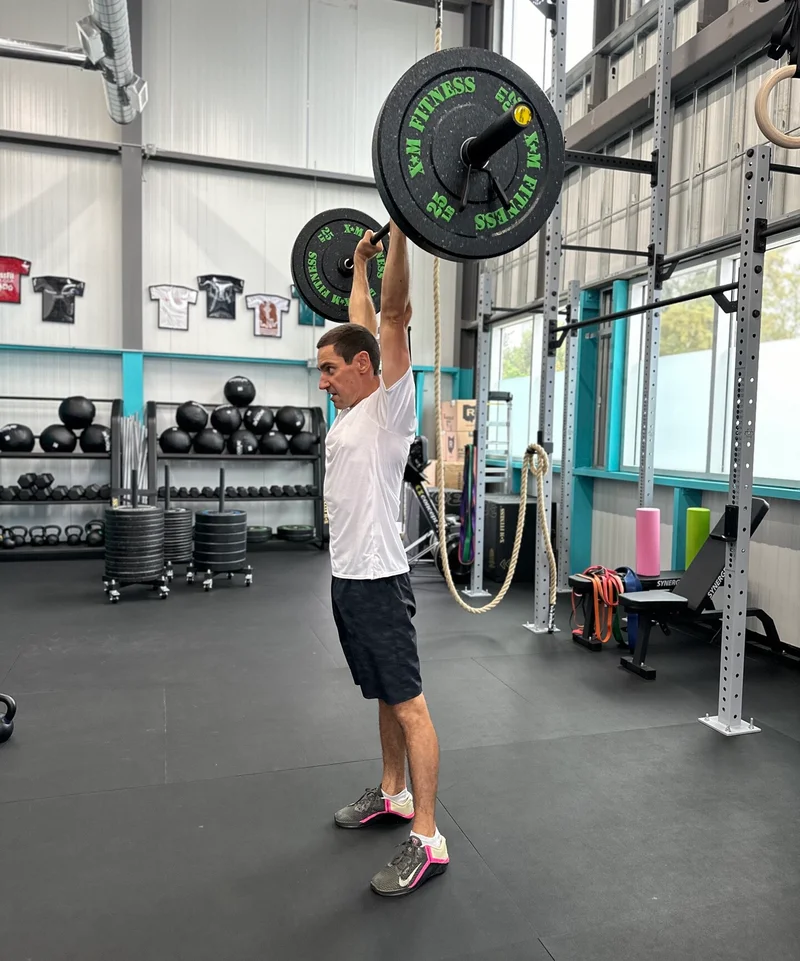
Set the bar near upper-chest height, grip it just outside shoulder width, and establish a stable stance roughly hip-width apart. Keep your wrists stacked over your forearms rather than bent dramatically backward. Before the first rep, brace your abdomen and glutes as if preparing for a heavy squat, then move the head slightly out of the bar’s path as you press.
The bar should travel close to your face, not swing in a huge arc away from the body. As it clears your forehead, bring the head and torso underneath to finish with the bar balanced above the shoulders and midfoot. Lower under control to a comfortable front-rack position. A small natural torso adjustment is different from repeatedly arching the low back to escape a weight you cannot press strictly.
Use a manageable load for sets of three to eight when strength is the priority. Rest long enough to reproduce crisp repetitions. If the knees dip to initiate every rep, you have shifted toward a push press, which is a valid separate exercise but should not be logged as the same lift. If shoulder mobility makes a front-rack position uncomfortable, experiment with grip width, dumbbells or a neutral-grip implement rather than forcing a painful path.
For athletes who care about overhead strength, standing barbell work also develops the skill of coordinating the whole body under a load. It is a technical lift: treat the first rep of every set as a deliberate setup, not a race to get the bar moving.

Bodybuilding Shirts & Workout Gear
Bodybuilding shirts, tanks and gym gear for lifters chasing muscle, size, symmetry and the pump.


Superman Dumbbells Logo – Superhero Workout for Bodybui T-Shirt
Bring “Superman Dumbbells Logo” humor to your everyday gym style.

Gymbro Heavy Metal Lifting | Funny Workout with Skull D Hoodie
Bring “Gymbro Heavy Metal Lifting” gym humor to lazy days and post-workout plans.


Big Flex Theory Tee
Bring “The Big Flex Theory Science-Based Lifting” humor to your next gym day.

Doom-Bells Villain Doctor Doom & Dumbbells Meme & T-Shirt
Rep “Doom-Bells” humor in and out of the gym.

Math 45+45=135 Shirt Meme – Top & Gymbros T-Shirt
Heavy lifts, good laughs, and a little “Gym Math 45+45=135” energy.

Vitruvian Man With Dumbbells Shirt: Leonardo Da T-Shirt
Bring “Vitruvian Man With Dumbbells” humor to your next gym day.

Listen Heavy Lift Heavy Gym | Heavy Metal Lifting Skull Sticker
Stick a little “Listen Heavy Lift” humor on your favorite gear.
Seated dumbbell press: a reliable bodybuilding option
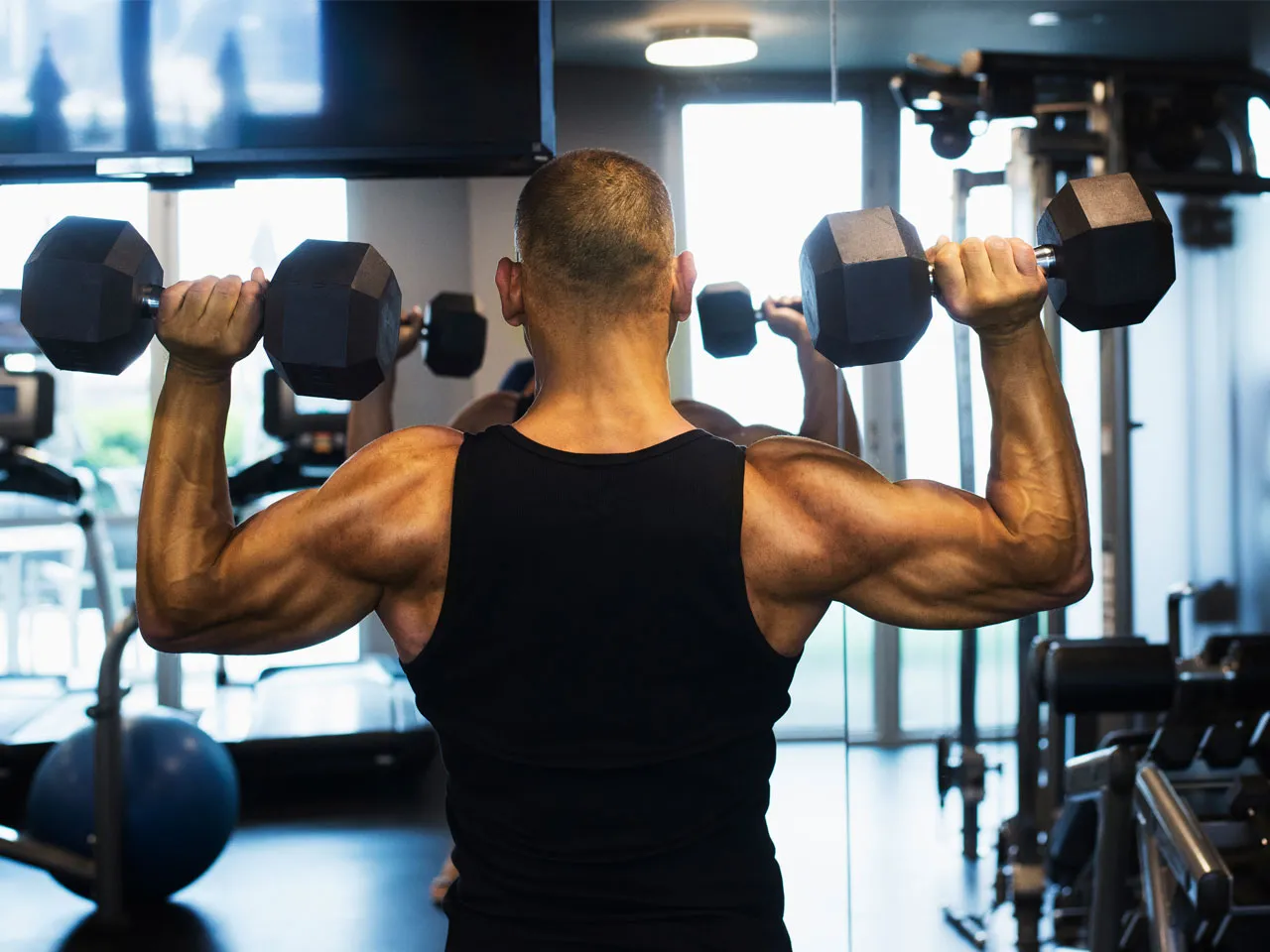
Place an adjustable bench at a near-upright angle that supports the upper back without turning the movement into a steep incline chest press. Plant both feet securely and bring the dumbbells to shoulder level with palms facing forward or slightly inward. Keep the forearms roughly vertical, then press through a comfortable overhead arc without crashing the weights together at the top.
Compared with standing dumbbells, the backrest reduces the need to balance the entire body. That often makes it easier to work close to muscular fatigue with predictable form. Dumbbells also permit a degree of individual arm path adjustment, which some lifters find more comfortable than a fixed straight bar. That freedom does not mean the dumbbells should drift wildly or that the elbows must flare directly sideways.
Start with two or three challenging sets of six to twelve reps, leaving roughly one to three repetitions in reserve. Progress only when the last repetitions remain controlled. If you can perform twelve smooth reps at the current weight in every set, a modest increase is reasonable. If heavier dumbbells force shortened range, exaggerated back arching or bouncing off the bottom, stay with the previous load.
A seated barbell press is another legitimate option, but the bench and rack setup must allow a safe unrack and rerack. Machine shoulder presses can also be productive when they fit your body. Choose the implement that lets you train hard and repeatably; the most complicated setup is not automatically the most effective.
Equipment Worth Exploring
Explore equipment, accessories and gear from our carefully selected range.


VOLTRA
Compact digital cable trainer with smooth, adjustable resistance.

Go-Tone Pro
Portable digital cable trainer with up to 66 lb (30 kg) of adjustable resistance.
Horizon Grip
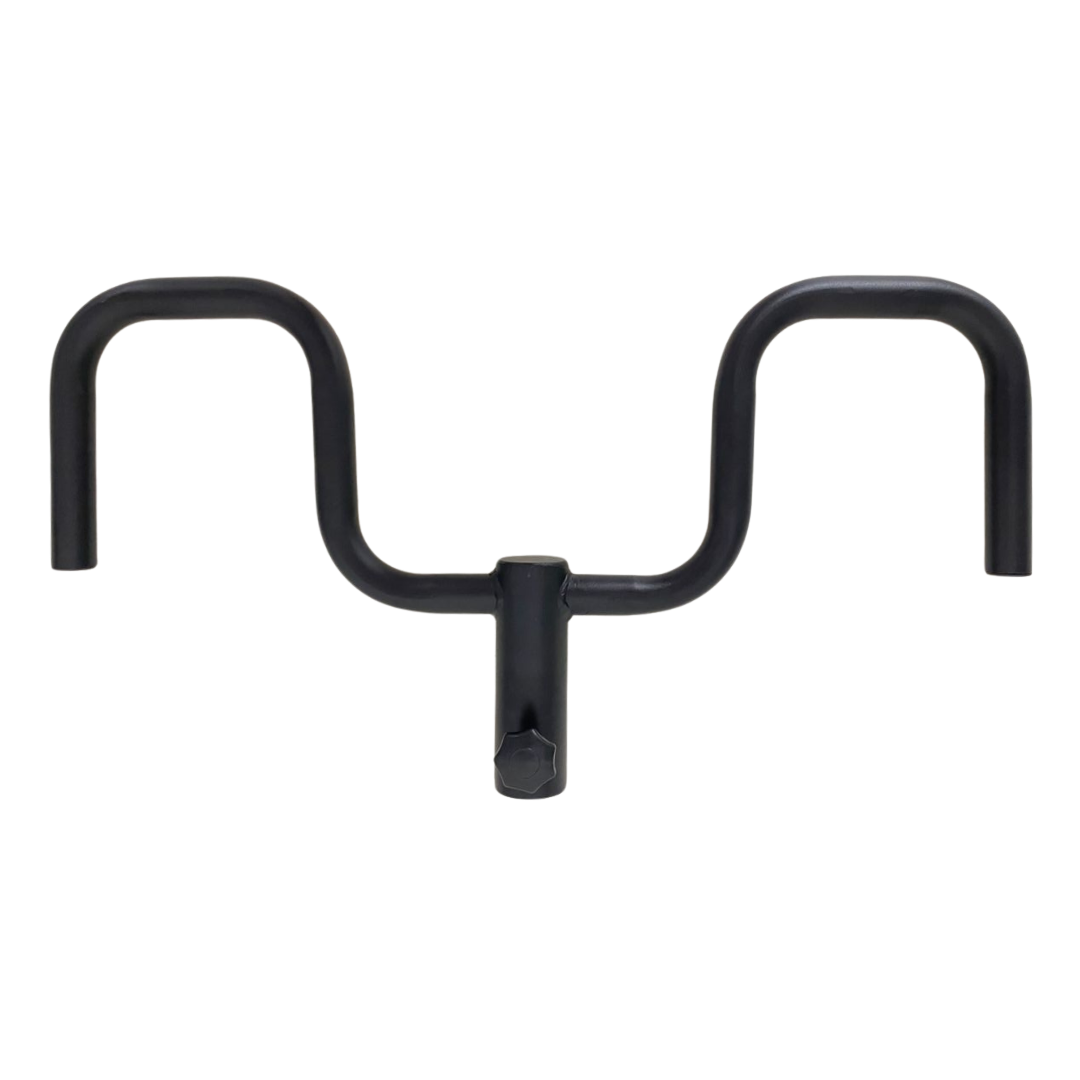
Ergonomic V-style cable grip for rows and back training.

GymPin Ergo Handles
Pair of ergonomic cable handles shaped for comfortable triceps and pulling exercises.


Which variation should you choose for your actual goal?
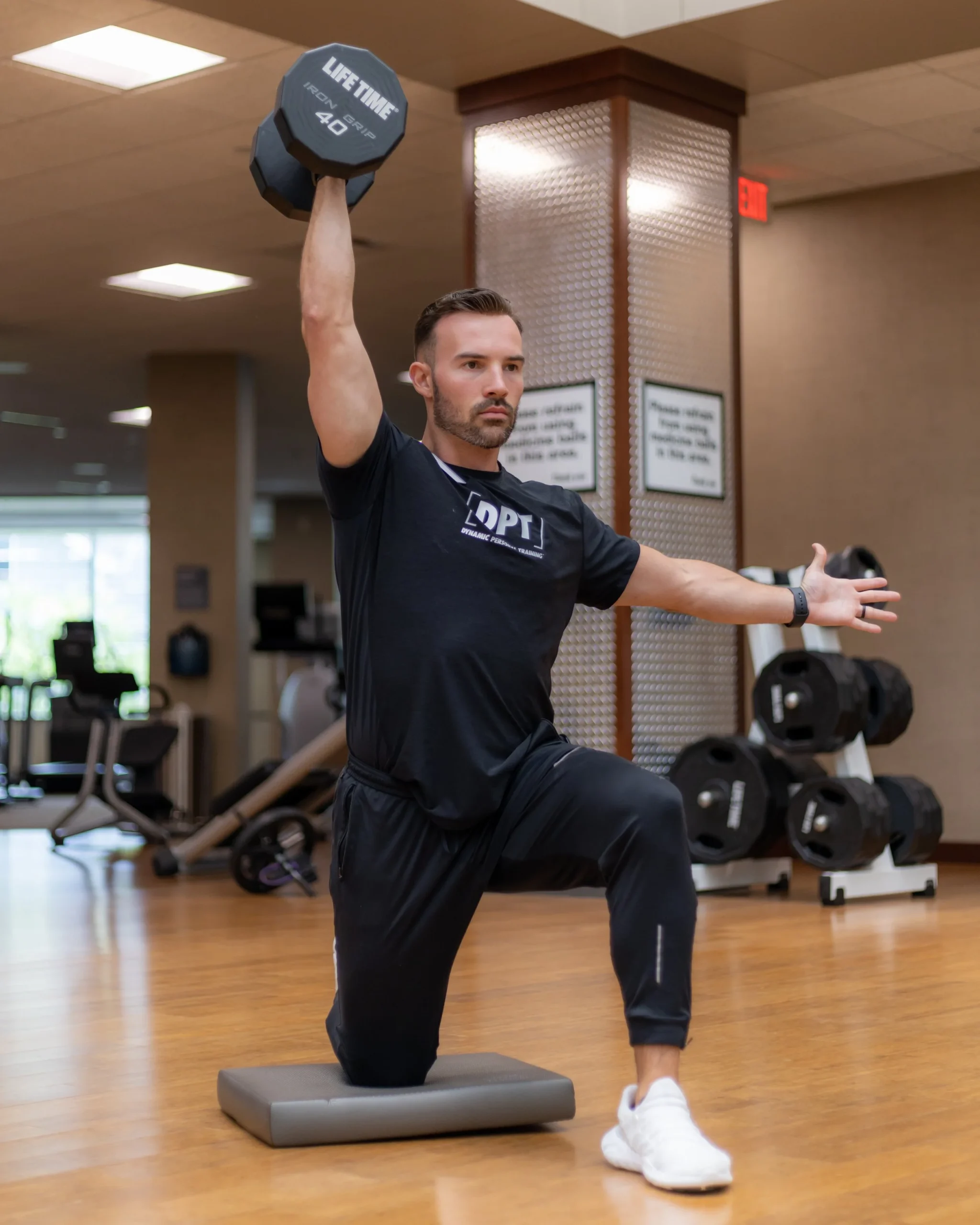
For a strict overhead-press personal record, make the standing barbell version your primary movement because strength is specific to the tested task. For shoulder hypertrophy, seated dumbbells or a well-fitting machine can be useful because they simplify balance and let you focus on high-quality hard sets. For general athletic training, standing dumbbells introduce an extra stabilization challenge, but that does not mean they replace heavy barbell work or sport-specific practice.
Keep the exercise order sensible. Put the press that matters most early in the session, before your triceps and shoulders are exhausted by accessories. Pair pressing with horizontal or vertical pulling, and use lateral raises when side-delt development is a priority. Pressing alone is unlikely to maximize the entire shoulder’s appearance, especially if the rear delts and upper back receive little direct work.
Pay attention to pain rather than trying to win an argument about the “best” press. A neutral grip, slightly different bench angle or a single-arm press can change how the movement feels. Sharp or persistent pain warrants a pause and appropriate assessment, not a demand to push through. A limited overhead range can also make a landmine press a useful alternative, although it is not a perfect replacement for vertical pressing.
For busy lifters, consistency is a powerful tie-breaker. A movement you can set up quickly, load safely and track accurately may beat a theoretically ideal variation that requires awkward unracking or leaves you too fatigued for the rest of your program.
A six-week shoulder-press plan you can actually measure
Train shoulders twice weekly with at least two days between hard pressing sessions. On Day A, prioritize the standing barbell press for three sets of four to six controlled repetitions, then perform two sets of lateral raises for ten to twenty reps and two sets of upper-back pulling. On Day B, use a seated dumbbell press for three sets of eight to twelve, followed by two sets of lateral raises and two sets of rear-delt or rowing work. Adjust total pressing volume downward if your chest training already includes substantial pressing.
In weeks one and two, choose loads that leave approximately two or three good repetitions available at the end of each working set. Write down load, reps and any technique notes. In weeks three and four, add repetitions within the target range before increasing weight. Once all sets reach the top of the range with consistent form, raise the load by the smallest practical increment and build back up.
Week five can be the hardest normal training week, but avoid turning it into a maximal test if fatigue or joint discomfort is accumulating. In week six, reduce sets slightly or keep one or two more repetitions in reserve, then compare performance with week one. The useful outcome is not just the heaviest single: check whether you can move more weight for the same clean repetitions, or complete more clean repetitions at the same load.
Keep a clear boundary between strict and assisted reps. Do not compare a standing press performed with knee drive against an earlier strict press and call it straightforward progress. Likewise, do not compare seated dumbbells at a different bench angle without noting the change. The winning variation is the one that supports your goal, respects your joints and produces measurable progress over time.
Funny Gym Shirts & Workout Gear
Funny gym shirts, tanks, hoodies and workout gear for lifters who like training hard.

Superman Barbell Weight Plate Logo – Superhero Bodybuil Sticker
A fun “Superman Barbell Weight Plate Logo” touch for bottles, laptops, and lockers.

Fortitude Stoic Sigma Bodybuilder : Meme Shirt & T-Shirt
Rep “Fortitude Stoic Sigma Bodybuilder” humor in and out of the gym.

Raise The Barbell Shirt – Motivational & T-Shirt
Show some powerlifting attitude with a playful “Raise The Barbell” tee.

Shirt & Barbell Heartbeat , Gymbros & Meme Lovers T-Shirt
Heavy lifts, good laughs, and a little “Funny Gym Shirt & Pump” energy.


Shirt – Train Hard Gains – Meme , & Workouts T-Shirt
Bring “Train Hard Gains” humor to your next gym day.

Lift Together Grow Stronger for Gym Buddies Who Train T T-Shirt
Show some gym-day personality with “Lift Together Grow Stronger”.

Stronger Than Excuses Tank
Show some personality between sets with “Be Stronger Than Your Excuses”.

Dumbbell Meme Shirt – Essential & Gymbros Seeking T-Shirt
Make gym days more fun with “Dumbbell Gym Meme” style.