The SkiErg looks simple: grab two handles, pull hard, repeat. But in a HYROX race, that approach can turn the first station into an expensive mistake. You must cover 1,000 meters on the SkiErg after the opening run, then still have seven more runs and seven more workout stations to survive. The challenge is not merely posting a fast split; it is finding the quickest sustainable effort that lets you run normally afterward.
Good SkiErg performance comes from a repeatable double-pole stroke, appropriate flywheel feel, consistent pacing and enough aerobic conditioning to avoid a spectacular early fade. This guide breaks down technique, monitor numbers, common errors and a four-week training block for lifters and hybrid athletes who want practical improvement, not a magical damper setting or an unverified promise of a particular race time.
Why the HYROX SkiErg is a pacing problem, not an arm contest
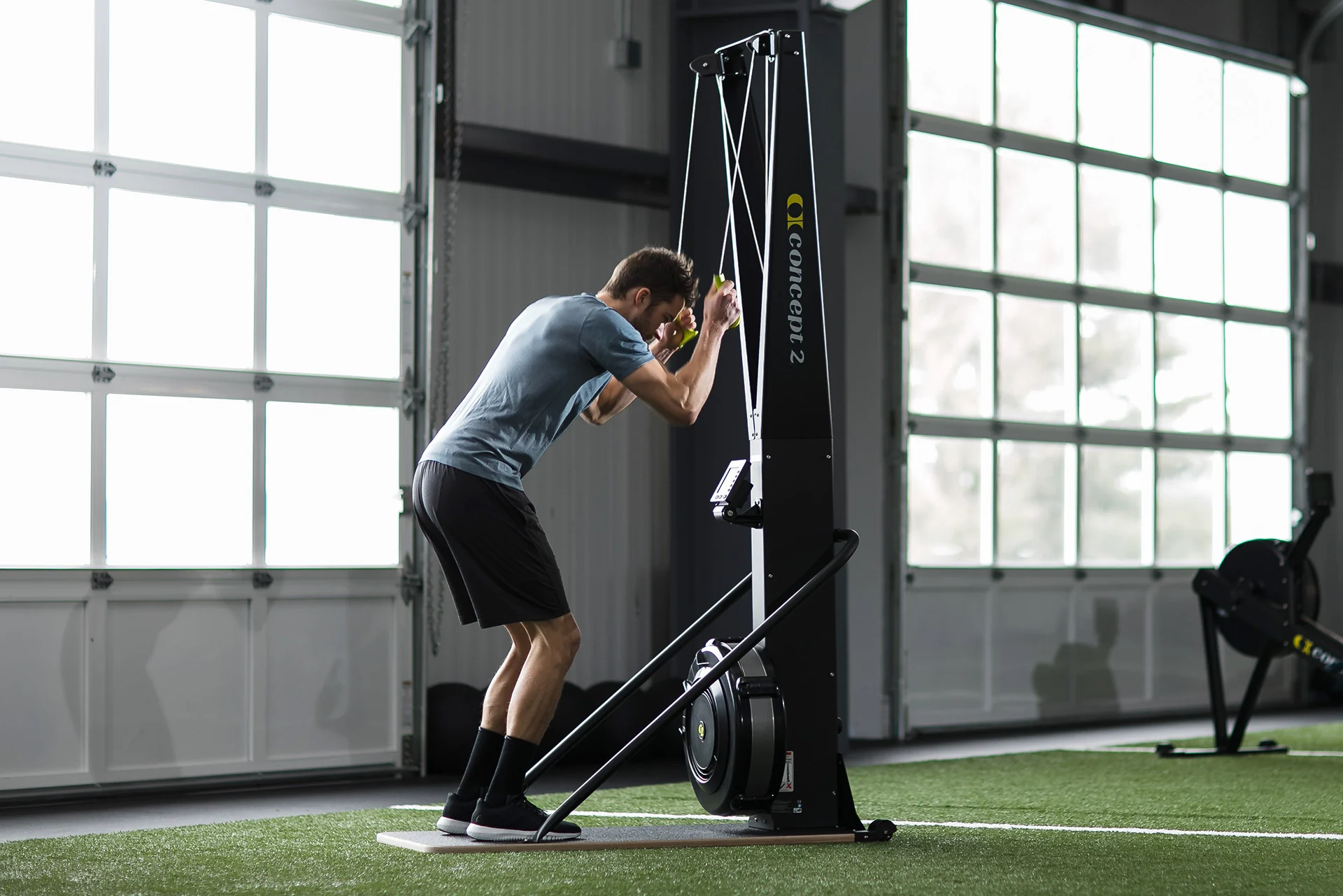
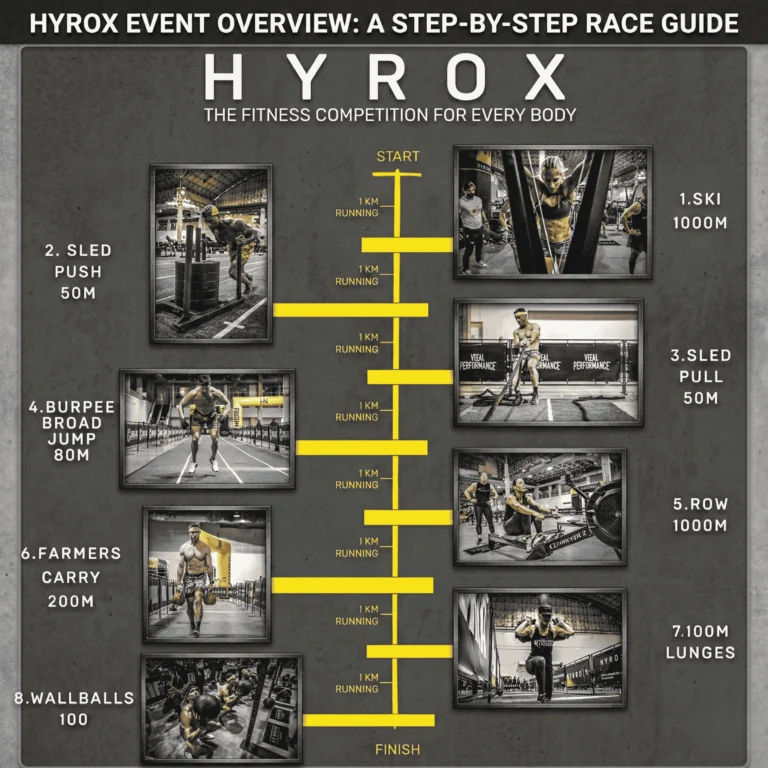
HYROX alternates approximately one kilometer of running with one functional station, eight times. The SkiErg is station one, and its required distance is 1,000 meters across standard singles divisions. That position matters: an aggressive start can make the next run feel like a hill sprint even when the course is flat. A personal-best SkiErg time achieved fresh in a gym does not automatically represent the best race-day target.
Think about the station as a trade. You might gain ten seconds by pulling at an intensity that forces you to walk or slow down for half a minute after leaving the machine. The fastest isolated station is not necessarily the fastest combined run-plus-station segment. Your objective is a strong average pace that does not produce a dramatic collapse in breathing, grip, posture or running rhythm.
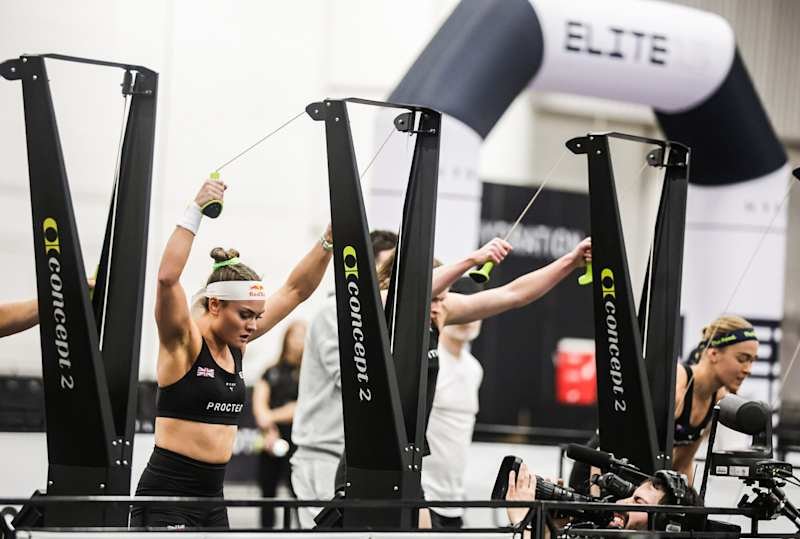
The machine uses a flywheel driven by two handles, and the movement draws on the lats, shoulders, triceps, trunk and lower body. It is not just a standing cable crunch. Laboratory work on double-poling exercise has found meaningful contributions from both upper- and lower-body muscles, especially as work rate rises. However, SkiErg technique and on-snow skiing are not identical, so do not translate every skiing result directly into a race prediction.
For a first benchmark, perform a controlled 1,000-meter effort after a normal warm-up and record average pace per 500 meters, stroke rate and perceived effort. Then repeat after an easy one-kilometer run on another day. The gap between the two is often more useful for race preparation than chasing an arbitrary leaderboard number.
Build a powerful double-pole stroke from the floor up
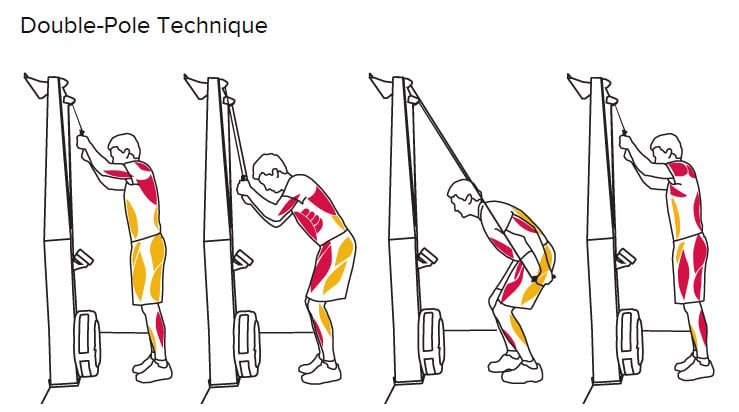
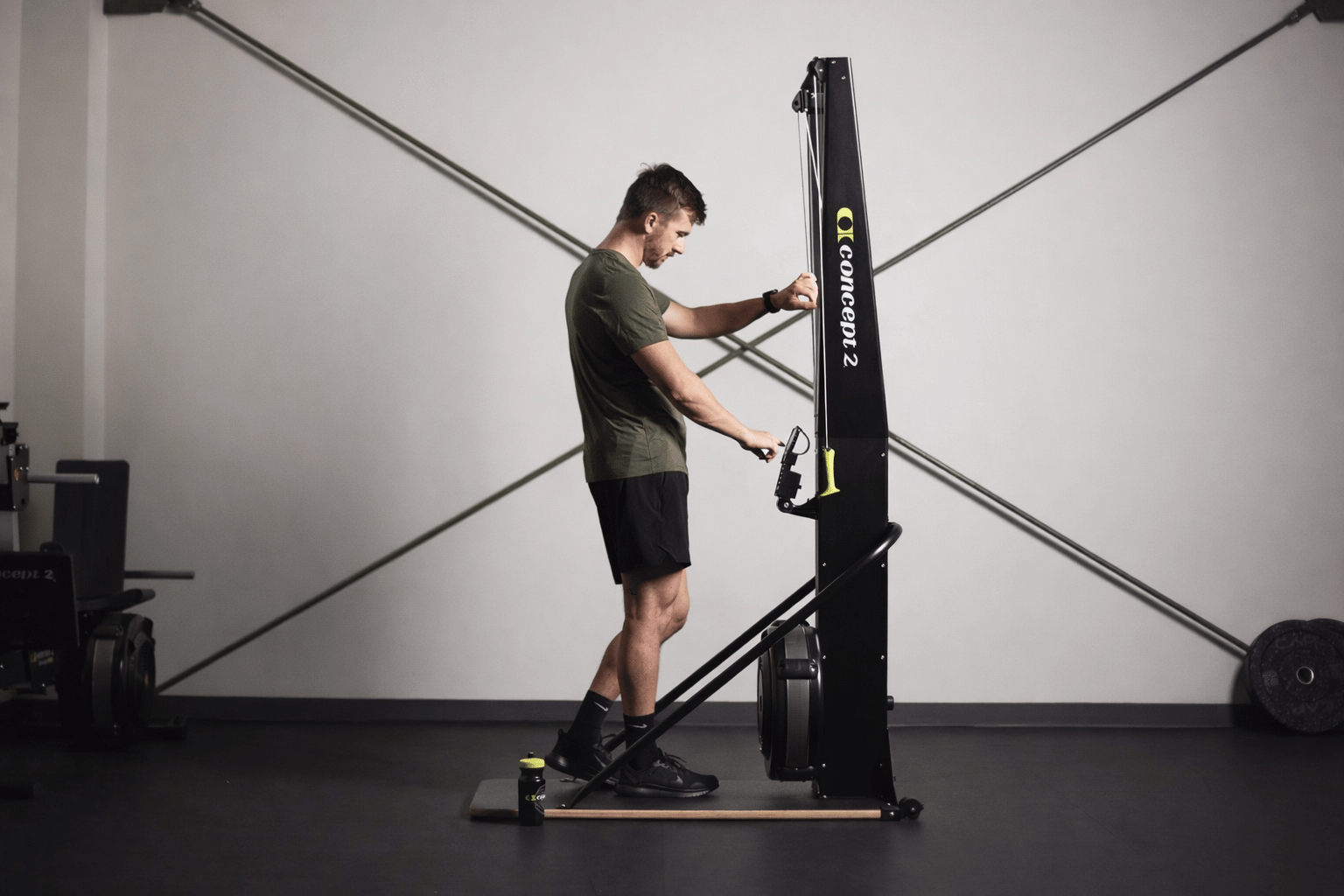
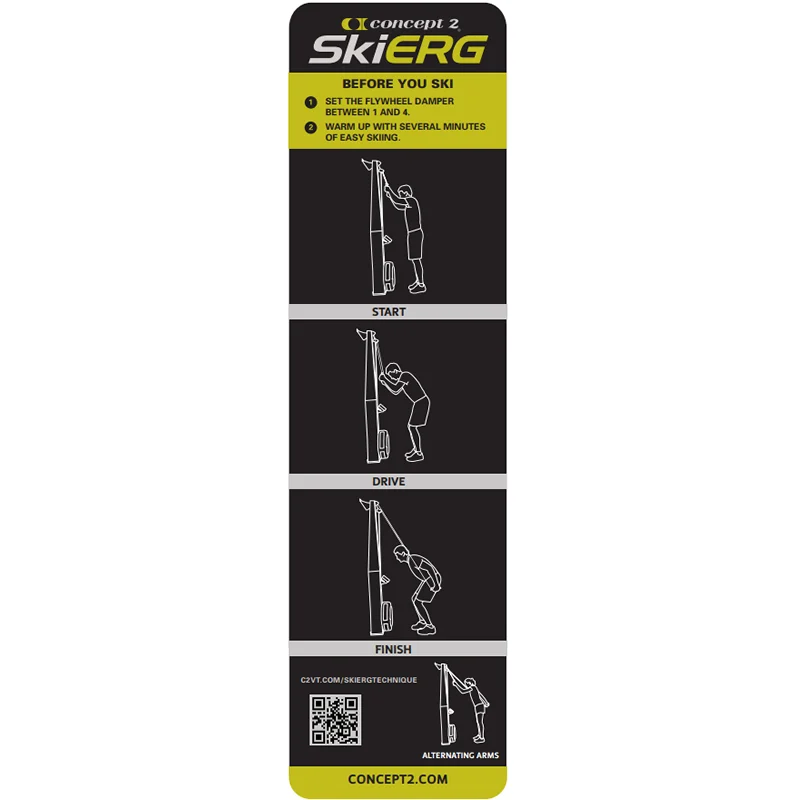
Start standing tall with feet about shoulder width apart, roughly 18–24 inches from the flywheel. Reach for the handles with bent elbows and hands just above eye level. Keep the ribs stacked over the pelvis, knees soft and weight balanced across the feet. The setup should feel athletic rather than like a rigid overhead stretch.
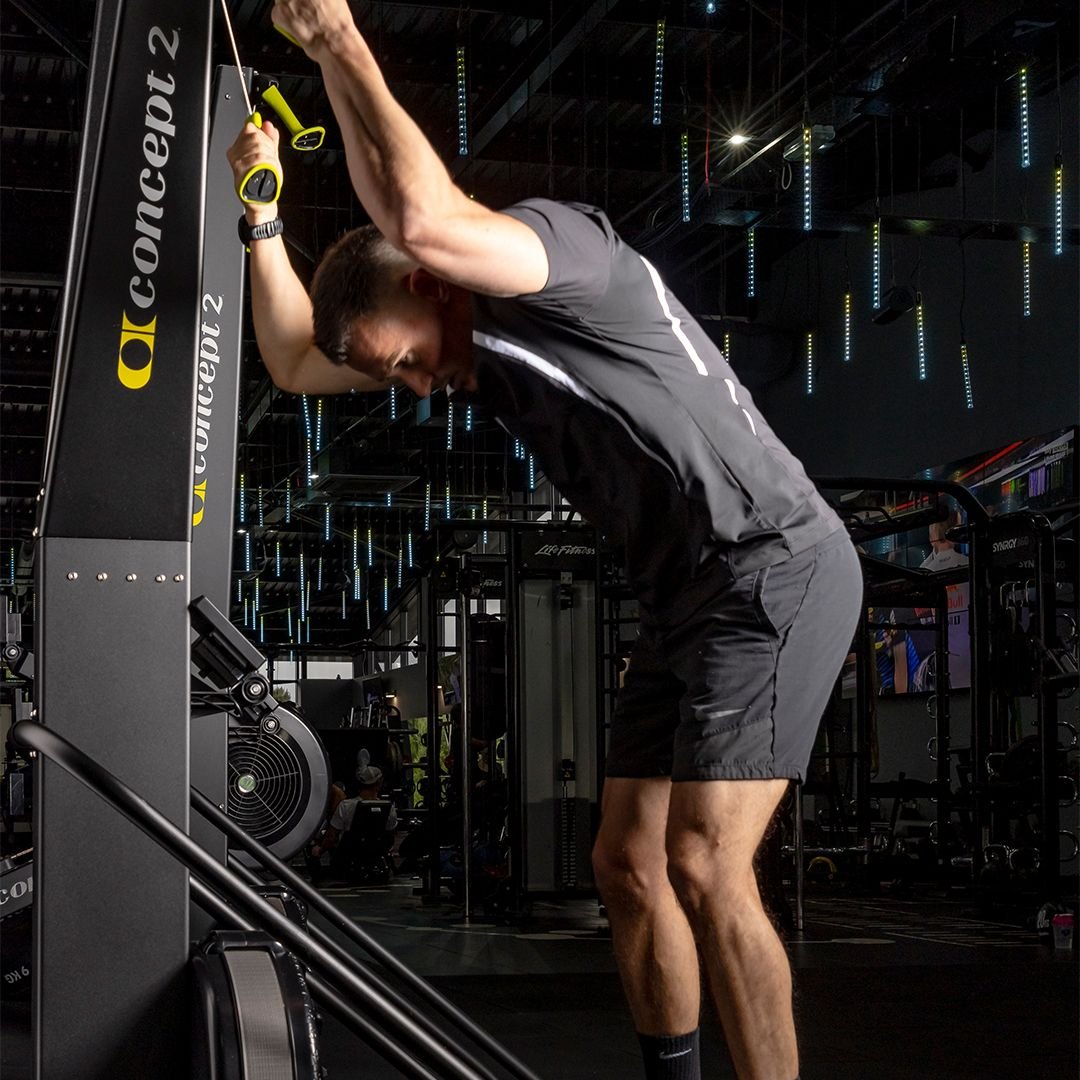
Initiate the pull with the trunk and hips. Brace the abdomen, hinge forward and allow the shoulders to travel down as the handles accelerate. The elbows stay bent through the early drive; the arms then finish the stroke beside the thighs. Think hands high, trunk drives, hands to pockets. A small knee bend helps use the legs without turning each repetition into a deep squat. The handle path stays close enough that you do not waste energy reaching far forward or swinging outward.
At the bottom, finish decisively but do not keep dragging the handles behind the body. Rise smoothly, allow the arms to return overhead and use the recovery to inhale. A powerful drive followed by a deliberately longer recovery is a useful starting rhythm. You should feel the stroke repeat with similar timing at the beginning and end of a work interval.
Try three technique drills before adding speed. First, complete ten slow strokes with a clear hip hinge. Second, perform ten strokes emphasizing a compact handle path. Third, complete one minute at an easy pace while keeping the recovery unhurried. Film from the side if possible: the torso should contribute, the elbows should not lock straight at the catch, and the shoulders should not shrug upward on every repetition.

Equipment Worth Exploring
Explore equipment, accessories and gear from our carefully selected range.
VOLTRA
Compact digital cable trainer with smooth, adjustable resistance.

Go-Tone Pro
Portable digital cable trainer with up to 66 lb (30 kg) of adjustable resistance.


GymPin Starting Blocks
Portable high-density foam blocks for adjusting machine starting positions and range of motion.


Fix common mistakes and stop treating damper 10 as a badge
The most common error is pulling mostly with the arms while the torso stays upright. That makes smaller muscles do work the trunk and hips could share. Another is over-squatting: dropping very low on every stroke forces you to lift your body weight back up before the next pull. Excessive arm flaring and a hurried recovery can also make the stroke longer without adding useful power.
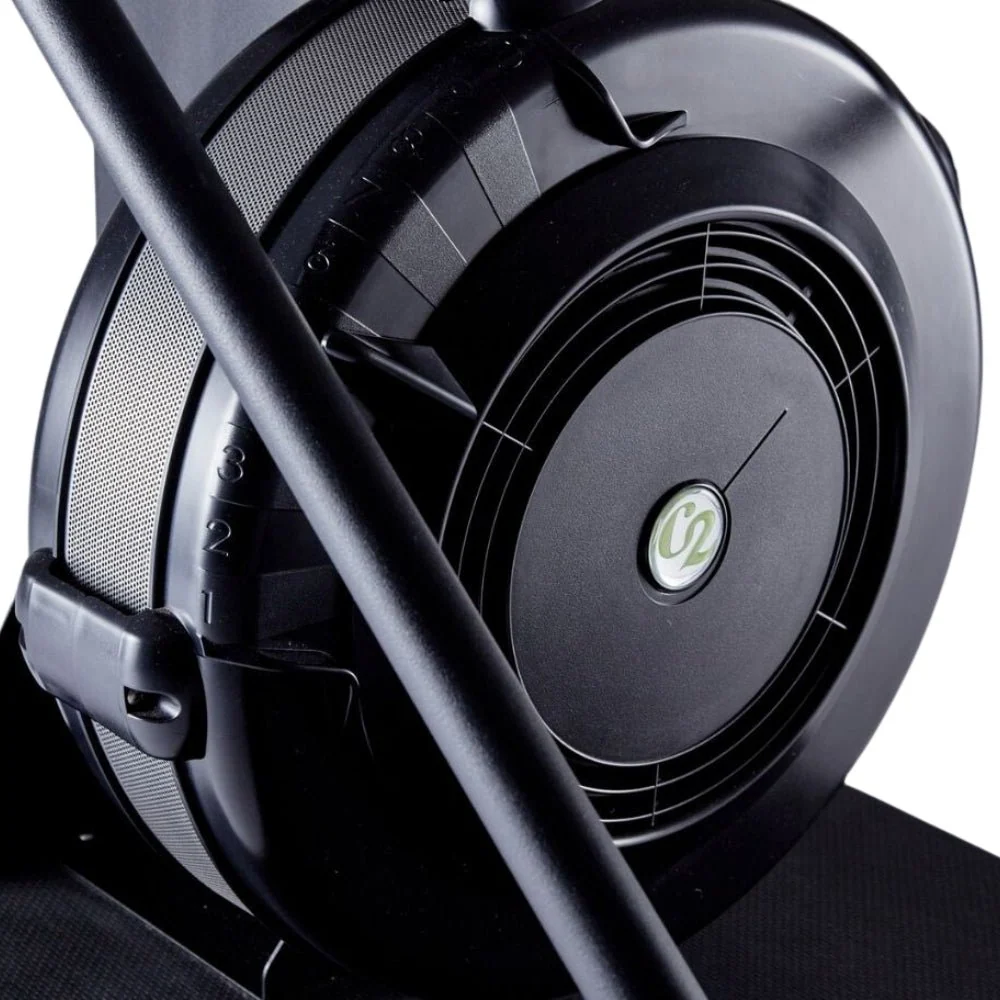
The SkiErg damper is not a weight-stack selector. It changes airflow into the flywheel and therefore how heavy or light each stroke feels. Higher numbers are not automatically faster, harder in the right way, or better for a race. A sensible first experiment is a moderate-to-low setting and a controlled interval, then small adjustments while monitoring average pace and stroke quality. The optimal feel can differ between athletes and between short sprints and longer pieces.
Use the PM5 drag-factor display when comparing machines. Two ergs at the same damper number can feel different because of airflow, maintenance and environment. Drag factor offers a more useful comparison of flywheel feel than the lever number alone. Still, a matching drag factor does not erase differences in technique, fatigue or fitness.
Before racing, check the current event briefing for platform-foot placement, monitor reset, damper presets and judge confirmation. Do not assume rules from a previous season or another event. In training, practise stepping onto the platform, settling the handles, completing the prescribed distance and leaving without rushing the final few meters. Small procedural habits become valuable when your heart rate is already elevated.

Functional Fitness Shirts & Workout Gear
Functional-fitness shirts, tanks and workout gear for athletes who train strength, conditioning and everything in between.

HYROX High Rocks Sweater Functional Fans Meme T-Shirt
Add a playful “HYROX High Rocks” touch to your casual rotation.


Hybrid Athlete – Strength & Endurance Crewneck for Func T-Shirt
For laid-back days and lifting humor: “Hybrid Athlete”.

Anti HYROX HYROX Club Meme Shirt Gymbro T-Shirt
Make gym days more fun with “Anti HYROX HYROX Club” style.

Live Love Lift Crewneck Pullover Sweater Workout Gymbro T-Shirt
For laid-back days and gym-girl humor: “Live Love Lift”.

Gym Is My Happy Place Happy Kettlebell Smiley Face Emoj Tank Top
Bring “Gym Is My Happy Place” humor to your next lifting session.

Kettlebell Heartbeat Hooded Pullover Workout Fans Hoodie
Keep it laid-back with a little “Kettlebell Heartbeat” attitude.

Vive La Resistance Bands – Resistance Bands Warmup Reha Tank Top
Your gym-day look, with a playful “Vive La Resistance Bands” twist.


Fit And Fitter : Dumb And Dumber Gymbro Cardio & T-Shirt
Show some cardio attitude with a playful “Fit and Fitter” tee.
Read the PM5 correctly: pace, watts, strokes and drag factor
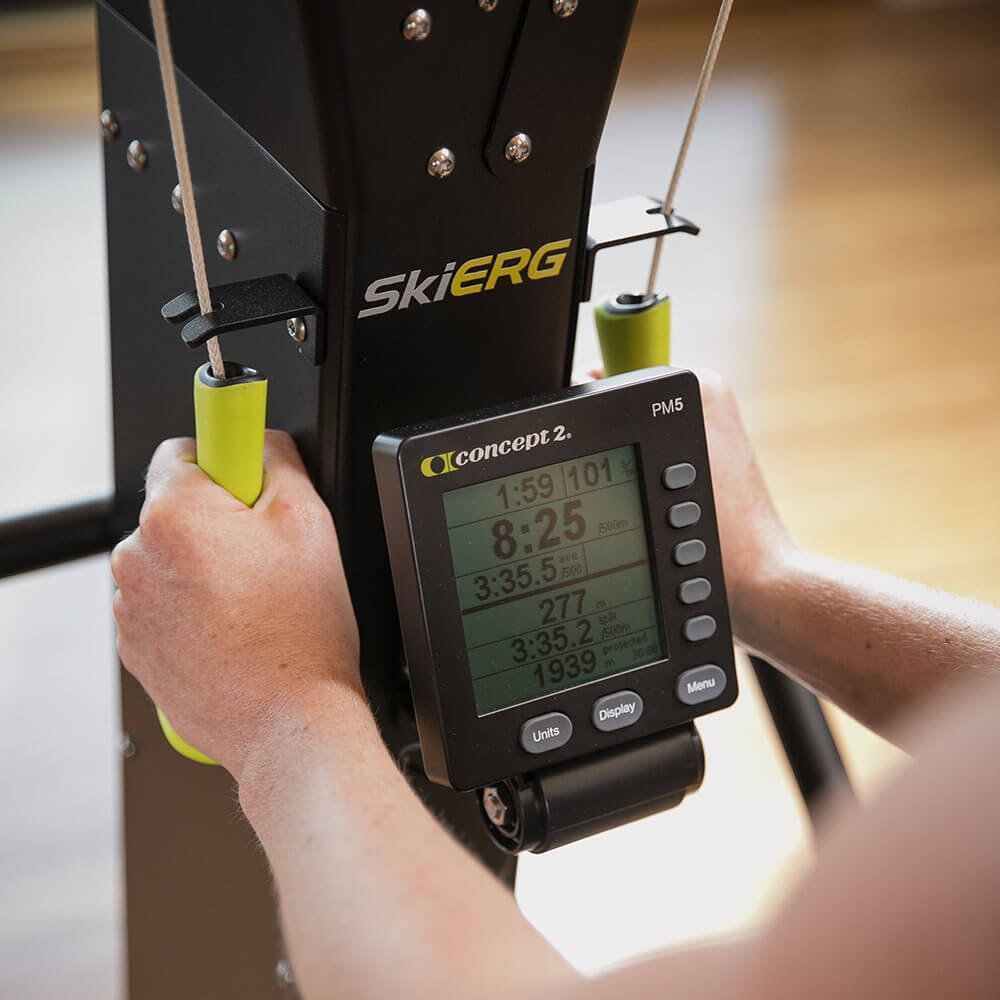
The Performance Monitor can show distance, elapsed time, pace per 500 meters, watts and strokes per minute. For a 1,000-meter test, the simplest planning number is average time per 500 meters. An average of 2:10 per 500 meters projects to about 4:20 for 1,000 meters; 2:00 per 500 meters projects to about 4:00. These are arithmetic conversions, not predictions of what you can sustain in a race.
Watts reflect mechanical output, while stroke rate shows how often you cycle the handles. Neither should be chased in isolation. A very high stroke rate with shallow, weak pulls may produce worse pace than a slightly slower rhythm with effective force transfer. Conversely, a huge effort on every stroke can become unsustainable after a few hundred meters. The useful combination is the one that produces steady output without visible technique breakdown.
During training, note your first 250 meters, middle 500 meters and final 250 meters. If the first quarter is much faster and the last quarter collapses, you probably opened too aggressively. If the pace is steady and you finish feeling you could accelerate, you have room to test a slightly faster target next time. Keep notes on the damper setting, drag factor, stroke rate and how the next run feels.
Do not compare calories on the screen with a precise measurement of fat burned. The monitor’s exercise-calorie metric is useful for standardized machine workouts, but it is not a personalized body-composition calculation. For HYROX preparation, distance, pace, power and the quality of the run afterward are the more actionable metrics.
Pace the 1,000 meters so the next run is still yours
Use a controlled opening instead of attacking the handles at maximal intensity. For the first 150–200 meters, establish a rhythm slightly more conservative than your standalone best-effort pace. From roughly 200 to 800 meters, settle into the strongest pace you can maintain while breathing rhythmically. In the final 200 meters, increase effort only if your stroke remains organized and you can transition back to running without a prolonged recovery walk.
This is a practical pacing template, not a rule that every athlete must follow. A powerful, highly trained competitor may benefit from a different distribution, while a first-timer should prioritize an even effort. Test the plan during sessions that include the preceding run, because the same monitor pace can feel very different with elevated heart rate and legs already working.
Try a useful rehearsal: run 1,000 meters at controlled race effort, move to the SkiErg, complete 1,000 meters at your intended station pace, then run another 600–1,000 meters. Record the time and perceived effort of the second run. Repeat the session after adequate recovery with a slightly more conservative SkiErg start. If the combined time improves, the less dramatic station split was probably the better choice.
Practise the transition as carefully as the pull. Avoid fumbling with the handles or monitor, finish the full distance, follow the judge’s signal and start the next run with short relaxed steps until your breathing settles. A fast race is built from clean, repeatable segments rather than one heroic station.
Cardio Shirts & Workout Gear
Cardio and conditioning gym gear for runners, endurance athletes and anyone who earns the sweat.

Rowing – Dost Thou Even Row Medieval Knight Gym Decal f Sticker
Give your everyday gear a playful “Rowing” twist.


Cardio Heartbeat for Runners, Cyclists and Endurance Fa Tank Top
Bring “Cardio Heartbeat” humor to your next lifting session.

Triathlon – Iron Man Medieval Knight Swim Bike Run Pull Hoodie
Show off your medieval humor in a laid-back “Triathlon” hoodie.

Don't Quit Do It – Motivational Jumper Pullover For Wor T-Shirt
Show some gym-day personality with “Don't Quit Do It”.

Cardio Is Hardio – Workout Meme Hooded Pullover Hoodie
Keep it laid-back with a little “Cardio Is Hardio” attitude.

Anti Rowing Rowing Club Shirt – Meme & Top T-Shirt
Show some cardio attitude with a playful “Anti Rowing Rowing Club” tee.

Cardio Is Calling Decline Sweater Meme T-Shirt
Bring “Cardio Is Calling” humor to your everyday gym style.

Everything Hurts And I'M Tired Motivation Hooded Hoodie
Stay casual and show some cardio attitude with “Everything Hurts And I'm Tired”.

We Don't Need No Cardio – Pink Floyd Meme Vest Muscle S Tank Top
Your gym-day look, with a playful “We Don't Need No Cardio” twist.
Train the lats, trunk and legs without confusing strength with SkiErg skill
Stronger pulling muscles can support your training, but extra gym strength does not automatically make you efficient at a 1,000-meter SkiErg effort. You need the skill to coordinate the pull and the conditioning to repeat it for several minutes. Keep two focused resistance sessions in your week if recovery allows, especially when you also run, push sleds and carry heavy implements.
A simple strength session could include a horizontal row for three sets of six to ten, a vertical pull for three sets of eight to twelve, a hip hinge for two to three sets of six to ten, and a trunk exercise for two to three sets. On another day, use split squats, carries, push-ups or presses and controlled anti-rotation work. Leave one to three repetitions in reserve on most sets during demanding race-preparation weeks.
The aim is not to turn every exercise into a SkiErg imitation. Cable pulldowns and rows build pulling capacity, carries challenge trunk stability and grip, and leg work supports the running and sled portions of the race. The actual SkiErg sessions teach stroke timing, pacing and flywheel control. Treat the two as complementary rather than interchangeable.
For lifters with limited recovery, remove redundant accessory sets before sacrificing key SkiErg intervals or long aerobic work. If elbows or shoulders become irritated, reduce pulling volume, check the handle path and allow the tissue to settle instead of forcing more high-intensity repetitions. Training consistency over four weeks is worth more than winning one exhausted Tuesday workout.
Equipment Worth Exploring
Explore equipment, accessories and gear from our carefully selected range.


Leather Lifting Straps
Padded leather straps support grip during heavy rows, deadlifts and pulling exercises.

Apple Watch Ultra 3
Rugged 49 mm smartwatch with cellular connectivity, GPS and fitness tracking.

Powerbeats Fit
Secure-fit wireless workout earbuds with active noise cancellation and a charging case.

FID Bench MAX
Adjustable bench offering flat, incline, and decline positions + adjustable headrest.

A four-week SkiErg progression you can actually repeat
Use two dedicated SkiErg sessions per week, separated by at least a day when practical. Keep a third hybrid session optional and short. Warm up with five to eight minutes of easy skiing, a few controlled technique strokes and gradual accelerations before the first hard interval. The workouts below are examples for healthy adults already accustomed to moderate training; reduce volume if you are new to the machine.
Week 1 — establish technique: Session A is six rounds of two minutes at a sustainable pace with one minute easy recovery. Session B is four rounds of 250 meters at a controlled effort, with 90 seconds of rest. Note stroke rate and how quickly you regain normal breathing. Add one easy one-kilometer run followed by five minutes of relaxed SkiErg practice if recovery is good.
Week 2 — extend repeatability: Session A becomes five rounds of three minutes with 90 seconds easy. Session B is three rounds of 350 meters at your intended 1,000-meter pace, with two minutes rest. Do not increase both stroke rate and damper aggressively. Your target is a tighter spread between the first and last interval, not a spectacular opening rep.
Week 3 — connect the station to running: Session A is three rounds of 500 meters at controlled race effort, each followed by two minutes easy. Session B combines a one-kilometer run, 750 meters on the SkiErg and another one-kilometer run. Compare the second run to the first and adjust pacing. Keep strength training slightly lighter if this session exposes accumulating fatigue.
Week 4 — rehearse and consolidate: Early in the week, complete four easy 250-meter efforts with a few short controlled accelerations. After at least 48 hours without hard SkiErg work, perform a one-kilometer run, a measured 1,000-meter SkiErg and a short transition run. Review the full sequence, not just the monitor split. If you are racing soon, reduce total volume and arrive fresh rather than squeezing in another maximal test.
Retest under similar conditions, record drag factor, pace and perceived exertion, and change one variable at a time. Improvement may appear as a faster SkiErg split, a more stable second run or simply less fatigue at the same output. All three are useful signs that your training is moving in the right direction.