Why the Romanian deadlift belongs on leg day
The Romanian deadlift, or RDL, looks simple: stand with a barbell, push your hips backward, lower the weight and stand again. But done well, it solves a problem that many quad-dominant leg workouts leave untouched. Squats, leg presses and split squats can produce excellent lower-body strength while still leaving relatively little direct hip-hinge work for the hamstrings. The RDL makes the back of your legs work hard as the hips move through a controlled range.
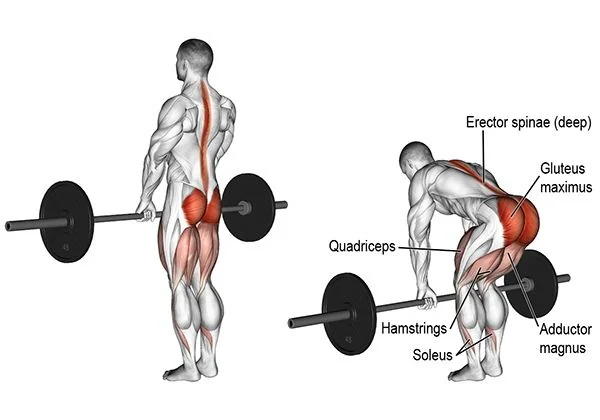
The main engines are the hamstrings that cross the hip and the gluteus maximus. The spinal erectors resist bending under load, the upper back and lats help keep the bar near the body, and the hands must hold on. That does not make the RDL a replacement for every deadlift or hamstring curl. Knee-flexion exercises such as seated curls and Nordics train another important hamstring function. A balanced posterior-chain program can use both.
It is worth separating a useful training sensation from a scientific promise. A strong stretch in the hamstrings can be a good cue that you are hinging rather than squatting. It does not prove that every millimeter of additional depth creates more growth. Your own controllable range, consistent loading and recovery determine whether the exercise stays productive. The goal is tension where you want it, not touching the plates to the floor.
Set up the hinge before you add serious weight
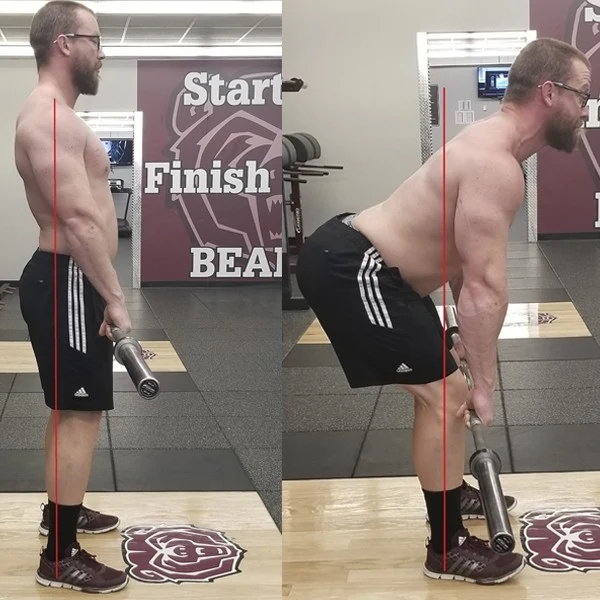
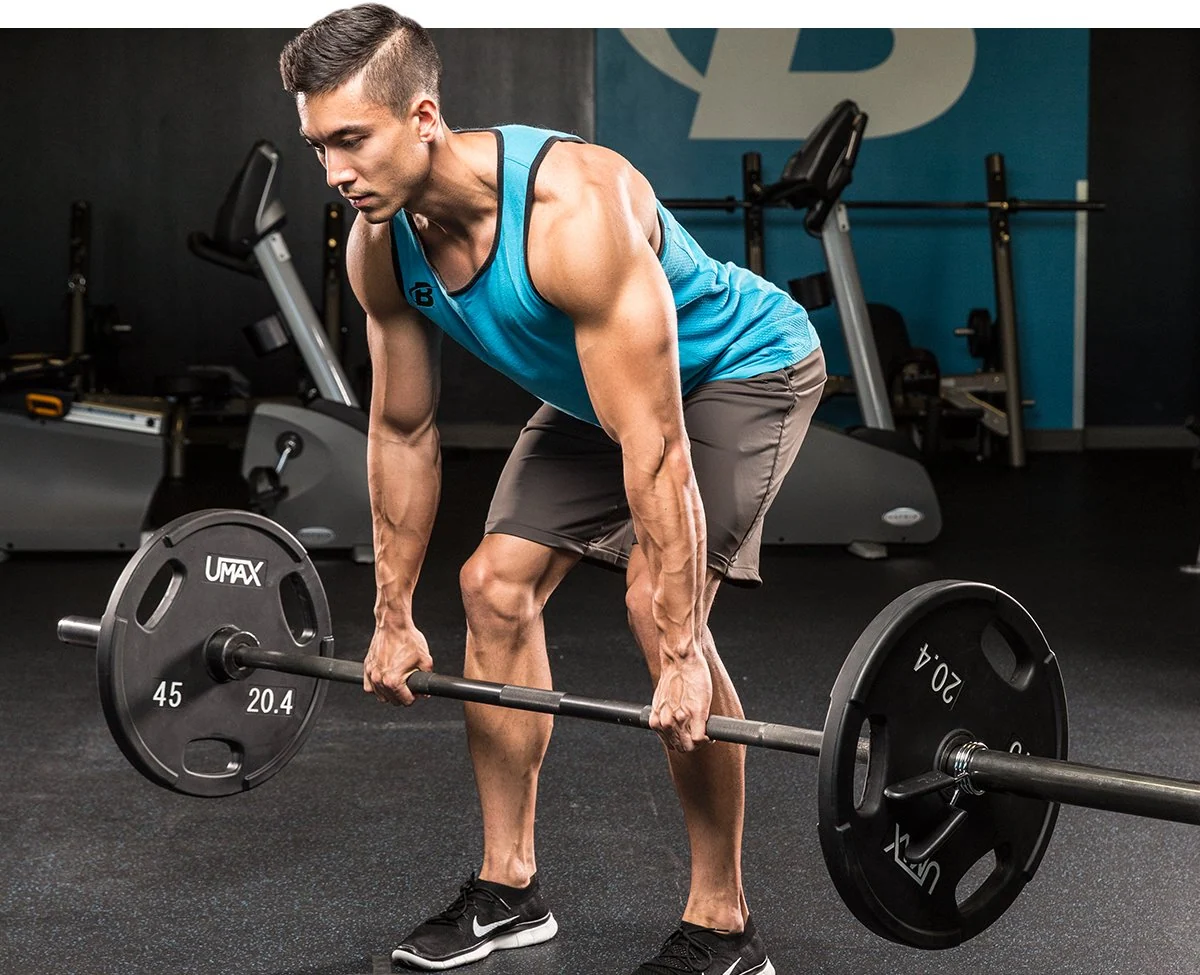
Start tall with feet around hip width, a loaded bar against the thighs and hands just outside the legs. Unlock the knees slightly, then hold approximately that knee angle throughout each repetition. Take a breath, brace your trunk as if preparing for a firm push to the stomach, and make your upper arms feel connected to your torso. The shoulders should not be pulled into a dramatic backward squeeze; think of keeping the bar close with the lats.
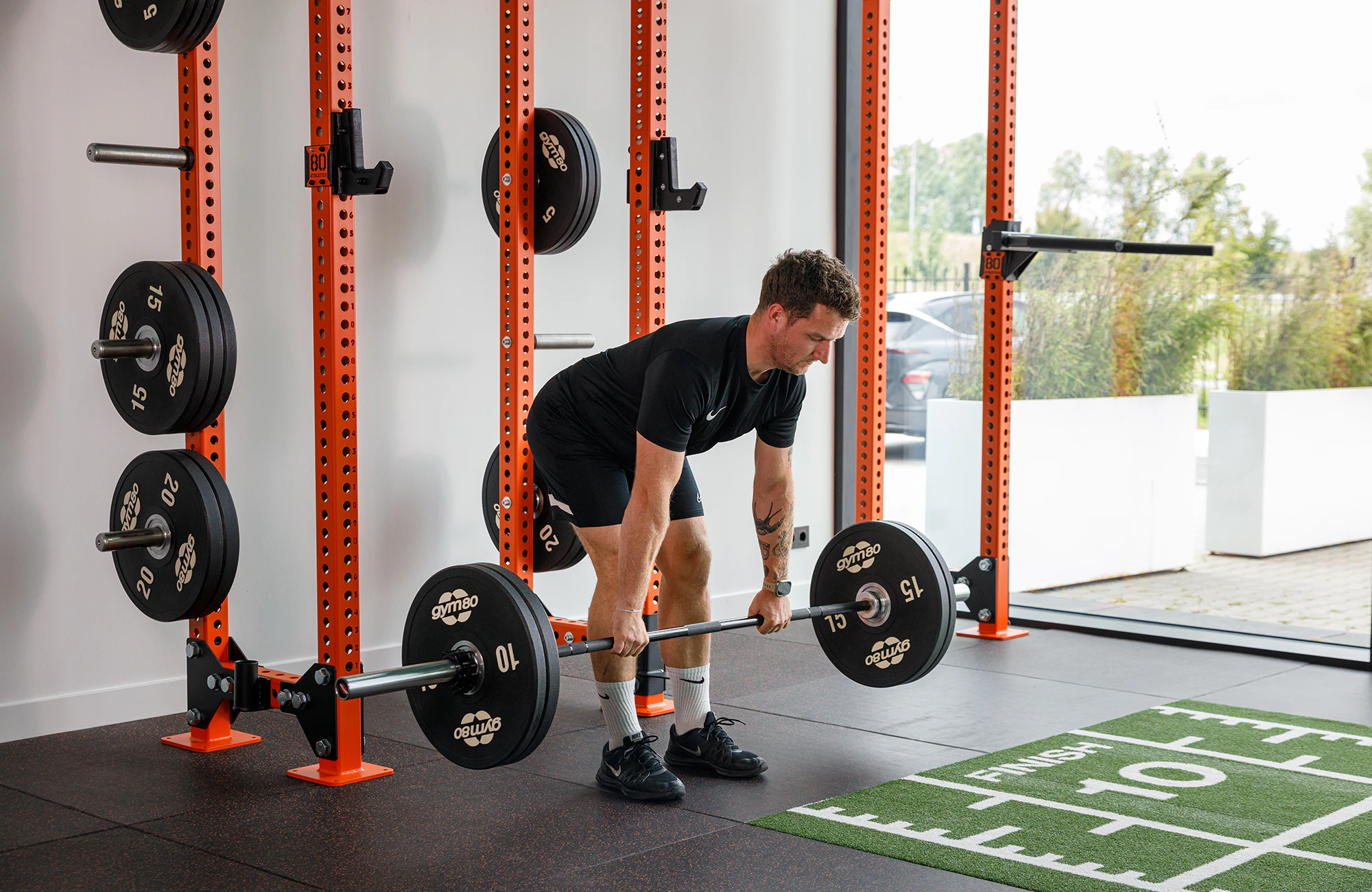
Now imagine closing a car door behind you with your hips. Send the hips backward while the torso inclines forward. Your shins should remain relatively upright, with the knees neither locked nor repeatedly bending into a squat. The bar tracks near the thighs, knees and shins rather than swinging forward. Maintain a comfortable, controlled spinal position instead of chasing a forced arch.
If you cannot distinguish a hip hinge from a squat, practice with a dowel along your back or stand a short distance in front of a wall and reach your hips toward it. Then try a light dumbbell. You should feel the hamstrings become increasingly loaded as the hips travel backward. Only move to a barbell once the pattern is repeatable without sudden shifts in your back or balance.
A stable platform, appropriate collars, enough clearance and a bar you can control matter more than owning a specialized deadlift bar. Set the bar at a comfortable starting height or deadlift it to standing first. If grip fatigue ends the set before your hamstrings are challenged, lifting straps can be a reasonable tool for hypertrophy-focused work, provided you also train grip elsewhere.

Equipment Worth Exploring
Explore equipment, accessories and gear from our carefully selected range.


Leather Lifting Straps
Padded leather straps support grip during heavy rows, deadlifts and pulling exercises.


How low should the bar go? Use control, not a fixed target
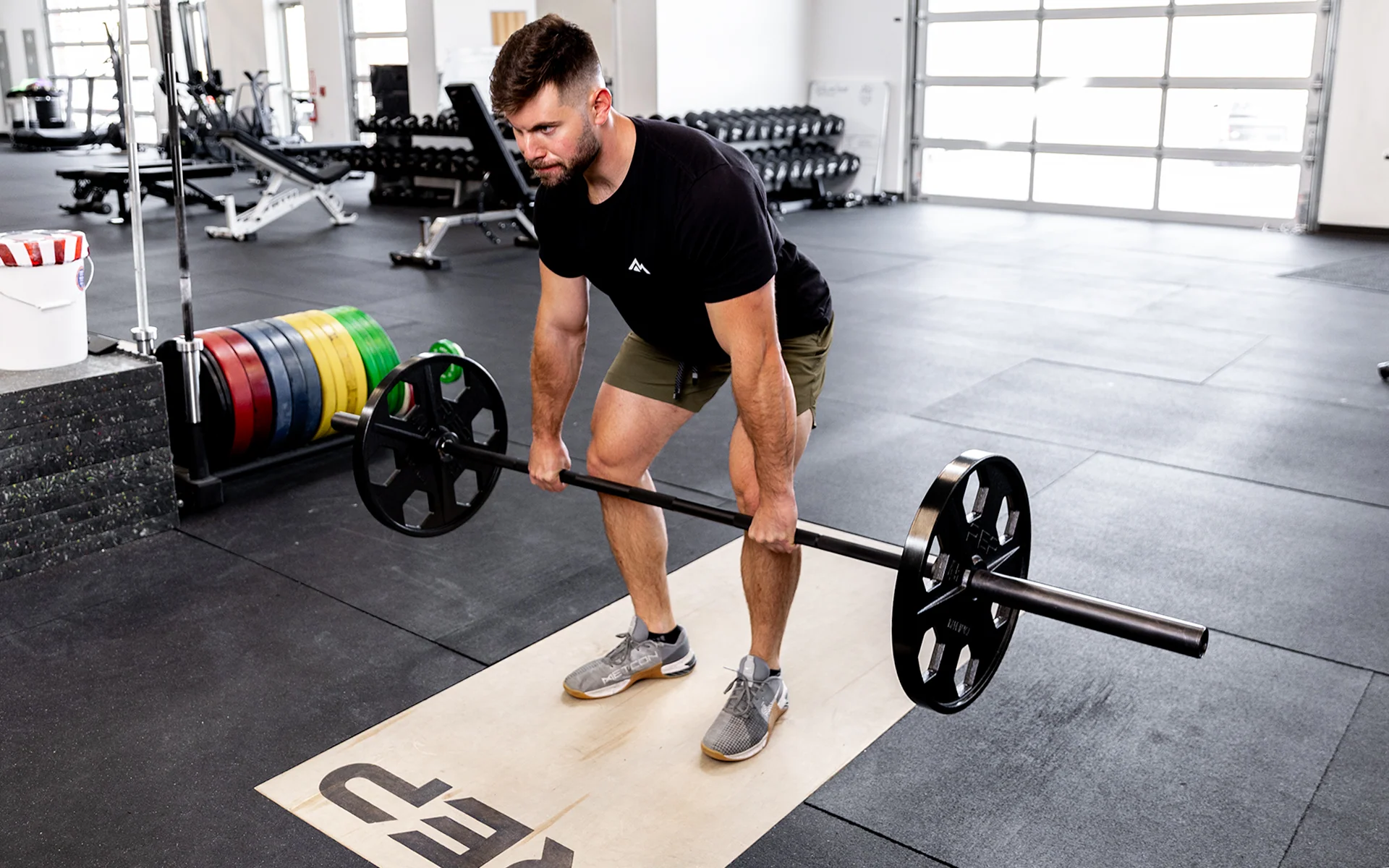
Lower the bar under control, often taking roughly two to three seconds, until you reach a meaningful hamstring stretch without losing your intended spinal position. For many lifters that means just below the knees or around mid-shin. Someone with long arms and excellent hip mobility may travel farther; another lifter may stop higher. Neither position is automatically a failure.
The important test is whether the hips are still moving backward while the bar stays close. If your pelvis stops rotating and the next few inches come from rounding your lower back, the useful hip-hinge range has probably ended for that rep. Pause briefly if it helps maintain control, then push the floor away and bring the hips forward to stand. Finish tall rather than leaning backward or snapping the knees into a hard lockout.
Try filming one set from the side at a moderate load. Watch the bar path, knee angle and the point where the pelvis stops moving. The best coaching cue may be surprisingly individual. Some people respond to ‘hips back’; others need ‘keep the bar brushing the legs’ or ‘stop before your back changes shape.’ A technically consistent eight-rep set is more informative than a one-rep personal record that looks like a different exercise.
Tempo is a tool, not a contest in slow motion. A controlled eccentric can improve position awareness, but excessively slow lowering may force you to use such light weights that total productive work suffers. Use enough control to feel the target muscles and enough load to make the final few repetitions challenging without compromising the hinge.
RDL versus conventional and stiff-leg deadlifts
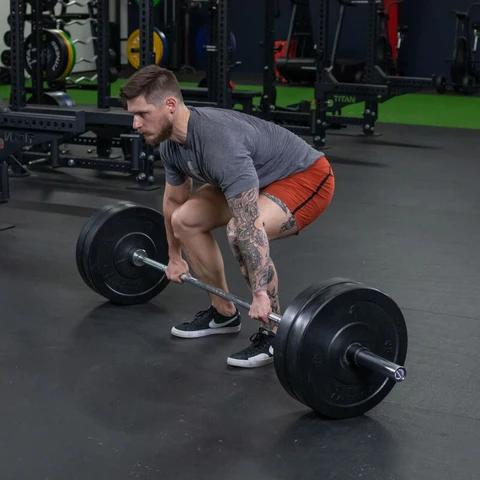
The conventional deadlift normally begins with the bar on the floor and combines substantial hip and knee extension. The Romanian deadlift begins standing, uses a softer but relatively fixed knee bend, and emphasizes the lowering phase and hip hinge. A stiff-leg deadlift usually keeps the knees straighter and can place different demands on mobility and the lower back. These labels are not perfectly standardized across gyms, so the movement you actually perform matters more than the name.
A small laboratory comparison involving 21 men found higher rectus femoris and gluteus maximus activation during conventional deadlifts than RDLs under the tested conditions. Hamstring activation was not clearly different in that experiment. An electromyography review also emphasized that results vary by exercise version, measurement and technique. Neither finding establishes which lift creates the most muscle growth over months. EMG is a measure of electrical activity, not a direct hypertrophy score.
For powerlifting, the conventional or sumo deadlift deserves specific practice because those are competition lifts. For bodybuilding, an RDL is attractive because it allows a repeatable hip-dominant stimulus without needing to reset a bar from the floor each rep. The two can coexist, but heavy sets of both on the same day can create unnecessary grip and erector fatigue. Put the movement most important to your current goal first.
One practical split is heavy deadlifts on a strength day and moderate-repetition RDLs on a separate lower-body day. Another is to prioritize RDLs for several weeks while maintaining conventional deadlift technique with lighter practice. Neither approach requires maximal loads every session.

Leg Day Shirts & Workout Gear
Leg-day gym shirts and workout gear for lifters who never skip squats, lunges and lower-body punishment.

I Love Deadlifts Valentine's Gym Shirt | Funny Leg Day T-Shirt
Show some leg-day attitude with a playful “I Love Deadlifts Valentine's” tee.

Deadlifts & Dragons Fantasy Swoleplaying Meme & Top T-Shirt
Heavy lifts, good laughs, and a little “Deadlifts & Dragons” energy.

Dead Pull Muscle Shirt Athletic Vest for Deadlift Lifte Tank Top
Show some personality between sets with “Dead Pull”.

Patriotic Eagle Deadlift Stars Stripes and Deadlifts Cr T-Shirt
Show some gym-day personality with “Patriotic Eagle Deadlift”.

Deadlift Skull Gym Gold Heavy Metal Crewneck for Powerl T-Shirt
Show some gym-day personality with “Deadlift Skull”.

Deadlift Viking Skull Crewneck for Powerlifters, Norse T-Shirt
For laid-back days and Viking humor: “Deadlift”.

Deadlift PR or ER Bloody Skull Crewneck for Powerlifter T-Shirt
Keep things casual with a little “Deadlift” attitude.

Deadlift Electric Skull Graphic , Hardcore Gym Pullover T-Shirt
Show some gym-day personality with “Deadlift”.

Deadlift Wasteland Skull Graphic , Hardcore Fitness Pul T-Shirt
For laid-back days and deadlift humor: “Deadlift”.

Deadlift Fiery Skull Graphic , Hardcore Fitness Pullove T-Shirt
For laid-back days and deadlift humor: “Deadlift”.
Choose the variation that fits your equipment
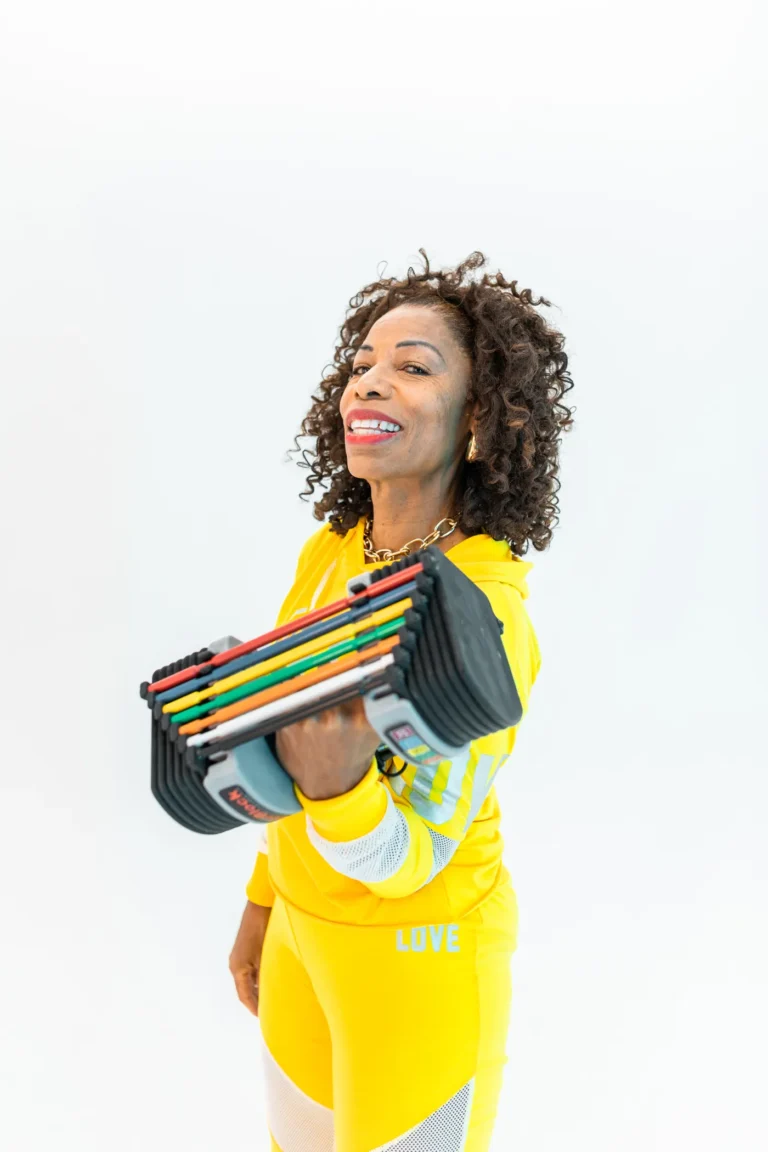
A straight barbell makes progressive overload easy: add small plates and repeat the same stance and range. Dumbbells can be more convenient in a smaller room and may let your hands travel beside the legs. Their limitation is often the available load or the difficulty of getting heavy bells into position. A pair of adjustable dumbbells can nevertheless support months of productive RDL training if you use honest reps and gradual progression.
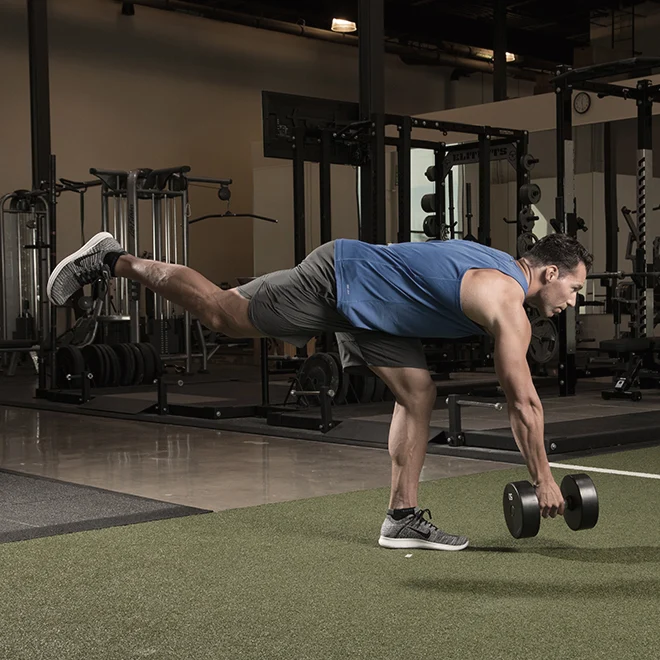
Single-leg RDLs trade absolute load for balance, hip control and unilateral challenge. Start with one dumbbell in the opposite hand from the working leg, keep the pelvis approximately level, and reach the free leg behind you as the torso hinges. A lightly supported single-leg version can be better for hamstring training than wobbling through every rep without support. Balance is a skill; it should not become the only thing your set measures.
Cable RDLs can work when the line of pull and starting position allow a genuine hip hinge. Keep the attachment and resistance path predictable, and do not assume that a cable machine automatically duplicates a barbell’s resistance curve. Trap-bar hinges and sandbag hinges are additional options, but each changes the position of the load and the balance demands.
For direct hamstring work, pair one hinge with a knee-flexion movement such as a seated curl, sliding leg curl or Nordic progression. A six-week randomized comparison of eccentrically biased RDLs and Nordics in 32 young adults found broadly similar changes in several measured hamstring architecture outcomes, not proof that one exercise is universally superior. That is useful news for lifters who need to work around their equipment, joints or schedule.
Equipment Worth Exploring
Explore equipment, accessories and gear from our carefully selected range.



GymPin Hyper Loader
Central Olympic-plate loading attachment for weighted hyperextensions.

Squat Harness
Wearable harness for hands-free cable squats, sled work, and lower-body training.

Belt Squat Collar
Heavy-duty collar adapter for compatible belt-squat and landmine bar setups.
Five mistakes that turn good RDLs into bad reps
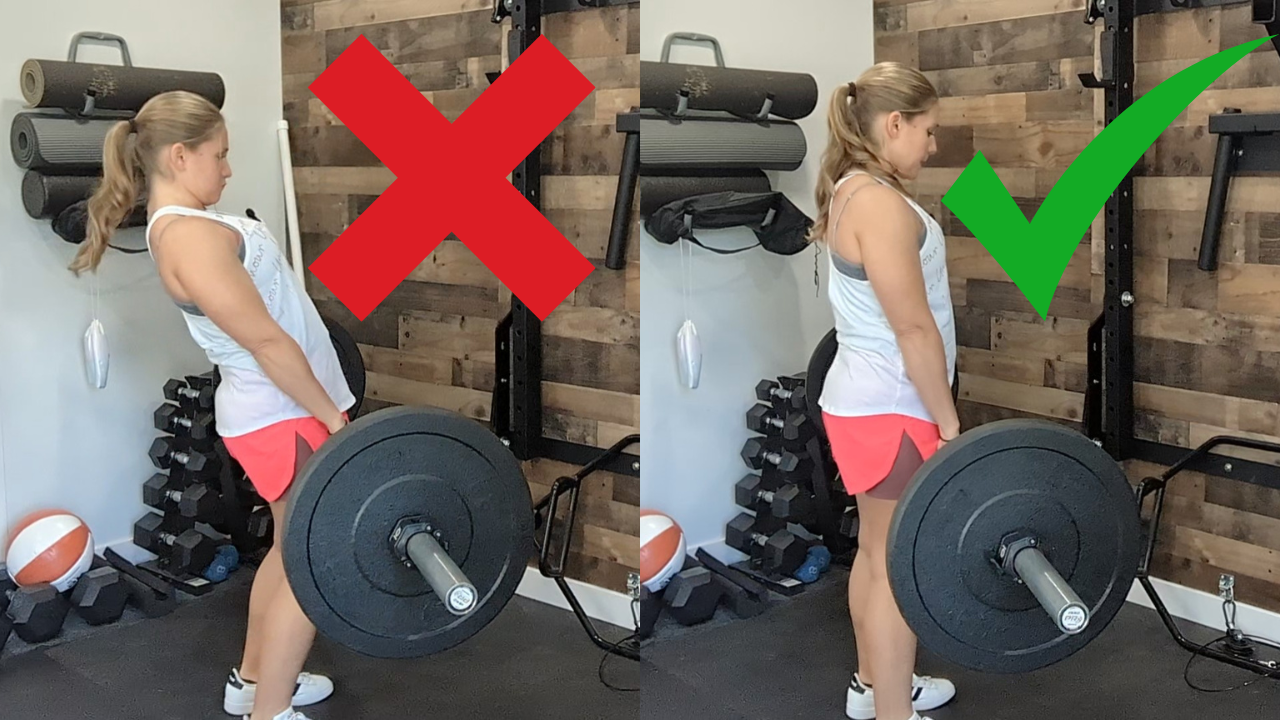
The first mistake is turning the movement into a squat. If your knees keep traveling forward and the hips sink downward, you change the exercise’s emphasis. Keep a modest knee bend and send the hips back. Second is letting the bar drift away. Even a small forward drift increases the moment arm and can make your back feel like the limiting factor. Keep the bar close without scraping yourself painfully.
Third is chasing the floor. A shorter, stable range with a strong hamstring stretch beats reaching deeper by collapsing through the spine. Fourth is finishing each rep by throwing the shoulders backward and leaning into an exaggerated lockout. Stand tall and let the glutes finish the hip extension. Fifth is adding load faster than technique can accommodate. If the bar accelerates unpredictably or you cannot repeat your bottom position, reduce the weight and rebuild.
Fatigue management is part of form. Heavy RDLs after maximal squats, deadlifts and rows may produce a different movement than fresh RDLs. Consider using two or three challenging working sets rather than adding junk volume at the end of a marathon session. Straps can help when grip is the bottleneck, but they cannot fix poor positioning. A belt may help you brace consistently, but it does not replace learning to brace.
Normal muscular effort and next-day soreness are not reasons to panic. Sharp, radiating or escalating pain is different. Stop the set if a movement produces unusual pain, and seek appropriate professional assessment for persistent or concerning symptoms. You do not have to prove toughness by forcing a hinge through symptoms that are clearly getting worse.
Powerlifting Shirts & Lifting Gear
Powerlifting shirts and gym gear for squat, bench and deadlift lifters who live for heavy numbers.


1000lb Club Shirt – Meme Top & Gymbros T-Shirt
Heavy lifts, good laughs, and a little “1000lb Club” energy.

Powerlift Deadlifts Powerage Album Parody AC/DC Heavy M Sticker
Put “Powerlift Deadlifts” gym humor on your laptop, bottle, or gym gear.

The Ultimate Deadlifter Jesus Christ – Deadlifts Liftin Hoodie
Make your off-duty look more fun with “The Ultimate Deadlifter Jesus Christ”.

The Art Of The Deadlift Patriotic Meme – Funny USA Gym Hoodie
Bring “The Art Of The Deadlift Patriotic Meme” gym humor to lazy days and post-workout plans.

Uncle Sam Deadlift Patriotic – 4th of July Workout Jump T-Shirt
Keep things casual with a little “Uncle Sam Deadlift Patriotic” attitude.

I Want You To Deadlift – Patriotic Uncle Sam 4th of Jul T-Shirt
For laid-back days and deadlift humor: “I Want You To Deadlift”.

Do You Even Deadlift Hooded Pullover Deadpool Fans Hoodie
Bring “Do You Even Deadlift” gym humor to lazy days and post-workout plans.

Deadlift Military Skull Gym Decal for Powerlifters, Har Sticker
Put “Deadlift” gym humor on your laptop, bottle, or gym gear.

Deadlift Cyberpunk Skull Gym Crewneck for Powerlifters, T-Shirt
Keep things casual with a little “Deadlift” attitude.
A four-week RDL plan for bigger hamstrings and stronger pulls
For a practical two-day lower-body setup, place the main RDL on Day A after your primary squat or as the first lift if hamstring growth is the priority. Perform three sets of six to ten repetitions, leaving roughly two repetitions in reserve on the first week. Follow with a leg curl variation for two or three sets of eight to fifteen, then your preferred quad and calf work. On Day B, use a lighter dumbbell or single-leg RDL for two sets of ten to twelve per side, followed by a knee-flexion exercise and the rest of your lower-body program.
In week one, establish a repeatable range and log the weight, reps and how many clean reps you think remained. In week two, add one repetition to sets that stayed within your technical standard. In week three, once all sets reach the top of the rep range, increase the load by the smallest practical increment and return toward the lower end. In week four, either continue modest progression if recovery is excellent or reduce a set if your hamstrings, grip or lower back are still carrying excessive fatigue.
The 2026 resistance-training guidance from the American College of Sports Medicine emphasizes consistent training and sufficient weekly work over obsession with one perfect prescription. Use the RDL as one component of a complete leg program rather than assuming that three sets of hinges replace all knee-flexion and quad training. Most lifters will make better progress by accumulating months of repeatable hard sets than by changing exercises every week.
Keep a short training log. If your load or reps climb while the movement stays consistent, you are progressing. If the numbers rise only because the range shrinks or the back takes over, you have changed the test. The best RDL is not the deepest or heaviest one you can perform once. It is the version you can train hard, recover from and improve for the long haul.