Perimenopause can change how women experience sleep, recovery and everyday energy. That has made creatine an increasingly interesting supplement, but the important question is narrower than the headlines: does adding creatine to resistance training measurably improve those outcomes, or are ordinary training effects being mistaken for supplement benefits?
A randomized study released in October 2026 followed 51 perimenopausal women, comparing creatine plus lifting, placebo plus lifting and a non-training control. The results offer a few intriguing signals for sleep consistency and brain oxygenation, alongside several important null findings. They do not establish a cure for brain fog, insomnia or menopause symptoms, and they do not tell us that everyone should start supplementing.
Understanding the design, the actual measurements and the difference between a physiological signal and a meaningful everyday improvement makes this study useful for lifters of any experience level.
1. What the six-week trial actually tested
The participants averaged 46 years of age, with considerable individual variation. Eighteen were assigned to creatine monohydrate, 20 to a placebo and 13 to a non-training comparison group. The two supplement groups performed progressive, high-intensity resistance training twice a week. The intervention used a five-day loading phase of 20 grams of creatine per day, followed by approximately 4.5 grams daily for six weeks. The placebo group followed its own matched protocol.
This design matters because both active groups lifted weights. A change shared by both groups might be related to training, practice on a test, expectation, normal fluctuations or other factors. The cleaner estimate of an additional creatine effect is the difference between the creatine and placebo training groups, not simply whether the creatine group improved from its starting point.
The investigators assessed attention-related performance with a Stroop task, memory with a short recall test, and oxygenation over the prefrontal region with a non-invasive optical measurement. A wearable tracked sleep patterns and daily self-reported symptoms, including temperature sensitivity, fatigue, soreness and brain fog. Those are useful measures, but each answers a different question. A wearable-derived sleep score is not a laboratory diagnosis of insomnia, and oxygenation is not interchangeable with memory, mood or mental clarity.
Finally, six weeks is a short window for studying menopause-related health. The trial is a starting point for questions about supplementation and resistance training, not a definitive guide to long-term clinical outcomes.
2. The sleep result: consistency, not a guaranteed extra hour
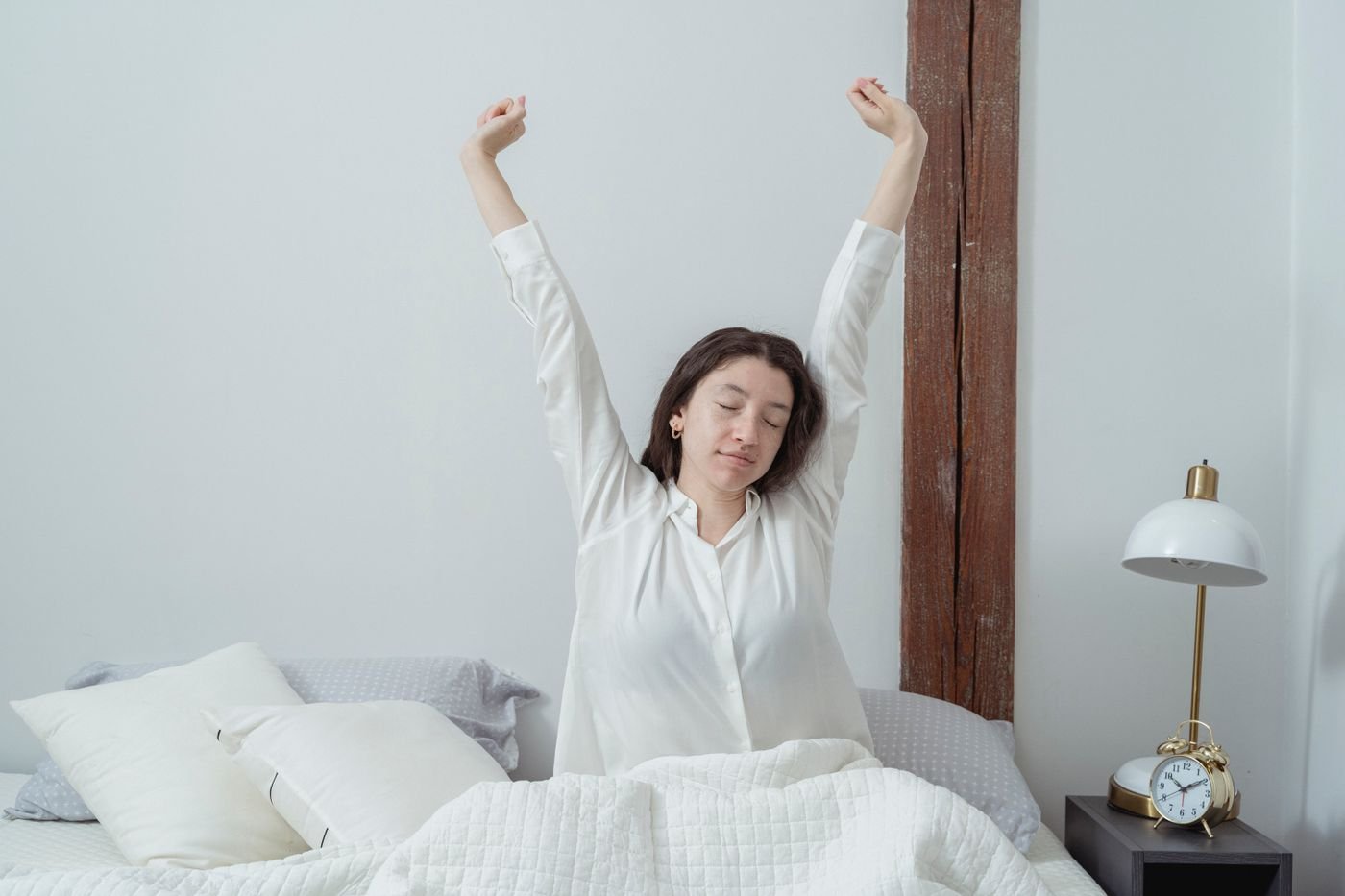
The clearest sleep-related difference concerned consistency. By week six, the creatine group had a baseline-adjusted sleep-consistency score 7.4 percentage points higher than the placebo group. The reported comparison reached statistical significance, but the result describes regularity of sleep timing and patterns as captured by the wearable, not a seven-percent increase in sleep duration or a seven-percent reduction in insomnia.
Those distinctions are easy to lose. Sleep duration asks how many hours someone slept. Sleep efficiency describes the proportion of time in bed spent asleep. Consistency asks how regular the timing and pattern of sleep were. A person can improve one without improving the others, and an individual score can be affected by work shifts, family schedules, travel, illness and the way a device estimates sleep.
In a related analysis of this training program, sleep consistency was generally better on training nights than on non-training nights across the training groups. That finding cannot isolate creatine because the training routine itself may influence schedules and bedtime behavior. Some measures of sleep disturbance also increased on training nights. It would therefore be misleading to say that hard lifting automatically produces perfect sleep.
For practical purposes, the study gives a reason to measure sleep regularity rather than judge a supplement by one impressive night. Keep bedtime and wake time reasonably stable, record how rested you feel and look for changes over several weeks. If persistent night sweats, insomnia or daytime sleepiness are disruptive, they deserve proper medical attention regardless of supplement use.

Equipment Worth Exploring
Explore equipment, accessories and gear from our carefully selected range.




FID Bench MAX
Adjustable bench offering flat, incline, and decline positions + adjustable headrest.


VOLTRA
Compact digital cable trainer with smooth, adjustable resistance.

Go-Tone Pro
Portable digital cable trainer with up to 66 lb (30 kg) of adjustable resistance.
3. Brain oxygenation changed, but cognition did not clearly beat placebo
The creatine group showed a small increase in prefrontal oxygenation during a cognitive task, while the placebo group showed a decrease. The reported group comparison was statistically significant. This is an interesting physiological finding, but it is not evidence that creatine reliably improves intelligence, memory or daily decision-making in perimenopause.
On the Stroop task, reaction times improved over the study period, yet there were no significant between-group differences. That is the more direct behavioral result. Repeating a cognitive test can improve familiarity and speed, while sleep, attention and ordinary day-to-day variation can also affect performance. An oxygenation signal may help generate a mechanism to investigate, but it does not replace a demonstrated functional benefit.
The small group sizes make interpretation particularly delicate. With 18 women taking creatine and 20 taking placebo while training, a few unusual responses can influence the average. Researchers measured several cognitive, sleep and symptom outcomes, which also raises the chance that some comparisons will appear significant by chance. Replication in larger, longer trials with prespecified outcomes would be much more convincing.
The useful takeaway is measured curiosity. Creatine has a well-established role in supporting repeated high-intensity muscular work, while its potential brain-related effects are still being mapped across populations. A woman who notices better concentration while following a new lifting routine should not assume she has identified which ingredient caused the change. Track both objective training progress and ordinary functioning before drawing conclusions.

Gym Girl Shirts & Workout Gear
Gym shirts, tanks and workout gear for women who lift, train hard and live the gym lifestyle.

Hardest Working Lady Patriotic Statue Of Liberty 4th T-Shirt
Heavy lifts, good laughs, and a little “Hardest Working Lady” energy.

Flowers & Weights Pink 45LB Plate Floral Barbell Workou T-Shirt
Show some gym-girl attitude with a playful “Flowers & Weights Pink 45LB Plate” tee.

Tulips & Weights 45LB Plate Floral Barbell Workout Spri Hoodie
Keep it laid-back with a little “Tulips & Weights 45LB Plate” attitude.

Roses & Weights 45LB Plate Romantic Barbell Workout Val T-Shirt
Show some gym-girl attitude with a playful “Roses & Weights 45LB Plate” tee.

GymTok – TikTok Parody Peach Graphic for Gym Girl Conte T-Shirt
Make gym days more fun with “GymTok” style.

Break The Stereotype Gym | Feminist Muscle Shirt For St Tank Top
Add some lifting attitude to training with “Break The Stereotype”.

Stronger Than You Crewneck
Add a playful “Stronger Than You” touch to your casual rotation.

Mom Shirt: Sleepless Not Weak Supermom – Mother'S T-Shirt
Make gym days more fun with “Gym Mom” style.

The Powerlift Girls – Gym Girl Superhero Cartoon Hooded Hoodie
Keep it laid-back with a little “The Powerlift Girls” attitude.

Strong Woman Leg Day Squats Decal Water Bottles Sticker
A fun “Strong Woman” touch for bottles, laptops, and lockers.
4. Temperature sensitivity, symptoms and the limits of self-report
The exploratory analysis also reported fewer days of temperature sensitivity in the creatine group than in the placebo group. That is worth studying because hot flashes and disrupted sleep can meaningfully affect quality of life. But the symptoms were recorded through daily self-report, and the trial was not designed to prove that creatine treats vasomotor symptoms or changes the hormonal transition itself.
Perimenopause is not a uniform experience. Menstrual patterns, hormone treatment, contraceptive use, baseline fitness, stress, caregiving responsibilities and sleep conditions differ substantially between individuals. In a small sample, those differences may matter as much as a supplement. Temperature sensitivity also is not identical to a clinically assessed hot flash frequency or severity score.
Another limitation is the commercial context of the research. The publication disclosed relationships involving supplement companies and the wearable manufacturer. Such disclosures do not invalidate data, but they reinforce the importance of transparent analysis, independent replication and separating exploratory findings from established recommendations. The wearable-data analysis was conducted by an investigator affiliated with the device manufacturer and was not independently reproduced by an unaffiliated analyst, although analysis code was made available.
A sensible reader should distinguish three claims: a particular measurement differed between small randomized groups; that difference might reflect a meaningful biological process; and a supplement improves a patient’s daily symptoms. The first can be supported by this trial. The second remains a hypothesis. The third requires stronger, preferably independently replicated clinical evidence.
5. Where creatine has firmer evidence: strength alongside training
Creatine monohydrate helps replenish phosphocreatine stores used to regenerate energy during brief, demanding muscular efforts. This is why its most established applications involve repeated hard sets, sprint-like efforts and the ability to maintain training quality. It does not replace protein, progressive overload or adequate recovery, and it is not a hormone treatment.
Evidence from postmenopausal women offers useful context, though postmenopause is not the same population as perimenopause. A 2026 synthesis of seven randomized trials involving 608 women found a small average lean-mass advantage of about 0.37 kilograms with creatine and a pooled leg-press strength advantage of about 7.5 kilograms in the studies reporting that outcome. The clearer benefits tended to occur when approximately five grams or more per day were combined with resistance training. Bone mineral density did not show a reliable overall improvement.
These are averages, not promises for an individual. Some studies found little extra benefit, and the certainty of different outcomes varies. Creatine can also increase water stored within muscle, which can affect lean-mass measurements without proving that every additional gram is new contractile tissue. That is why strength progression, performance and long-term consistency are valuable alongside body-composition estimates.
For healthy adults who decide to supplement, a commonly used maintenance amount is around three to five grams of creatine monohydrate daily. A loading phase can saturate stores faster but is not mandatory for many people. People with kidney disease, relevant medication use or other medical concerns should discuss supplementation with their clinician. The goal is an informed choice, not chasing an experimental sleep result with a larger dose.
Bodybuilding Shirts & Workout Gear
Bodybuilding shirts, tanks and gym gear for lifters chasing muscle, size, symmetry and the pump.

Powered By Creatine Creatine Lovers & Breaking Bad Hoodie
Bring “Powered By Creatine” gym humor to lazy days and post-workout plans.

Creatine Gym Cosmic Decal , Funny Workout Supplement En Sticker
Give your everyday gear a playful “Creatine” twist.

Creatine Monster Cookie Monster Meme Hooded & Hoodie
Keep it laid-back with a little “Creatine Monster” attitude.

Barbell Crossed Weights 45LB Plate Hardcore Hoodie
Keep it laid-back with a little “Classic Barbell Crossed Weights 45LB Plate” attitude.

Grateful Weights Rock Tee
Heavy lifts, good laughs, and a little “Grateful Weights” energy.

I Don'T Miss Workouts Hawkeye Superhero Bros, & Meme T-Shirt
Bring “I Don't Miss Workouts Hawkeye Superhero” humor to your next gym day.

Train Like A Machine – Iron Man Inspired Bros & T-Shirt
Rep “Train Like A Machine” humor in and out of the gym.

Caffeine & Weights for Coffee Fueled Workouts, Bodybuil T-Shirt
For laid-back days and powerlifting humor: “Caffeine & Weights”.

The Ultimate Deadlifter Shirt – Jesus Christ Bros & T-Shirt
Make gym days more fun with “The Ultimate Deadlifter” style.

I Love Deadlifts Muscle | Funny Valentine's Gym Vest Fo Tank Top
Add some deadlift attitude to training with “I Love Deadlifts”.
6. A practical two-day resistance-training framework
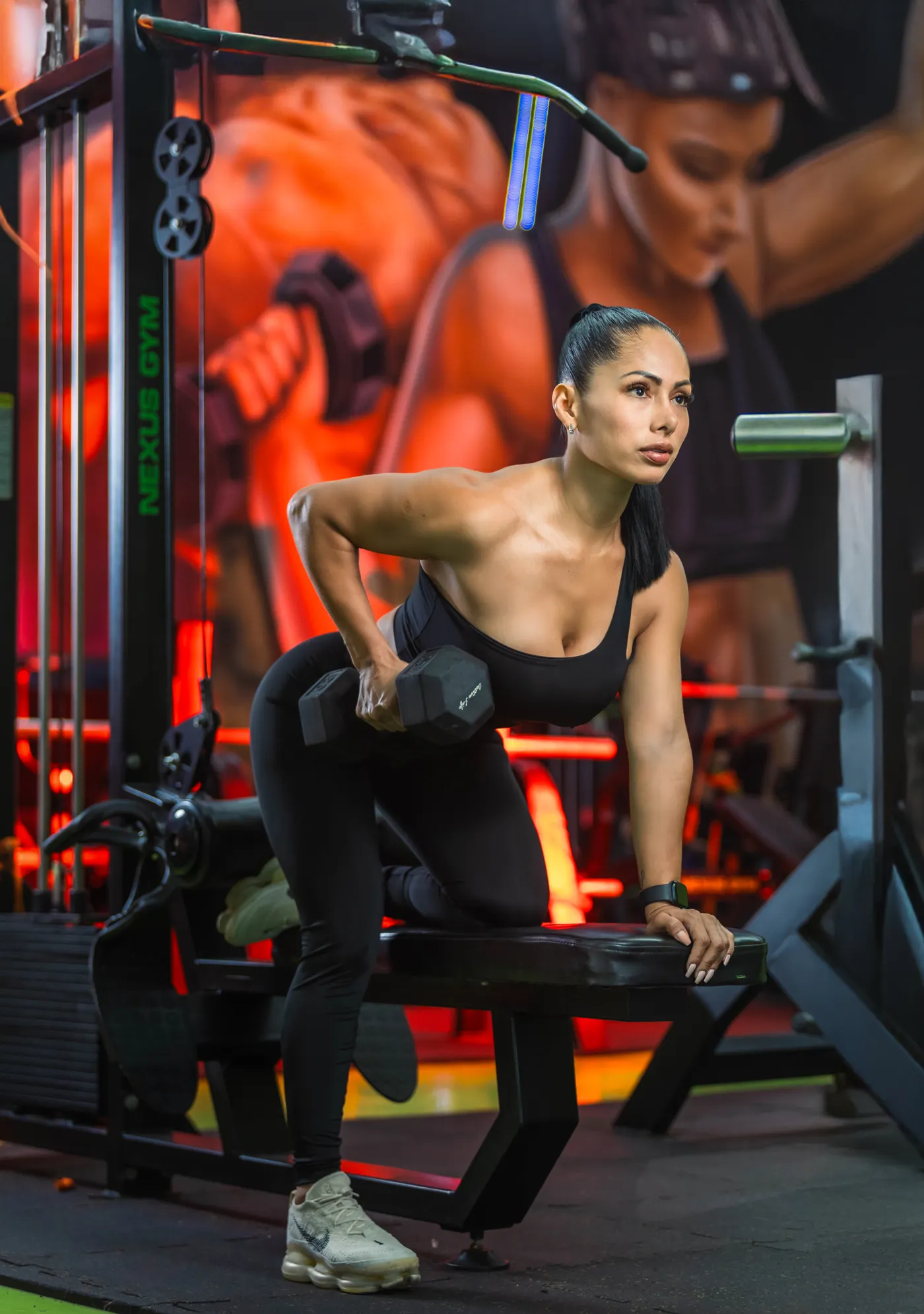
There is no reason to turn the trial into an all-out daily workout prescription. Twice-weekly progressive resistance training is a realistic foundation, especially for someone balancing work, sleep disruption and fluctuating recovery. The following example is gym-neutral: barbells, machines, dumbbells and cables can all work if the movement is comfortable and resistance is measurable.
Session A: perform a squat or leg-press pattern for three sets of six to ten repetitions; a horizontal press for three sets of six to ten; a supported row for three sets of eight to twelve; and a controlled calf raise or carry for two sets. Rest roughly two minutes between demanding sets, and longer when breathing or technique has not recovered.
Session B: perform a hip hinge or Romanian deadlift for three sets of six to ten; a pulldown or assisted pull-up for three sets of eight to twelve; a split squat or step-up for two sets per side; and an overhead or incline press for two sets of eight to twelve if tolerated. A short walk or light cycling session on separate days can complement lifting without turning every workout into a maximal-intensity test.
Start with roughly two repetitions in reserve on most sets. If all prescribed repetitions are controlled for two consecutive sessions, add a small amount of load or one repetition per set. If sleep is poor or symptoms are unusually disruptive, keep the session but reduce a set or the load rather than treating one difficult day as failure. The long-term objective is a sequence of recoverable sessions.
Creatine is optional within this plan. The training stimulus, regular meals, hydration and enough recovery remain central whether or not someone uses a supplement. Track the load, repetitions and perceived effort so that a subjective good day is not mistaken for the entire story.
Equipment Worth Exploring
Explore equipment, accessories and gear from our carefully selected range.





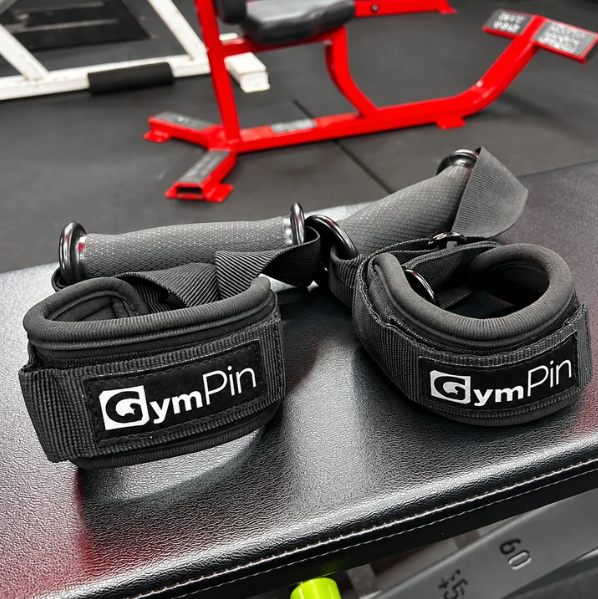
GymPin D Cuffs
Adjustable wrist cuffs with textured grips for supported cable-machine exercises.


Power Tower
Freestanding pull-up and dip station with adjustable handles for bodyweight training.
7. How to decide what to track over the next month
Before changing several habits at once, choose two or three outcomes that actually matter. For a lifter, that might be repetitions at a fixed dumbbell weight, the number of completed weekly sessions and the ability to recover for the next workout. For someone struggling with sleep, record approximate bedtime, wake time, awakenings and daytime energy. Keep the method consistent and avoid overinterpreting daily fluctuations.
During week one, establish baseline training loads and a typical sleep schedule. During week two, aim for the same two sessions and make one small progression if technique allows. During week three, review whether you are recovering well enough to repeat the sessions; adjust volume if needed. During week four, compare the original performance measures under similar conditions, rather than testing a maximum after a sleepless night.
If experimenting with creatine, avoid simultaneously changing caffeine intake, training frequency, bedtime and several other supplements, because it becomes difficult to identify what changed. A short personal log cannot prove causality, but it can help separate an expensive expectation from a useful routine. Persistent sleep problems or significant menopause symptoms are reasons to seek individualized clinical guidance, not to keep escalating supplements.
The 51-woman trial suggests creatine may influence certain sleep-pattern and physiological measures during perimenopause. It does not demonstrate a reliable cognitive advantage, cure insomnia or establish a universal menopause protocol. The strongest practical foundation remains progressive strength training, appropriate nutrition, regular recovery habits and decisions based on outcomes that matter in daily life.