Advertising disclosure: This page includes affiliate product links that may earn us a commission, as well as products from our own store.
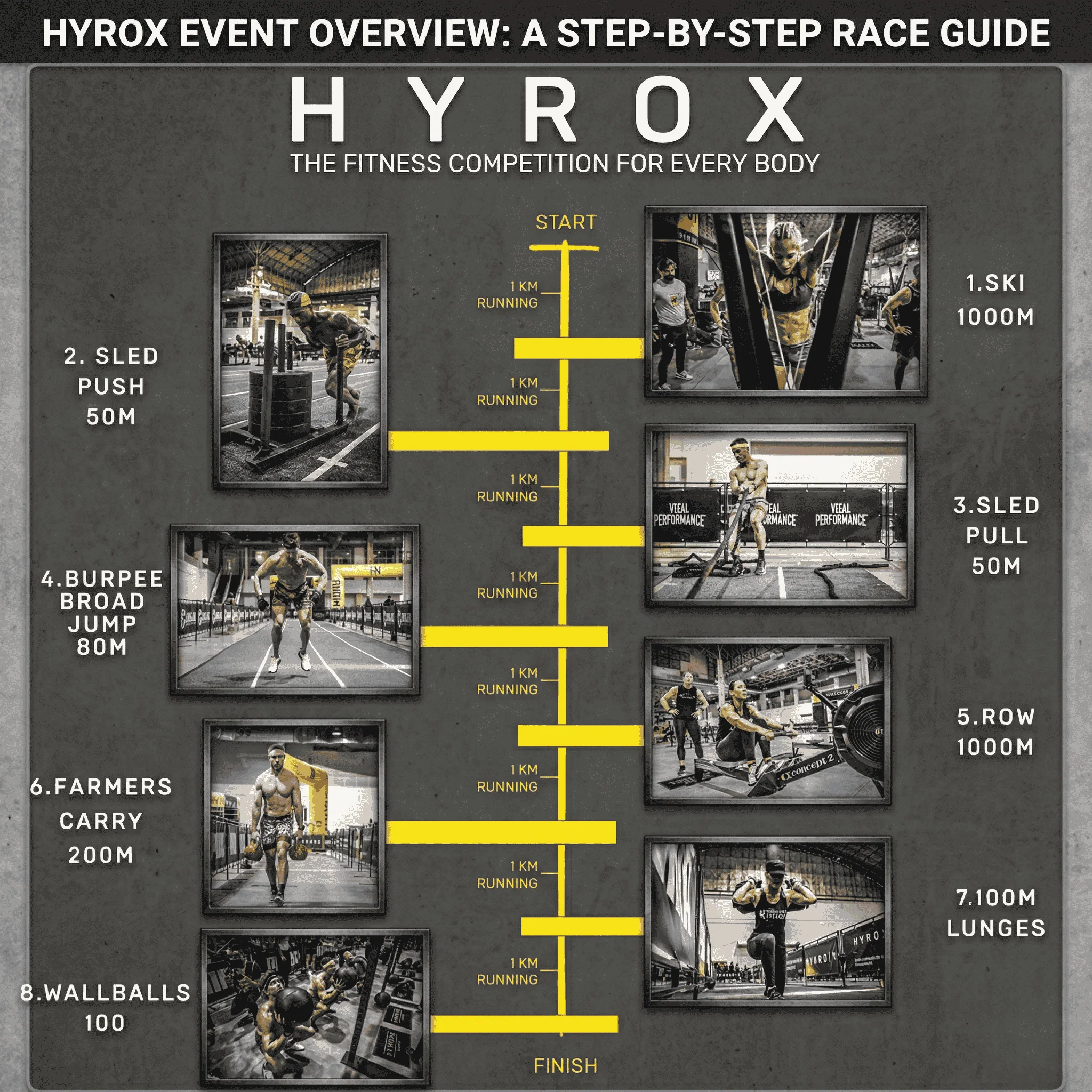
HYROX is part running race, part strength-endurance test—and unlike a conventional gym competition, you know exactly what is coming. Every standard race follows the same sequence: eight 1 km runs, each followed by a functional workout. That is 8 km (5 miles) of running plus eight workout stations, completed against the clock.
It sounds straightforward until you have to run after pushing a heavily loaded sled, or throw your 90th wall ball after almost an entire race of fatigue. This guide explains the complete HYROX format, each station, the differences between Open and Pro, and how to prepare intelligently for your first event.
HYROX at a glance
- Race: Eight 1 km runs alternating with eight workout stations.
- Total running: 8 km / approximately 5 miles, with additional movement in the transition area.
- Divisions: Open, Pro, Doubles and four-person Relay, with event-specific options.
- Biggest challenge: Combining a sustainable running pace with heavy, high-repetition work.
- Best first-race approach: Train consistently, learn the standards and pace conservatively.
What is HYROX, and how is it different from CrossFit?
HYROX is an indoor fitness race that combines endurance running with standardized functional movements. You start with a 1 km run, complete a workout station, run another kilometre, complete the next station, and continue until you finish all eight. The clock keeps running through the workout stations and transitions.
The major difference from CrossFit is predictability. CrossFit competitions can feature changing workouts, complex skills and surprise tests. HYROX sticks to its established sequence, so a competitor can train the exact movements, track station times and compare performances across events. It is also different from an ordinary road race: being a fast runner helps, but running alone is not enough.
That doesn’t make HYROX easy. Sled friction, repeated leg fatigue, grip demands, station standards and crowd management can all make a seemingly manageable pace unravel. Strength athletes usually need to invest more in running. Runners often need to prepare specifically for the sleds, carries and wall balls.
How the HYROX race format works
The order is always run → workout → run → workout. The final 1 km run happens before the wall-ball station; after finishing the wall balls, you cross the finish line. The distance between stations and the run course is navigated through the race’s transition area, usually called the Roxzone.
| Order | Run | Workout | Required work |
|---|---|---|---|
| 1 | 1 km | SkiErg | 1,000 m |
| 2 | 1 km | Sled Push | 50 m |
| 3 | 1 km | Sled Pull | 50 m |
| 4 | 1 km | Burpee Broad Jumps | 80 m |
| 5 | 1 km | Rowing | 1,000 m |
| 6 | 1 km | Farmers Carry | 200 m |
| 7 | 1 km | Sandbag Lunges | 100 m |
| 8 | 1 km | Wall Balls | 100 repetitions |
The table describes the standard adult race. Station weights depend on division; consult the specific event rulebook for applicable equipment, penalties and movement standards.

The eight HYROX workout stations, explained
Each station stresses different qualities. Understanding where you can work steadily, where you should conserve energy and which movements demand technical practice is far more valuable than simply doing every session at maximum intensity.
1. SkiErg — 1,000 metres
The race begins with the SkiErg after the first run. This machine uses a double-pole pulling pattern, engaging the upper body and trunk while requiring sustained aerobic output. It’s tempting to chase an impressive split because you’re still fresh. That can be an expensive mistake when the sleds are coming next.
Training focus: Practise relaxed shoulders, controlled breathing and a repeatable stroke rate. Work up to consistent 1,000 m efforts, then practise a kilometre of running immediately afterward. A powerful stroke matters, but an efficient stroke you can maintain matters more.

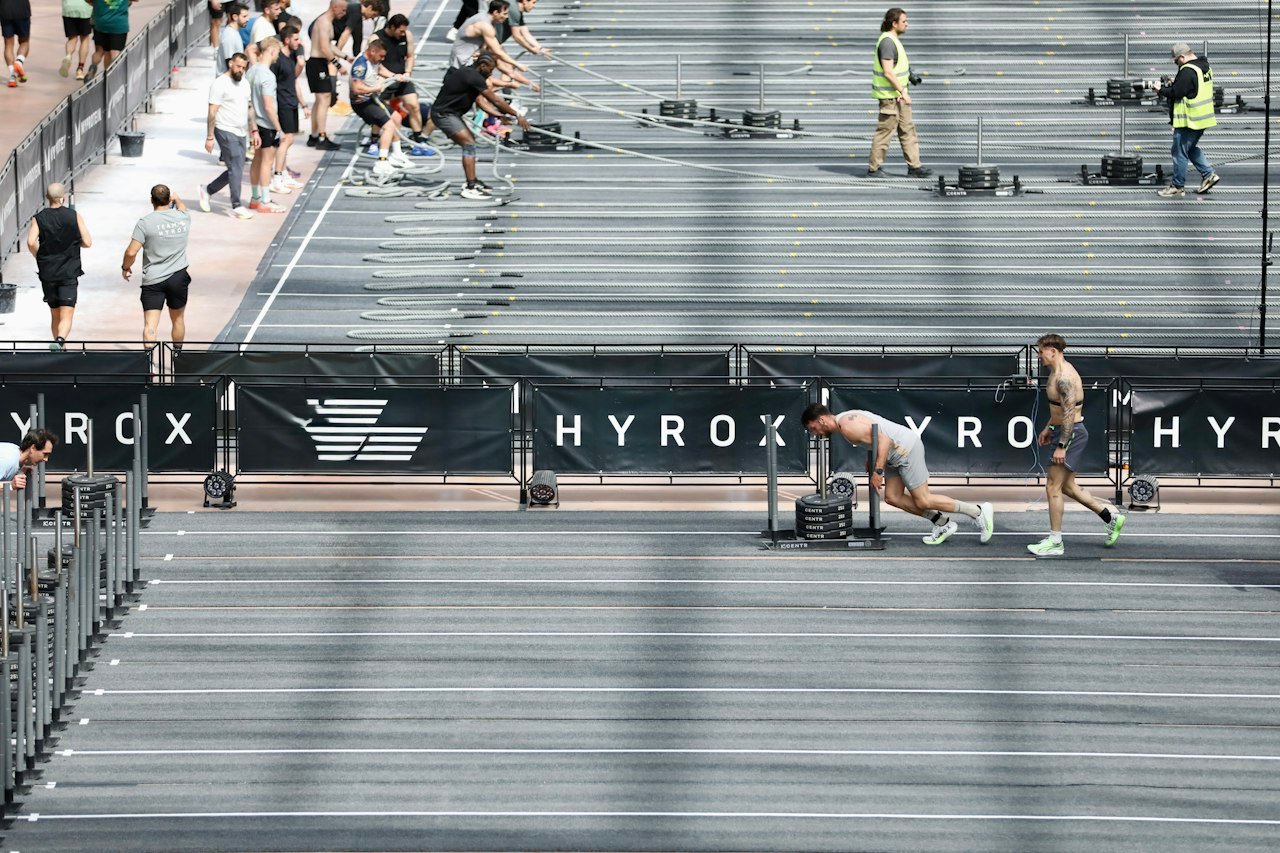
2. Sled Push — 50 metres
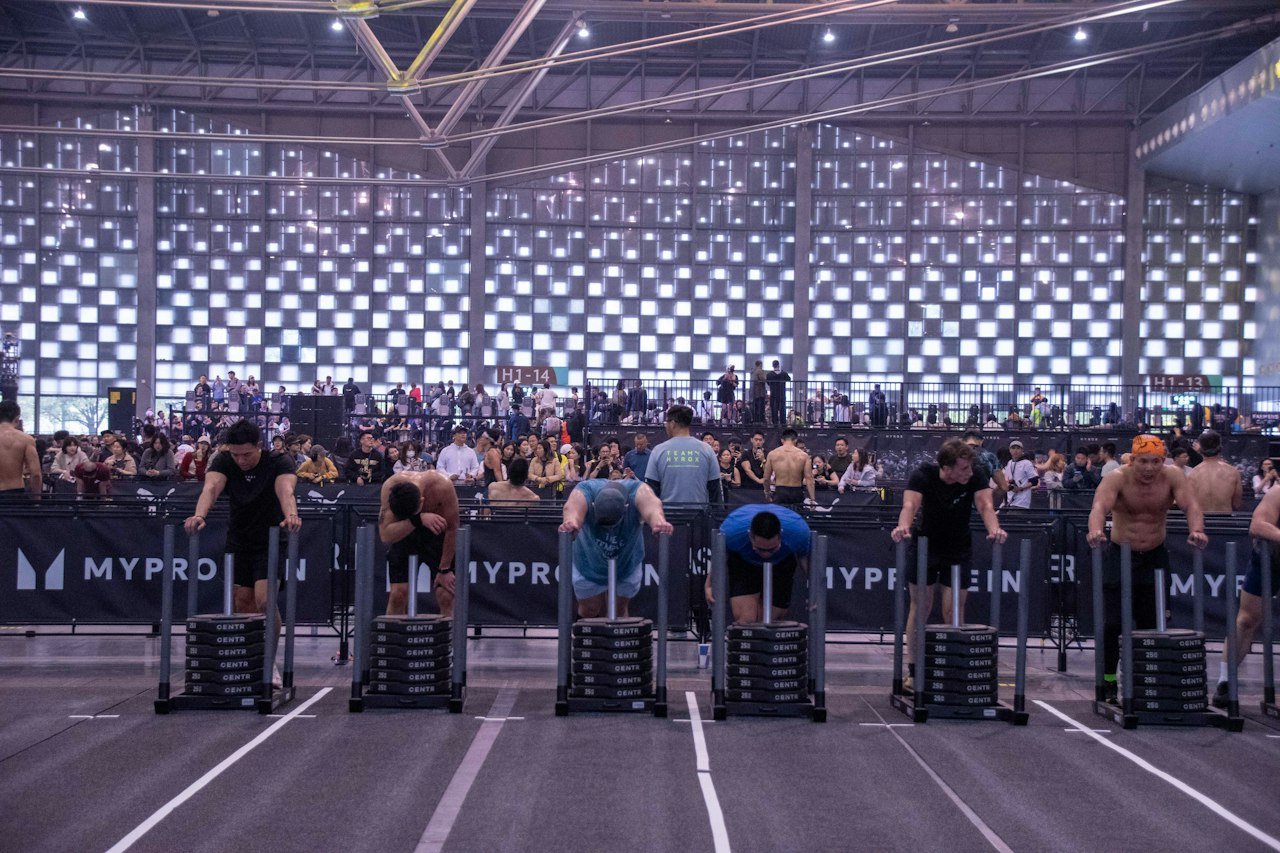
This is where many first-time competitors discover that gym strength doesn’t translate perfectly to racing. You push a loaded sled along a marked lane over a total of 50 metres. The surface and sled friction can change how challenging a given listed weight feels. The effort hits the quads, glutes, calves and cardiovascular system simultaneously.
Training focus: Practise short, forceful steps, strong bracing and a body angle that lets you drive through the floor. Test the prescribed load on similar turf if possible. Learn to restart the sled after a stop: repeatedly losing momentum wastes both energy and time.
3. Sled Pull — 50 metres
Here you move a weighted sled by hauling a rope from inside a designated area. It places a different demand on the upper back, arms, legs and grip from the push. Footwork and rope management matter. Tangling the rope or rushing hand-over-hand pulls can turn a manageable station into a slow one.
Training focus: Establish a secure stance, move the rope methodically and practise staying balanced as the sled approaches. Include rows and grip work in training, but also rehearse the actual pull technique—strength alone does not teach rope efficiency.

4. Burpee Broad Jumps — 80 metres
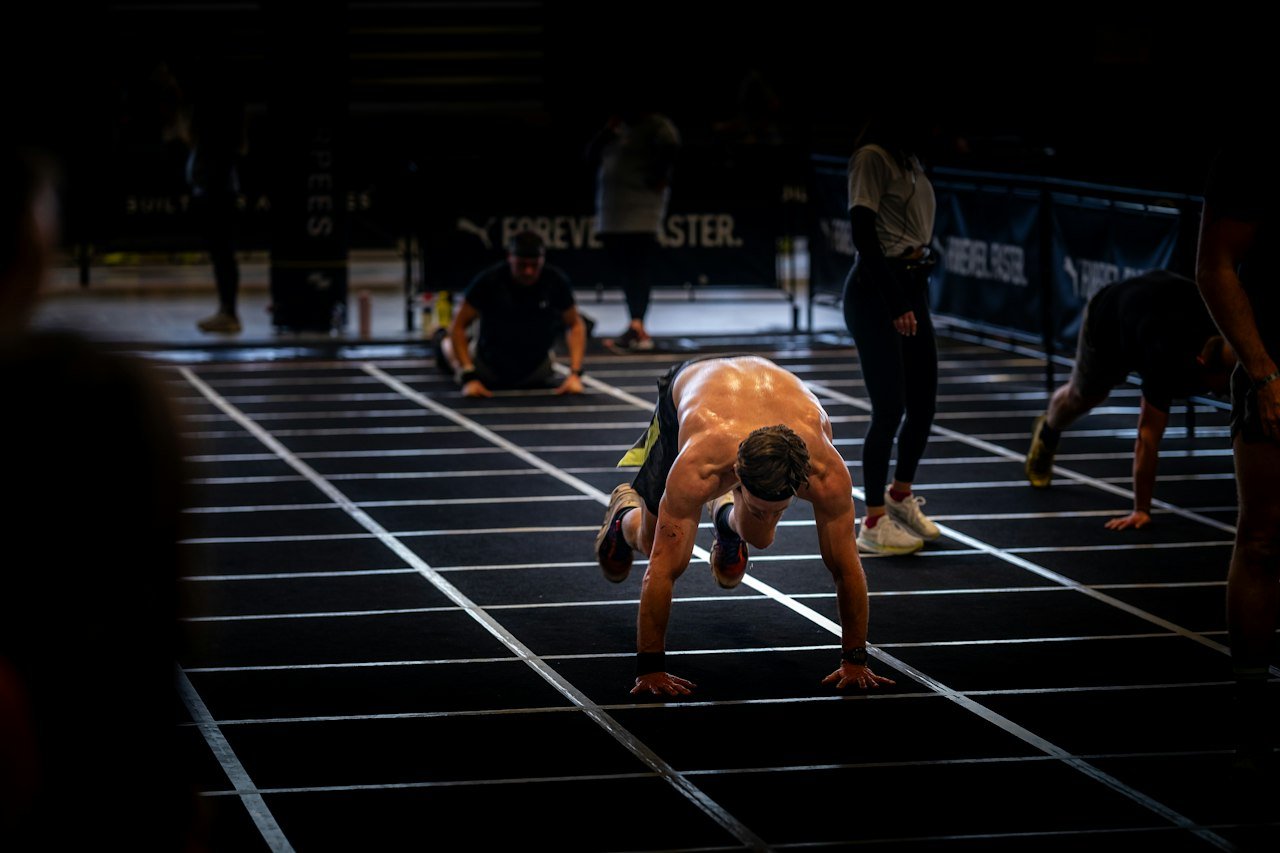
At station four, you repeatedly lower into a burpee and jump forward, progressing along the lane until you’ve covered 80 metres. This is a movement-efficiency test disguised as a conditioning station. Starting aggressively with oversized jumps often leads to more standing around later.
Training focus: Learn the current movement standard, find a repeatable jump distance and get comfortable breathing while alternating the floor transition and broad jump. Build volume gradually if your knees, ankles or shoulders are not accustomed to repeated landings.
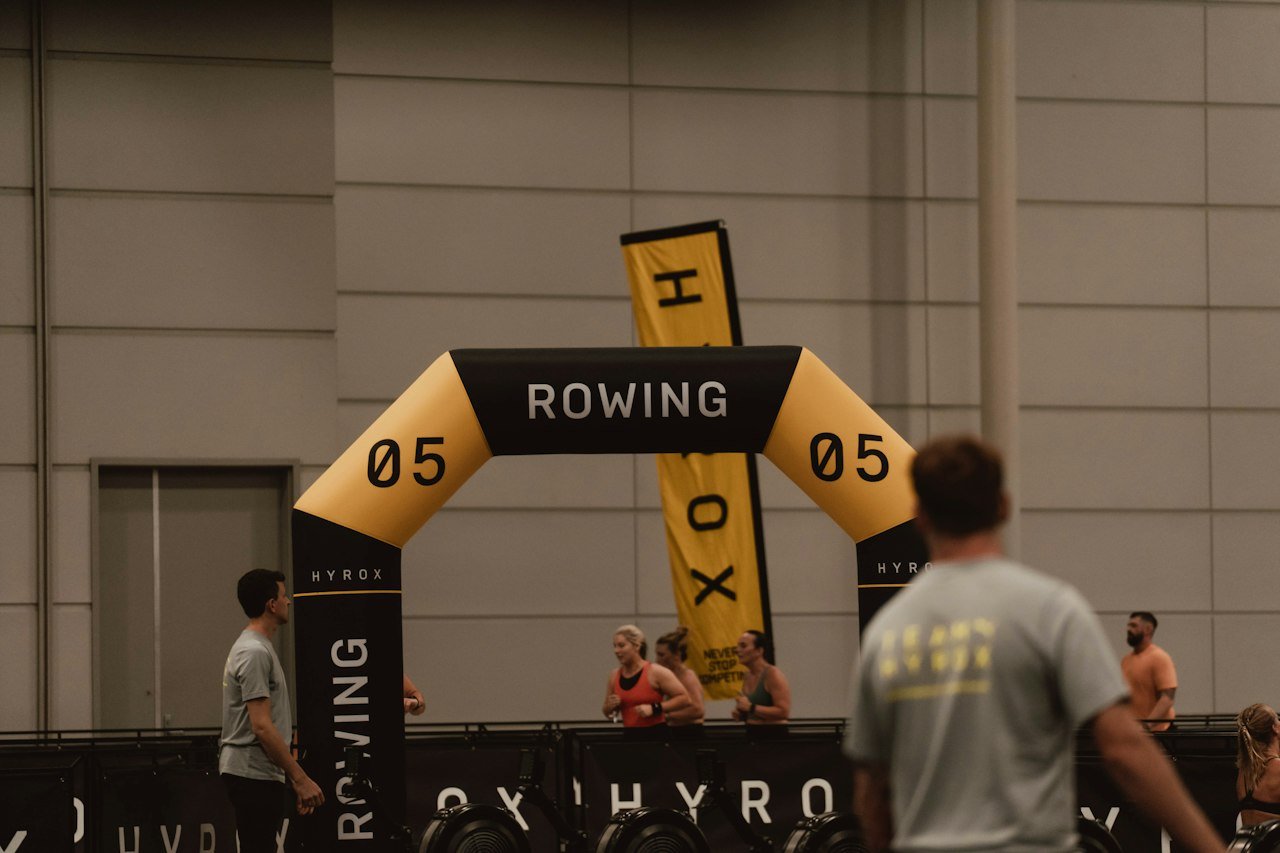
5. Rowing — 1,000 metres
After the fifth run, the rower offers a chance to find a rhythm again—but only if you resist sprinting. This station involves the legs, posterior chain and upper body. A frantic stroke rate can inflate your heart rate while barely improving your overall result.
Training focus: Drive through the legs first, maintain a stable trunk, then complete the pull with your arms. Practise smooth 1,000 m pieces under mild fatigue. Before racing, become familiar with the monitor, foot straps and drag-factor feel of the equipment.
6. Farmers Carry — 200 metres
The sixth station is a 200 m loaded carry with a kettlebell in each hand. Heavy carries can look simple until your grip begins to fail after the previous workouts. Posture, walking speed and the number of times you need to put the bells down can determine your split.
Training focus: Carry progressively heavier kettlebells with a tall torso and short, controlled steps. Train grip endurance without constantly going to failure. A smooth walk and planned set-down strategy will usually beat repeated all-out surges followed by long rests.

7. Sandbag Lunges — 100 metres
With a sandbag loaded across the upper back, competitors lunge over a total of 100 metres. This is a brutal test of single-leg endurance after several kilometres of running and heavy work. Poor step length and a collapsing torso make it feel harder than it needs to be.
Training focus: Build lunge volume progressively and practise the required knee-contact and extension standards. Use steady step lengths, brace through the trunk and learn how the sandbag rests on your shoulders. Add work under fatigue occasionally, but not every session.
8. Wall Balls — 100 repetitions
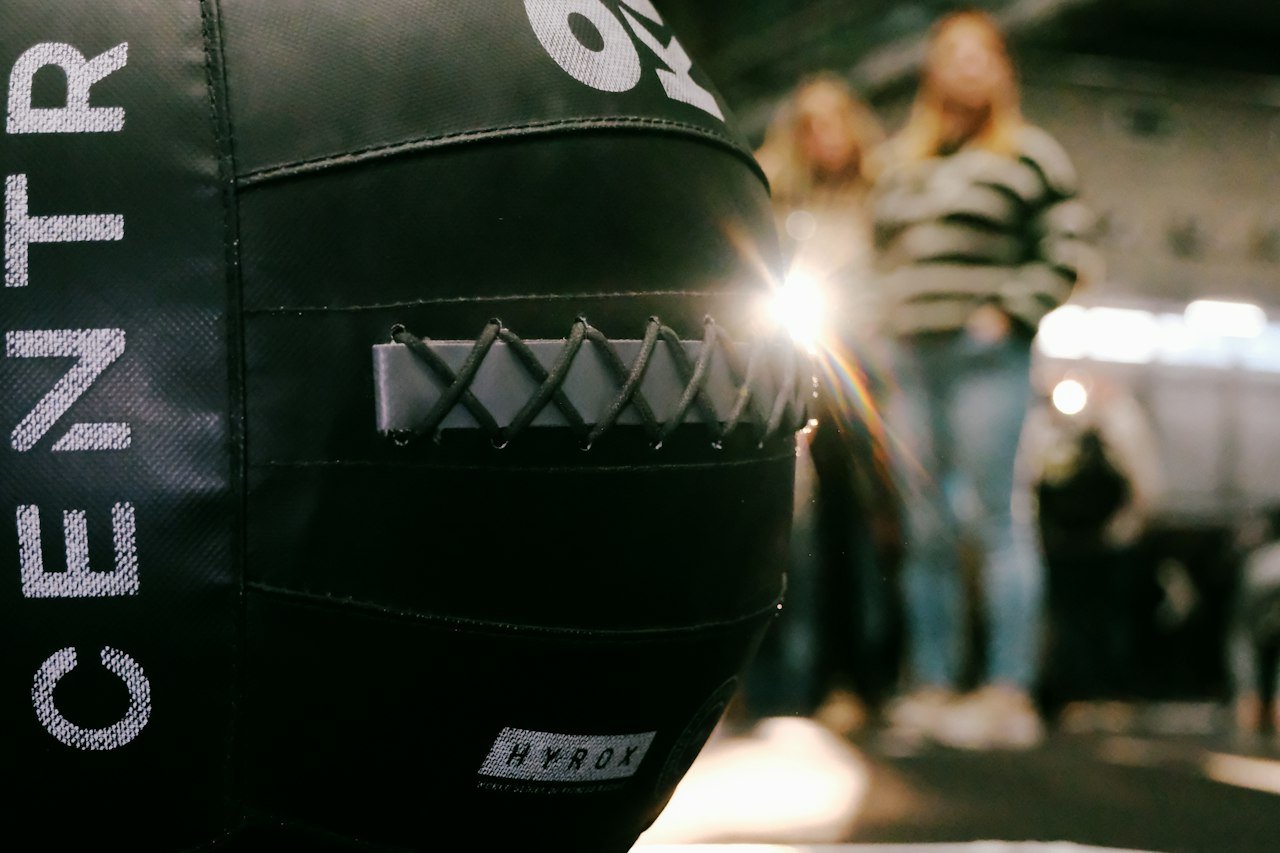
The final station is the famous wall-ball finish: squat with a medicine ball, stand and throw it to the target, catch and repeat. In the standard race, every adult individual division completes 100 reps. The ball weight and target height depend on division, and invalid repetitions do not count.
Training focus: Practise full-depth squats, accurate throws and a breathing rhythm. Break your reps into manageable sets before you reach failure—for example, steady sets with brief planned pauses. The best strategy is the one that keeps good reps coming after seven previous workouts, not the one that looks spectacular for the first twenty.

HYROX Open vs Pro: weights and divisions
Open is generally the better entry point for most first-timers, but it is not an anything-goes scaled workout. You still need to complete the prescribed station distances, repetitions and movement standards for your division. Pro uses heavier loads at several stations; the eight 1 km runs stay the same.
The following standard individual division figures come from the official 2025/26 HYROX Singles Rulebook. Weights are in kilograms; sled figures include the sled itself. Event-specific or later-season rules may change, so confirm before you register.
| Station / load | Women Open | Men Open | Women Pro | Men Pro |
|---|---|---|---|---|
| Sled push | 102 kg | 152 kg | 152 kg | 202 kg |
| Sled pull | 78 kg | 103 kg | 103 kg | 153 kg |
| Farmers carry (each bell) | 16 kg | 24 kg | 24 kg | 32 kg |
| Sandbag lunge | 10 kg | 20 kg | 20 kg | 30 kg |
| Wall ball | 4 kg | 6 kg | 6 kg | 9 kg |
Other station distances remain the same across those standard adult individual divisions. Women’s wall-ball targets are generally 2.7 m (approximately 8 ft 10 in); men’s are 3.0 m (approximately 9 ft 10 in). Check the event’s official rulebook for exact standards.
Doubles and Relay: two alternatives for beginners
HYROX Doubles: Both partners complete all eight 1 km runs together, but they can divide the work at stations according to the prescribed rules. This is an excellent option when you want the full running experience while sharing the functional workload. Mixed Doubles may have different prescribed loads than Women’s Doubles; check your selected category.
HYROX Relay: Four people share the event. Typically each team member runs two 1 km segments and completes two associated stations. Relay makes the race much more approachable for someone who wants the atmosphere without an entire solo event.
Choose a division based on your ability to meet the actual station standards, not just your general gym experience. A skilled lifter who rarely runs can still find Open highly demanding.
How hard is HYROX? Running, strength and pacing
For many competitors, the most underestimated part is not one heavy workout—it is the way the stations disrupt running rhythm. A 1 km pace that feels comfortable when fresh can feel dramatically different immediately after a heavy sled push or sandbag lunges.
A useful way to think about race time is the sum of eight run splits + eight station splits + Roxzone transitions. A runner who saves a few seconds per kilometre but loses several minutes at the sleds may have little advantage. A strong lifter who goes out too fast can find the second half of the run laps increasingly expensive.
Practical pacing rule: Keep your first kilometre and SkiErg deliberately controlled. Avoid taking the sled push to complete muscular failure. Expect breathing to settle gradually after each station, and know your realistic sustained pace rather than trying to match the crowd.
How to train for HYROX: a sensible weekly plan
The best HYROX programme is the one that improves running and strength endurance without constantly leaving you too exhausted to train again. If you already have a good lifting base, prioritise building a consistent running habit. If you run regularly, give extra attention to sled proficiency, carries, lunges and wall balls.
Start with a training volume you tolerate, then progress over several weeks. For many first-time racers, eight to twelve weeks of specific preparation is a useful framework, but a true beginner may need longer to build the underlying capacity. Keep most aerobic sessions comfortable, make some sessions harder, and allow room for recovery.

Sample five-session training week
| Day | Session | Goal |
|---|---|---|
| Monday | 35–50 min easy run + mobility | Aerobic base and recovery |
| Tuesday | Strength: squat/hinge/pull + sled push and carries | Strength with station specificity |
| Wednesday | Running intervals, such as 4–6 × 800 m with recovery | Repeatable speed and pacing |
| Thursday | Rest or light walking | Absorb training |
| Friday | HYROX-style combo: 3–4 rounds of 800 m run + one shortened station | Practise compromised running |
| Saturday | Longer easy run; optional light technique practice | Comfortable endurance |
| Sunday | Rest | Full recovery |
Scale each distance, load and session count to your current training level. A beginner might start with three weekly sessions and shorter intervals; an experienced hybrid athlete may train more frequently. The session pattern matters more than copying the example numbers exactly.
Three training priorities that pay off
- Build the run first: You will run eight times, so running fitness has a major influence on total time.
- Learn the stations before going heavy: Technique improves efficiency, especially on sleds, burpees, lunges and wall balls.
- Practise transitions: Combine running and moderate station work sometimes to understand how your legs and breathing respond—not every day.
Six mistakes first-time HYROX racers should avoid
- Starting at 5 km personal-best pace. The first run is only the beginning; protect your energy for the final stations.
- Ignoring the sled surface. A nominal load is not the whole story. Train with a comparable sled and flooring if possible.
- Doing only all-out simulations. A full mock race is very fatiguing. Use scaled combinations and keep most sessions productive.
- Skipping movement standards. No-reps and penalties can cost more time than small fitness differences.
- Leaving wall-ball practice until the end. Your first 100-rep attempt should not happen after seven race stations.
- Neglecting race-day basics. Familiar shoes, nutrition, hydration, warm-up and knowing where to go all help avoid unnecessary stress.
Race-day checklist: what to expect and how to prepare
Sign up through the official HYROX website, choose an event and division, and review your event’s athlete information. Start times, event layouts, wave details and race-day instructions differ by location.
- Before race week: Practise your normal pre-training meal and any fuel you might use; do not experiment on race morning.
- In the final days: Reduce training fatigue, prioritise sleep and keep short, easy movement in your routine.
- At the venue: Allow time for check-in, a warm-up, toilets, equipment questions and finding the start area.
- During the race: Count laps carefully, follow station marshals, complete valid repetitions and use the prescribed lanes and entrances.
- After the finish: Review run, station and Roxzone splits to identify what will make the greatest difference next time.
Frequently asked questions about HYROX
Can a beginner do HYROX?
Yes, provided they have prepared sufficiently to complete the prescribed work safely. Open, Doubles and Relay provide different ways to take part. However, there is no blanket ability to substitute lighter weights or shorter distances on race day in a standard competitive division.
Do you have to run all eight kilometres?
In individual races, yes: eight 1 km runs are part of the format. In Doubles, both teammates run each kilometre together. In a standard four-person Relay, each team member runs two kilometres in their assigned legs.
Is HYROX harder than CrossFit?
They reward overlapping but different fitness qualities. HYROX is highly demanding for sustained running and functional endurance. CrossFit may place more emphasis on varied strength, gymnastics and technical skill. Which feels harder depends heavily on your background.
How many wall balls are in HYROX?
The standard adult individual event ends with 100 valid wall-ball repetitions. The prescribed ball weight and target height vary by division, and judges can reject repetitions that fail the movement standard.
Can I train for HYROX without a special gym?
You can build much of the aerobic and strength base with running, rowing, squats, lunges and loaded carries. However, practicing with a similar sled, SkiErg and the actual wall-ball setup is extremely useful before race day. Consider occasional sessions at a HYROX-affiliated gym if your usual gym lacks the equipment.
Where can I find HYROX races and rules?
Use the official HYROX site for current event dates and entry categories. Read the applicable rules before registering; loads, movement standards and race administration can change between seasons.
Final verdict: is HYROX worth trying?
If you enjoy measurable challenges and want a goal that demands more than either lifting or running alone, HYROX is worth considering. The predictable format makes progress tangible: a stronger sled split, a calmer second-half pace or a more efficient set of wall balls can all move your finishing time.
For your first event, don’t make an arbitrary finish time the only measure of success. Arriving healthy, knowing the standards, pacing intelligently and completing the full race is already an achievement. After that, your split times give you a clear blueprint for improving.

Want to get started? Choose a realistic division, pick an event and spend the next training block building the running, movement skill and work capacity you need to enjoy the experience.
Rules reference: HYROX — About the Race · Official Singles Rulebook 2025/26 · Official Doubles Rulebook 2025/26. Always check the rulebook for your event and season.