Could an exercise bike build stronger legs while feeling easier on your heart and lungs? A 2026 experiment with sedentary adults suggests the answer depends on which way the muscles work. Participants who trained by resisting motor-driven pedals improved several measures of leg function, yet the conventional pedaling group made substantially larger gains in aerobic fitness.
This is not a reason to abandon ordinary cycling or to assume that a gentle-feeling session is automatically more effective. It is an interesting distinction between muscular loading and cardiovascular training, with practical consequences for older beginners, rehabilitation settings and anyone choosing between endurance work and leg-strength exercise. The equipment used in the experiment is specialized, and a standard spin bike cannot simply be switched into the same mode.
1. Eccentric cycling is not ordinary backward pedaling

Most cycling is concentric: your leg muscles shorten as they push the pedals forward against resistance. Eccentric cycling reverses the mechanical job. A motor drives the cranks and the rider actively resists that motion, so the working muscles generate force while lengthening. Think of controlling the descent of a squat rather than standing up from it, translated into repeated pedal strokes.
That difference is important because muscles can handle substantial force during lengthening contractions while using less oxygen for a given mechanical load. It does not mean the session is free of effort. The legs still absorb force, the movement must be controlled and the machine must be designed to produce the reverse mechanical demand safely. Simply pedaling backward on a normal exercise bike usually does not recreate motor-driven eccentric cycling.
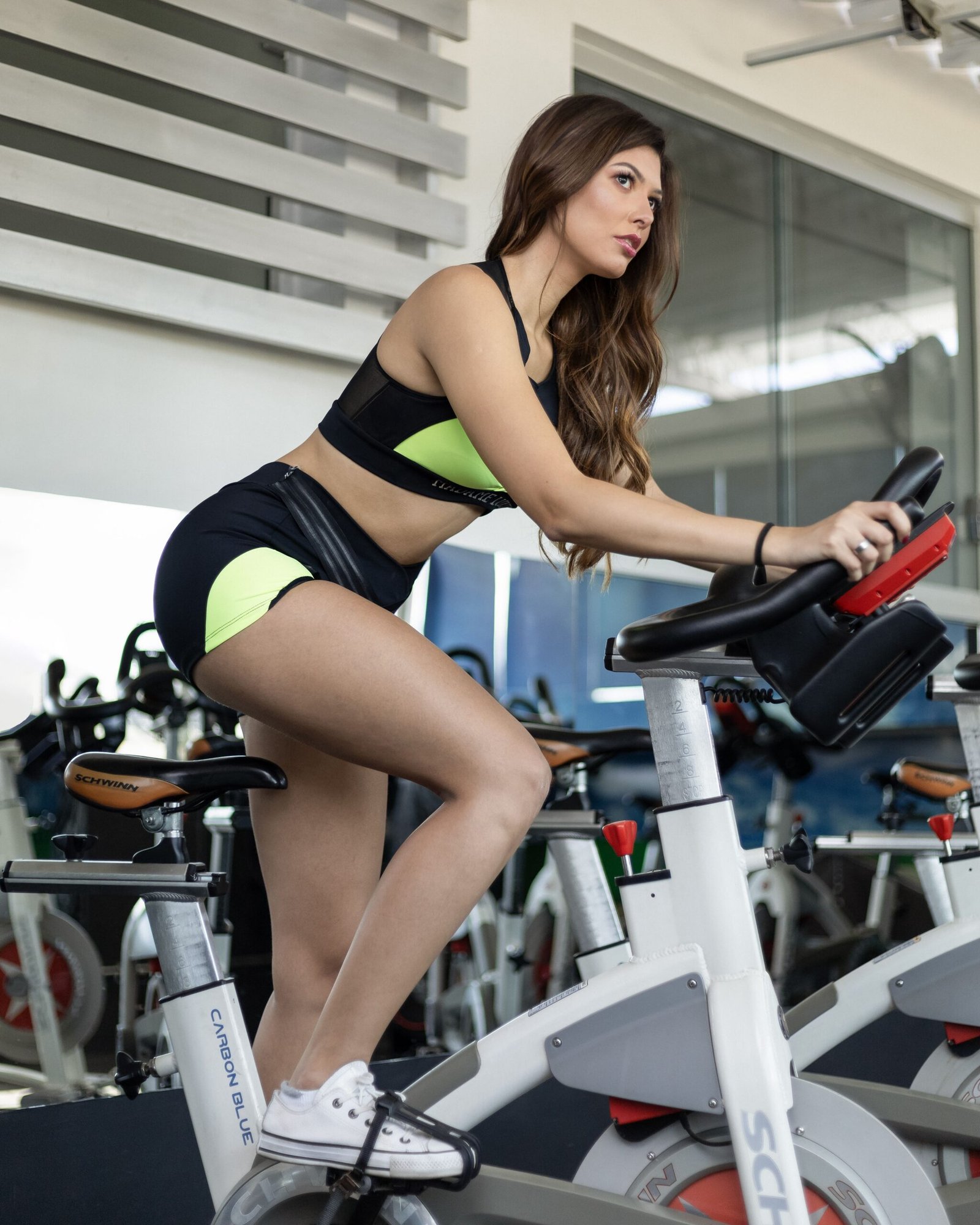
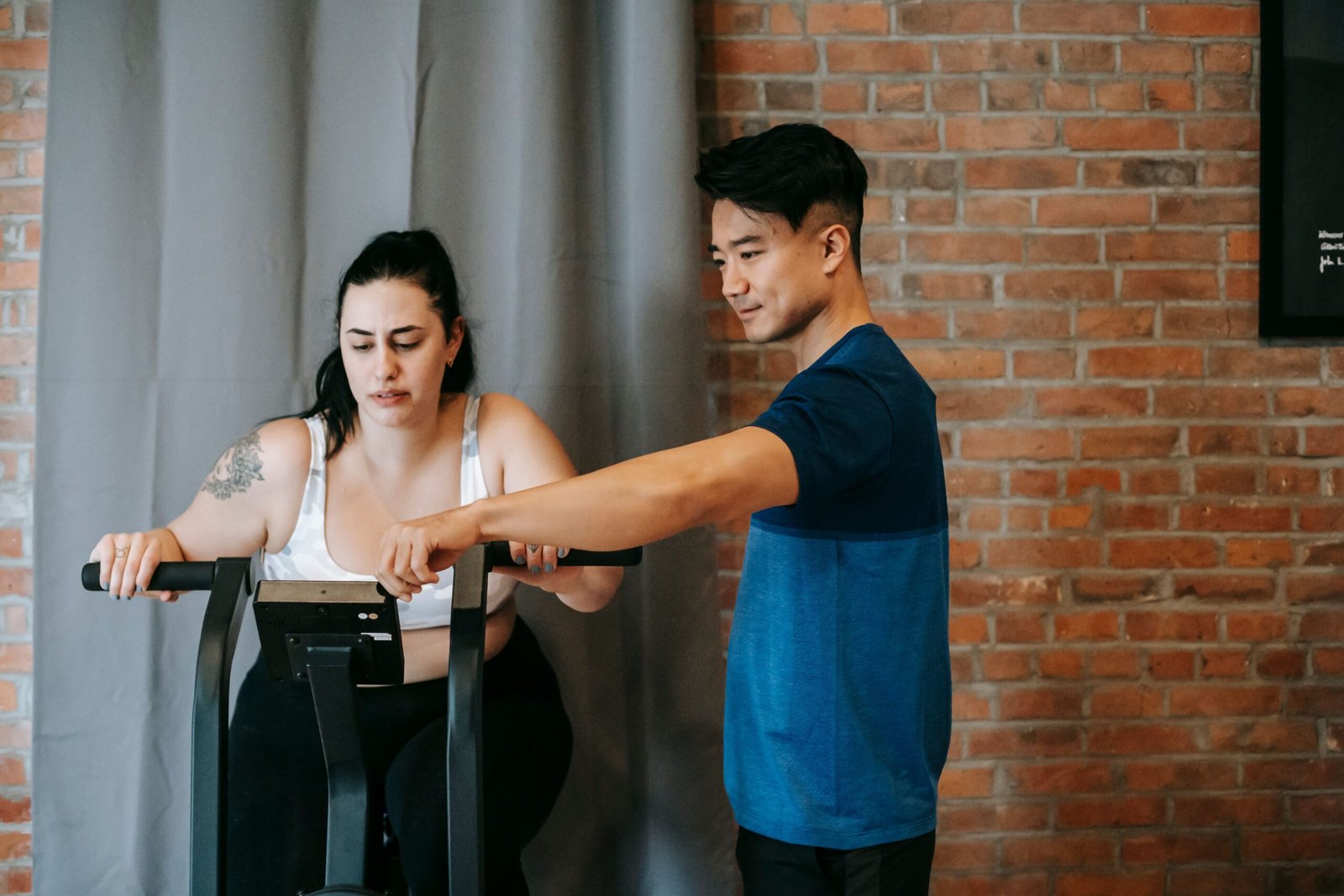
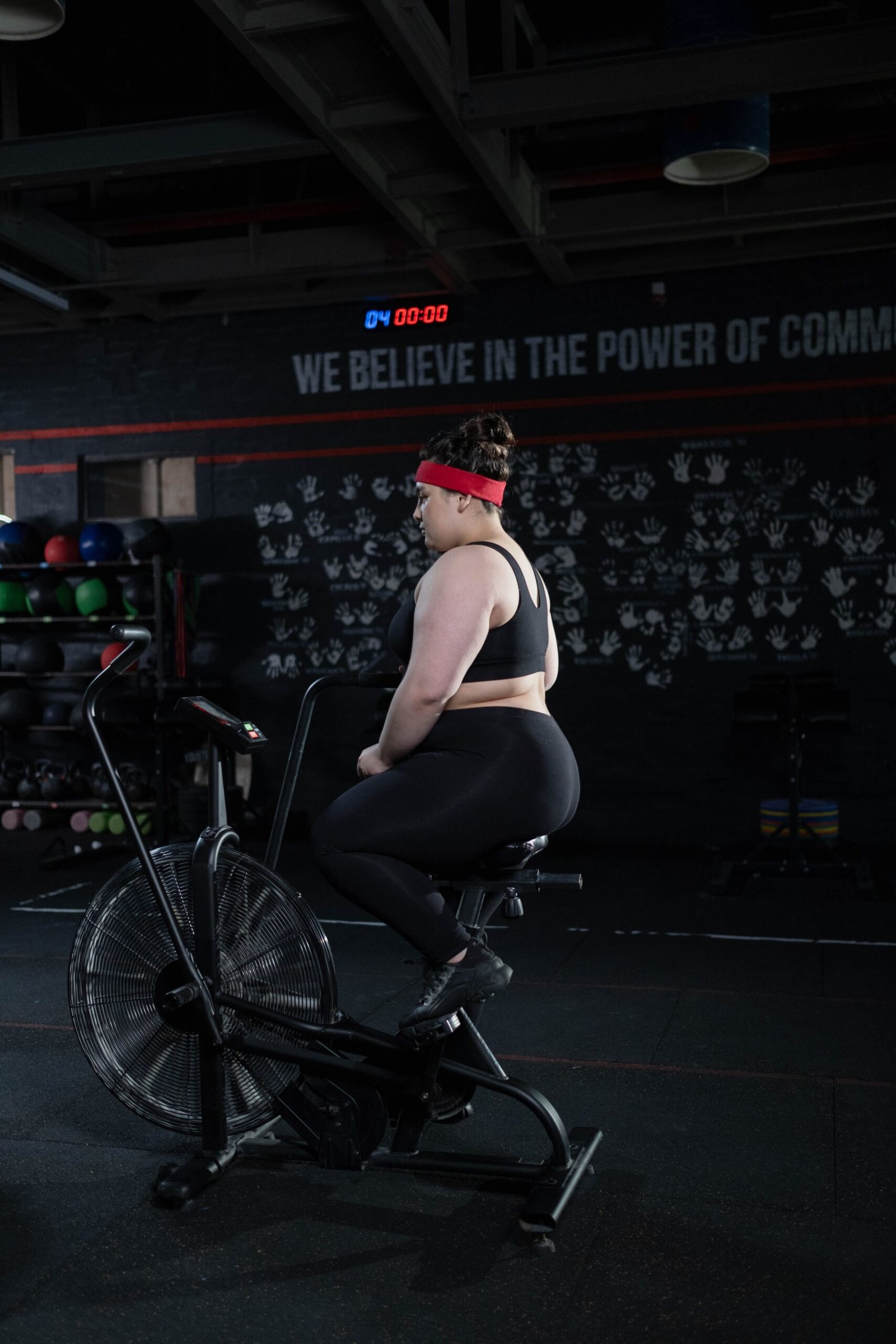
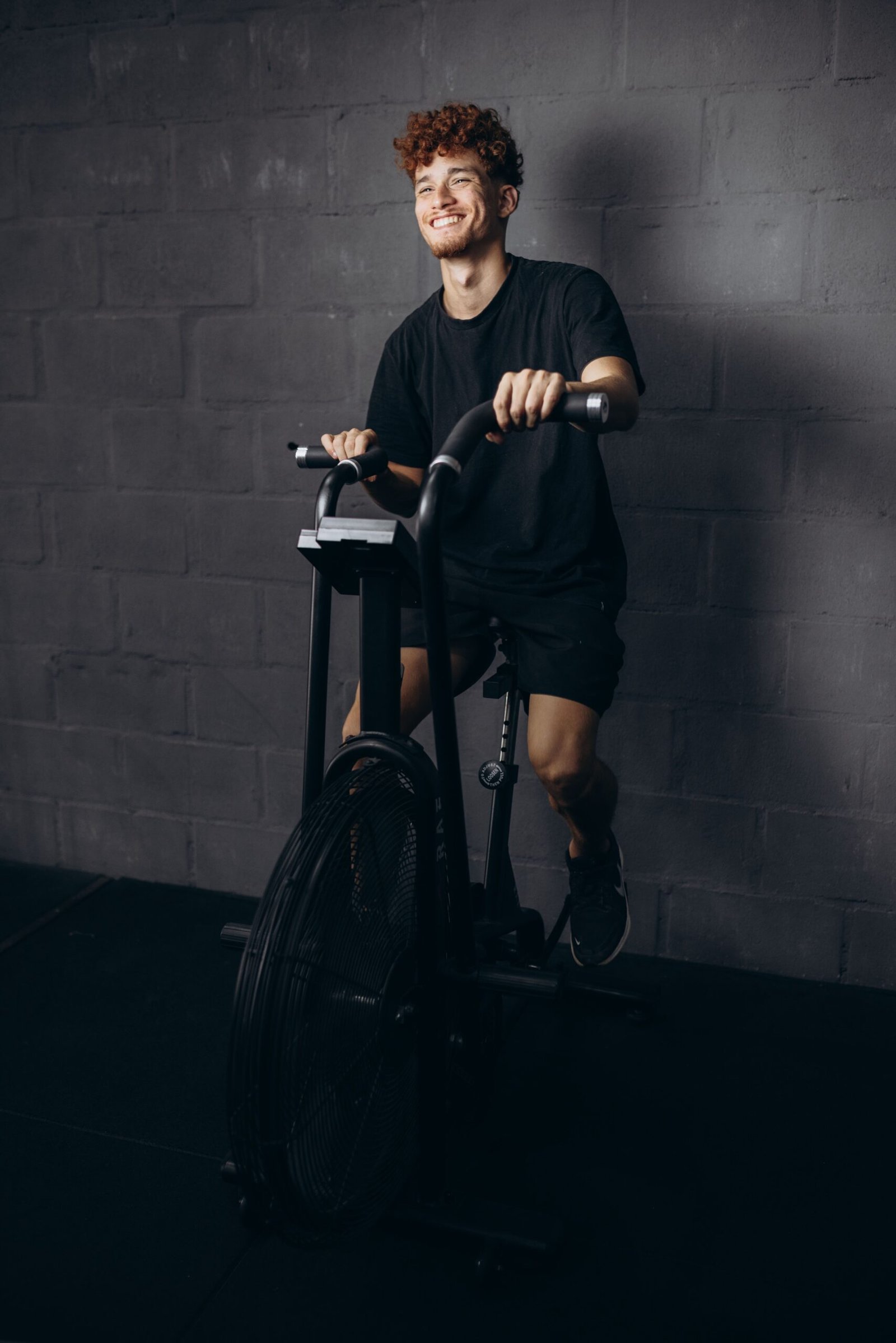
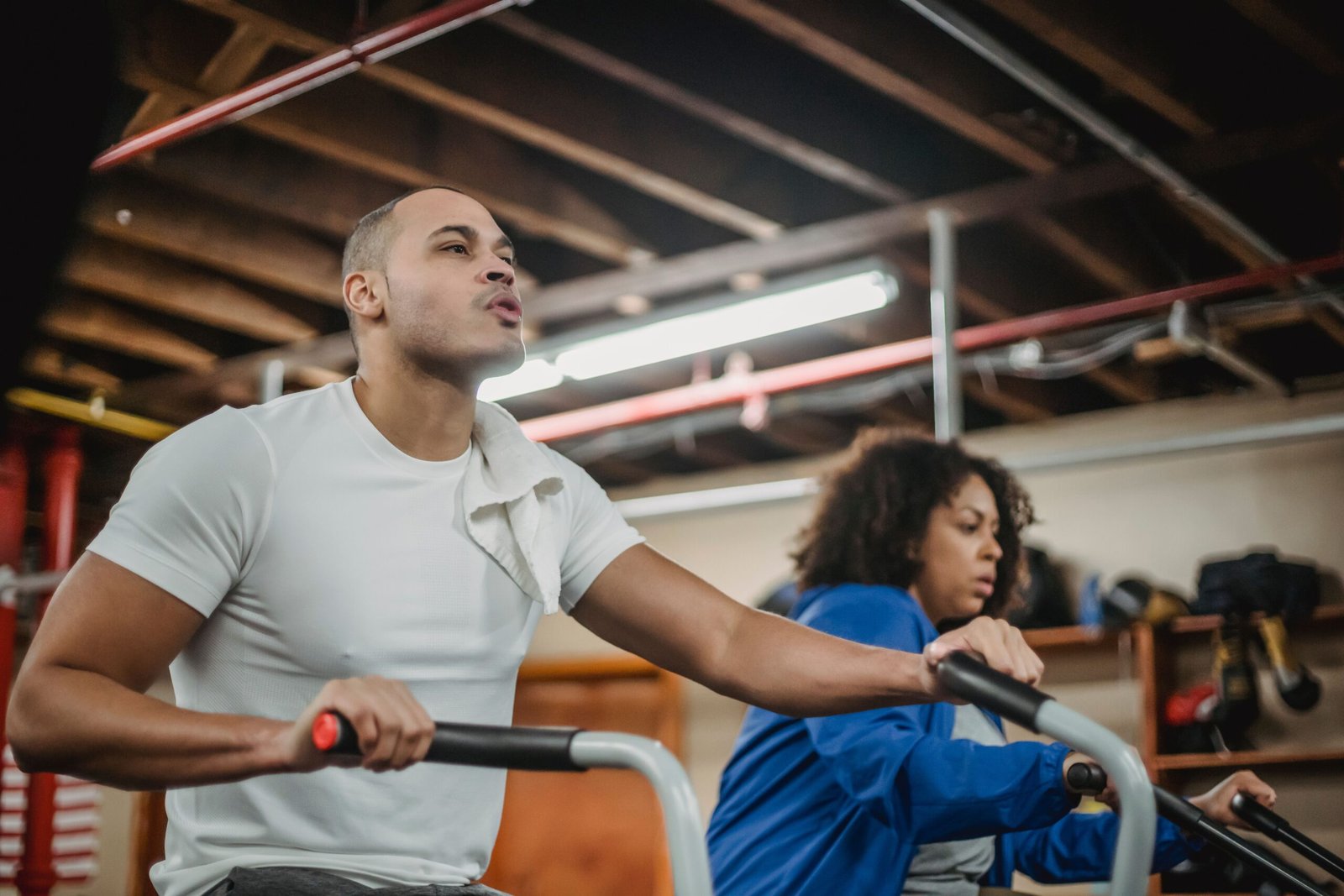
Many gym bikes, including the conventional bikes shown in the accompanying photographs, provide forward pedaling or fan resistance rather than true eccentric ergometry. When reading research about the latter, do not assume that a familiar stationary bicycle will reproduce its results. For most people, the useful takeaway is the broader distinction between muscle-loading stress and cardiorespiratory stress, not an urgent need to buy a specialized machine.
2. What the 12-week study compared
The 2026 experiment enrolled 43 sedentary adults with an average age around 61. Participants were divided into three supervised training groups: 15 performed interval eccentric cycling, 15 performed continuous eccentric cycling and 13 performed conventional concentric interval cycling. All three approaches were scheduled twice weekly for 12 weeks. That common frequency helps comparison, although the relatively small groups limit how confidently the findings can be generalized.
The interval eccentric group resisted a motor-driven workload, the continuous eccentric group worked without the same interval structure and the conventional group pedaled against resistance. Researchers prescribed intensity relative to each mode’s testing framework; percentages of maximal aerobic power should not be read as interchangeable weights on the same machine. The key comparison was what each method demanded from the legs and the aerobic system over time.
Before and after training, the team measured maximal oxygen uptake, maximal aerobic power, quadriceps isometric torque and functional tasks such as a six-minute walk and repeated chair stands. During sessions they also tracked heart rate, perceived exertion, soreness and cognitive demands. This matters because a program that improves a laboratory strength score but leaves daily mobility unchanged would tell a different story from one that helps both.
It was a training study, not a demonstration that one form of cycling prevents falls, treats heart disease or replaces a complete fitness program. There was no large long-term follow-up showing whether gains persisted after training stopped. Those boundaries are part of the result, not small print to ignore.

Equipment Worth Exploring
Explore equipment, accessories and gear from our carefully selected range.


Apple Watch Ultra 3
Rugged 49 mm smartwatch with cellular connectivity, GPS and fitness tracking.

Powerbeats Fit
Secure-fit wireless workout earbuds with active noise cancellation and a charging case.

VOLTRA
Compact digital cable trainer with smooth, adjustable resistance.

Go-Tone Pro
Portable digital cable trainer with up to 66 lb (30 kg) of adjustable resistance.


3. Leg strength and everyday function improved in all three groups
Quadriceps maximal isometric torque improved by roughly 14% in the eccentric interval group, 17% in the eccentric continuous group and 24% in the conventional interval group. The six-minute walking test improved by about 6%, 6% and 4%, respectively. Repeated sit-to-stand performance also improved across the three approaches, by approximately 14%, 17% and 11% as reported in the study.
These figures describe changes within the training groups. They do not prove that one method is categorically superior for every strength or mobility outcome. Small samples, baseline variation and the specifics of the training protocols all matter. The practical finding is that a relatively modest twice-weekly dose of structured lower-body work was associated with measurable improvements in several abilities that are meaningful outside a laboratory.
Chair stands demand coordinated hip and knee extension, balance, enough leg force and confidence to repeat the movement. Walking capacity reflects more than oxygen delivery: leg fatigue, gait, motivation and movement economy can affect the distance someone covers. Improvements in those tests are encouraging, but they should not be treated as proof of increased muscle size. Isometric torque is a strength measure, not a direct measurement of hypertrophy.
For a previously inactive person, this suggests a sensible way to evaluate training: record how a repeatable leg exercise feels, how smoothly you stand from a chair and how a familiar walk progresses. If all three improve, the program is delivering something useful even before a wearable reports a new fitness score.
4. The aerobic-fitness result was very different
Conventional concentric interval cycling was the clear aerobic winner in this particular experiment. Maximal oxygen uptake rose by about 14% in that group, while the eccentric interval and eccentric continuous groups showed approximately +1% and -1%. Maximal aerobic power rose by about 18% with conventional cycling, compared with roughly 4% and 1% in the two eccentric groups. The investigators therefore described meaningful aerobic improvements only in the conventional interval condition.
That pattern fits the basic training principle of specificity. If the heart, lungs and oxygen-delivery system face a greater repeated challenge, improvements in aerobic capacity become more likely. Eccentric cycling can place high force demands on the legs without producing the same whole-body oxygen demand. The two training stimuli are not interchangeable just because both happen on a bike.
During the experiment, mean heart rate and perceived exertion were lower in the eccentric groups than during conventional interval cycling. Lower perceived effort can make a modality appealing for some people, but it should not be confused with a superior cardiovascular workout. Conversely, higher heart rate does not make every session better: the appropriate dose depends on fitness, recovery, medication, symptoms and the goal of that day.
For someone whose main objective is to improve aerobic capacity, regular cycling, walking at an appropriate pace or other progressive endurance activity remains important. For someone whose limiting factor is leg strength or tolerance of higher breathing demands, an eccentric modality may offer a different route to muscular work. A single low-heart-rate session cannot be expected to accomplish both goals equally well.

Cardio Shirts & Workout Gear
Cardio and conditioning gym gear for runners, endurance athletes and anyone who earns the sweat.

Jigsaw'S Spin Bike Horror Cardio Killer Hoodie
Show off your cardio humor in a laid-back “Jigsaw's Spin Bike Horror” hoodie.

Chucky's Cardio Revenge Gym | Scary Horror Workout Vest Tank Top
Add some cardio attitude to training with “Chucky's Cardio Revenge”.

Jump Rope Wonder Woman Sticker
Put “Jump Rope Wonder Woman” gym humor on your laptop, bottle, or gym gear.

Anti Cycling Cycling Club – Ironic Cardio Meme & T-Shirt
Show some cardio attitude with a playful “Anti Cycling Cycling Club” tee.

Cardio Is Calling Decline Sweater Meme T-Shirt
Bring “Cardio Is Calling” humor to your everyday gym style.

Skip Cardio Exit Cardio Meme Hooded Hoodie
Keep it laid-back with a little “Skip Cardio” attitude.

Negative Cardio Review Cardio Sucks 1 Star Vest Tank Top
Bring “Negative Cardio Review” humor to your next lifting session.

Shirt – Cardio Is Hardio – & Gymbros T-Shirt
Show some cardio attitude with a playful “Cardio is Hardio” tee.

Straight Outta Shape Hoodie
Stay casual and show some cardio attitude with “Straight Outta Shape”.

Jump Rope Cardio Tee
Rep “Jump Rope Cardio Van Halen Rock Music” humor in and out of the gym.
5. Other experiments support a cautious, mixed picture
A separate 2025 randomized experiment assigned 55 older adults to four weeks of intermittent cycling using eccentric, conventional, hypoxic or blood-flow-restricted approaches. Multiple measures of strength and cycling performance improved, but the investigators did not find significant differences between the training groups. That short study points toward the value of doing appropriately supervised exercise rather than assuming a sophisticated modality is always better.
In a 2024 crossover experiment involving 24 healthy middle-aged adults, eccentric cycling produced markedly lower oxygen uptake and lower several measures of cardiopulmonary demand than conventional cycling at matched submaximal protocols. The oxygen-uptake response was about 52% lower in the eccentric condition. This helps explain how the legs can experience mechanical work without the same breathing burden, but a single-session physiological response is not proof of a long-term rehabilitation outcome.
Broader technical work on eccentric cycling has also emphasized its unusual force-to-metabolic-cost relationship, along with practical complications: machine availability, learning the braking action, managing delayed soreness and choosing loads appropriately. Results from highly controlled eccentric ergometers should not be casually transferred to a fan bike, road bicycle or standard exercise class.
The studies answer different questions. One compares 12-week training adaptations, another compares short-term training modes and another measures acute cardiovascular responses. They reinforce a plausible mechanism, yet none establishes that eccentric cycling is universally safer, cheaper, more effective or suitable without supervision. That distinction protects readers from the familiar mistake of turning an interesting experimental tool into a miracle exercise.
6. Who might benefit, and when to be careful
Eccentric cycling may be especially interesting where muscular work is desirable but sustained cardiovascular strain needs careful management. That includes some rehabilitation and deconditioning settings, provided a qualified team can assess the person, select appropriate equipment and supervise progression. It is not a prescription for someone with heart disease, joint pain or a recent injury to begin eccentric intervals independently.
Muscle lengthening work can cause substantial soreness when the dose is unfamiliar, even if breathing feels relatively easy during the session. A beginner may misjudge the workload because perceived exertion and heart rate do not capture every form of tissue stress. Start conservatively, watch the following 24 to 72 hours and increase the dose only when movement quality and recovery are acceptable. Persistent joint pain, dizziness, chest symptoms or unusual shortness of breath require appropriate medical attention rather than pushing through.
For most healthy beginners without access to a true eccentric ergometer, a conventional exercise bike is still a useful and accessible option. Add leg strengthening separately if strength is the goal: controlled sit-to-stands, supported split squats, leg presses or step-ups can be scaled to ability. Eccentric control is part of ordinary strength exercises too, although that does not make them mechanically identical to eccentric cycling.
A well-rounded plan should also include aerobic work, progressive muscle strengthening and, for older adults, balance-oriented activity. The most sustainable equipment choice is often the one that is available, comfortable to use correctly and easy to progress. Novelty alone is not a training outcome.
Equipment Worth Exploring
Explore equipment, accessories and gear from our carefully selected range.


GymPin Squat Wedges
Non-slip 15-degree squat wedges help elevate the heels for deeper quad-focused squats.


HUSLA Leg Extension Pad
Pad attachment designed to increase usable range of motion on compatible leg-extension machines.

FID Bench MAX
Adjustable bench offering flat, incline, and decline positions + adjustable headrest.
7. A practical two-day plan that does not require a special bike
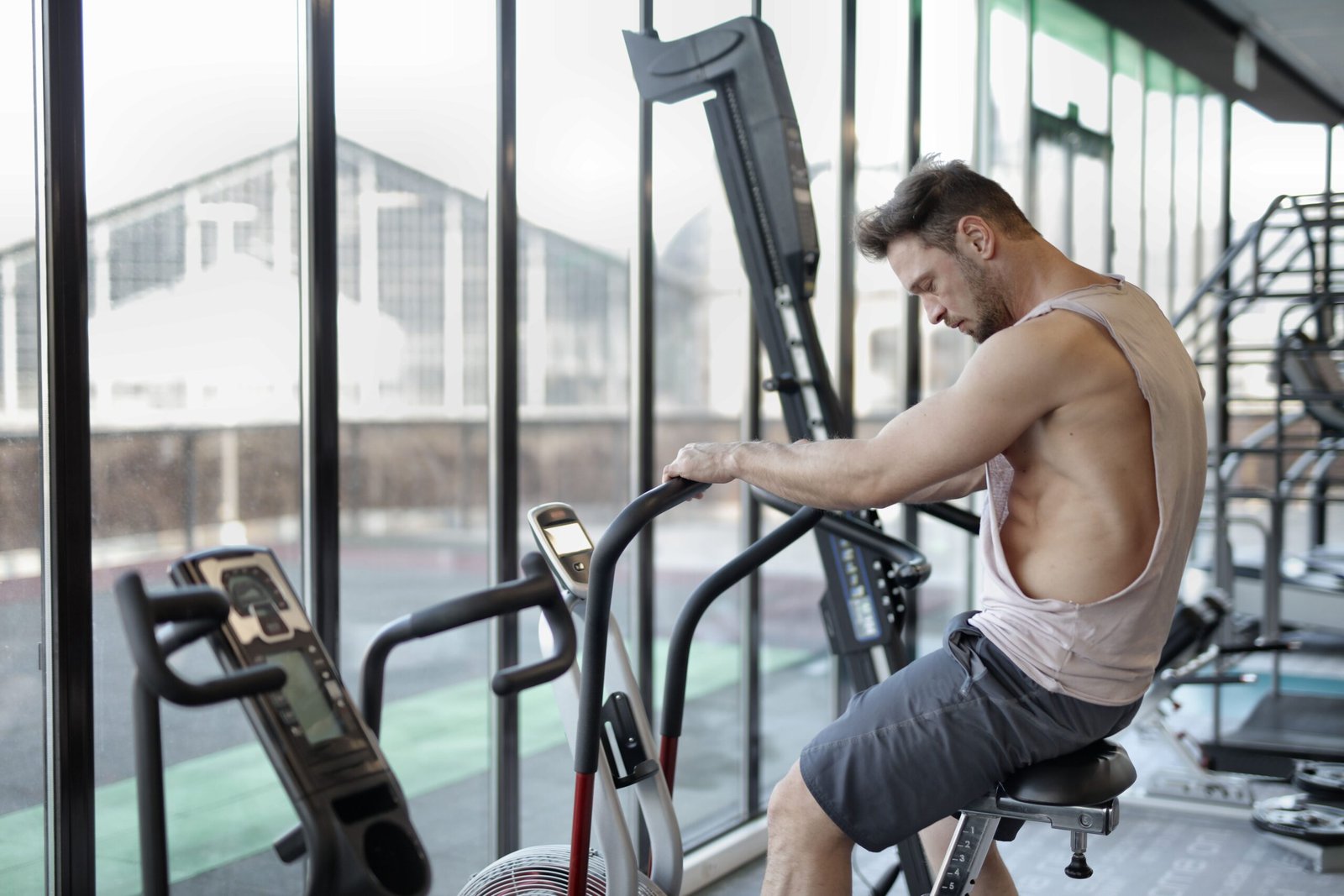
If you have access only to a conventional stationary bike, use it for the purpose it serves best: repeatable aerobic work. Pair it with straightforward leg-strength exercises instead of pretending that backward pedaling duplicates the research protocol. A starter schedule can use two nonconsecutive sessions each week, with easier walking or cycling on other days as tolerated.
Day A – steady cycling plus basic strength: warm up for five minutes at an easy pace, then cycle for 15 to 25 minutes at a conversational effort. After a short rest, perform two sets of six to ten supported chair stands or squats and two sets of eight to twelve controlled calf raises. Finish with a few minutes of comfortable movement. If the bike portion already leaves you exhausted, shorten it before adding more exercises.
Day B – controlled intervals plus leg function: warm up for five minutes, then alternate six rounds of one minute at a brisk but controlled effort with two minutes easy. Cool down for five minutes. Add two sets of six to eight step-ups per side or supported split squats, then a brief balance drill near a stable support. The intervals are an example, not a replica of the 2026 eccentric protocol; people with medical limitations should obtain individualized guidance.
Progress by adjusting only one variable at a time: a few minutes of cycling, a small resistance increase or an additional clean repetition. Keep the easier day genuinely easier if soreness accumulates. Track a familiar walk, chair-rise quality and cycling tolerance over several weeks rather than judging one session by sweat or calories.
The bigger lesson from the 2026 comparison is simple: stronger legs and a stronger aerobic engine are related but different adaptations. A specialized low-metabolic-cost cycling method may improve muscular function, while conventional cycling can deliver a more potent aerobic stimulus. Build a program that deliberately trains both qualities instead of expecting a single machine setting to do everything.
Leg Day Shirts & Workout Gear
Leg-day gym shirts and workout gear for lifters who never skip squats, lunges and lower-body punishment.

Gym Girl Booty Builder Sweatshirt
Bring “Gym Girl Booty Builder” humor to your everyday gym style.

Thicc Booty Energy Leg Day Lovers & Squat Enthusiasts Tank Top
Bring “Thicc Booty Energy” humor to your next lifting session.

Let It Grow Booty Building Leg Day & Squat Hoodie
Show off your leg-day humor in a laid-back “Let It Grow” hoodie.

Viking Shirt – Viking Squats , Gymbros & Gains – T-Shirt
Bring “Viking” humor to your next gym day.

OnlyGains Leg Day & Booty Building Meme Athletic Tank Top
Add some leg-day attitude to training with “OnlyGains”.

Anti Leg Day Leg Day Club & Meme Fans Hoodie
Show off your leg-day humor in a laid-back “Anti Leg Day Leg Day Club” hoodie.

Leg Day Decal Water Bottles & Equipment Meme Sticker
A fun “Leg Day” touch for bottles, laptops, and lockers.

Hippo Thrust Meme Leg Day Booty Workouts & Glute Tank Top
Add some leg-day attitude to training with “Hippo Thrust Gym Meme”.

Get In Loser We'Re Gonna Squat Booty Leg Day Meme T-Shirt
Show some leg-day attitude with a playful “Get In Loser We're Gonna Squat” tee.

Grim Reaper Deadlift Skeleton Bros & Leg Day Tank Top
Your gym-day look, with a playful “Grim Reaper Deadlift” twist.