Advertising disclosure: This page includes affiliate links that may earn us a commission at no additional cost to you.
Eight Arnold Strongman Classic victories are impressive enough as a number. The sequence makes Žydrūnas Savickas’s achievement more interesting: six consecutive wins from 2003 through 2008, followed by two more in 2014 and 2016. This was sustained dominance, then a return to the top after other champions had taken over.
That distinction matters when people discuss Big Z. A spectacular lift captures a moment; a championship record captures repeated performances across different editions of a demanding contest. Looking closely at the years, the events and the other major titles gives a more useful picture than treating his career as one enormous overhead press.
Six consecutive victories established the standard
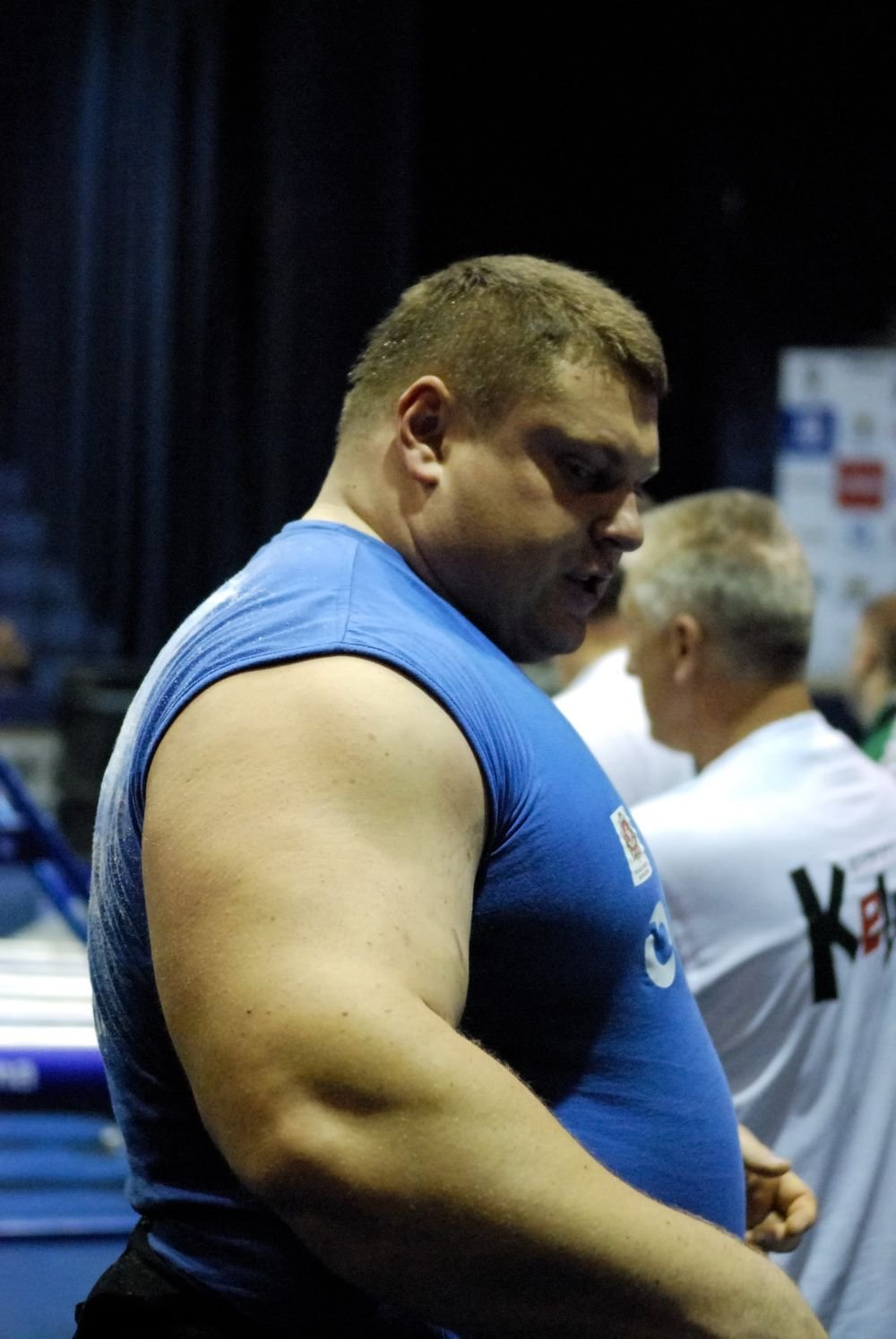
Savickas first won the Arnold contest in 2003 and retained the title every year through 2008. Count those editions separately and the streak reaches six. That is already most of his eventual eight-win total, achieved before the two later victories that completed the record.
A run of that length asks a different question from a one-day personal best. Each edition requires another preparation period and another performance against the athletes who arrive that year. Previous wins establish reputation, but they do not put points on the next scoreboard.
There is a temptation to explain a long streak with one favorite quality: enormous pressing strength, determination or a supposedly perfect training method. The result alone cannot isolate a single cause. It establishes that Savickas repeatedly produced winning overall performances, not that one exercise or personality trait explains everything.
For a spectator, the practical starting point is to separate the record into its components. Which competition is being counted? Which years belong to the streak? Are later victories consecutive, or separated by other winners? These questions make a remarkable career easier to understand without reducing it to a slogan.
The later wins were a return, not an unbroken streak

After 2008, the Arnold winner’s name changed. Derek Poundstone won in 2009 and 2010, Brian Shaw in 2011, Mike Jenkins in 2012 and Vytautas Lalas in 2013. Savickas returned to first place in 2014. Shaw won again in 2015, before Savickas took his eighth victory in 2016.
That is why eight titles and eight consecutive titles are different claims. The first describes Savickas’s achievement; the second would rewrite the results. The interruptions do not weaken the story. They show that the later victories came after other competitors had established themselves as champions.
Nor does a year without a win mean the athlete disappeared from contention. Savickas finished second at the Arnold in 2010 and 2015 and third in 2011 and 2012. The space between gold medals contains other strong results, rather than a simple division between unbeatable years and irrelevant years.
That perspective is useful outside elite sport. A training block can produce worthwhile progress without a new personal record in every session. Keep enough detail to recognize improvements in consistency, execution and the work you can repeat. A narrow focus on the single best number can hide a much broader pattern.
An overall title can survive an uneven event sheet
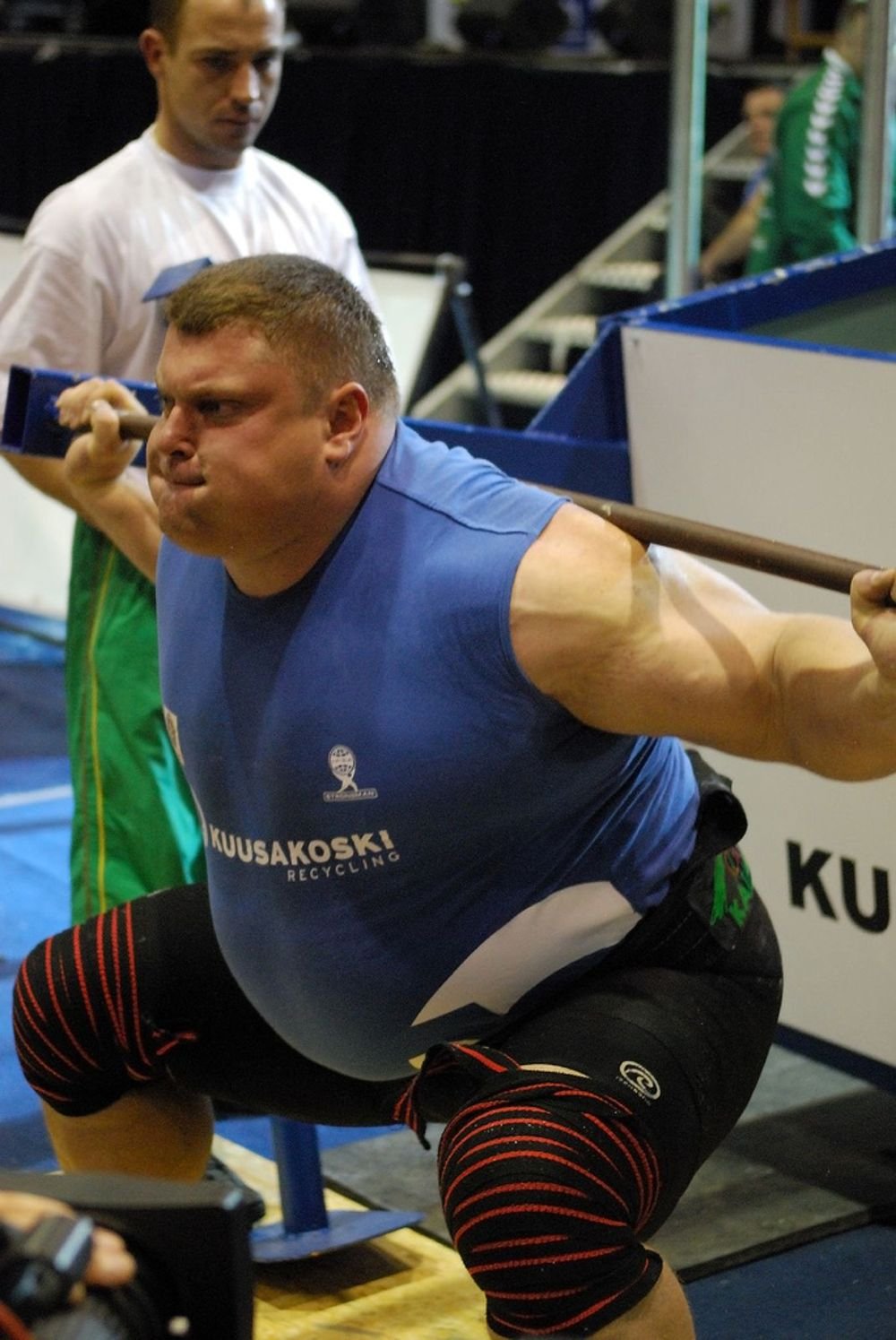
Savickas’s 2016 Arnold results illustrate why an overall competition deserves more attention than one highlight. He placed first in the Austrian Oak, completing four repetitions with 205 kg, and first in the timber carry. He was second in the bale tote and third in the Cyr dumbbell.
His max deadlift placing was sixth. He still won the overall contest. Those facts belong together: a champion can have an event in which several rivals do better and still produce the strongest combined result across the program.
This is not permission to ignore weaknesses. It is a reminder that the scoring system defines the task. A competitor prepares to accumulate points across the announced events. Improving one result may matter greatly, but its value depends on how the rest of the contest unfolds.
Our look at two Rogue Invitational titles decided by one point offers another example of why the full event sheet matters. Close overall outcomes reward looking beyond the biggest single lift or the most memorable video.
For your own training, decide what success actually means before judging a week. If the goal includes carrying, overhead work and a hinge, a great hinge session does not automatically describe the other two. Keep the individual measures visible while judging progress against the goal you chose.

Equipment Worth Exploring
Explore equipment, accessories and gear from our carefully selected range.


Pro Sled System
Heavy-duty push-pull training sled for loaded conditioning, speed, and strength work.


Rubber Hex Dumbbells
Rubber-coated hex dumbbell pairs with a stable shape for home and commercial strength training.


Four world titles add a separate chapter
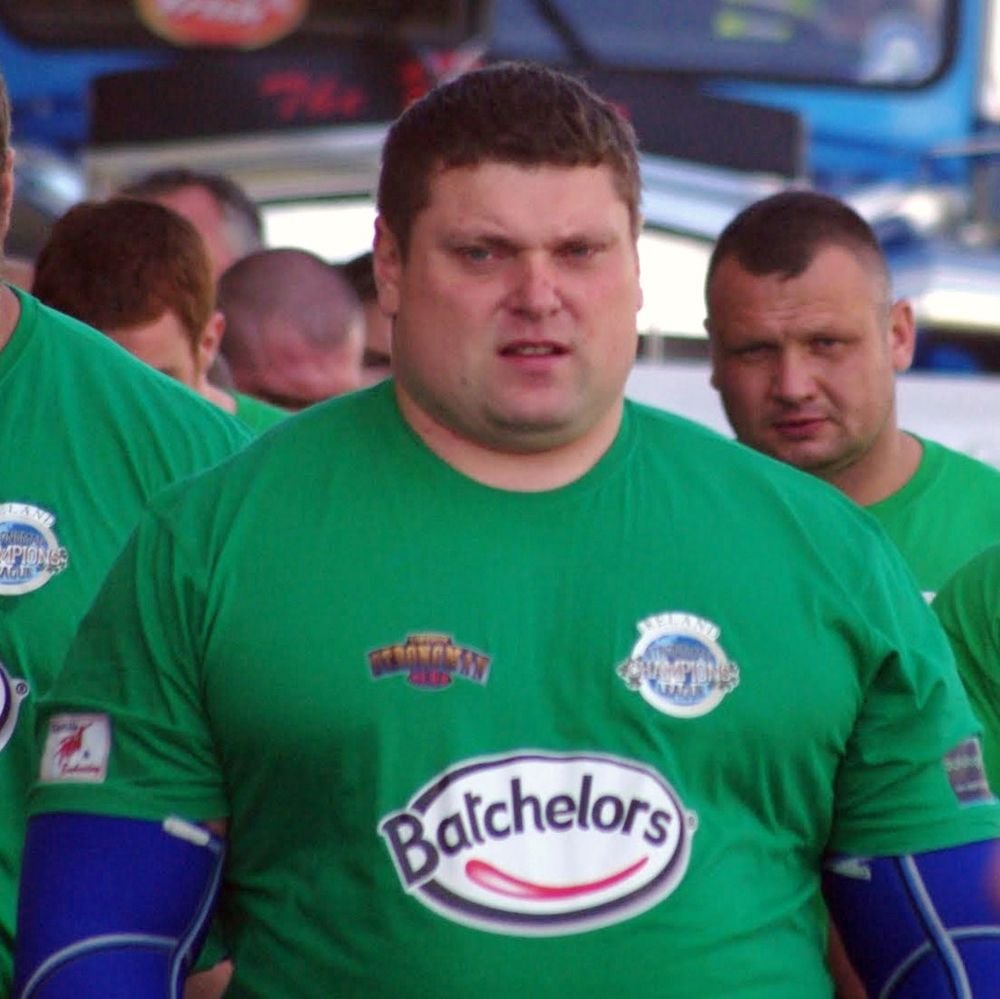
Savickas also won World’s Strongest Man in 2009, 2010, 2012 and 2014. Those four victories are a separate championship record from his eight Arnold wins. The events share elite strongman competitors, but their titles should not be mixed into one interchangeable total.
His World’s Strongest Man record also includes six second-place finishes. Four wins and six silvers make ten podium appearances. That longer view captures both the victories and the occasions when another athlete finished ahead of him.
Finishing second can look like failure when the entire story is framed around defending a title. Across a career, repeatedly reaching that level remains substantial evidence of competitive strength. You can acknowledge that someone else won without pretending the runner-up contributed nothing worth studying.
The same care helps when comparing athletes from different periods. Specify the competition and the result instead of letting an impressive nickname stand in for the evidence. A log lift, a multi-event title and a long run of podium finishes describe related but distinct achievements.
For another view of strongman’s varied demands, our Tom Stoltman feature on stones, carries and strongman skills explores why moving awkward loads involves more than a familiar gym strength number. Different implements and tasks deserve their own preparation and context.
Borrow the perspective, not an invented program
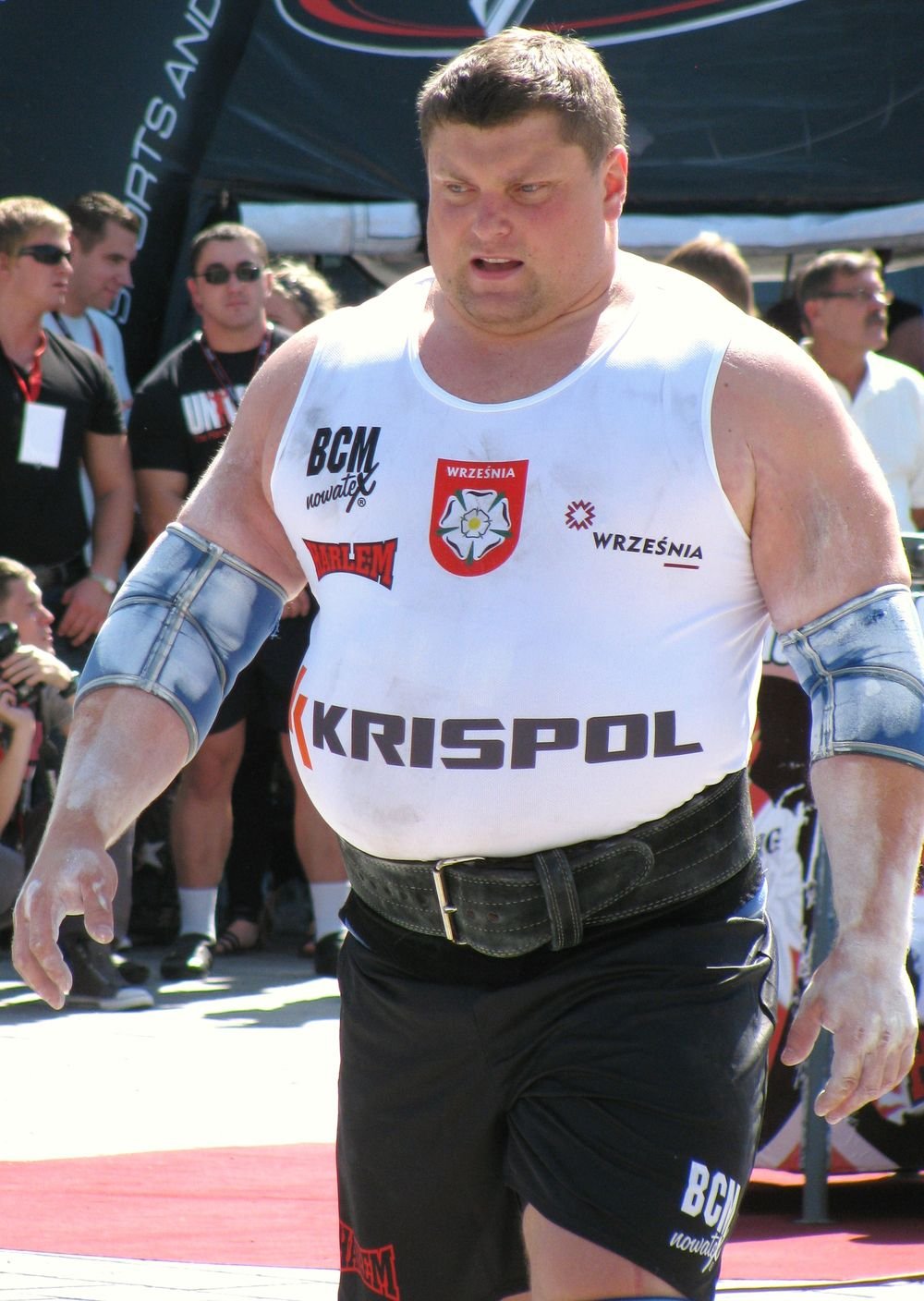
A career like Savickas’s invites people to ask for the secret workout. A list of titles cannot supply it. Competition results show what an athlete achieved under particular conditions; they do not reveal every training decision, recovery constraint or change made along the way.
The useful lesson is therefore a way of evaluating work. Separate a standout performance from the ability to return and perform well again. In your log, retain the exercise, implement, range and conditions that give a number meaning. That makes comparisons more useful than collecting impressive loads without context.
If strongman interests you, start with manageable versions of the tasks you can perform appropriately. A dumbbell, a carry or a sled can create worthwhile training, but none automatically reproduces a contest apparatus or its demands. Choose loads and arrangements that let you learn the movement before treating it as a test.
Keep ordinary lifting goals in proportion, too. You do not need an elite competitor’s schedule or equipment collection to make progress. You need a clear target, repeatable practice and enough information to adjust when the work stops matching the goal. These are general editorial takeaways, not a claim to have reconstructed Big Z’s own routine.
Savickas’s eight Arnold titles remain compelling because of their shape: six in a row, a period with other champions, then two further wins. The four World’s Strongest Man victories broaden the picture. Together, the results make a case for sustained competitive excellence that is richer than any single strength highlight.

Powerlifting Shirts & Lifting Gear
Powerlifting shirts and gym gear for squat, bench and deadlift lifters who live for heavy numbers.

Meme : Lift O'Clock Top Gains & Bros T-Shirt
Show some lifting attitude with a playful “: Lift O'clock” tee.

No Plates No Dates Gym Meme | Funny Workout Decal & Gym Sticker
A fun “No Plates No Dates Gym Meme” touch for bottles, laptops, and lockers.

1500lb Club Meme Stack Of Weight Plates T-Shirt
Bring “1500lb Club Gym Meme” humor to your next gym day.

– Dost Thou Even Hoist Sir? & Top T-Shirt
For laid-back days and powerlifting humor: “Dost Thou Even Hoist Sir? Workout”.

Lifting Is My Therapy – Bodybuilding Powerlifting Meme Tank Top
Your gym-day look, with a playful “Lifting Is My Therapy” twist.

Barbell Heartbeat Hooded Pullover for Powerlifting Lift Hoodie
Bring “Barbell Heartbeat” gym humor to lazy days and post-workout plans.

Raise The Barbell Shirt – Motivational & T-Shirt
Show some powerlifting attitude with a playful “Raise The Barbell” tee.

Meme – "Shhh I'M Doing Plate Math" Vest & Tank Top
Train hard, laugh a little, and rep “"Shhh I'm Doing Plate Math"”.

Be Happy Lift Heavy Happy Weights Emoji Weight Plate De Sticker
Give your everyday gear a playful “Be Happy Lift” twist.

Lift Eat Repeat Weightlifting & Hooded Hoodie
Keep it laid-back with a little “Lift Eat Repeat” attitude.