Advertising disclosure: This page includes affiliate links that may earn us a commission at no additional cost to you.
Hamish Bond did not build his sporting reputation by collecting impressive gym numbers in isolation. He built it by producing repeatable power in an extraordinarily demanding endurance sport, first in larger boats and then in one of the most successful rowing partnerships in history. He subsequently won a Commonwealth Games medal on a bicycle before returning to rowing and winning a third Olympic gold medal in an eight.
That career is a useful case study for anyone trying to become stronger without giving up endurance. Bond’s results do not establish that rowing automatically makes someone a fast cyclist, or that a cyclist can simply climb into a racing shell and win. They illustrate the difference between a transferable physical foundation and the discipline-specific preparation required to turn that foundation into performance.
A champion built through years of rowing

Bond was part of New Zealand’s world championship-winning men’s four in 2007. At the Beijing Olympics in 2008, that crew finished seventh. Those results are an important starting point: the athlete who later became famous for winning had already experienced the difference between international success and disappointment at the Olympic Games.
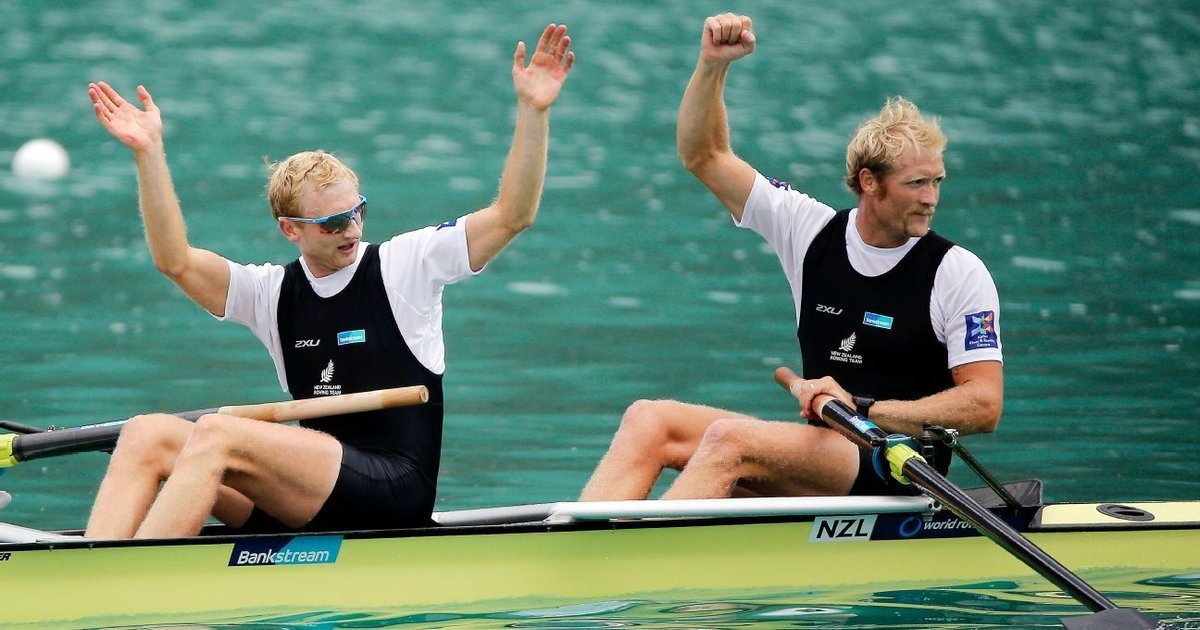
In 2009 he teamed up with Eric Murray in the men’s coxless pair. The partnership went on to win 69 consecutive races, including Olympic gold medals in London in 2012 and Rio in 2016. In a coxless pair each rower controls one oar, so two athletes need to produce complementary forces while also keeping the hull balanced and travelling in the desired direction. Neither athlete’s individual strength can fully compensate for a poorly coordinated stroke.
Rowing also rewards repeated force production. The legs contribute to the drive, the trunk transfers force and the upper body completes the movement. The recovery sets up the next stroke. Accelerating the handle violently at the wrong moment or rushing the slide can interfere with the rhythm. On an indoor rower the task is somewhat different because the machine does not have the balance and steering requirements of a boat, but the value of sequencing the drive remains.
For a recreational athlete, the useful lesson is to develop a dependable movement before trying to turn every session into a test. A short set of clean strokes at a sustainable pace provides feedback on sequencing and rhythm. A session of uncontrolled maximum efforts provides a less reliable foundation for gradually increasing work.
Why the pair was more than two strong athletes
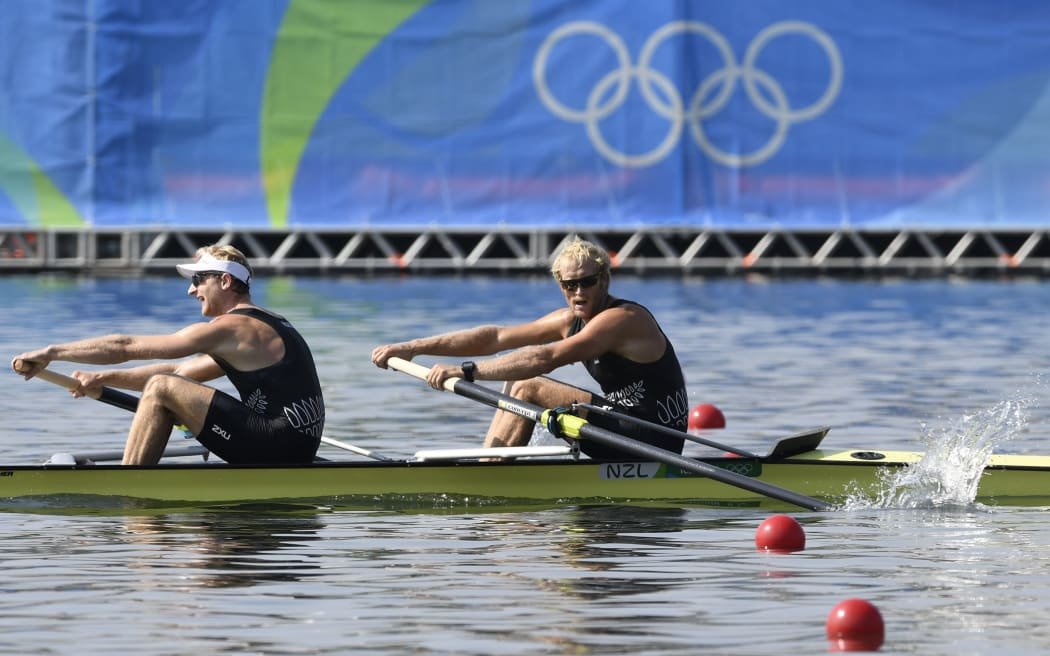
The partnership’s success was not the result of discovering an exercise that other rowers had missed. Bond described a demanding training environment under coach Dick Tonks, including substantial rowing volume and repeated hard sessions. The important distinction is that the work formed part of the preparation of full-time elite athletes with extensive training histories.
Strength in this context is not synonymous with maximal force in a single repetition. A powerful stroke must be available many times, under accumulating fatigue, and at a rate that remains compatible with effective movement. Rowers therefore have good reason to develop both muscular strength and aerobic capacity. The two qualities can complement each other, but adding strength work without accounting for rowing fatigue can compromise the quality of the next water session.
There is also a partner component. In a pair, Murray and Bond could not independently choose whatever rhythm felt best to them at a given moment. A shared timing pattern was essential. Training consistency allowed them to refine that timing alongside their physical capacities. Their long winning sequence is evidence of the effectiveness of the partnership, not a controlled experiment that isolates a particular training variable.
Most gym-goers can apply the same distinction between capacity and execution. If your deadlift improves but your rowing stroke deteriorates as soon as the effort becomes challenging, the stronger deadlift has not solved that technical problem. Treat the gym as a way to increase available capacity and use rowing practice to learn how to express it efficiently.
From the boat to the bicycle

After the Rio Olympics, Bond switched his focus to cycling. He won the New Zealand national individual time trial championship in January 2018, covering approximately 40 kilometres in 50 minutes and 50.90 seconds. At the Gold Coast Commonwealth Games later that year he earned bronze in the men’s individual time trial, riding the approximately 38.5-kilometre course in 48 minutes and 45.45 seconds.
Those results demonstrate an unusually successful move between endurance disciplines. Both cycling and rowing involve large amounts of repeated lower-body work and place substantial demands on oxygen delivery. A highly trained cardiovascular system can therefore provide a useful starting point when changing sports. That is very different from claiming that the movements or physiological demands are identical.
A cycling time trial requires sustainable power while holding an aerodynamic position, pacing across changing terrain and controlling the bicycle. A rower moving to the bike must adapt to a constrained pedalling pattern, a different posture and unfamiliar local muscle fatigue. Aerodynamics can also change speed for the same mechanical power output. These are cycling-specific problems that rowing fitness alone does not address.
A recreational lifter who wants to add cycling should expect the same kind of distinction, on a smaller scale. The first few weeks on a stationary bike may feel awkward even if the athlete can run or row comfortably. Starting with moderate-duration rides instead of repeatedly chasing peak watts gives the legs and contact points time to adapt. Increasing exposure gradually matters more than proving general fitness in the first session.
Returning to rowing in a different crew
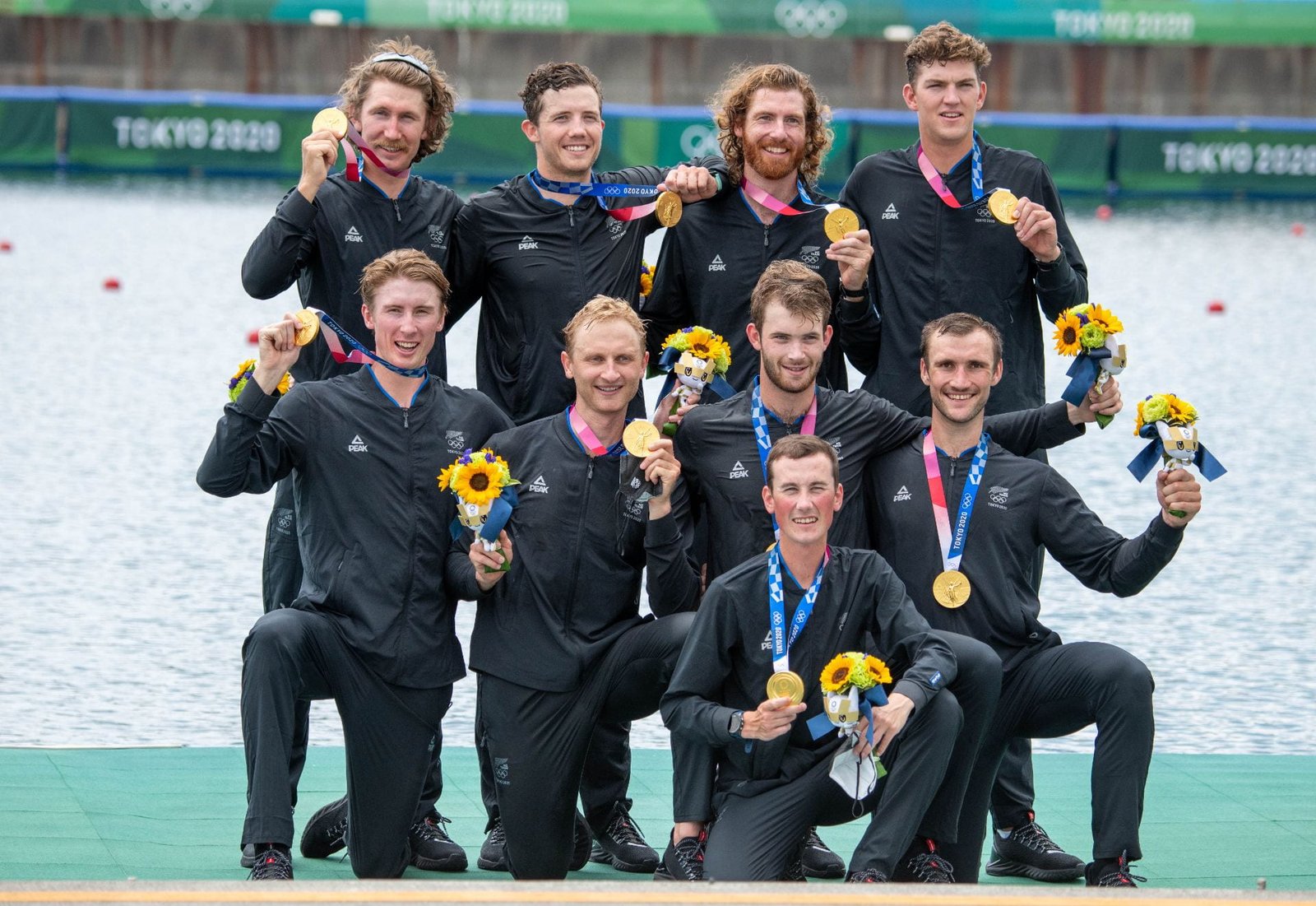
Bond eventually returned to rowing and joined the men’s eight. The crew finished sixth at the 2019 world championships and secured Olympic qualification at Lucerne in 2021. At the Tokyo Olympics, held in 2021, New Zealand won the men’s eight final in 5:24.64. For Bond, this was a third Olympic gold medal, but the first in that boat class.
The eight is not simply a larger version of the pair. It has eight rowers and a coxswain, a different hull and a greater collective coordination challenge. Each athlete contributes to the boat’s acceleration while responding to the rhythm of the crew. Bond had to fit his abilities into a different group and adapt to a new competitive environment after concentrating on cycling.
His route back to the top also included a period when the eight was not winning every major race. That is worth remembering when assessing cross-training. Moving into a new discipline, or returning to a familiar one after a break, may temporarily reduce performance despite retaining a considerable general fitness base.
When Bond announced his retirement from rowing in January 2022, his career encompassed a world title in the four, extraordinary consistency in the pair, a Commonwealth Games medal in cycling and Olympic victory in the eight. The broader pattern is not that one sport is superior to another for conditioning. It is that a well-developed physical foundation can support new goals when accompanied by enough specific practice.
A practical four-week cross-training block

The following block is an editorial example for a healthy recreational lifter, not a reconstruction of Bond’s training. It assumes that the athlete already tolerates basic resistance exercise and moderate aerobic activity. The purpose is to improve the ability to maintain aerobic work while preserving two purposeful strength sessions each week, without suddenly increasing fatigue from every direction.
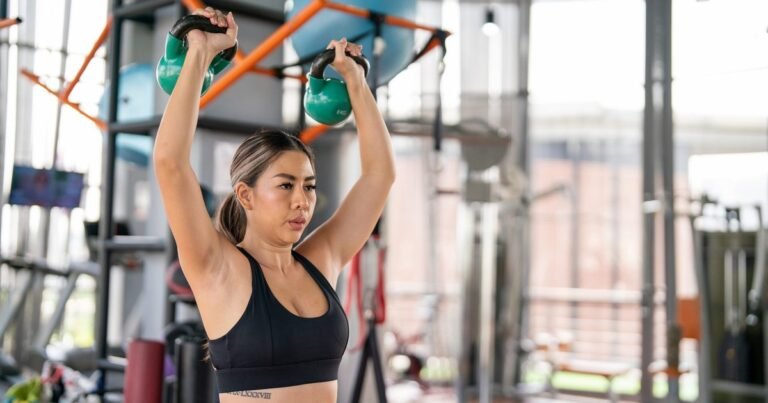
On Monday, use a trap-bar deadlift or a manageable kettlebell deadlift for three sets of five, then a bench-supported dumbbell row for three sets of eight and a split squat for two sets of eight per leg. Leave roughly two or three repetitions in reserve on each set. Tuesday is a 25-minute easy indoor rowing session, keeping the effort conversational and the stroke sequence controlled. Wednesday is a rest day or a short walk.
Thursday is the second strength day. Perform a dumbbell bench press for three sets of eight, assisted pull-ups or a suitable pulling variation for three sets of six to eight and a kettlebell carry for three short, controlled bouts. Friday is an easy 30-minute bike ride. Saturday can be used for a short rowing technique session of 15 to 20 minutes or another easy aerobic session; Sunday is a rest day. Choose loads and equipment that allow controlled repetitions, and do not treat the carries or cardio as compulsory if recovery is poor.
In week two, add five minutes to one aerobic session if the first week was comfortable. In week three, maintain the strength volume and add three two-minute moderately hard rowing or cycling intervals separated by two minutes of easy work, replacing part of an existing session rather than piling extra work on top. In week four, reduce the strength sets and interval work if fatigue is accumulating, and repeat one familiar easy session at the same perceived effort. Record its average pace or power alongside how the session felt.
Do not expect a four-week block to reproduce an Olympian’s capacities. The meaningful early indicators are consistent attendance, tolerable fatigue, clean lifting technique and greater control over a familiar endurance effort. If strength performance and sleep deteriorate for several sessions, reduce the demanding conditioning first or separate it from the heavy lifting by more time. If rowing or cycling is the main competitive priority, increase discipline-specific practice instead of assuming that more gym exercises will automatically improve race results.

Equipment Worth Exploring
Explore equipment, accessories and gear from our carefully selected range.


Open Hex Bar
Open-frame trap bar with multiple handles for deadlifts, carries, and lower-body training.


Power Tower
Freestanding pull-up and dip station with adjustable handles for bodyweight training.