Advertising disclosure: This page includes affiliate links that may earn us a commission at no additional cost to you.
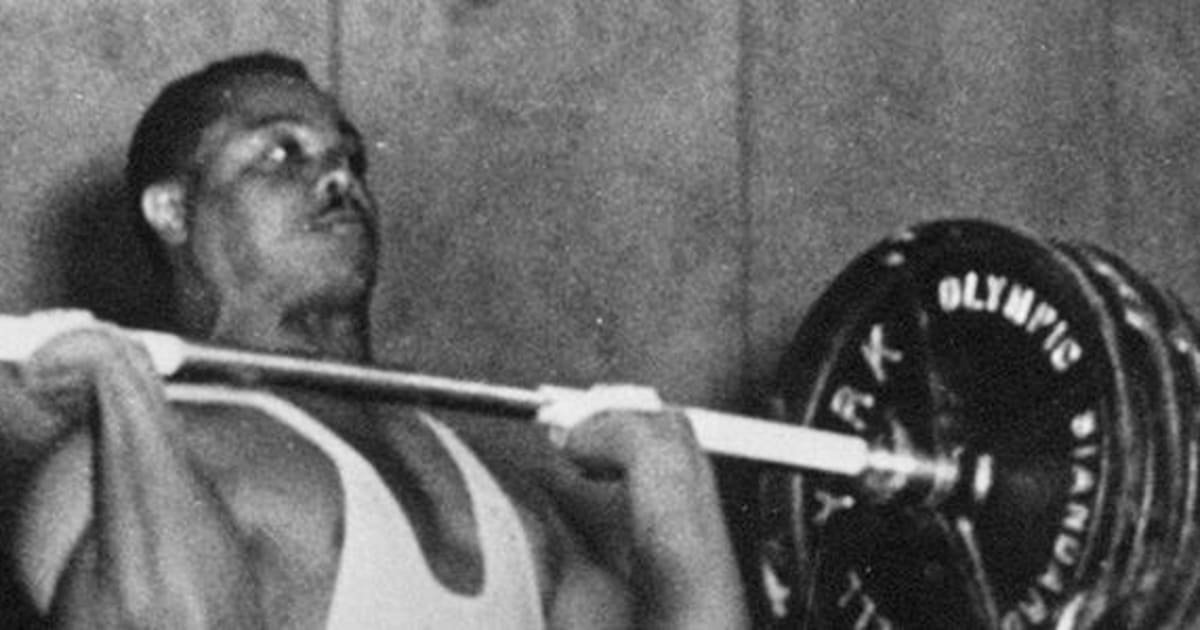
John Davis did not need a single spectacular lift to make his case as one of the greatest strength athletes of his generation. He won Olympic heavyweight gold in 1948 and again in 1952, competing in an era when a champion had to demonstrate proficiency in three different overhead lifts rather than today’s two. His first world title came at 17, and his international winning run stretched across fourteen calendar years of elapsed time, including a war that interrupted competition. That combination of early promise, sustained performance and technical versatility makes his career worth studying even if you have never entered a weightlifting meet.
Understanding the numbers also changes how you look at old lifting records. A 460 kg total in 1952 does not mean the same thing as a 460 kg total today. The point is not to rank athletes separated by generations of equipment, rules and training methods. It is to see how Davis built a winning result from several separate skills, and how that lesson can inform your own training.
How a teenager became a world champion
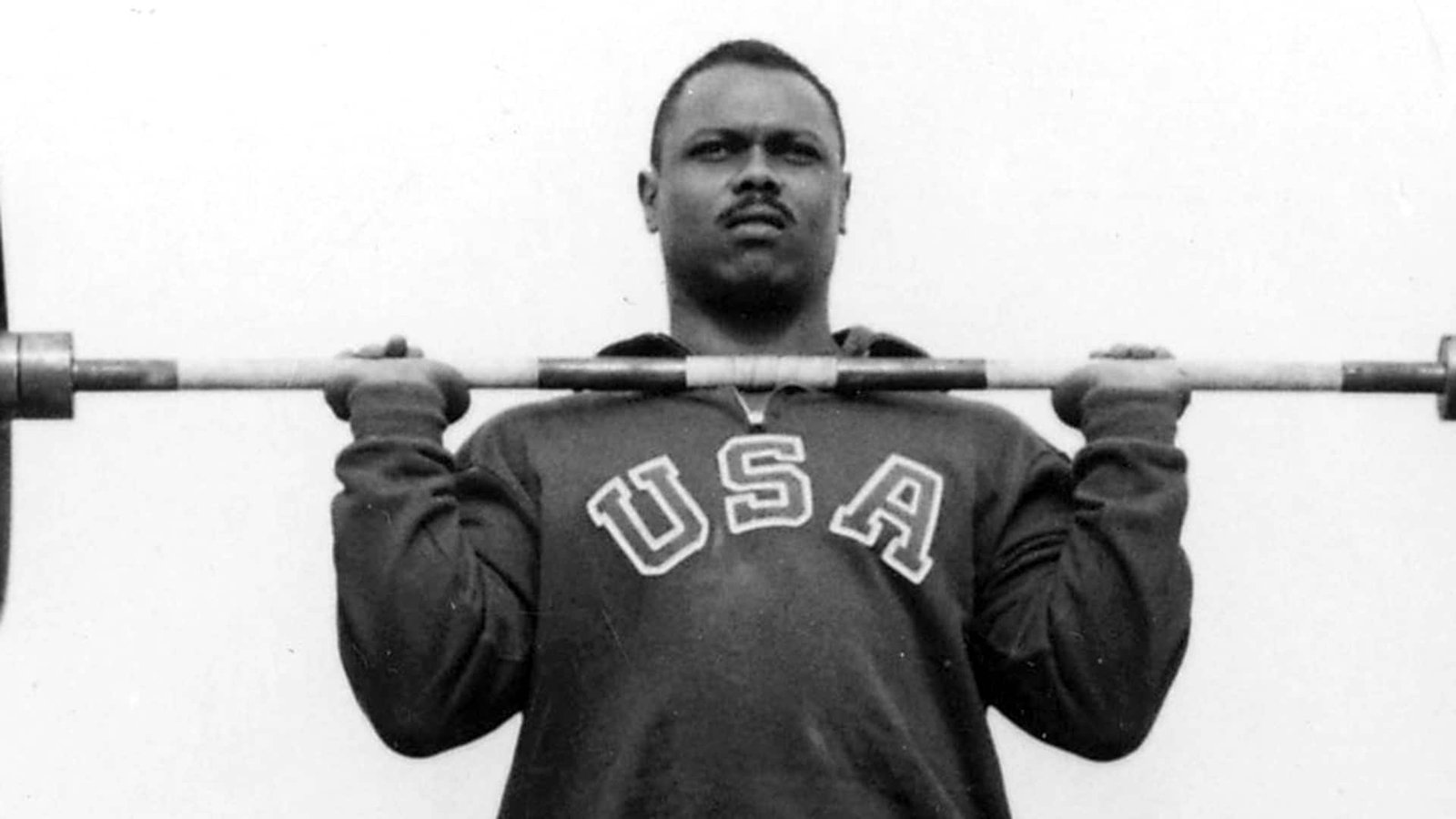
Born in 1921 and associated with Brooklyn, Davis started out with bodyweight training rather than a fully equipped weight room. His introduction to organized lifting came through another lifter who gave him access to a home training space. He eventually represented the York Barbell Club and won the light-heavyweight world title in 1938, while he was still a teenager.
The early achievement is remarkable, but it is equally important not to turn it into a prescription for young lifters. Competitive results reflect a mixture of individual talent, technical development, opportunity and accumulated training. Reaching a world championship in your teens is not a sensible benchmark for someone starting to train. A better benchmark is whether you can repeat the same movement with stable positions and gradually improve your performance over months.
His career was not an uninterrupted stream of competitions. Davis spent several years in military service during the Second World War, when major international competitions were canceled. After the interruption, he returned to win world titles in 1946 and 1947. His championship run therefore demonstrates successful return as well as consistency at the top. It does not establish how many sessions he trained during the war or what his exact routine looked like; those details should not be filled in from imagination.
For an ordinary lifter, that distinction matters. A disrupted season is not necessarily the end of progress. After an extended break, rebuild tolerance to training, start below your old working weights and let your ability to recover determine the pace of the return. The record that matters at first is a string of repeatable sessions, not an immediate personal best.
London 1948: Winning all three lifts
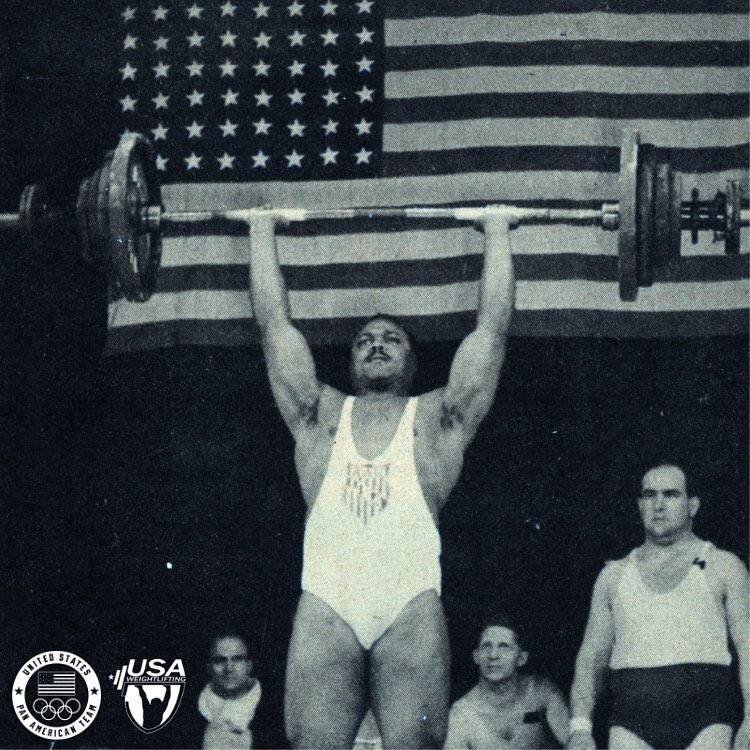
At the London Games, the heavyweight category began above 82.5 kg. The competition combined the best successful press, snatch and clean and jerk. Davis recorded 137.5 kg in the press, 137.5 kg in the snatch and 177.5 kg in the clean and jerk, giving him a total of 452.5 kg. His advantage over silver medalist Norbert Schemansky was 27.5 kg.
Those results show why balance across lifts mattered. A lifter could specialize in the final movement and still arrive there with a substantial deficit. Davis had the strongest credited result in each of the three movements at London. His performance was not a case of salvaging a weak opening with an enormous last attempt. He was already establishing an advantage before the clean and jerk.
Think of the difference between three individual records and one competitive result. The total rewards the athlete who can perform all the required skills in the same competition. It also rewards choosing loads you can successfully complete rather than simply choosing the biggest number you think you might lift. A theoretical maximum means little if an unsuccessful attempt produces no improvement to your score.
Even if you train primarily to build muscle or general strength, you can apply that logic. Record a small set of benchmark movements, rather than making one favorite exercise the sole measure of progress. A squat, an overhead press and a pulling movement can tell you more about your developing capacities than an occasional heavy single alone. The exact selection should suit your goals, your equipment and your ability to perform each exercise comfortably. A growing total across your own repeatable benchmarks is a useful sign that improvements are not confined to a single movement.
Helsinki 1952: A second gold and a different total
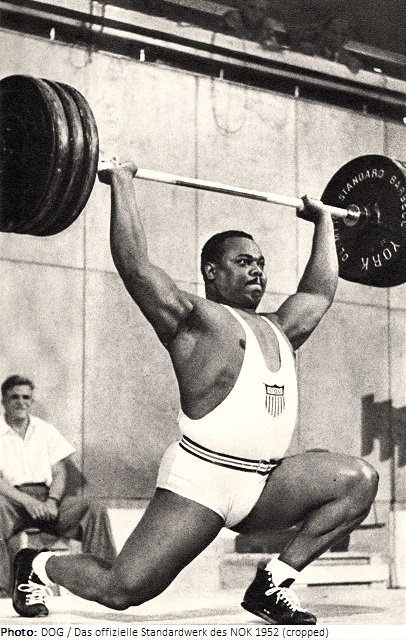
By Helsinki in 1952, the heavyweight boundary had moved to above 90 kg. Davis returned as the defending champion and finished with a 150 kg press, 145 kg snatch and 165 kg clean and jerk. His three-lift total was 460 kg. James Bradford took silver and Humberto Selvetti bronze.
The change from London is particularly interesting. His press increased by 12.5 kg and his snatch by 7.5 kg, while his credited clean and jerk was 12.5 kg lower. The combined improvement was 7.5 kg. In other words, his second winning Olympic total was stronger overall even though the heaviest individual movement was not as high as it had been four years earlier.
This is not evidence that his clean and jerk capacity declined permanently. Competition results are snapshots of what was credited on a particular day, not controlled tests of the athlete’s full potential. In 1951 he had already lifted 402 lb in the clean and jerk, breaking the 400 lb barrier. Attempt selection, form on the day, and the requirements of winning the competition can all influence which numbers an athlete ultimately records.
His sequence of world titles ended with silver at the 1953 championship, when he was affected by a thigh injury. Across his career he accumulated six world championships and two Olympic golds. He eventually left competitive lifting after a serious injury during the 1956 Olympic trials. The ending is a useful reminder that an outstanding competitive record does not make a body immune to setbacks. Pain or injury that changes how you move is a reason to reassess the session, not a reason to prove how tough you are by adding weight.
Why the old three-lift format matters
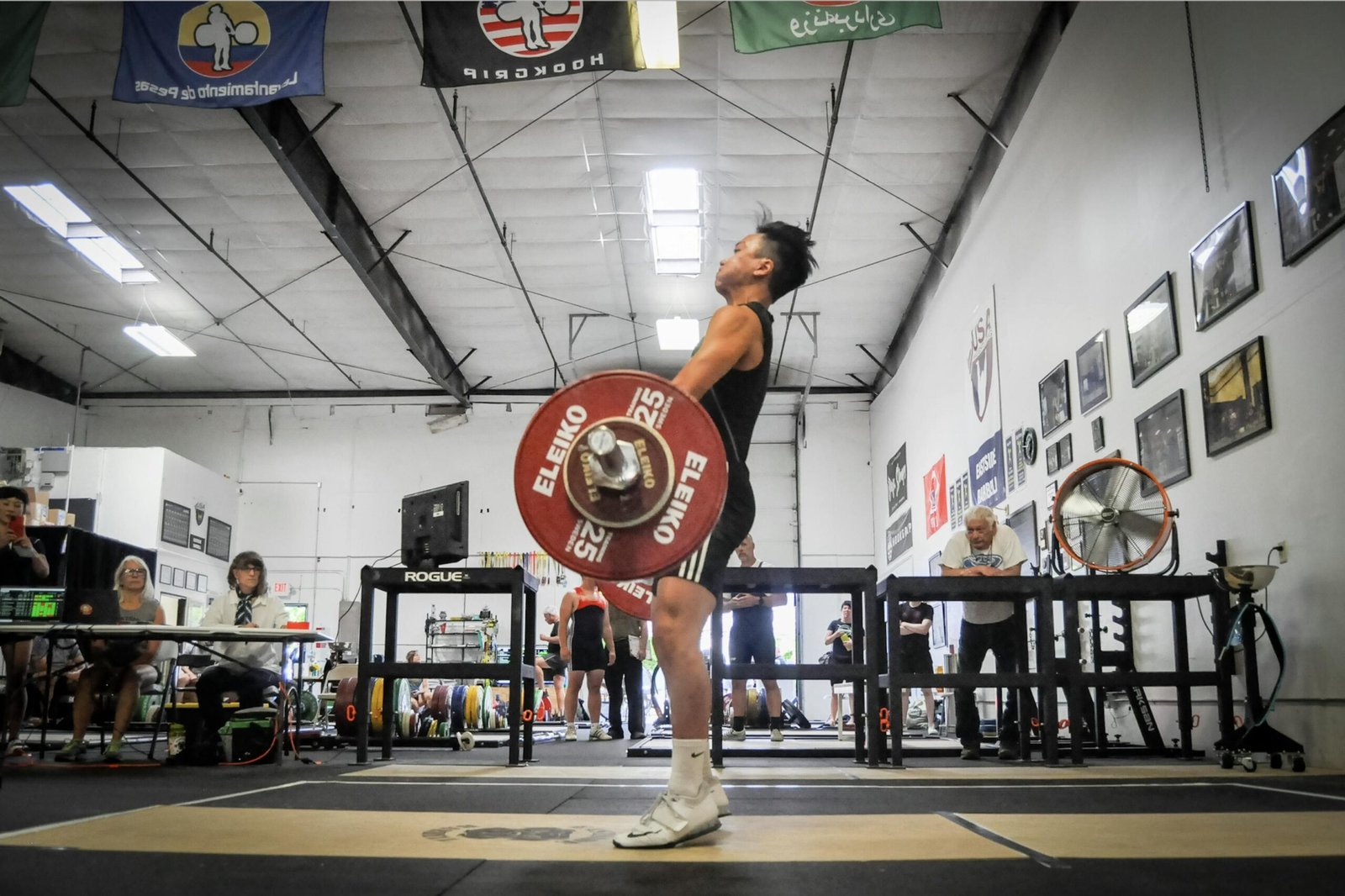
Modern Olympic weightlifting consists of the snatch and clean and jerk. The snatch takes the bar from the floor to overhead in a single continuous movement. The clean and jerk first brings it to the shoulders, then sends it overhead using leg drive and an active receiving position. Both demand strength, acceleration, balance and the ability to stabilize a moving load.
In Davis’s era, the clean and press added a third test. The press emphasized getting a load from the shoulders to overhead without the jerk’s deliberate leg drive and receiving dip. Over time, the competitive press became increasingly difficult to judge consistently as technique changed. It was removed after the 1972 Olympic Games. That is why the modern two-lift total and the historical three-lift total must not be compared as if they measured identical tasks.
For a more meaningful comparison, look at each lift separately, along with its rules and the weight category. You could subtract the press from a historical total, but the resulting two-lift sum would still have been achieved in a different competition structure. The lifter had spent time and energy preparing for a third lift, and that affects how the performance should be interpreted.
There is also a practical equipment lesson. An Olympic bar with rotating sleeves, suitable bumper plates and secure collars makes technical training more manageable. A stable platform and sufficient overhead clearance are important when practicing the receiving phases. Change plates allow smaller load jumps when technique is the limiting factor. A rack can support separate front-squat or pressing practice, but full lifts need a clear area. Never assume a bar or floor can withstand drops just because the equipment looks similar to competition equipment. Use a facility and equipment designed for the intended lifts.

Equipment Worth Exploring
Explore equipment, accessories and gear from our carefully selected range.


Competition Plates
Competition-style bumper plates for Olympic lifts and loaded strength training.


Leather Lifting Straps
Padded leather straps support grip during heavy rows, deadlifts and pulling exercises.
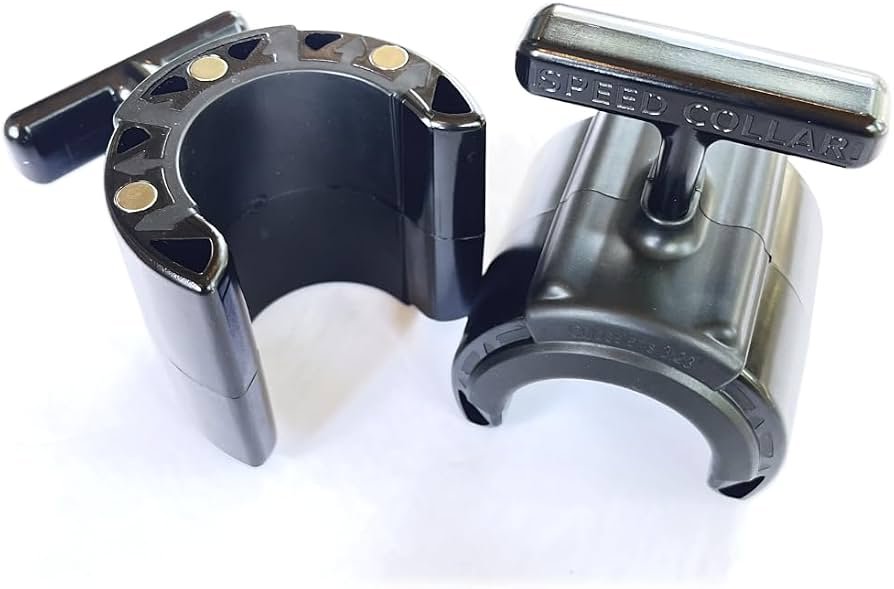
Speed Collar
Quick-release collars designed to secure weight plates on standard two-inch Olympic bars.

What today’s lifters can take from Davis
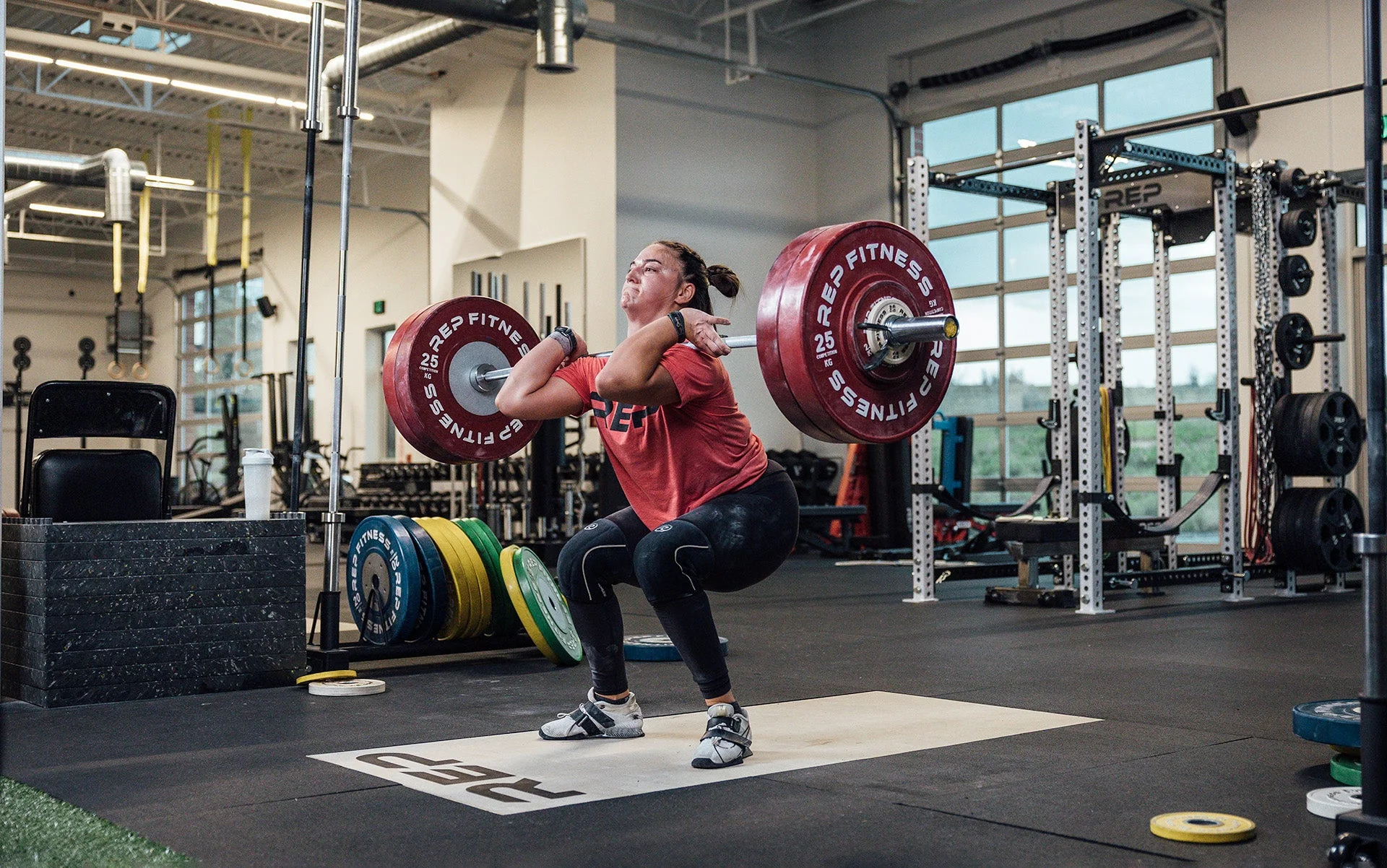
The most useful lesson from Davis is not to copy a champion’s workload or chase the numbers printed on a historical results table. It is to train the distinct qualities that make a difficult lift repeatable. For someone interested in Olympic lifting, that means learning to pull the bar smoothly, receive it in a balanced position and stabilize it before gradually increasing load. Front squats can build the strength to stand from the clean; light overhead work can help develop controlled positions. Neither replaces practice of the actual lifts.
Start with a coach or a qualified instructor, especially if you are unfamiliar with overhead receiving or dropping a bar safely. On a technical day, work with loads that allow multiple crisp singles or doubles rather than sets taken to failure. Rest long enough that your next attempt resembles your first. If you repeatedly lose balance or struggle to maintain a stable catch, reduce the load and practice the limiting phase instead of adding more attempts at the same weight.
If your goals are general strength rather than competition, you do not have to learn a full snatch or jerk. Squats, rows, controlled presses and hip-hinge movements can develop many of the underlying qualities with less complex technique. Choose a progression you can recover from, and use exercise logs to distinguish actual improvement from unusually good or bad sessions.
One way to organize a week is to put skill work near the start of a fresh session, then add a small number of assistance exercises. Use another session for squat and pulling strength, and leave room for recovery before another demanding overhead day. This is an illustrative modern approach, not a reconstruction of Davis’s training. Change the schedule when your experience, work commitments or recovery demand it.
Ultimately, two Olympic golds and six world championships tell a story of strength expressed through skill, consistency and adaptability. The enduring challenge for the rest of us is more modest: build a program that improves several abilities at once without sacrificing the quality of the movements or the ability to return for another session. That is a better tribute to an athlete like Davis than trying to match a number from a competition held under rules that no longer exist.

Funny Gym Shirts & Workout Gear
Funny gym shirts, tanks, hoodies and workout gear for lifters who like training hard.

Wonder Snatch Wonder Woman Olympic Weightlifting Superl Sticker
Stick a little “Wonder Snatch Wonder Woman Olympic” humor on your favorite gear.

Barbell Flag USA Patriotic Gym | Funny Distressed Flag Sticker
Put “Barbell Flag USA Patriotic” gym humor on your laptop, bottle, or gym gear.

No Plates No Dates Shirt – Gymbros & – Meme & Gains T-Shirt
Bring “No Plates No Dates” humor to your next gym day.

More Plates More Dates Gym Meme | Funny Workout Pullove T-Shirt
Bring “More Plates More Dates Gym Meme” humor to your everyday gym style.

Bane Barbell Club Crewneck Pullover Sweater Gymbros Bar T-Shirt
Add a playful “Bane Barbell Club” touch to your casual rotation.

Superman Barbell Tank
Show some personality between sets with “Superman Barbell Weight Plate Logo”.

Mutant Strength Wolverine X-Men Superhero Bodybuilding Sticker
Bring “Mutant Strength Wolverine X-Men” attitude to your water bottle or laptop.


Therapy Barbell – Lifting Bodybuilding Powerlifting Mem T-Shirt
Rep “Therapy Barbell” humor in and out of the gym.

Gym Cult Occult Barbell Meme – Powerlifting Bodybuildin T-Shirt
Show some gym-day personality with “Gym Cult”.