Advertising disclosure: This page includes affiliate links that may earn us a commission at no additional cost to you.
Kip Keino won Olympic gold over 1500 metres in Mexico City in 1968, then won another gold in the 3000-metre steeplechase in Munich four years later. Alongside those titles came two silvers, one over 5000 metres and one over 1500. That range makes his career more interesting than a single famous victory.
For fitness readers, the useful story is how different competitive demands can sit within one athletic career. Speed, endurance, positioning and event-specific skill overlap, but they are not interchangeable. Keino’s results provide a remarkable example of breadth without giving us permission to invent the training programme behind it.
The range was there before Mexico City

Keino’s international career included the 1962 Commonwealth Games and the 1964 Tokyo Olympics. He finished fifth in the Tokyo 5000 metres. In 1965 he set world records over 3000 and 5000 metres; in 1966 he won the Commonwealth mile and three-mile titles. The Mexico City breakthrough followed established international success.
This matters because an Olympic highlight can make a long career look sudden. The image of a runner moving away from the field is easy to remember. Earlier races, technical development and years of competition are less visible. Calling a performance a breakthrough should describe the result’s significance, rather than imply that the ability appeared overnight.
His range also complicates the simple distinction between a fast runner and an endurance runner. Moving successfully between middle and longer distances requires more than choosing a different number of laps. A shorter race changes the importance of position and speed; a longer one extends the problem of sustaining effort. The results show that he could compete across those demands.
They do not reveal the precise contribution of every session. A medal table cannot tell us how many repetitions he ran on a particular Tuesday, how he adjusted a difficult week or how his preparation differed between events. Those are separate historical questions requiring direct evidence. Keeping them separate makes the achievement more credible, not less impressive.
Mexico City rewarded a race that suited him
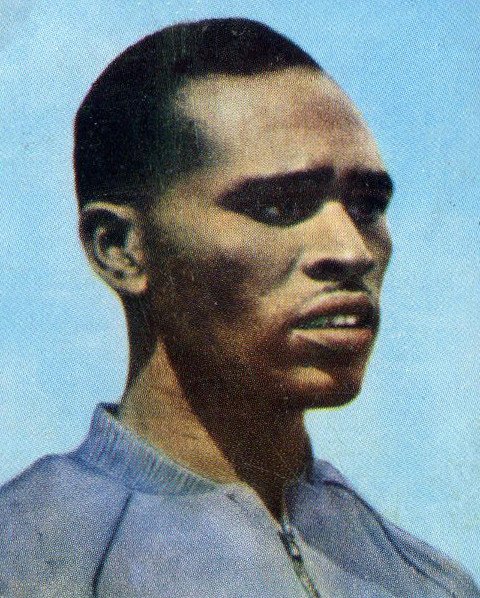
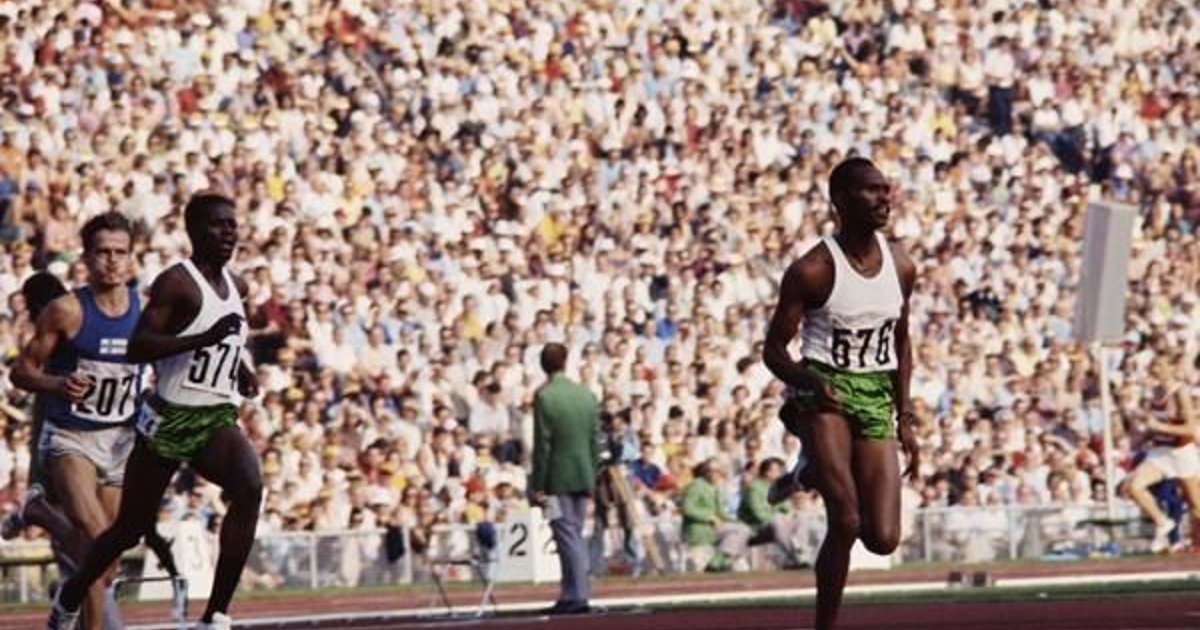
At the 1968 Games, Keino won 1500-metre gold in an Olympic-record 3:34.9 and took silver over 5000 metres. His 1500-metre victory became a defining moment in Kenyan athletics, remembered for assertive front-running rather than a race reduced to a final sprint.
A championship final is a competition against people as well as a test against the clock. Position affects which moves are available. A runner following the pack can preserve options but may also leave the result dependent on someone else’s pace. Moving forward changes that relationship: opponents must decide whether to follow, wait or accept a gap.
That does not make leading universally superior. It is an approach with costs and conditions. The runner taking responsibility for the pace must sustain it, while those behind can react. What makes a successful performance worth studying is the fit between the athlete’s capabilities, the event and the decisions made on the day.
Our profile of Hicham El Guerrouj’s route from records to Olympic titles offers another way to examine that distinction. A world-record performance and a championship win ask related but different questions. Neither automatically supplies the other, even for an exceptional athlete.
Munich added a different technical challenge
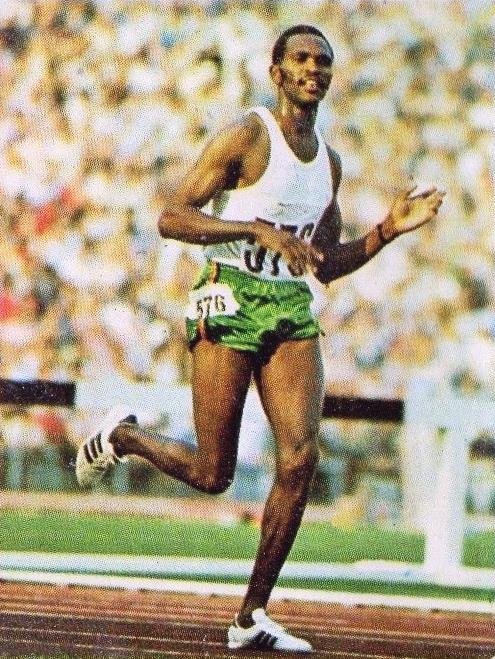
In 1972, Keino won the Olympic steeplechase in 8:23.64 and collected silver over 1500 metres. His two Olympic golds therefore came in different events. Munich extended the story beyond repeating his Mexico City title.
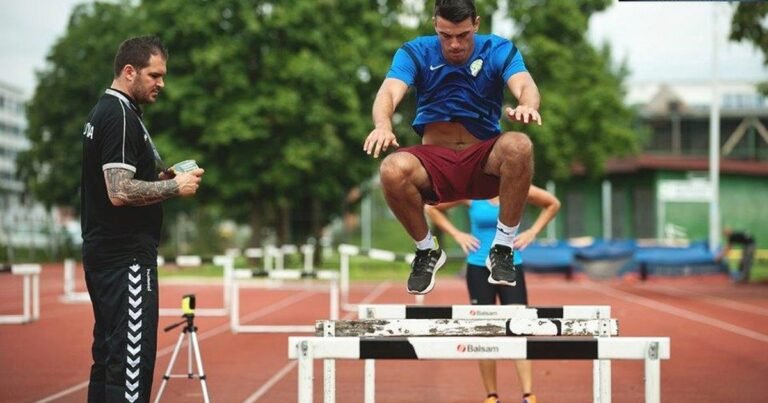
The steeplechase introduces barriers and a water jump into the running problem. Maintaining a rhythm between obstacles is only part of the task; the athlete also has to negotiate them efficiently. A strong flat-running background is valuable, but the obstacles create demands that a flat-race result does not fully describe.
That is a useful distinction for anyone interested in versatile fitness. General capacity can support a new activity without replacing its skill requirements. Being able to sustain effort does not automatically establish technical fluency. Learning the particular task still matters, whether the transition is between running events or between familiar training and a new sport.
Keino’s medal sequence should not be turned into a claim that every runner ought to race several disciplines at once. His achievements tell us what one exceptional athlete accomplished. They do not establish an ideal workload for someone combining a job, lifting sessions and occasional runs. The interesting principle is to recognize both the shared abilities and the parts that need specific practice.
| Olympic Games | Gold | Silver |
|---|---|---|
| Mexico City 1968 | 1500 metres | 5000 metres |
| Munich 1972 | 3000-metre steeplechase | 1500 metres |
What an exceptional career cannot prescribe
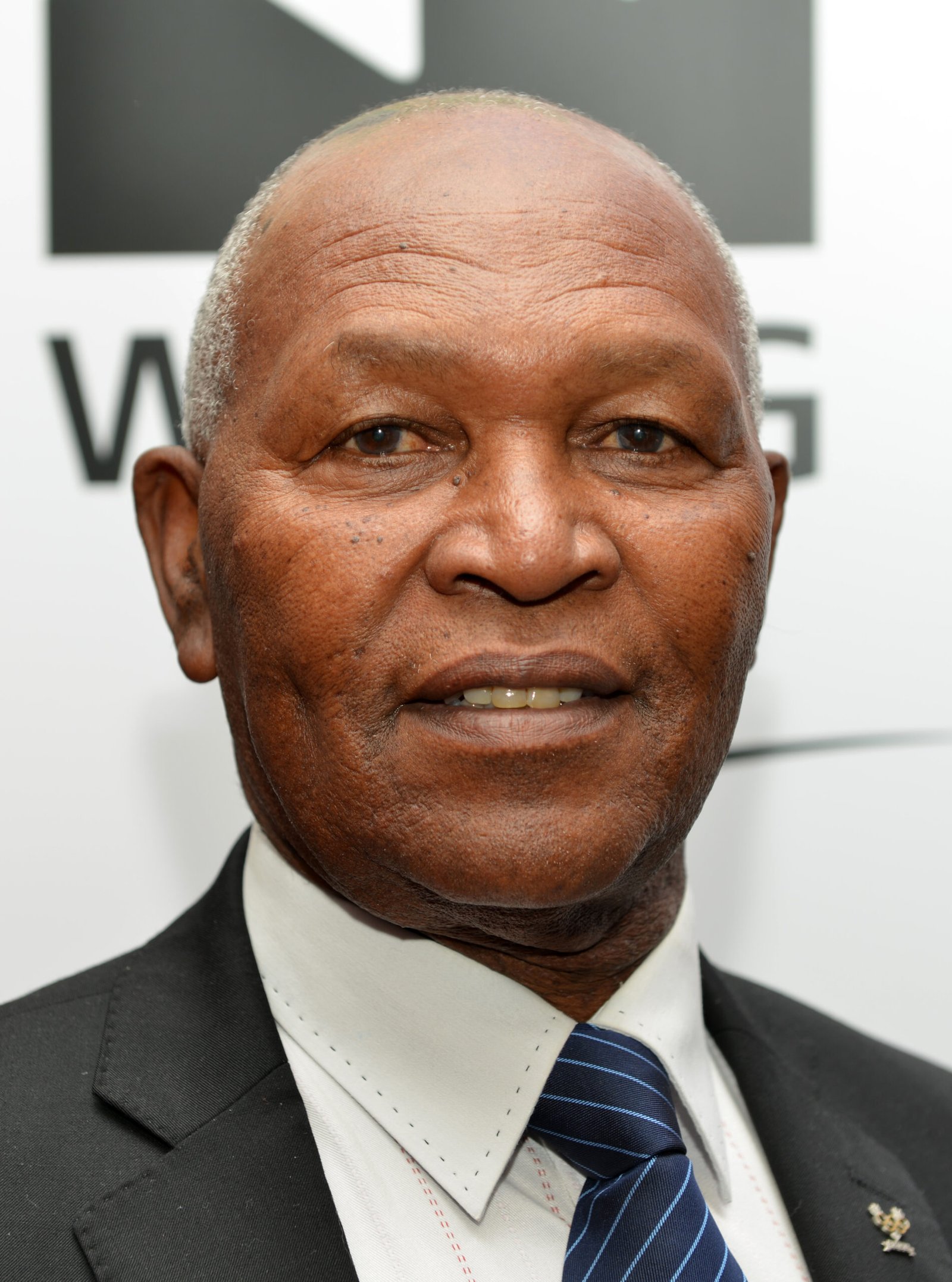
It is tempting to turn every champion’s biography into a shortcut: copy the attitude, copy the hardest session, obtain a similar result. That approach loses the information needed to make a training decision. A career summary gives outcomes, while a useful plan needs a starting point, a manageable workload and a way to judge how the work is going.
Even a detailed routine would require context. The same session can mean different things for an experienced runner and someone returning after years away. Pace, recovery, recent training and familiarity with the movement all affect what the session represents. A famous name does not remove those differences.
Stories about Keino’s 1968 campaign also describe illness. That historical detail belongs to his particular experience; an extraordinary result is not proof that ignoring illness is a good general training decision. We cannot infer the condition of an individual athlete from the fact that he won a race, or turn a dramatic anecdote into a rule for readers.
A more useful way to read a sporting biography is to ask a precise question. Was this athlete successful across events? Did the medal distribution change? Was the result a record, a title or both? Those questions can be answered from the record without pretending that it contains a complete explanation of training or health.
Running culture has room for serious ambition and a sense of humour about the effort involved. Running, cardio and motivation designs are optional ways to express that interest, rather than equipment that explains an Olympic performance.

Cardio Shirts & Workout Gear
Cardio and conditioning gym gear for runners, endurance athletes and anyone who earns the sweat.


Anti Jogging Jogging Club Shirt – & Meme Top T-Shirt
Bring “Anti Jogging Jogging Club” humor to your next gym day.

Anti Running Club Tee
Heavy lifts, good laughs, and a little “Anti Running Running Club” energy.

Cardio Is Hardio – Workout Meme Decal for Water Bottles Sticker
Put “Cardio Is Hardio” gym humor on your laptop, bottle, or gym gear.

Don't Quit Do It – Motivational Workout Hooded Pullover Hoodie
Show off your cardio humor in a laid-back “Don't Quit Do It” hoodie.

Shirt – Sometimes Motivation Finds You – , Swimming T-Shirt
Bring “Sometimes Motivation Finds You” humor to your next gym day.

Straight Outta Shape – Out Of Shape Meme T-Shirt
Add a playful “Straight Outta Shape” touch to your casual rotation.

Cardio Is Calling Decline Vest Meme Tank Top
Show some personality between sets with “Cardio Is Calling”.

Cardio Sucks Negative Review 1 Star Hooded Hoodie
Show off your cardio humor in a laid-back “Cardio Sucks” hoodie.
The legacy extends beyond the finish line
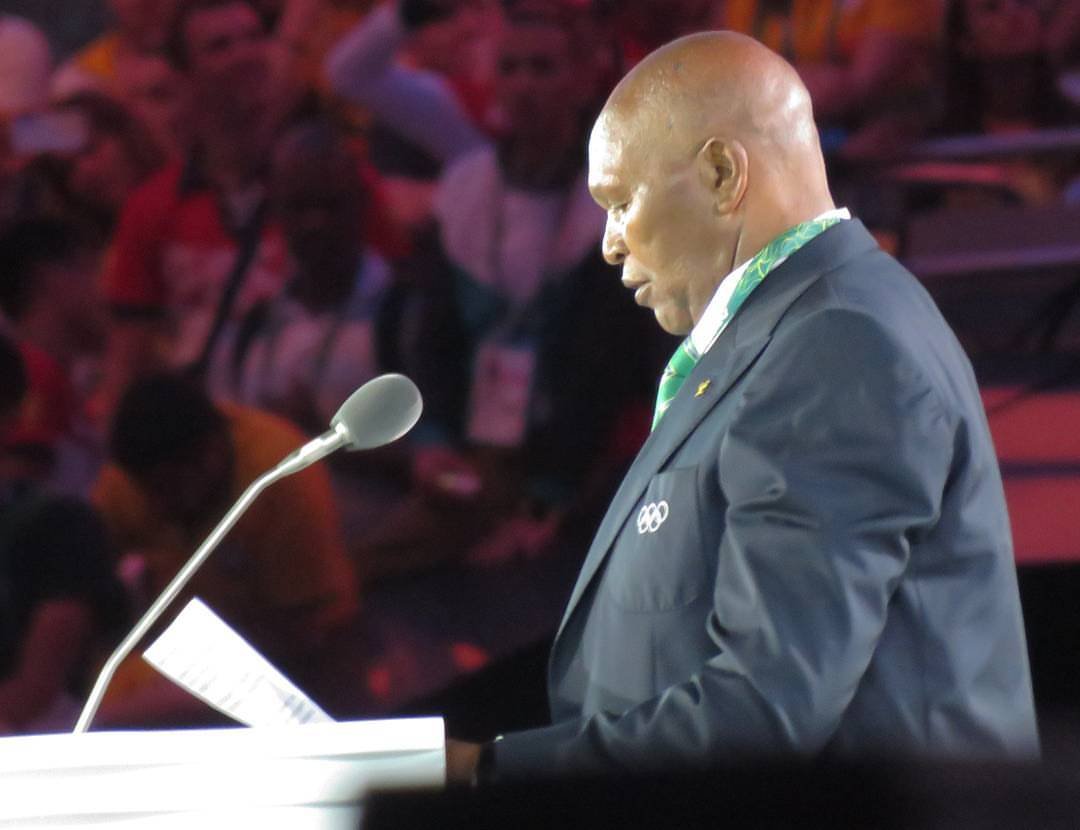
Keino’s later life included work supporting children and education in Kenya. At the Rio 2016 opening ceremony, he received the first Olympic Laurel. That recognition adds another dimension to a career often introduced through a famous race.
Competitive success and service beyond competition are different measures of influence. A gold medal records an outcome within a sporting event. Helping create opportunities for others concerns what happens outside that event. A rounded account can recognize both without treating one as evidence for every claim about the other.
The broader history of African distance running also contains distinct stories that deserve to remain distinct. Abebe Bikila’s two Olympic marathon victories concern a different distance, athlete and competitive problem. Connecting those histories helps readers explore the sport; flattening them into one universal training secret makes each less informative.
Keino’s record is compelling on its own terms: excellence across middle distance, longer track racing and the steeplechase, followed by influence beyond racing. The best lesson is to look closely at what the achievements actually show. Admire the range, understand the different tests and resist filling the gaps with an invented workout.