Advertising disclosure: This page includes affiliate links that may earn us a commission at no additional cost to you.
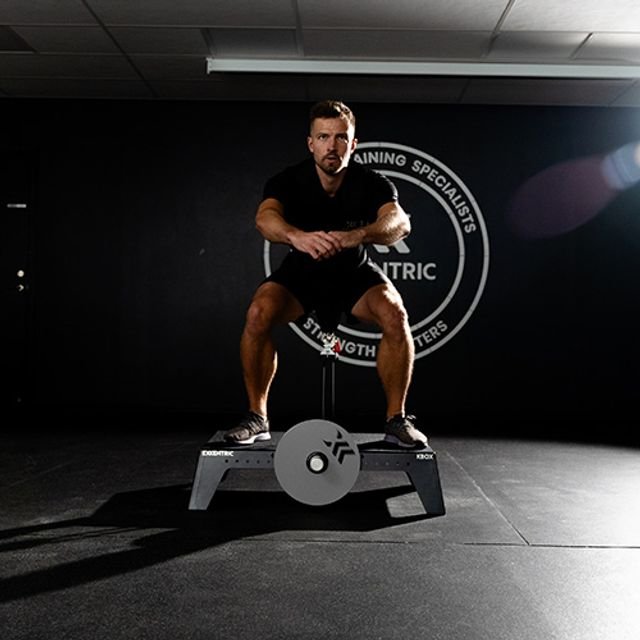
A flywheel squat can feel like a completely different exercise from a conventional leg press. Instead of pushing a weighted sled away from your body, you accelerate a spinning disc and then resist the energy returning through a strap. Your legs can feel heavily challenged even if the equipment looks remarkably small.
Does that unusual resistance translate into greater quadriceps activation? A November 2026 crossover experiment involving 18 trained men compared the electrical activity of three quadriceps muscles across both movements. It did not establish a clear winner. That is a useful result for anyone deciding whether flywheel equipment deserves space in their gym, but it needs to be interpreted carefully: a similar electrical signal during a workout is not proof that two machines produce identical results over months of training.
Why the flywheel squat feels different from a weighted sled
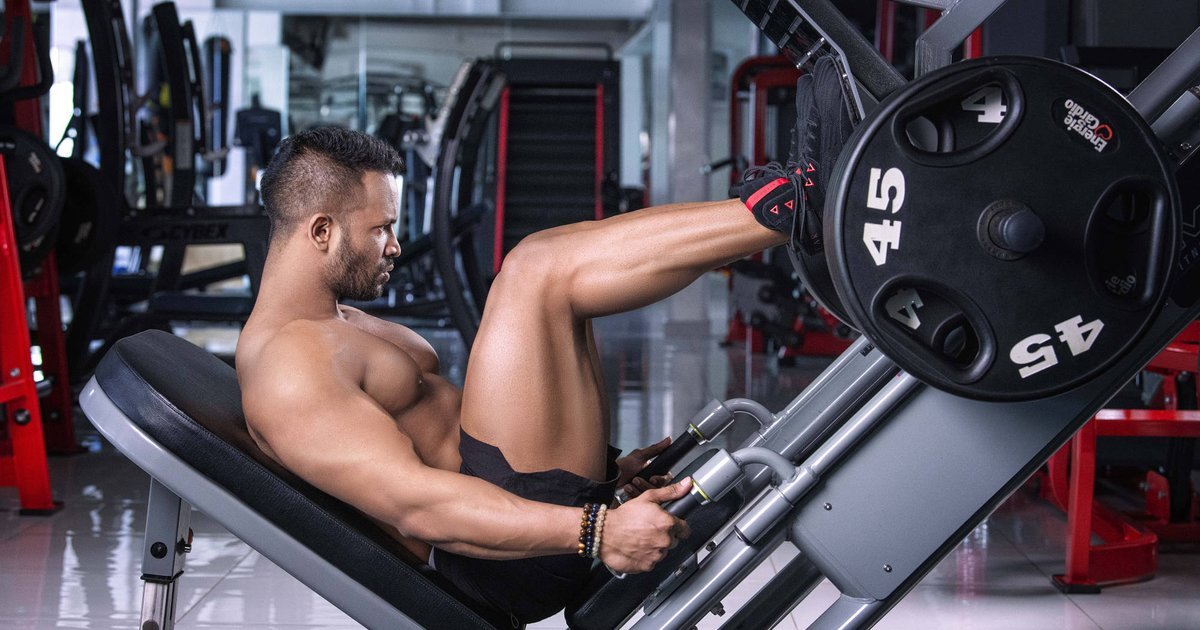
A conventional leg press moves a load along a defined path. You push the carriage away and control it as it returns. Depending on the angle, friction, leverage and the weight of the carriage itself, the number on the plates can tell you surprisingly little about the actual force applied to your feet. What it does offer is a relatively repeatable loading reference on the same machine.
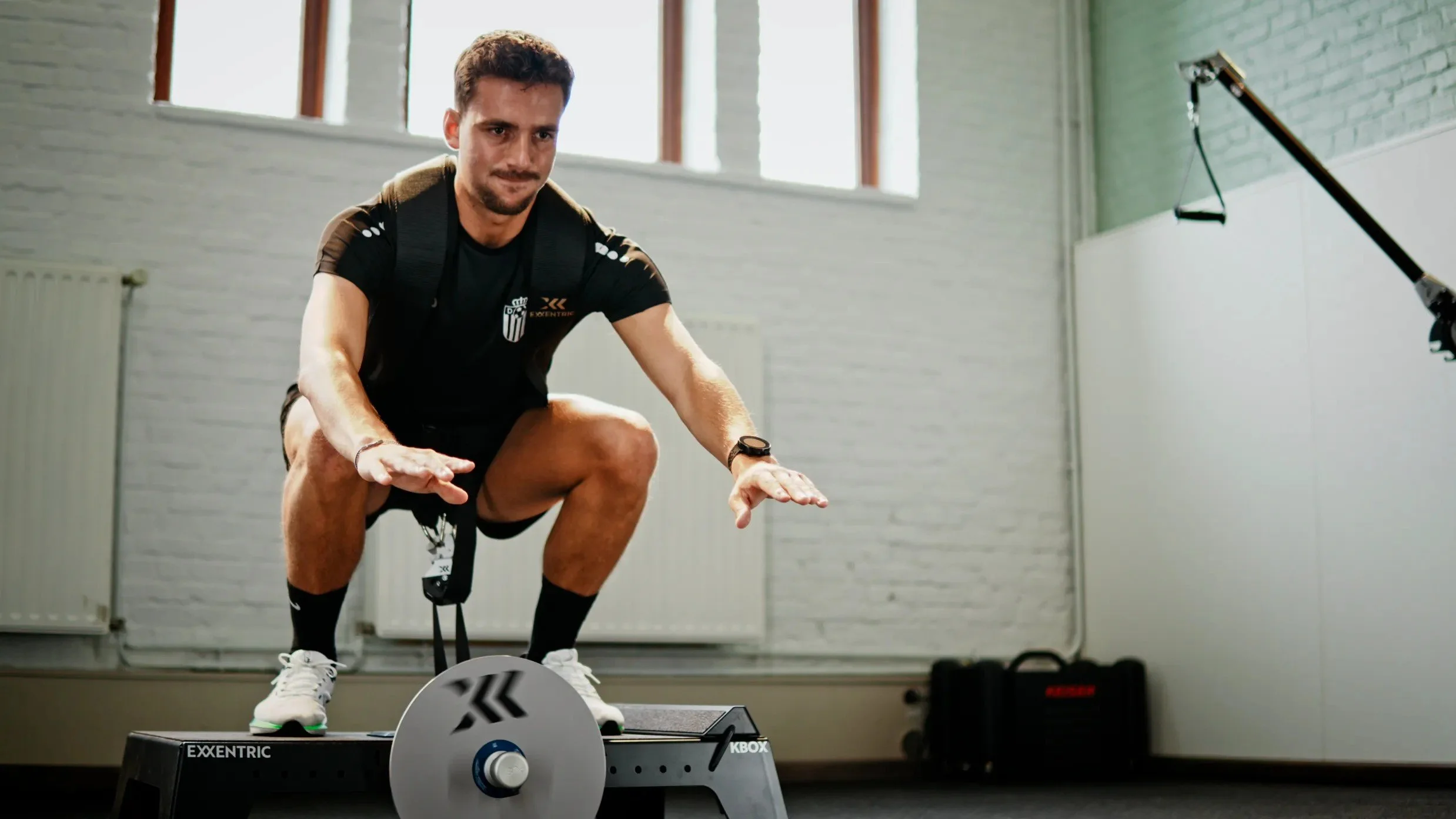
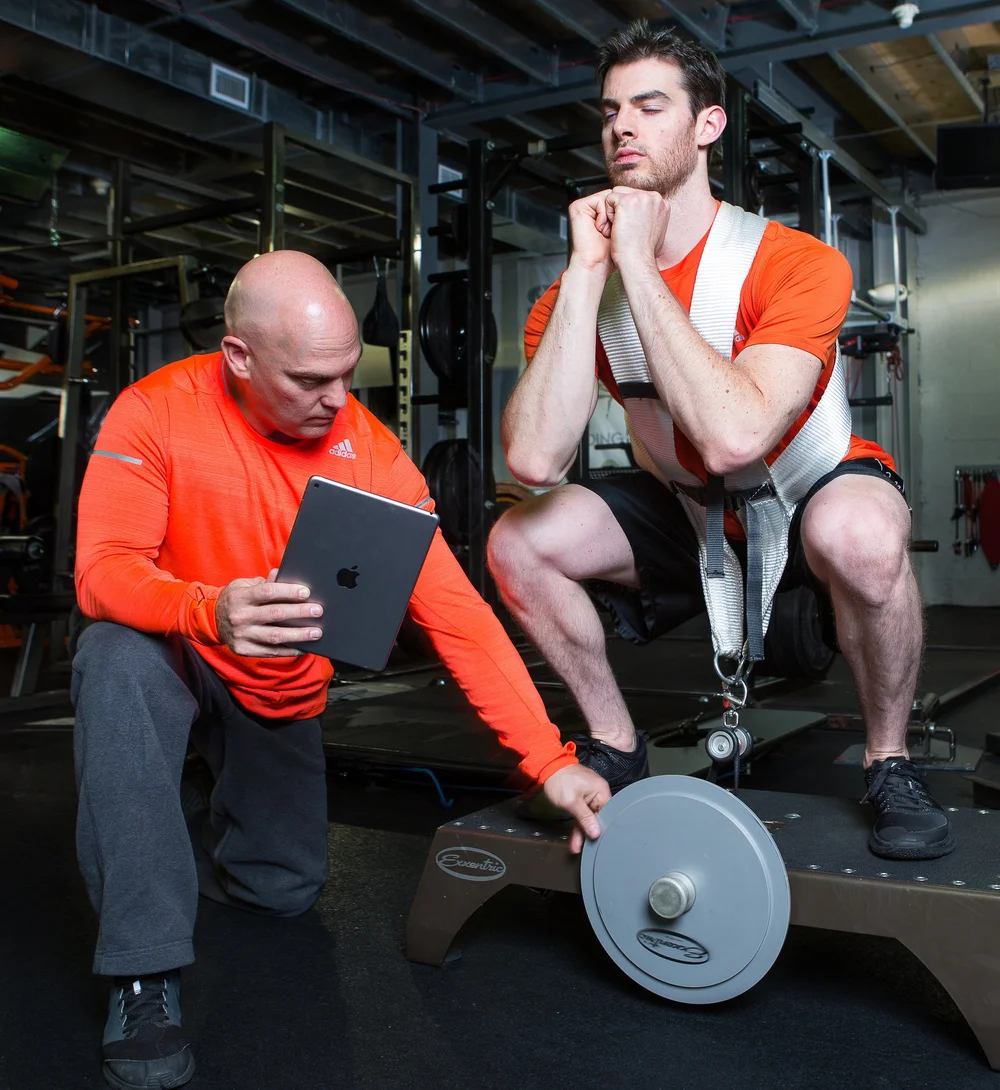
A flywheel uses rotational inertia. During the upward portion of the squat, pulling the strap spins the disc. The strap then winds back around its axle, drawing you into the downward portion. You must absorb the returning energy before accelerating again. The resistance therefore depends partly on how you perform each repetition, rather than only on which disc you install.
The distinction matters because a hard push on one repetition can make the following descent more demanding. A beginner who accelerates aggressively but does not yet know how to brake may find the return difficult to control. Start with a manageable inertia and learn to decelerate before deliberately increasing the intensity. Follow the specific device instructions for attachment, strap length and stopping the disc before stepping off.
A squat performed with a hip belt also places the resistance differently from a shoulder-loaded squat or a seated press. The flywheel squat still requires the lifter to organize the hips, knees and trunk through the movement. On the press, a backrest supports the torso and the footplate provides the opposing surface. Neither arrangement is automatically superior: they are different solutions to loading knee and hip extension.
How the 18-person experiment kept the comparison controlled
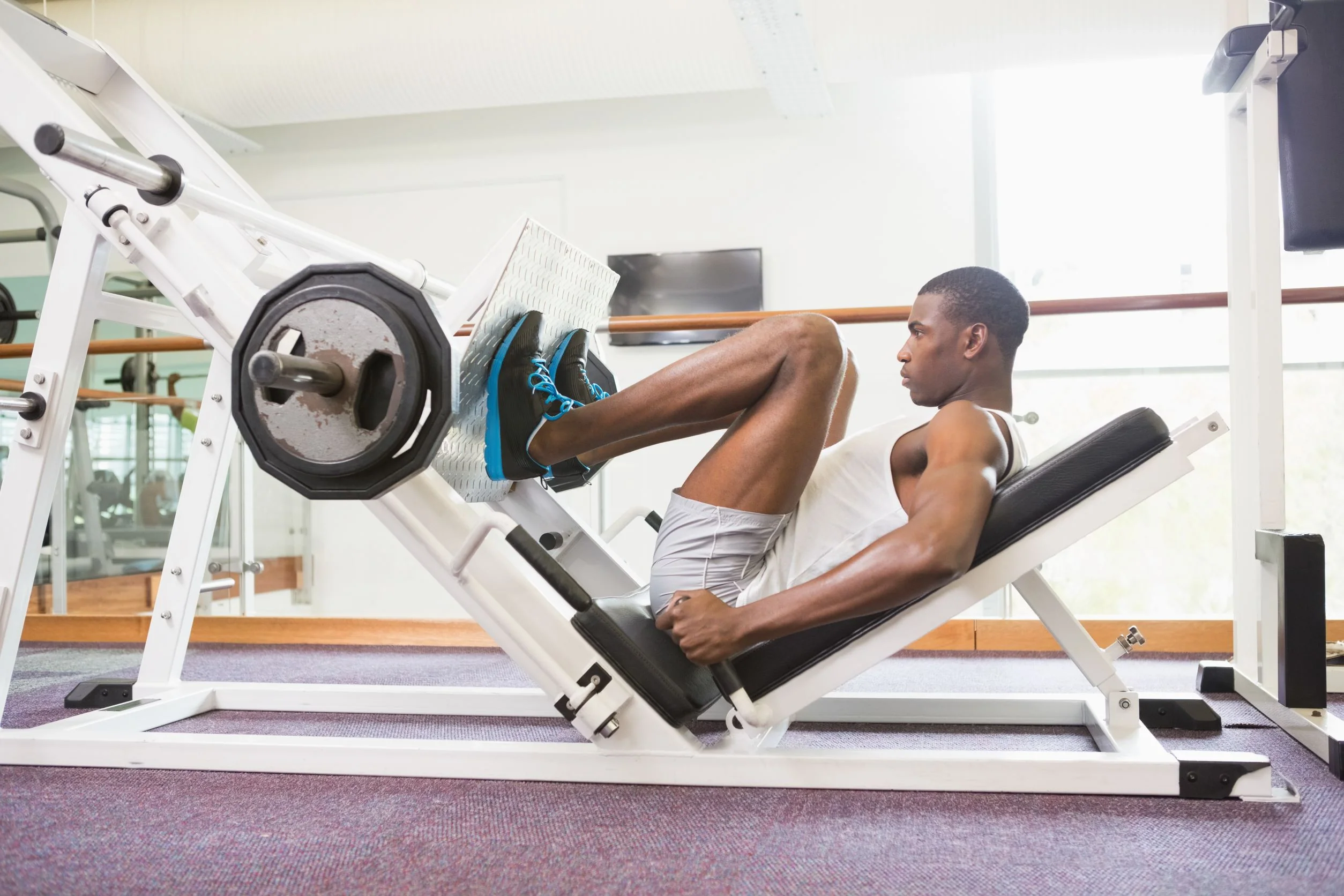
The experiment used a randomized crossover design, meaning that each of the 18 men performed both exercises instead of comparing separate groups of lifters. Testing sessions were separated by seven days and the order was balanced. Participants were already accustomed to resistance training and went through familiarization before the measured workouts.
Each workout involved three sets of six analyzed repetitions with two minutes of rest. The flywheel exercise used an individualized inertia setting and a hip-belt attachment. Preparatory turns brought the disc into motion, after which the participants tried to accelerate the upward movement and actively brake the return. The conventional exercise used a 45-degree leg press, with the pelvis and back supported and a consistent knee-bend target around 90 degrees. The investigators also attempted to keep repetition duration comparable using familiarization data.
That is a considerably better comparison than asking two people to perform their favorite leg exercise and judging which one looks more strenuous. It is not, however, a perfect mechanical match. Flywheel inertia and kilograms loaded onto a sled are different quantities. Identical repetition counts and approximately similar durations do not guarantee equal joint torque, effort or total mechanical work. The precise time spent in each phase was not recorded during the measured repetitions.
For a practical comparison at your gym, borrow the idea of repeating your own setup rather than copying the research load. Record the device, belt or seat position, foot placement, depth, sets and rest time. If you change those variables every session, the effect of changing resistance becomes much harder to distinguish from the effect of changing technique.
What the three quadriceps signals actually showed
The researchers examined three parts of the quadriceps: the rectus femoris, the vastus lateralis on the outer thigh and the vastus medialis toward the inside of the thigh. Surface electromyography, or EMG, was used to record electrical activity over each muscle. Values were normalized against a reference maximal voluntary contraction so that the readings could be compared within the experimental framework.
Taking the flywheel squat minus the leg press, the estimated differences were:
- Rectus femoris: −9.90 percentage points, 95% confidence interval −20.81 to +1.01.
- Vastus lateralis: +2.58 percentage points, interval −7.33 to +12.49.
- Vastus medialis: +8.57 percentage points, interval −2.76 to +19.89.
The point estimates leaned toward the leg press for rectus femoris and toward the flywheel squat for the other two muscles. All three intervals nevertheless crossed zero, and the corrected comparisons did not establish a statistically significant difference. These data do not demonstrate that either movement preferentially recruits a specific quadriceps region in a reliable way.
Notice the difference between a percentage point and a percentage increase. The rectus femoris contrast, for example, is a difference between normalized EMG readings, not a finding that the press grows the rectus femoris by almost 10 percent more. The intervals are also broad enough to leave room for meaningful differences. This was not an equivalence trial designed to prove that the exercises perform identically within a predetermined margin.

Leg Day Shirts & Workout Gear
Leg-day gym shirts and workout gear for lifters who never skip squats, lunges and lower-body punishment.

Leg Press Dost Thou Even Press Medieval Knight Crewneck T-Shirt
Show some gym-day personality with “Leg Press”.

Don't Skip Leg Day Sticker
Put “Dont Skip Leg Day” gym humor on your laptop, bottle, or gym gear.

Squat You Must Star Wars Leg Day Meme Hooded Hoodie
Show off your leg-day humor in a laid-back “Squat You Must” hoodie.

SwoleBob Squatpants Meme – Leg Day, & Gains – Top T-Shirt
Rep “SwoleBob Squatpants Gym Meme” humor in and out of the gym.

Heavy Squatter Gym Wizards | Funny Harry Potter Workout Sticker
A fun “Heavy Squatter Gym Wizards” touch for bottles, laptops, and lockers.


Coffee Shots & Heavy Squats for Caffeine, Lifting and S Sticker
Put “Coffee Shots & Heavy Squats” gym humor on your laptop, bottle, or gym gear.

Never Skip Leg Day – NSLD Meme Fried Chicken Jumper Pul T-Shirt
Add a playful “Never Skip Leg Day” touch to your casual rotation.

8 Plates Squat Club : Essential Meme & T-Shirt
Make gym days more fun with “8 Plates Squat Club” style.

Squatbucks & Coffee Meme Leg Day, & Gains Top T-Shirt
Show some leg-day attitude with a playful “Squatbucks Gym & Coffee” tee.
Why an acute muscle signal is not a muscle-growth ranking
EMG is valuable for studying muscle activity during a specific task, but it does not measure muscle growth directly. Electrode positioning, muscle geometry, contraction type, movement speed and the relationship between electrical activity and force all complicate interpretation. A higher signal cannot be converted into a reliable prediction of how many millimeters of muscle you will gain.
There is another especially important limitation here. The readings represented activity across the whole repetition. A flywheel is often selected because the returning energy can be used to challenge the lowering phase, yet a whole-repetition average cannot tell you whether one phase carried a distinct advantage. Nor did this test measure long-term muscle size, injury rates or strength gains.
Longer training research gives a more useful perspective. Flywheel training can improve strength and power and can contribute to muscle growth when consistently programmed. Comparisons with other resistance methods have not established that it is universally better. Some outcomes, such as power, may benefit from particular protocols. Other comparisons vary with the exercise, the participants and how the programs are matched. Separate biomechanical work comparing flywheel-based squat and press configurations also illustrates that joint loading may differ even when estimated activity in a muscle group looks similar.
If you want bigger legs, prioritize a challenging exercise that you can perform consistently through a suitable range of motion, recover from and progressively overload. If your goal is to improve rapid force production or braking ability, flywheel training can be a useful specific tool, provided you have the technique to use it. Those are different training questions. Treat the acute experiment as evidence that both movements can engage the quadriceps, not as a verdict on every outcome that matters to you.
How to choose and progress your own leg-day movement

For most lifters, the simplest choice is the exercise that fits their current goal and equipment. A conventional leg press is often convenient for accumulating challenging lower-body volume without balancing a barbell. Flywheel squats may appeal to athletes who want a compact setup and a different loading pattern. A belt squat, hack squat or V-squat is another option if the conventional press is unavailable; a leg extension can supplement compound work when direct knee-extension training is desired. These are alternatives for building a program, not mechanical substitutes for the flywheel tested in the experiment.
Use the first two weeks to establish a consistent movement. On a flywheel, choose a modest inertia, perform controlled practice repetitions, and avoid chasing the biggest possible braking force. On a conventional machine, set the safety stops, load conservatively and choose a depth you can control while maintaining comfortable contact with the support. Two or three working sets of six to ten repetitions can be a reasonable starting example for an experienced lifter, adjusted to the rest of the program.
Over the following weeks, progress one variable at a time. If the leg press feels manageable at the same range and repetition count, increase the load in a small step. On a flywheel, you can track repetition quality and repeatable power output if the device provides reliable feedback, then adjust inertia or effort once control is established. Don’t treat adding inertia as exactly equivalent to adding plates. Record whether the last repetitions remain controlled, and reduce the demand if technique deteriorates.
Where possible, keep the exercise consistent for several weeks instead of alternating machines simply because one produces more soreness. Check trends in performance, tolerable training volume and recovery. If the current movement is producing progress, this small experiment provides no compelling reason to replace it. If your goals, space or preferences favor a different device, the evidence leaves room for that choice too. The best equipment is the equipment you can use well enough to train productively over time.

Equipment Worth Exploring
Explore equipment, accessories and gear from our carefully selected range.

Leg Press/Hack Squat BPR-790
Convertible 45-degree leg press and hack squat machine with a broad footplate and band pegs.

Compact Leg Press CLP-700
Compact reverse-style leg press with a moving seat carriage and an adjustable footplate.

Studio V-Squat
Plate-loaded V-squat machine for supported lower-body strength training.

Squat Harness
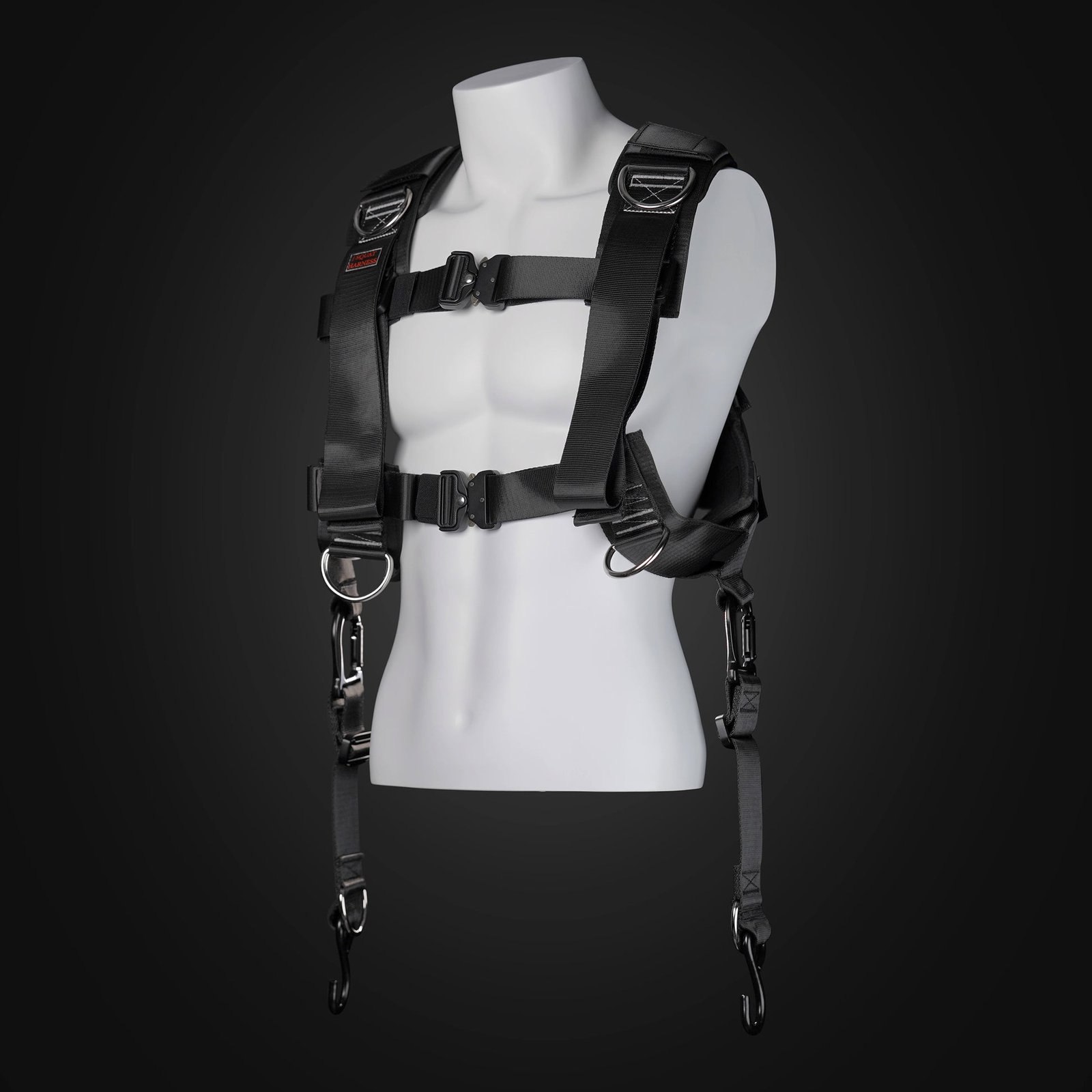
Wearable harness for hands-free cable squats, sled work, and lower-body training.

Belt Squat Collar
Heavy-duty collar adapter for compatible belt-squat and landmine bar setups.


GymPin Squat Wedges
Non-slip 15-degree squat wedges help elevate the heels for deeper quad-focused squats.

Leg Extension/Curl BCO-780
Leg extension and lying leg curl combo with plate loading, band pegs and a cable-loading option.