Advertising disclosure: This page includes affiliate links that may earn us a commission at no additional cost to you.
The leg extension is a simple exercise to describe: straighten the knee against resistance. But the position of your hips changes the length of one of the muscles producing that movement. A ten-week experiment published online in December 2024 put two different seated positions to the test, and the findings offer a practical reason to inspect the backrest rather than automatically use the last person’s setting.
The important distinction is that the more open hip position appeared to favor the rectus femoris, not every part of the quadriceps equally. That makes this a potentially useful adjustment, rather than a reason to abandon a comfortable machine or insist that one angle is universally correct.
What 40 and 90 degrees actually mean
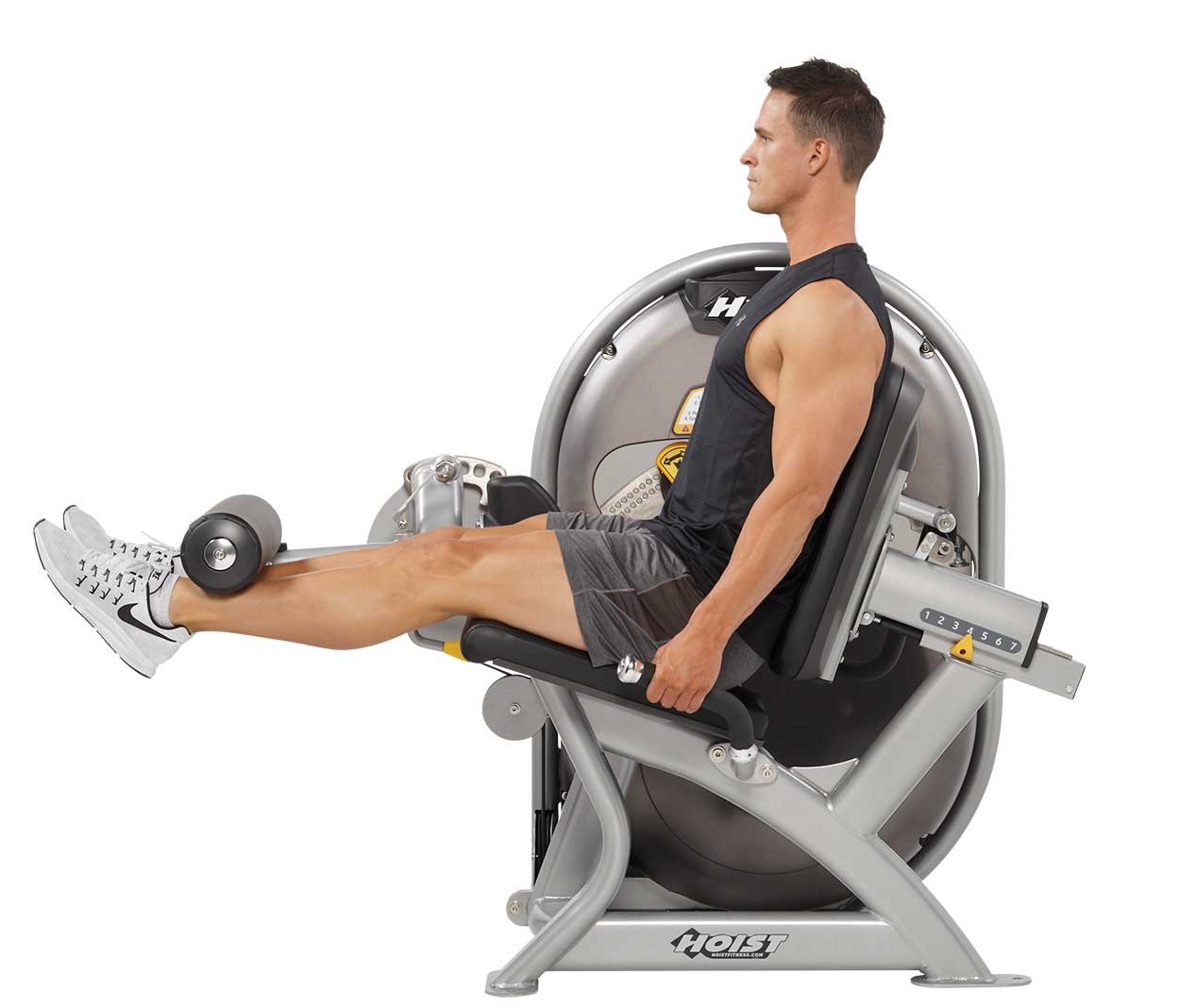
Imagine standing upright with the thighs approximately in line with the torso. That is close to zero hip flexion. Sitting upright with your thighs extending horizontally in front of you puts the hip near 90 degrees of flexion. If the thigh remains in the same position and the torso reclines, the amount of hip flexion decreases. The hip opens rather than closes.
This is easy to confuse with the angle displayed on the backrest adjustment. A manufacturer might describe a pad angle relative to the floor, relative to the seat or relative to a vertical reference. None necessarily corresponds to the anatomical hip angle. Likewise, 40 degrees of hip flexion does not mean bending the knee to 40 degrees or stopping the repetition at that point.
The difference matters because two people can sit in the same machine with different pelvis positions. Long or short femurs, the seat depth and the shape of the back pad can change where each person ends up. A useful adjustment starts by maintaining a stable position for the pelvis and keeping the knee appropriately aligned with the machine’s pivot, rather than chasing a number on the frame.
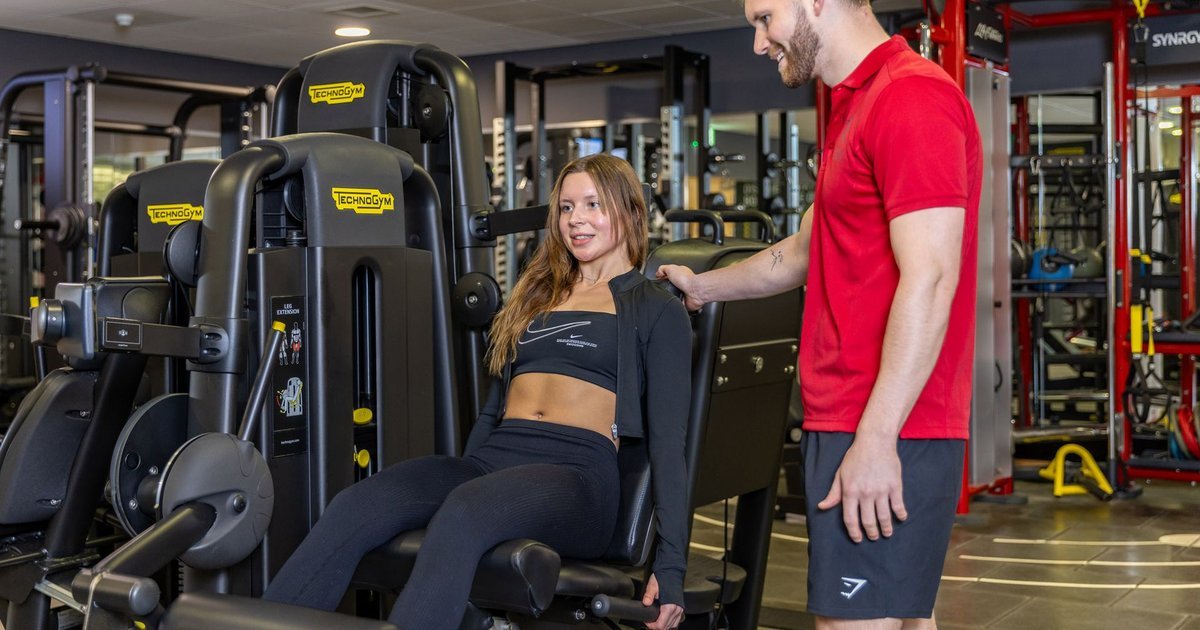
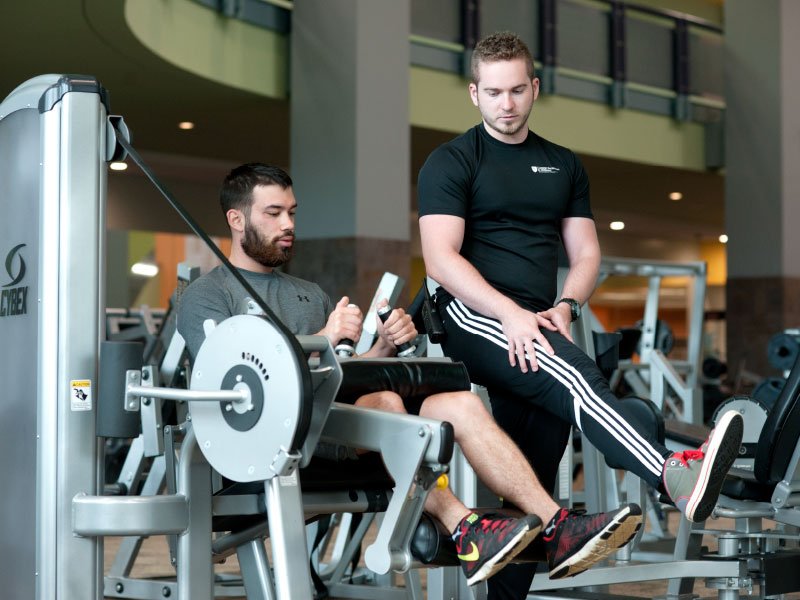
You do not need a goniometer to make your next workout useful. If the backrest adjusts, compare a comfortable upright position with a more open position that still provides support. Record which setting you use so that a later set is a meaningful comparison. The photographs here illustrate general gym setups, not the participants or exact apparatus from the experiment.
What the ten-week experiment found
Twenty-two men without previous resistance-training experience completed ten weeks of leg-extension training, with two sessions each week. Each participant trained one leg at 40 degrees of hip flexion and the other at 90 degrees. The allocation of the two conditions to the legs was randomized. This within-person comparison reduces the influence of differences in diet, sleep and general responsiveness between individuals.
The researchers measured muscle thickness with ultrasound at two locations along each of two quadriceps muscles: the rectus femoris and the vastus lateralis. The more open hip position produced a greater hypertrophic response at both measured rectus femoris sites. The vastus lateralis did not show a clear advantage for either position. The statistical analysis provided especially strong evidence for the rectus femoris difference.
That is more informative than an overall thigh circumference alone. A larger tape measurement could reflect changes in multiple tissues, while a localized ultrasound measurement can reveal different responses in different muscles. It is still a measurement at a particular site, however, not a complete map of every region of the thigh.
There are also limits worth keeping in mind. Ten weeks is a useful intervention, but not a lifetime of training. The participants were inexperienced men, so the magnitude of any benefit in advanced bodybuilders, women or older lifters remains uncertain. The study compared two positions, not a continuous range of angles. It did not establish that 40 degrees is a universal optimum or that reclining farther will necessarily produce more growth. Treat the result as evidence for a promising setup modification, not as a precise forecast of your next ten weeks.
Why the rectus femoris behaves differently
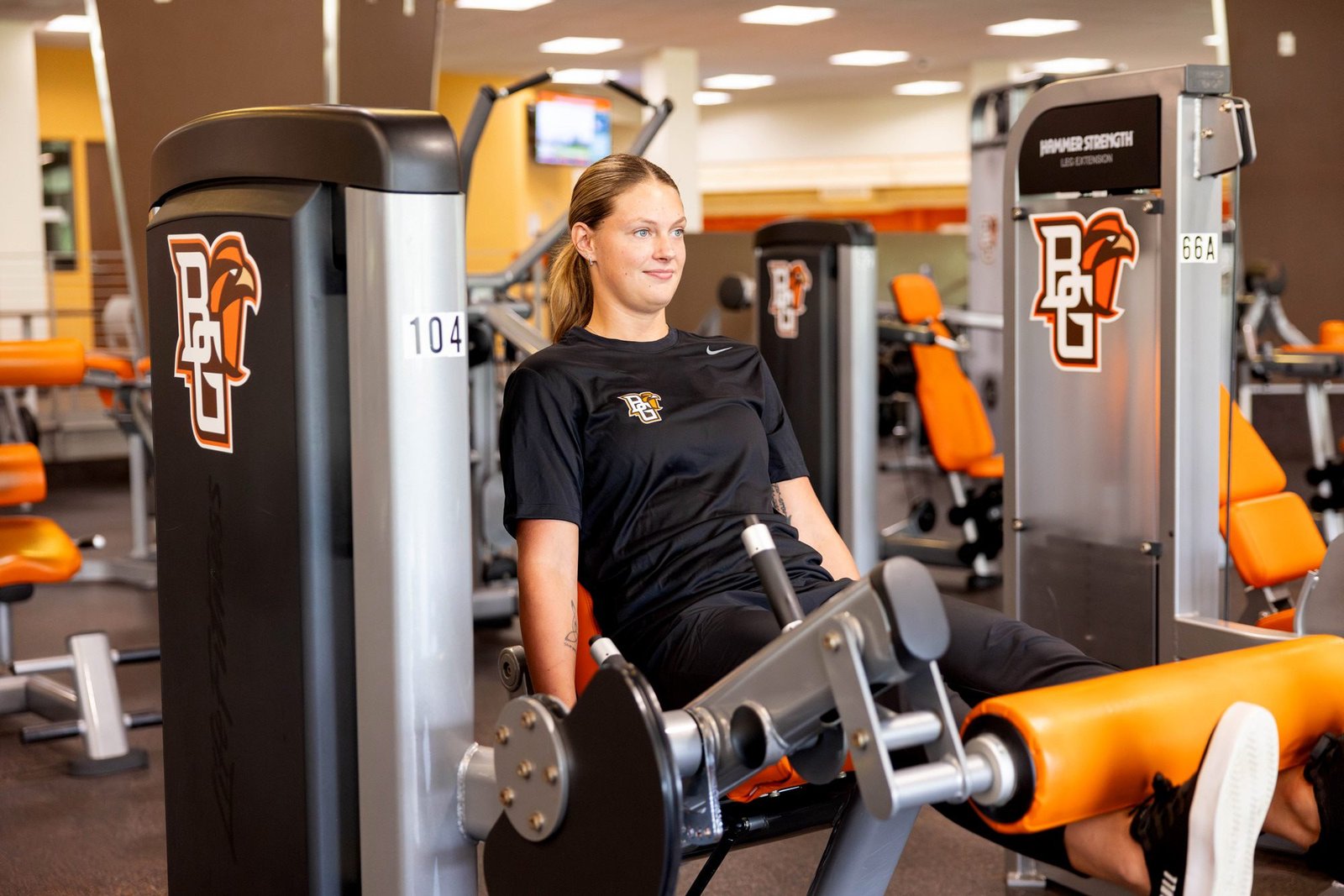
The quadriceps are not four identical knee extensors. Three of the main muscles, the vastus lateralis, vastus medialis and vastus intermedius, cross the knee joint but not the hip. The rectus femoris crosses both. It contributes to knee extension and hip flexion. As a result, changing the angle of the hip can change its starting length even when the knee begins at the same angle.
Opening the hip generally lengthens the rectus femoris at its upper end relative to sitting upright. Bending the knee lengthens it at the lower end. This provides a plausible mechanical explanation for why it may respond differently when the hip is more open. It is not proof that muscle length alone caused the entire difference: leverage, active tension, stabilization and the machine’s resistance profile may contribute to the training experience.
Other knee-extension research also indicates that the quadriceps can grow differently depending on the contraction or exercise used. Comparisons of knee extensions with squats or leg presses have found differing growth patterns across the individual muscles. Those studies do not replicate the 40-versus-90-degree comparison, but they reinforce the point that exercises sharing a broad muscle-group label are not necessarily identical hypertrophy stimuli.
Our comparison of squats and leg extensions examines a separate training question, including how resistance profile and exercise choice affect the interpretation of results. The practical lesson here is narrower: when your goal is to develop the rectus femoris specifically, examine the position in which you perform the isolation movement rather than relying only on the exercise name.
How to adjust the machine without losing support
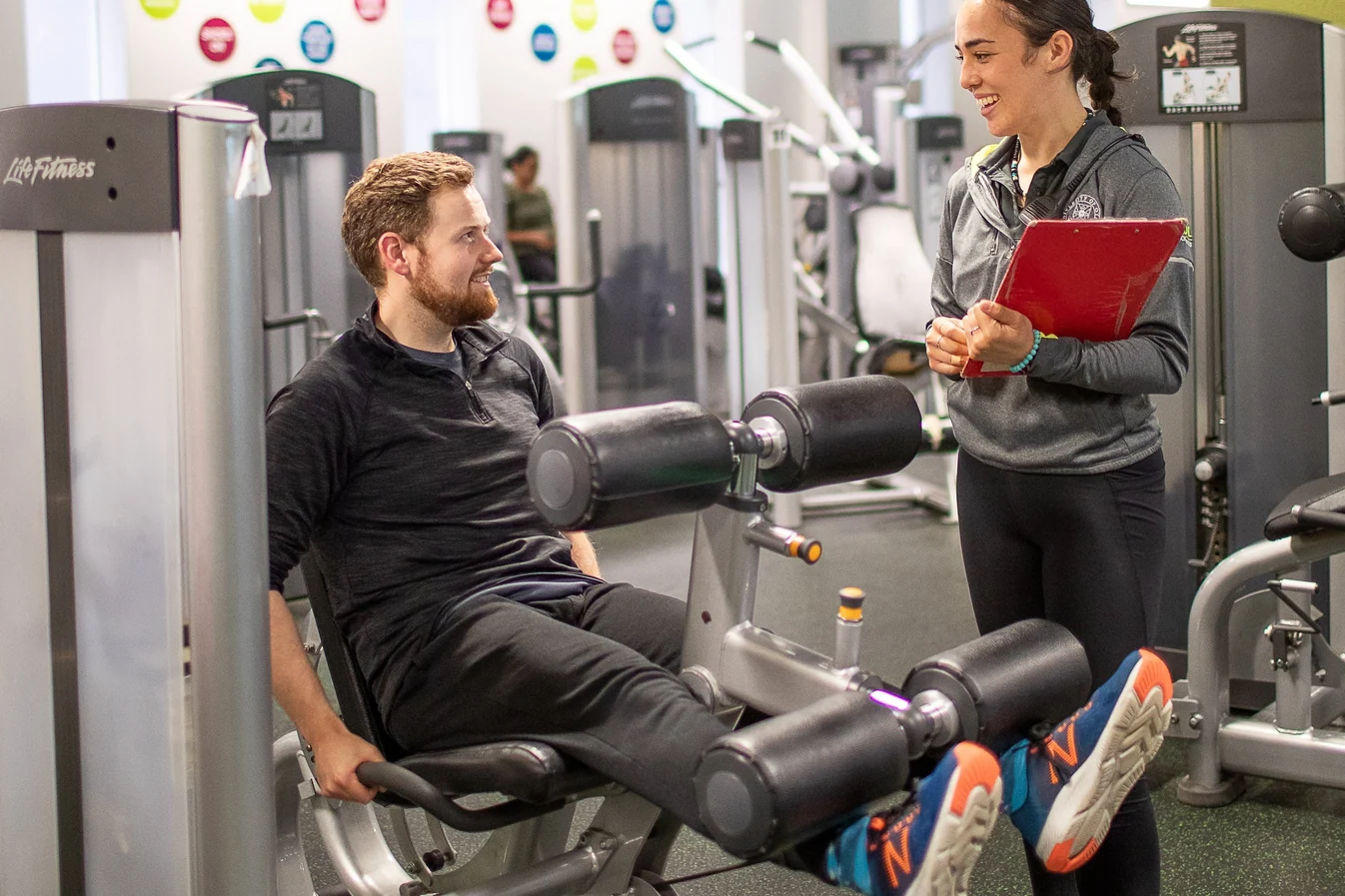
Start with a machine that can support you throughout the repetition. Adjust the backrest and seat together where possible. Position the knee near the machine’s intended axis and place the lower pad just above the ankle, following the equipment instructions. Your pelvis should remain stable while your knee moves, and you should not need to slide forward to reach the handle or force your torso into an uncomfortable arch.
Test the position with a light load before attempting a hard working set. Check whether you can lower the weight under control, straighten the knee through a comfortable range and return to the same starting position. If you have to pull yourself down against the seat with every repetition, the setup may not be a good fit. A smaller adjustment that you can control is more useful than a dramatic recline that changes how you perform the exercise.
Machines differ. A seated combination station may offer a movable back pad, while a bench-mounted developer or an ankle-loaded attachment may provide a different resistance curve and different positioning constraints. None should be assumed to reproduce the study conditions simply because it trains knee extension. Leg presses and supported squat machines are useful complementary options, but they do not replace an isolated knee-extension task one-for-one.
Do not improvise an unsupported backrest by piling up loose cushions or sitting on the edge of a machine. If a machine does not allow a secure open-hip setup, use the position it was designed for. Both conditions in the experiment were viable for quadriceps training. For persistent pain or symptoms that change with positioning, stop and seek individualized guidance rather than forcing a prescribed angle.

Equipment Worth Exploring
Explore equipment, accessories and gear from our carefully selected range.

Seated Leg Combo BCO-680
Adjustable seated leg extension and leg curl machine with band pegs for added resistance.


Leg Extension/Curl BCO-780
Leg extension and lying leg curl combo with plate loading, band pegs and a cable-loading option.


HUSLA Leg Extension Pad
Pad attachment designed to increase usable range of motion on compatible leg-extension machines.


Compact Leg Press CLP-700
Compact reverse-style leg press with a moving seat carriage and an adjustable footplate.

Leg Press/Hack Squat BPR-790
Convertible 45-degree leg press and hack squat machine with a broad footplate and band pegs.

Studio V-Squat
Plate-loaded V-squat machine for supported lower-body strength training.
Put the finding into a sensible leg day
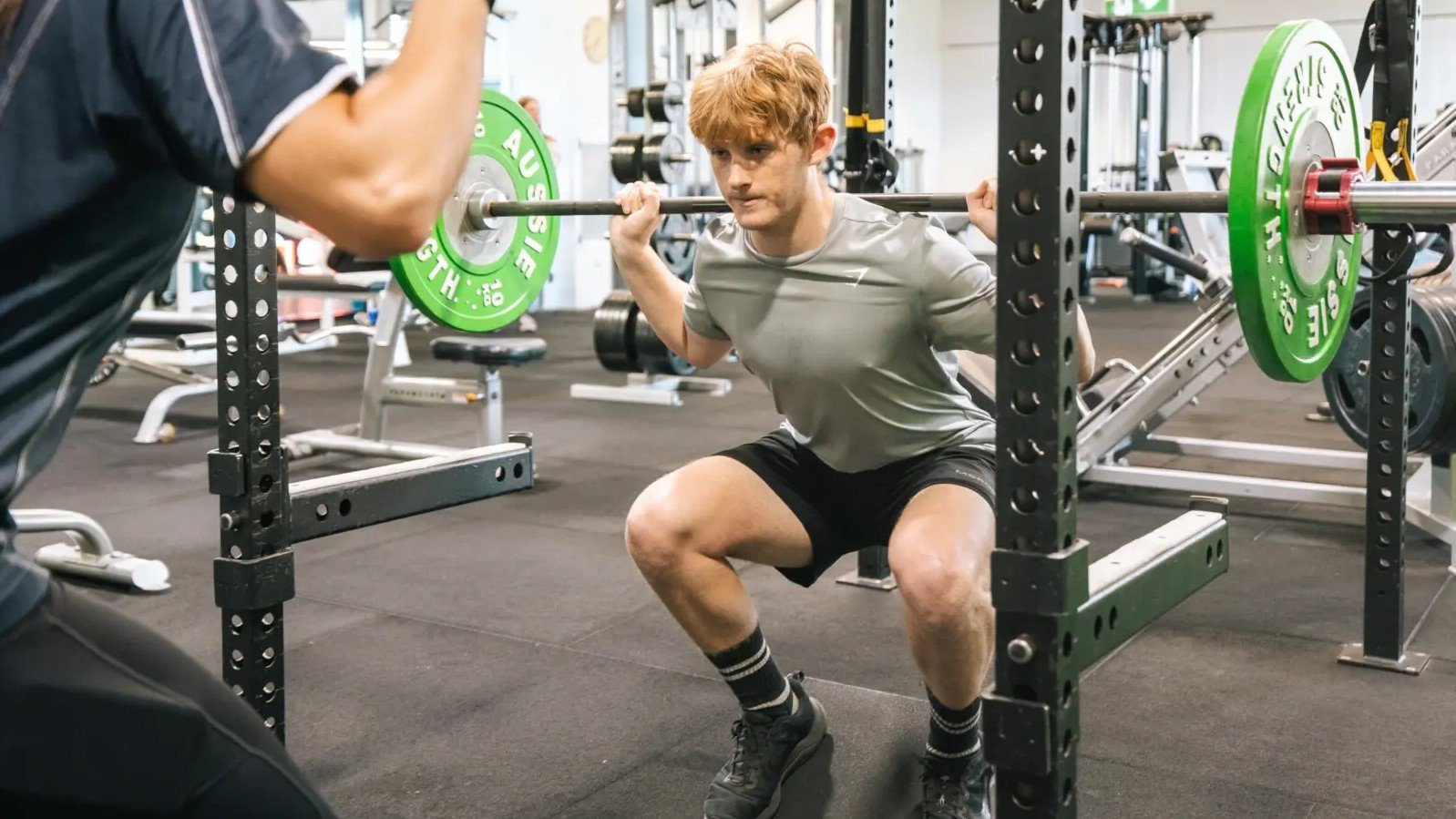
For a lifter already performing squats or leg presses, the result suggests a way to make existing accessory work more deliberate. You could keep your main compound exercise and add a small amount of supported knee-extension work afterward. Alternatively, if rectus femoris development is the priority, perform knee extensions early in one session so that fatigue from the compound lift does not dictate the quality of the isolation work.
As an illustrative starting point, consider two lower-body sessions per week, each with two or three sets of controlled leg extensions in a range of roughly 10 to 15 repetitions. Leave one to three repetitions in reserve as you get accustomed to the position. This is a practical example, not a reconstruction of the experiment or a guaranteed optimal prescription. Reduce the amount if it pushes your existing quadriceps workload beyond what you can recover from.
Keep a consistent record of the machine, seat and backrest settings, range of motion, repetitions and load. Progress when the same movement becomes easier to repeat. If you change the backrest, establish a new baseline rather than treating a lower stack number as a loss of strength or a higher number as automatic progress. Give the new setup several weeks before judging it by anything other than comfort and execution.
Most importantly, do not confuse the promising result for one muscle with a rule for the entire thigh. If your current upright position works well, there is no need to discard it. An adjustable, stable setup that opens the hip may be worth trying when you want to give the rectus femoris a more focused stimulus. The best useful experiment is the one you can repeat safely, measure honestly and fit into the rest of your training.

Leg Day Shirts & Workout Gear
Leg-day gym shirts and workout gear for lifters who never skip squats, lunges and lower-body punishment.


The Quadfather Leg Day Meme Top & T-Shirt
Bring “The Quadfather” humor to your next gym day.

Yesterday I Skipped Leg Day – Beatles Music Meme Hooded Hoodie
Show off your leg-day humor in a laid-back “Yesterday I Skipped Leg Day” hoodie.

If You're Reading This Its Leg Day Drake Parody | Decal Sticker
Stick a little “If You're Reading This Its Leg Day Drake” humor on your favorite gear.

Dont Skip Leg Day Hooded Pullover Deadpool Fans Hoodie
Keep it laid-back with a little “Dont Skip Leg Day” attitude.

Strong Woman Leg Day Meme Hooded Barbie Hoodie
Make your off-duty look more fun with “Strong Woman”.

Mermaid Leg Day Sweater Strong Meme T-Shirt
For laid-back days and leg-day humor: “Mermaid Leg Day”.

Muscle Mommy – Squats & Leg Day Meme Princess, T-Shirt
Make gym days more fun with “Muscle Mommy” style.

Squat Queen Gym | Funny Burger King Parody Workout | Le Hoodie
Stay casual and show some burger-loving attitude with “Squat Queen”.

Swolebob Squatpants Gym | Funny SpongeBob Leg Day Meme Hoodie
Show off your leg-day humor in a laid-back “Swolebob Squatpants” hoodie.