Advertising disclosure: This page includes affiliate links that may earn us a commission at no additional cost to you.
A plyo box looks like one of the simplest purchases you can make for a gym. It is a platform to jump onto, step onto or use as a movement reference. Yet two boxes with the same advertised height may feel quite different underfoot, take up different amounts of space and suit different training sessions.
Before comparing prices, work out whether you want jump practice, controlled lower-body strength work or a versatile conditioning station. Then compare the usable landing surface, starting height, construction and safe setup. Here is how to make that choice using real product dimensions and practical checks.
One box, three heights — and three different footprints
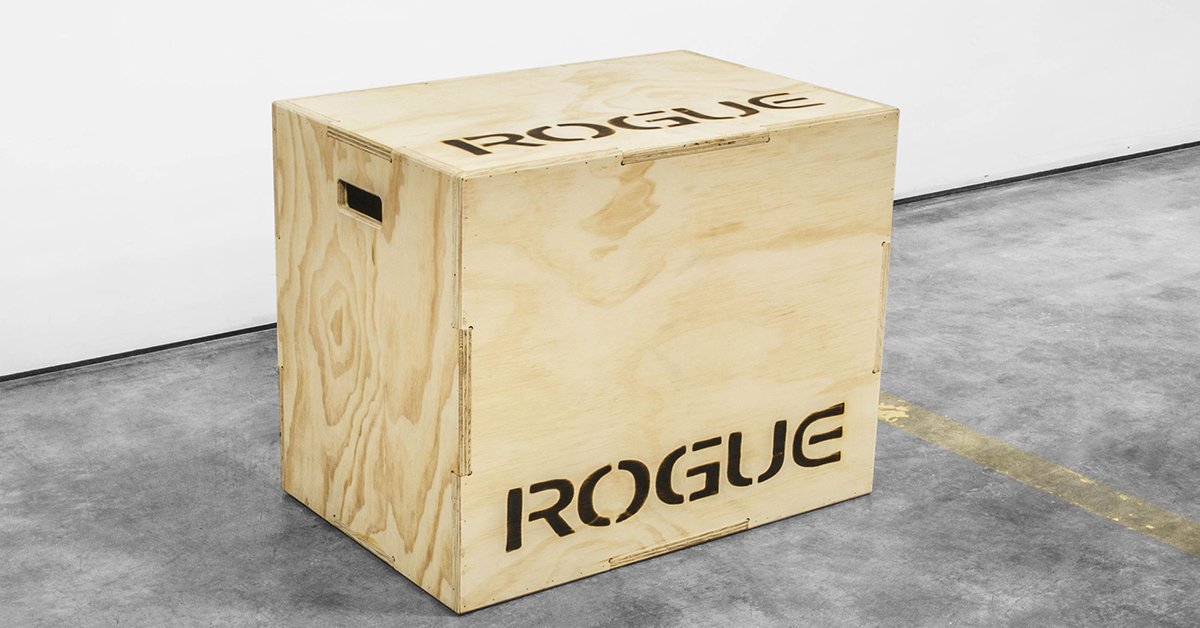
Most three-in-one plyometric boxes are rectangular cuboids. The Rogue Games Box, for example, measures 20 by 24 by 30 inches. Flip it onto a different face and the distance from the floor to the top changes. But something else changes too: the size of the surface supporting your landing.
At 20 inches high, its base and landing surface measure 24 by 30 inches, or 720 square inches. At 24 inches high, both measure 20 by 30 inches, or 600 square inches. At 30 inches high, they measure 20 by 24 inches, or 480 square inches. The highest setting therefore offers one-third less landing area than the lowest. Those dimensions describe the outer faces, not a guarantee that every inch is usable for landing.
That is a particularly important detail for a taller or heavier athlete, someone with large feet, or a person who likes to land with a slightly wider stance. It is also worth thinking about if you train in a narrow space. The orientation with the smallest footprint is not necessarily the best orientation for your body or your workout.
Measure both your intended stance and the clear floor around the box before you order one. Keep in mind that you will need room to approach, land, step down and reposition yourself, not just a rectangle where the equipment can sit between sessions.
Wood versus foam: the trade-offs that actually matter
A traditional wood box offers a relatively rigid landing surface. Rogue’s Games Box uses three-quarter-inch plywood, an internal reinforcing structure and rounded edges. The listed unit weighs 56 pounds. A solid wood design can work well for people who want a predictable platform and who can comfortably move the unit between sessions. The obvious downside is that clipping a hard edge with your shin can hurt.
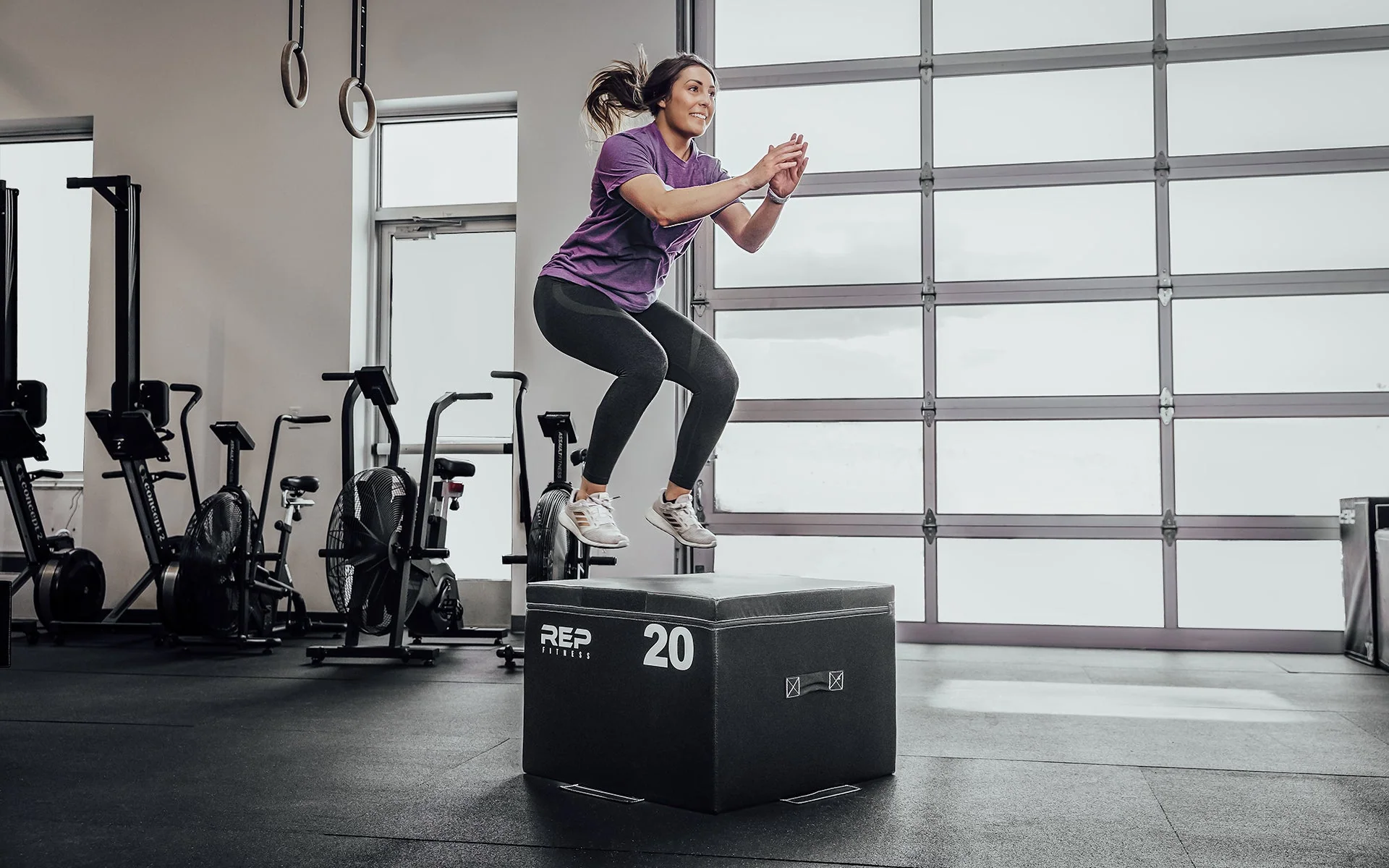
Soft boxes are a different proposition, but the word soft does not describe one universal construction. REP’s stackable foam models use dense foam and a fixed 28-by-28-inch footprint. Its 20-inch and 24-inch units are listed at 75 and 85 pounds respectively. That makes them substantially heavier than some rigid boxes; foam does not automatically mean lightweight. A fixed footprint also keeps the landing surface consistent when you select a taller individual unit from the same range.
Eleiko’s three-height Hybrid Plyo Box uses expanded polypropylene foam. Its stated weight is 14 kilograms and its maximum load is 150 kilograms. The manufacturer also warns about surface damage from free weights contacting the box. That distinction matters: equipment suitable for an athlete performing bodyweight jumps is not necessarily designed to have dumbbells dropped onto it.
Compare the actual construction, footprint, load guidance, weight and surface grip rather than assuming one material wins every category. These are product specifications and design implications, not results from a hands-on impact or stability test. Even a padded edge cannot make an unstable landing or an inappropriate box height safe.
Choose the lowest useful height, not the highest available
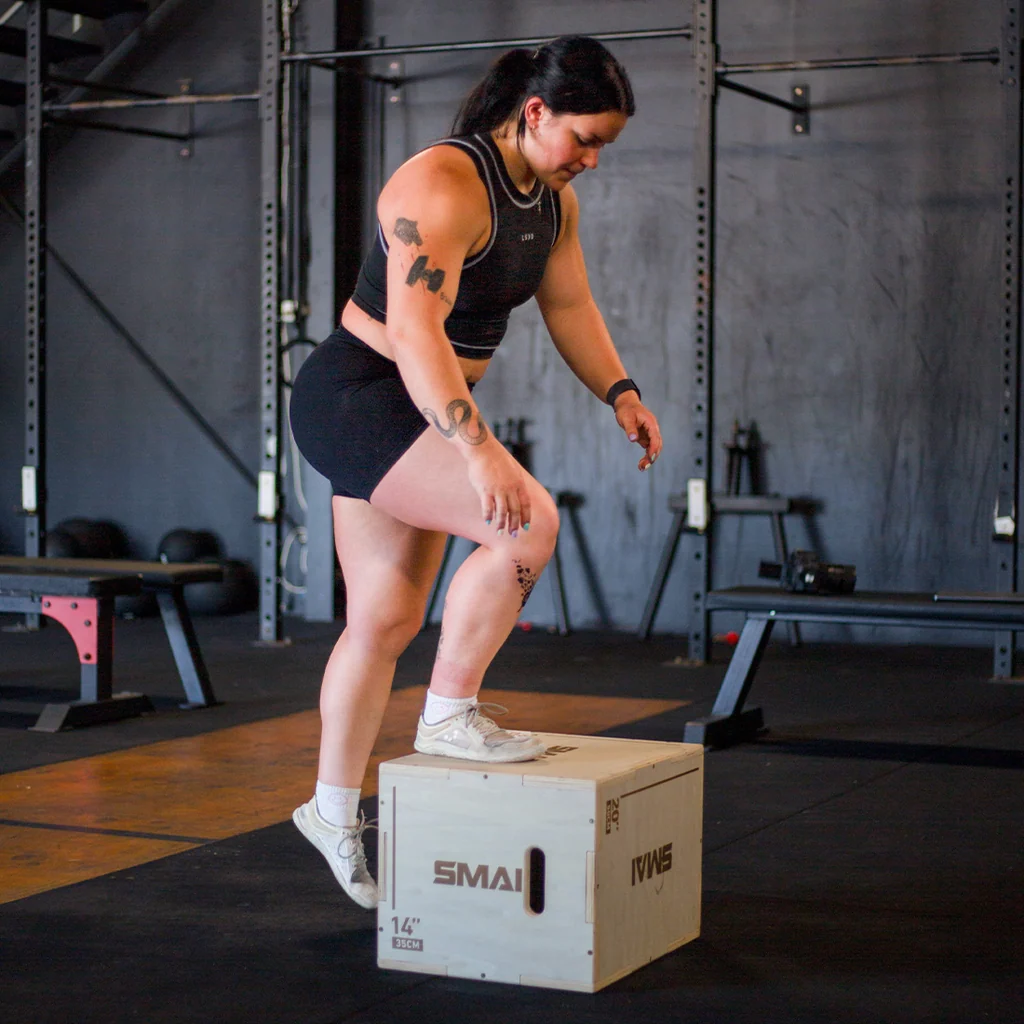
The standard 20-, 24- and 30-inch sequence is convenient for experienced athletes and some functional-fitness workouts, but it leaves beginners with a fairly high starting point. Smaller wood designs exist: SMAI, for example, makes a model with 14-, 16- and 20-inch orientations. An even lower purpose-built platform might be a better fit for someone starting with step-ups.
For jumps, pick a height you can clear comfortably while landing with both feet on the platform, controlling your knees and hips, and standing up without a struggle. If your only way onto the box is to pull your knees almost to your chest and land in an extremely deep crouch, the height is partly measuring your ability to tuck rather than simply how much elevation your jump produces.
For step-ups, choose a platform that allows the working foot to remain firmly planted while your knee and hip extend under control. Begin with bodyweight and pay attention to how much you push off the trailing foot. If the movement turns into a hop or your pelvis tilts substantially, try a lower surface. Tall athletes can tolerate different heights, but leg length alone does not tell you which box is appropriate.
A useful purchase question is not whether you could complete a single repetition on the highest setting. It is whether you can perform your regular sessions on the lowest available setting with repeatable quality, including when tired. Buy around the movements you intend to practice most often.
Check the box, floor and surrounding training space
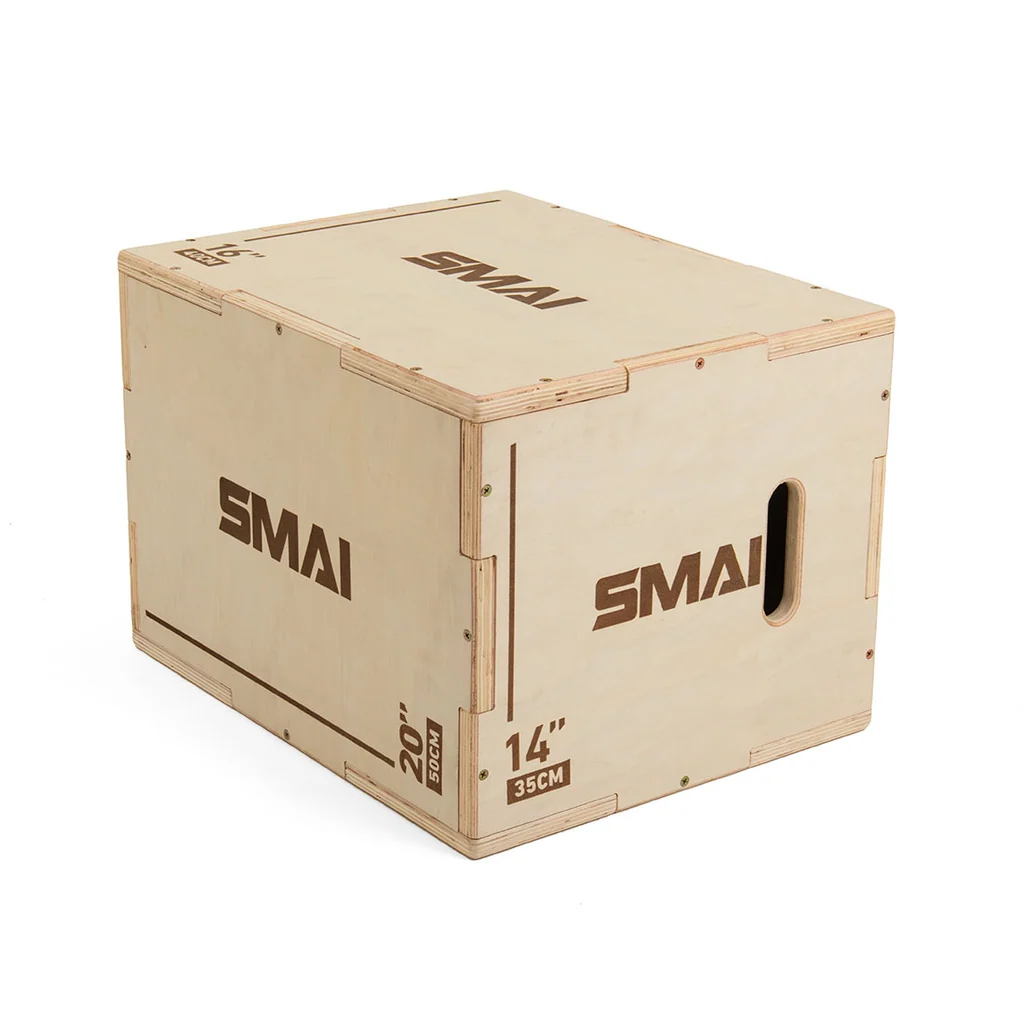
Before jumping onto a new box, inspect its construction and assembly. Look for a damaged panel, loose fasteners, uneven seams, exposed hardware or a cover that shifts against the surface beneath it. Follow the manufacturer’s assembly and inspection guidance rather than improvising structural changes. A box should sit flat on an appropriate level floor without rocking.
Pay particular attention to orientation and direction of movement. A high rectangular box with a narrow base can be less forgiving of a sideways or edge-heavy landing than the same box resting on its broadest side. That geometric consideration does not replace product-specific stability testing. Avoid placing the box on top of loose plates, another unrelated platform or a pile of mats to create an extra height.
Stacking is a separate design feature. Use only a manufacturer’s designated stackable system and its prescribed attachment method; not every foam box is made to sit on another box. Check the permitted configuration and load guidance for the complete setup, especially when multiple people use the equipment.
Finally, leave clearance from racks, walls and other people. A ceiling that comfortably accommodates ordinary lifting may be too low when you stand on a tall box or jump upward. A flat, clear step-down area is equally important. Step down under control instead of automatically rebounding off the box if the objective is simply repeatable jump practice.
Make the box part of a complete lower-body session
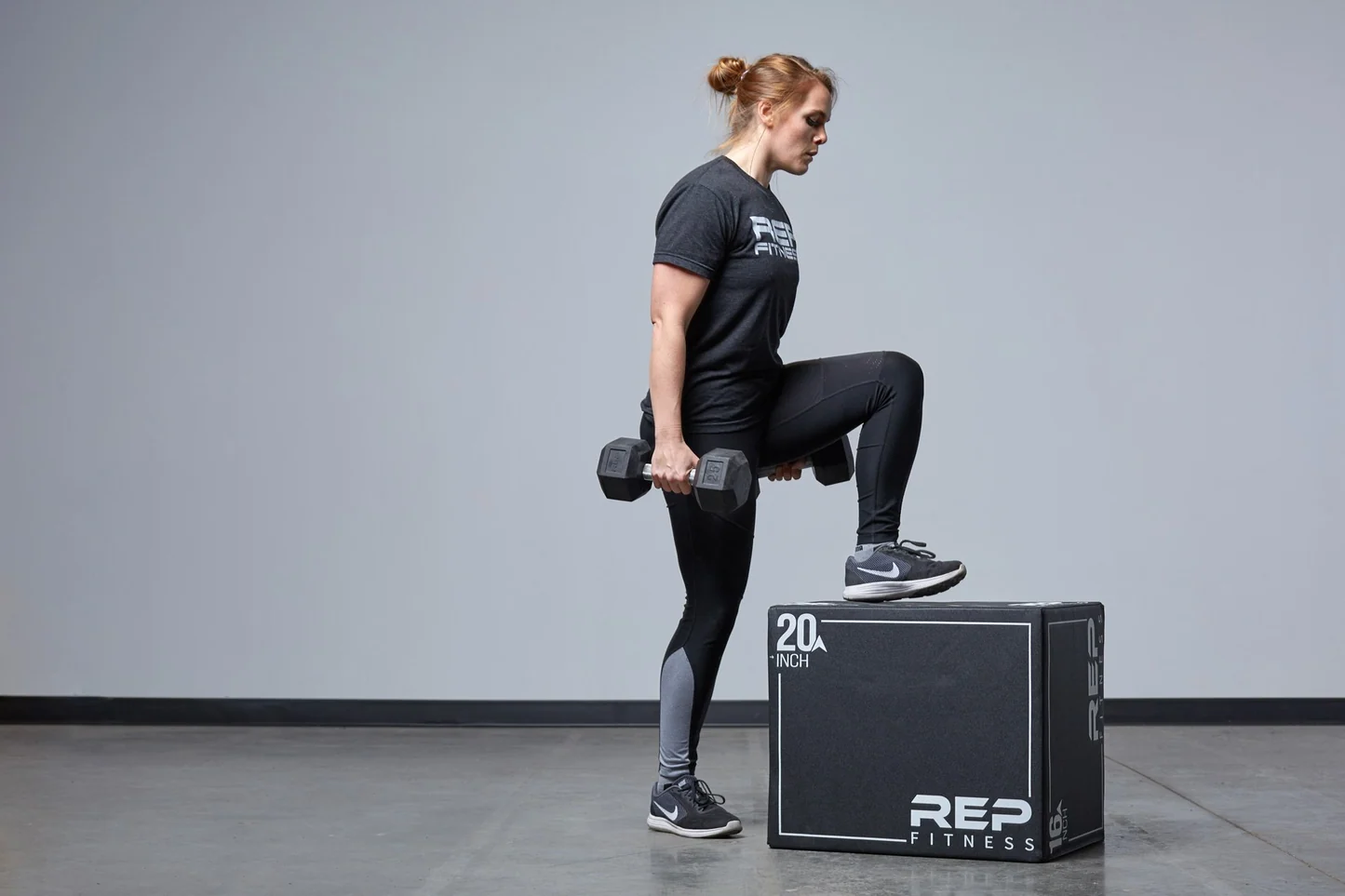
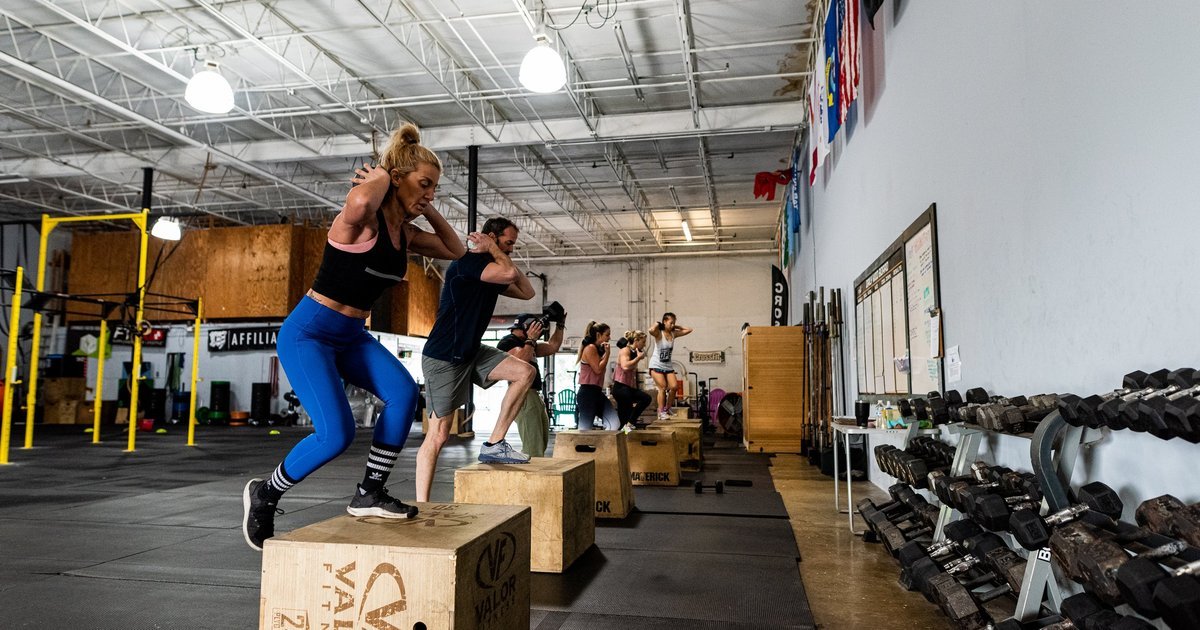
Once you have a suitable box, decide which job it will do. For explosive practice, a simple example is three sets of three low, crisp jumps after a warm-up, allowing ample rest and stepping down between repetitions. End the set if landing control or confidence deteriorates. For strength, controlled step-ups can work well for two or three sets of six to ten repetitions per leg, progressing from bodyweight to a manageable dumbbell or kettlebell load where the platform is explicitly suitable for that use.
If you plan to sit onto a box with a loaded barbell, do not assume that a jump box is approved for that application. Check the manufacturer’s intended use, combined load guidance and stability. Choose a reference height that supports your movement goal rather than simply shortening the lift, and use a setup that permits a controlled pause.
Keep the rest of your equipment simple. Dumbbells and kettlebells provide options for progressively loaded step-ups and complementary squats. A jump rope can support a general warm-up or separate conditioning block for people comfortable with rope work. Sled pushes or drags are another option for a lower-body conditioning session without repeatedly landing on an elevated platform. A dedicated squat setup may also be a better purchase if heavy squats, rather than jumps, are your real priority.
Do not chase height and external loading at the same time. If power development is the goal, remember that adding external load can slow movement and change jump performance; prioritize crisp unloaded repetitions before considering loaded jumps. The best box is ultimately the one that suits your available floor space, your current movement skill and the exercises you will actually repeat. A sensible low platform can deliver far more useful training than an impressive high one that spends most of its life unused.

Equipment Worth Exploring
Explore equipment, accessories and gear from our carefully selected range.


Rubber Hex Dumbbells
Rubber-coated hex dumbbell pairs with a stable shape for home and commercial strength training.


Cast Iron Kettlebells
Textured cast-iron kettlebells for swings, squats, carries, and full-body training.


Pro Sled System
Heavy-duty push-pull training sled for loaded conditioning, speed, and strength work.