Advertising disclosure: This page includes affiliate links that may earn us a commission at no additional cost to you.
Loadable dumbbells seem like an obvious answer for a home gym: buy two handles, share the Olympic plates you already own and avoid a rack full of fixed dumbbells. But the choice between the Rogue DB-10 and DB-15 is not simply a choice between a light handle and a heavy one. The longer handle gives you significantly more sleeve space, while the shorter handle is easier to accommodate when your arms move close to your torso. Your plates determine how useful either advantage will be.
The important question is not the biggest number you can assemble for a photograph. It is whether you can build a balanced, properly secured pair at the weights you actually train with, without turning every change of weight into an interruption. Here is how to evaluate that trade-off before buying either model.
The dimensions that actually change your workout
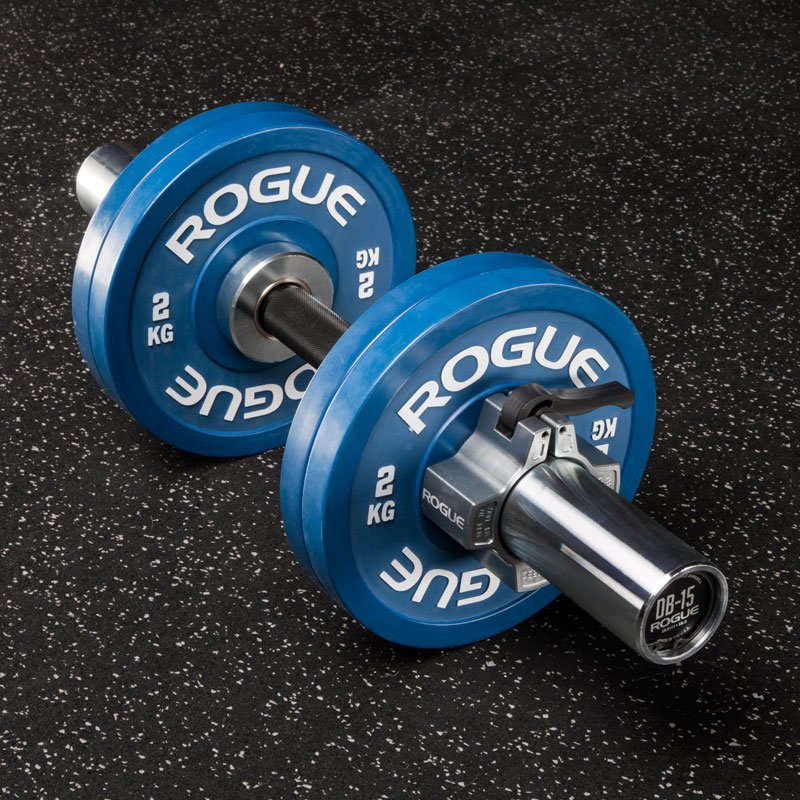
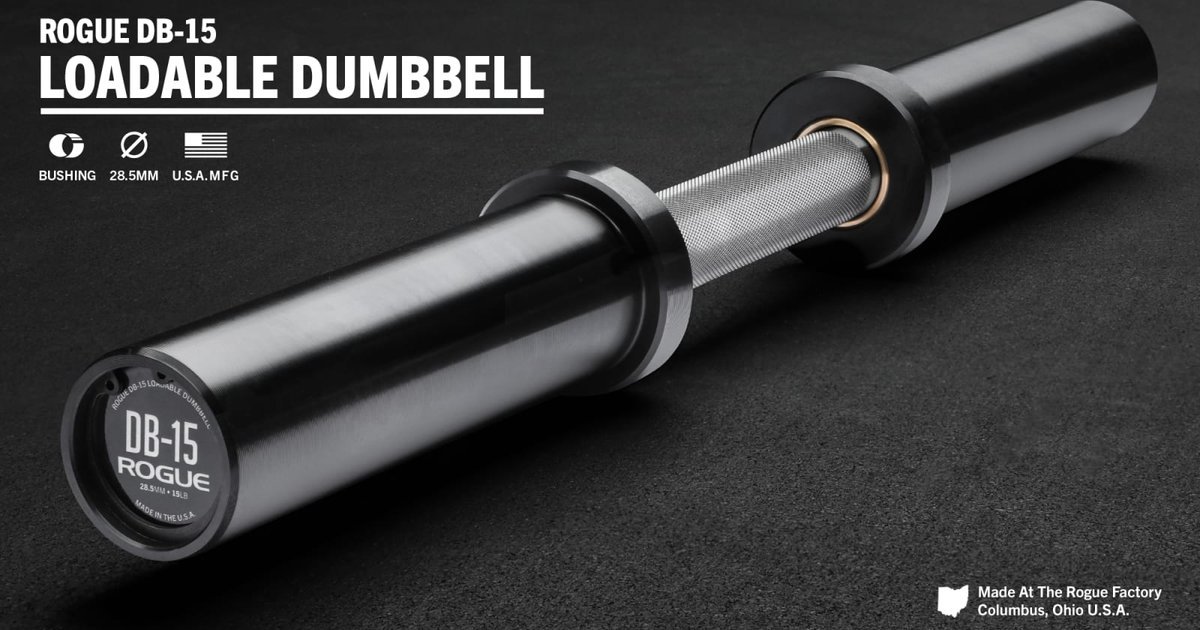
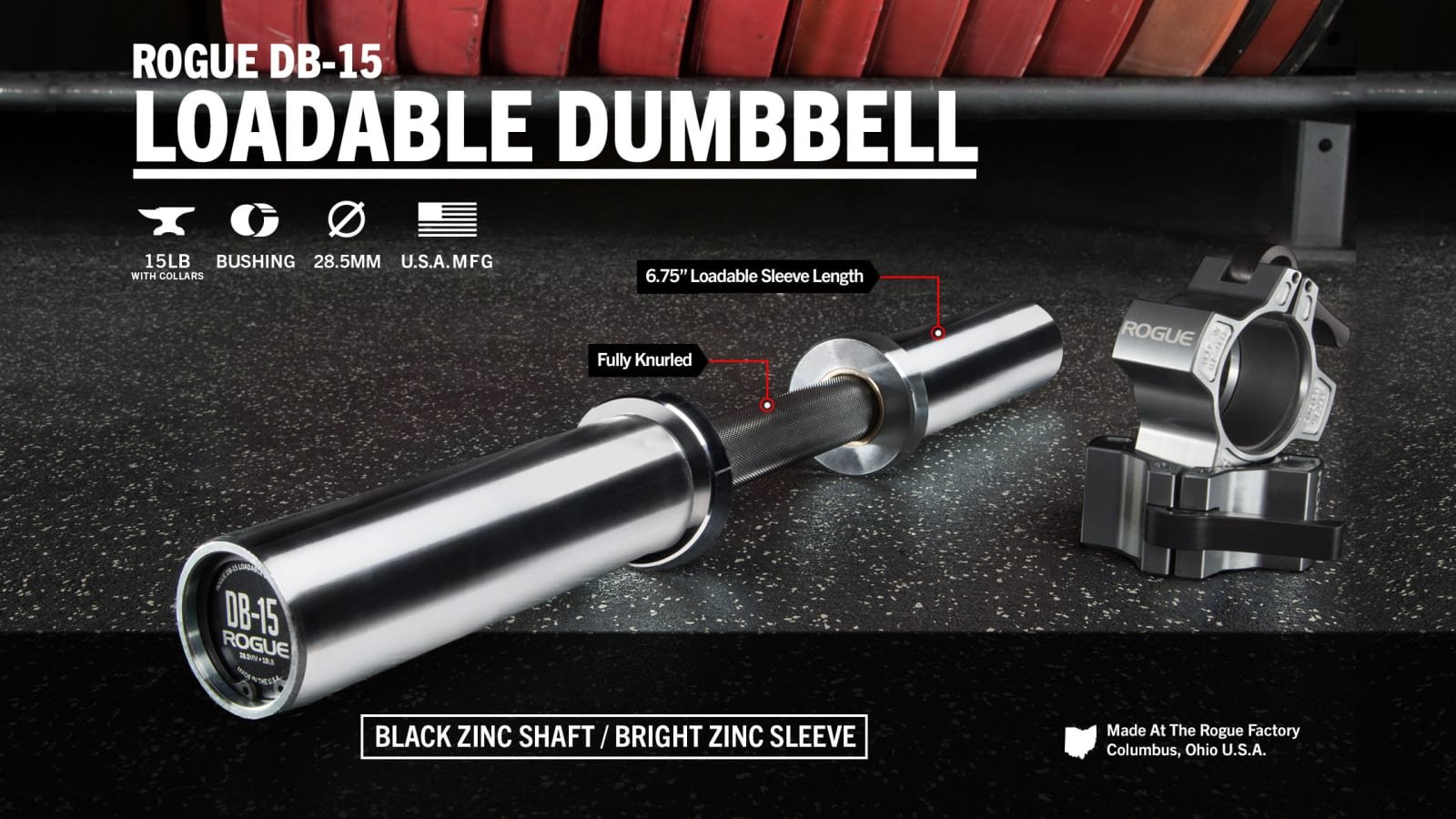
The nominal weight of the DB-10 is 10 lb with collars, while the DB-15 is 15 lb with collars. Without collars the listed handles weigh approximately 9 and 14 lb respectively. Each uses a 28.5 mm grip and a rotating Olympic-style sleeve with a bronze bushing. The major distinction is geometry: the shorter model measures about 14.25 inches overall, with 3.625 inches of loadable sleeve on each side. The longer model measures 20.5 inches overall and provides 6.75 inches per sleeve.
That is an extra 3.125 inches of sleeve space at each end, not merely an additional five pounds of starting weight. The DB-15 gives you substantially more room for thicker plates and multiple small plates. Conversely, the DB-10’s shorter overall length is helpful if you want a compact implement for arm training, shoulder work and exercises where the ends pass close to your body. Neither length is adjustable as the load changes: even when the DB-15 is empty, you still have to accommodate its full length.
Measure the path of your current dumbbells during a press, a hammer curl and a row. If you normally bring the bells close together at the top of a press, a long sleeve may contact the opposite dumbbell before your arms reach their usual position. A longer handle may also contact your thigh sooner during a curl if you move it across your body. Those effects are not universal; grip orientation, arm length, bench position and exercise technique all matter.
For two-handed movements, consider the combined space occupied by both bells rather than the length of just one. For unilateral work, consider clearance between the loaded plates and your knee or bench. The longer handle is a useful option when load capacity matters, but it is not inherently a better-shaped dumbbell. If your working weights fit comfortably on the shorter one, the shorter geometry may be the feature you notice most often.
Calculate the weight and the space it occupies
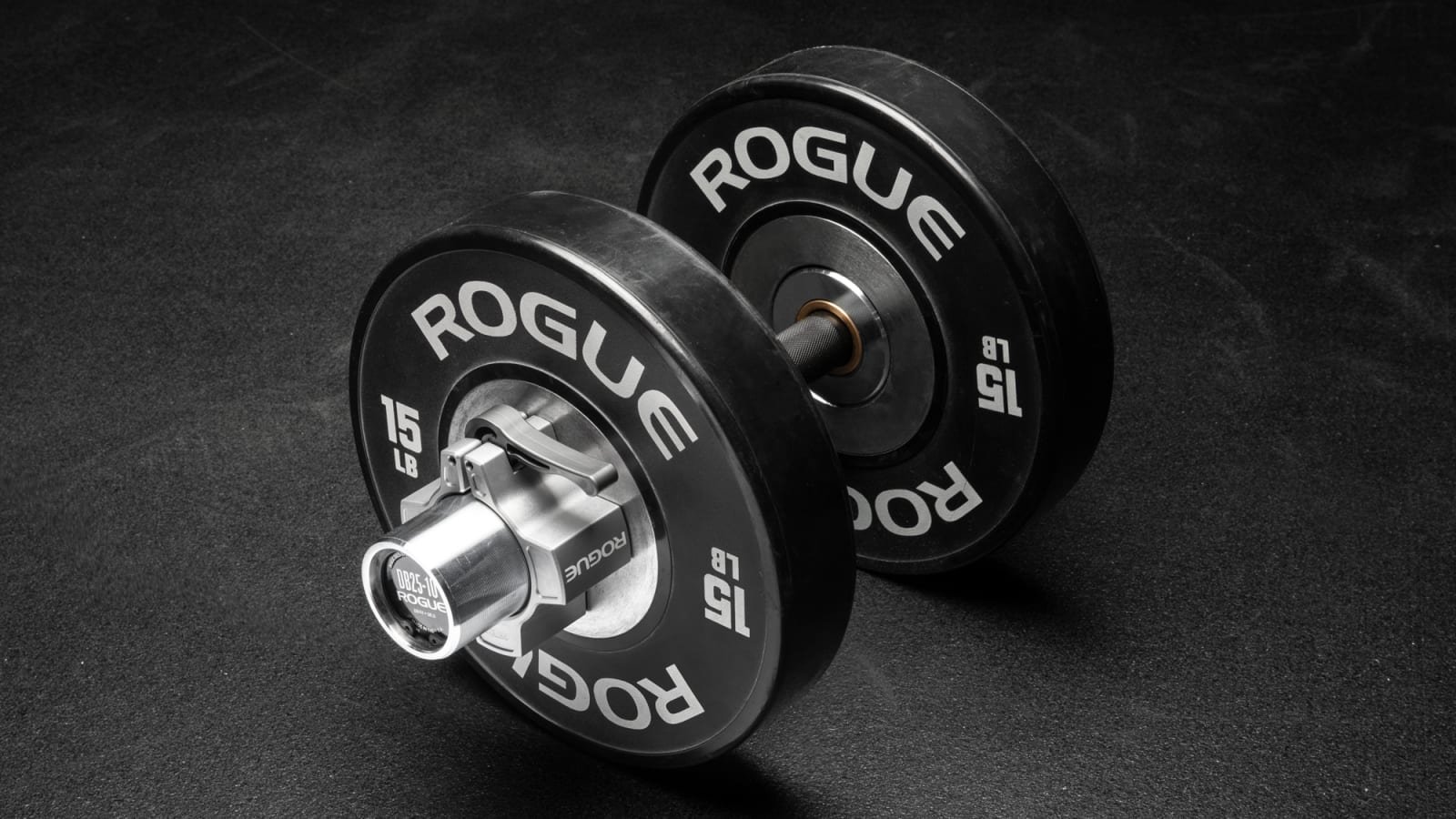
Start your calculations from the actual assembled empty weight, including the collars you plan to use. Nominally, a DB-10 with a 15 lb plate on each side weighs 40 lb. A DB-15 with a 25 lb plate on each side weighs 65 lb. These examples are basic arithmetic, not a promise that every plate marketed at those weights will fit. Plate thickness, hub protrusion and the collar’s required engagement all affect the usable length.
A balanced dumbbell normally uses matching plates on both ends. Adding a 2.5 lb plate to each side increases the total by 5 lb. To increase both dumbbells by that amount, you need four 2.5 lb plates. Similarly, adding two 1.25 lb plates to each bell’s two sleeves combined gives a 2.5 lb increase per dumbbell. Small increments are a particularly useful feature for lateral raises, curls and other movements where a large jump can represent a substantial percentage of your working weight.
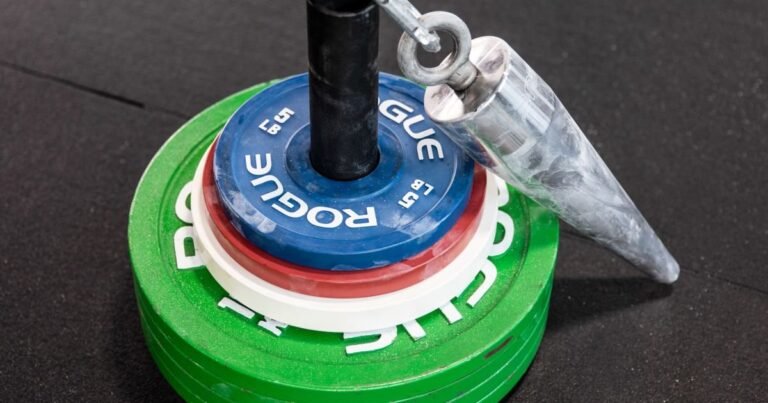
Rogue offers dedicated 230 mm diameter dumbbell bumpers that illustrate why sleeve length cannot be considered in isolation. For that specific plate range, the shorter handle accommodates one 10 or 15 lb plate on each sleeve; larger models in the range are not intended for the DB-10. The longer handle can accommodate up to four 10 lb plates or two 15 lb plates per sleeve, or one of the larger 25, 35, 45 or 55 lb plates per sleeve. Those are model-specific fit examples, not universal sleeve capacities for all Olympic plates.
For an existing plate collection, write down the thickness of every plate you expect to use. Include the thickness of the metal hub if it stands proud of the rubber. Make a few stacks on the floor corresponding to your warm-up, regular working and anticipated heavier loads. If the stack occupies almost the entire sleeve, it is not a usable configuration until you have accounted for secure collar engagement. Also check the diameter: a conventional full-size bumper may technically slide onto a compatible sleeve but can be awkward to use as a dumbbell because its large diameter changes the movement clearance.

Equipment Worth Exploring
Explore equipment, accessories and gear from our carefully selected range.


Rubber Hex Dumbbells
Rubber-coated hex dumbbell pairs with a stable shape for home and commercial strength training.


Grip Plates
Rubber-coated weight plates with handholds for loading barbells and machines.
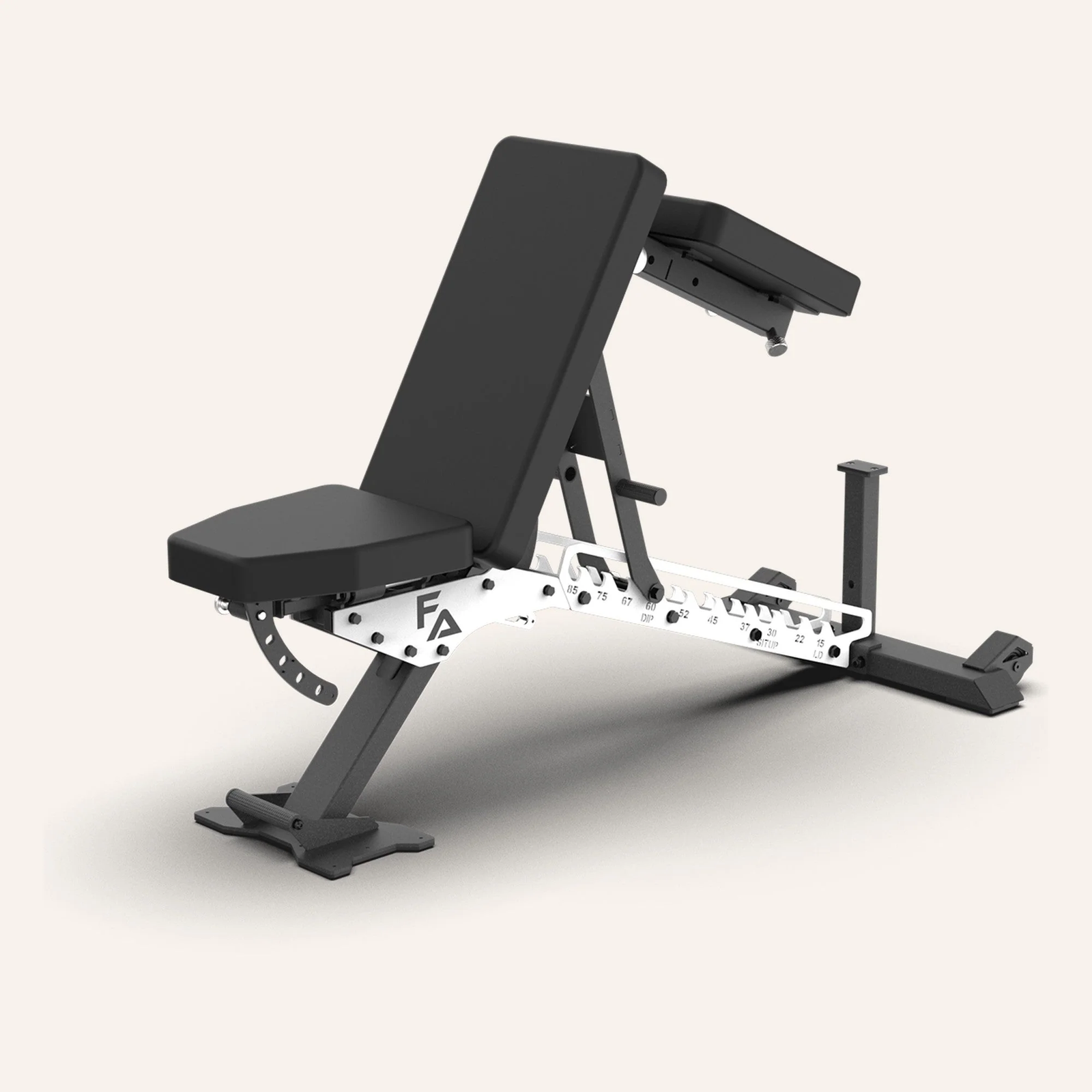

FID Bench MAX
Adjustable bench offering flat, incline, and decline positions + adjustable headrest.
Collars, loading and the limits of plate compatibility
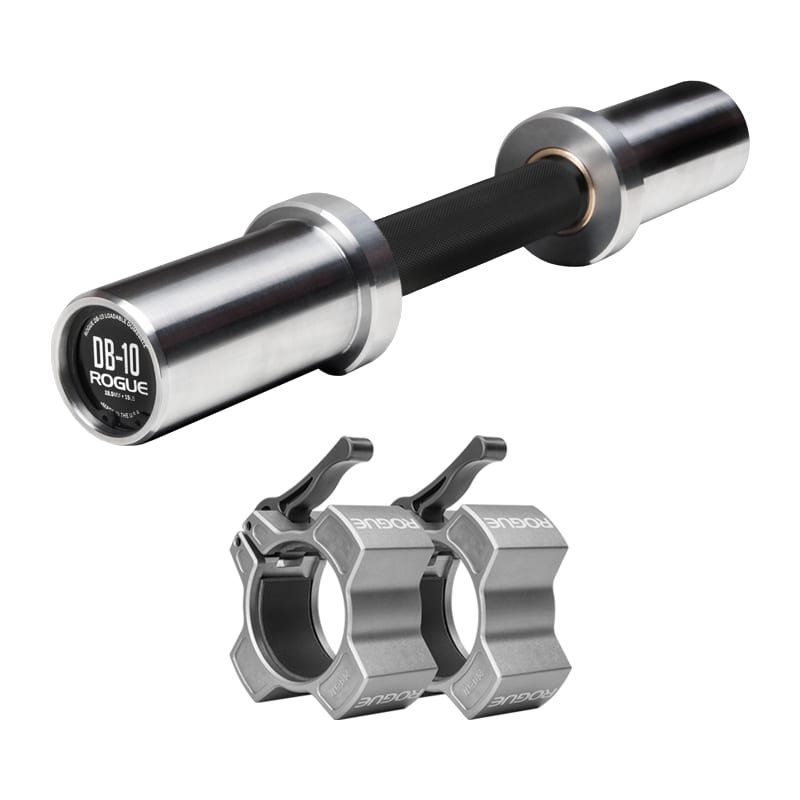
A rotating Olympic sleeve is useful because the plate stack can turn relative to the grip as you change the orientation of the dumbbell. It does not, however, make a badly secured stack safe. A loadable dumbbell regularly moves through vertical and diagonal positions, and the plates can bear directly against the outer collar. For that reason, the collar is part of the implement rather than an optional accessory.
Before every set, check that both ends are loaded equally, that the plates sit against the inner stop and that the collar engages the sleeve as intended. Use a collar appropriate for the handle and follow its instructions. Do not assume a collar works securely simply because both products are described as Olympic size. Different collar shapes, liner designs and sleeve finishes can behave differently. A collar that takes more space also reduces the room available for plates.
Keep the load low enough to set the dumbbells down under control after a difficult set. The dedicated bumper format does not turn a plate-loaded dumbbell into something designed for overhead drops. Avoid dropping either handle and use a suitable floor surface. For a heavy press, plan how you will get into position and how you will finish before increasing the weight. A long projecting sleeve is particularly worth considering when you rest a bell against your thigh: the end of the implement may be less comfortable than the broad head of a conventional dumbbell.
There is also a practical distinction between physical fit and a verified safe operating limit. Counting the plates that can slide onto the sleeve is not a way to establish a rated maximum. Follow the manufacturer’s instructions and any applicable limits for the handles, plates and collars rather than attempting to infer a rating from the material or dimensions.
What a pair really costs in space and equipment
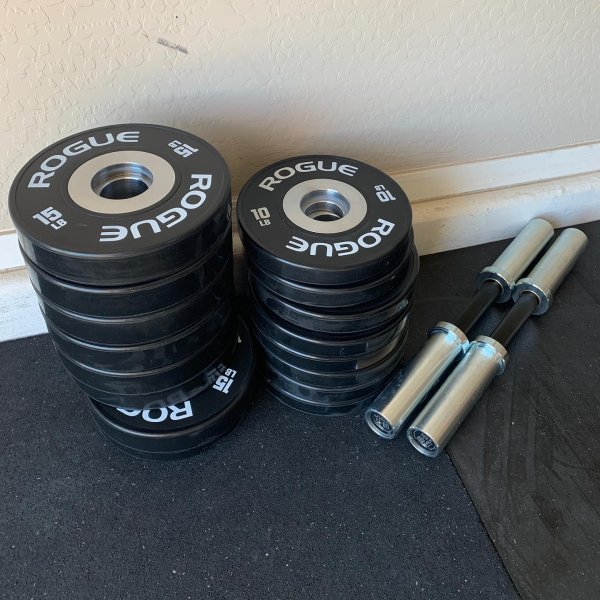
One loadable handle is not a pair. Rogue sells these handles individually, so a buyer planning bilateral presses or two-handed rows needs two handles, enough compatible collars and enough plates to assemble two matching loads. Check the full basket, including delivery, before comparing the system with alternatives. A set of four small plates at every increment may cost more than expected if your existing collection was assembled for one barbell.
Sharing plates is a genuine advantage in a compact gym, provided you are not using those same plates simultaneously on another station. Someone who alternates dumbbell work with a plate-loaded machine may find that moving plates repeatedly adds friction. In contrast, a lifter who performs several dumbbell exercises at the same weight may make only a few changes per session. Think about the actual sequence of exercises rather than the number of exercises you could theoretically perform.
A simple storage solution is to keep the handles unloaded and the most frequently used small plates nearby, with a dedicated place for the collars. That avoids needing to pick a loaded dumbbell up from a crowded floor just to change the plates. A horizontal shelf can work if it is strong enough and prevents round handles from rolling off. Leave space around the bench to load the sleeves without trapping your fingers against equipment or walls.
Other systems solve the same problem differently. A pair of conventional 20-inch Olympic handles typically offers sleeve length in the same general range as the longer Rogue model, but handle weight, grip and included accessories vary. A selectorized adjustable dumbbell that changes load in a cradle can save time during circuits and drop sets; some systems offer small metric increments and a compact storage base. Fixed dumbbells remove the loading task entirely and may offer a better thigh-rest surface. Compare the full physical footprint and the actual frequency of weight changes, not just the headline maximum of the product.

Funny Gym Shirts & Workout Gear
Funny gym shirts, tanks, hoodies and workout gear for lifters who like training hard.

Funny Basement Gym Hooded Pullover for Home Gym Lifters Hoodie
Stay casual and show some lifting attitude with “Basement”.

Home Gym Nerd Garage Gym Basement Gym Meme Bodybuilding Sticker
A fun “Home Gym Nerd” touch for bottles, laptops, and lockers.

Garage Gym Hero Crewneck Pullover Sweater for Home Gym T-Shirt
For laid-back days and lifting humor: “Garage Gym Hero”.

Home – Home Built Not Bought , Gymbros & Garage Gains T-Shirt
Rep “Funny Home Gym” humor in and out of the gym.

No Cars Allowed In My Garage – Meme , & Gains – Top T-Shirt
Make gym days more fun with “No Cars Allowed In My Garage” style.

I Work Out At Home So I Can Cry In Peace – Home Meme T-Shirt
Bring “I Work Out At Home So I Can Cry In Peace” humor to your next gym day.

Shirt – Home Is Where Your Is Hilarious Homegym, T-Shirt
Heavy lifts, good laughs, and a little “Home Is Where Your Gym Is Hilarious” energy.

Anti Social Gymbro Club & Fans Meme Vest Tank Top
Train hard, laugh a little, and rep “Anti Social Gymbro Club”.

Patriotic Eagle Free Weights USA Gym Shirt for 4th of J T-Shirt
Make gym days more fun with “Patriotic Eagle Free Weights” style.

Progressive Overload Milo Tee
Bring “Progressive Overload Milo Bull” humor to your next gym day.
Which handle belongs in your training plan?
Choose the DB-10 if you primarily want a compact Olympic handle, already have thin compatible plates, and can build the majority of your working weights with adequate sleeve space for collars. It is particularly appealing for controlled isolation work where you value clearance and manageable starting weight. Choose the DB-15 if your presses and rows regularly require thicker or more numerous plates, you can accommodate a longer implement, and you want more flexibility as your strength increases.
For example, a lifter whose presses are much heavier than their lateral raises could use the longer model for the press and a shorter or fixed pair for accessories. Buying both models is not automatically necessary, but mixing equipment can make sense if the two roles are genuinely different. Another option is to keep a fixed light pair for warm-ups and use one set of loadable handles for the heavier work. The smaller fixed pair avoids repeated unloading between heavy rows and lighter shoulder exercises.
For a flat or incline dumbbell press, select a load you can bring into position safely and lower through a repeatable path. For a chest-supported dumbbell row, check that the plates and projecting sleeve do not hit the bench as your elbows travel backward. If a certain grip angle causes contact, adjust your setup or use a shorter implement rather than forcing an unfamiliar range of motion just to accommodate the equipment.
A useful purchasing exercise is to record your current working weight for five movements, the next two realistic increments for each and the plates needed to assemble those weights on two handles. Then compare the longest required stack with the usable sleeve length after accounting for collars. If both handles accommodate the list, give extra weight to comfort, clearance and ease of storage. If the short handle cannot accommodate your regular load with secure collars, the longer one becomes the more practical purchase. In a compact gym, equipment that you can load, use and put away consistently is worth more than capacity that exists only on paper.