Advertising disclosure: This page includes affiliate product links that may earn us a commission, as well as products from our own store.
Nose or Mouth Breathing on the Bench Press? What a 107-Person Test Found
Nasal breathing has become another thing lifters are told to optimize. Keep your mouth closed, the argument goes, and your next set will become more efficient. But a breathing habit can feel deliberate without adding repetitions. Before changing your bench routine, separate three questions: where air enters, when you breathe during a repetition, and how you maintain a stable pressing position.
A 2024 bench-press experiment provides a useful reality check on the first question. Its findings give lifters little reason to turn nasal-only breathing into a mandatory technique rule. They also leave plenty of room for sensible breathing practice, consistent training and individual comfort. The practical goal is a repeatable set you can perform and finish in control.
1. Nasal-only breathing did not produce more repetitions
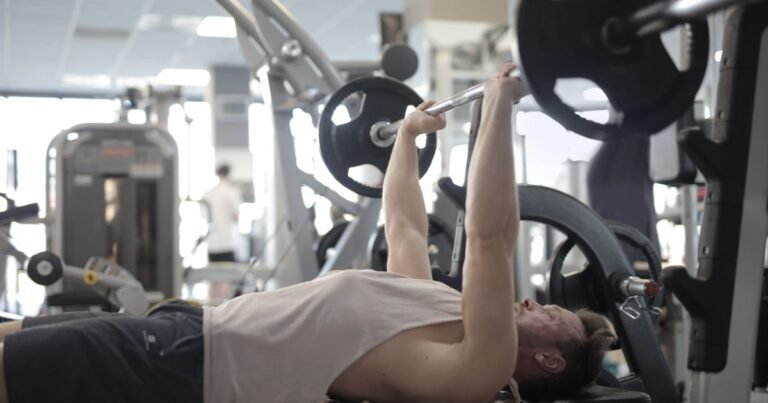
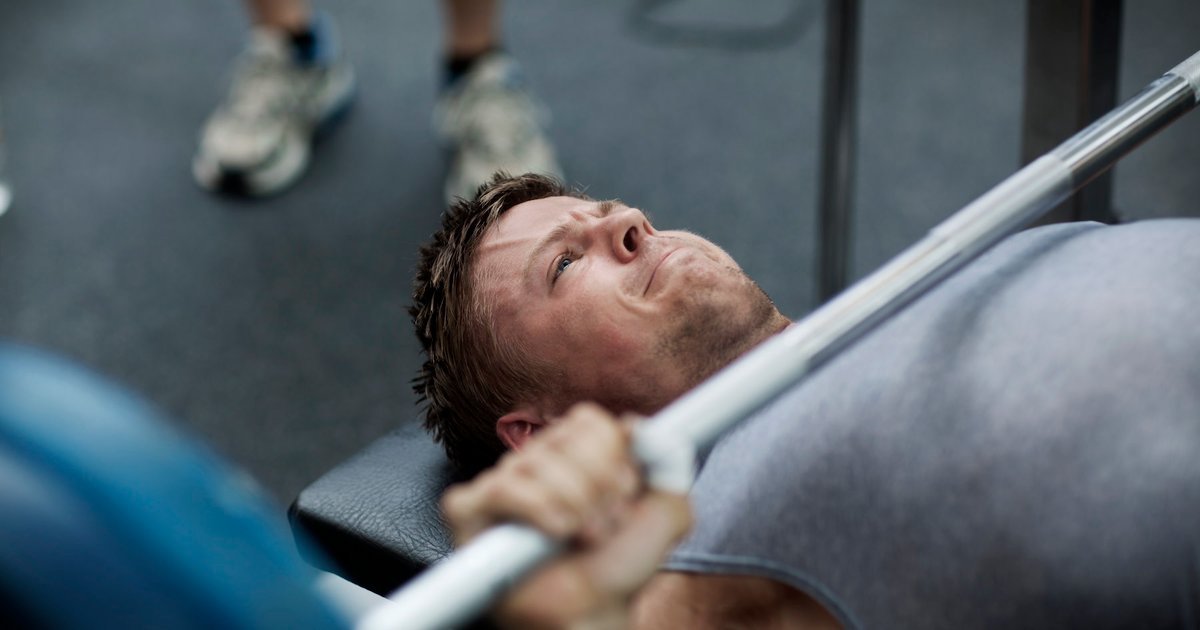
The experiment involved 107 physically active college students: 68 men and 39 women. They performed bench-press repetitions to failure using three breathing conditions in randomized order: nose in and nose out, nose in and mouth out, and mouth in and mouth out. The prescribed loads were 60% of body weight for men and 40% for women. Those percentages refer to body weight, not one-repetition maximum.
There were no statistically significant differences in repetitions completed, perceived exertion or post-test blood oxygen saturation between the breathing conditions in either sex. Men had a small post-test heart-rate reduction with nasal-only breathing; women did not show that difference. A lower heart rate did not translate into a demonstrated repetition advantage.
This was an acute performance test, not a muscle-growth program or a maximal-strength comparison. It cannot establish whether months of a particular breathing practice improve hypertrophy. Nor does an absence of a significant difference prove that every possible effect is exactly zero.
For your training decisions, keep the outcome attached to the question. A heart-rate observation is not an extra repetition, and a repetition result is not a measurement of future chest growth. You can find a method comfortable without needing to describe it as a performance breakthrough. Equally, you do not need to abandon a comfortable habit simply because another one is fashionable.
2. Airway choice and heavy-lift bracing are different decisions
Breathing through the nose or mouth describes an air route. Bracing describes how you organize tension and support around a lift. Breath timing adds another variable. Treating those ideas as interchangeable makes it easy to take a finding about repeated bench presses and turn it into advice for a difficult single that the experiment never tested.
Separate maximal-bench research has compared strategies including breath holding, the Valsalva maneuver and reverse breathing. In a 24-man experiment, reverse breathing reduced the maximum load lifted relative to the other conditions. That is a different task and comparison from choosing nasal versus oral breathing during repeated submaximal presses. One result does not cancel the other.
You also cannot diagnose an athlete’s breathing route or internal pressure from a photograph. A closed mouth is not proof of a particular brace, and a visible exhale does not tell you everything about the preceding repetition. Judge coaching cues by the task, the lifter and observable control rather than by a dramatic face or sound.
For routine pressing practice, avoid experimenting with prolonged breath holds under a difficult bar. If you have hypertension or have been told to avoid straining, get individualized guidance: breath holding during resistance exercise can cause large blood-pressure responses. Nasal-only breathing does not remove that issue. Experienced lifters working on heavy attempts should refine their strategy with competent coaching instead of importing a blanket rule from a breathing trend.

Equipment Worth Exploring
Explore equipment, accessories and gear from our carefully selected range.

Multi Bench MBX-650 2.0
Adjustable multi-bench with roller adjustment, 15 backrest positions and accessory mounts.


Competition Plates
Competition-style bumper plates for Olympic lifts and loaded strength training.

Grip Plates
Rubber-coated weight plates with handholds for loading barbells and machines.


Foldable Wall Rack
Wall-mounted folding squat rack designed to save floor space between workouts.
3. Keep the pressing task stable before adding another cue
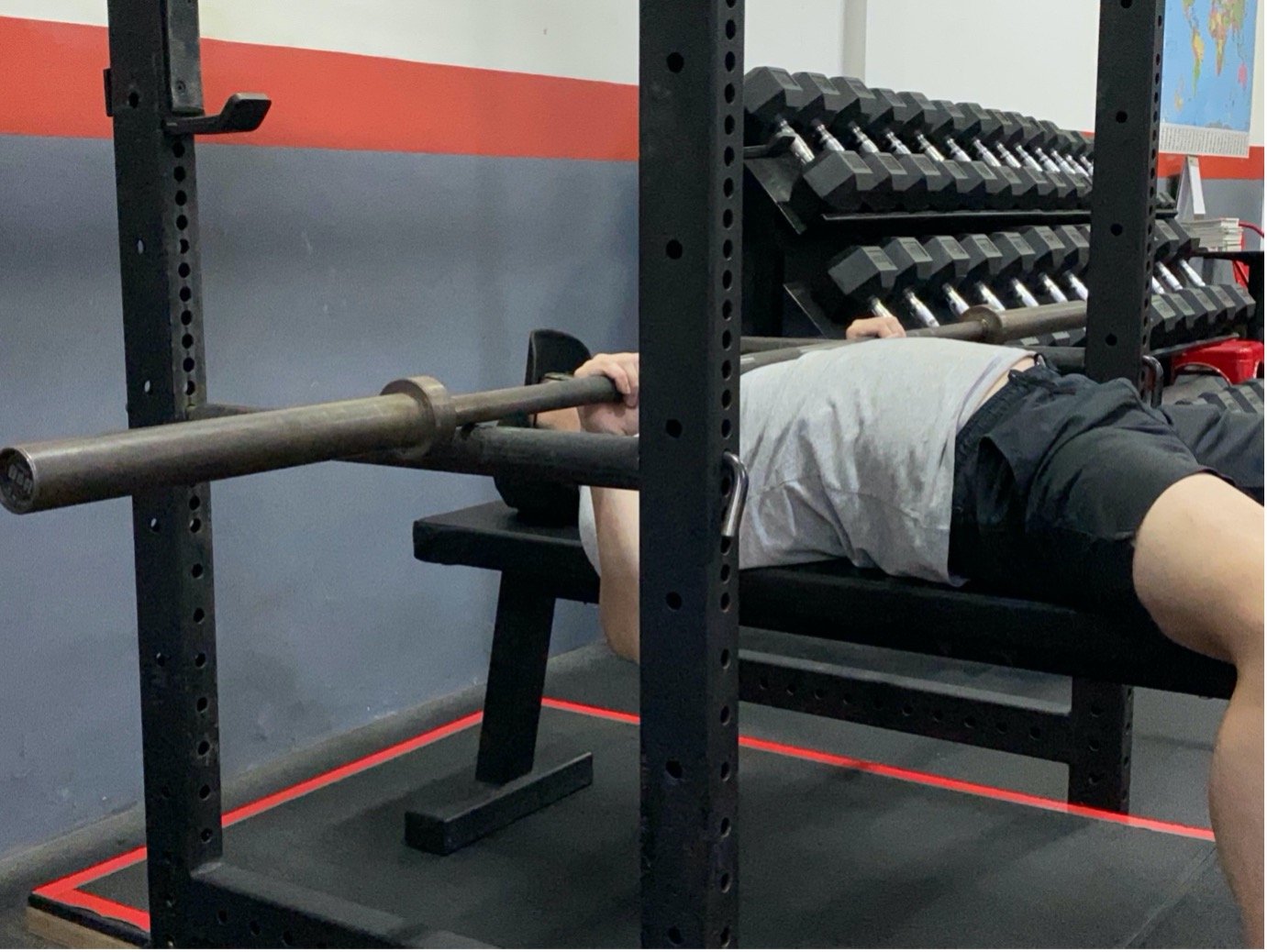
A useful practice set has a recognizable starting position and endpoint. For a conventional dumbbell chest press, establish firm contact through the head, shoulders and buttocks on the bench, with the feet supported. Keep the wrists controlled and the grip secure. Lower deliberately and press without turning the repetition into a changing series of improvised body positions. A simple general breathing cue is to inhale while lowering and exhale while pressing.
That is a practice framework, not a demand to synchronize an enormous breath with every centimeter of movement. If concentrating on the nose makes you rush the lowering phase, lose the grip or stop paying attention to the weights, simplify. Choose a manageable load and restore the movement before trying to fine-tune another detail.
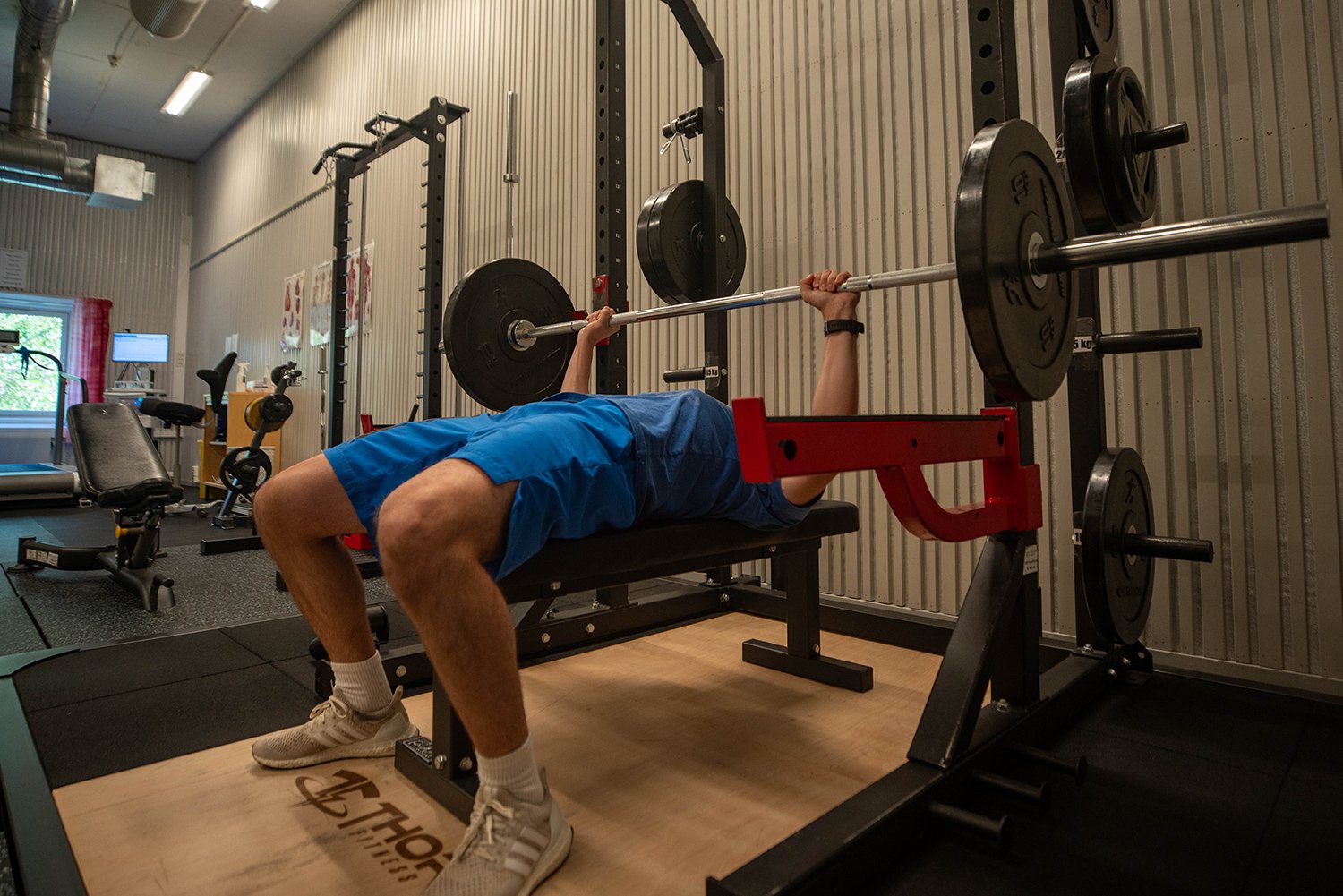
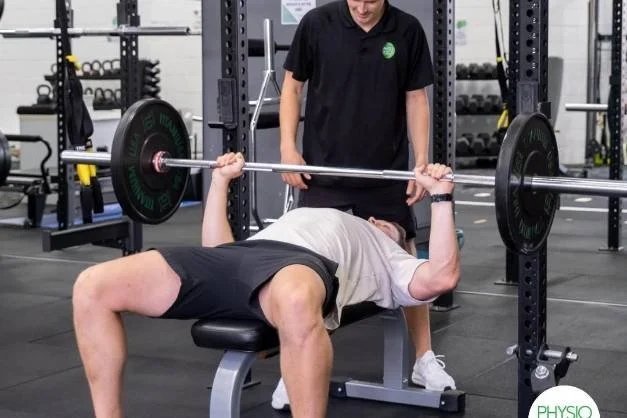
With a barbell, plan the handoff, rack height and return as part of the set. Use an appropriately arranged safety setup or a competent spotter. Tell the spotter what assistance you want before starting. Repetitions-to-failure research does not require you to reproduce a failure test alone, and a different breathing route is no substitute for a way to end a failed repetition.
Write down what counts as your usual rep: the implement, grip, comfortable range and whether you pause. If those details change between sessions, acknowledge the change rather than crediting everything to breathing. A shorter repetition with a bounce and a controlled full repetition are different observations, even if the plate total is identical.
4. Give recovery its own place between sets

How you breathe during the press is only one part of the session. Rest duration also affects how many repetitions you can repeat. Evidence across resistance-training studies has found that three to five minutes of rest can preserve more repetitions over multiple sets than shorter rest when lifting moderate-to-heavy loads. This does not make one timer setting compulsory for every exercise or goal.
It does make recovery a variable worth controlling. Imagine testing a comfortable breathing pattern after four minutes of rest and comparing it with a new one after a hurried minute. The second set might be harder, but you have changed more than the breathing condition. The same problem appears when one session begins with bench press and another places it after exhausting accessory work.
As a practical starting point for comparing ordinary work sets, use a repeatable rest interval that lets you recover and preserve the intended technique. Extend it when you are still clearly unready. If the session is deliberately organized around short rests, record that constraint and compare it with similar sessions. Do not confuse a demanding circuit with a fresh bench-performance test.
Between sets, let breathing settle naturally rather than treating recovery as another challenge to win. There is no need to force the mouth shut to make the rest period count. When the next set starts, your task is to perform the planned work with control, not to prove loyalty to a breathing category.

Funny Gym Shirts & Workout Gear
Funny gym shirts, tanks, hoodies and workout gear for lifters who like training hard.

Breathe In Between Sets – Pink Floyd Meme Pullover Jump T-Shirt
Bring “Breathe In Between Sets” humor to your everyday gym style.

I Love Bench Press Muscle | Heart Plate Gym Vest for Ch Tank Top
Add some lifting attitude to training with “I Love Bench Press”.

7 Plates Bench Club Shirt & Meme T-Shirt
Rep “7 Plates Bench Club” humor in and out of the gym.

The Chestfather Arnold – Big Chest , Meme Shirt, T-Shirt
Bring “The Chestfather Arnold” humor to your next gym day.

Kanye Chest Gym | Funny Chest Day Workout Decal | Gym M Sticker
Give your everyday gear a playful “Kanye Chest” twist.

My Bench Press Is Stuck Horror Movie Meme Scary Vest Tank Top
Bring “My Bench Press Is Stuck” humor to your next lifting session.

Bench Press and Chill Funny Gym T
Make gym days more fun with “Bench Press and Chill” style.

I Want You To Bench Press Uncle Sam – 4th of July Patri Hoodie
Bring “I Want You To Bench Press Uncle Sam” gym humor to lazy days and post-workout plans.


Gym Sir Swole of Benchalot Medieval Knight Bench Press Hoodie
Show off your medieval humor in a laid-back “Sir Swole of Benchalot Medieval Knight” hoodie.
5. Compare comfort and performance without inventing a breakthrough
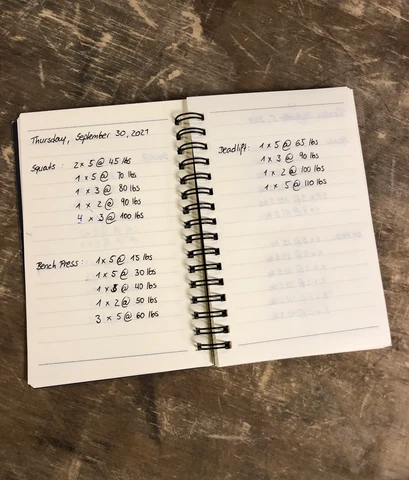
If you are curious, make the comparison modest. Use a familiar exercise and manageable work sets, keep the setup and rest similar, and avoid simultaneously changing the grip, tempo and load. Start by noticing which comfortable breathing pattern lets you attend to the lift. You do not need to reach failure or deliberately restrict airflow to learn that.
A useful log includes load, repetitions, sets, rest, exercise order and a brief note about effort or discomfort. Record the breathing approach as another observation. For example, write that nasal-only breathing felt distracting on the final repetitions rather than calling it objectively inferior. Or note that it felt comfortable without claiming it supplied extra oxygen or accelerated growth.
Repeat observations across normal sessions before treating a one-repetition difference as meaningful. Sleep, prior training, exercise order and ordinary variation can all complicate a personal comparison. This is a way to improve your training notes, not a substitute for a controlled experiment. If a breathing cue repeatedly makes your sets feel less controlled, remove the cue and reassess the task.
Keep the larger training plan in view. A consistent movement, appropriate workload and a way to measure progress deserve attention before a rigid airway rule. Nasal breathing can remain an option for lifters who find it comfortable. Mouth breathing can remain an option when it fits the effort. The useful standard is whether you can train deliberately, repeat the work and understand what changed.