Advertising disclosure: This page includes affiliate product links that may earn us a commission, as well as products from our own store.
Incline cable triceps extensions can be straightforward once the bench, pulley and attachment work together. The useful question is whether you can repeat the movement comfortably and track it honestly. Compare the bar and rope setup with four distinct alternatives, then give one suitable version a consistent place in your training.
Start with the incline bench and a grip you can control
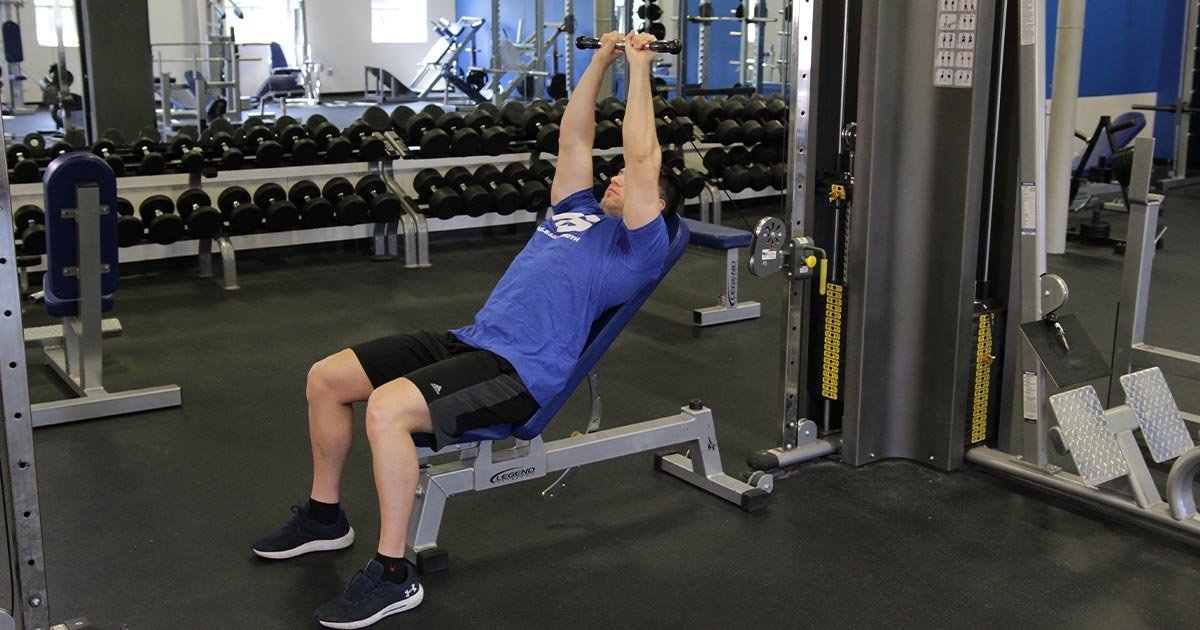
An incline cable triceps extension uses a supported torso and a cable behind the bench. A practical starting arrangement is a low pulley, a backrest around 30 degrees and an overhand grip on a straight bar. Keep your back supported while bending and straightening the elbows under control. The incline rope version uses a neutral grip instead, with the palms facing each other. Neither attachment needs to be forced into a position that feels awkward at the wrists.
Treat that starting arrangement as a setup to test with a light load. Bench dimensions, pulley height, rope length and your own proportions affect whether the cable clears the backrest. Before beginning a working set, move through several easy repetitions and look for contact between the cable and the bench. If the line rubs on the upholstery or hardware, reposition the equipment rather than accepting friction as part of the exercise.
A useful setup note is more specific than incline extensions: record the backrest notch, pulley position, attachment and approximate bench distance. Those details make the next session easier to reproduce. A heavier stack setting with a different bench position is not automatically evidence that your triceps became stronger.
Choose the grip that lets you repeat the movement smoothly. A rope offers separate ends to hold; a straight bar keeps both hands on one rigid attachment. That difference can affect comfort without establishing a universal winner for muscle growth. Begin with the attachment already available, inspect its connection and make sure you can enter and leave the position safely. Buying a longer rope is useful only when it solves a real clearance or grip problem.
Use the flat-bench variation to check your cable path
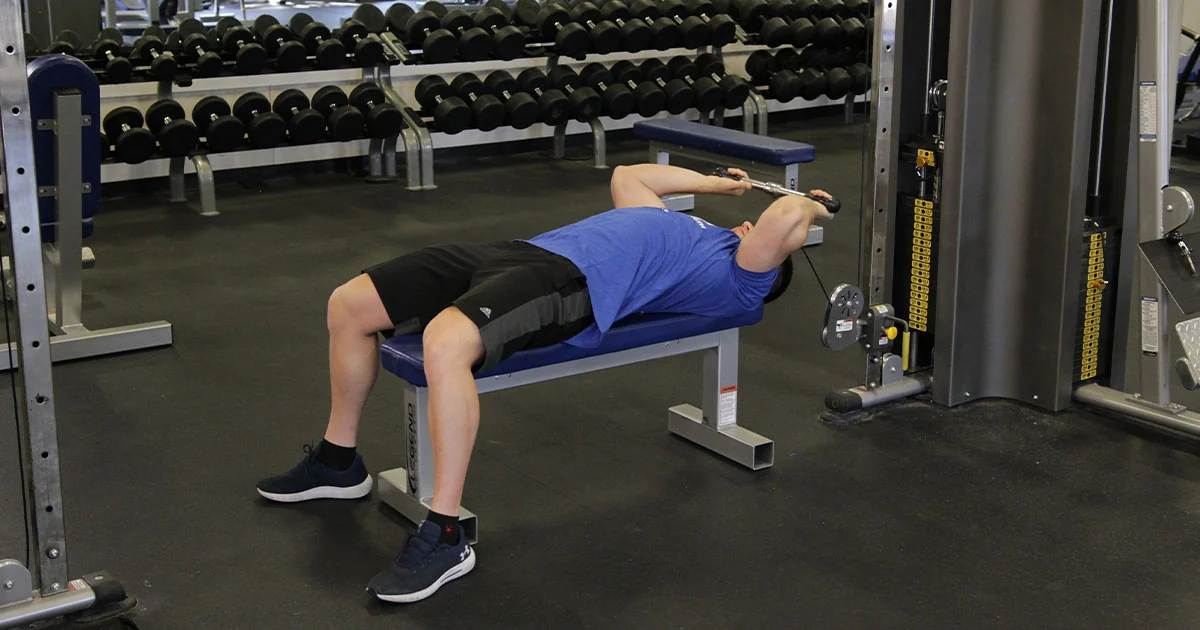
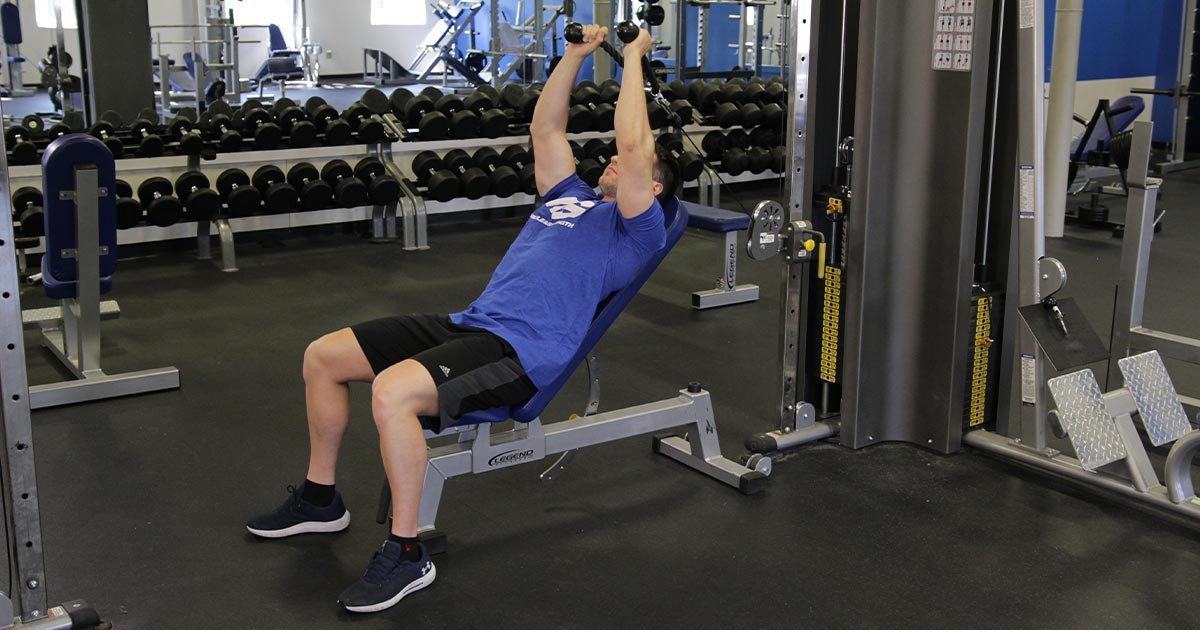
The flat-bench cable extension is a separate variation, shown here with a straight bar. Place the head end toward a low pulley, keep the feet supported and control the bar as the elbows bend and straighten. The photograph shows the bent-elbow position. It is not an instruction to pull the bar farther behind the head than your own control and comfort allow.
Changing from an incline to a flat backrest alters the relationship between your torso and the cable. It also changes what the bench obstructs. Check the route of the cable through the entire repetition, not just at the starting position. A line that clears the frame at the top can still catch as the hands move back. Use an unloaded or very light rehearsal to identify that problem.
Watch for a repetition that gradually turns into a different movement. If the shoulders sweep backward and forward while the elbows barely change angle, the set is no longer a consistent elbow-extension exercise. Reduce the load and establish a repeatable path. Small natural adjustments are different from using a large torso or shoulder movement to keep an oversized load moving.
For equipment selection, prioritize a stable adjustable bench, a cable station with a suitable low position and an attachment you can grip securely. Confirm compatibility and clearance before ordering accessories. A bar with two attachment points may require a different cable arrangement from an ordinary single-point handle. Extra attachment holes, curved grips and premium materials do not by themselves fix a poorly positioned bench. The useful purchase is the one that makes your actual setup easier to repeat, not the one with the longest list of possible exercises.

Equipment Worth Exploring
Explore equipment, accessories and gear from our carefully selected range.

FID Bench MAX
Adjustable bench offering flat, incline, and decline positions + adjustable headrest.

Multi Bench MBX-650 2.0
Adjustable multi-bench with roller adjustment, 15 backrest positions and accessory mounts.

Long Tricep ERGO Ropes
Extended triceps ropes with ergonomic grips for cable pressdowns and overhead extensions.
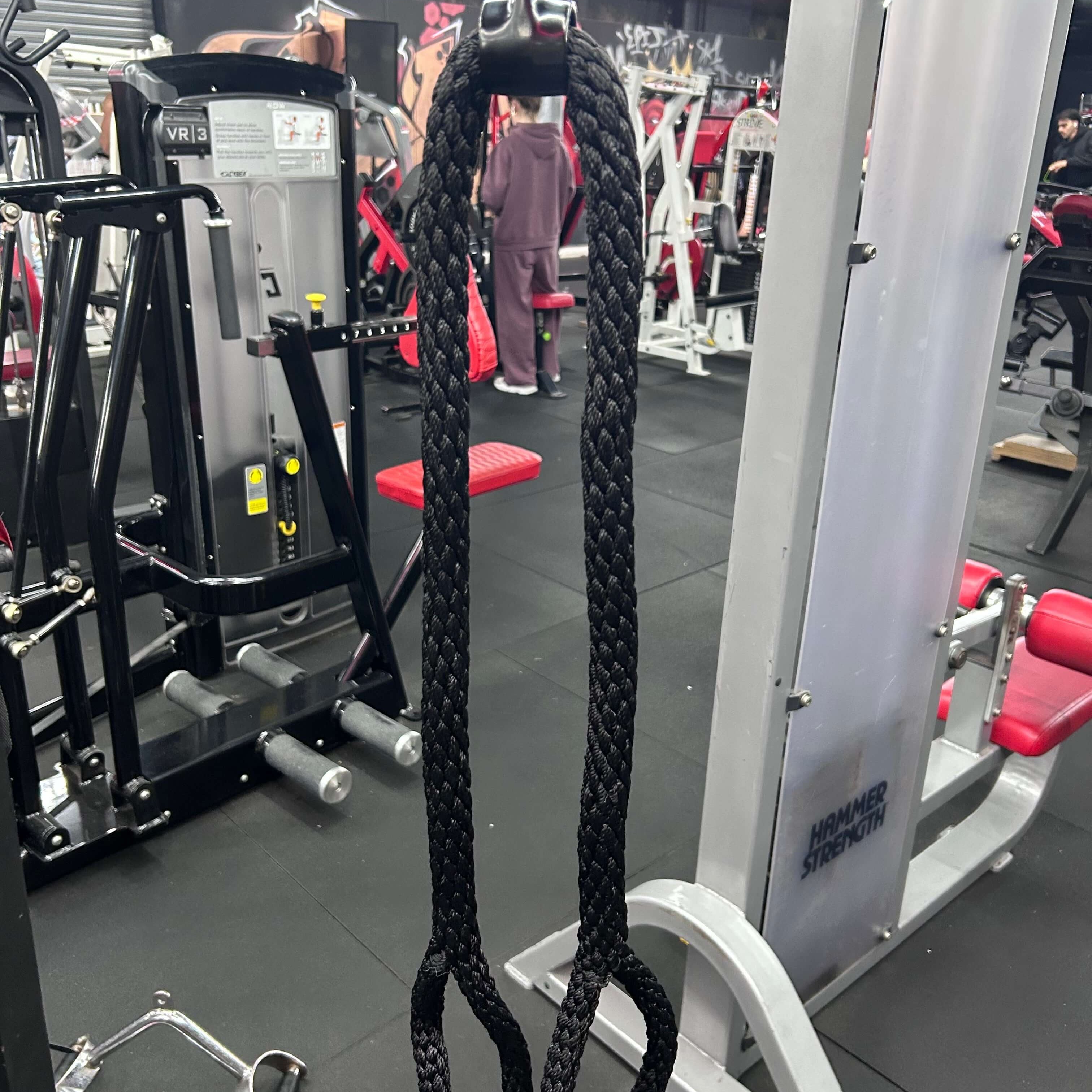
Super Long Tricep Rope
Extra-long looped cable rope for triceps pressdowns and overhead extensions.

GymPin D Handle Bar
Multi-use steel D-handle bar for cable rows, pulldowns and other cable exercises.
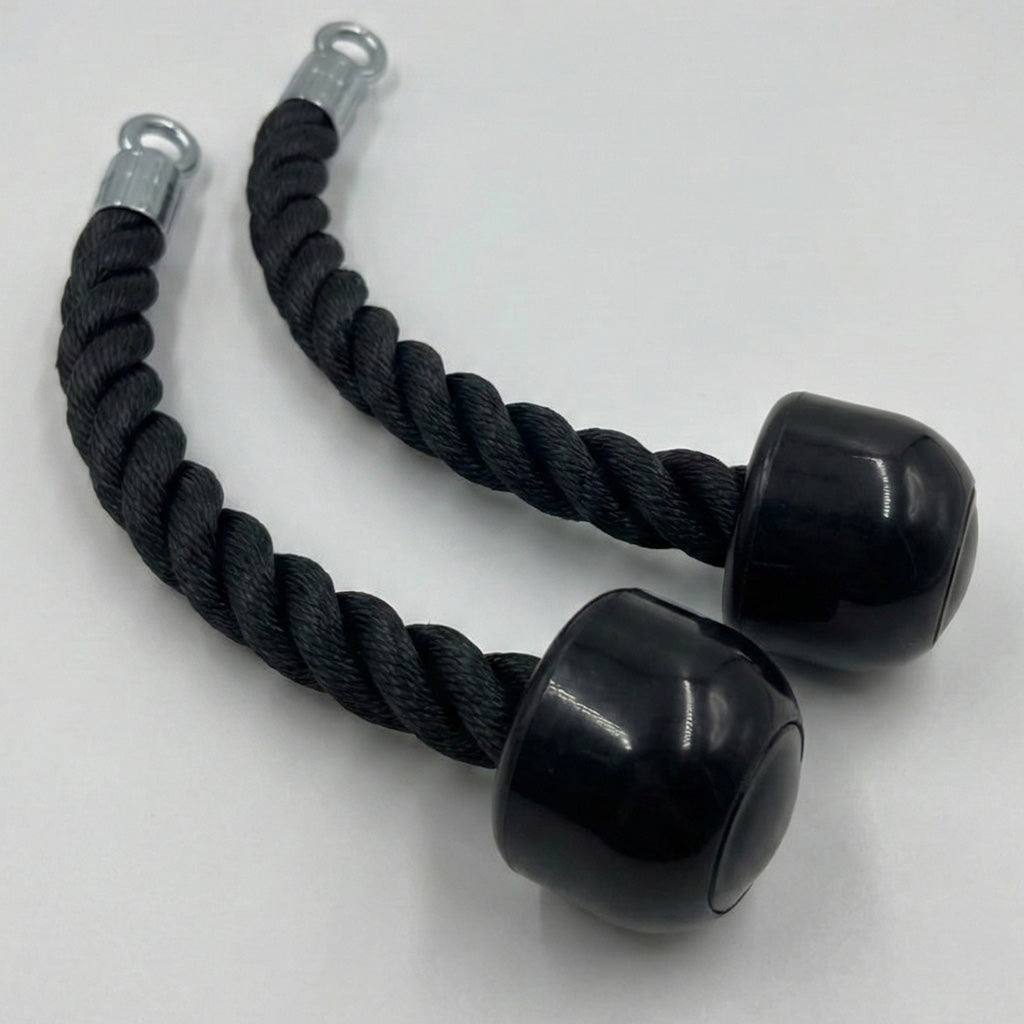
Individual Tricep Ropes
Pair of individual cable ropes for triceps pressdowns and cable hammer curls.

Multi-Length Tricep Strap
Adjustable-length cable strap for triceps, biceps and upper-body cable exercises.
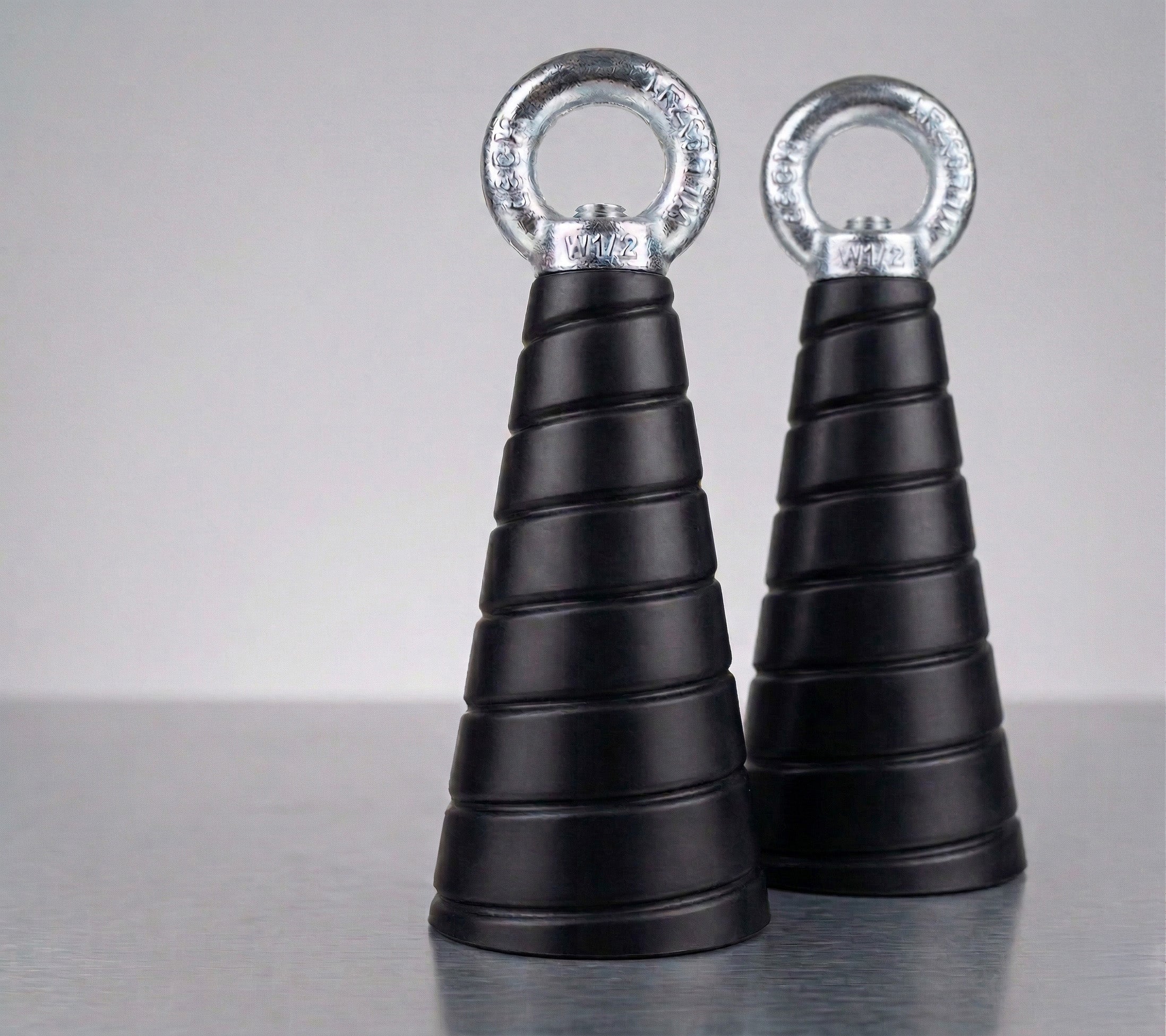
Tapered Tricep Cone
Tapered rubber cable grip for triceps extensions, face pulls and hammer curls.

Dual Hook EZ Curl Bar
Angled aluminum dual-hook cable bar for biceps curls and pulldown variations.

VForce Wall Trainer
Space-saving wall-mounted functional trainer with pivoting cable arms and variable resistance ratios.
A standing dumbbell extension removes the cable setup
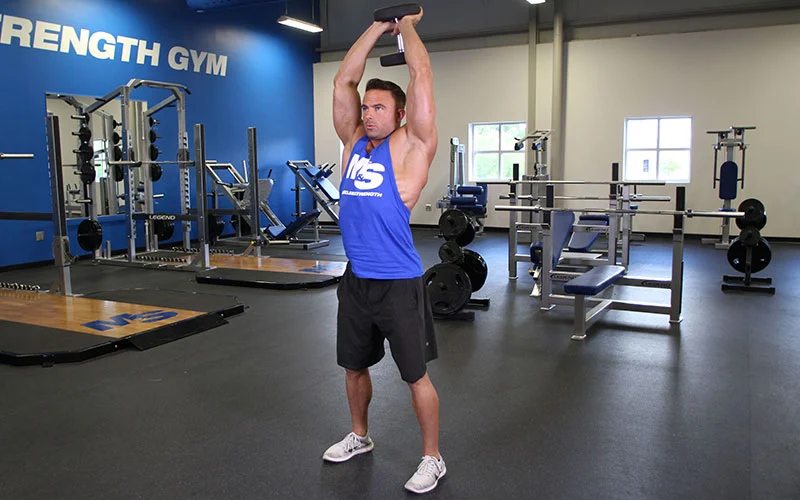
The standing alternative uses one dumbbell held with both hands overhead. Bend the elbows to lower it behind the head, then extend them to return. Keep the torso steady instead of creating extra apparent range by leaning backward. The photograph shows a standing repetition with the arms extended; it does not depict an incline cable exercise or a seated variation.
This can be a practical option when the cable area is occupied, but the handling demands differ. You must get the dumbbell overhead and bring it down safely as well as complete the repetitions. A load that feels manageable once in place may still be awkward to position. Choose a weight and an entry method you can control without improvising a throw or a last-second catch.
Check the specific dumbbell before using an overlapped two-hand grip. Fixed and adjustable models have different shapes, handles and end plates. Follow the equipment maker's instructions and secure any adjustable components. Do not assume every model offers the same comfortable place to hold it. If the available dumbbell is awkward, choose another exercise rather than trying to make your hands fit a photograph.
There is also a tracking tradeoff. A cable-stack number and a dumbbell label describe different resistance arrangements, so compare progress within each exercise. Ten controlled repetitions with one attachment cannot be converted into a matching dumbbell target by copying the displayed kilograms. Keep separate log entries, start conservatively after switching and assess whether the movement remains repeatable. You can prefer the dumbbell for convenience without claiming that it duplicates the cable's resistance through every part of the repetition.
Decline dumbbell extensions are another distinct option
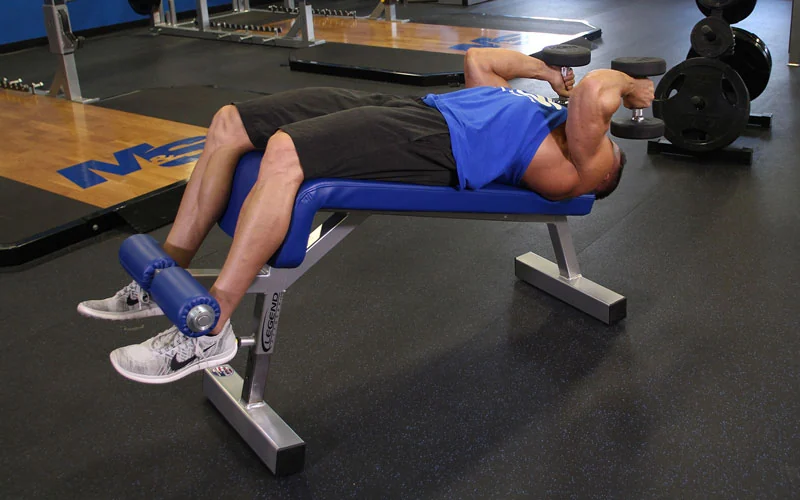
A decline lying dumbbell extension uses two dumbbells and a bench angled downward, commonly around 15 to 30 degrees. A neutral grip allows each hand to hold its own weight as the elbows bend. The illustrated version has the feet secured at the raised end of the bench. This differs from both the incline cable setup and the single-dumbbell standing movement.
Check that the bench is intended for decline use and that its adjustment is fully engaged. A flat bench tilted using loose plates or improvised supports is not an equivalent setup. Position the weights so that beginning and ending the set are manageable. If you cannot safely get into the decline position with the intended dumbbells, use a simpler variation that session.
Independent implements can make differences between sides more noticeable, but noticing a difference is not a diagnosis. Keep each repetition controlled and resist the temptation to accelerate the struggling arm while the other side waits. Use a load both arms can handle through a consistent comfortable range. The purpose of choosing this variation is to obtain useful practice, not to prove that the two hands can follow perfectly identical paths.
Avoid changing bench angle, grip, load and repetition target simultaneously when comparing options. For a straightforward trial, hold the rest of the session reasonably constant and write down how the setup performed: easy or difficult to position, stable or distracting, comfortable or irritating. Those observations answer a practical programming question. They do not establish which exercise produces the most growth for everyone. A decline bench can be a useful available tool; it is not a prerequisite for an effective arm routine.
Build a repeatable arm-day slot, including a floor option
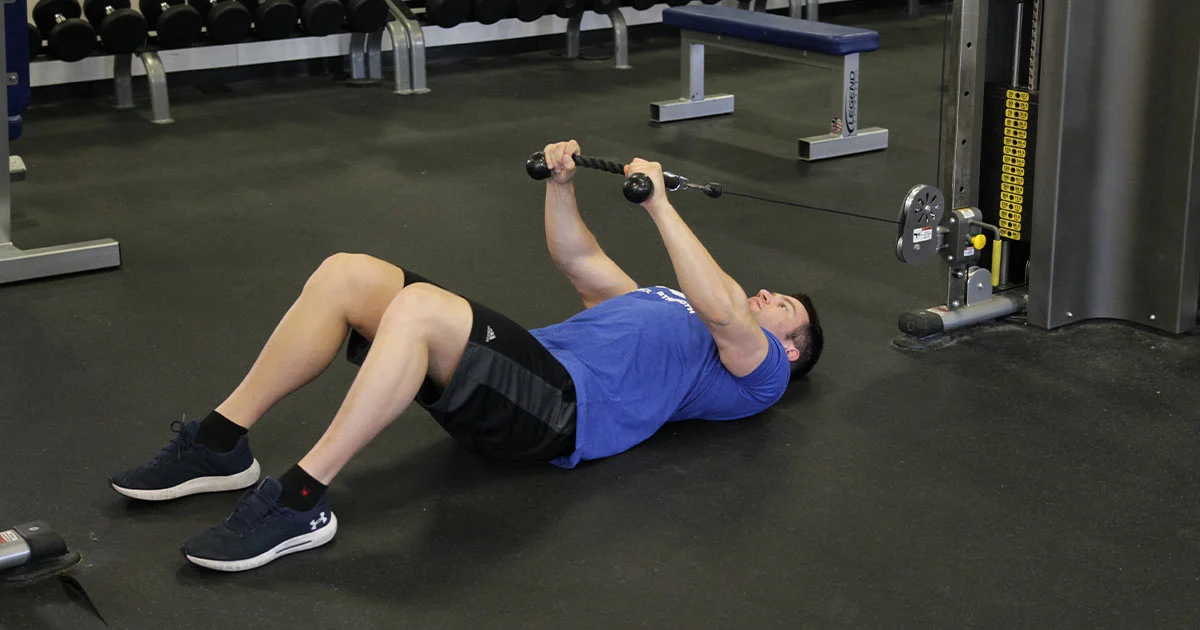
The floor cable-rope variation offers another supported position without a bench. Lie facing away from the low pulley, keep the head supported on the floor and use a neutral grip. Bending the knees with the feet planted can help make the position stable. Rehearse the cable path and the way you will put the attachment down before adding a demanding load.
For an illustrative starting plan, place one extension variation after your main pressing work on an upper-body or push day. Try two controlled working sets in a manageable repetition range, such as 10 to 15, leaving a few repetitions available. This is an example to adjust to your existing training, not a claim that two sets or a particular rep range is optimal for every lifter.
Progress requires consistent practice and honest records. Keep the same attachment, bench position and technique while working toward the upper end of your chosen range. When both sets become repeatable at the intended effort, consider a small load increase. If the next stack increment makes the movement sloppy, keep practicing with the current load rather than forcing the jump. Record repetitions, load, setup and any discomfort, not just whether the set felt difficult.
Discipline also includes recovery. Arm-day motivation and training slogans should not become a reason to add hard extensions every day or ignore pressing fatigue. Eat and sleep consistently, review how the next session feels and adjust the extra arm work when needed. Stop an exercise that causes pain; seek qualified advice for persistent symptoms or an unfamiliar movement you cannot perform confidently. Keep the version that fits your equipment and lets you practice well, then give that choice enough consistency to evaluate it.

Funny Gym Shirts & Workout Gear
Funny gym shirts, tanks, hoodies and workout gear for lifters who like training hard.


Gym If You're Reading This It's Arm Day Drake Parody & T-Shirt
Keep things casual with a little “If You're Reading This It's Arm Day Drake” attitude.

Every Day Is Arm Day
Make gym days more fun with “Every Day is Arm Day Octopus Gym Meme” style.

Dumbbell Heartbeat Crewneck Pullover Sweater Workout Fa T-Shirt
Add a playful “Dumbbell Heartbeat” touch to your casual rotation.

Lift Smart Brain Weight Plate Mind Muscle Connection 45 Hoodie
Keep it laid-back with a little “Lift Smart Brain Weight Plate” attitude.

Safety Practice Safe Sets Hooded Jumper Top Hoodie
Show off your bodybuilding humor in a laid-back “Gym Safety” hoodie.


Progress Stoic Sigma Greek God Marble Sculpture – T-Shirt
Rep “Progress Stoic Sigma Greek God Marble” humor in and out of the gym.

Stronger Than Excuses Tank
Show some personality between sets with “Be Stronger Than Your Excuses”.

Gymhead Meme Mind Muscle Connection Decal Water Sticker
A fun “Gymhead” touch for bottles, laptops, and lockers.