Advertising disclosure: This page includes affiliate product links that may earn us a commission, as well as products from our own store.
Inchworms: Walk Into a Strong Plank Without Rushing the Warm-Up
An inchworm links a forward hinge, a hand walk and a plank. The movement looks simple, but the transitions are the useful part: you have to move your support points while keeping enough control to arrive in a position you can hold.
For a warm-up, use the version that walks the hands out and then back toward the feet. Travelling inchworms, which bring the feet forward toward stationary hands, are another option. Choose one version deliberately so a set does not become an improvised mixture of long reaches, push-ups and hurried standing repetitions.
1. Reach the floor without turning it into a flexibility test

Start standing with a comfortable stance and enough clear floor in front of you. Bend forward through the hips and let the knees soften as needed to place the hands down. A small knee bend is a useful adjustment; forcing straight legs is not a requirement for a productive repetition.
Choose a firm, non-slip surface. A mat can make hand contact more comfortable, but it should not bunch up or slide as you move. Clear loose dumbbells, bags and cables from the route before beginning. The exercise needs space, rather than special equipment.
Use the first repetition to find a comfortable reach. If you cannot get to the floor without strain, rehearse an easier hinge separately instead of dropping your body weight onto hands that have not found support. A coach can help select a simpler version if the combined movement is not currently suitable.
Keep the starting setup consistent. Use roughly the same stance and surface across the set so you can judge whether movement is becoming easier or simply changing. You do not need to chase a deeper fold every repetition.
2. Walk the hands out in steps you can control

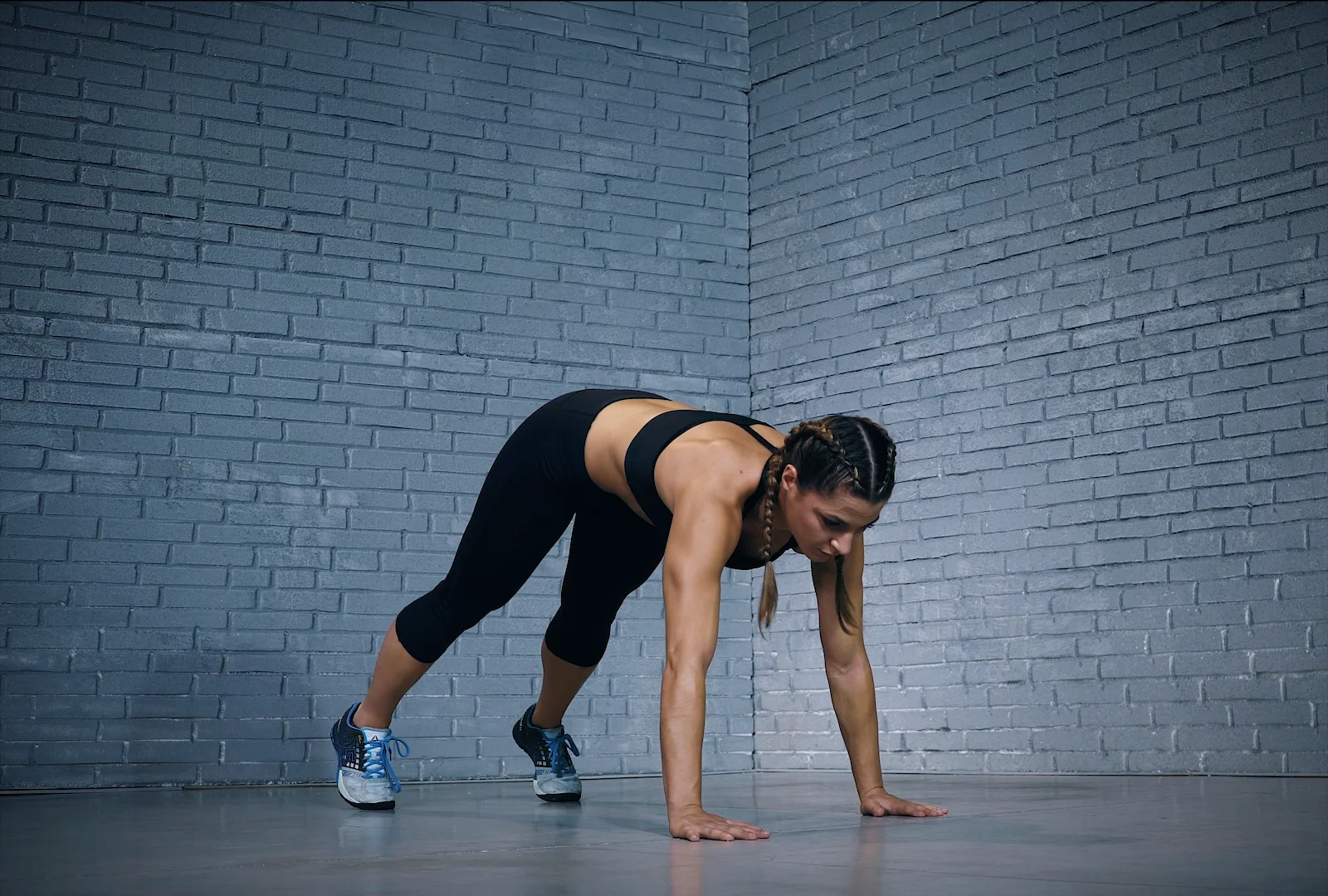
Place the palms securely and shift enough weight onto them to begin walking forward. Take small steps instead of reaching as far as possible. Your heels can rise as the body lengthens; keep moving gradually until you approach a normal high-plank position.
Notice whether the shoulders and hips move together or whether the trunk suddenly sags between hand placements. Shortening the next step may give you a better transition. More distance is not automatically an improvement when it changes the position you intended to practise.
Keep your attention on the contact points. A planted palm should feel secure before the other hand moves. If the surface is slippery or wrist discomfort increases, stop and change the setup or exercise rather than trying to get through the remaining repetitions faster.
A useful self-check is to pause one hand placement earlier than usual. If that position is calm and the next reach makes everything unstable, you have identified a practical boundary for today’s version. You can return to that observation next time.
3. Arrive in a plank you can briefly own
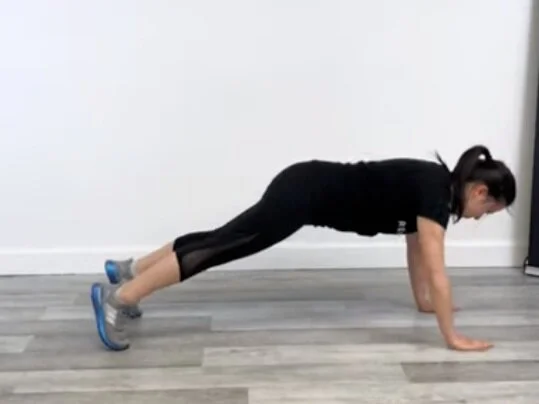
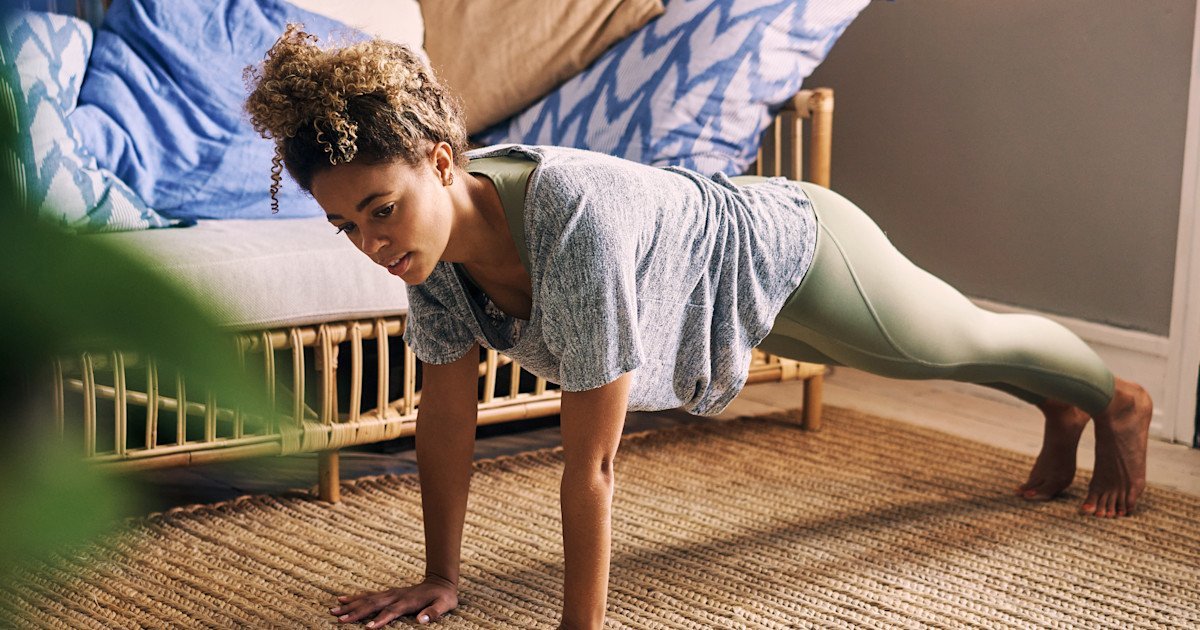
Finish the outward walk with the hands approximately below the shoulders and the body organised in a high plank. Brace the trunk and keep the hips from dropping. You are looking for a supportable position, not the longest shape your arms can reach.
Pause briefly and keep breathing. If you need to hold your breath or make several hurried adjustments, shorten the movement or practise the plank separately. A warm-up does not need to become an endurance contest before the rest of the workout has begun.
Separate the goal from the sensation. Feeling the shoulders or abdominal muscles working tells you they are supporting the task; it does not establish that the exercise is better than every other core movement. Use a version that fits the session and your current ability.
A push-up is optional. Adding one creates extra pressing work, which may be useful in a different context, but it also changes the demand. Learn to enter and leave the plank consistently before combining several exercises into every repetition.

Equipment Worth Exploring
Explore equipment, accessories and gear from our carefully selected range.


Power Tower
Freestanding pull-up and dip station with adjustable handles for bodyweight training.


Rubber Hex Dumbbells
Rubber-coated hex dumbbell pairs with a stable shape for home and commercial strength training.
4. Give the return the same attention as the walk-out
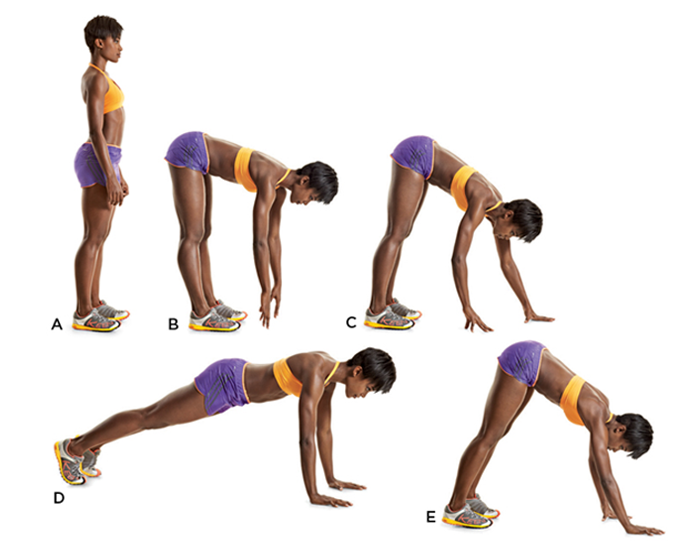
For the stationary version, take small hand steps back toward the feet. Allow the hips to rise as the distance between hands and feet shortens. Bend the knees as necessary, then return to standing without snapping the torso upward.
For a travelling version, the hands stay in place while the feet take short steps forward. Stop before the available range turns into forced stretching, then begin the next hand walk. The travelling and stationary versions share a pattern, but they need different amounts of floor space.
Check the route behind you before choosing the return. In a busy gym, an apparently empty space can become a walkway between sets. Staying in one place may be more practical than repeatedly crossing the floor.
Do not treat the last part as a rest you can skip. If the outward phase looks controlled but the return becomes a scramble, reduce the repetition count. A complete repetition includes getting back to a position from which you can begin again calmly.
5. Use enough practice to prepare, not exhaust, yourself
Begin with a few slow repetitions, then check how you feel before doing more. The right amount depends on whether this is a warm-up, a short movement break or part of a bodyweight circuit. Those purposes do not require identical pacing or volume.
For example, a lifter might use three comfortable repetitions before more specific warm-up sets. Someone practising the transitions might instead do single repetitions with a brief reset. These are practical options, not universal prescriptions or evidence that one number produces a special result.
Keep later training in view. If push-ups, pull-ups, ring work or dumbbell exercises are the main session, leave enough energy for them. Rings, parallettes and weights belong to those separate exercises; none is necessary to perform the floor inchworm.
Track one useful observation: smoother hand steps, a steadier plank or an easier return at the same pace. Do not add distance, extra push-ups and longer holds simultaneously. Changing one feature at a time makes it easier to understand the result.
The warm-up has done its job when you can move into the next task comfortably and with attention. Keep the inchworm controlled, make adjustments when needed and let the planned workout determine what comes next.

Funny Gym Shirts & Workout Gear
Funny gym shirts, tanks, hoodies and workout gear for lifters who like training hard.


Calisthenics Heartbeat Decal for Water Bottles Laptops Sticker
Put “Calisthenics Heartbeat” gym humor on your laptop, bottle, or gym gear.


Lord of the Calisthenics Rings Gym | Funny Jesus Lifter Hoodie
Keep it laid-back with a little “Lord of the Calisthenics Rings” attitude.

Lord of the Calisthenics Rings Gollum Gym Meme | Funny T-Shirt
Make gym days more fun with “Lord of the Calisthenics Rings Gollum” style.

Lord of the Calisthenics Rings Gandalf | LOTR Workout P T-Shirt
Show some gym-day personality with “Lord of the Calisthenics Rings Gandalf”.

Pull Up or Shut Up Crewneck Pullover Sweater for Calist T-Shirt
For laid-back days and bodybuilding humor: “Pull Up or Shut Up”.

Always Pull Yourself Up Tank
Show some personality between sets with “Always Pull Yourself Up”.

Hero Spider-Man Comic Book Meme Pullups & Gains T-Shirt
Make gym days more fun with “Gym Hero Spider-Man” style.

Six Pack Panther Workout Hooded for Bodybuilding Superh Hoodie
Stay casual and show some superhero attitude with “Six Pack Panther”.