Advertising disclosure: This page includes affiliate product links that may earn us a commission, as well as products from our own store.
A common fear in the weight room is that every hard bike interval steals gains from your squats. Yet the evidence is more interesting than a simple cardio-versus-muscle argument. In a sixteen-week comparison involving nineteen previously untrained young men, adding long-interval high-intensity training did not erase key muscle-building responses. The lifters who focused on weights alone, however, gained more strength, while the mixed-training group improved aerobic capacity. Those differences matter if you want both a strong physique and a useful engine. The practical question is not whether HIIT is forbidden, but which adaptation you care about most and how to fit both demands into a recoverable week.
What the 16-week comparison actually tested
Nineteen young men without prior resistance-training experience were randomly allocated to weight training alone or a concurrent program that combined weight training and long-interval high-intensity endurance work. Their training ran for sixteen weeks. Researchers measured strength, peak aerobic capacity, muscle-fiber size, and several cellular signals associated with adaptation. Muscle samples were also obtained around a standardized session at weeks four and sixteen, allowing the team to look beyond whether someone simply added weight to the bar.
The groups did not split neatly into “builders” and “cardio athletes.” Both had resistance training as a meaningful part of the intervention, so the comparison concerns the additional endurance demand, not weights versus cycling in isolation. That is an important distinction: a person replacing their entire leg workout with sprint intervals would be asking a different question. So would a trained powerlifter combining very high running mileage with a peak-strength block.
The central finding is a trade-off, not a cancellation. Muscle-protein synthesis rose after exercise at both examined points without a significant difference between groups. Type II muscle fibers increased in size across training, while the weight-only arm showed the larger increase in strength. Only the mixed-training arm improved peak aerobic capacity. Because just nineteen men participated, group estimates are less stable than results from a much larger trial, and the response of advanced lifters remains uncertain.
Muscle signals stayed active, but that does not prove identical gains
A biopsy can reveal things that the mirror cannot. Myofibrillar protein synthesis tracks part of the process through which muscles build the proteins used to generate force. The study also examined satellite cells, the number of nuclei in muscle fibers, and gene-expression signals involved in remodeling. These measures help explain how training challenges are processed, but they are not interchangeable with whole-muscle growth measured by imaging.
In the comparison, protein synthesis increased after the test exercise at weeks four and sixteen and did not differ significantly between the two groups. Satellite-cell content increased over time in type II fibers; myonuclear numbers rose in both fiber types. Type II fiber cross-sectional area also increased. Those results argue against the simplistic claim that long-interval HIIT necessarily switches off the machinery for gaining muscle. Importantly, “no significant difference” is not proof that the two methods would produce exactly the same hypertrophy in every population.
The findings should also not be turned into a claim that cardio builds all the muscle you need. Both interventions involved lifting, and exercise order, interval length, total training load and recovery all influence how a mixed program feels in practice. Earlier pooled comparisons have generally found that combining aerobic and resistance work can preserve whole-muscle growth, although some fiber-level measures and explosive-strength outcomes may be more sensitive. A practical interpretation is to keep your hard sets productive while using endurance work for the distinct benefits it provides.

Equipment Worth Exploring
Explore equipment, accessories and gear from our carefully selected range.

Multi Pull Smith Rack MPHR-780
All-in-one rack with a Smith machine, functional trainer, lat pulldown and low row.

Foldable Wall Rack
Wall-mounted folding squat rack designed to save floor space between workouts.


Competition Plates
Competition-style bumper plates for Olympic lifts and loaded strength training.

FID Bench MAX
Adjustable bench offering flat, incline, and decline positions + adjustable headrest.

Safety Squat Handles
Barbell squat handles that reduce shoulder positioning demands during high-bar squats.

Rubber Hex Dumbbells
Rubber-coated hex dumbbell pairs with a stable shape for home and commercial strength training.


Open Hex Bar
Open-frame trap bar with multiple handles for deadlifts, carries, and lower-body training.

Why the weight-only group gained more strength
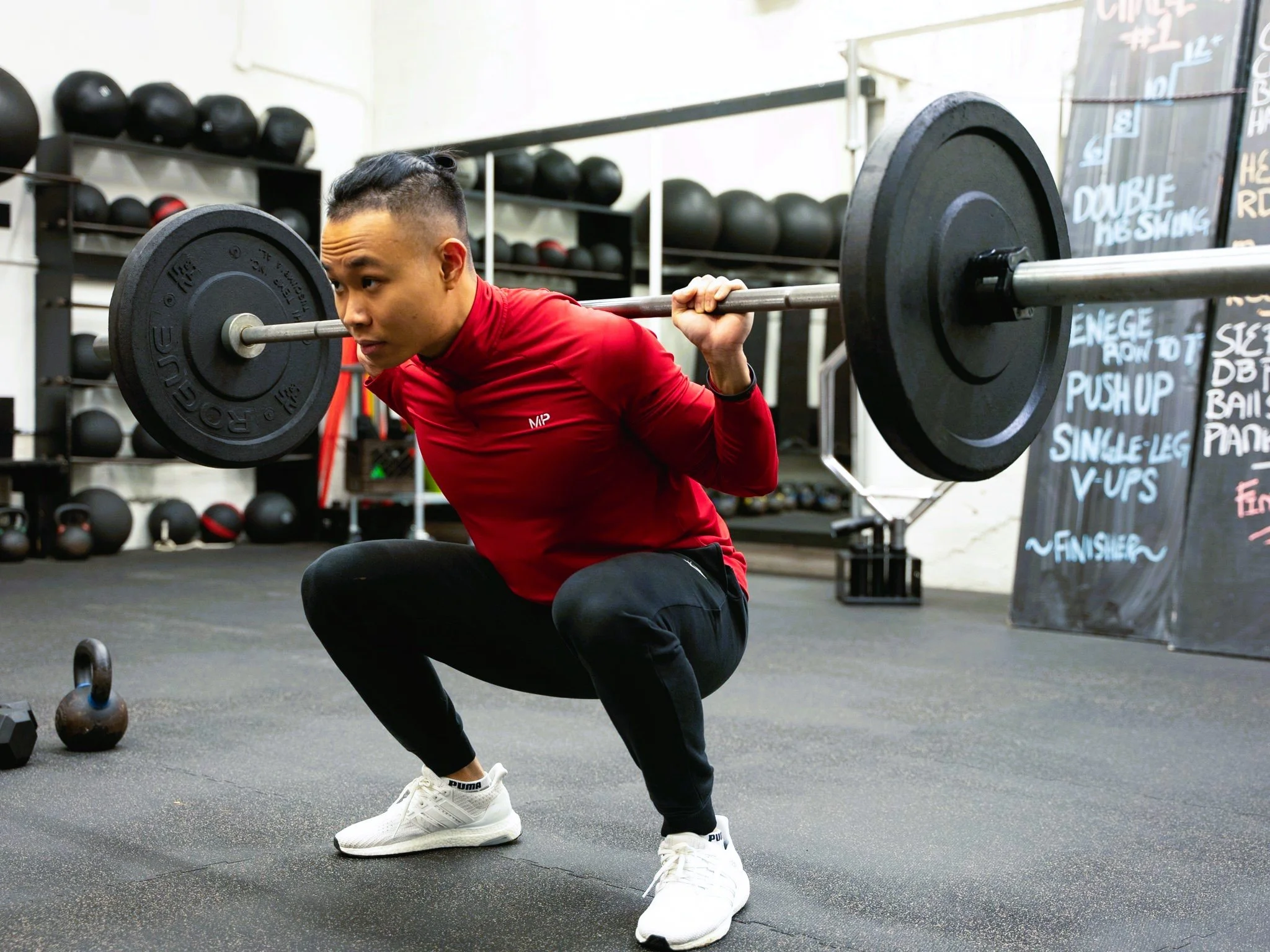
Muscle size is only one part of strength performance. Skill with a particular lift, technical consistency, the ability to produce force quickly, and readiness on testing day all influence how much weight moves. Someone can have favorable muscle remodeling but still progress more slowly in maximal barbell strength when their week contains another demanding physical stimulus. The sixteen-week study showed exactly why strength and growth deserve separate columns in a training log.
This does not mean the added intervals damaged the participants or caused a measurable decline in muscle. Their gains in the strength outcome were smaller than those of the weight-only group; that is different from losing strength. Nor does the finding reveal one universal mechanism. The cumulative cost of endurance work, how sessions are spaced, total leg fatigue and specificity of training could all contribute. The experimental comparison describes what happened under its conditions rather than proving which single factor caused the gap.
If your priority is a squat or deadlift personal record, protect the heavy sessions that require the most coordination and force. Put your most technically demanding lower-body work where you are fresh, keep the intensity of supporting intervals controlled, and avoid converting every cardio workout into a second leg-day failure test. Track your first work set, your final work set and the quality of movement; a number on the bike display is less useful if it regularly compromises the training that actually serves your primary goal.
Aerobic fitness was the benefit the lifting-only group missed
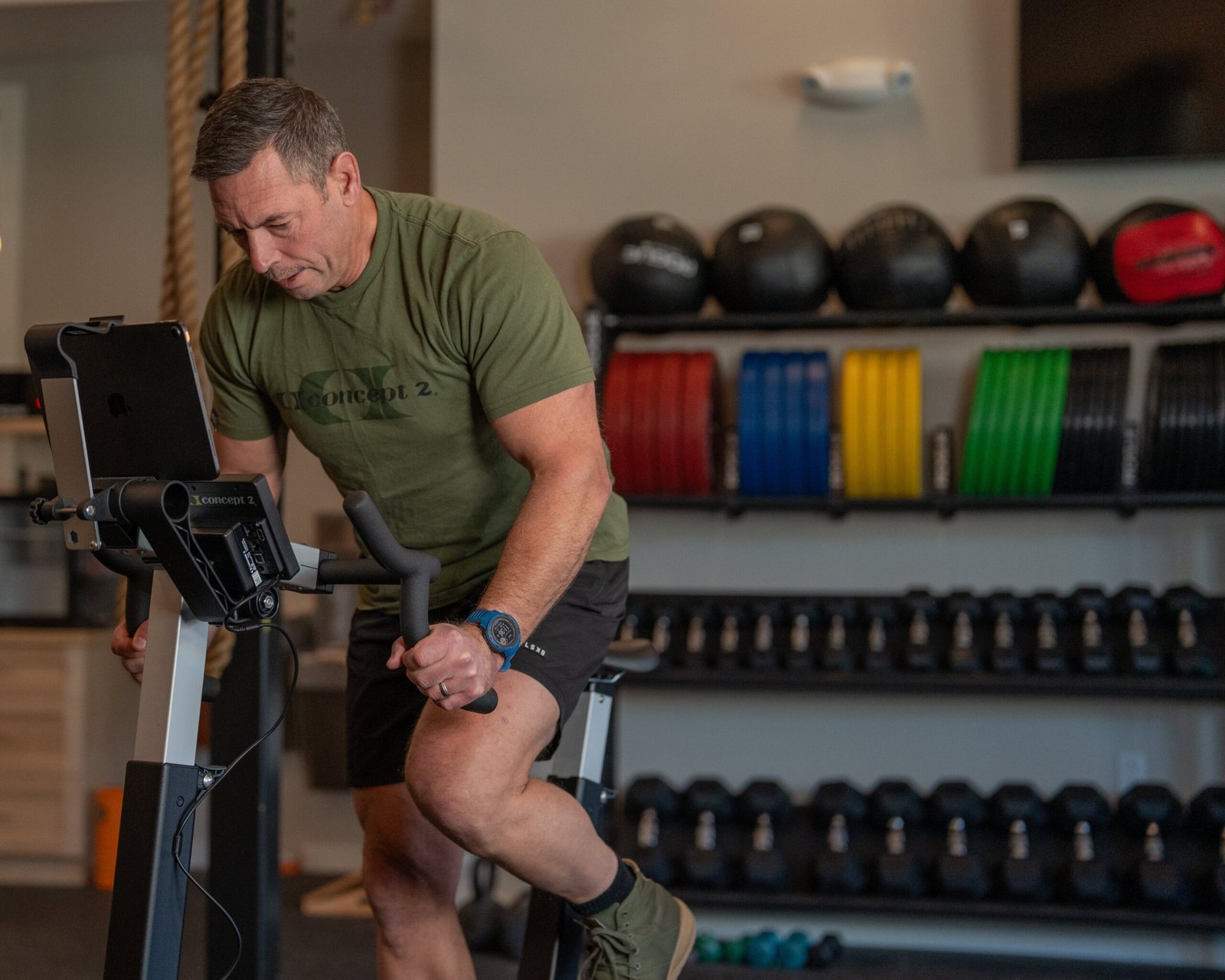
The other side of the trade-off is easy to overlook when the entire discussion revolves around arm size. Peak aerobic capacity improved in the combined-training group and not in the weight-only group. That is the adaptation the added endurance sessions were designed to target. Better aerobic capacity can make demanding activities more tolerable, improve endurance performance and broaden what you can comfortably do outside the weight room, even though it should not be treated as a guaranteed shortcut to faster muscle recovery.
Intervals are attractive because they concentrate hard cardiovascular work into a manageable session. They are also easy to overdo. An all-out cycle sprint produces considerable local leg fatigue, and a long work interval is not the same demand as a few seconds of explosive pedaling. If a program calls for four hard minutes, the effort has to be sustainable over four minutes. Going maximal for twenty seconds and crawling through the rest is a different session with different demands.
For someone who primarily lifts, use modality and dose as programming levers. Cycling and rowing reduce the need to learn a new complex impact skill, but they still load the legs. Running adds impact and its own recovery requirements. Air-bike intervals distribute work between arms and legs but can still leave the whole body exhausted. Choose an option you can perform consistently without aggravating joints or letting conditioning become the biggest source of soreness each week.
Equipment Worth Exploring
Explore equipment, accessories and gear from our carefully selected range.

Pro Sled System
Heavy-duty push-pull training sled for loaded conditioning, speed, and strength work.


Competition Wall Ball
Competition-style weighted wall ball for HYROX, wall-ball shots, and functional conditioning.

Slam Ball
Low-bounce weighted slam ball for explosive throws and high-intensity conditioning.
VOLTRA
Compact digital cable trainer with smooth, adjustable resistance.

Go-Tone Pro
Portable digital cable trainer with up to 66 lb (30 kg) of adjustable resistance.

VForce 2IN1
Half rack and pivot-arm functional trainer with switchable 1:1 and 2:1 pulley ratios.


Powerbeats Fit
Secure-fit wireless workout earbuds with active noise cancellation and a charging case.
Schedule HIIT around the work that matters most
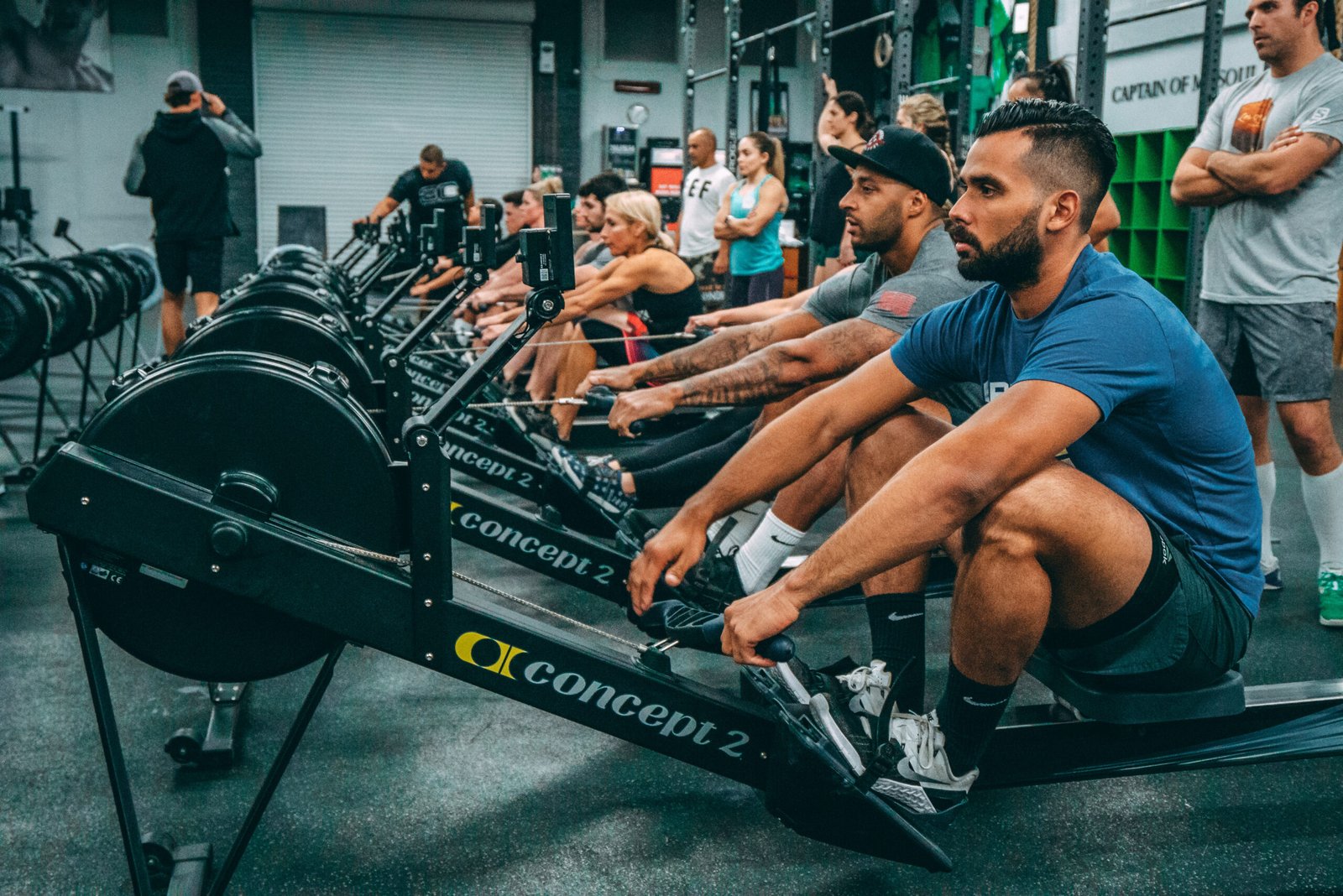
The first decision is your hierarchy. If maximal strength is the priority, reserve your best energy for heavy compound lifts and treat conditioning as supplementary. If balanced strength and aerobic fitness is the goal, accept that you may not maximize every individual performance measure at once. If an endurance event is imminent, lift enough to retain useful strength while placing greater emphasis on sport-specific aerobic work. None of these choices is inherently superior; they simply answer different training problems.
A sensible starting point for a generally healthy person already tolerating resistance work is one or two interval sessions per week, not a sudden five-day conditioning challenge. Separate demanding cardio from heavy lower-body days when practical; different days are often the easiest arrangement. If the sessions must share a day and strength matters most, lift first, and keep intervals sufficiently modest that you can recover. Research comparing same-session and separated training suggests timing may matter especially for explosive power, although no exact hour gap guarantees identical outcomes for every athlete.
Maintain the lifts you want to improve. For example, a strength-focused week could use Monday for heavy squat and accessories, Tuesday for short cycling intervals, Thursday for heavy hinge and upper-body work, and Saturday for an easy cardio day or a second controlled interval session. This is a sample schedule, not a reproduction of the study protocol. A mixed-goal lifter might instead perform two full-body lifting days and two cardio days, adjusting the total rather than adding everything on top of an already maximal program.
Watch the boring signals. Poor sleep, an unusual drop in training performance, soreness that lasts into the next heavy session, and a persistent sense of being under-recovered are reasons to trim the interval dose. Keep food intake adequate for the combined workload. A calorie deficit may be appropriate for fat loss, but a large deficit plus frequent hard intervals and heavy lifting can make performance comparisons difficult to interpret.
A four-week experiment: keep the gains and build an engine
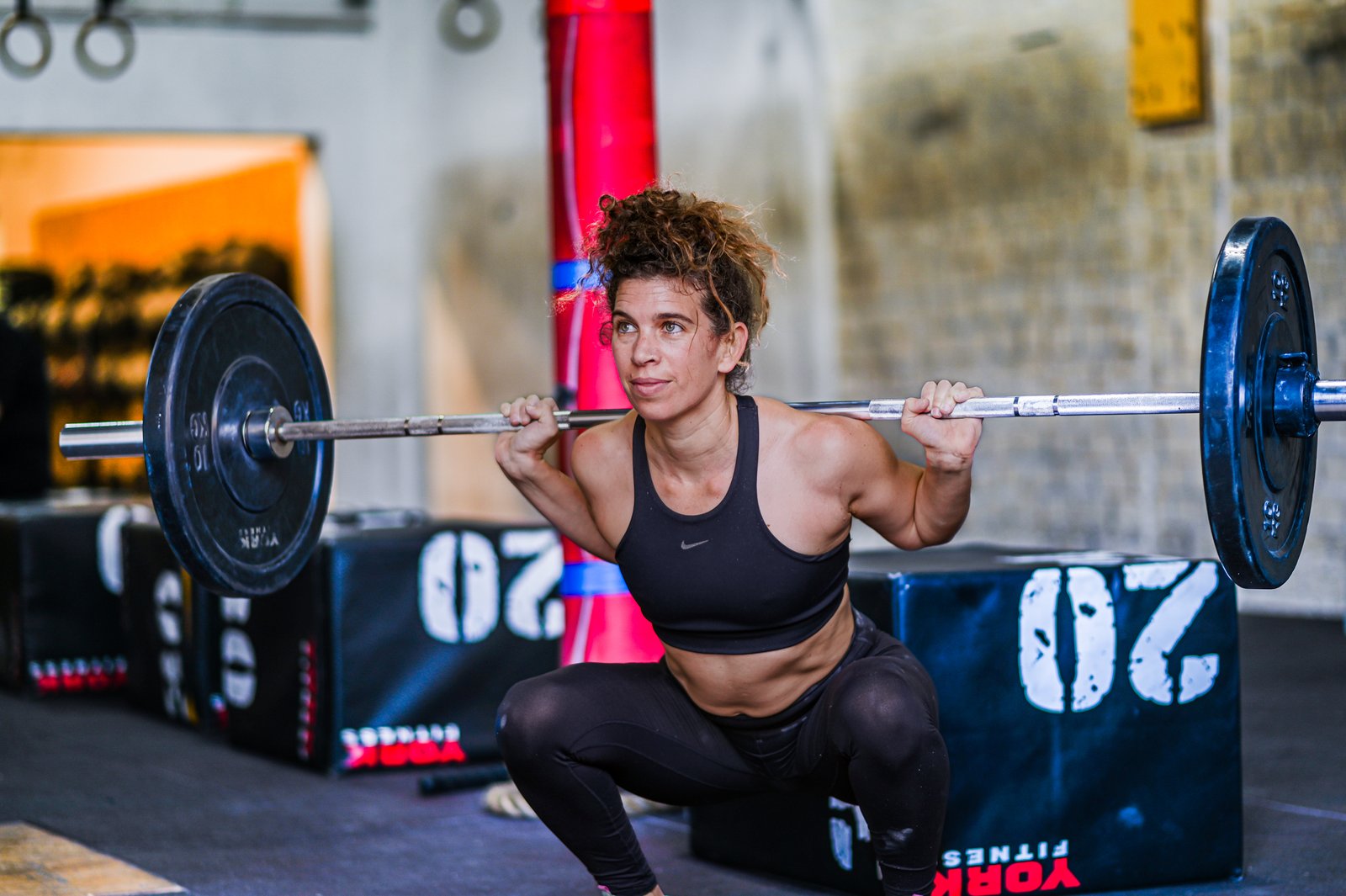
Week one is your baseline. Write down your normal lifting exercises, sets, approximate effort and weekly performance; also record one repeatable submaximal cycling or rowing test. Add a single manageable interval session with a thorough warm-up. Rather than chasing a universal prescription, use an effort you can repeat with consistent technique and an easy recovery period between work bouts. Anyone new to intense exercise or managing a cardiovascular issue should get appropriate professional guidance before starting hard intervals.
Week two repeats the structure. Try to hold your lifting volume steady rather than adding sets to compensate for the cardio. Note how your first and final hard sets feel, how your legs behave the following day, and whether the cardio session was actually repeatable. If you are unusually sore or your lift quality deteriorates, do not assume that more conditioning will force adaptation. Reduce the work or move it farther from your hardest session.
Week three is your only planned progression, provided the first two were well tolerated. Add a little total interval work or improve consistency at the same effort, not both at once. Keep strength progression conservative: one extra repetition or a small load increase is useful when technique remains sound. If your primary barbell lifts become erratic, lower the endurance dose before rewriting the entire program.
In week four, compare like with like. Repeat the same cardio test under similar conditions and review the trend in key lifts across several sessions rather than treating one tired workout as proof of interference. An improving aerobic result alongside stable lifting performance means the current balance may be working for you; substantial strength stagnation paired with heavy fatigue suggests the dose or scheduling needs adjustment. Four weeks cannot prove long-term hypertrophy, so body measurements and muscle-building trends need a longer observation window.
The takeaway from the sixteen-week comparison is conditional but useful: meaningful endurance improvements can accompany lifting without an obvious shutdown of the muscle-building response, while maximal strength may benefit from a more specialized emphasis. Program from that distinction. You do not need to choose between looking strong and being fit; you do need to decide which goal takes precedence when recovery or time becomes limited.

Functional Fitness Shirts & Workout Gear
Functional-fitness shirts, tanks and workout gear for athletes who train strength, conditioning and everything in between.

Hybrid Athlete Strength Tee
Show some lifting attitude with a playful “Hybrid Athlete” tee.


Dost Thou Even Pedal Tee
Make gym days more fun with “Dost Thou Even Pedal Medieval Air Bike” style.

Rowing – Dost Thou Even Row Medieval Knight Crewneck fo T-Shirt
Show some gym-day personality with “Rowing”.

Viva La Resistance Bands , Meme Shirt, Top T-Shirt
Make gym days more fun with “Viva La Resistance Bands” style.

Live Love Lift – Gymbro Meme & Gains – Shirt T-Shirt
Rep “Live Love Lift” humor in and out of the gym.


Shirt – Watermelon Kettlebell , Gymbros & Meme Lovers T-Shirt
Rep “Watermelon Kettlebell” humor in and out of the gym.