Advertising disclosure: This page includes affiliate product links that may earn us a commission, as well as products from our own store.
Long before a physique could fill a phone screen, Eugen Sandow made people buy a ticket to look at one. His appeal went beyond moving heavy objects. He turned muscular development into a performance that could be posed, photographed, compared and sold.
That makes him an unusually useful figure for understanding modern bodybuilding. The stage physique, the promotional photograph and the training business were already intertwined in his career. The technology has changed dramatically; the tension between building a body and presenting it remains familiar.
When showing muscle became part of the act
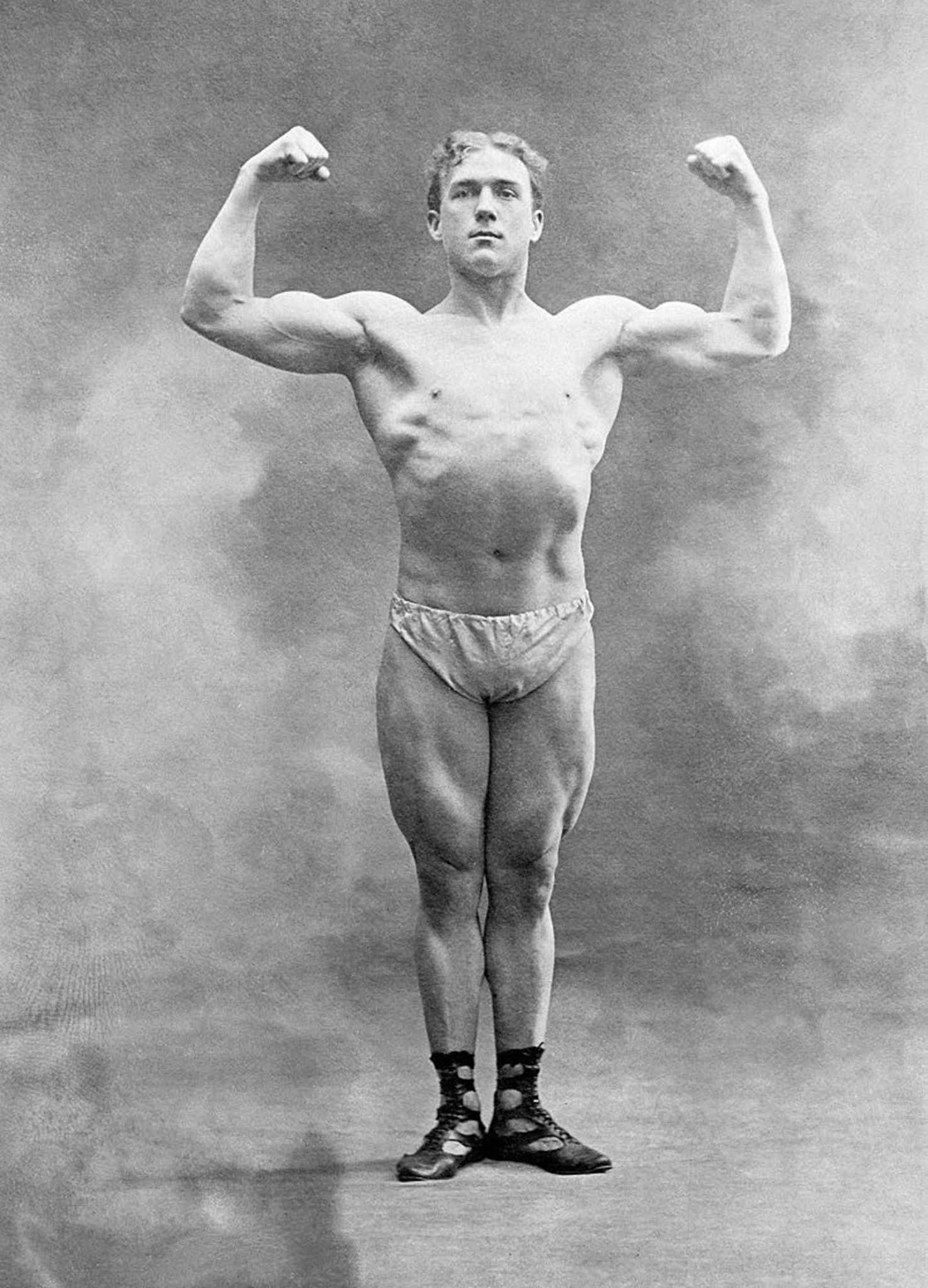
Sandow began as a circus athlete and gained attention in London in 1889 through a strongman challenge. His muscular appearance then became an attraction in its own right. Classical Greek and Roman sculpture supplied a visual language for displaying the body: a turned torso, a deliberate stance, a pose held long enough for the audience to study it.
His performances combined physique display with demonstrations of strength. During his 1902–03 New Zealand tour, the presentation included posing on a revolving pedestal before feats of strength. The body was something spectators could examine as well as watch in action.
The distinction matters. A strength performance asks whether a task was completed. A physique presentation invites judgments about proportion, muscular development and appearance. Those interests can overlap, but they reward different things. A lifter can improve a difficult lift without looking dramatically different, while a carefully chosen pose can make an existing physique more striking.
Sandow’s classical styling also shows how much of bodybuilding’s appeal is visual storytelling. The muscular figure evokes an ideal before the viewer knows anything about the training behind it. Marble statues, heroic imagery and gym clothing still draw on that association. Enjoying the aesthetic does not require treating a sculpted ideal as a biological standard that every lifter should meet.

Greek Gods Gym Shirts & Workout Gear
Greek mythology-inspired gym shirts and workout gear for lifters chasing godlike strength and physiques.

White Marble Greek God Statue – Meme & Ultimate Top T-Shirt
Show some lifting attitude with a playful “White Marble Greek God Statue” tee.

Stoic – Meme Shirt & Sigma T-Shirt
Heavy lifts, good laughs, and a little “Premium Stoic Bodybuilding Graphic” energy.

Work Like A Greek God: Stoic Meme T-Shirt
Make gym days more fun with “Work Like a Greek God: Funny Stoic” style.

The Meme : A Rodin Sculpture & Top T-Shirt
Make gym days more fun with “The Lifter Gym Meme” style.

Fearless Greek God : & Memes T-Shirt
Heavy lifts, good laughs, and a little “Fearless Greek God” energy.

Hercuflex Gym Hoodie
Stay casual and show some powerlifting attitude with “Hercuflex Legendary Lift”.

Broseidon God of Bodybuilding | Poseidon Muscle Shirt Tank Top
Your gym-day look, with a playful “Broseidon God of Bodybuilding” twist.

Hustle For That Muscle Gym | Funny Greek God Meme Worko Sticker
Stick a little “Hustle For That” humor on your favorite gear.

Zeus God of Gains Tee
Show some lifting attitude with a playful “Zeus God of Gains Thunder & Lightning” tee.

The physique photograph was already a powerful product
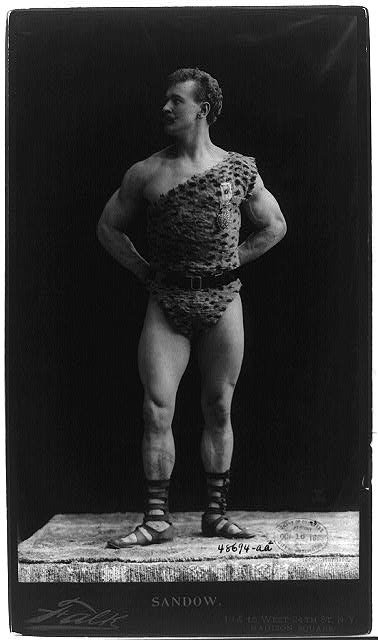
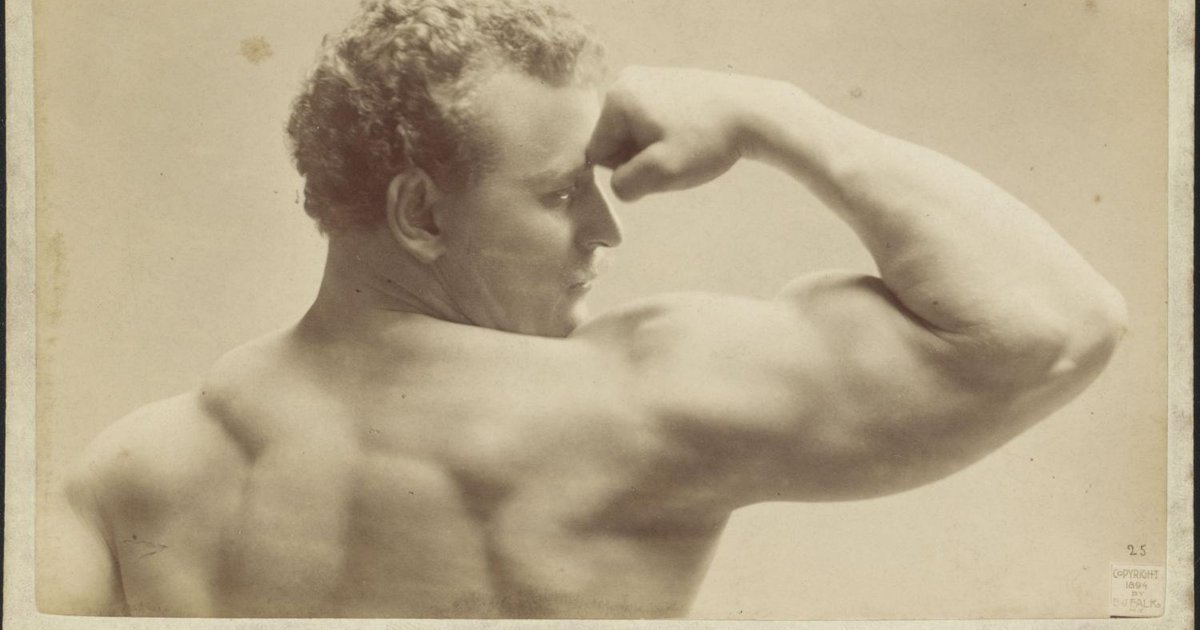
Surviving portraits show how deliberately Sandow presented himself. In one, he wears a theatrical leopard-pattern costume; in another, a flexed arm and turned back dominate the frame. The photographs vary the pose, costume and viewing angle. They give the viewer selected views of a performer rather than a complete account of his abilities.
A photograph also separates a physique from the live event. Someone can encounter the image without seeing the performance, checking the apparatus or knowing the performer’s daily habits. It becomes possible to admire the result while having very little evidence about the process.
This is a useful way to look at fitness imagery today. A picture can show a muscular person holding a pose. It cannot, by itself, establish the person’s exact programme, training volume, health, diet or lifetime drug-use status. Those are separate questions requiring separate evidence. Historical photographs deserve the same restraint as contemporary transformation pictures.
For your own progress photos, the practical lesson is consistency. Choose similar lighting, distance and poses if you want comparisons that mean something. A dramatic promotional frame and a relaxed check-in serve different purposes. Confusing them can make ordinary progress feel disappointing even when training is moving in the right direction. Sandow’s archive is a reminder that presentation was a skill long before filters and social feeds.
From a famous body to a fitness business
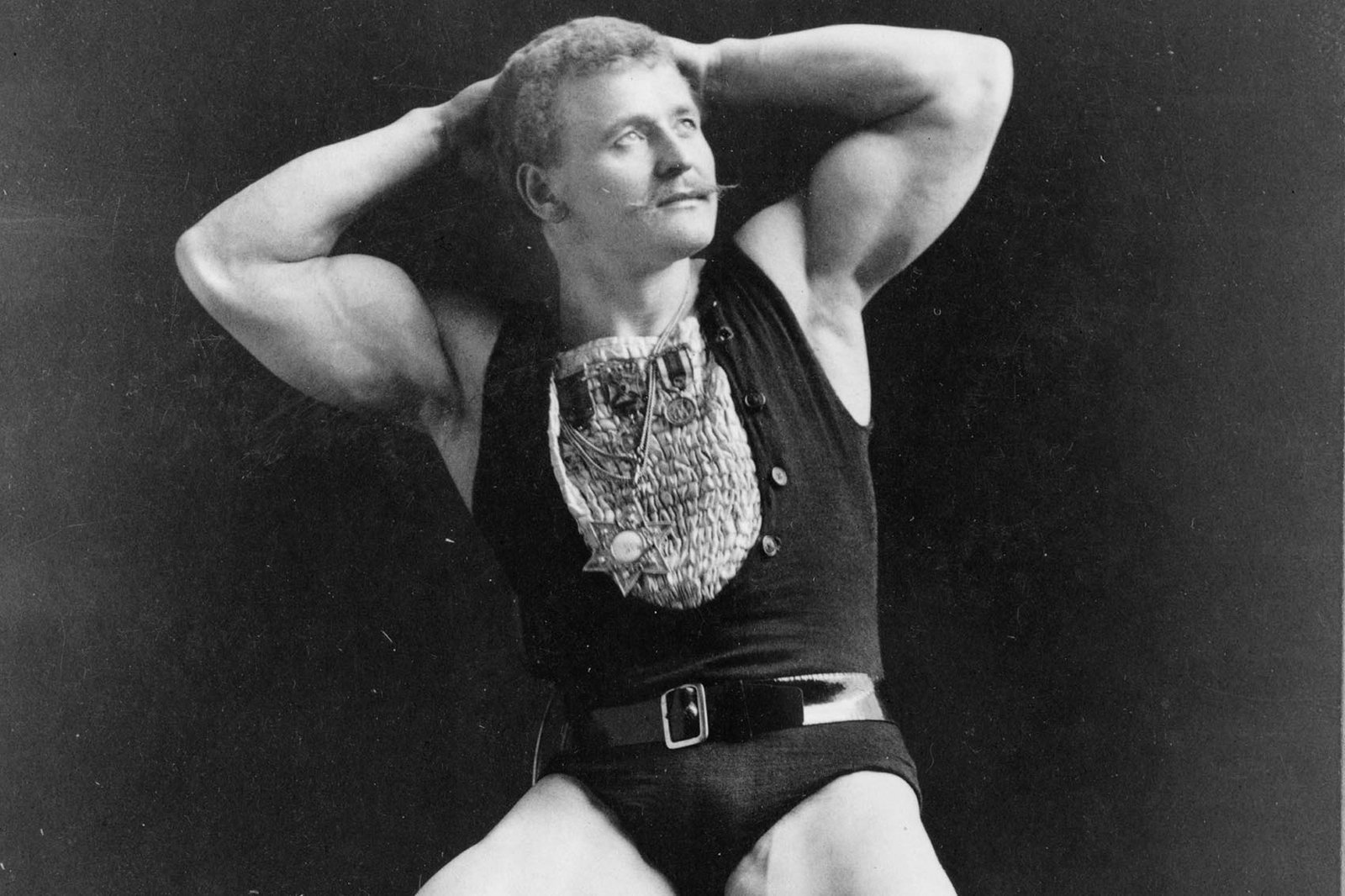
Sandow’s commercial reach extended beyond touring. His name appeared on exercise books, a magazine, training equipment and physical-culture schools. The Sandow System offered an identity that could travel beyond the places where he performed. By the time he toured New Zealand, his exercises and products already had a presence there.
That combination is recognisable: the physique creates attention, instruction gives the audience something to do, and products offer a way to participate. His career is an early example of a fitness personality operating across several formats. The existence of a successful brand, however, does not establish how effective every associated product or promise was.
A modern buyer can separate three questions. Does the person’s appearance attract me? Is the instruction clear and appropriate for my goals? Does the equipment solve a real training problem? An enthusiastic answer to the first question should not automatically decide the other two.
Dumbbells, barbells, weight plates and adjustable benches remain familiar tools for resistance training. Their usefulness depends on practical details such as loading, adjustment, available space and the exercises you intend to perform. The modern equipment below belongs in that broader training context; it is not a reconstruction of Sandow’s equipment or a claim that buying it reproduces his physique.

Equipment Worth Exploring
Explore equipment, accessories and gear from our carefully selected range.


FID Bench MAX
Adjustable bench offering flat, incline, and decline positions + adjustable headrest.

Rubber Hex Dumbbells
Rubber-coated hex dumbbell pairs with a stable shape for home and commercial strength training.

Grip Plates
Rubber-coated weight plates with handholds for loading barbells and machines.

Multi Bench MBX-650 2.0
Adjustable multi-bench with roller adjustment, 15 backrest positions and accessory mounts.


The 1901 contest made the comparison explicit
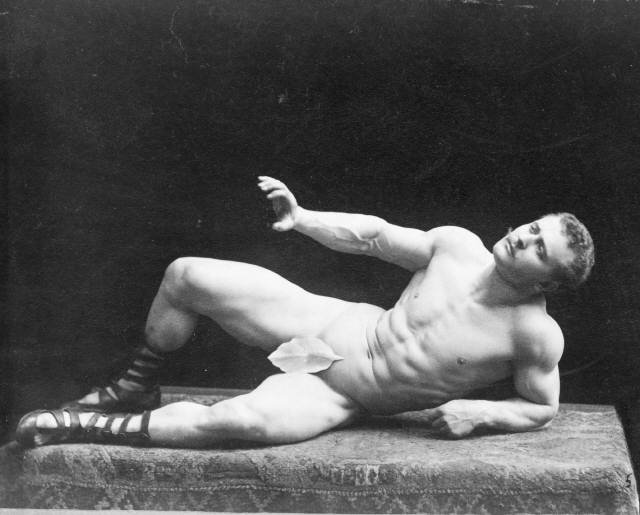
On 14 September 1901, Sandow’s Great Competition took place at the Royal Albert Hall. William L. Murray won. Sandow served as referee alongside judges Sir Charles Lawes and Sir Arthur Conan Doyle. The event is commonly recognised as the first modern bodybuilding contest, although smaller physique competitions had existed before it.
It followed a qualification process rather than simply assembling a few men on a stage. The judging criteria included overall development, balance between muscle groups, tissue condition, general health and skin condition. Those historical categories should be understood in their period context; they were not equivalent to a modern clinical health assessment.
The emphasis on balance helps explain an enduring bodybuilding question: what makes the whole physique convincing? More size in one area does not automatically improve the overall presentation. The contest formalised the idea that a body could be assessed through several visible qualities, rather than reduced to a single measurement or a weight lifted.
The accompanying photograph shows Sandow posing, not the competition itself. That distinction is easy to lose when an archive image appears beside an event story. The competition’s importance comes from its organised comparison and judging, not from pretending every surviving Sandow photograph documents that particular evening.
A famous physique is an ideal to examine
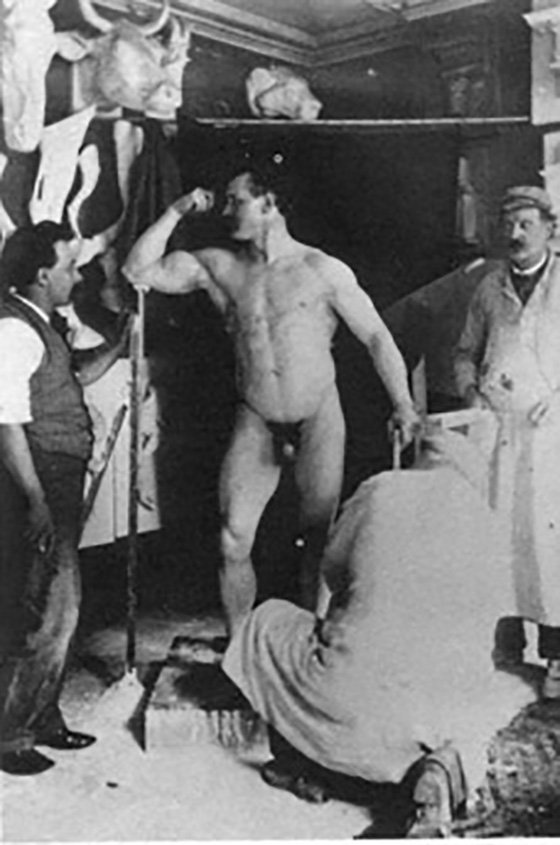
In 1901, Sandow’s body was also cast for a public display. The process involved making moulds in sections while he held poses. The resulting statue proved controversial and was removed after only a few months. The surviving studio photograph records the practical, awkward work behind an apparently effortless muscular ideal.
There is a darker context too. The display was promoted through claims about an ideal European male body. That racial framing was pseudoscience, not a sound way to rank human bodies. Admiration for Sandow’s muscular development should not carry those assumptions forward.
For a present-day lifter, the useful approach is to distinguish inspiration from a personal target. You might admire the proportions, learn to pose more deliberately or become curious about strength history. None of that tells you exactly how your own body should look, or establishes a reliable deadline for getting there.
If you want a balanced physique, define what balance means for your goals and assess it over time. Keep training records alongside photographs so appearance is not your only measure. If a historical routine interests you, examine its actual instructions and context before borrowing it; do not fill gaps with an invented celebrity split.
Sandow helped make muscular development something audiences wanted to watch. His story also gives those audiences a useful habit: appreciate the performance, then ask what the evidence actually shows about the training behind it.