Advertising disclosure: This page includes affiliate links that may earn us a commission at no additional cost to you.
Elbow sleeves are often bought for comfort, but some lifters swear they also add kilos to a press. That is a different claim: feeling more secure under a bar does not necessarily mean producing more force. A controlled experiment published in November 2025 provides an unusually direct comparison of pressing with and without neoprene sleeves.
The results were positive for maximum load and repetition performance, but the changes were modest. They do not establish that sleeves build more muscle, prevent injuries or make every heavy press safer. Here is how to put those numbers to work without making the accessory more important than your training.
What the 20-lifter experiment actually tested
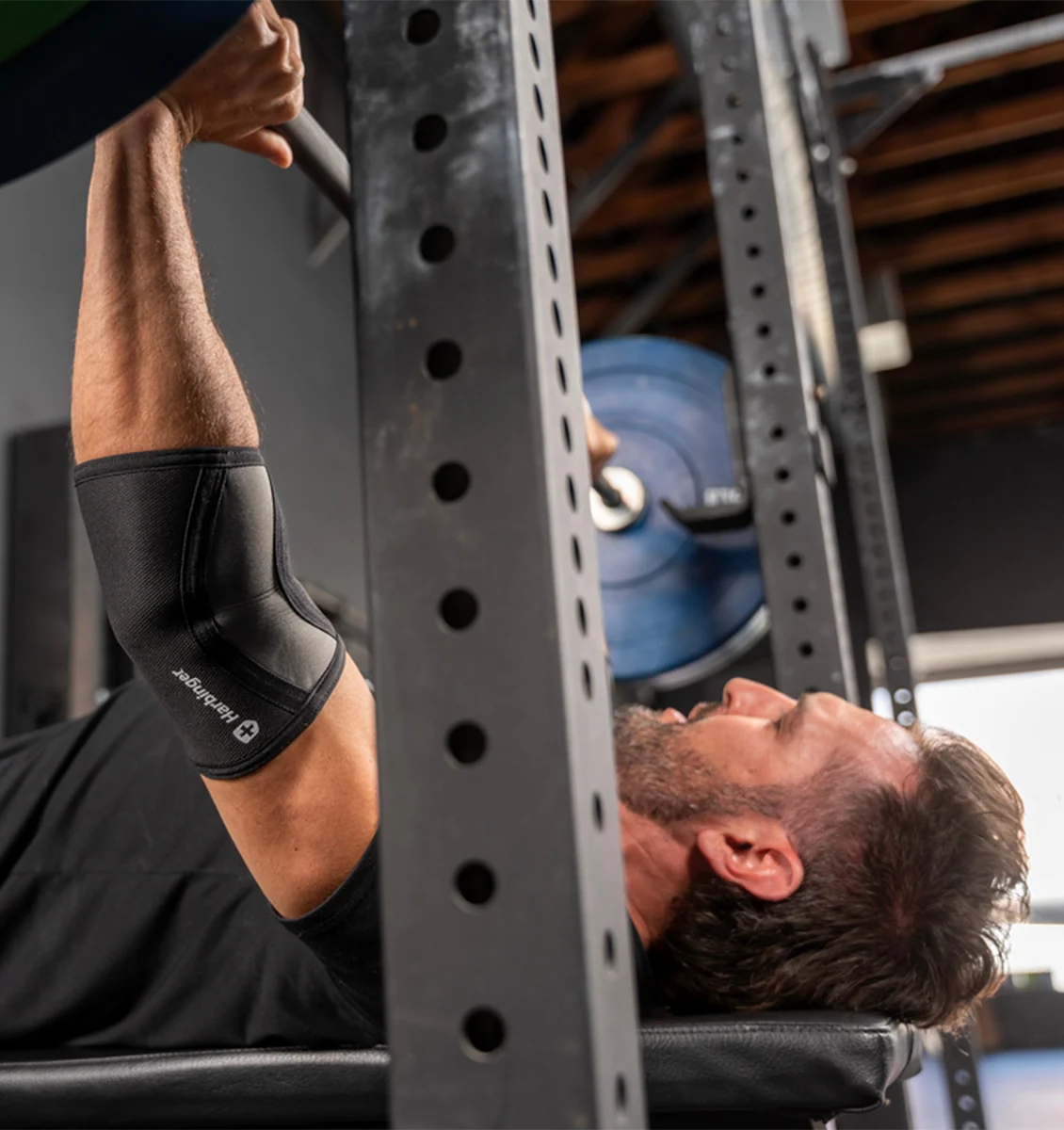
The researchers recruited 20 resistance-trained adults, 19 men and one woman, with an average age of approximately 24. Each participant completed testing in both conditions: pressing with neoprene elbow sleeves and pressing without them. They visited for separate bench press and shoulder press sessions, with the order balanced across participants.
This crossover design helps separate an equipment effect from differences between individuals. A naturally strong bencher is not being compared with someone who has only recently started lifting. Instead, the important comparison is what the same person achieved in the two conditions.
Testing included a one-repetition maximum, a set of as many repetitions as possible at a heavy prescribed load and measures of bar velocity. The repetition comparison used the same absolute load in both conditions, based on 85% of one-repetition maximum. This matters because adding a repetition at the same weight is not the same thing as changing both the weight and the repetition count.
These were short-term performance tests, not a training intervention. The experiment can tell us how people performed on the testing days. It cannot tell us whether their strength or muscle mass would have developed differently after months of wearing sleeves.
The bench press: a small improvement in maximum load
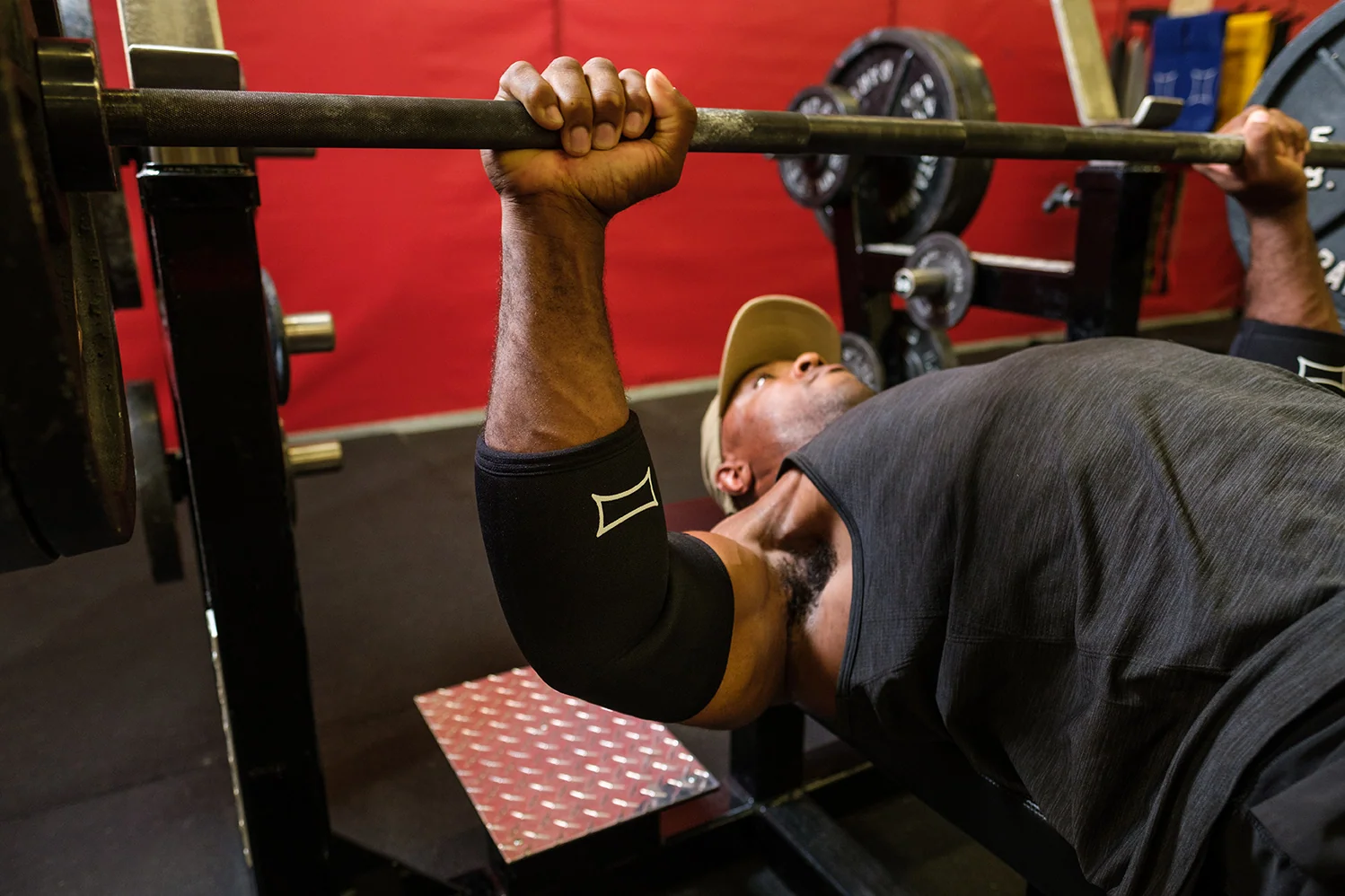
The mean bench press maximum was 103.2 kg without sleeves and 104.8 kg with them. That is a difference of 1.6 kg, with an estimated 95% confidence interval for the mean difference of 0.4 to 2.8 kg. The average effect is small, but it is not necessarily trivial to an experienced lifter.
Consider a lifter whose current maximum is 100 kg. Getting to 102.5 kg may be a meaningful achievement after several months of training. The study does not promise a 2.5 kg personal record, but it suggests that an equipment change might influence the result by an amount similar to the smallest practical increase in load.
That makes standardization essential. If you record a maximum without sleeves and then beat it while wearing them, the improvement is a valid performance in the new condition. It is not automatically proof that your unaided strength increased by the same amount.
When comparing your sessions, use the same bar, bench, grip width, range of motion and pressing standard. A paused bench and a touch-and-go bench are different tests, even when the weight is identical. Secure the plates with suitable collars and use appropriately positioned safeties or a competent spotter for demanding sets. Small change plates can help you progress without turning every session into a maximal attempt.

Equipment Worth Exploring
Explore equipment, accessories and gear from our carefully selected range.



FID Bench MAX
Adjustable bench offering flat, incline, and decline positions + adjustable headrest.


Multi Bench MBX-650 2.0
Adjustable multi-bench with roller adjustment, 15 backrest positions and accessory mounts.

Grip Plates
Rubber-coated weight plates with handholds for loading barbells and machines.

Shoulder pressing, extra repetitions and bar speed
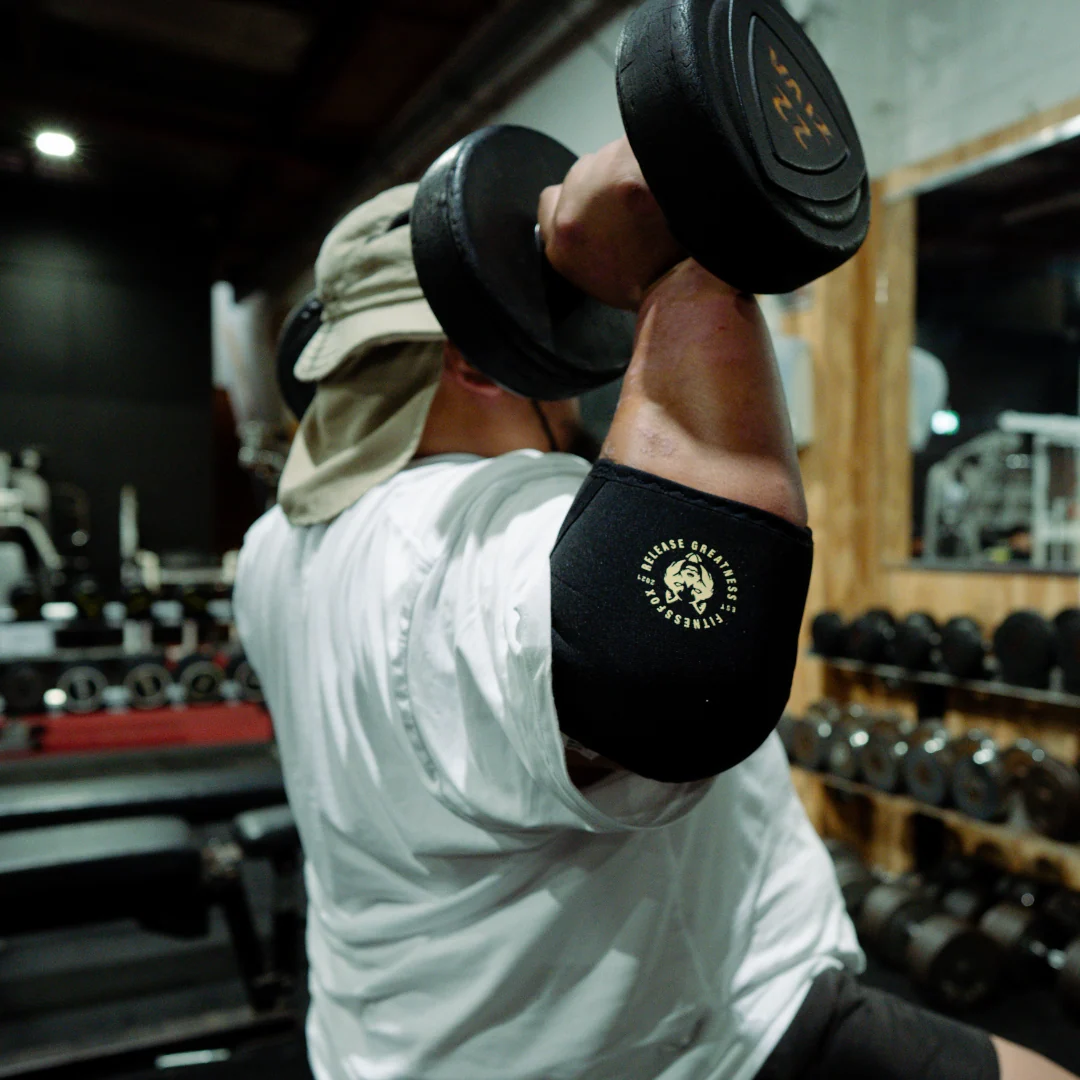
The shoulder press also improved in the sleeve condition, from a mean maximum of 64.0 kg to 66.0 kg. The estimated mean difference was 2.0 kg, with a 95% confidence interval of 0.6 to 3.4 kg. A two-kilogram change is proportionally larger on a lighter lift than it is on a heavy bench, but individual responses can still vary substantially.
Repetition performance followed a similar pattern. In the bench press, participants averaged 4.1 repetitions without sleeves and 5.2 with them. For the shoulder press, the corresponding averages were 4.6 and 5.8 repetitions. These are group averages, not a guarantee that you will get an extra repetition every time you put sleeves on.
The shoulder-press repetition result also deserves extra caution: the analysis involved 19 participants, one participant experienced acute shoulder pain during testing, and the repeatability of that outcome was limited. The experiment did not find a statistically significant improvement in bar velocity. It would therefore be misleading to conclude that sleeves consistently make every rep faster or more explosive.
For a strength-focused lifter, the distinction between maximum load, repeated efforts and movement speed is useful. If your program calls for fast repetitions at a submaximal load, there is no need to change accessories simply because a heavy repetition test produced a favorable result.
What neoprene can and cannot do for your elbows
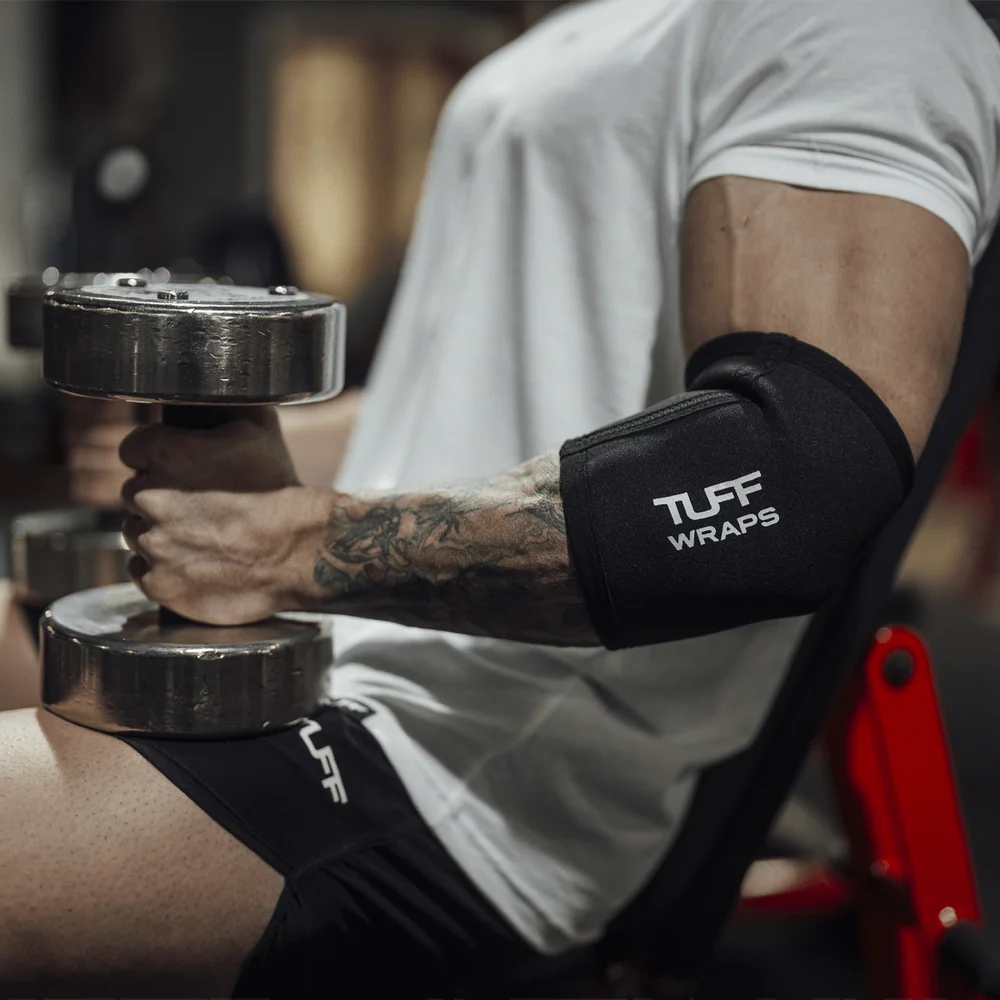
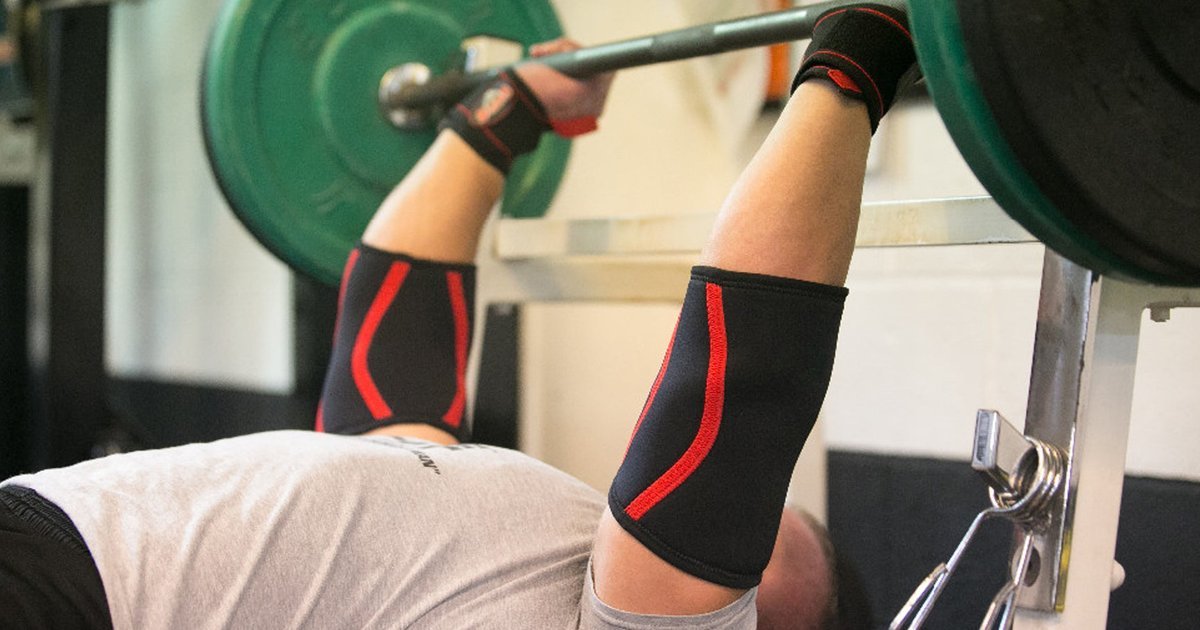
Neoprene sleeves compress the elbow region and can feel warm and supportive. A sleeve also deforms when you bend your elbow. It is plausible that elastic material contributes a small amount of assistance during part of a press, but the experiment did not directly measure that mechanism. It would be premature to say precisely how much of the benefit came from elasticity, perceived support or another factor.
Do not treat all sleeves, wraps and supportive garments as equivalent. A thick, tight elbow sleeve is different from a thin warming sleeve, and an elastic wrap wound around the joint can behave differently again. In a separate bench press experiment involving wrist wraps, the wraps did not significantly improve strength or repetition performance. Likewise, another experiment involving knee sleeves did not demonstrate a repetition benefit during an exhaustive leg press. Equipment effects depend on the joint, garment and movement being tested.
If you want to buy sleeves, measure the elbow according to the specific manufacturer’s sizing instructions. Check whether the garment stays in position during a full, controlled pressing range. Avoid selecting a smaller size solely on the assumption that more compression always means better performance. Excessive tightness, numbness, tingling or worsening pain are reasons to stop using the sleeve rather than tighten it further.
Most importantly, a sleeve is not a treatment for an injured elbow. The fact that a person can press more weight while wearing one does not establish a protective effect on tendons, joints or other tissues. Persistent or worsening symptoms warrant assessment by an appropriately qualified clinician.
How to use sleeves without confusing assistance with progress
For everyday training, choose the role of the sleeve before you decide how often to wear it. If it makes an otherwise comfortable heavy session feel better, it can be a useful part of your kit. If you prefer pressing without it, these results are not a reason to abandon that approach. The accessory is optional.
Try comparing conditions across several matched sessions instead of judging a single personal record. For example, use the same moderate bench load and perform your planned sets with a consistent rest interval, stopping each set at roughly the same effort. Alternate the sleeve condition on different days and record load, repetitions, perceived effort and comfort. This is not a laboratory experiment, but it is more informative than changing the equipment, rep standard and workout all at once.
For muscle growth, remember that an extra repetition is a possible way to add training stimulus, not an automatic reason to take every set to failure. Research comparing failure and non-failure training has not established a general advantage to reaching failure on every set. Use an effort level that fits your program and lets you recover between sessions. You can also include controlled chest fly work, dumbbell presses or other accessory movements according to your goals rather than increasing bench volume indiscriminately.
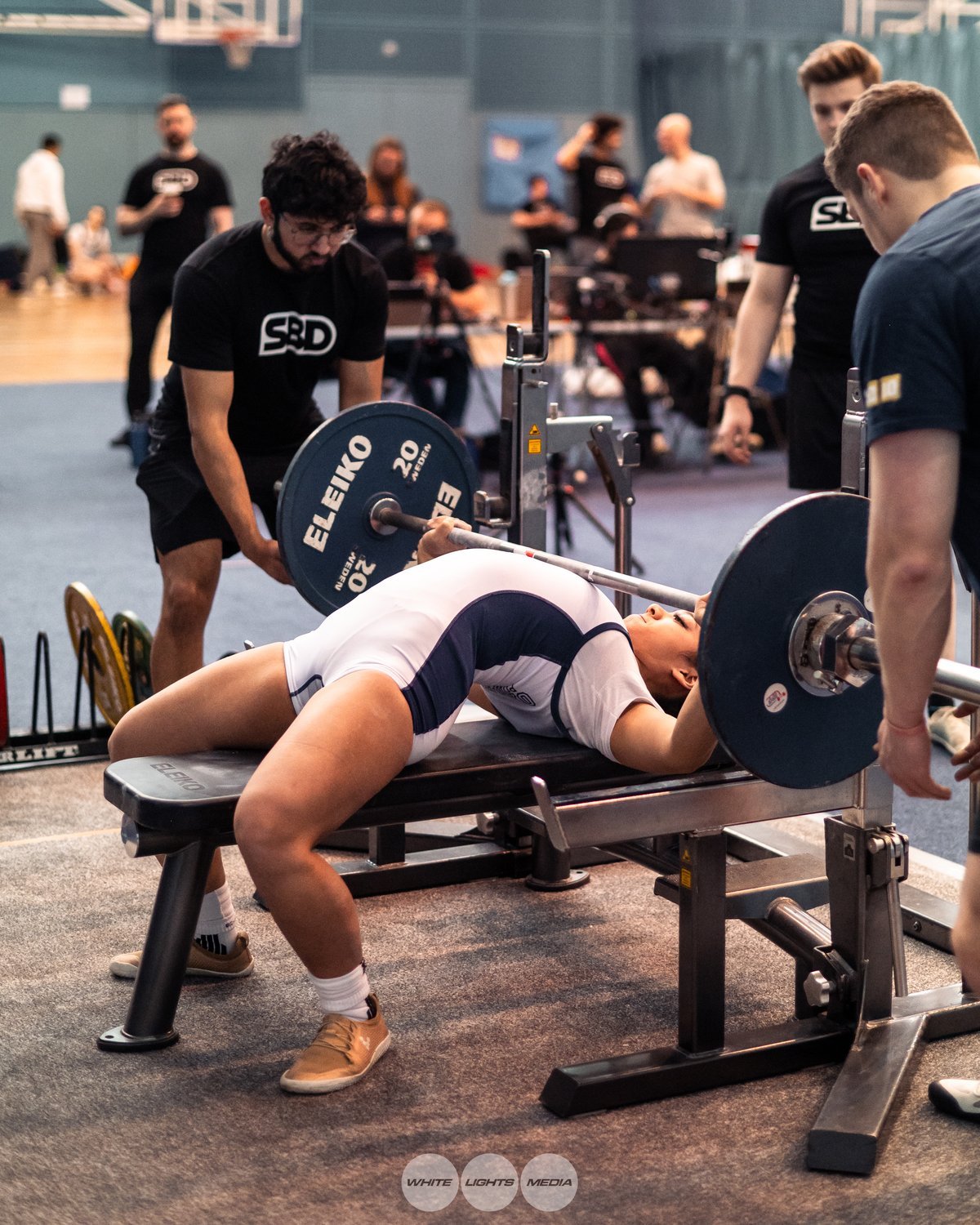
For competitive lifting, consult the current equipment rules of your own federation and event. Practice the competition standard with the equipment you will actually be allowed to use. Keep separate records for materially different lifting conditions so that you can judge your progress fairly.
The practical conclusion is straightforward: neoprene elbow sleeves produced modest improvements in pressing performance in this particular group. They are worth considering if you enjoy using them, but a consistent lifting technique, appropriate load progression and a repeatable training setup remain the foundation of long-term strength.

Funny Gym Shirts & Workout Gear
Funny gym shirts, tanks, hoodies and workout gear for lifters who like training hard.

2 Plates Bench Club Chest Day Meme & Top T-Shirt
Heavy lifts, good laughs, and a little “2 Plates Bench Club” energy.

| I Love Bench Press Pink Heart Pullover T-Shirt
For laid-back days and gym-girl humor: “I Love Bench Press Pink Heart”.

Ultimate Meme : The Essential Bench Press Shirt T-Shirt
Show some powerlifting attitude with a playful “Ultimate” tee.

Gym Sir Swole of Benchalot Medieval Knight Bench Press T-Shirt
Make gym days more fun with “Sir Swole of Benchalot Medieval Knight” style.

Shoulder Press Dost Thou Even Press Medieval Knight Cre T-Shirt
Show some gym-day personality with “Shoulder Press”.

The Only Difference Between Good And Great Is One T-Shirt
Bring “The Only Difference Between Good And Great” humor to your next gym day.

My Bench Press Is Stuck Horror Movie Meme Decal Scary Sticker
Give your everyday gear a playful “My Bench Press Is Stuck” twist.

New PR Birthday Cake : Meme T-Shirt
Heavy lifts, good laughs, and a little “New PR Birthday Cake” energy.

Listen Heavy Lift Heavy Gym | Funny Workout Hooded For Hoodie
Bring “Listen Heavy Lift” gym humor to lazy days and post-workout plans.